
Area
Lake Mutanda
A lava-dammed highland lake in southwestern Uganda, base for southern Bwindi gorilla trekking and quiet lakeside days.
Size: 29 km²
Key species: African clawless otter, kingfishers, tilapia
Habitat: Freshwater lake among highlands
Outflow: Rutshuru River, draining north to Lake Edward
Lava-dammed lake below the Virungas
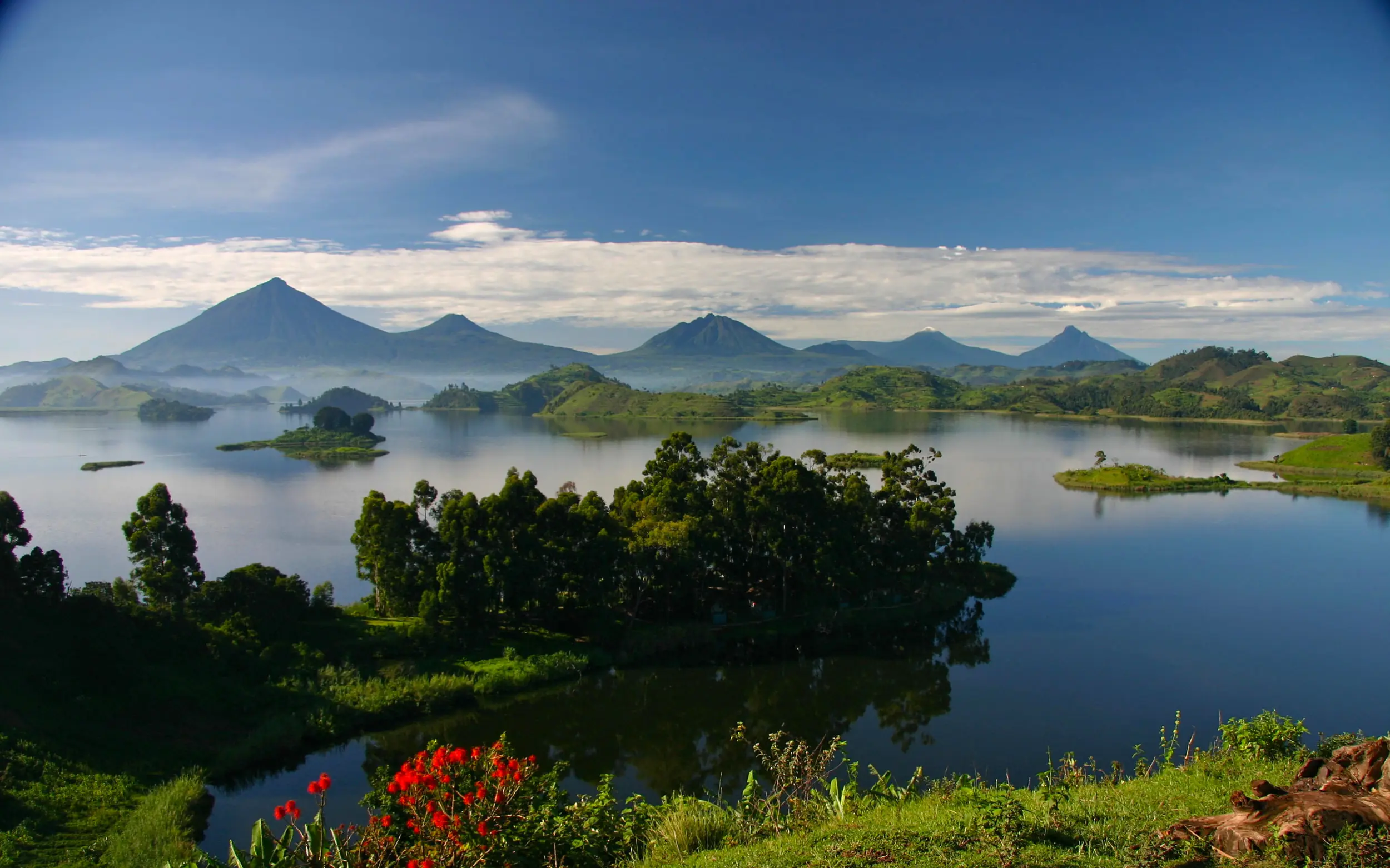
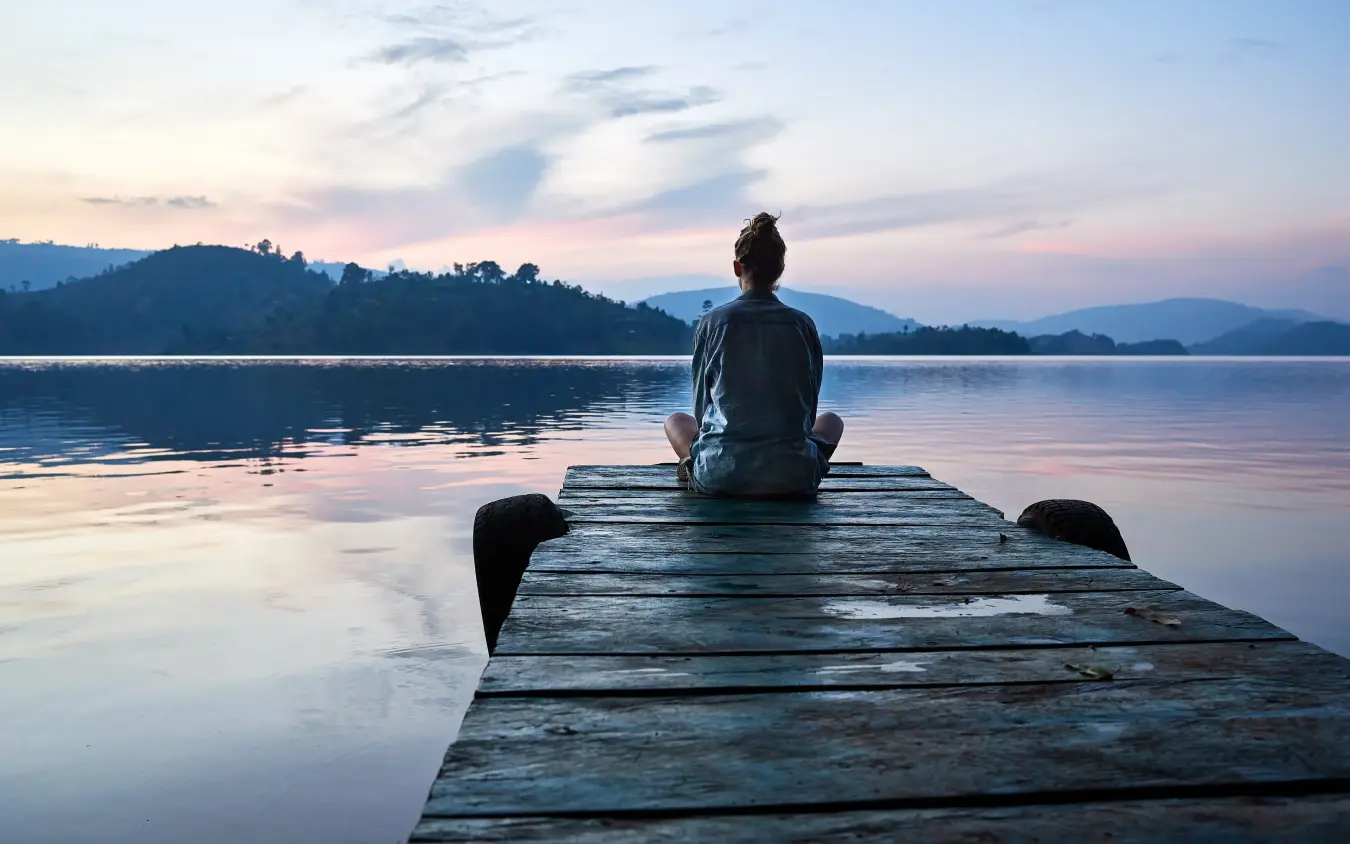
Lake Mutanda lies in Kisoro District, about 20 kilometres north of Kisoro town in far southwestern Uganda, close to the borders with Rwanda and the Democratic Republic of Congo. The Virunga volcanoes form its southern skyline, Muhabura, Gahinga and Sabyinyo rising above calm freshwater dotted with small islands.
The Virunga volcanoes form its southern skyline
The lake is the work of fire. Magma from Virunga eruptions once blocked a river channel, damming the water behind a lava flow to create a highland lake at roughly 1,800 metres. Steep, terraced hills fall away to the shoreline, and the Rutshuru River carries the outflow north towards Lake Edward in the Albertine Rift.
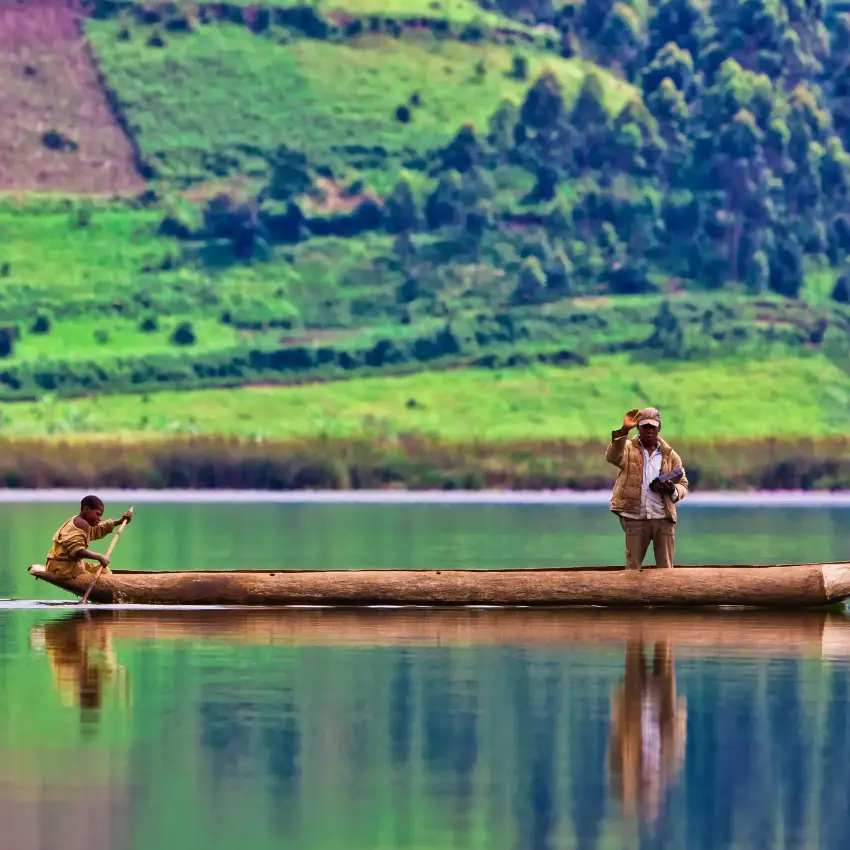
What sets Lake Mutanda apart from many of Uganda’s lakes is that it carries no crocodiles, so swimming here is part of the appeal rather than a risk. African clawless otters work the shoreline reeds, while kingfishers, herons and egrets feed across the shallows. Beneath them, tilapia support the local fishery.
Beneath them, tilapia support the local fishery
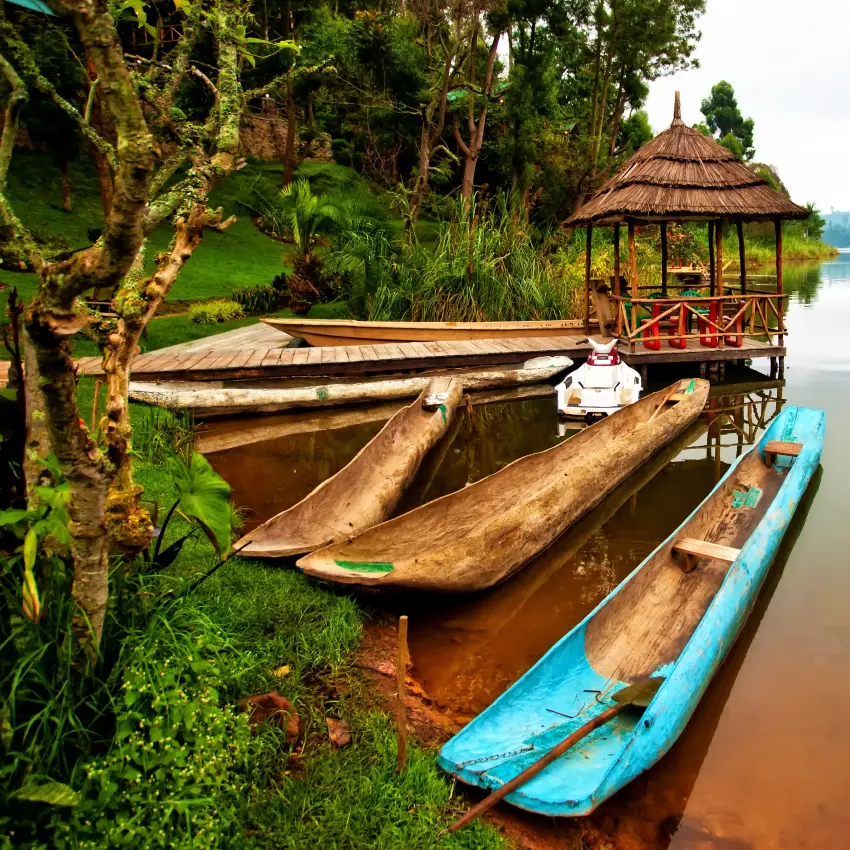
Canoes and kayaks suit the still water, and the scatter of islands gives a paddle somewhere to go. Behind the shore, walking trails climb into the hills and open onto long views over the lake and the volcanoes beyond. Several days here, divided between the water and the slopes, make Mutanda a place to settle into rather than simply pass through.
From Kisoro District, the southern sectors of Bwindi Impenetrable National Park, Nkuringo and Rushaga, lie within roughly an hour or two by road, as does Mgahinga Gorilla National Park. Gorilla trekking happens inside these parks under Uganda Wildlife Authority permits, on managed trails with rangers and small groups. The lake itself sits on community land with no park restrictions, which is why activity on and around the water feels so open compared with the regulated forests next door.
Mgahinga adds golden monkey trekking and day hikes on the Virunga volcanoes, though those climbs start at park trailheads and are managed park activities rather than lake excursions. The lake works just as well without any of them. Mornings on the water, an afternoon walk into the terraced hills, an evening watching cloud move across the volcanoes: the case for three or four nights makes itself.
The lake works just as well without any of them.
The communities around the lake are Bafumbira and Bakiga farmers, working the steep terraces that give the region its cultivated, layered look. The Batwa, the forest peoples displaced when the national parks were established, hold deep knowledge of these forests. They share it on guided walks covering medicinal plants and traditional skills, often ending at Garama Cave near Mgahinga. One of the lake’s islands is inhabited, with a small church reached by a boat crossing and a walk through farmland.
The islands carry their own history. Several served as burial sites for important community members, and one is remembered as a place where unmarried pregnant girls were once abandoned. Mutanda makes a natural base for this kind of contact. Village walks, island crossings and forest walks with Batwa guides all sit within a relaxed day, without the early starts the gorilla treks demand. It is a gentler way to know the region.
The best time to visit Lake Mutanda
Jan
Feb
Mar
Apr
May
Jun
Jul
Aug
Sep
Oct
Nov
Dec
Recommended
Transitional
Challenging conditions
For gorilla and golden monkey trekking with firm trails and clear views of the Virunga volcanoes, come in the two dry seasons, June to September and December to February. June to August is the cooler, settled stretch and best for the long climbs and calm-water canoeing. The rains of March to May and October to November leave the steep trails muddy, though greener and quieter for birding.
accommodation in lake mutanda
Accommodation clusters along the shoreline rather than in any town. The lodges sit on peninsulas and hillsides, positioned to face the lake and the Virungas, and range from colourful, individually designed chalets to comfortable cottages with panoramic views. Some include permanent tented rooms on raised platforms. Community-run bandas, dormitories and camping sit directly on the water, while Kisoro town, about 30 minutes away, holds more basic hotels for those passing through.


activities
Paddle, hike and trek gorillas
Canoeing and kayaking suit the still water, with island crossings, swimming and fishing for tilapia. Hiking trails climb the surrounding hills. Gorilla trekking in southern Bwindi and Mgahinga, plus golden monkey trekking and volcano hikes, all happen inside the national parks under permit, a road transfer from the lake.

conservation
Tree planting and wetland recovery
Lakeside lodges have driven local conservation: one has planted over 15,500 trees, protected remaining pocket forests and restored drained swamps in cooperation with local fishermen, with otters and previously absent bird species returning as a result. The Mutanda Eco Community Centre, run by the Mgahinga Community Development Organization, focuses on habitat protection and environmental education around the lake.

getting around
Fly to Kisoro, transfer by road
Aerolink Uganda operates scheduled daily flights from Entebbe to Kisoro Airstrip, roughly one to two hours, with charter options also available. From Kisoro, lodges around Lake Mutanda are about 30 to 45 minutes by road. Kigali in Rwanda is reached by road via the Cyanika border crossing, a common entry point for the southwestern parks.
other areas in uganda
Lake Mutanda fits naturally into a southwestern loop. Bwindi's northern Buhoma sector offers a second gorilla experience with different families and forest, while Mgahinga adds golden monkeys and volcano climbs. Lake Bunyonyi, another high-altitude lake near Kabale, extends the lakes theme with quiet island paddling. Further north, Queen Elizabeth National Park brings savannah game, Kazinga Channel boat trips and the tree-climbing lions of Ishasha, a strong contrast to the highland lake.




frequently asked questions
By road from Kisoro in about half an hour, or from the southern side of Bwindi in an hour or so.
Most clients arrive off the gorilla trekking rather than direct. Flying into Kisoro makes the journey manageable in a morning; the drive from Kampala is eight or nine hours and nobody should do it in one go.
The road down to the lake is rough in places and short.
We arrange the transfer with the trekking so the drive falls on the right day.
Quiet water with three volcanoes standing over it, and very few visitors.
The lake sits between Bwindi and Mgahinga, so the Virunga peaks fill the skyline and the islands break up the surface. There are no hippo or crocodile, and the local people fish it from dugout canoes.
A handful of small lodges sit on the shore and the hillsides above it.
It is a place to stop rather than a destination, and the view is the reason.
Yes. Both TravelHealthPro, the UK's official travel health service, and the CDC treat the whole of Uganda as a malaria area and recommend antimalarial cover countrywide.
The lake sits high in the Virunga foothills, which means fewer mosquitoes than the lowlands, but low risk is not the same as no risk.
We do not make medical recommendations. That is a conversation between you and your own doctor or a travel clinic.
On the practical side, cover up at dusk and carry repellent.
Water, walking and the volcanoes, and none of it demanding.
- A dugout canoe across the lake, which can replace part of the drive
- Walks to the villages and the crater lakes nearby
- Swimming, where the lodges say it is safe
- The golden monkeys and the Batwa trail at Mgahinga, half an hour away
The canoe crossing towards Bwindi is a genuinely good way to travel rather than a tourist trip.
Mostly, though, people sit and look at the mountains.
Different rather than better, and the view decides it.
Mutanda has the volcanoes, fewer visitors and smaller lodges, and sits closer to the southern gorilla sectors and to Mgahinga. Bunyonyi is larger, has more to do and more choice of places to stay.
If you are trekking at Rushaga or going on to Mgahinga, Mutanda saves you hours in a car.
Tell us where your permits are and we will pick the lake to match.
One or two, as a rest between the forests.
One night breaks the journey and gives you an evening with the mountains. Two lets you take the canoe out and walk in the hills without rushing.
It works well between Bwindi and Mgahinga, or as the last stop before flying out of Kisoro.
Tell us the whole route and we will say whether one night or two fits.
rated five stars by our clients

our approach
remote, exclusive
& personal
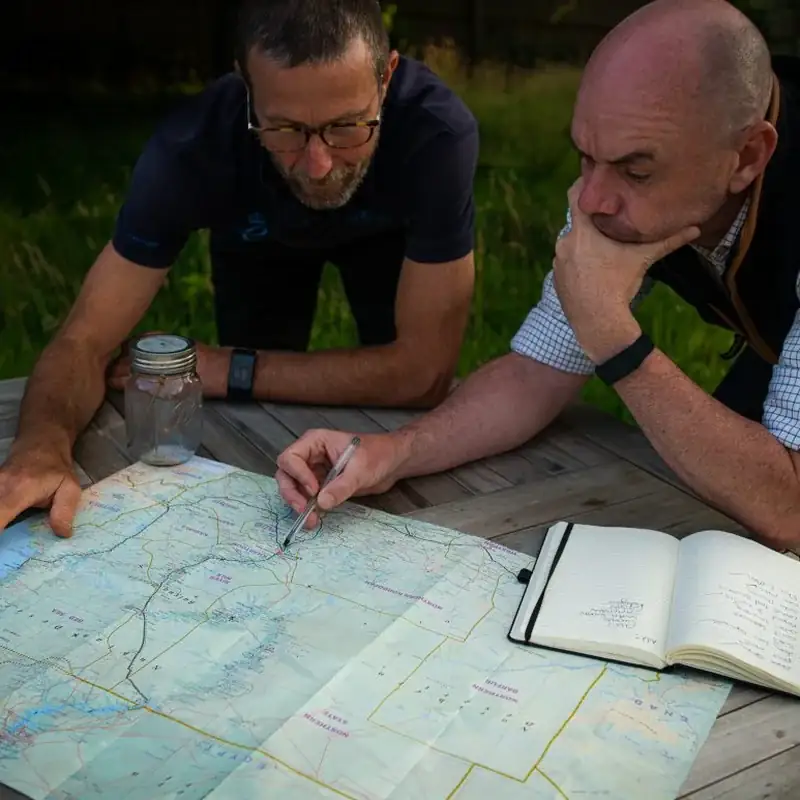
Every journey starts with a conversation. We take the time to understand your vision before we start planning.
Whether by phone or in person, we work with you directly to shape something that is considered, personal, and expertly delivered.
Every journey starts with a conversation. We favour a direct, personal approach: understanding your vision before anything else.
Whether by phone or in person, we work with you directly to shape a journey that is both thoughtfully considered and expertly delivered.
Get in touch to start planning yours.