 01
01

Area
Entebbe and Kampala
Uganda’s lakeside arrival town and its hill-built capital, the gateway where nearly every safari into the country begins and ends.
Size: 40 km of Lake Victoria shore, Entebbe to Kampala
Key species: Shoebill, chimpanzee, fish-eagle, 300+ birds
Habitat: Lakeshore, papyrus swamp, forest, city hills
The lakeshore and the capital hills
Almost every Uganda journey begins and ends on Lake Victoria’s northern shore. Entebbe is a green, unhurried peninsula town of gardens and water, built around the country’s only international airport, so a first or last night here asks for barely any driving. Neither Entebbe nor Kampala holds big game. Both exist to make the rest of Uganda reachable.
Both exist to make the rest of Uganda reachable
Kampala begins about forty kilometres north, and the change is immediate. The capital is built across a spread of green hills, each crowned by a mosque, a cathedral, a royal tomb or a market, and it trades the lakeshore’s stillness for the noise and colour of a working city. Between the two, a belt of lakeside resorts at Munyonyo and Kigo offers a third option, city access with the water at the door.

Entebbe carries its history quietly. It was the administrative seat of the Uganda Protectorate until 1962, and the memory lingers near the water and in the botanical gardens of 1898, where old trees shade the shore. The whole peninsula seems to keep an older, slower rhythm, and its wildlife runs to forest monkeys, water birds and rescued primates rather than open bush.
The whole peninsula seems to keep an older, slower rhythm
Kampala offers the opposite, the country’s cultural heart. It grew as the seat of the Buganda Kingdom, where old tradition sits beside malls, restaurants and nightlife. The hills carry the Kasubi royal tombs, the domed national mosque, cathedrals and the martyrs’ shrine at Namugongo, and the markets below trade at full volume. It makes a genuine city day, not a stopover.
A day in Entebbe fills easily without ever leaving the lakeshore. The botanical gardens, laid out in 1898, shelter stands of mahogany and fig where black-and-white colobus, vervet and red-tailed monkeys move through the canopy, and palm-nut vultures draw birders out before breakfast. Along the water there are sunset cruises, Nile perch to be fished, and day trips out to the forested, beach-fringed Ssese Islands for anyone with an extra night to spare. None of it requires a game drive. The appeal is a slower register, after a long flight in or before the long flight home.
The shoebill is the reason many travellers arrive a day early. Mabamba Swamp, a Ramsar-listed wetland of papyrus channels on Lake Victoria’s northwest shore, holds a small resident population reached by canoe from Entebbe, among three hundred species in the wider wetland. This prehistoric, near-motionless stork is hard to find across most of Africa. Local guides pole the shallow channels at dawn and cut the engine as the bird comes into view. It is a slow, quiet outing, closer to birdwatching than safari, and the best reason to build an extra morning into a lake stay.
Local guides pole the shallow channels at dawn and cut the engine as the bird comes into view
Kampala trades that calm for depth and energy, its landmarks spread across the city’s hills. The Kasubi Tombs, a UNESCO-listed site, hold four Buganda kings buried beneath a vast reed-and-thatch dome. The Uganda National Mosque on Old Kampala hill is climbed to its minaret for a full circle of views across the rooftops. The Uganda Museum, the oldest in East Africa, keeps the country’s cultural collections, the Ndere Centre stages Ugandan music and dance in the evenings, and the craft stalls and food markets of Owino and Nakasero give the capital its full, unfiltered volume.
More of the city’s story sits on its other hills. The martyrs’ shrine at Namugongo, where Christian converts were executed in 1886, draws pilgrims from across the region each June. The Bahai temple stands in quiet gardens to the north, one of only a handful of its kind in the world, and the Anglican and Catholic cathedrals of Namirembe and Rubaga hold their own hilltops. Below them lie the Kabaka’s palace and the royal mile, still the working heart of the Buganda kingdom that Kampala grew around.
Between the airport and the city, a belt of lakeside resorts has grown up along the shore at Munyonyo and Kigo, linked to both by the Entebbe expressway. This is where the capital keeps its water frontage: quiet, low-density ground about half an hour from downtown Kampala, with golf, spas and gardens running down to Lake Victoria. It suits guests who want the city’s dining and culture within reach but prefer to sleep beside the lake, and it works equally as a calm first night off the plane or a last one before flying home.
Wildlife around the lake runs to primates and rescue rather than open plains. Ngamba Island, a forty-five minute speedboat crossing on Lake Victoria, gives lifelong sanctuary to more than fifty orphaned and rescued chimpanzees, watched from a raised platform at feeding time. The Uganda Wildlife Conservation Education Centre in Entebbe cares for rescued lions, giraffes, rhinos and crocodiles, and a nearby reptile village adds snakes and tortoises. These are managed sites, a gentle morning rather than a full day out, and a comfortable start or finish to a trip.


The best time to visit Entebbe and Kampala
Jan
Feb
Mar
Apr
May
Jun
Jul
Aug
Sep
Oct
Nov
Dec
Recommended
Transitional
Challenging conditions
Come during the dry seasons of December to February or June to September, when rainfall is lighter and the weather more predictable for city sightseeing. These are the peak stretches for reliable outdoor days. The wet seasons bring lush landscapes and strong birdwatching, though heavier rain can occasionally disrupt plans.
accommodation in entebbe and kampala
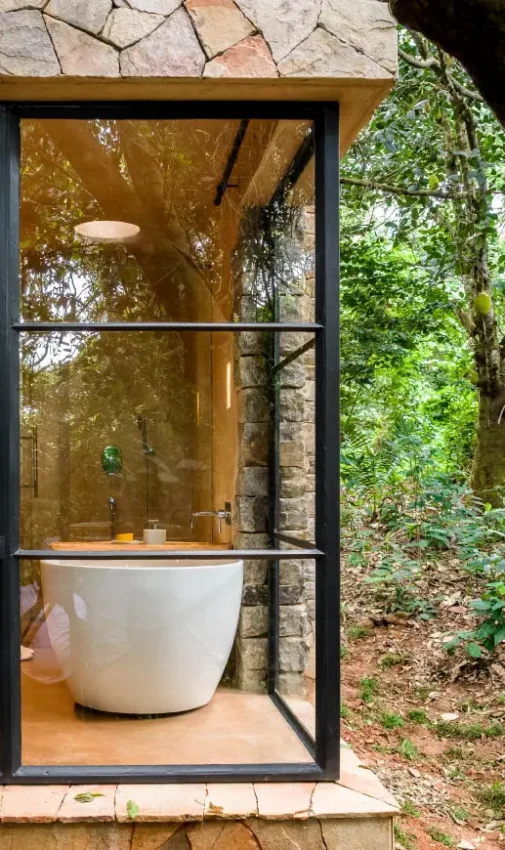
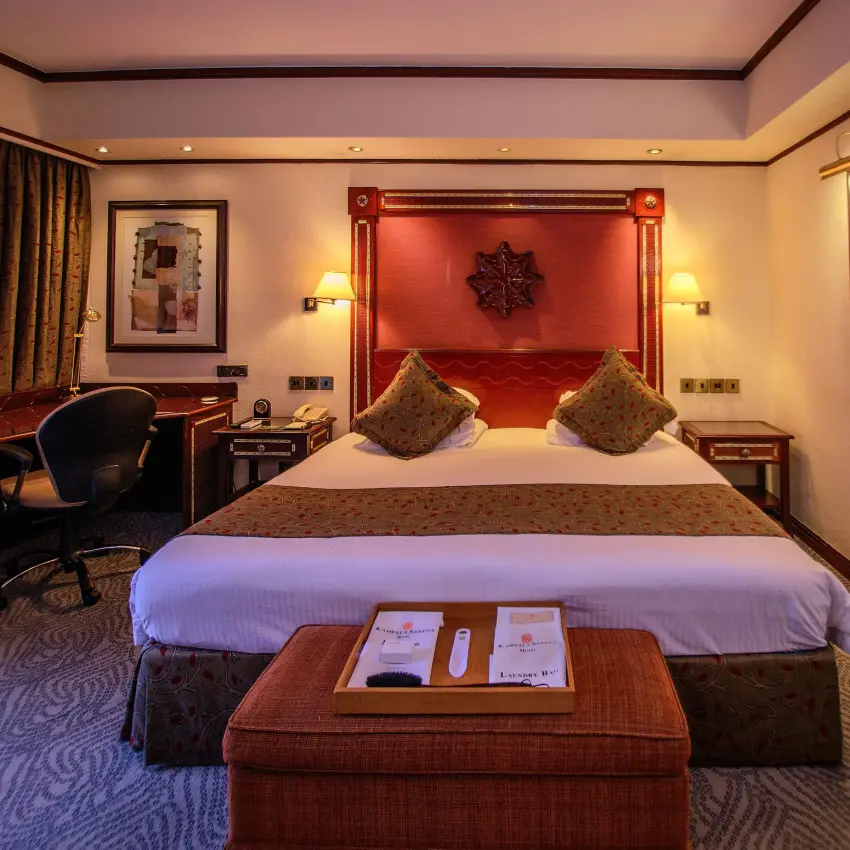
The stronger choice for arrival and departure sits in Entebbe, where boutique hotels and lakeside lodges stand in mature gardens within a short transfer of the terminal, several overlooking Lake Victoria. Kampala adds the country's most polished city hotels, in the business district and the leafy residential hills, close to the markets, heritage sites and dining. Between them, the lakeside resorts at Munyonyo and Kigo pair city access with golf, spas and water frontage, a calmer base than the centre without giving up its reach.


 01
01
activities
Activities
Canoe into Mabamba Swamp at dawn for the shoebill among the papyrus. Walk Entebbe's botanical gardens for colobus and forest birds, cruise Lake Victoria at sunset, or fish for Nile perch. In Kampala, tour the Kasubi Tombs, the national mosque and the Uganda Museum, take in an evening of music and dance at the Ndere Centre, and visit Ngamba Island's rescued chimpanzees before flying out.
 02
02
conservation
Conservation Projects
Mabamba Swamp is a protected Ramsar wetland where community guides and boatmen earn directly from shoebill birding, giving the papyrus a working value. Ngamba Island Chimpanzee Sanctuary and the Uganda Wildlife Conservation Education Centre rehabilitate rescued animals, while NatureUganda supports the region's Important Bird Areas, among them Mabamba and Lutembe Bay on Lake Victoria's shore.
03
getting around
Connectivity and Logistics
Entebbe International Airport handles almost every flight into Uganda, so the first night involves barely any drive. Light aircraft and helicopter charters connect onward to Bwindi, Queen Elizabeth, Murchison Falls and Kidepo. Kampala lies about forty kilometres north, roughly one to two hours by road depending on traffic, with the lakeside resorts at Munyonyo and Kigo about half an hour from the city on the Entebbe expressway.
other areas in uganda
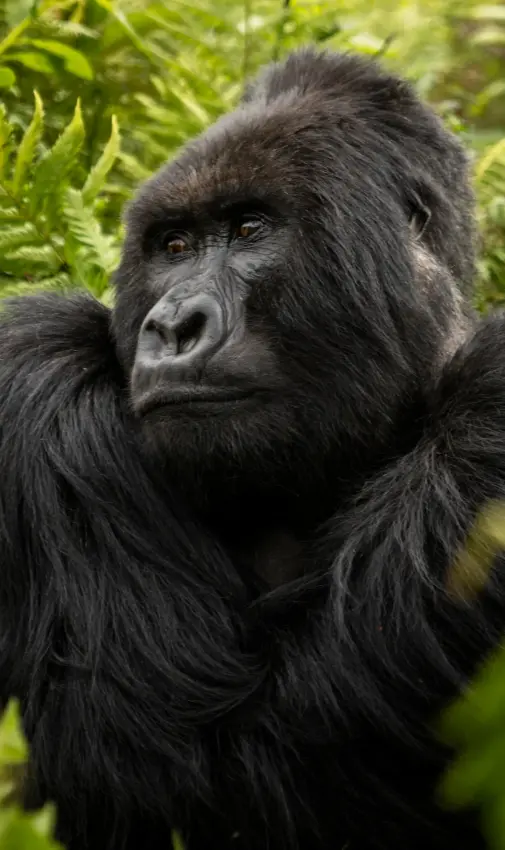
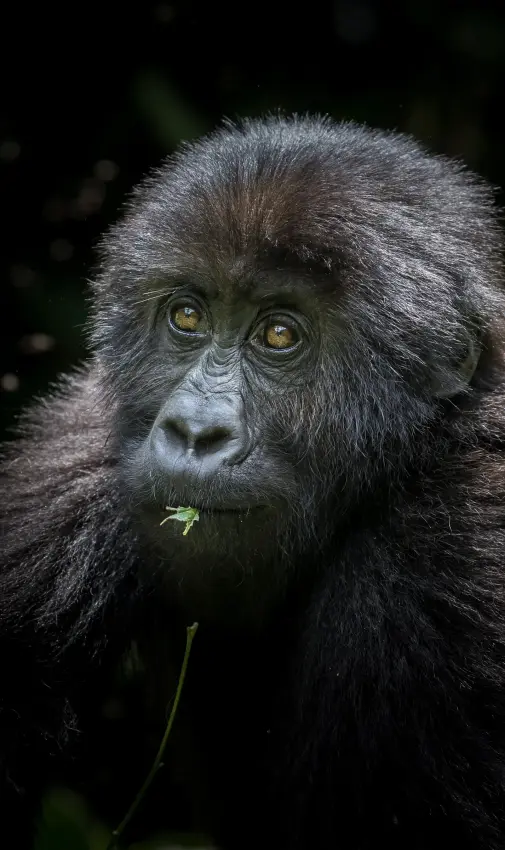
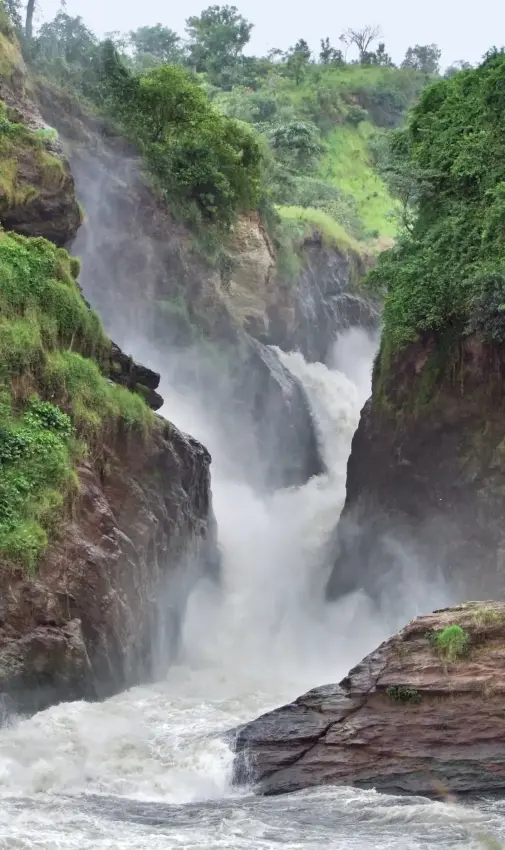
Most itineraries pair Entebbe and Kampala with the wilderness reached from the airport. Bwindi Impenetrable National Park in the southwest holds roughly half the world's mountain gorillas. Queen Elizabeth National Park is known for tree-climbing lions and Kazinga Channel boat cruises. Murchison Falls forces the Victoria Nile through a narrow gorge above savannah game, Kibale holds East Africa's densest chimpanzee population, and remote Kidepo Valley delivers Uganda's wildest northeastern scenery.




frequently asked questions
Entebbe International Airport sits on a peninsula in Lake Victoria and takes the long-haul flights, most of which land late at night or early in the morning.
Kampala is about forty kilometres away, which is an hour in clear traffic and considerably more in the rush, so we generally keep the first and last nights in Entebbe itself, minutes from the terminal.
The light aircraft to Bwindi, Kidepo and the Kibale side leave from the same airport.
We arrange the transfers so nobody is sitting in Kampala traffic before a flight.
Entebbe, almost always, and it is a straightforward call.
Entebbe is quiet, green, on the lake and five minutes from the airport, which is what you want after an overnight flight or before an early one. Kampala is busy, noisy and an hour of traffic away.
Kampala is worth a day if you want a city, the markets and the nightlife, and we will build it in.
Otherwise the first and last nights go in Entebbe and the trip starts properly the next morning.
Enough for a genuinely good day, which surprises people expecting an airport town.
- Ngamba Island, the chimpanzee sanctuary, about forty-five minutes by boat
- The botanical gardens on the lake shore, which are excellent for birds
- The wildlife education centre, good with children
- A boat out on Lake Victoria at the end of the afternoon
The shoebill, one of the strangest birds in Africa, can be looked for in the swamps nearby.
We will build any of these into an arrival or departure day rather than leaving you in a hotel.
Yes. Both TravelHealthPro, the UK's official travel health service, and the CDC treat the whole of Uganda as a malaria area, and the lake shore is a genuine risk area rather than a marginal one.
Antimalarial cover is recommended countrywide.
We do not make medical recommendations. Which tablets suit you, and what is right for a child, are questions for your own doctor or a travel clinic.
On the practical side, cover up at dusk and keep repellent to hand by the water.
Light aircraft leave from the same airport, and they save a great deal of road time.
Scheduled services run to the airstrips for Bwindi, Kibale, Queen Elizabeth, Murchison Falls and Kidepo, and a charter goes when the schedule does not suit. Kidepo in the far north is the one that genuinely needs flying.
Soft bags only, with a strict weight limit.
We book the flights with the rest of the route and say plainly which legs are worth driving instead.
One at the start and one at the end, and that is usually right.
Uganda's flights land and leave at unsociable hours, so those two nights are doing a practical job rather than filling the itinerary. A day trip to the chimpanzee island makes the final one worth having.
Add a Kampala day only if the city genuinely interests you.
Tell us your flight times and we will say whether the last night is needed or whether you can go straight from the bush.
rated five stars by our clients

our approach
remote, exclusive
& personal
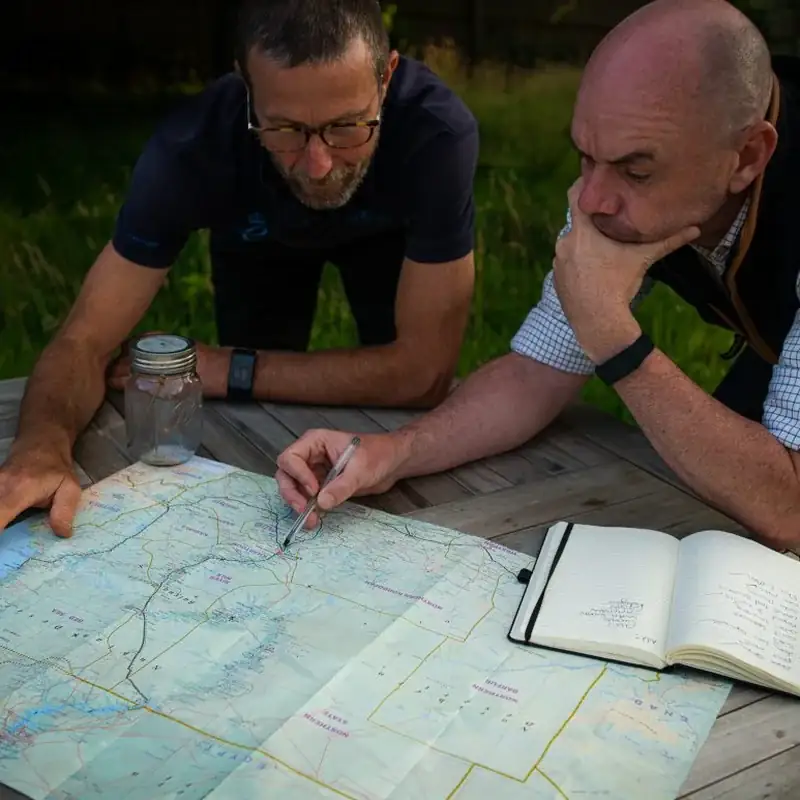
Every journey starts with a conversation. We take the time to understand your vision before we start planning.
Whether by phone or in person, we work with you directly to shape something that is considered, personal, and expertly delivered.
Every journey starts with a conversation. We favour a direct, personal approach: understanding your vision before anything else.
Whether by phone or in person, we work with you directly to shape a journey that is both thoughtfully considered and expertly delivered.
Get in touch to start planning yours.