

The Gorilla Park Few Consider
Mgahinga sits in Kisoro District, where three dormant volcanoes of the Virunga range rise from farmland into cloud forest. It is the country’s smallest park, and the one most travellers overlook when they plan a gorilla trek. That oversight is the point of going.
Uganda’s smallest park, and the one most gorilla trekkers overlook.
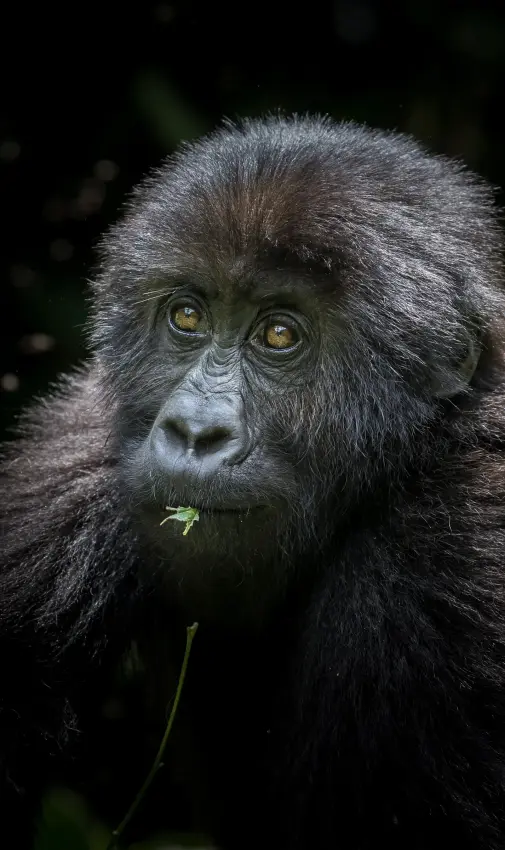
A single habituated gorilla family, the Nyakagezi group, lives here against the backdrop of Muhabura, Gahinga and Sabyinyo. The park borders Rwanda’s Volcanoes National Park to the south and DR Congo’s Virunga National Park to the west. Together they form the wider Virunga Conservation Area, which protects more than half of the world’s remaining mountain gorillas.


The Nyakagezi group spends much of its time in bamboo and on open volcanic slopes, rather than the tangled undergrowth that defines Bwindi to the north. The practical result is clearer sightlines and better photography. The volcanoes fill the frame behind the animals, and the treks remain strenuous at altitude, often three hours or more before the hour spent with the group.
The practical result is clearer sightlines and better photography.
Golden monkeys share these high-altitude forests, tracked through the bamboo zone where fresh shoots concentrate the troops. The altitude climbs from 2,227 metres to 4,127, carrying the vegetation up through montane forest into Afro-alpine moorland of giant lobelias and heathers. Over 180 bird species have been recorded across the slopes, among them several East Congo montane endemics.
Reaching Mgahinga takes commitment. The roads here are poor, the final approach from Kisoro running on rough murram, and the wider area has never drawn the lodge and infrastructure investment seen in Bwindi. That gap exists largely because there is only one habituated gorilla group rather than many, which keeps visitor numbers low and the park feeling genuinely remote. Most upmarket travellers fly in to Kisoro Airstrip, which reduces the rough last stretch to a short transfer rather than a full day’s ordeal.
One habituated gorilla family, three volcanoes, and almost no one else.
Beyond the gorillas, the volcano climbs are the reason fit travellers make the journey. Sabyinyo, whose serrated summit marks the meeting point of Uganda, Rwanda and DR Congo, is roughly eight hours round trip, with ladders and very steep sections near the top. Muhabura, the highest of the three at 4,127 metres, is a full day’s climb to a crater at its summit. Gahinga is a strenuous ascent through bamboo to a swamp-filled crater at 3,474 metres. For those who enjoy a genuine physical day, these rank among the best hikes in Africa.
The land around the park is the ancestral home of the Batwa, hunter-gatherer communities displaced when the park was gazetted in 1991. The Batwa Trail, led by Batwa guides, opens up their knowledge of forest plants, hunting methods and music. It provides income that reduces pressure on the park’s resources, sits apart from the regulated park activities, and rewards every hour spent on it.
Two highland lakes lie within easy reach. Lake Mutanda has its volcano backdrop, Lake Bunyonyi its still water, and both are natural places to slow down after hard trekking days. Mgahinga works best as part of a longer Uganda itinerary, the demanding high-altitude counterpoint to softer days on the water or further gorilla time in Bwindi. It is a place that asks something of you, and gives a great deal back.


The best time to visit Mgahinga National Park
Jan
Feb
Mar
Apr
May
Jun
Jul
Aug
Sep
Oct
Nov
Dec
Recommended
Transitional
Challenging conditions
For gorilla and golden monkey trekking, come in the dry seasons, June to September and December to February, when the steep trails are firmest and the Virunga volcanoes clearest. The primates are resident year-round, so the choice is trail comfort, not sightings. The rains of March to May and October to November bring mud, quiet trails and the flat light that suits photography.
accommodation in mgahinga national park
Options around Mgahinga are small in number and understated in style, weighted toward views and quiet rather than resort amenities. Expect boutique lodges and permanent tented camps set on hillsides overlooking the Virunga volcanoes or Lake Mutanda, typically owner-run with few rooms and fireplaces against the cool highland evenings. Simpler guesthouses cluster in Kisoro town. Private houses and villa-style stays on Lake Bunyonyi and Lake Mutanda pair well with the harder days in the park.


activities
Gorillas, Golden Monkeys, Volcano Hikes
Park activities are guided and done on foot. Trek the Nyakagezi gorilla group, track golden monkeys through the bamboo, and climb Muhabura, Gahinga or Sabyinyo on full-day hikes. The Batwa Trail and shorter birding walks run on community land adjacent to the park boundary.

conservation
Transboundary Virunga Gorilla Protection
Mgahinga is managed by the Uganda Wildlife Authority within the Greater Virunga Transboundary Collaboration, a joint effort with Rwanda and DR Congo to monitor gorillas across borders. The park sits on UNESCO's Tentative List. The Batwa Trail provides community income that reduces reliance on forest resources.

getting around
Fly to Kisoro Airstrip
Daily scheduled flights connect Entebbe and Kajjansi to Kisoro Airstrip in approximately one hour fifteen minutes, with private charters available on the same route. A short road transfer covers the final stretch to the park. The road from Kampala via Kabale runs around nine hours on winding terrain and requires a 4WD.
other areas in uganda
Mgahinga pairs naturally with Bwindi Impenetrable National Park, Uganda's other gorilla park, with multiple habituated families and a broader lodge selection. Kibale extends the primate theme with chimpanzee tracking, while Queen Elizabeth National Park adds savannah game and boat safaris on the Kazinga Channel. Lake Bunyonyi and Lake Mutanda provide gentle recovery days close at hand, balancing the park's demanding treks across a longer itinerary.





frequently asked questions
Fly to Kisoro, which is about thirty to forty-five minutes from the park, or drive from Kampala.
Scheduled and charter flights make the journey manageable in a morning. The drive from Entebbe or Kampala is eight to nine hours through the hills, which almost nobody should do in one go.
It sits close to the Rwandan border, so some routes fly into Kigali and drive across instead, which is quicker.
We will say plainly which way round works for your days.
One, the Nyakagezi family, and it has stayed put in Mgahinga for years.
Because there is a single habituated group the park issues far fewer permits than Bwindi, so we book them early.
It is our favourite of the Ugandan gorilla parks: a small park under the volcanoes, quiet underfoot, with the golden monkeys and the Batwa trail alongside the trek.
The permit comes from the Uganda Wildlife Authority and the minimum age is fifteen.
More than the gorillas, and it is why we send people here.
- Golden monkey tracking, and a full-day habituation experience with the researchers
- Climbing one of the three volcanoes, Muhabura, Gahinga or Sabyinyo
- The Batwa trail, led by Batwa elders through the forest they once lived in
- The Sabyinyo gorge walk, and birding for the Albertine Rift specials
The volcano climbs are long, steep days rather than walks.
The Batwa trail is the one most people say they remember, and it is worth a full morning.
Yes. Both TravelHealthPro, the UK's official travel health service, and the CDC treat the whole of Uganda as a malaria area and recommend antimalarial cover countrywide.
The Virunga foothills are high and cool, which means fewer mosquitoes than the lowlands, but low risk is not the same as no risk.
We do not make medical recommendations. That is a conversation between you and your own doctor or a travel clinic.
On the practical side, cover up at dusk and carry repellent.
Anything from a gentle morning to a serious mountain day.
Golden monkey tracking is the gentlest, on bamboo slopes with a short climb. Gorilla trekking is steep and can take hours. The volcano climbs are eight to ten hour days on rough ground at altitude, and they are properly hard.
The park sits high, so everything is harder than the same walk at sea level.
Tell us what your party can manage and we will book the days honestly rather than optimistically.
Two, and three if you want to climb a volcano.
Two nights gives you one tracking morning, either the gorillas or the golden monkeys, plus the Batwa trail. A third buys a volcano day, which needs its own day and a recovery evening.
It sits naturally alongside Bwindi, or as a Ugandan extension to a Rwandan gorilla trip.
Tell us how much walking you want and we will build the stay around it.
rated five stars by our clients

our approach
remote, exclusive
& personal
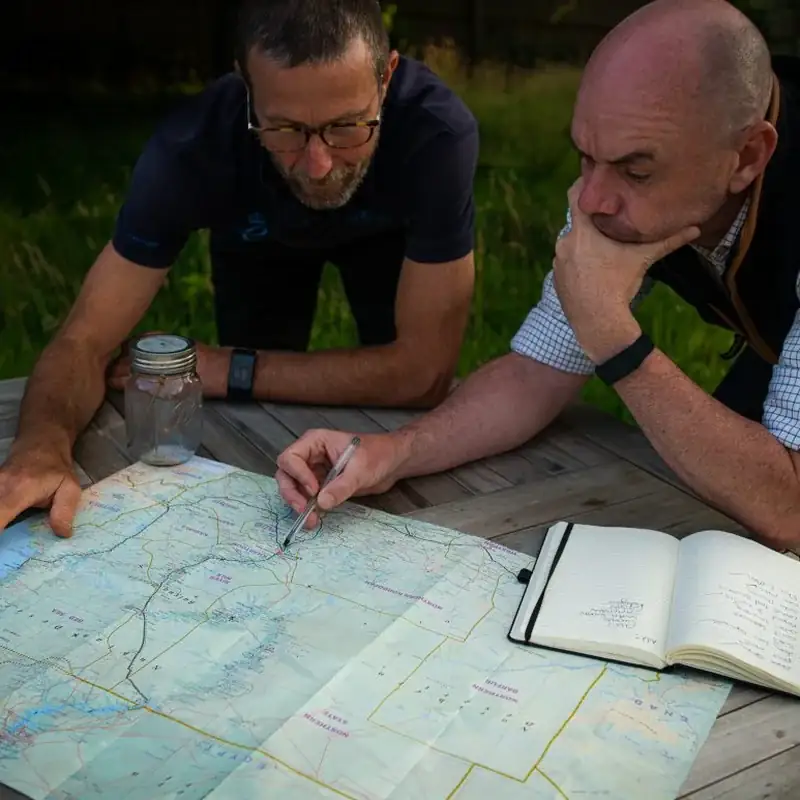
Every journey starts with a conversation. We take the time to understand your vision before we start planning.
Whether by phone or in person, we work with you directly to shape something that is considered, personal, and expertly delivered.
Every journey starts with a conversation. We favour a direct, personal approach: understanding your vision before anything else.
Whether by phone or in person, we work with you directly to shape a journey that is both thoughtfully considered and expertly delivered.
Get in touch to start planning yours.