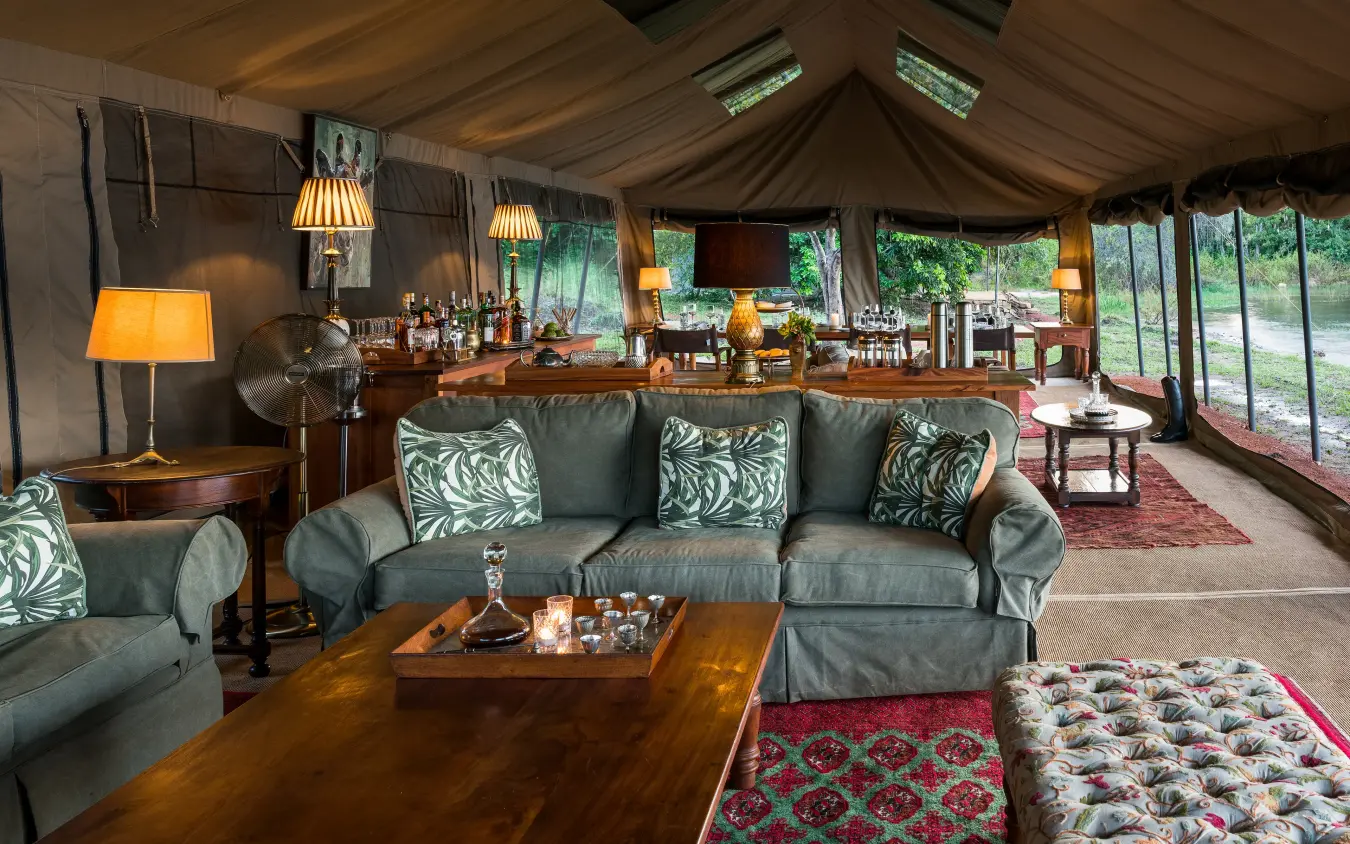
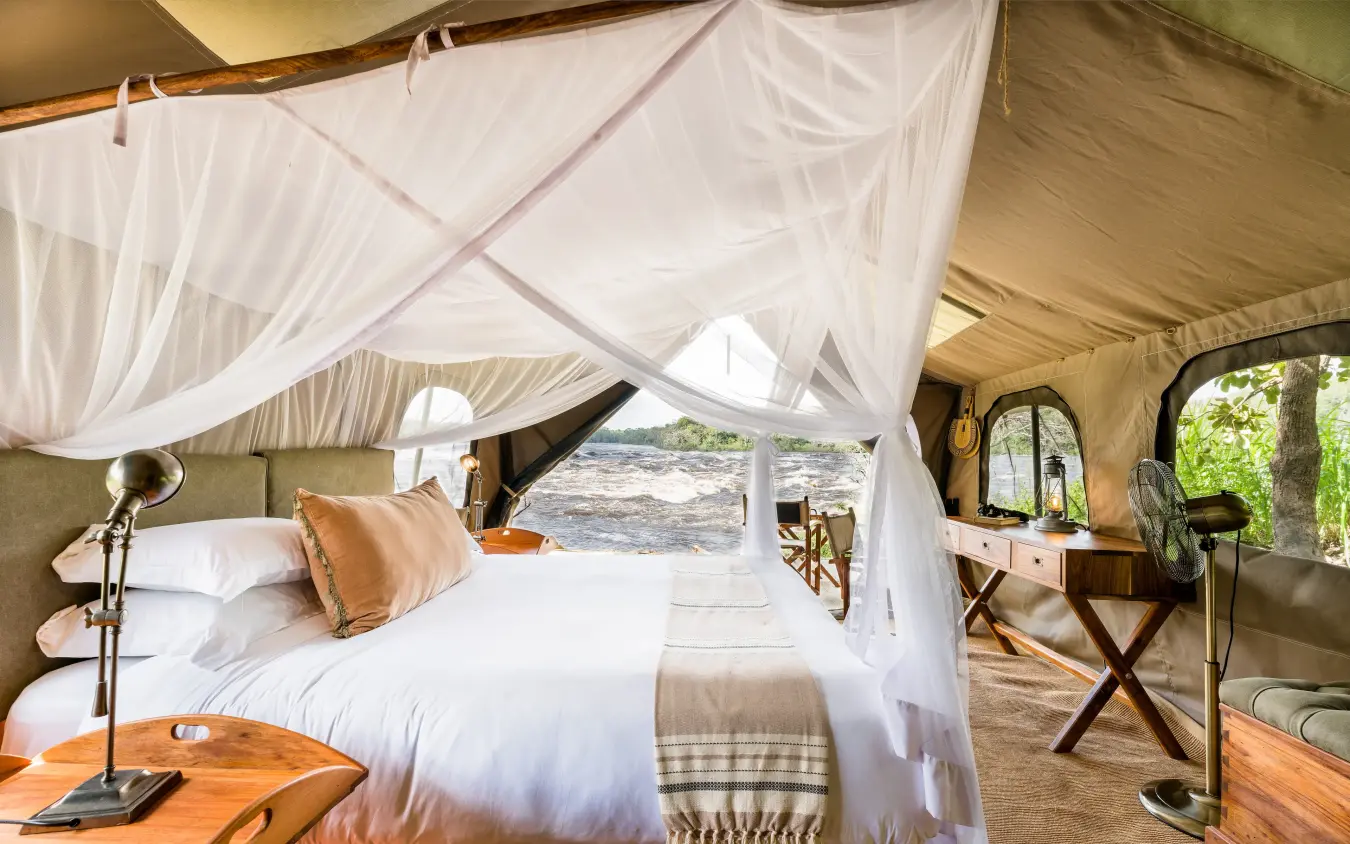
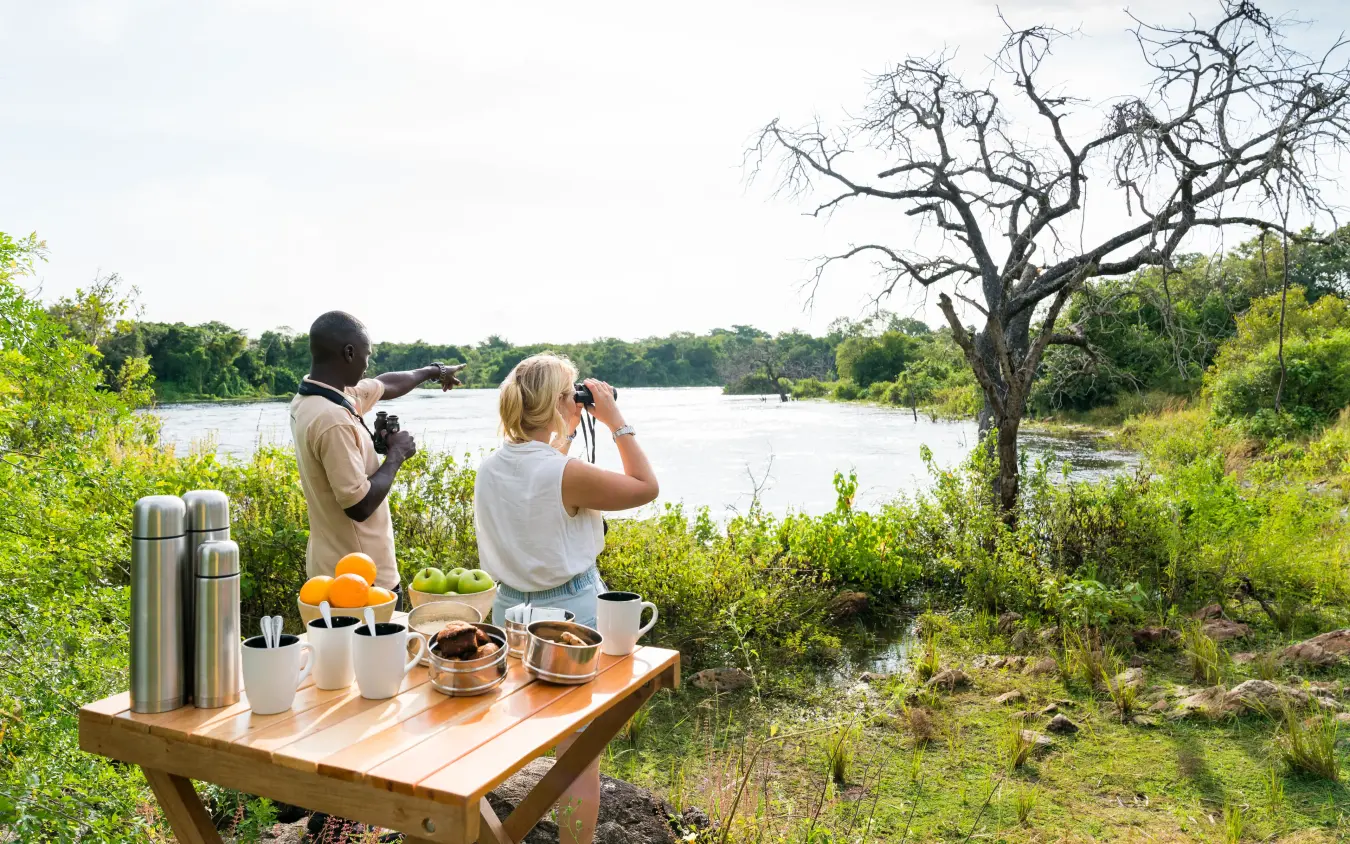
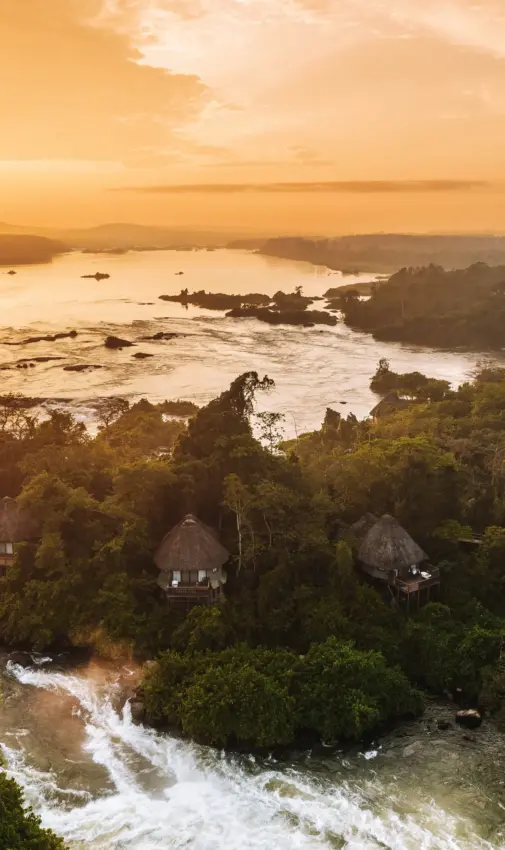
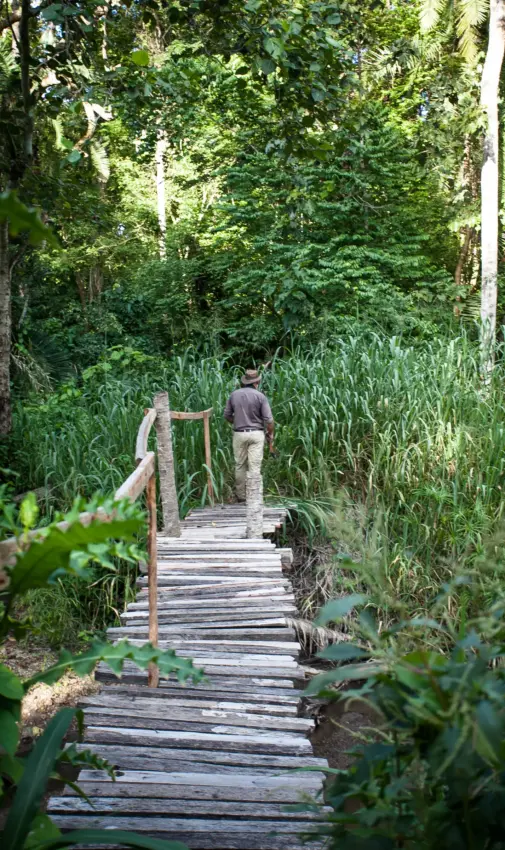
Each of the five tents looks out at the Nile through the fig canopy, with a private veranda and an open-air shower. From the veranda, and sometimes from bed, guests watch hippos surfacing and crocodiles basking along the bank. Elephants and giraffes come down to the water on the far side, and antelope with them. With no light pollution in this part of the park, the night sky is clear enough for stargazing after dinner. The rapids run on beneath it, broken now and then by a lion calling across the savanna, and at first light the same sound is still there.
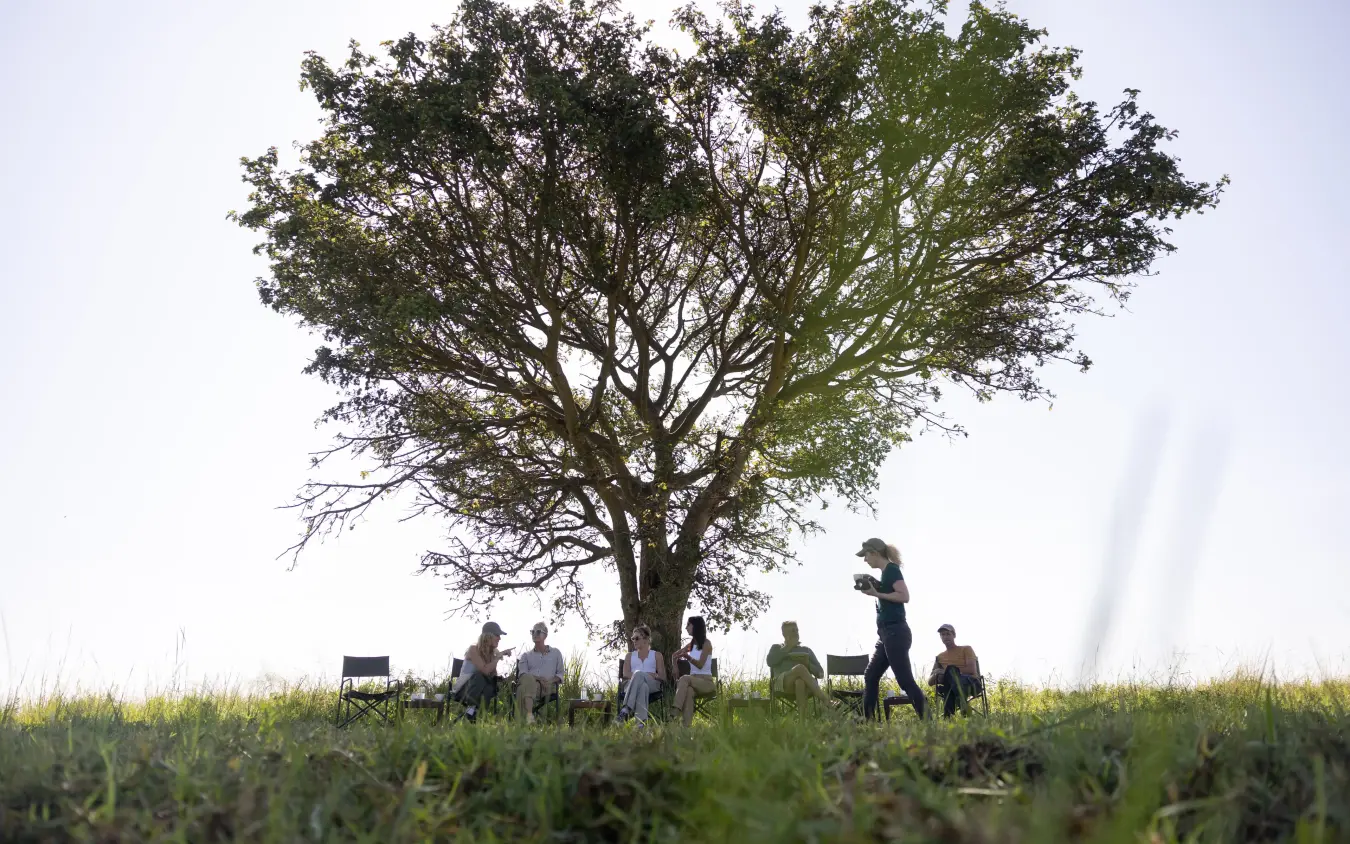
Days are spent working the low-use zone by vehicle. Beyond its lions and hyenas, elephants and buffalo share the savanna with Rothschild’s giraffe, warthog and baboon, and the antelope run from Jackson’s hartebeest to waterbuck and Ugandan kob. After dark the night drives turn up leopards, genets, civets and bushbabies. Guided bush walks add time on foot, under Uganda Wildlife Authority protocols, and the drive to the top of the falls takes around an hour and a half. The route passes plains game, the savanna opening wider as the river narrows towards its great drop.
After dark the night drives turn up leopards, genets, civets and bushbabies.
On the water, boat trips run past hippo pods and basking crocodiles, and birders find bee-eaters and ground hornbills along the bank, with the chance of a shoebill downstream. These are prime Nile perch waters too. The river is fished with a guide, all of it catch-and-release. Further afield, the camp arranges chimpanzee tracking in nearby Budongo Forest, a day among the trees that balances the open country of the park.
Dinner draws on fresh, local ingredients and African-inspired cooking, served in the breezy mess tent or out under the stars beside the river. The staff are drawn largely from nearby communities, and their welcome carries through the whole stay. Those communities share in the camp beyond employment, through in-house training, and through scholarships and support for schools. Inside the park, the Wright family’s work goes into ranger access and equipment, and into removing invasive species. Guests fly in to Pakuba Airstrip and continue to camp by road.