Kalokudo Gate opens straight onto the Narus Valley, the park’s main game area and the reason to base here. Game drives run morning and afternoon in search of lions, plains game and the great buffalo herds. On foot, ranger-accompanied walks cross the Lomej Mountains and the valley floor, a slower way to read the tracks, the birds and the smaller creatures a vehicle passes over. The park records some 475 bird species, so a walk is rarely quiet, and the armed ranger who leads it is as much a naturalist as a guard.
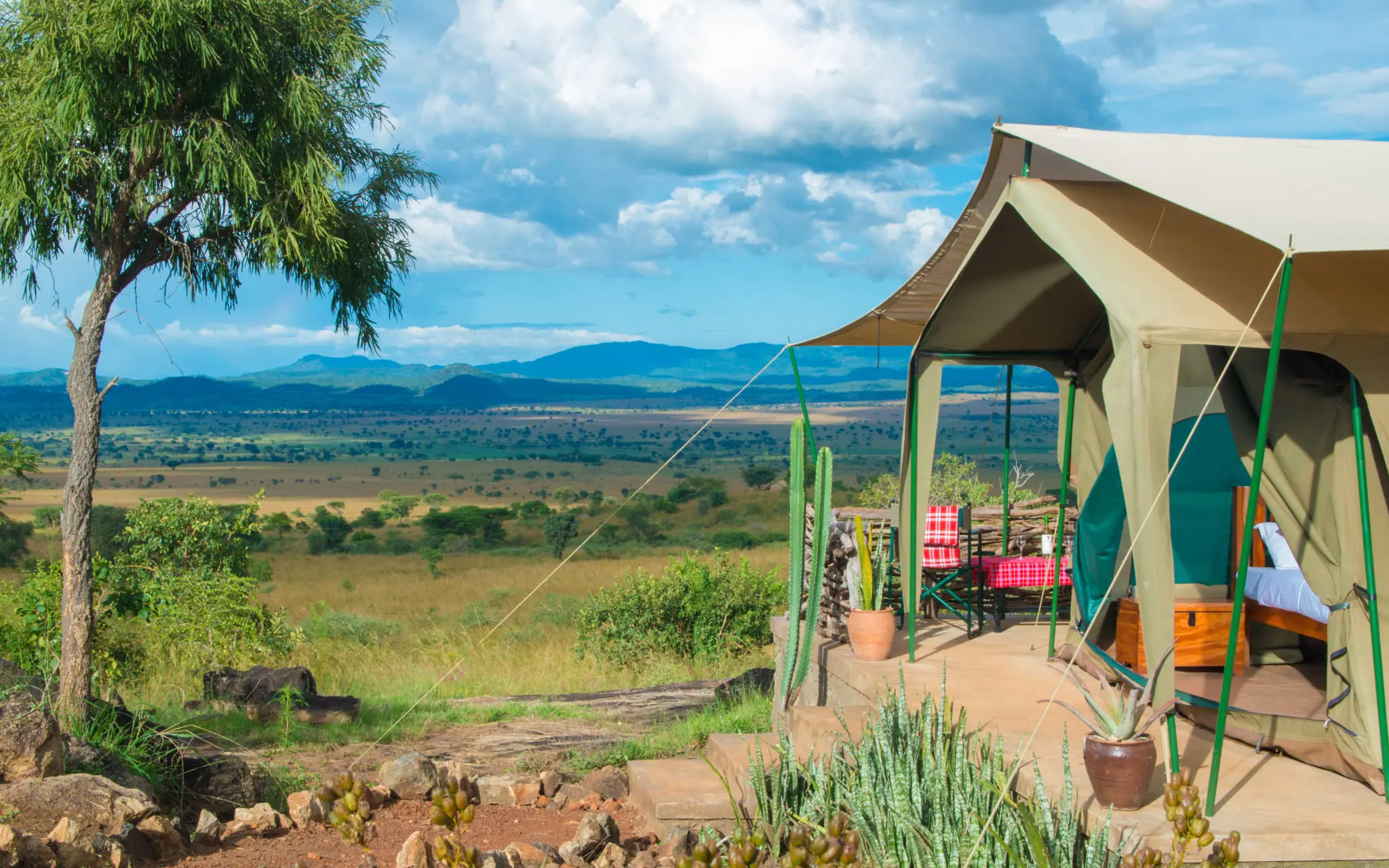
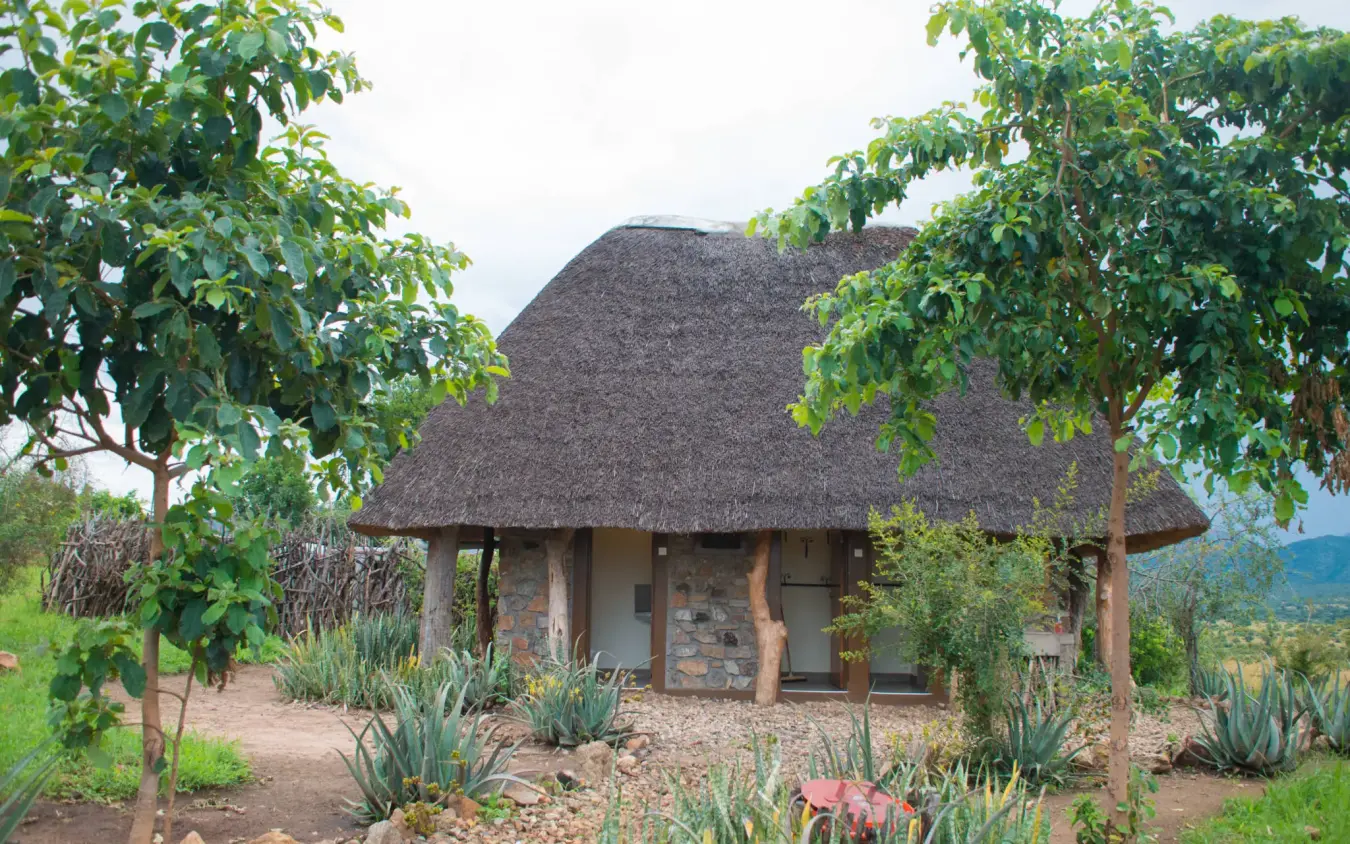
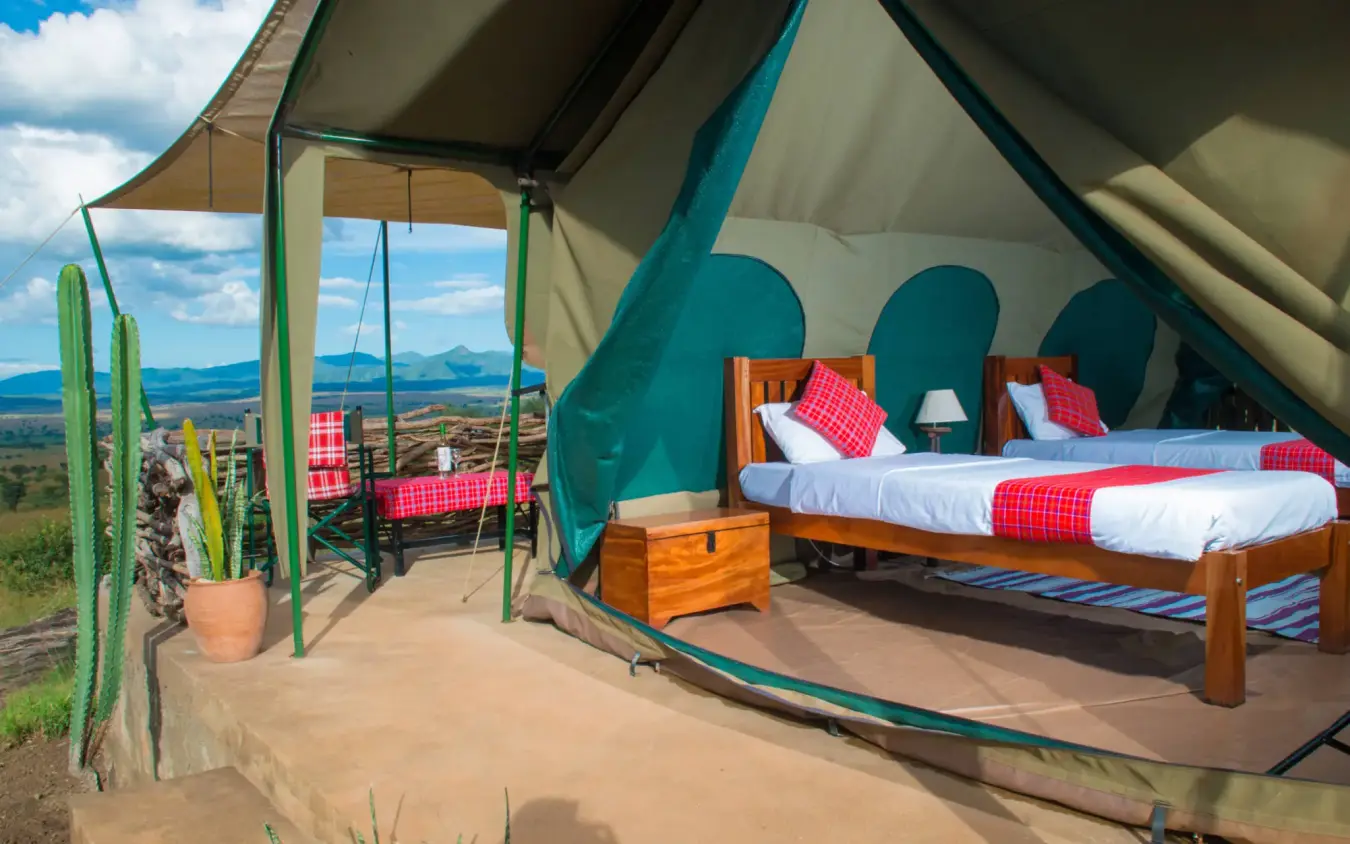
The camp offers two kinds of tent. Twelve self-contained Meru-style safari tents stand on raised wooden decks, each with a private veranda and an en-suite bathroom in an adjoining stone-and-thatch structure, a flush toilet and hot shower within. Nine simpler tents share a communal ablution block with hot showers and flushing toilets. The interiors are modest but considered, crisp white linen and wooden furniture, and bright blankets that pick up the earth tones of the landscape outside.
Nine simpler tents share a communal ablution block with hot showers and flushing toilets
Whole days pass here without another vehicle in sight, a measure of how few visitors reach this corner of Uganda. The camp’s design borrows from the manyatta homesteads of the Karamojong, and the culture is close at hand. Visits reach Karamojong villages, and the Ik people who live on the slopes of Mount Morungole, so that the country and its people arrive together.
This suits travellers who want wildness and isolation and will trade polish for it. The tents are comfortable and the food is good, but the finishes are simple and the amenities few. This is not the choice for those looking for high luxury. It is the choice for those who want one of Africa’s genuinely remote parks, reached at the end of a long road and shared with almost nobody.