






namibia & botswana
the desert coast to the linyanti
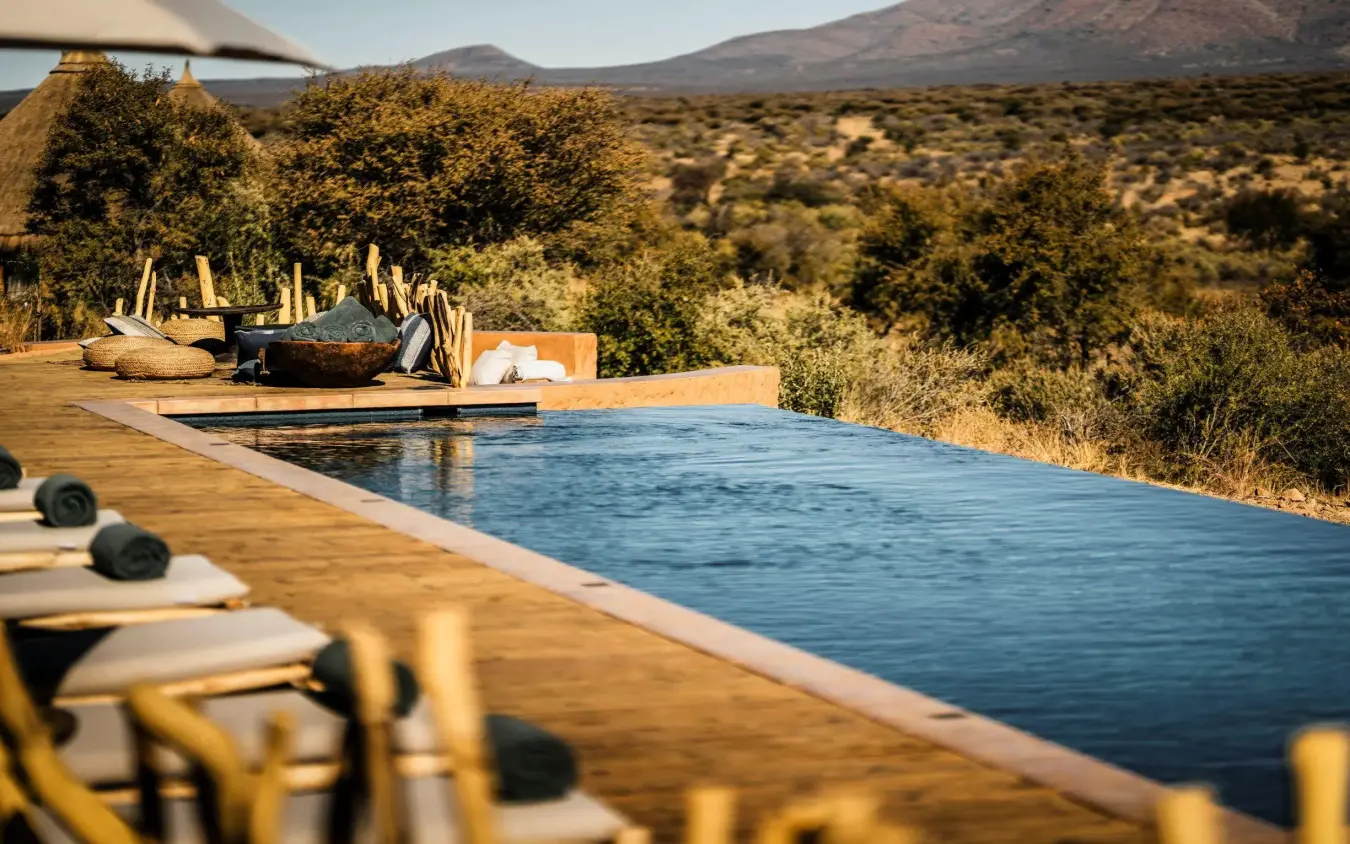
Ten nights from northwest Namibia's deserts and the Kunene to Botswana's Linyanti and its elephant corridors.
- Private Safari
- From $20,915 pp
- 2 guests
- 10 nights

This eleven-night route crosses Namibia from south to north. You begin in the capital, Windhoek, then move to the Sossusvlei dunes of the southern Namib, the fog-bound Atlantic town of Swakopmund, the red-rock silence of Damaraland, the waterholes of Etosha and finally the private Zannier Reserve near the airport.
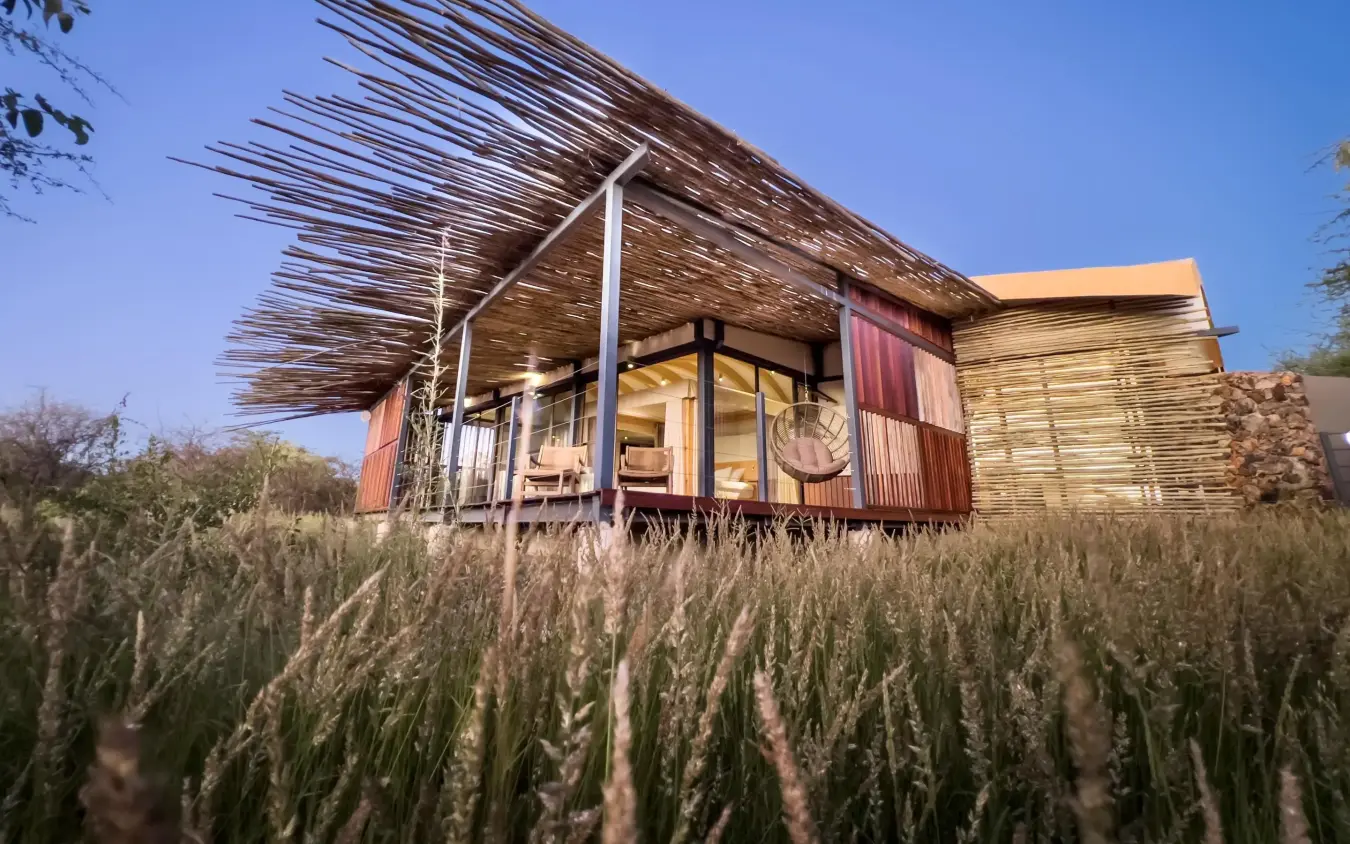
Travel runs largely on light aircraft, the network Namibia’s safaris depend on. The days hold dawn dune climbs, coastal tours, tracking on foot and by vehicle, and full days inside Etosha. The lodges range from an owner-led desert camp and a design-led coastal hotel to granite-set suites and huts on a rhino reserve, with a quiet guesthouse for the first night.
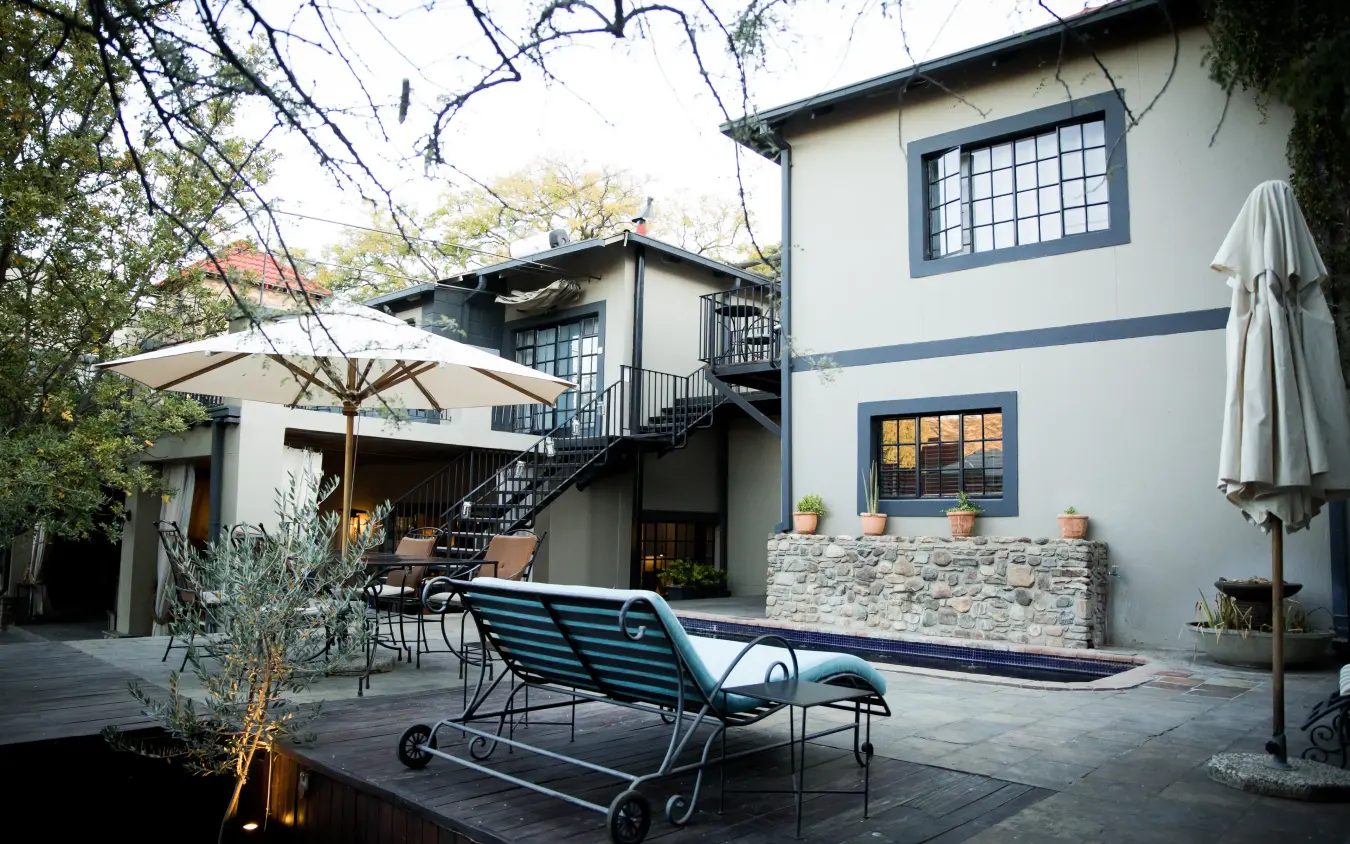
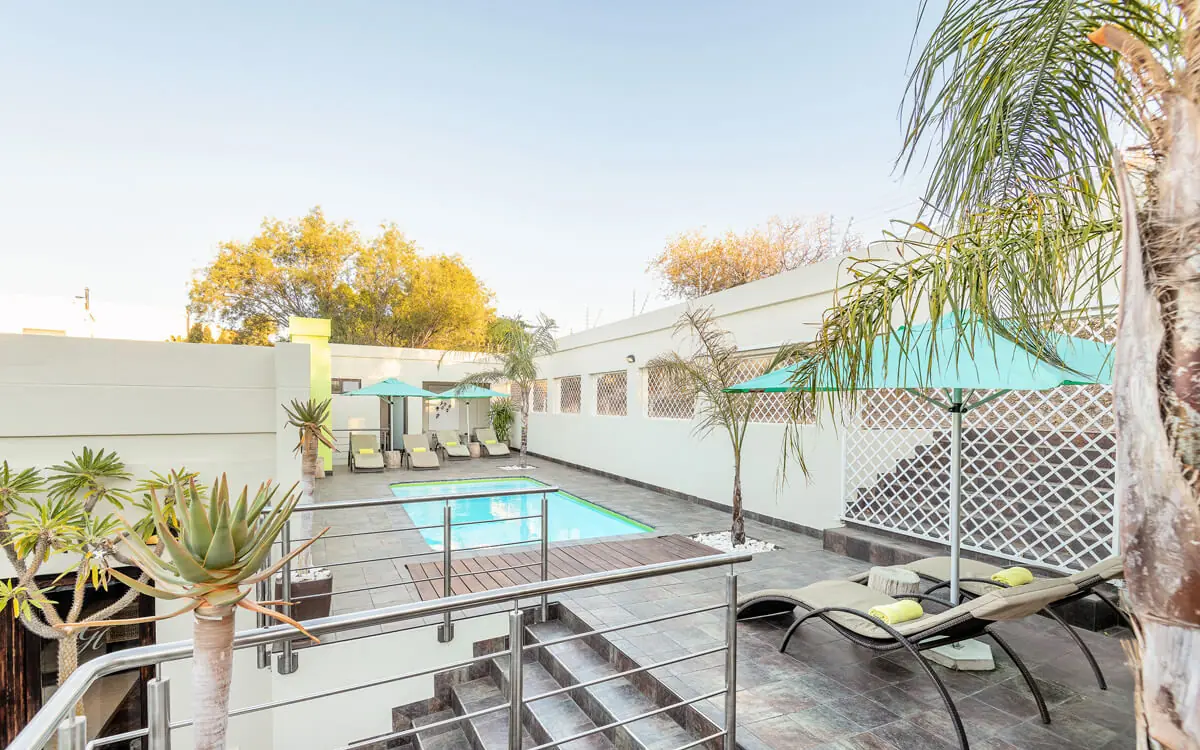
Namibia's capital sits on the Khomas Highland plateau at roughly 1,700 metres, and for most safari guests it plays one clear role: a settled night between an international arrival and the light-aircraft flight onward. A walkable centre holds the Christuskirche and the Independence Memorial Museum, which reward an hour or two rather than a full day. Nine rooms gather around a garden courtyard at Galton House, a quiet, solar-powered guesthouse in the Eros suburb, built for the first and last night of a Namibia trip.
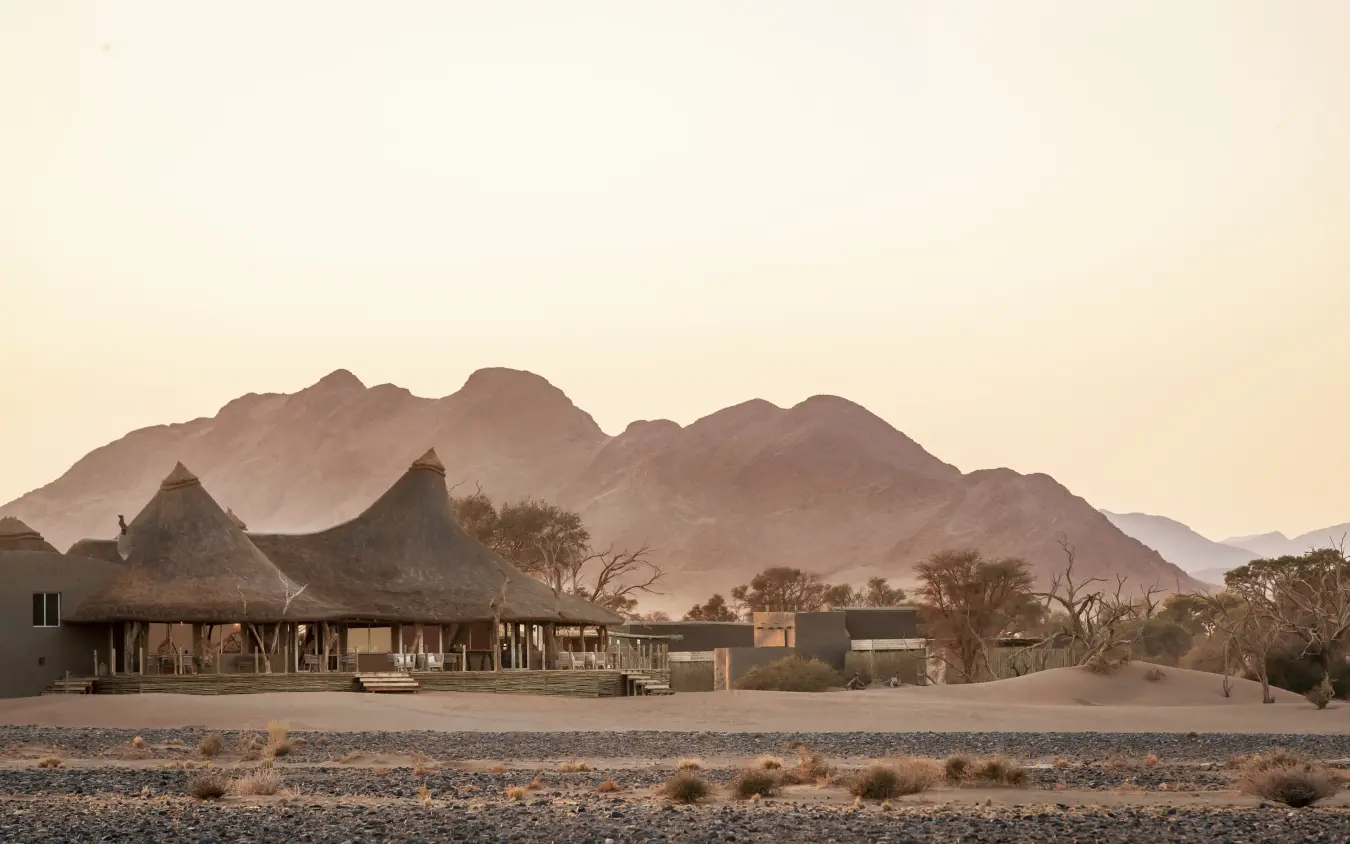
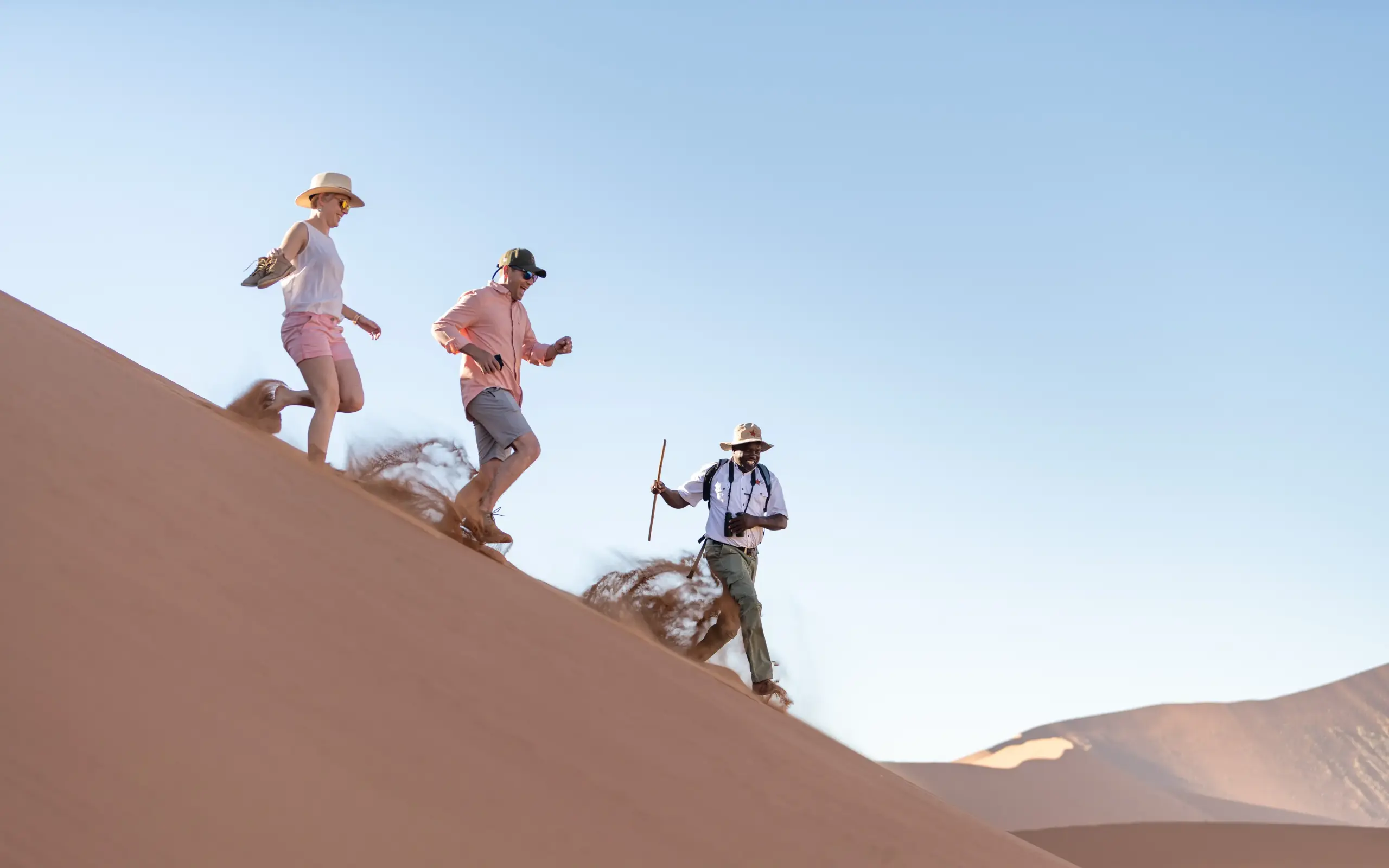
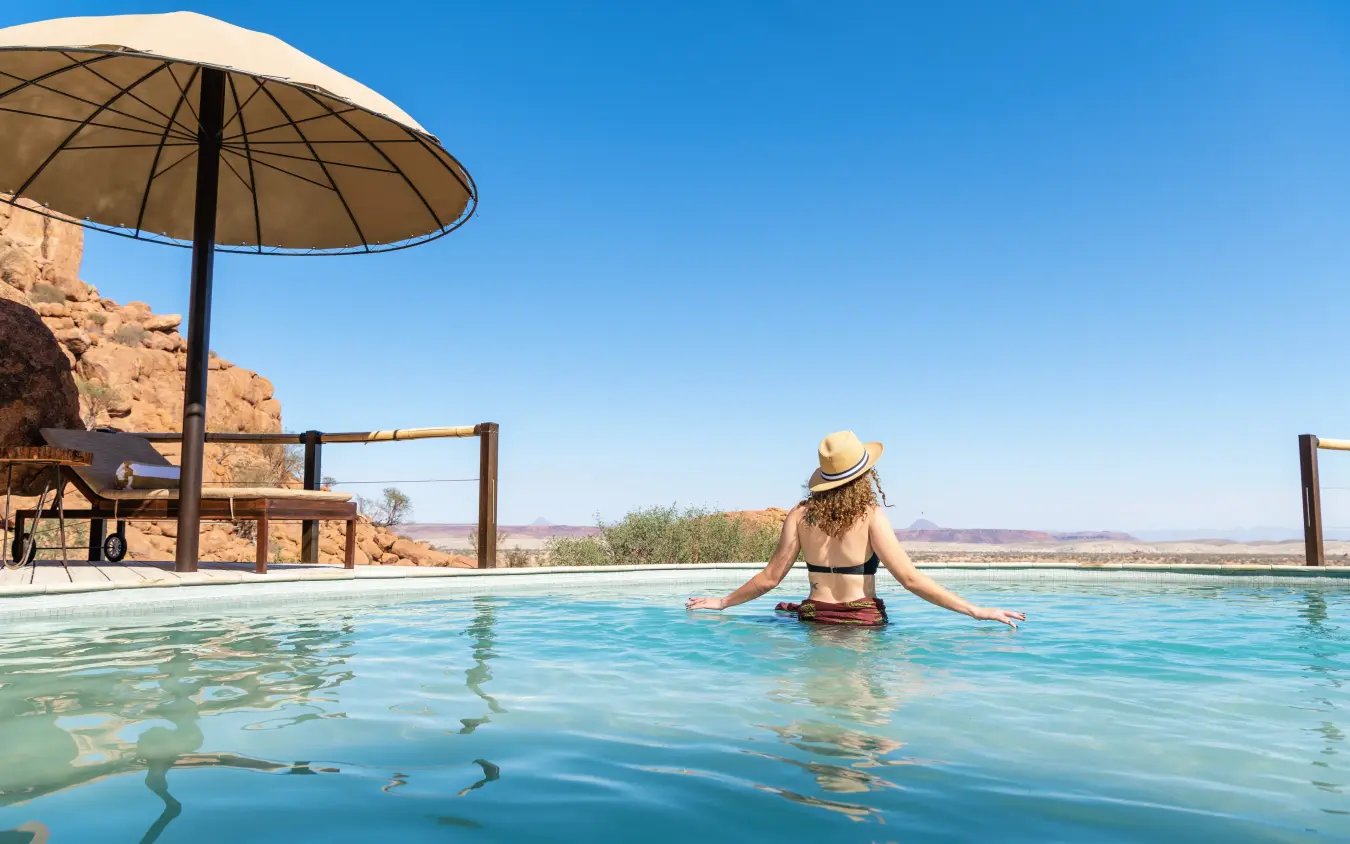
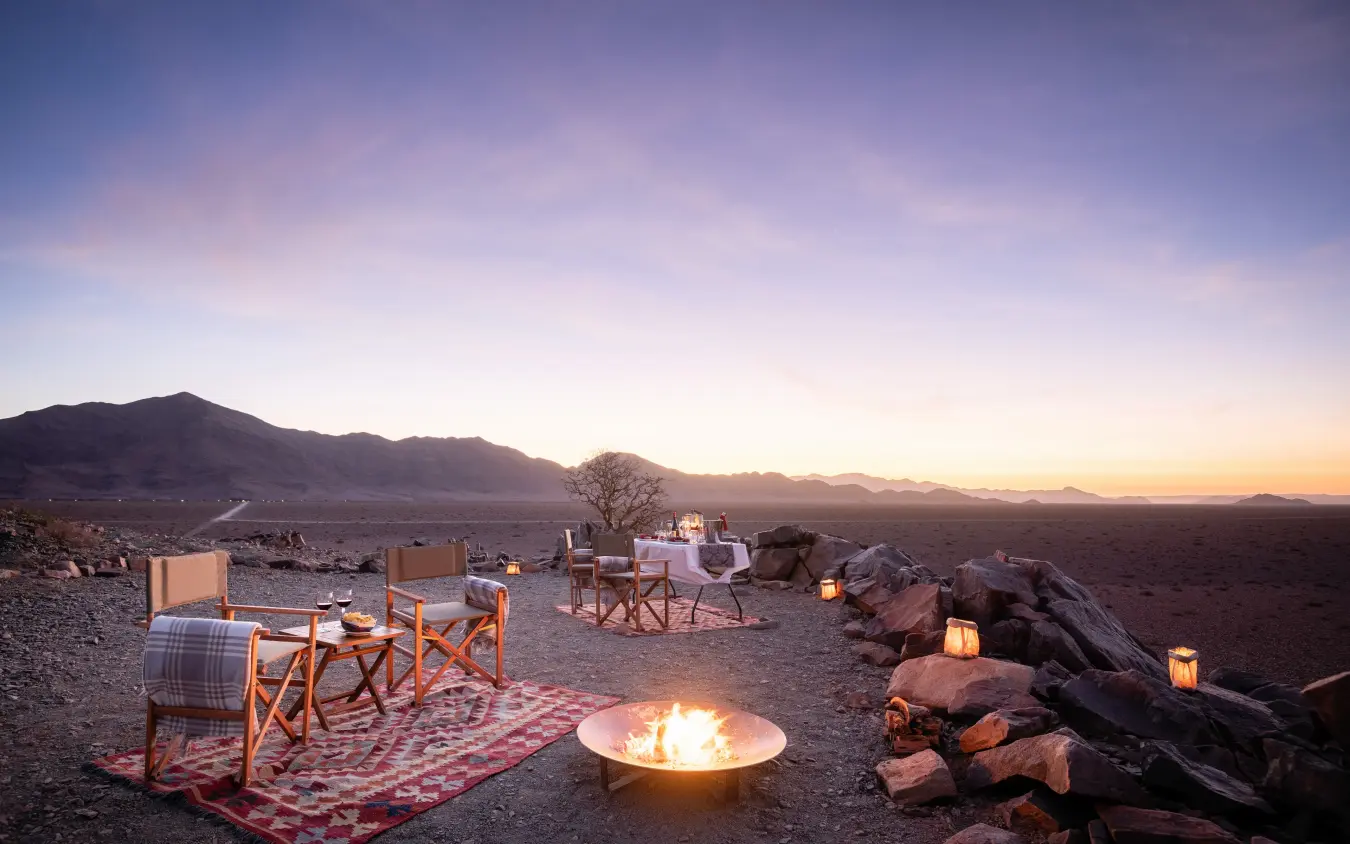
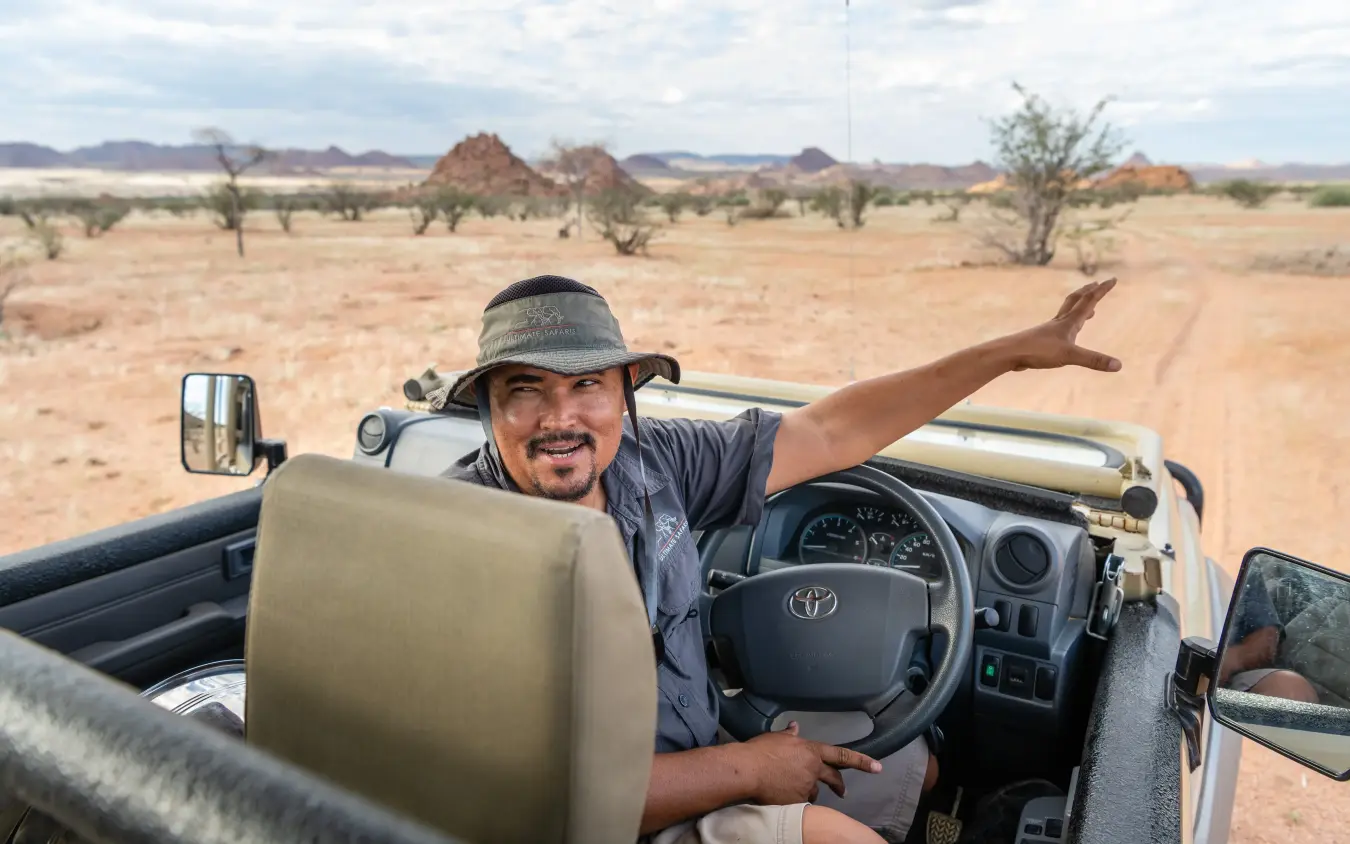
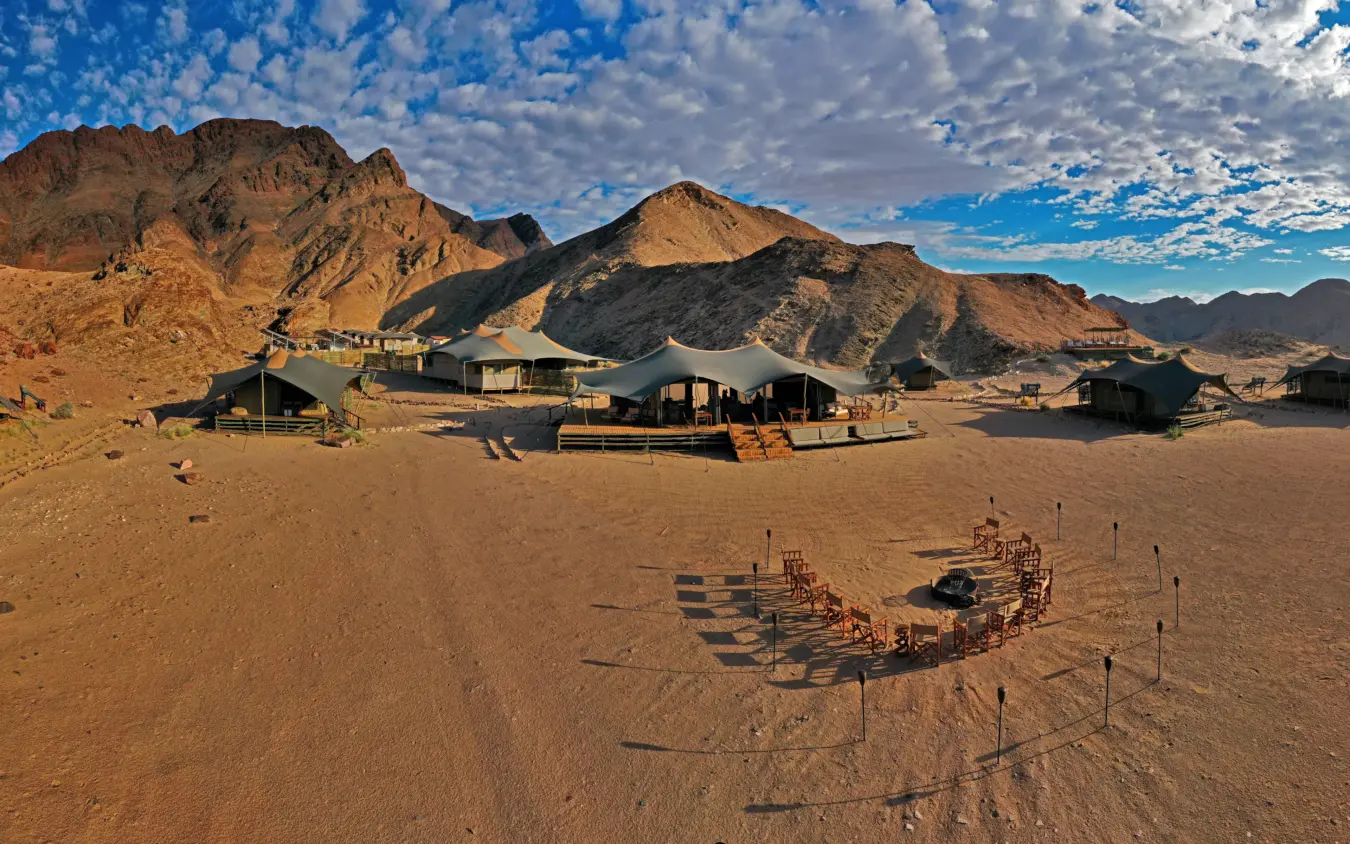
Arriving from Windhoek, you reach the dune landscape of the southern Namib, held within Namib-Naukluft National Park. Dawn decides the day here: low light rakes the orange-red dunes while the sand is still cool, and at the foot of Big Daddy the camel thorn trees of Deadvlei have stood dead for some 900 years against white clay. A full-day excursion follows the quieter routes to the dunes, Deadvlei and Sesriem Canyon, with lunch set up among the sand. Thomas and Henreza Becker run Hoodia Desert Lodge themselves, its canvas-walled chalets spaced along the Tsauchab riverbed facing the Naukluft mountains, and they lead the Sossusvlei day in person.
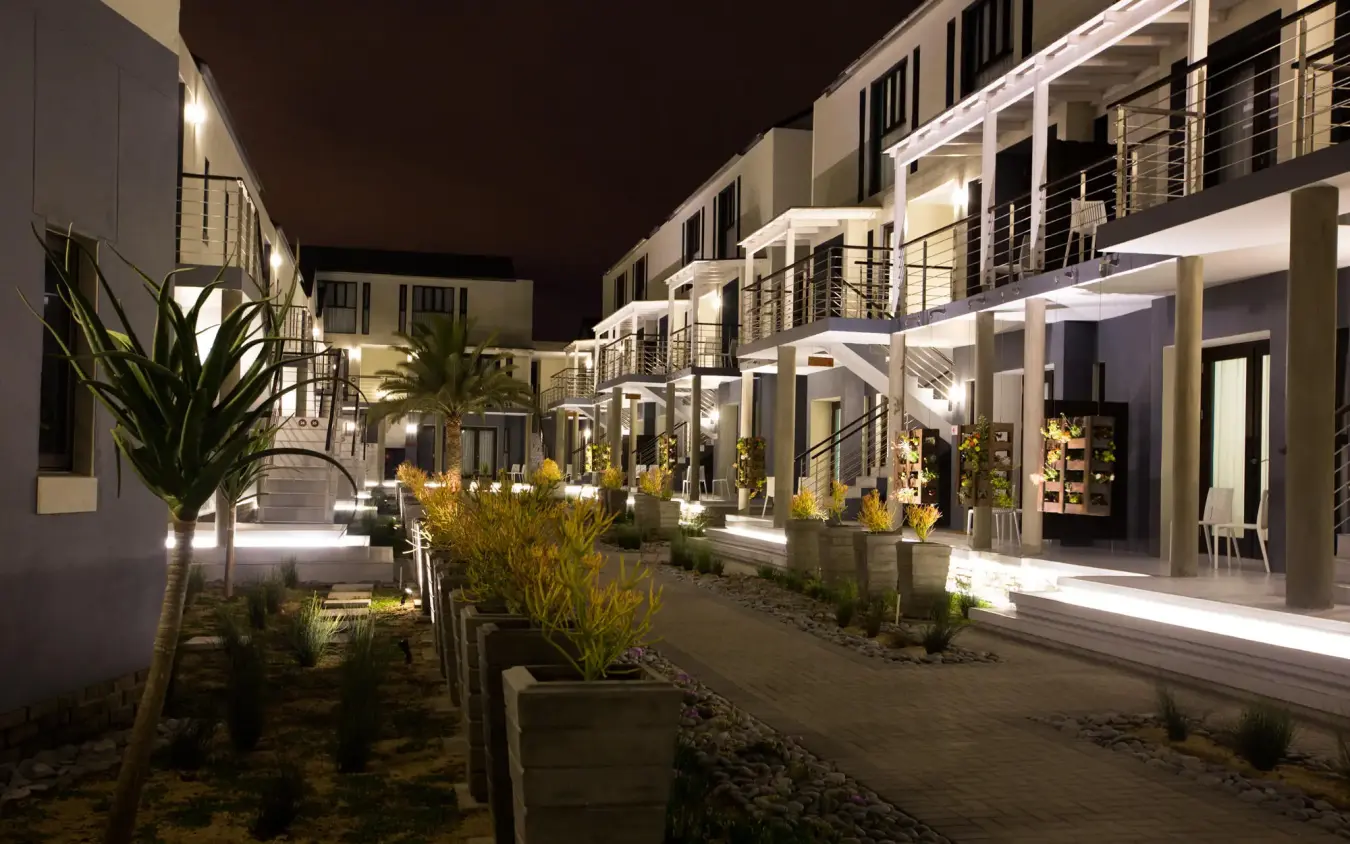
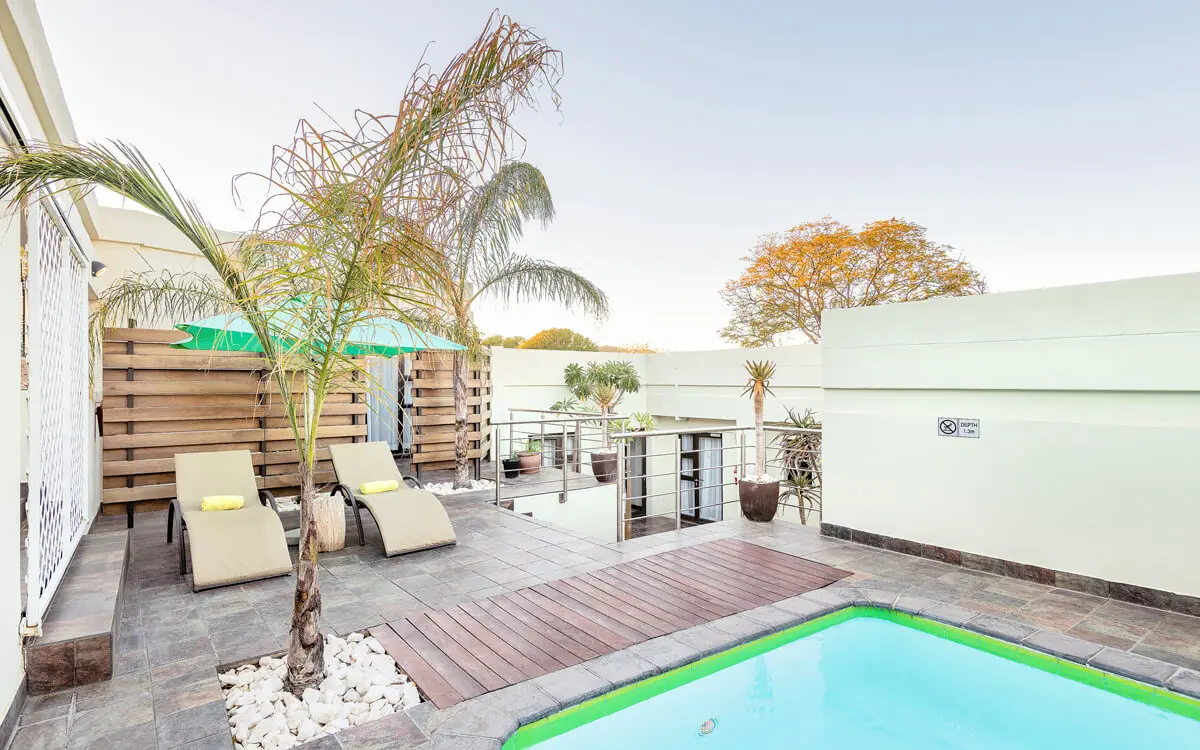
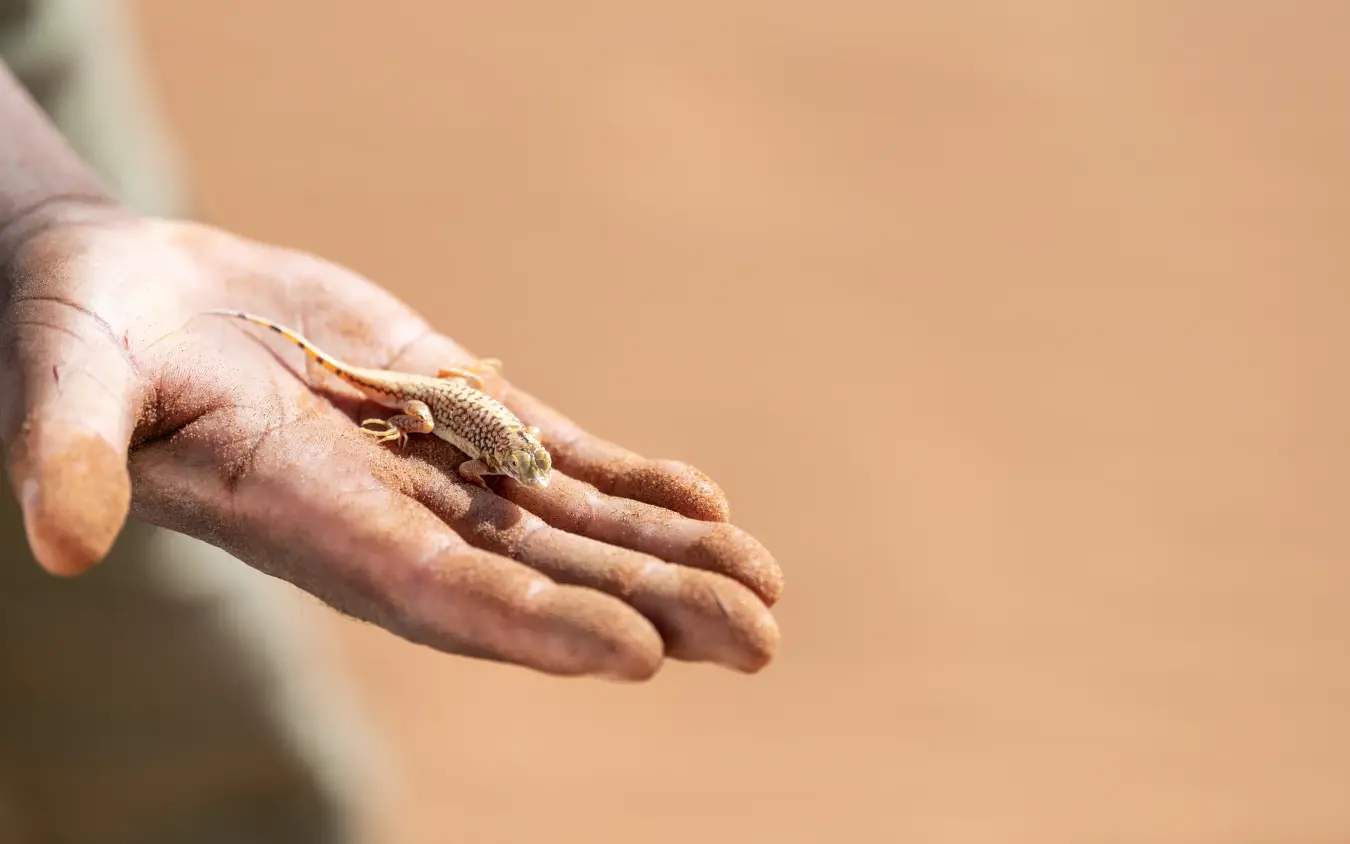
From the desert you move to the coast, where Swakopmund's palm-lined streets and Wilhelmine facades meet the cold Atlantic, and sea fog pulled in by the Benguela Current usually lifts by midday. The days run to kayaking beside the Cape fur seal colony at Pelican Point, Living Desert tours after chameleons and lizards, and sandboarding on the dunes at the edge of town. Two storeys of balconies wrap a green courtyard garden at The Delight Swakopmund, ten minutes' walk from the Mole; there is no dinner service by design, so you eat out in the town's seafood restaurants, tables booked from the lobby.
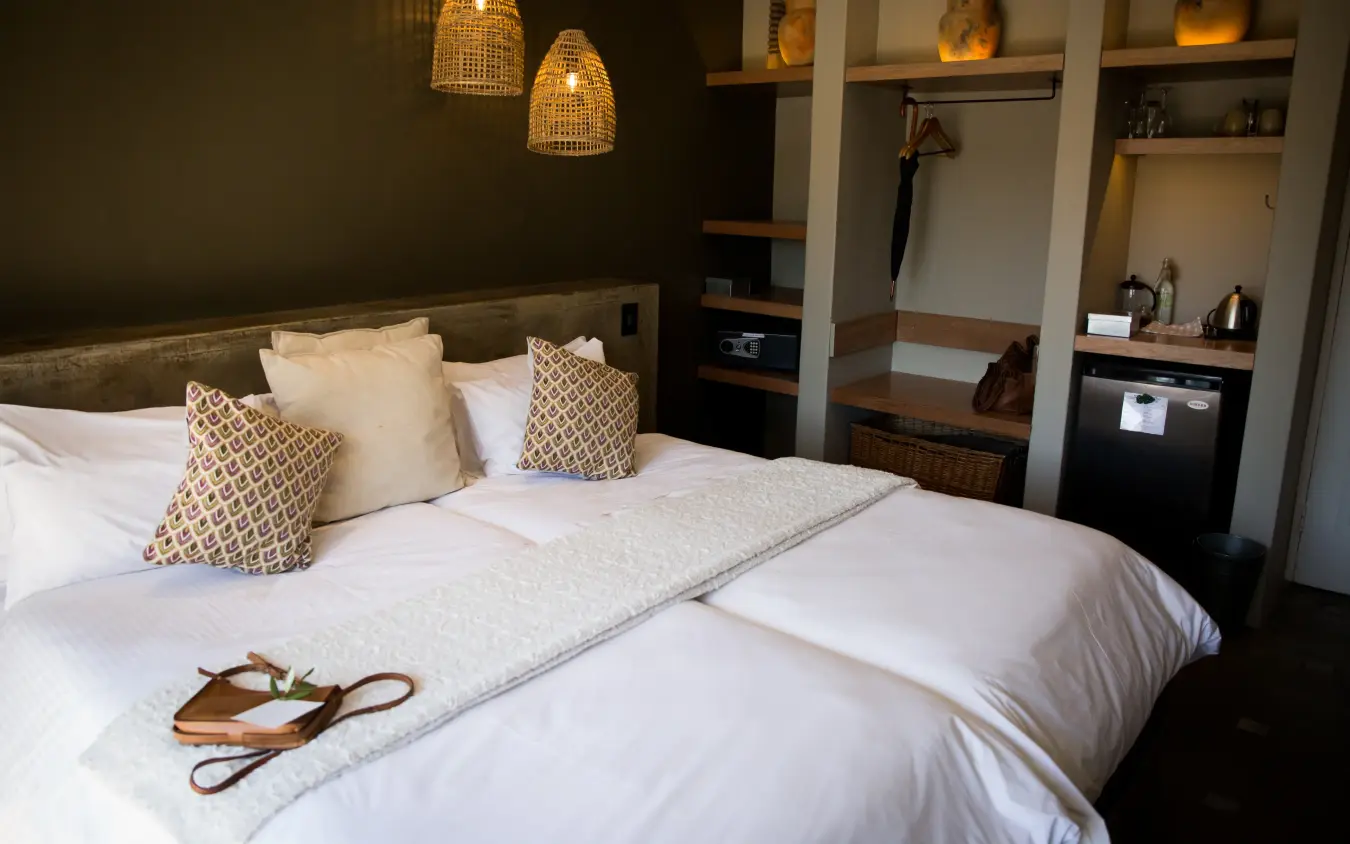
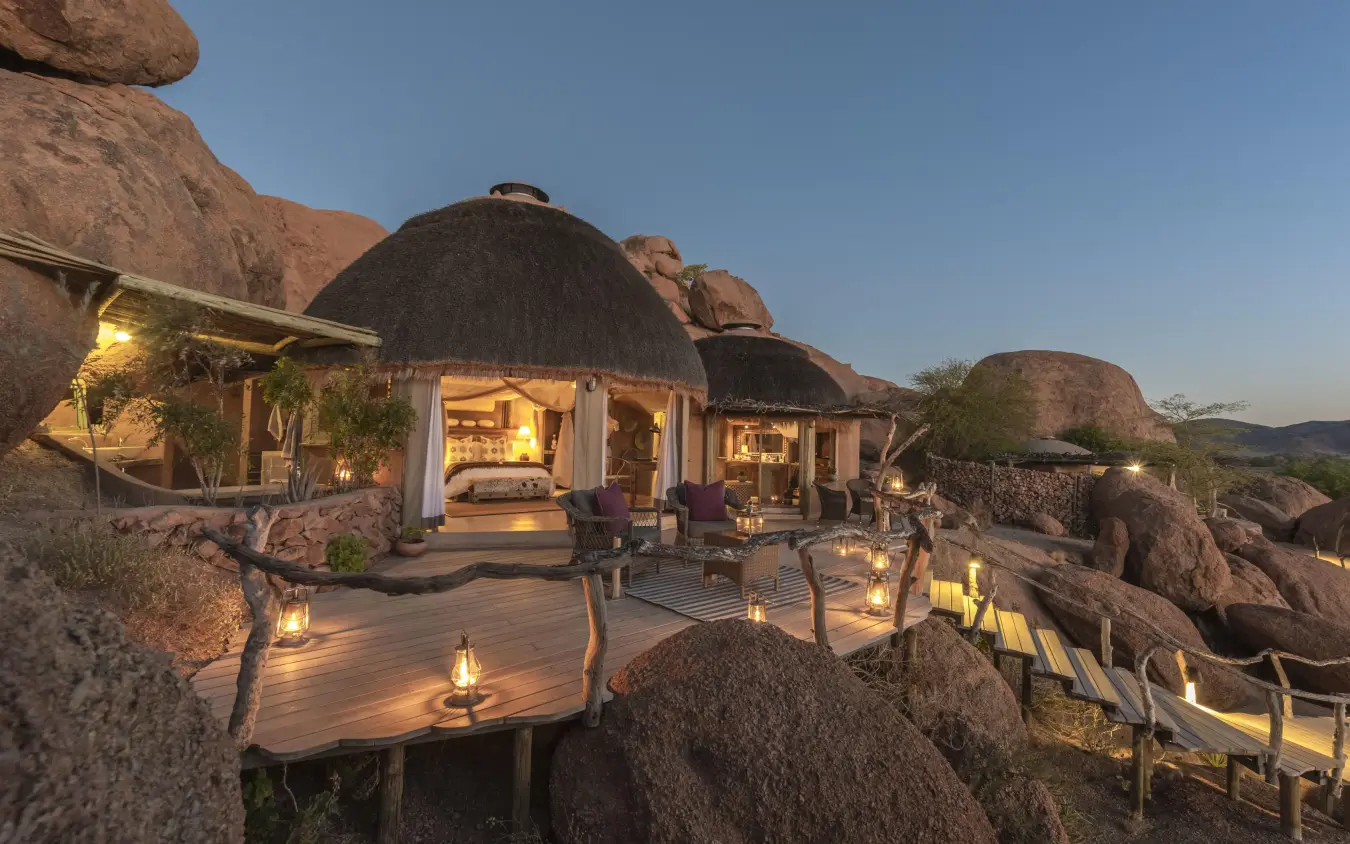
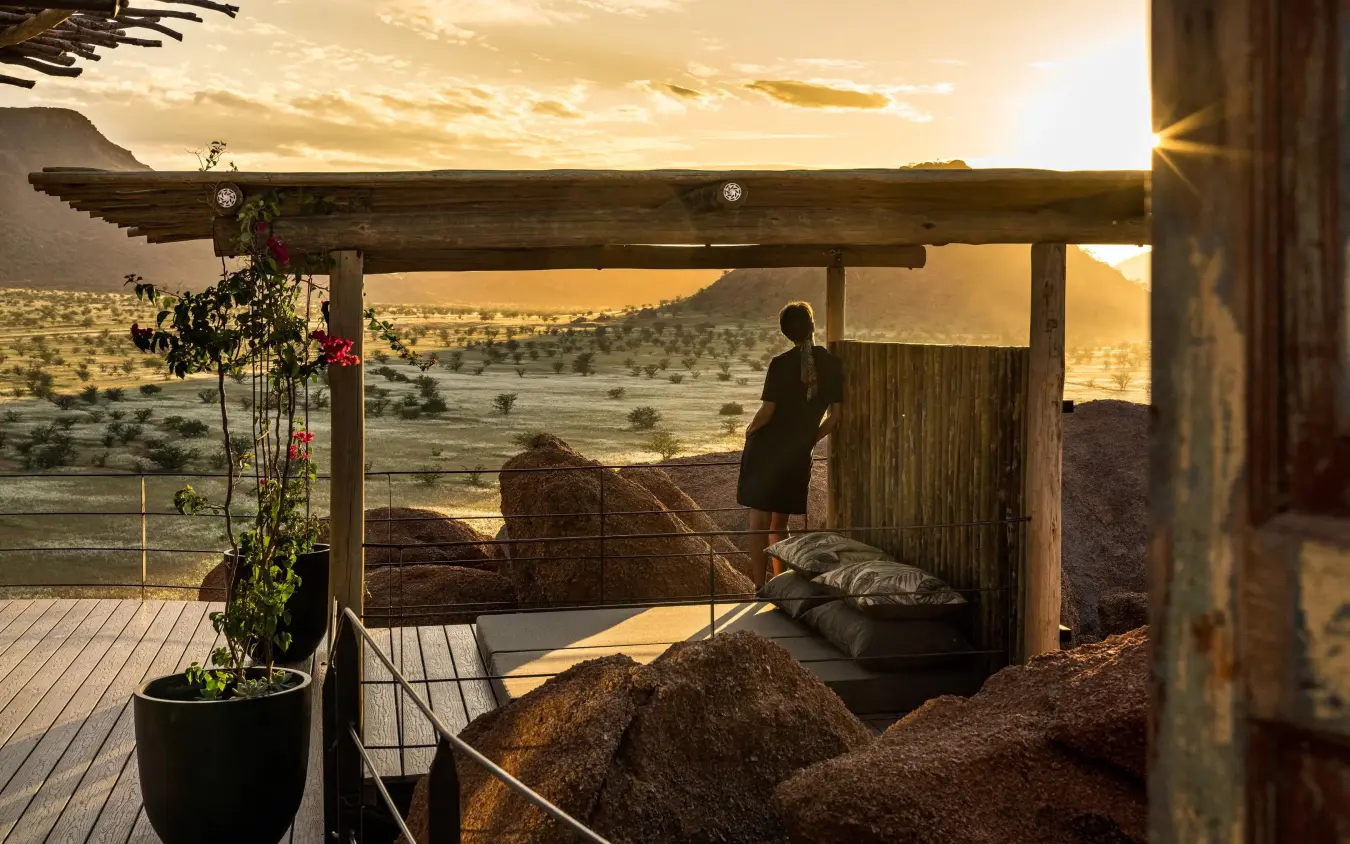
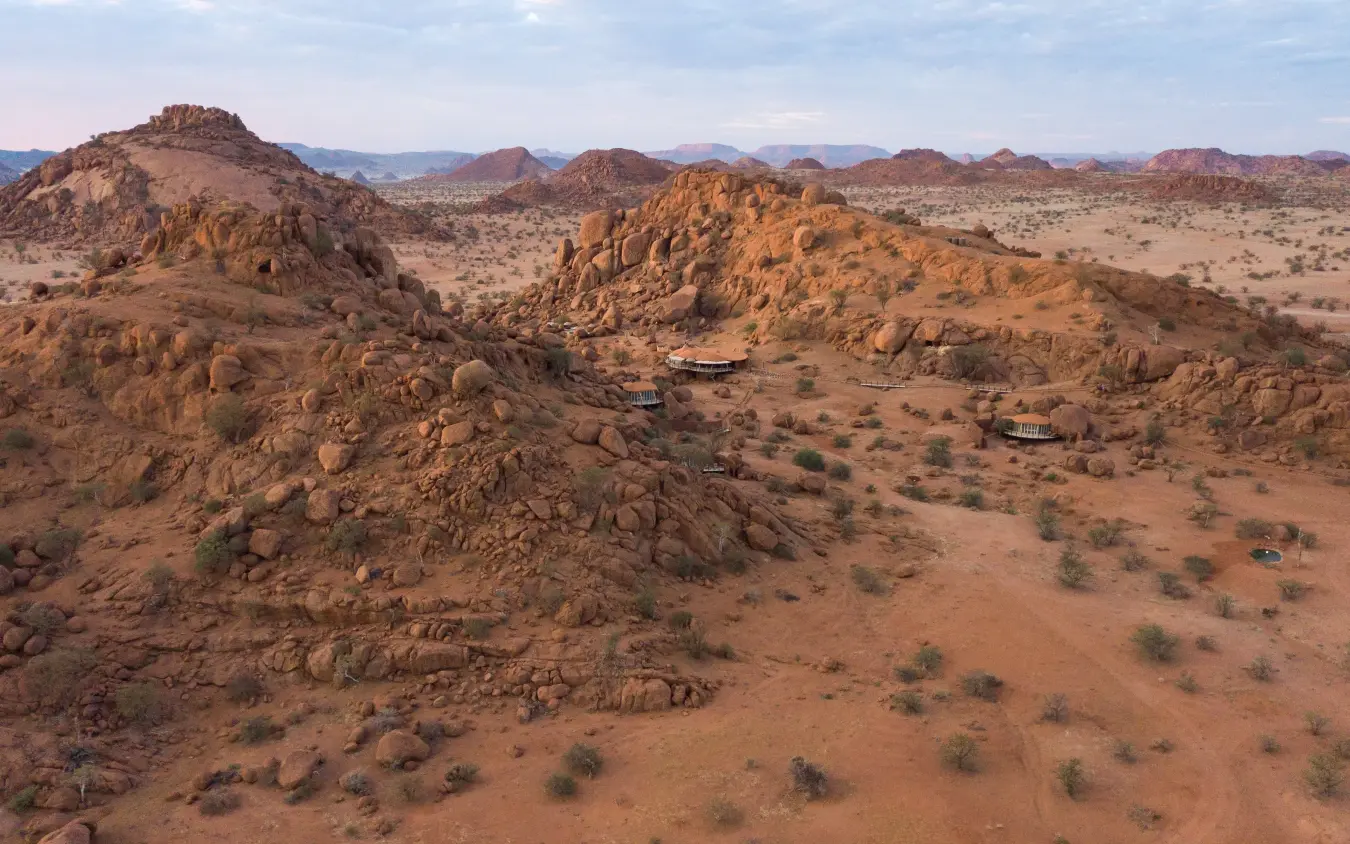
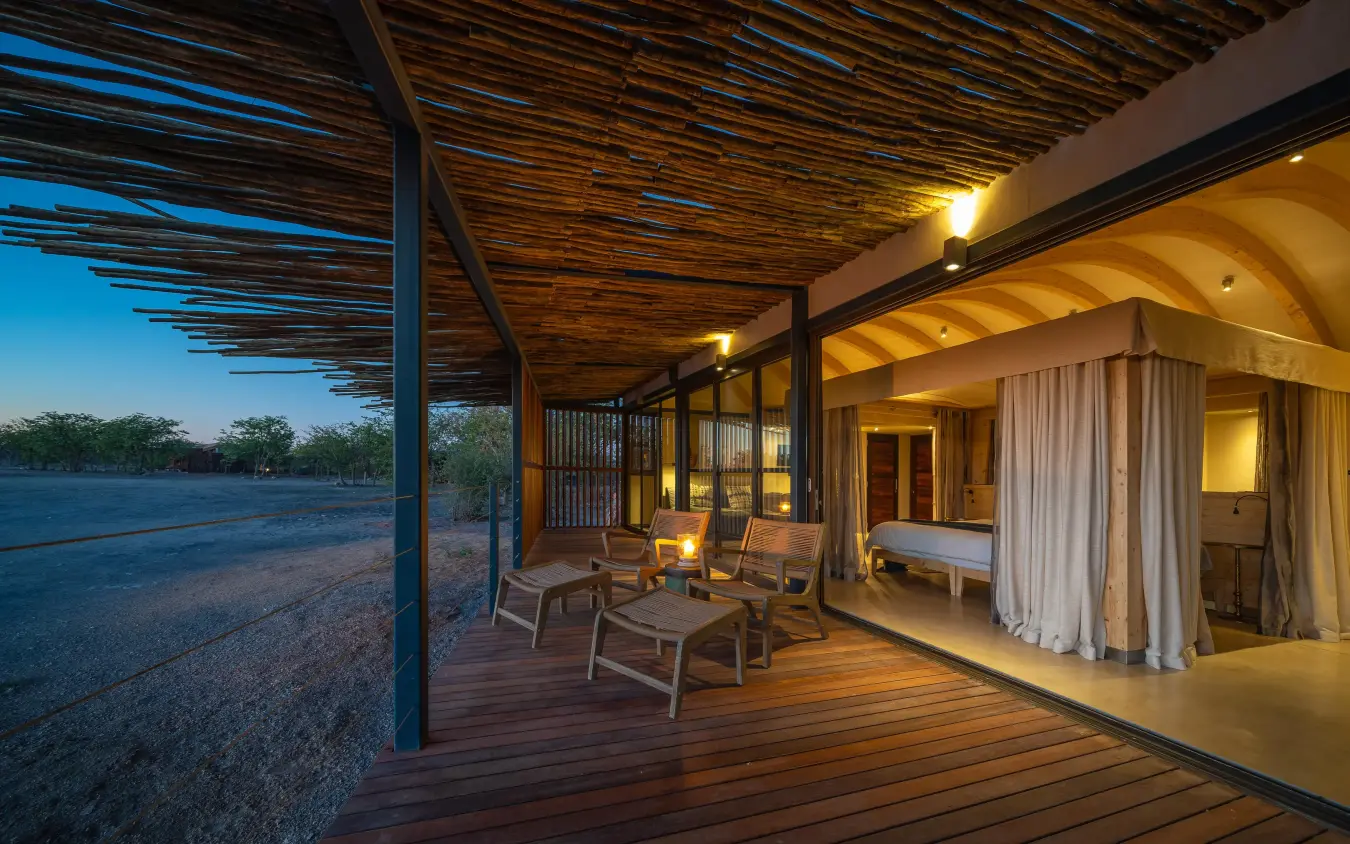
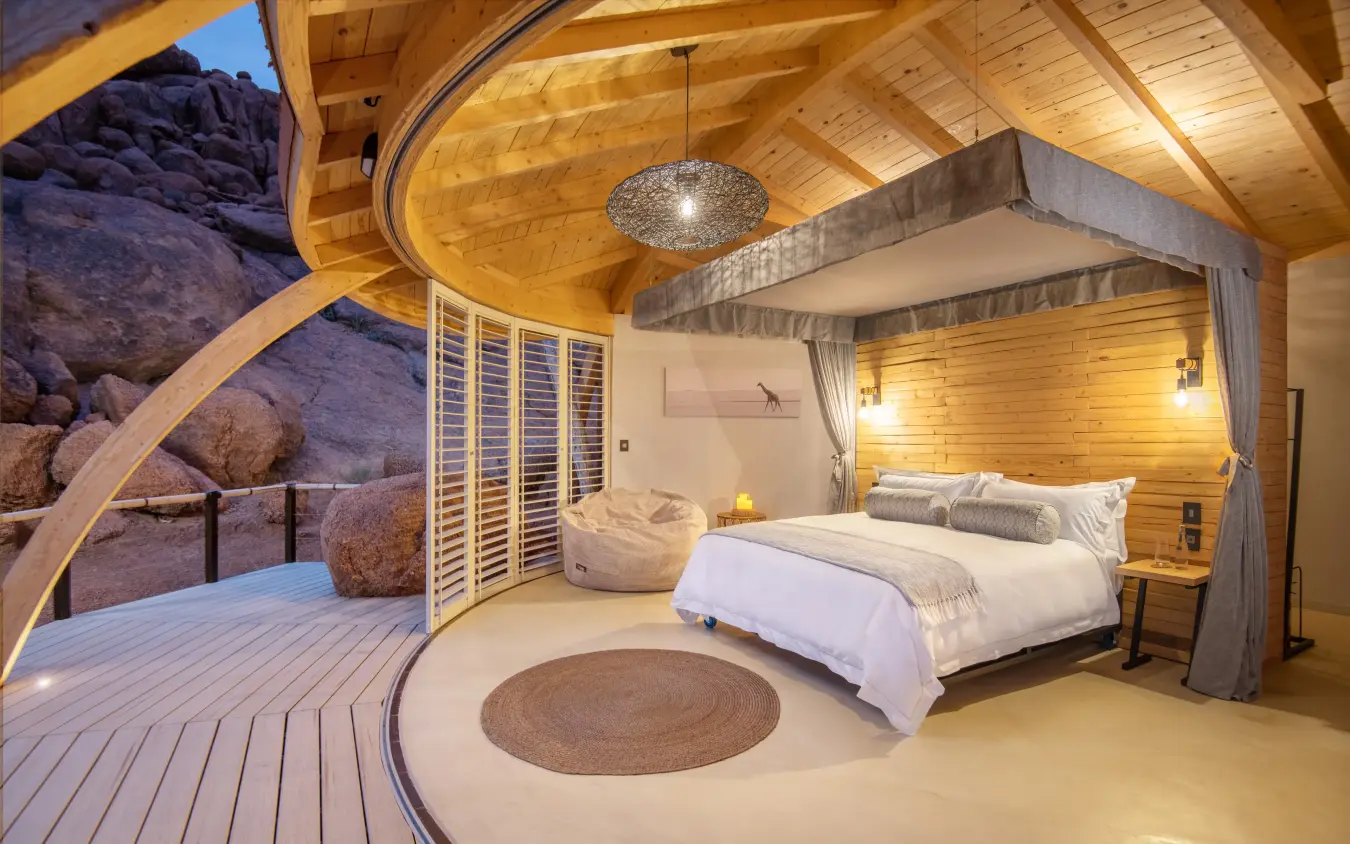
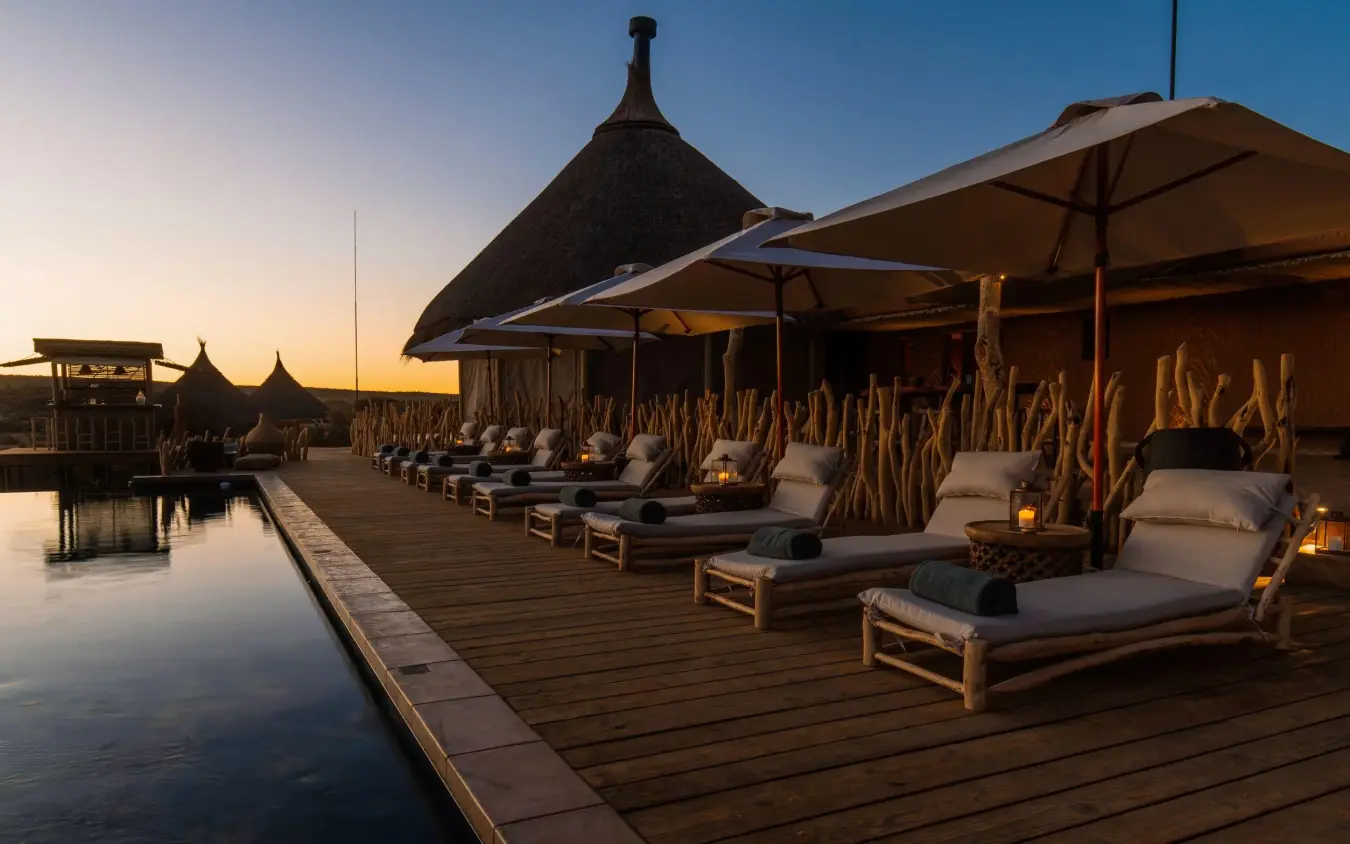
Inland from the coast lies the red-rock country of southern Damaraland, all granite hills, gravel plains and dry riverbeds. On this private concession in the Doro !Nawas Conservancy, guides track desert-adapted elephants by vehicle and can leave the road entirely to follow the animals, while solar-powered e-bikes and guided walks stretch the range to rock formations and old engravings; Twyfelfontein, a UNESCO rock-art site, lies about twenty minutes away. Six suites sit high on a ridge among granite boulders at Onduli Ridge, with Brandberg closing the southern horizon and the king bed rolling out onto a private deck.
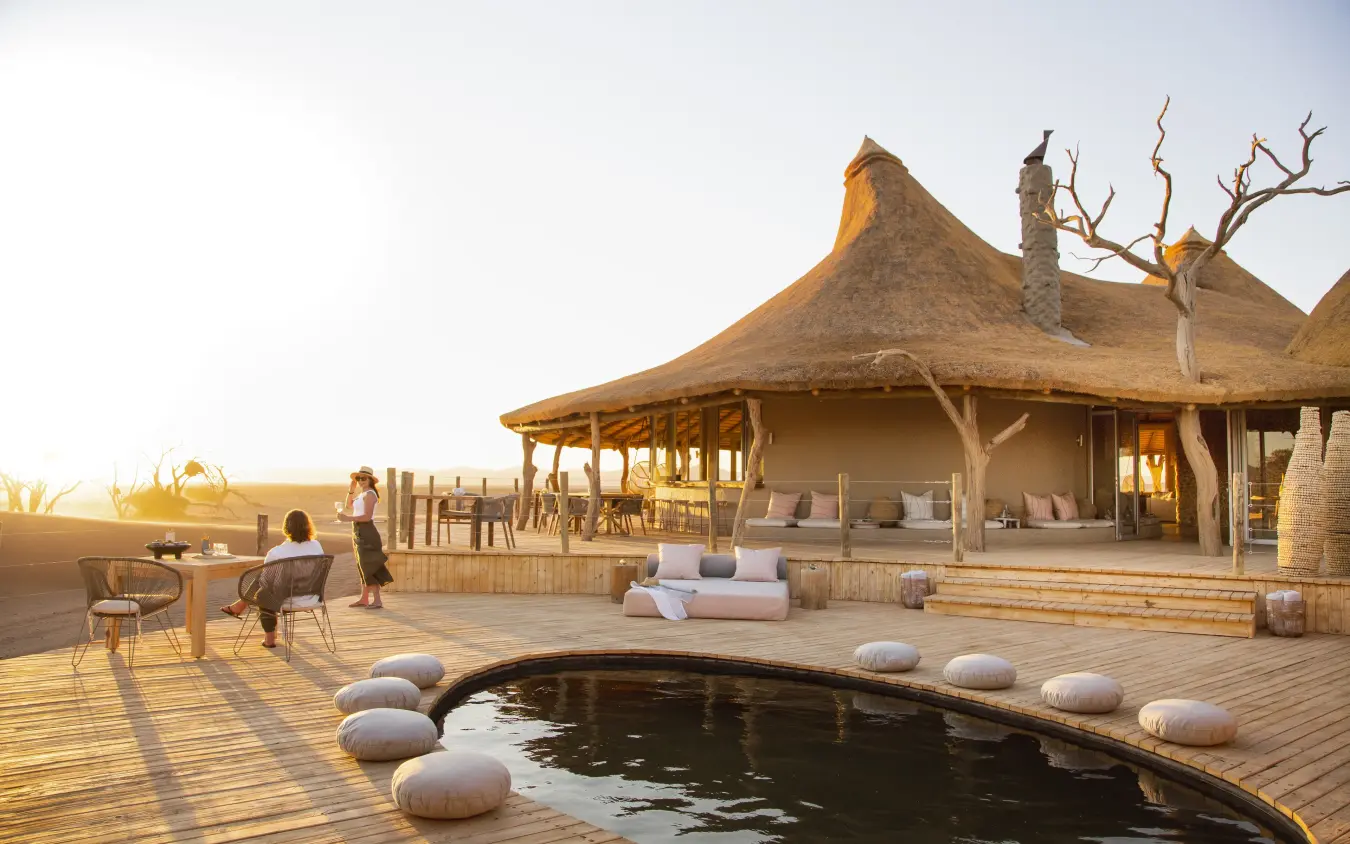
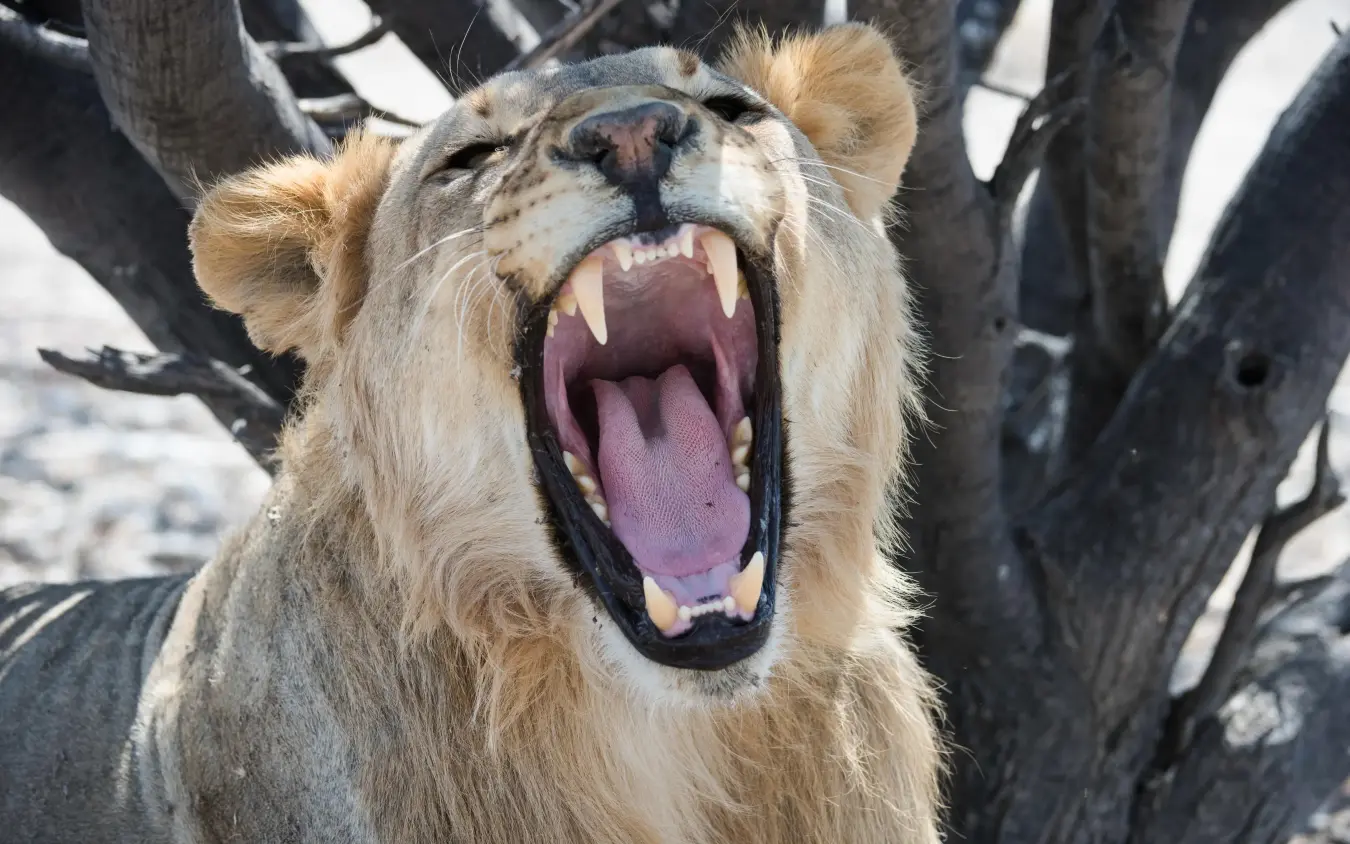
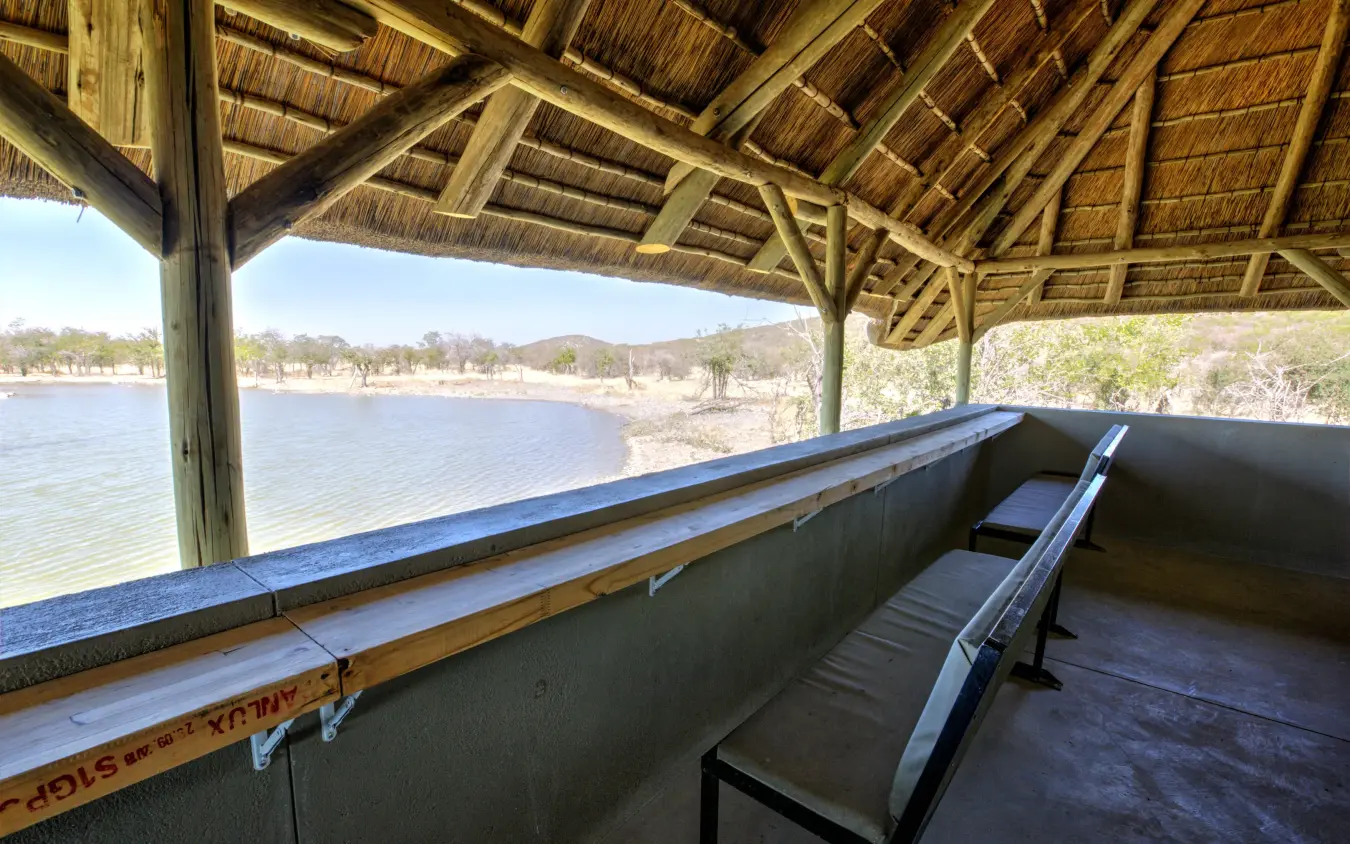
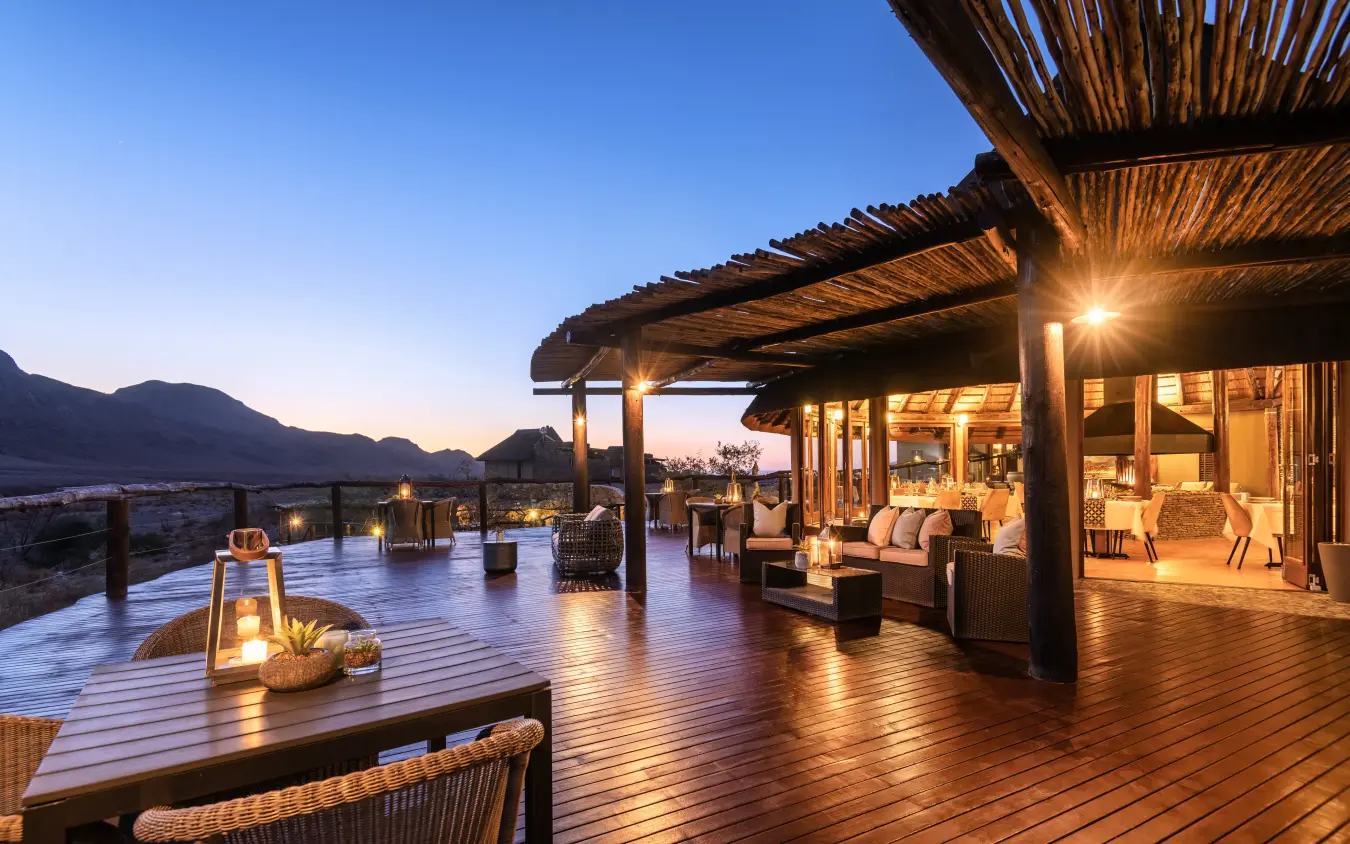
Three nights bring you to the edge of Etosha, whose defining feature is the vast white salt pan, ringed by springs and boreholes where the wildlife collects through the dry season. Full days inside the park follow the waterhole loops in daylight, turning up elephant, giraffe, zebra and lion on the open margins, while on the private Ongava reserve the rules loosen for night drives, walking safaris and rhino tracking on foot. Eight suites in stone, glass and blond wood make up Anderssons at Ongava, and a tunnel from the deck leads to a sunken hide at the waterline where rhino, giraffe and antelope drink a few metres from the glass.
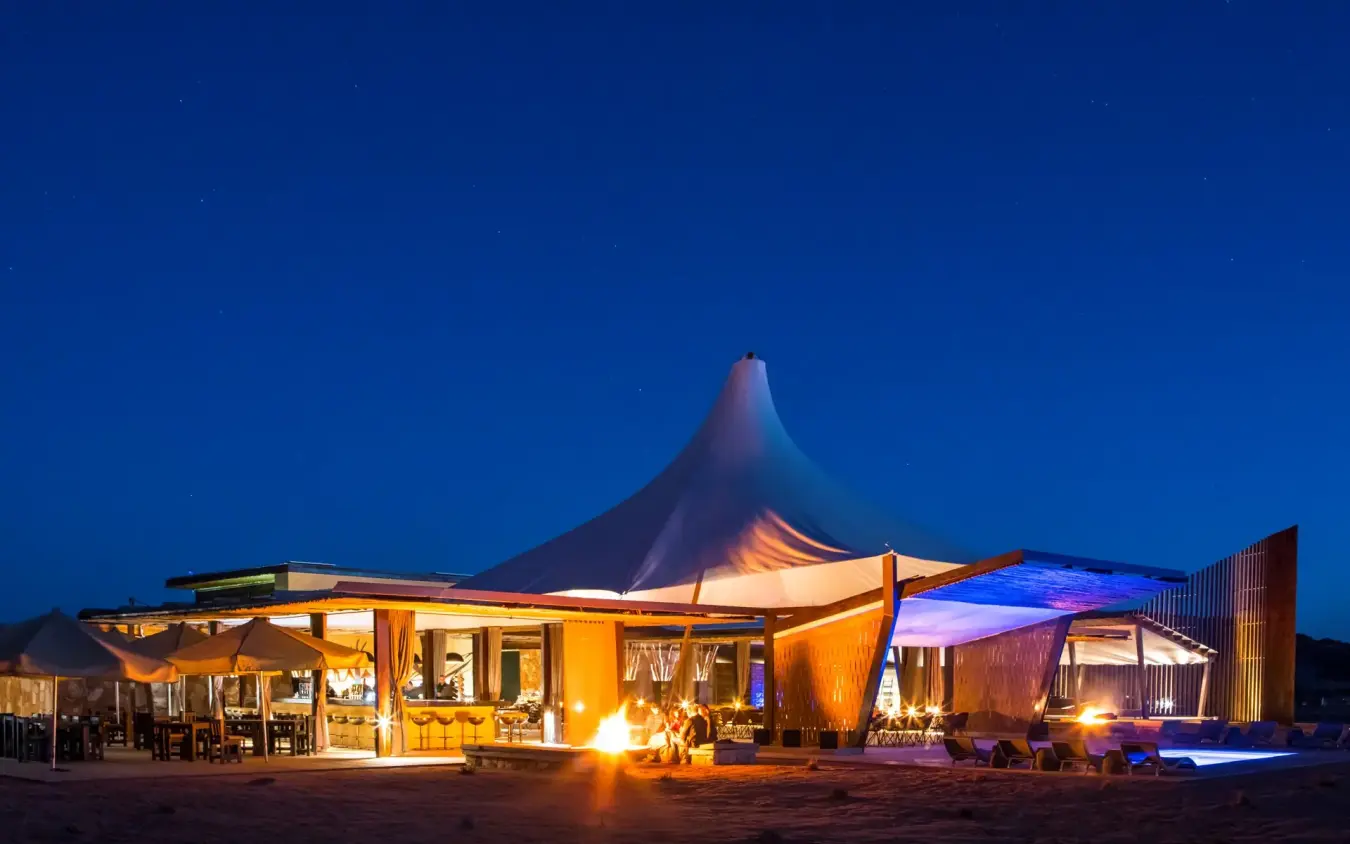
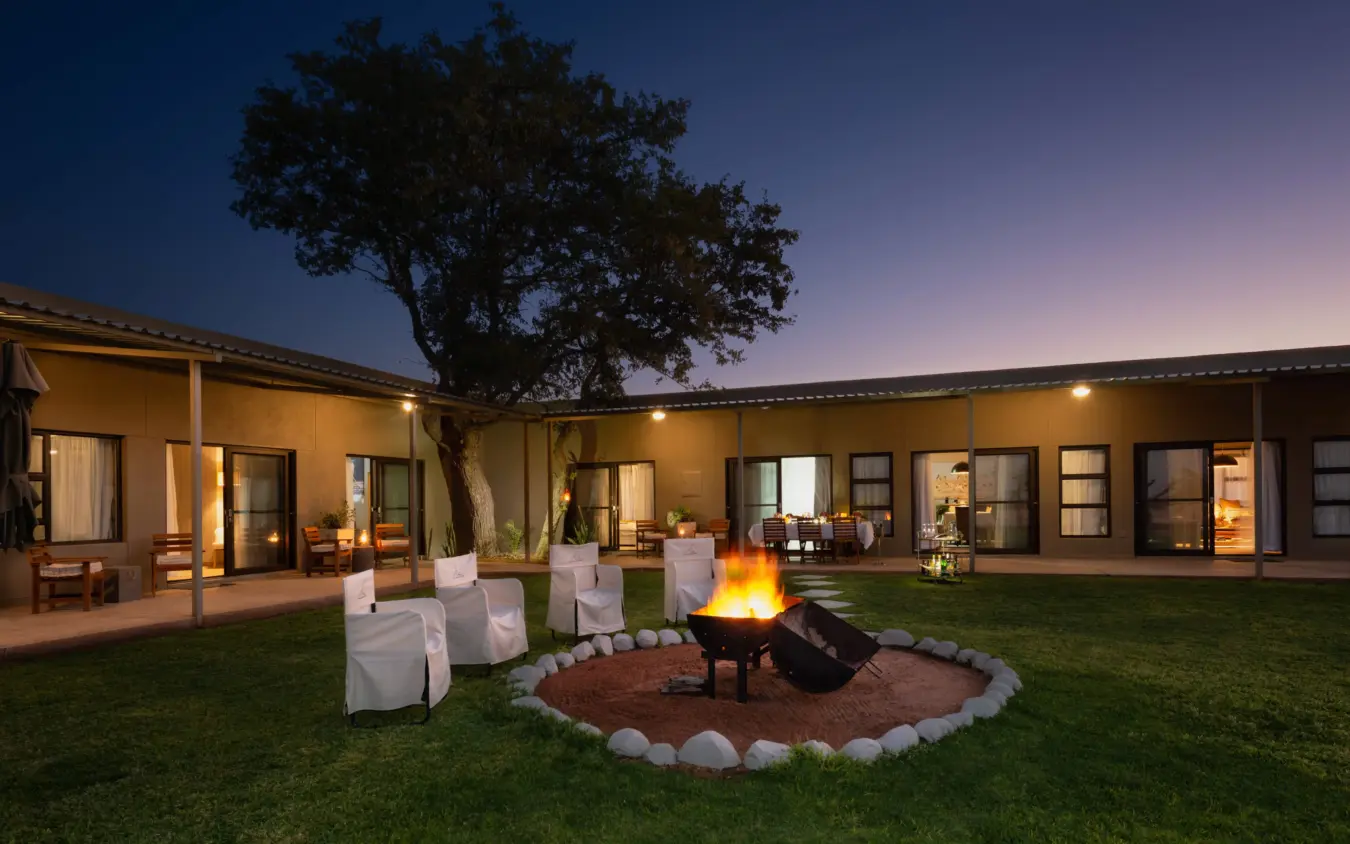
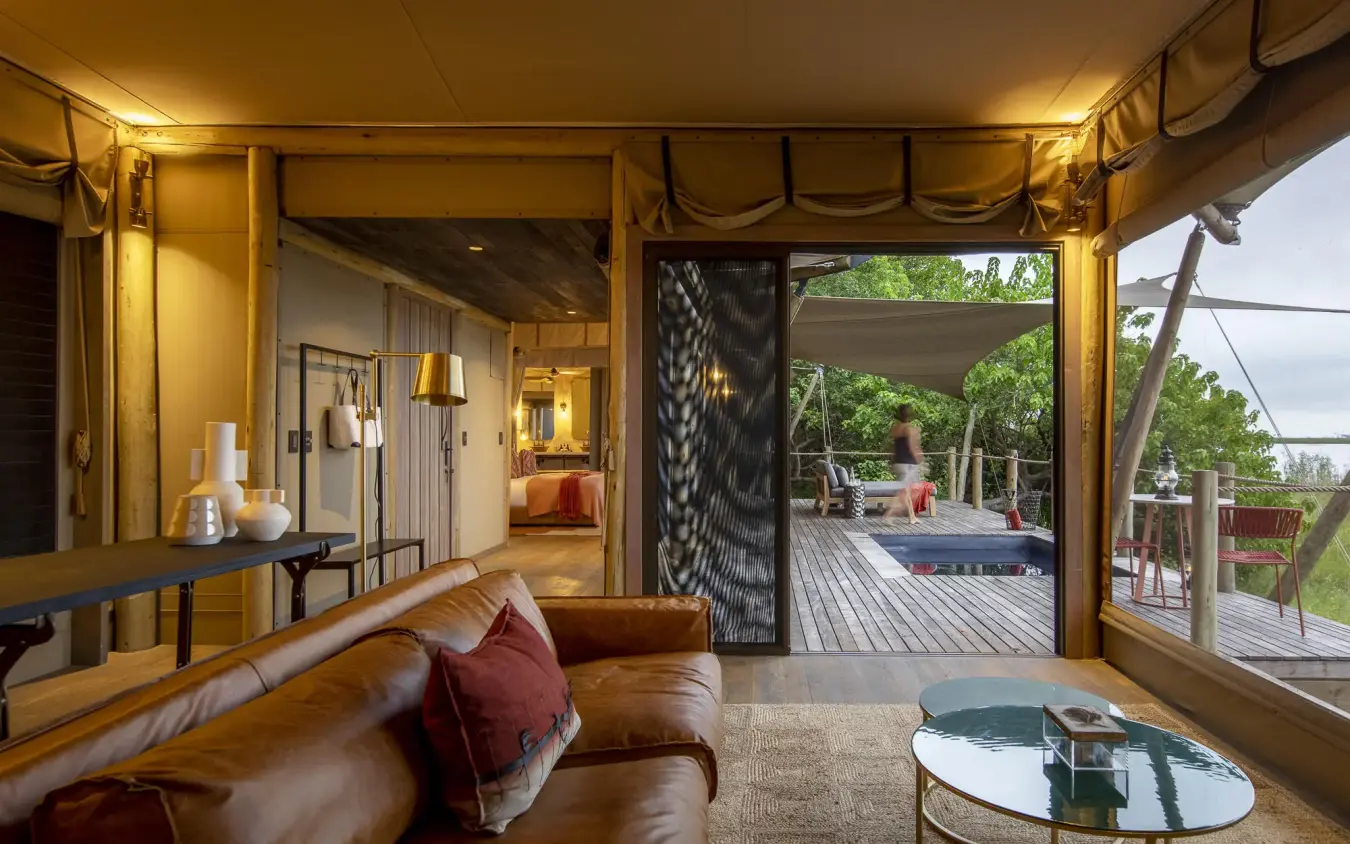
A final night comes on the private Zannier Reserve, some 9,000 hectares of central Namibian savannah run in partnership with the N/a'an ku sê Foundation, thirty to forty minutes from the international airport but with Windhoek absorbed entirely from view. As a private conservancy it allows what a national park could not: tracking rhino and elephant on foot, carnivore tracking and time behind the scenes of the conservation work, with game drives at sunrise and sunset across the plains. Round thatched huts drawn from Owambo homestead architecture make up Omaanda, each opening onto a terrace facing the grassland, with a waterhole below the lodge drawing giraffe and antelope into view.
It depends heavily on the season, and even in the best months it is a search, not a certainty.
Only around 150 desert-adapted elephants survive in the whole of north-west Namibia, strung out along a few dry rivers, the Ugab and the Huab among them, so this is a search and not a drive to a waterhole.
Two things tilt it your way. The family herds, led by the females, move in smaller and more predictable patterns than the bulls and seldom stray far from the riverbeds. And on this private concession your guide can leave the track and follow fresh spoor across country.
Through the dry winter, roughly June to October, that is where they are. Once the summer rains bring fresh grass they range more widely, and finding them takes longer. Two nights gives you one full day and the edges of two more, so come hoping, not expecting.
Both species are possible, in different ways.
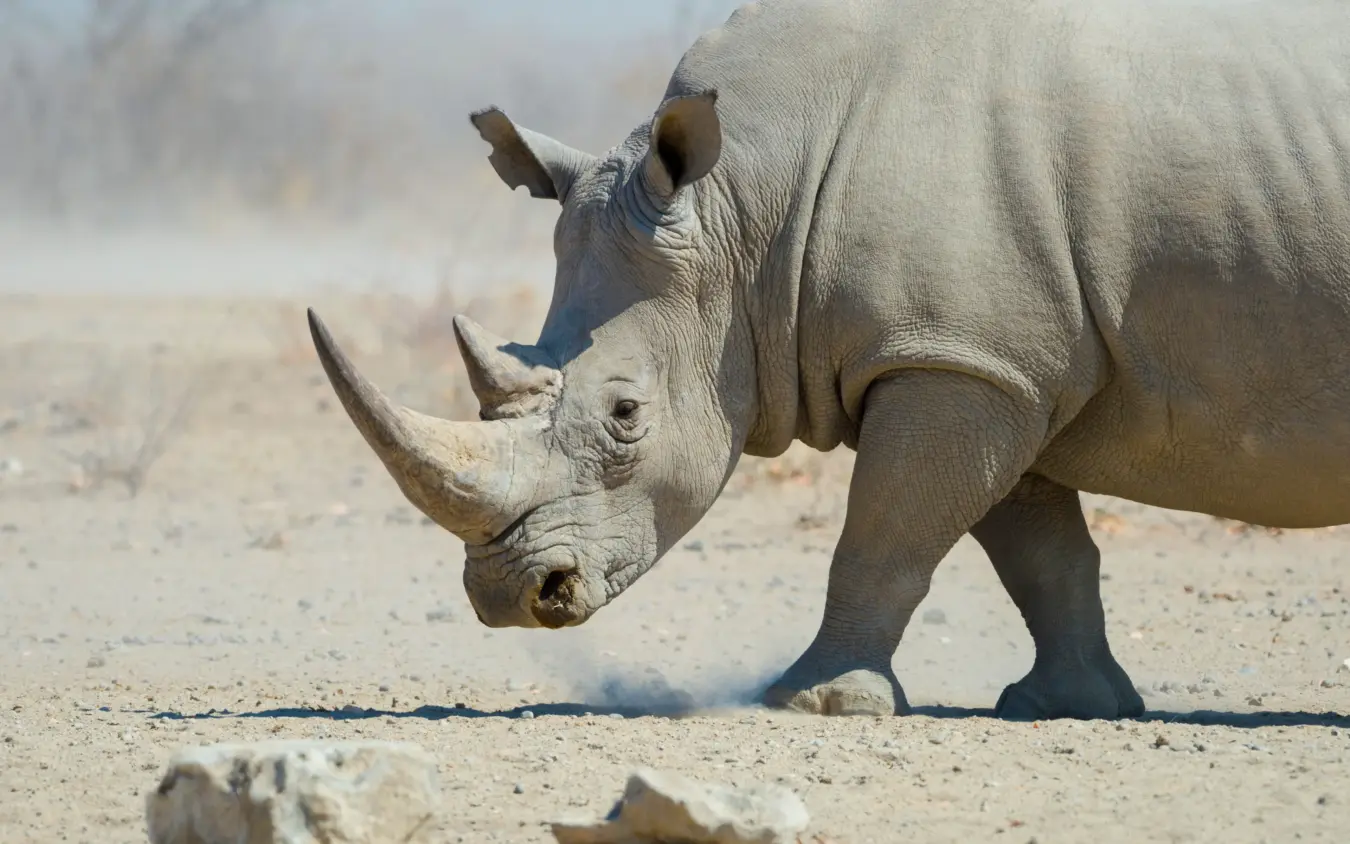
Etosha holds the largest population of black rhino in the world, and because black rhino feed and drink mainly at night, the usual way to see one is at a waterhole after dark.
Ongava, the private reserve beside the park's southern gate, has white rhino as well as black. Its white rhino, grazers that feed in the open by day, are the ones guests approach on foot with an armed guide.
The two places run on different rules. In the national park you stay in the vehicle, keep to the roads and leave by sunset, when the gates close. On Ongava the day carries on: drives after dark, walks, and at Anderssons a sunken hide where animals drink a few metres away.
No sighting is certain, but three nights with both day and night access gives you a good chance of rhino.
No. The outfits that run these trips say you need neither experience nor particular fitness, and they use stable double kayaks, so a nervous paddler can share with a confident one.
A typical morning begins at about eight at the waterfront in Walvis Bay, the neighbouring harbour town, whose bay is sheltered by the Pelican Point sand spit. A 4x4 takes you round the lagoon, past the pink salt pans, and out along the spit to the seal colony, which can take up to an hour, and you are back by lunchtime.
Time on the water is usually about an hour, depending on the weather. The seals do the rest: they are relaxed around kayaks and naturally inquisitive, so they tend to come to you.
This is a cold, often foggy coast, so dress warmly whatever the forecast inland. If paddling does not appeal, tell us and we will arrange a boat trip on the bay instead.
Early, but nobody has to climb anything.
Hoodia lies outside the national park, about 20 minutes' drive from the Sesriem gate, and that gate opens at sunrise, so you leave the lodge before dawn to be there when it does. Beyond it lie some 60 kilometres of tar road down the Tsauchab valley, then a final five kilometres of deep sand that needs a 4x4.
From the parking place Deadvlei is a good kilometre on foot across low, shadeless dunes, and that walk is all the pan asks of you.
Climbing is a choice. Big Daddy, at roughly 325 metres, takes one and a half to two hours of soft sand on the way up and a ten-minute run to come down; smaller dunes beside the road give a good view for much less effort. After about nine the sand scorches, so the dunes are done first.
For most people, June to September.
Each stop on the route gets our top rating then, because dry weather gathers Etosha's animals at the waterholes, keeps Damaraland's elephants to the riverbeds and makes dawn at the dunes cool. Expect cold nights and the year's busiest lodges.
May runs them close, and April is still green, a month often praised for clear air after the rains. October and November turn hot, although Etosha's waterholes are crowded with game in October.
The green season we rate as challenging, from December to February at the dunes and Etosha and on to March in Damaraland, because of heat and rain that lets the animals scatter.
The honest case for it is this:
It suits a second visit better than a first safari.
A great deal, and yes, you could.
This sample route uses light aircraft for the long legs, and the distances by road show why:
Long stretches are gravel, and the Foreign Office advises keeping below 80 kilometres an hour on it. Flying turns the same legs into short hops and gives the hours back to the desert.
The trade-off is luggage: the aircraft are typically a Cessna 210 or a Grand Caravan, and the allowance is 20 kilograms each, hand luggage counted in, with soft bags only. Driving with a private guide suits those who want to see the country in between.
Ed Charles, BBC Producer
Fitzroy are true specialists in accessing the wilderness. They know where to go and importantly, when to go there. Highly recommended.
namibia & botswana
Ten nights from northwest Namibia's deserts and the Kunene to Botswana's Linyanti and its elephant corridors.
namibia
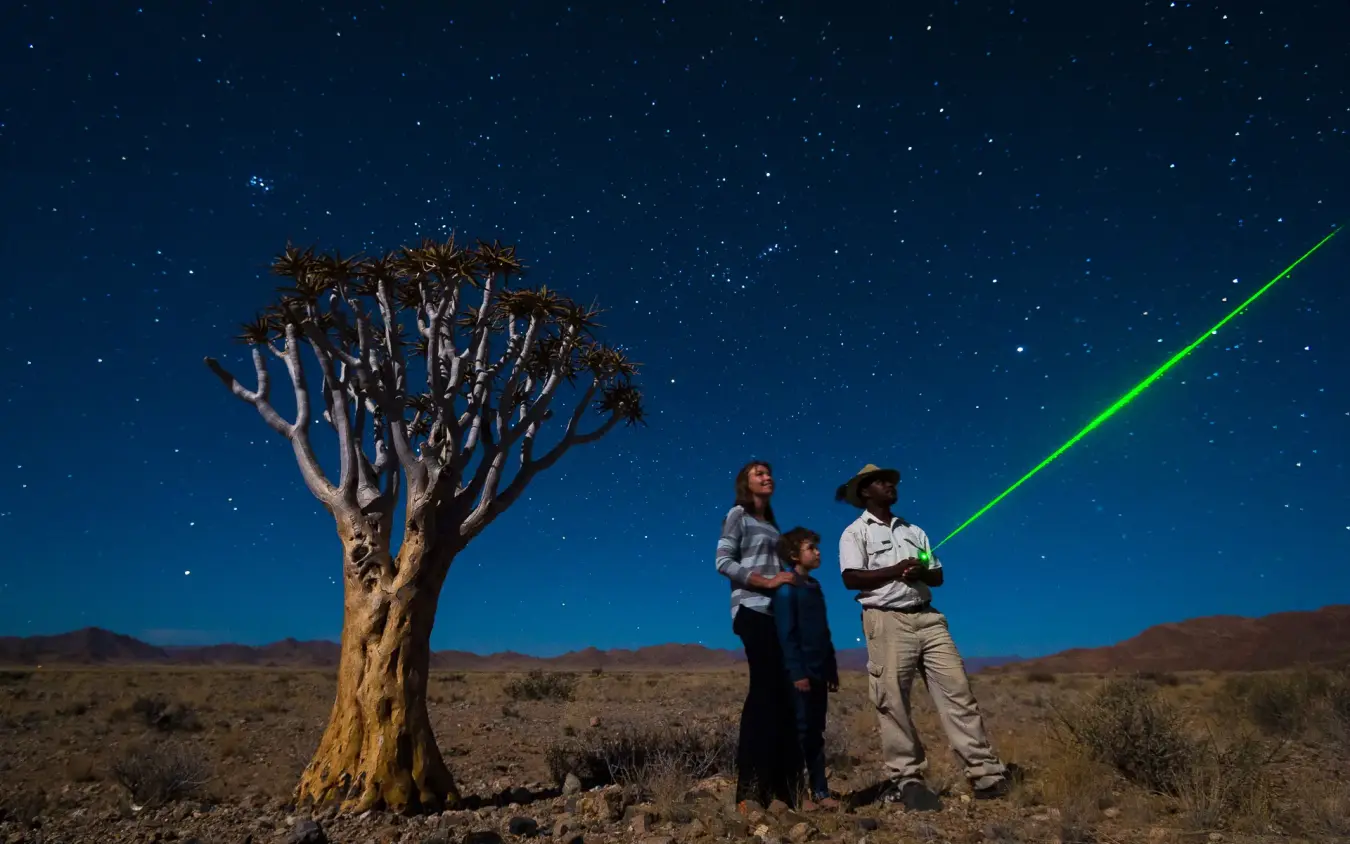
Thirteen nights linking the Sossusvlei dunes, the Skeleton Coast, the Kunene River and Etosha's rhino country.
namibia
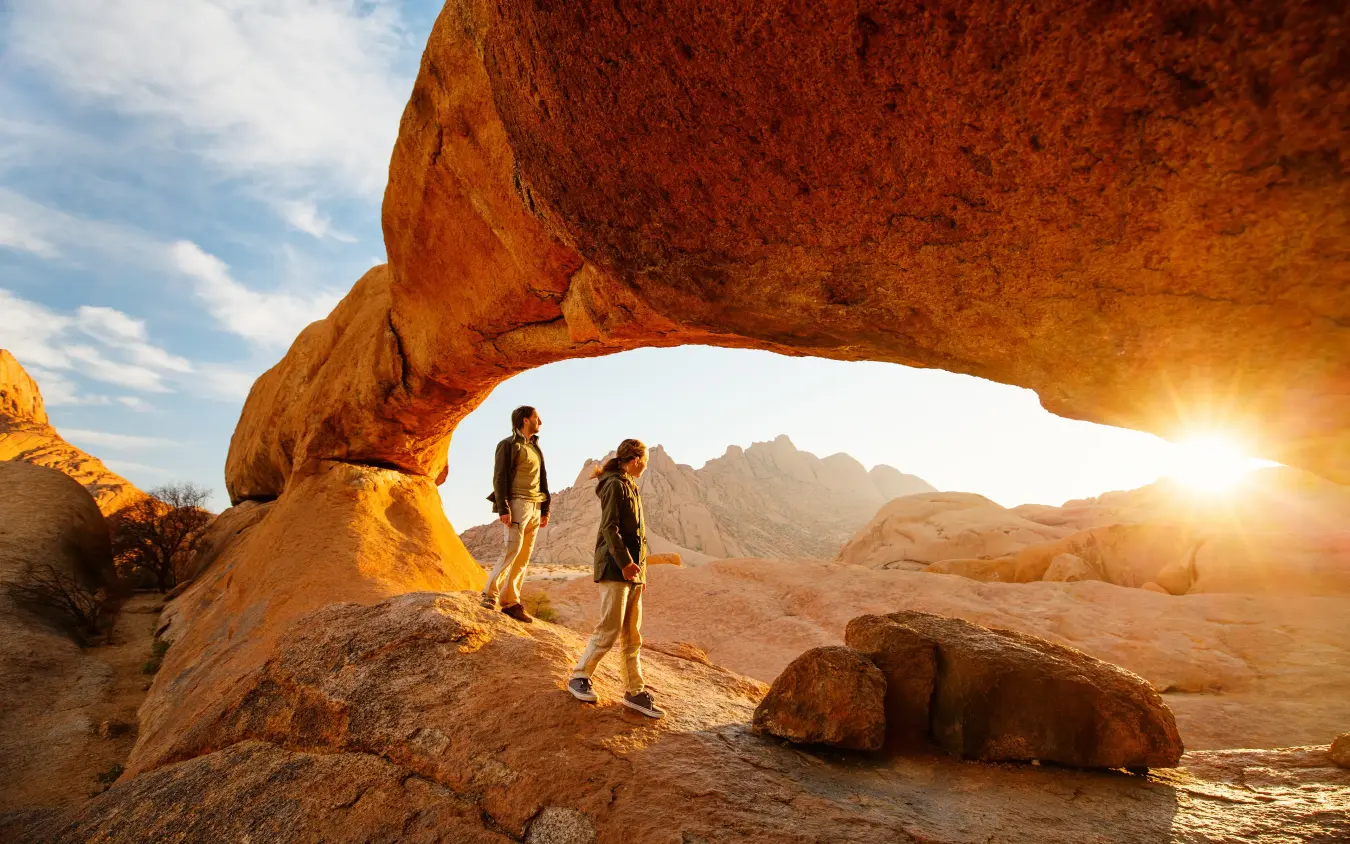
Kayak with seals at Walvis Bay, track desert-adapted elephants in Damaraland and finish on a private reserve beside Etosha.
rated five stars by our clients

our approach
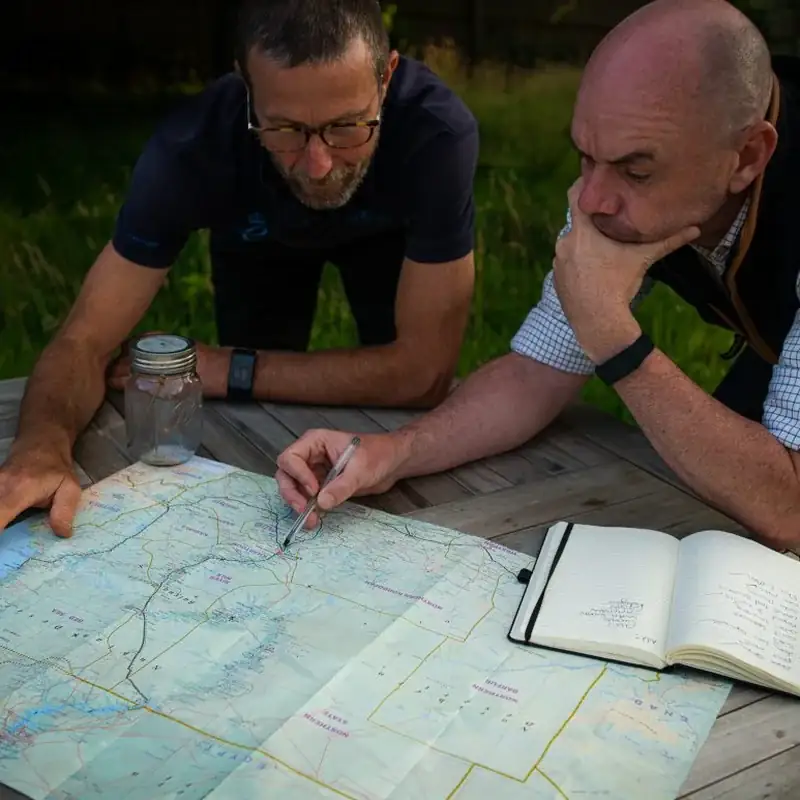
Every journey starts with a conversation. We take the time to understand your vision before we start planning.
Whether by phone or in person, we work with you directly to shape something that is considered, personal, and expertly delivered.
Every journey starts with a conversation. We favour a direct, personal approach: understanding your vision before anything else.
Whether by phone or in person, we work with you directly to shape a journey that is both thoughtfully considered and expertly delivered.
Get in touch to start planning yours.