






namibia
the namib dunes to damaraland
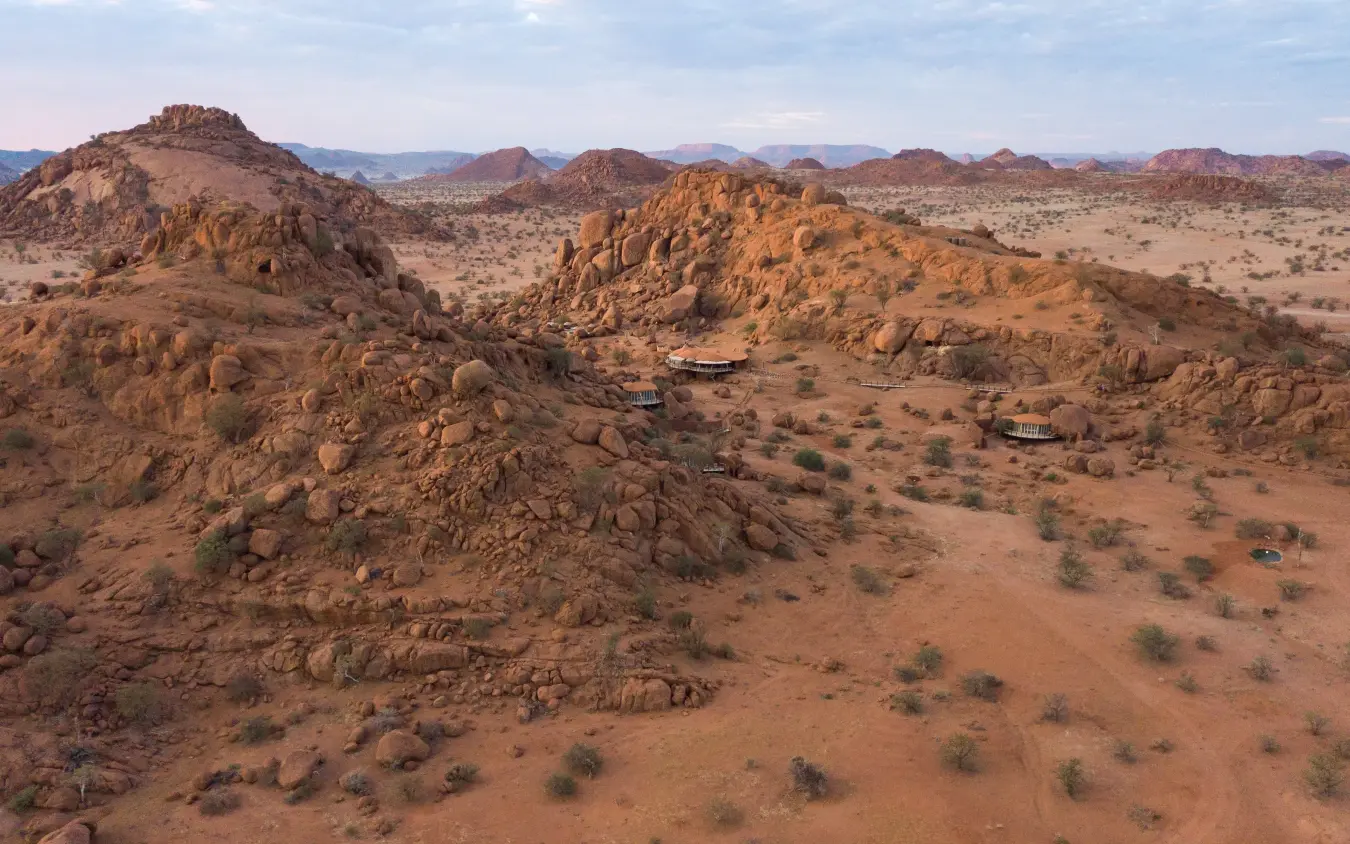
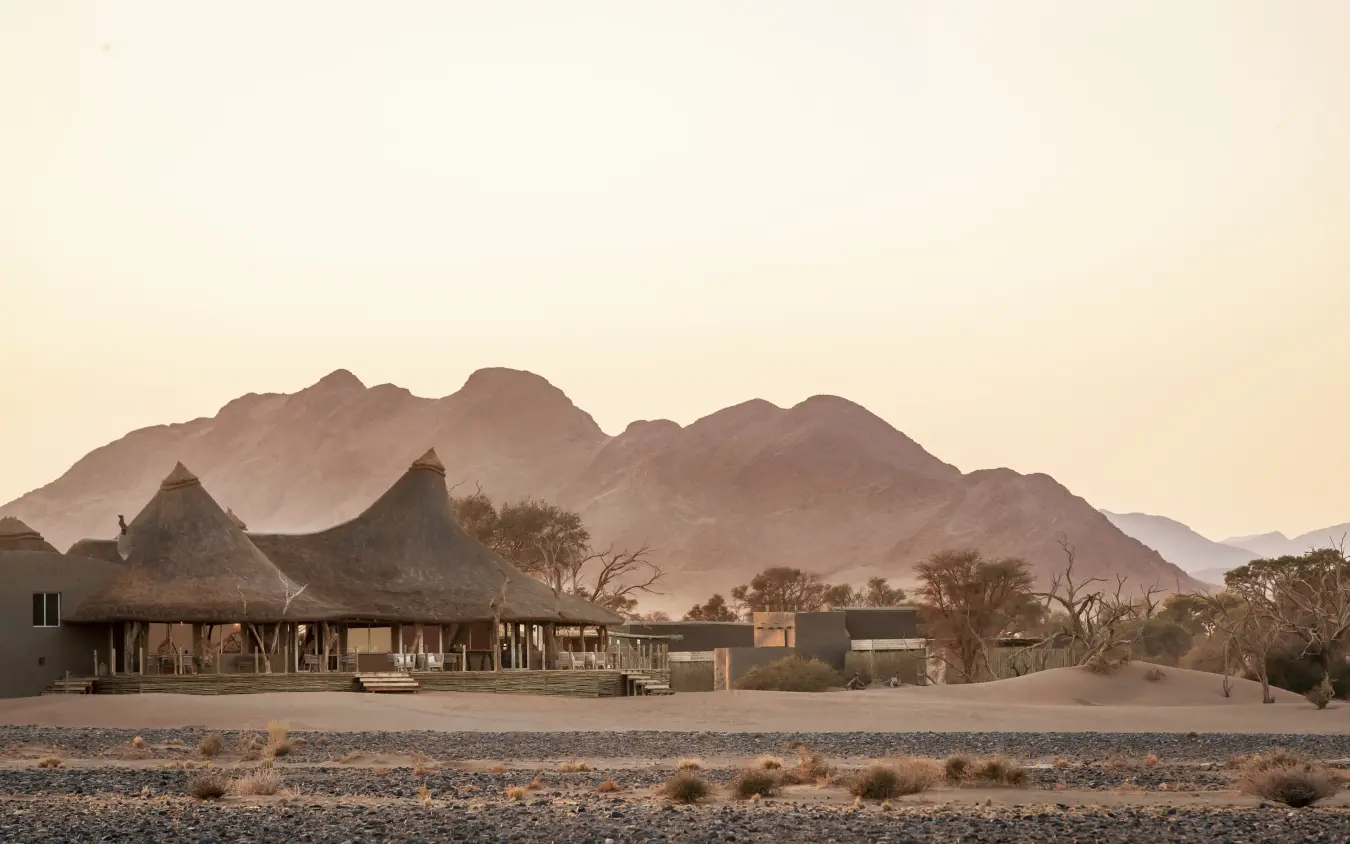
Eleven nights across Namibia, from the Sossusvlei dunes and the Atlantic coast to the granite ridges of Damaraland.
- Private Safari
- From $11,090 pp
- 2 guests
- 11 nights

This 13-night route crosses Namibia in six stays, beginning and ending in the high-plateau capital of Windhoek. In between it links the red dunes of Sossusvlei and Deadvlei, the lower Hoanib Valley within reach of the Skeleton Coast, the Kunene River on the Angolan border in the far north-west, and the rhino country along Etosha’s southern boundary.
You travel largely by light aircraft, with guided drives, walks and 4×4 outings at each stop. Days move from desert-adapted wildlife and dune photography to a full-day run to the Atlantic, quad-bike tracks across gravel plains and rhino tracking on foot. The camps are small and solar-run in the bush, while the Windhoek guesthouses are calm bases for the nights either side of the flights.
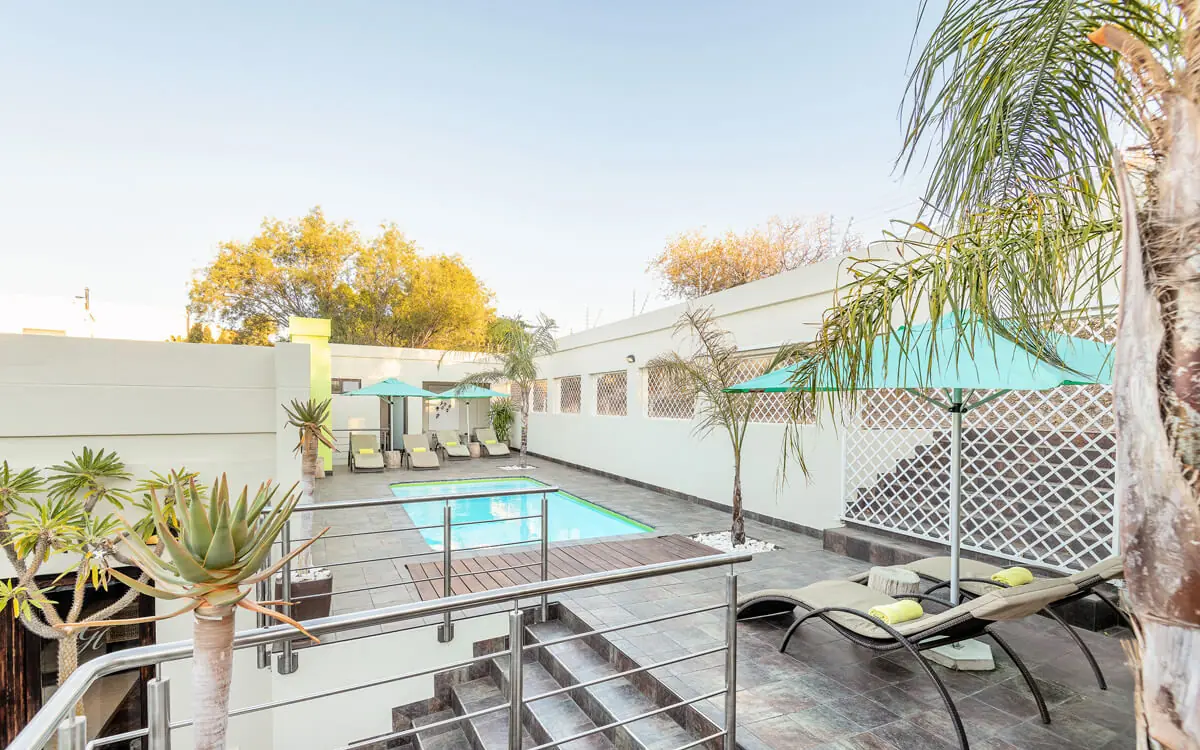
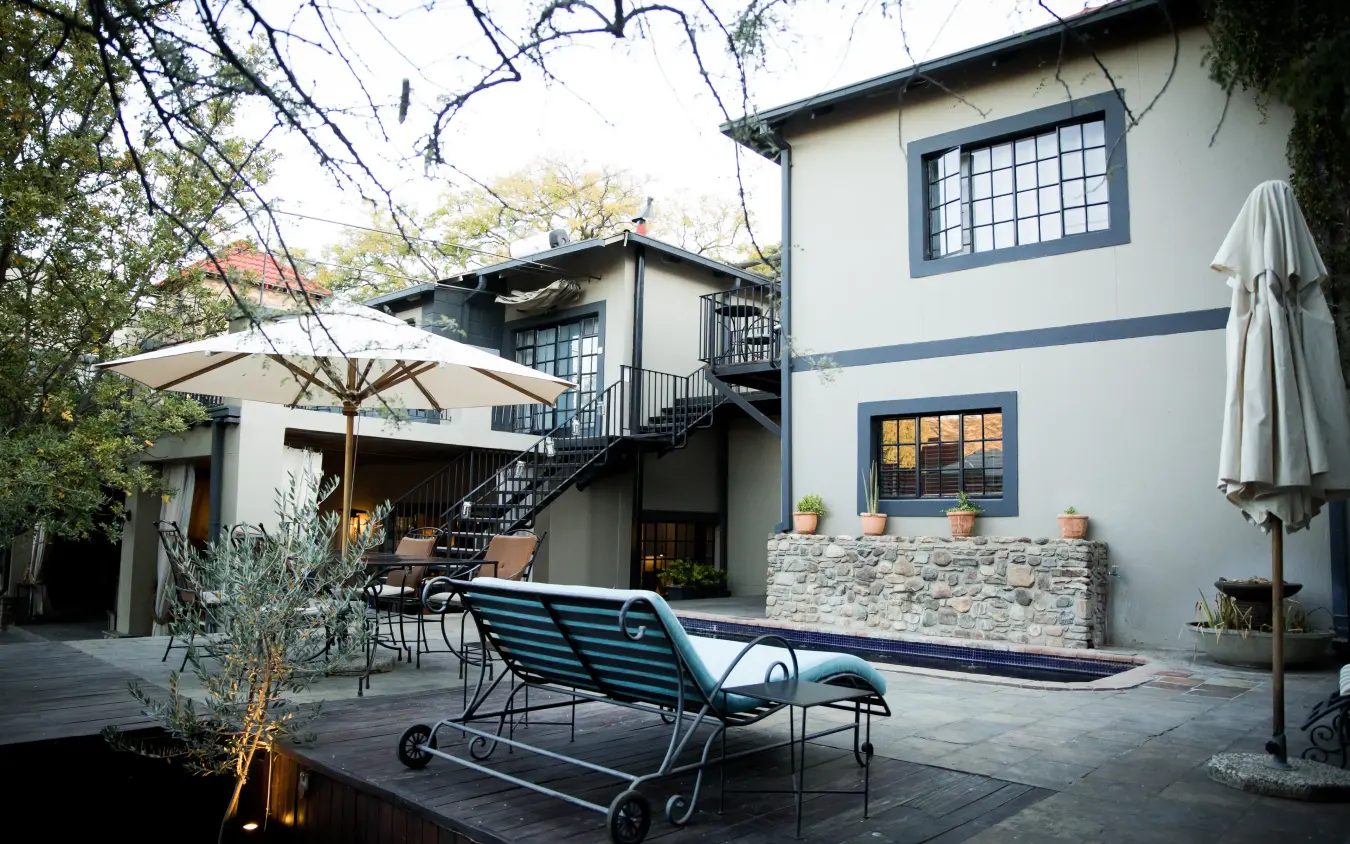
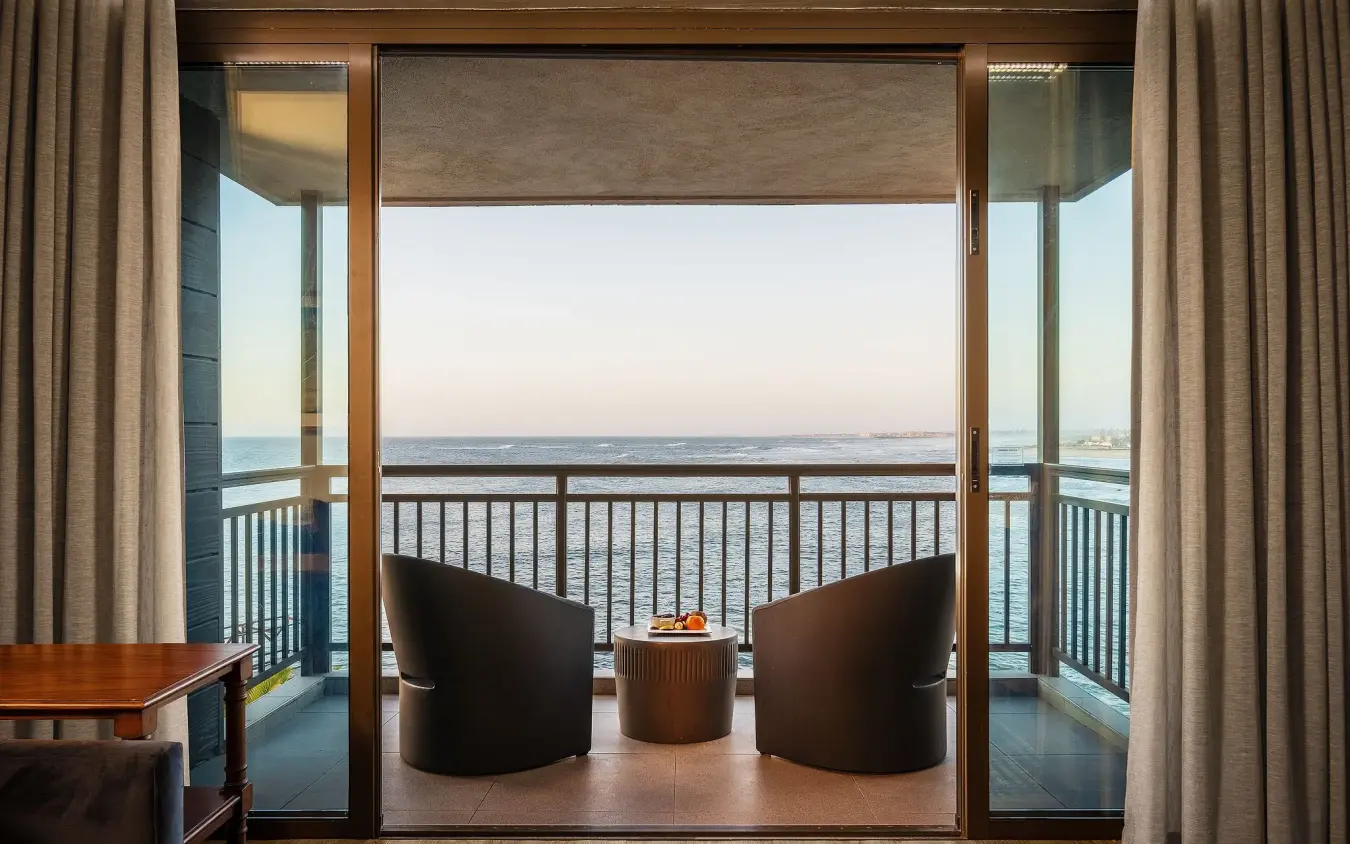
You arrive on the Khomas Highland plateau, at roughly 1,700 metres, for a night's rest between the international flight and the light aircraft north. Windhoek is compact and walkable, with the Christuskirche, the Tintenpalast parliament buildings and the Independence Memorial Museum in the centre. Set in the Eros suburb behind a gated entrance, Galton House gathers nine rooms around a garden courtyard, runs on solar power and keeps a day room for the awkward gaps between flights.
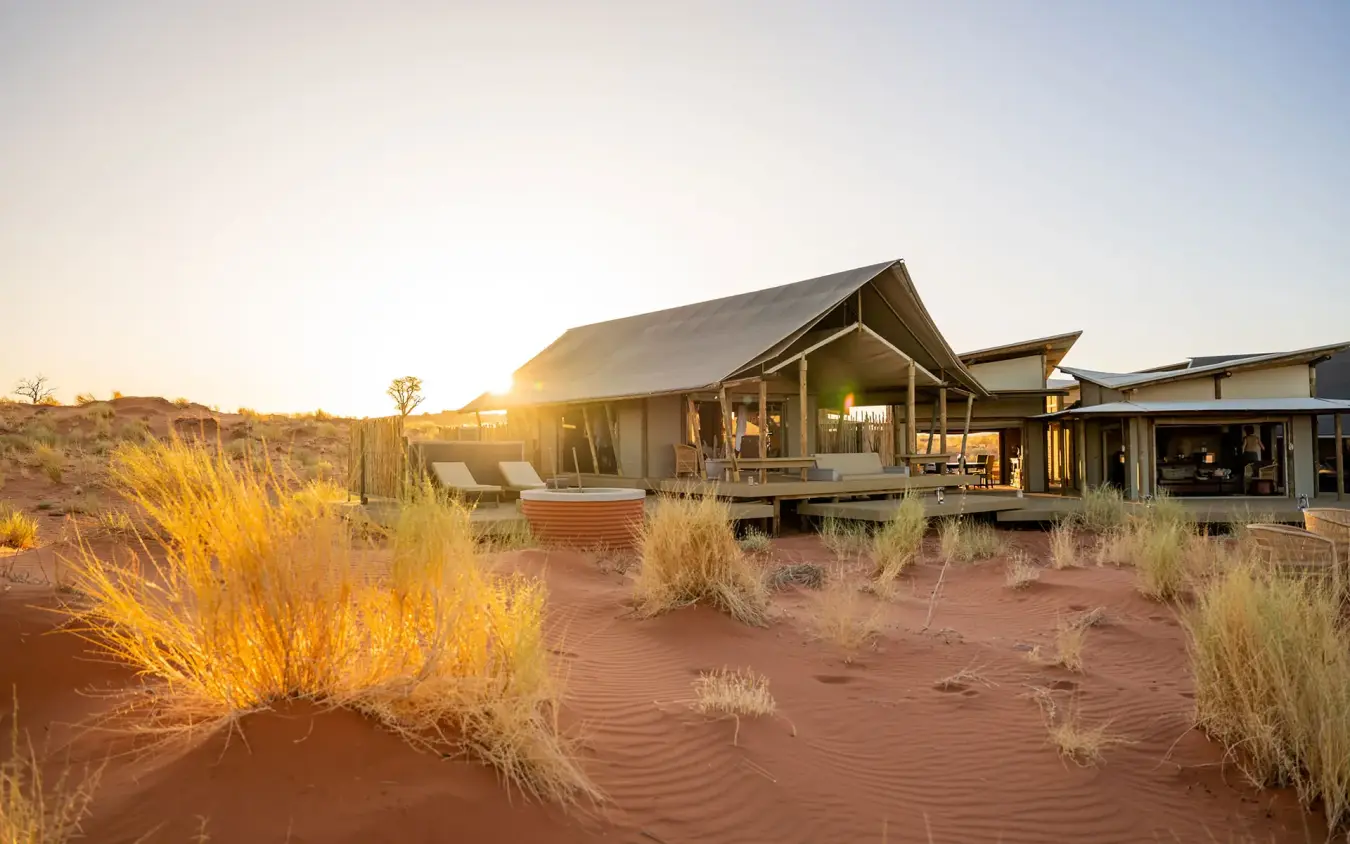
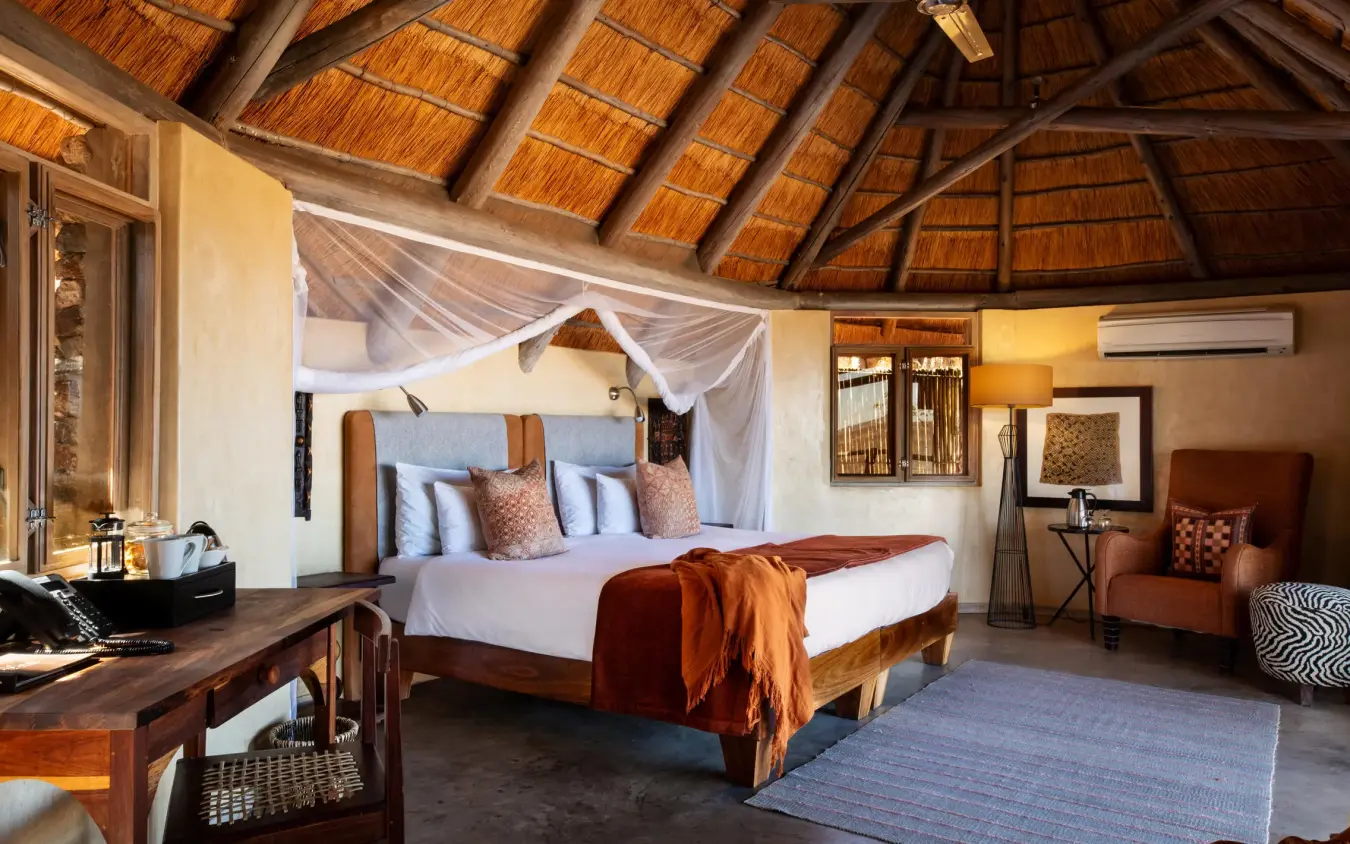
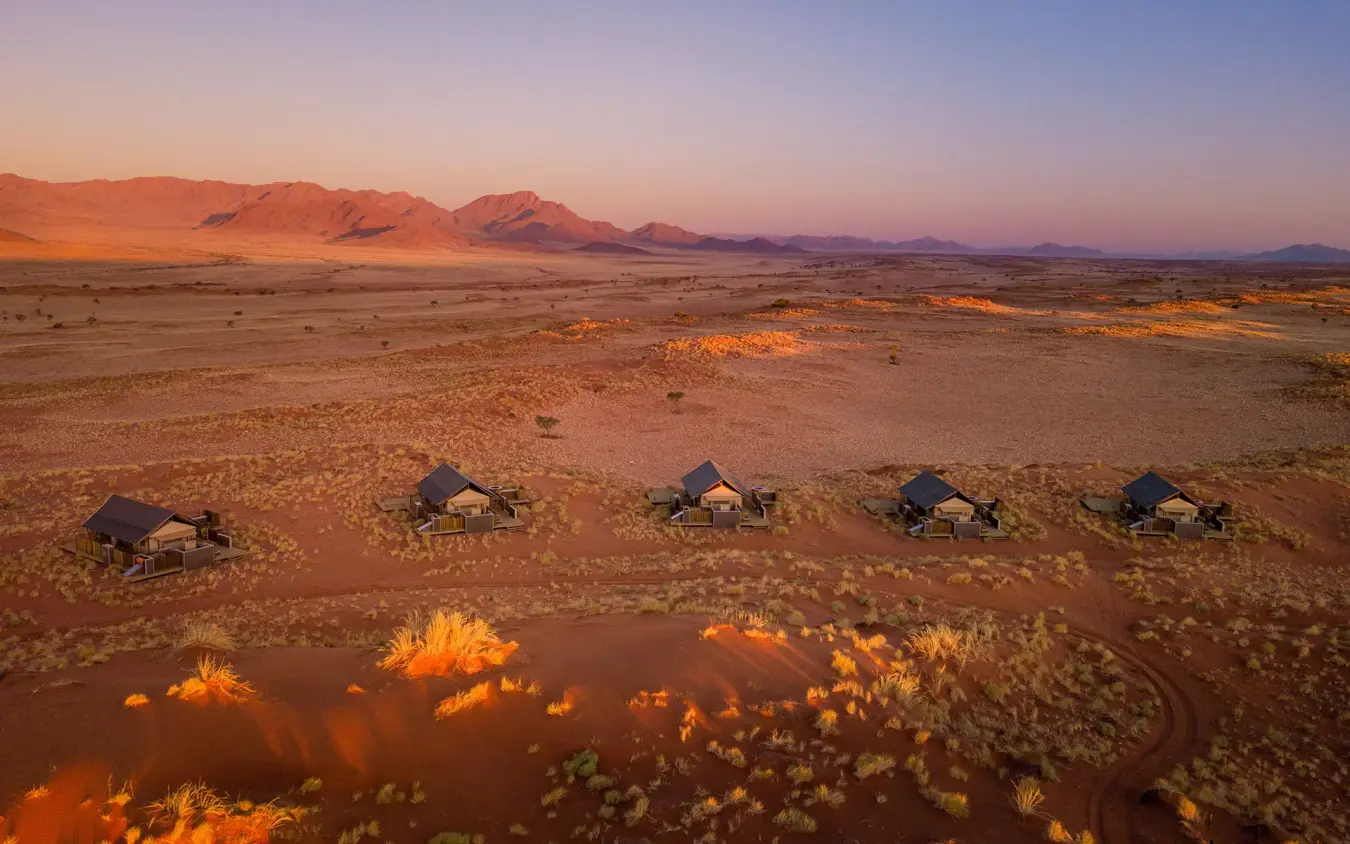
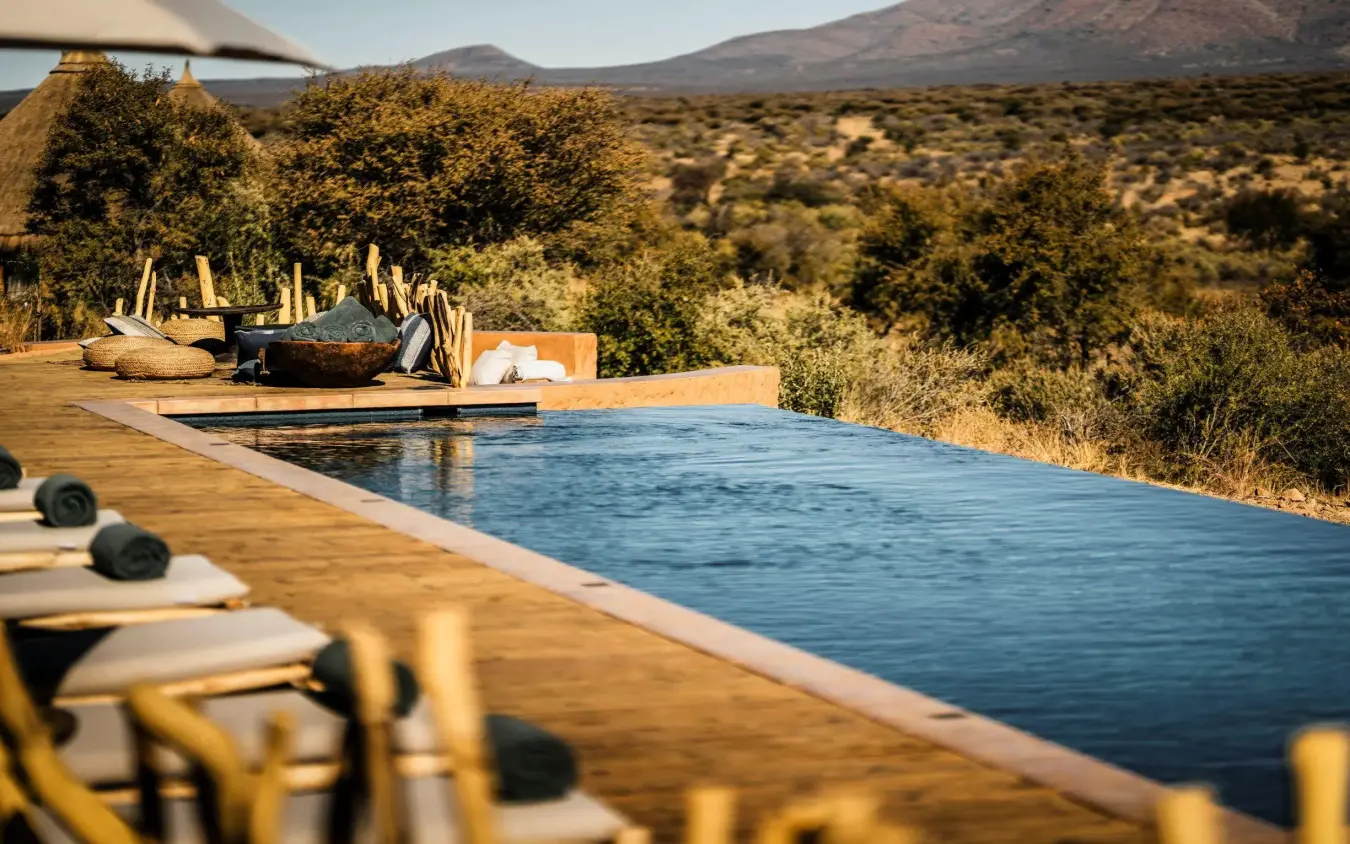
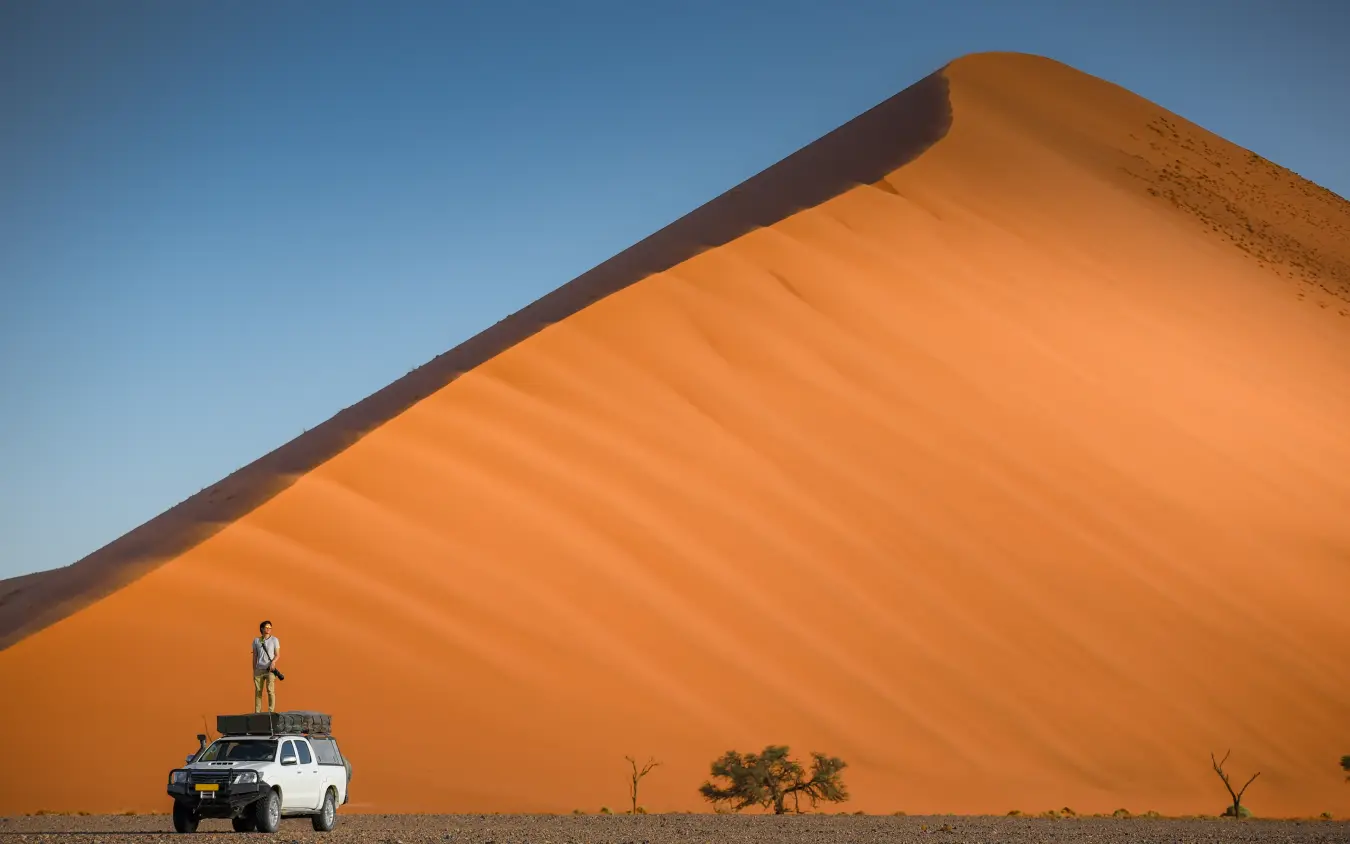
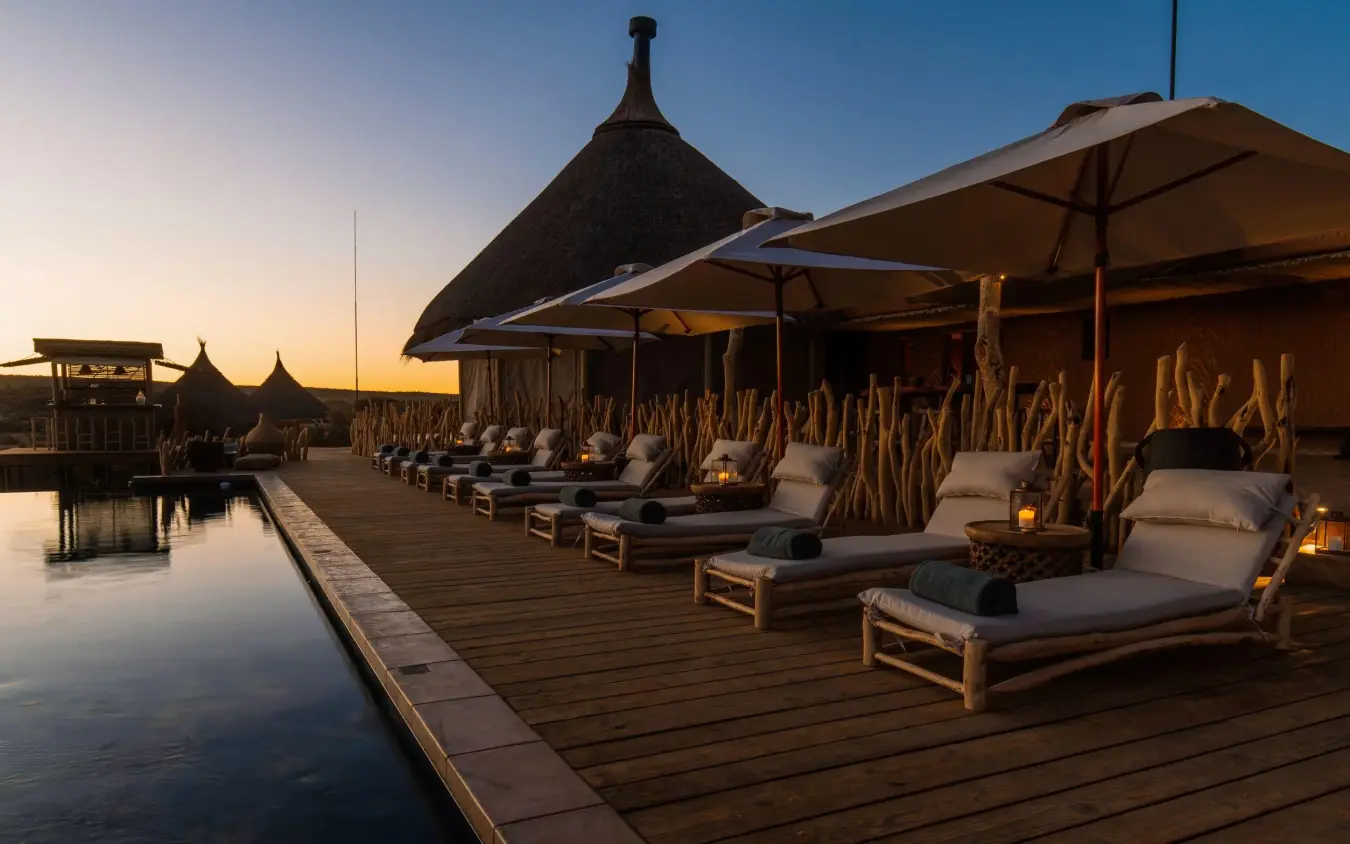
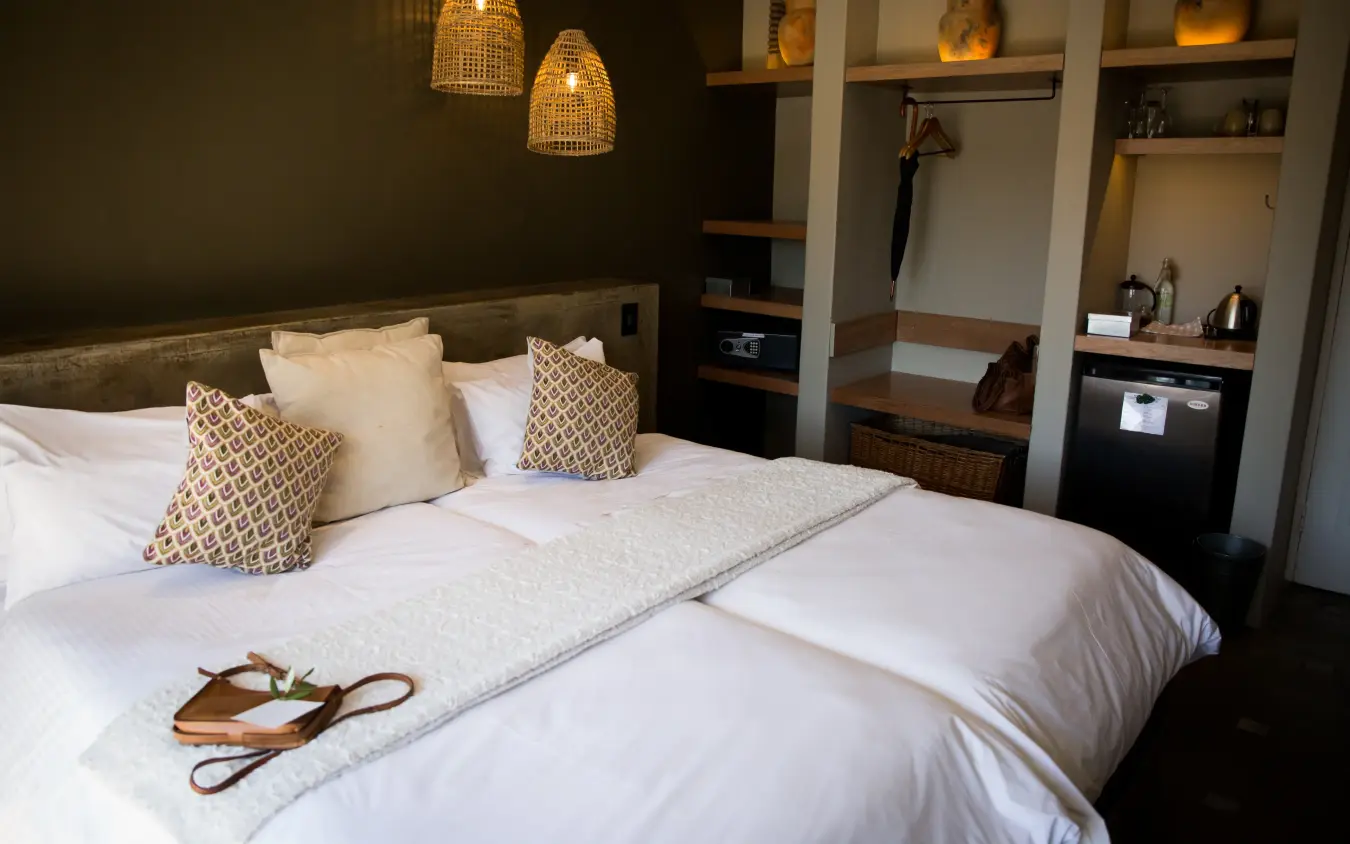
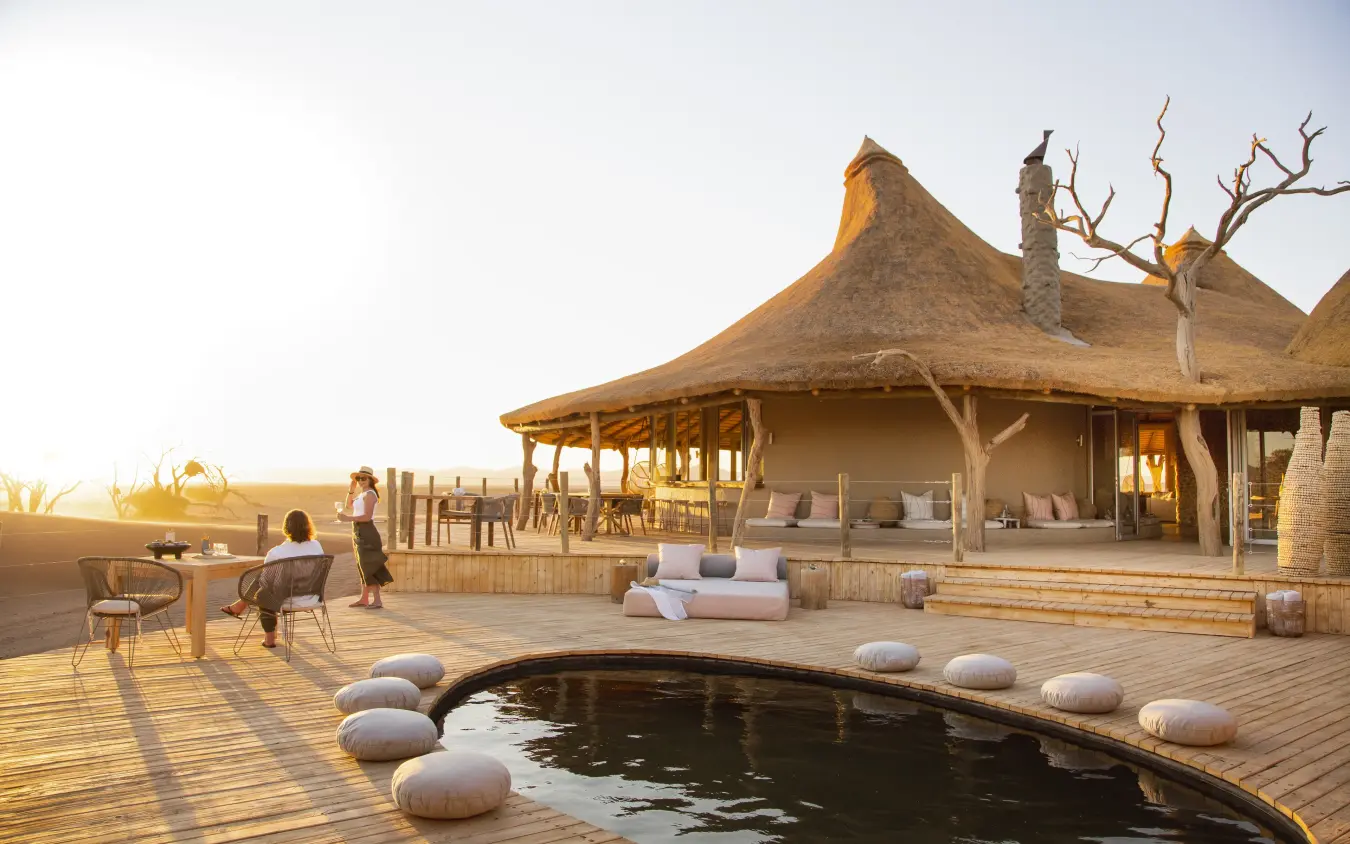
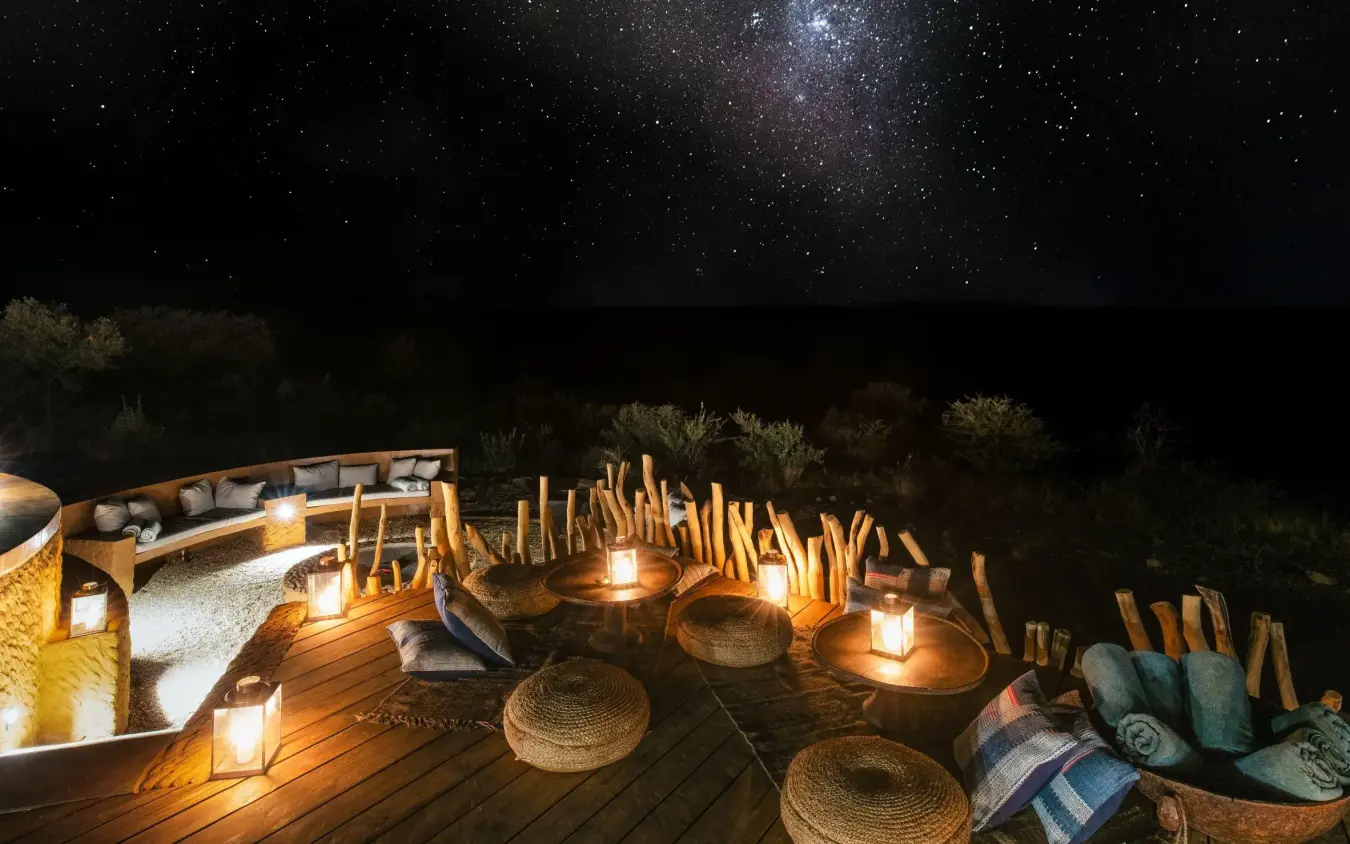
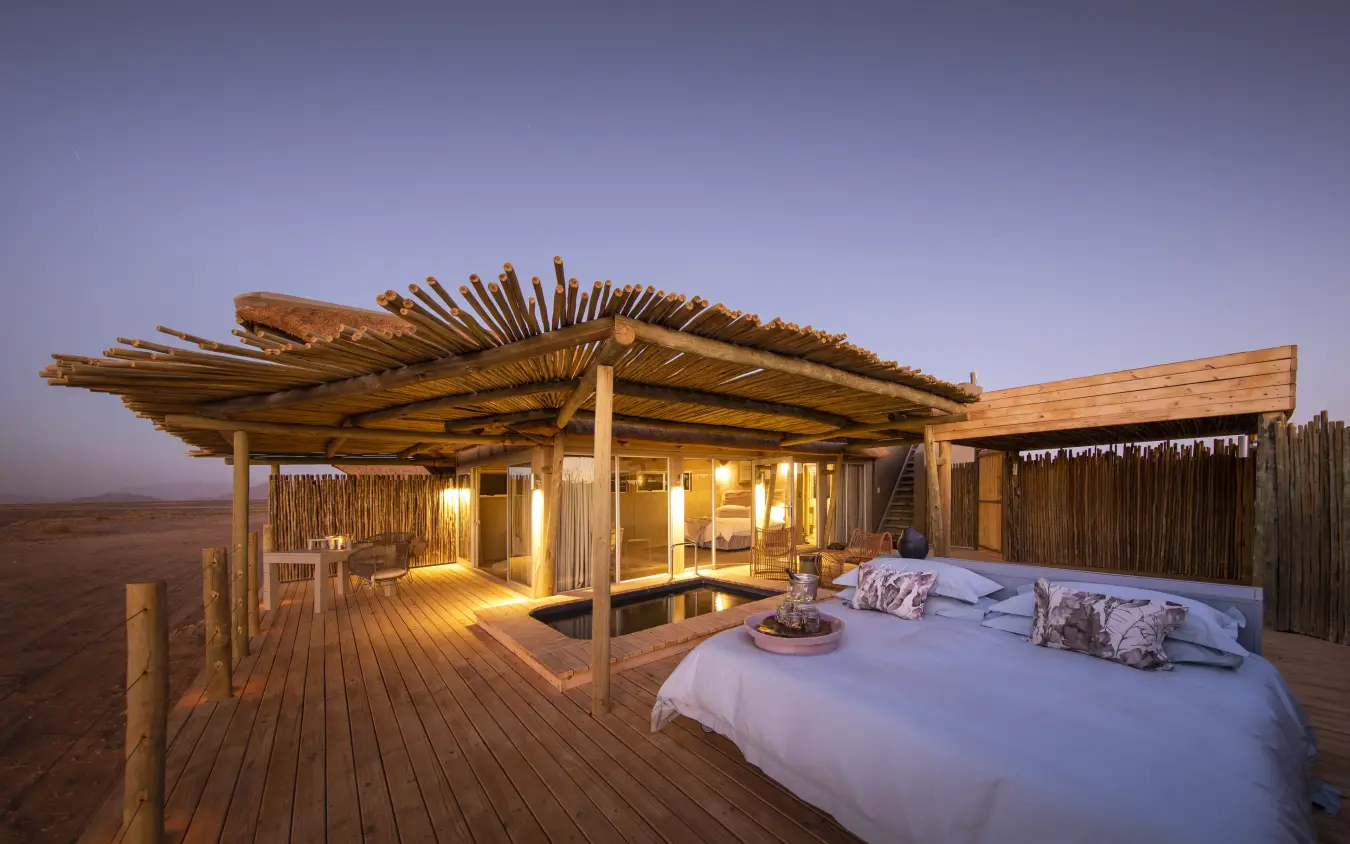
A light aircraft brings you south to the private Kulala Wilderness Reserve, where guided vehicles pass through a private gate into the Namib-Naukluft National Park, reaching the Sossusvlei dunes and Deadvlei in the low light of sunrise while others queue at Sesriem. You can climb the 325-metre Big Daddy dune before the sand heats underfoot, and photograph the black skeletal camelthorns of Deadvlei against white clay and red dunes. Little Kulala has eleven thatched suites, each with a plunge pool and a rooftop skybed for sleeping under dark desert skies.
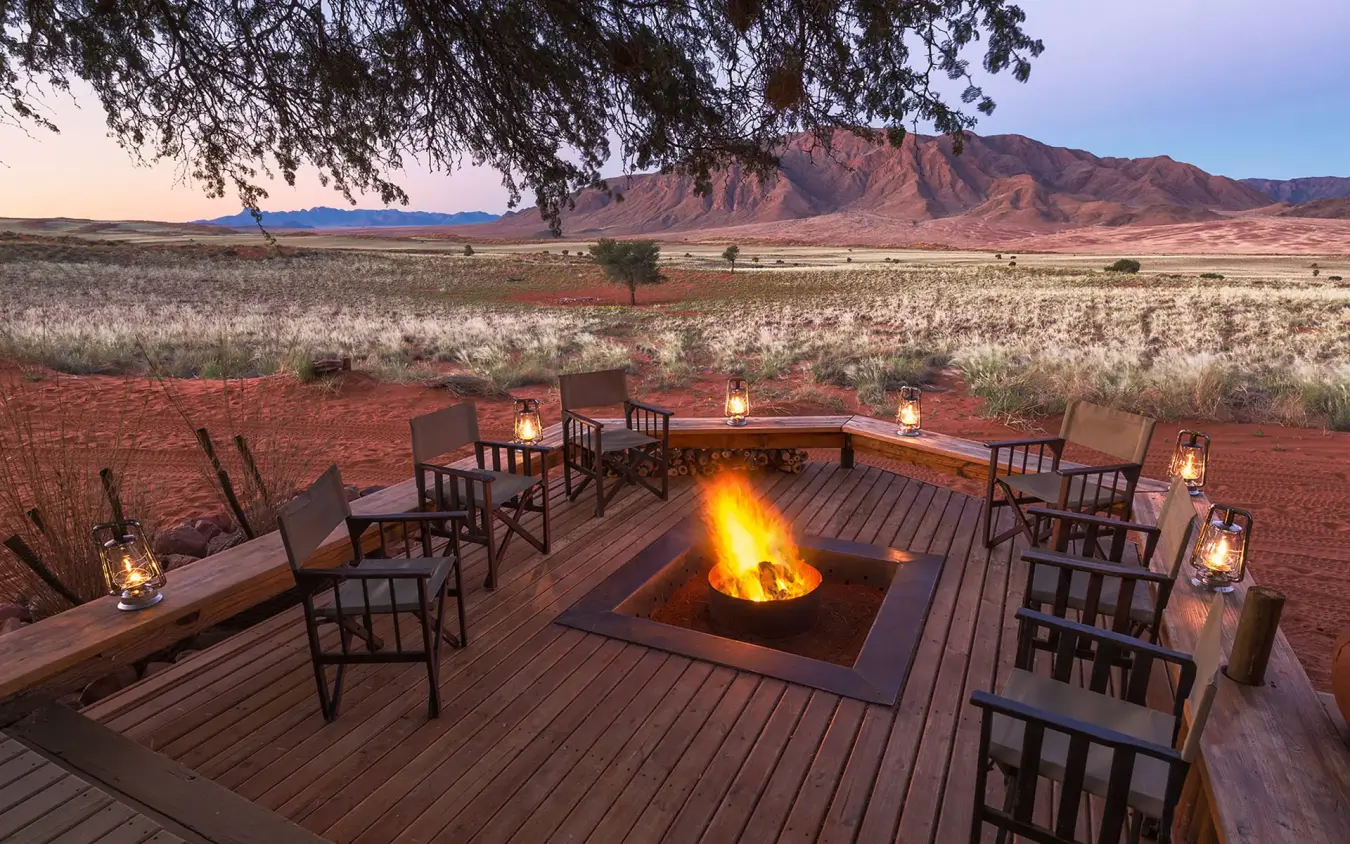
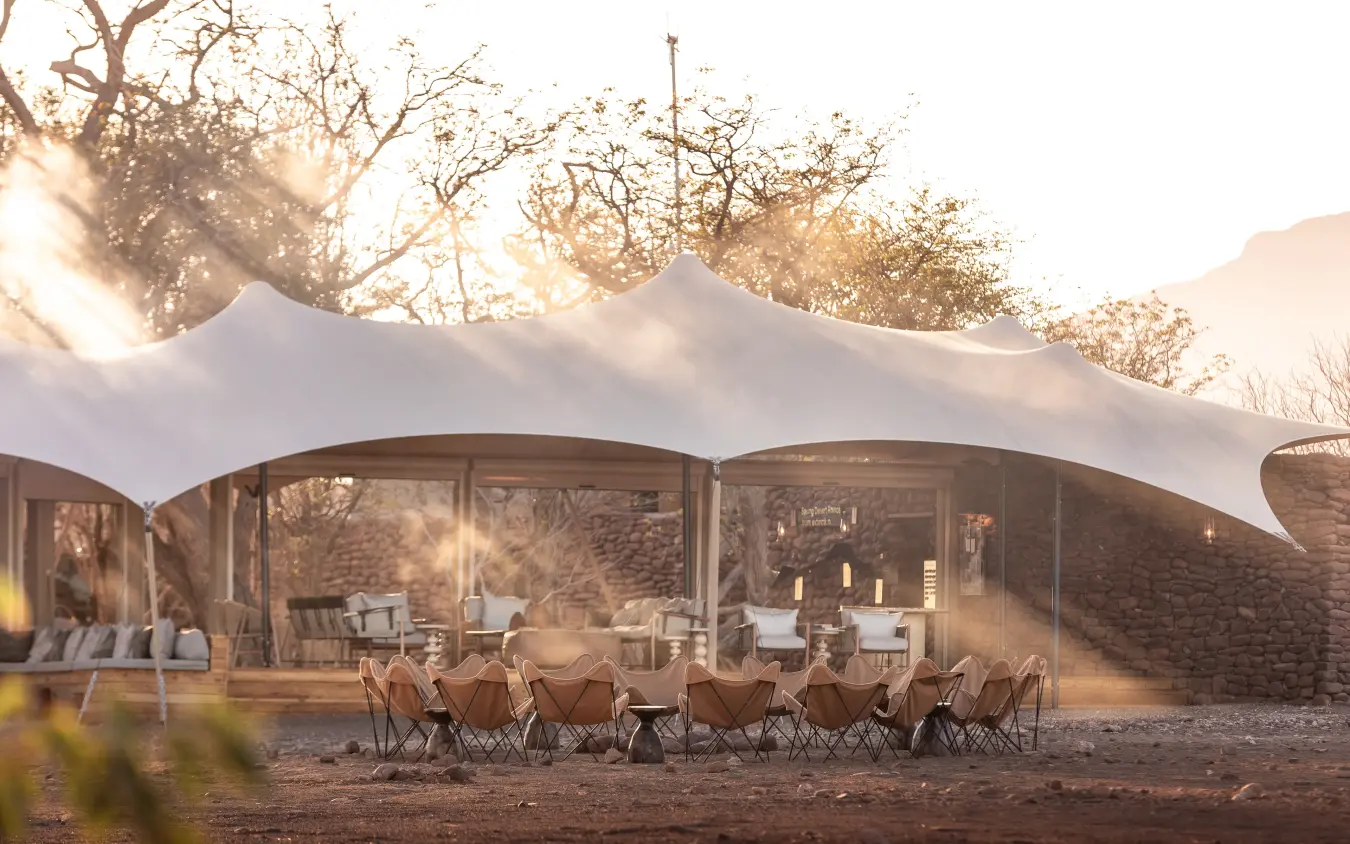
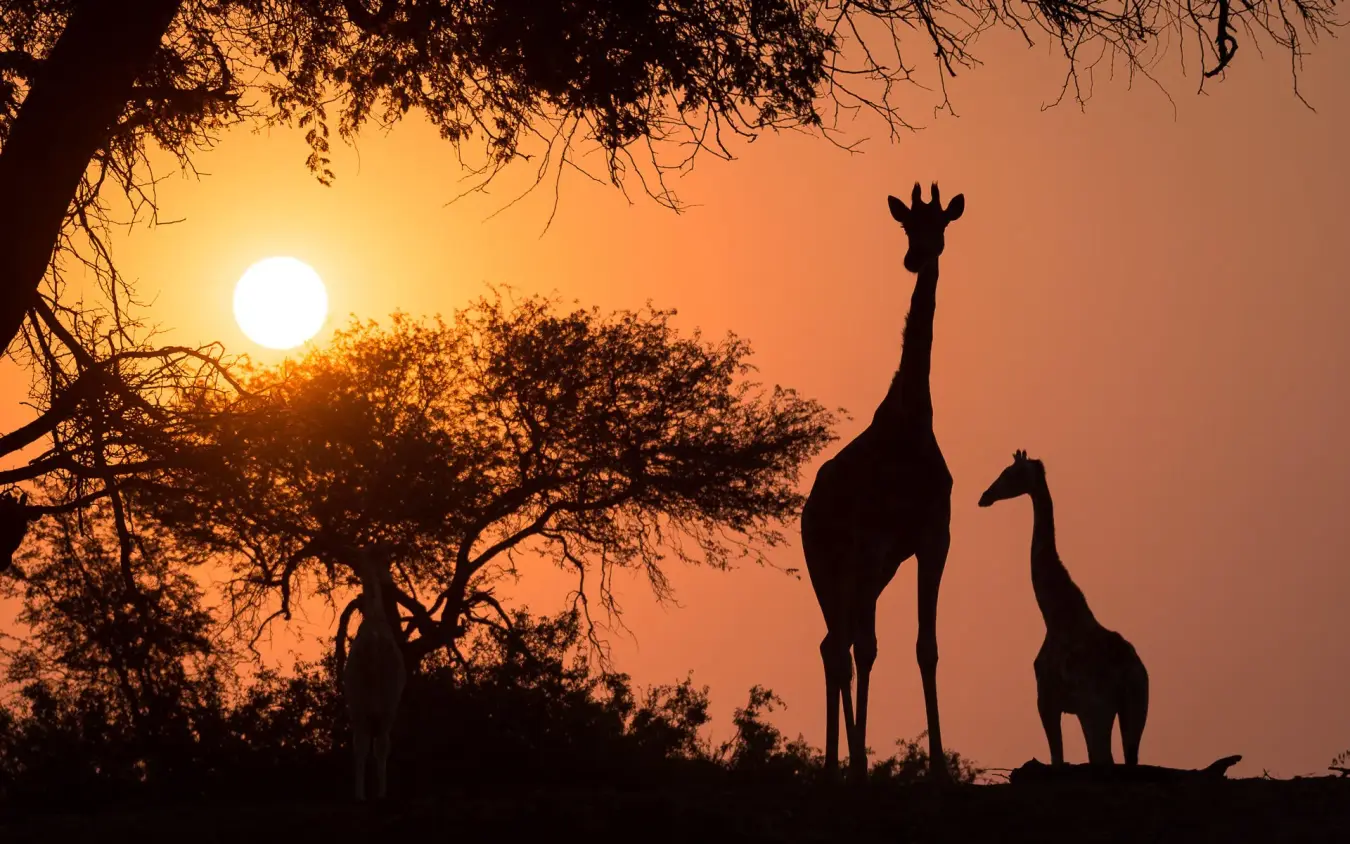
You fly north into the lower Hoanib Valley, in the Kunene region near the Skeleton Coast National Park boundary, a place reached only by air. Mornings might follow desert-adapted elephants along the dry riverbed, which also supports giraffe, gemsbok, springbok, kudu and Hartmann's mountain zebra, with lion and brown hyaena the subject of research that runs through the guiding. Later a full-day expedition runs down the river to the coast at Möwe Bay, returning by scenic flight over seal colonies and rusting wrecks. Hoanib Skeleton Coast Camp has eight solar-powered canvas suites facing a waterhole.
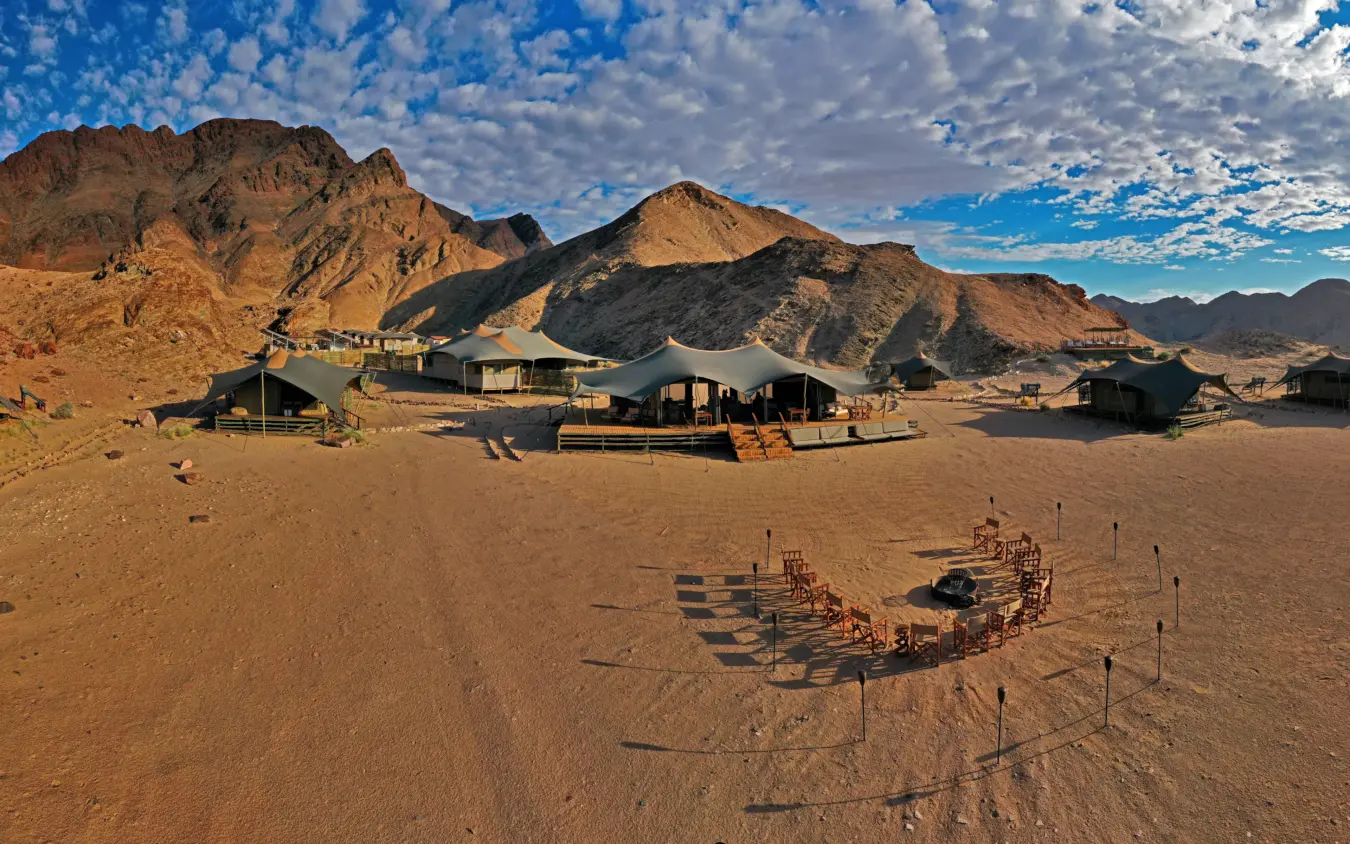
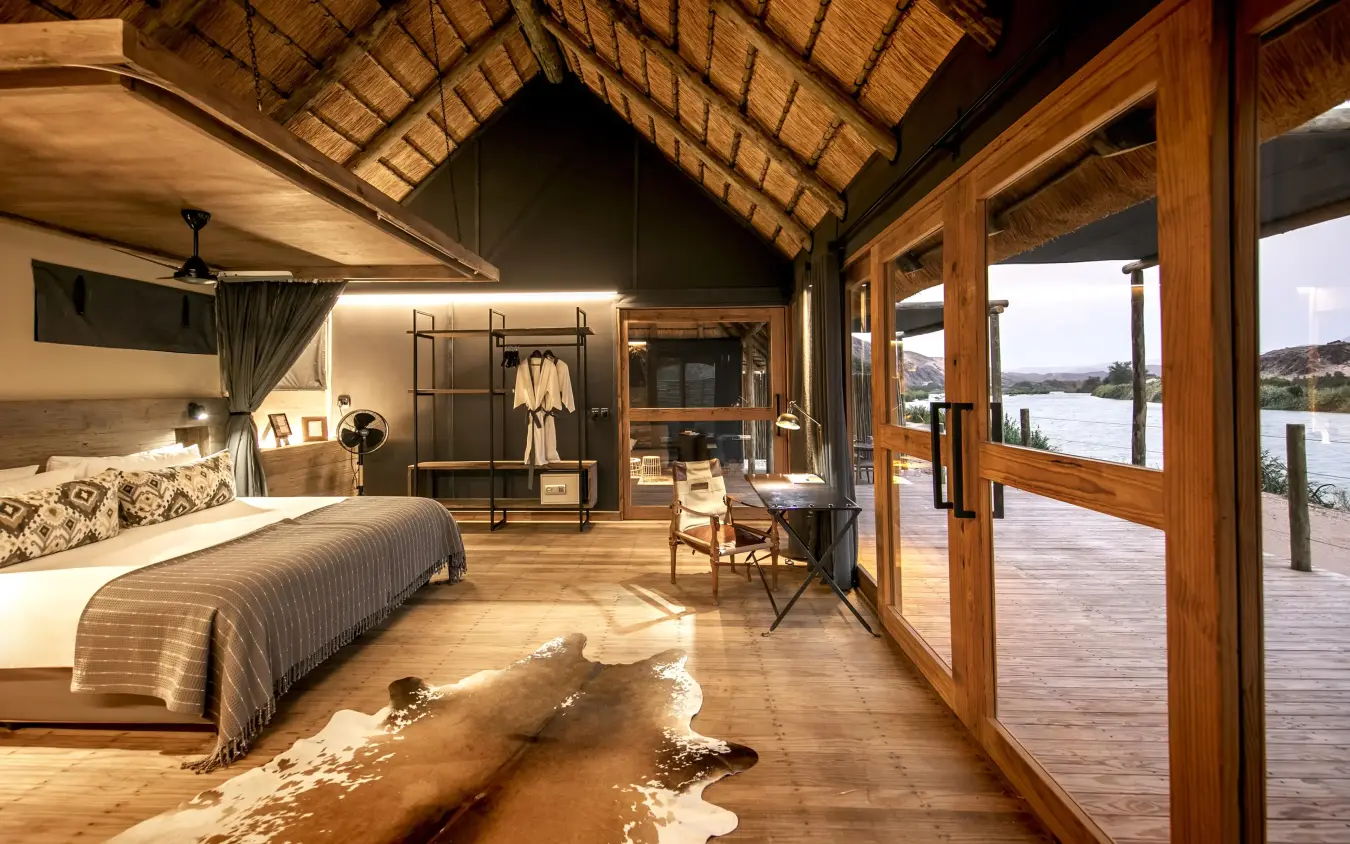
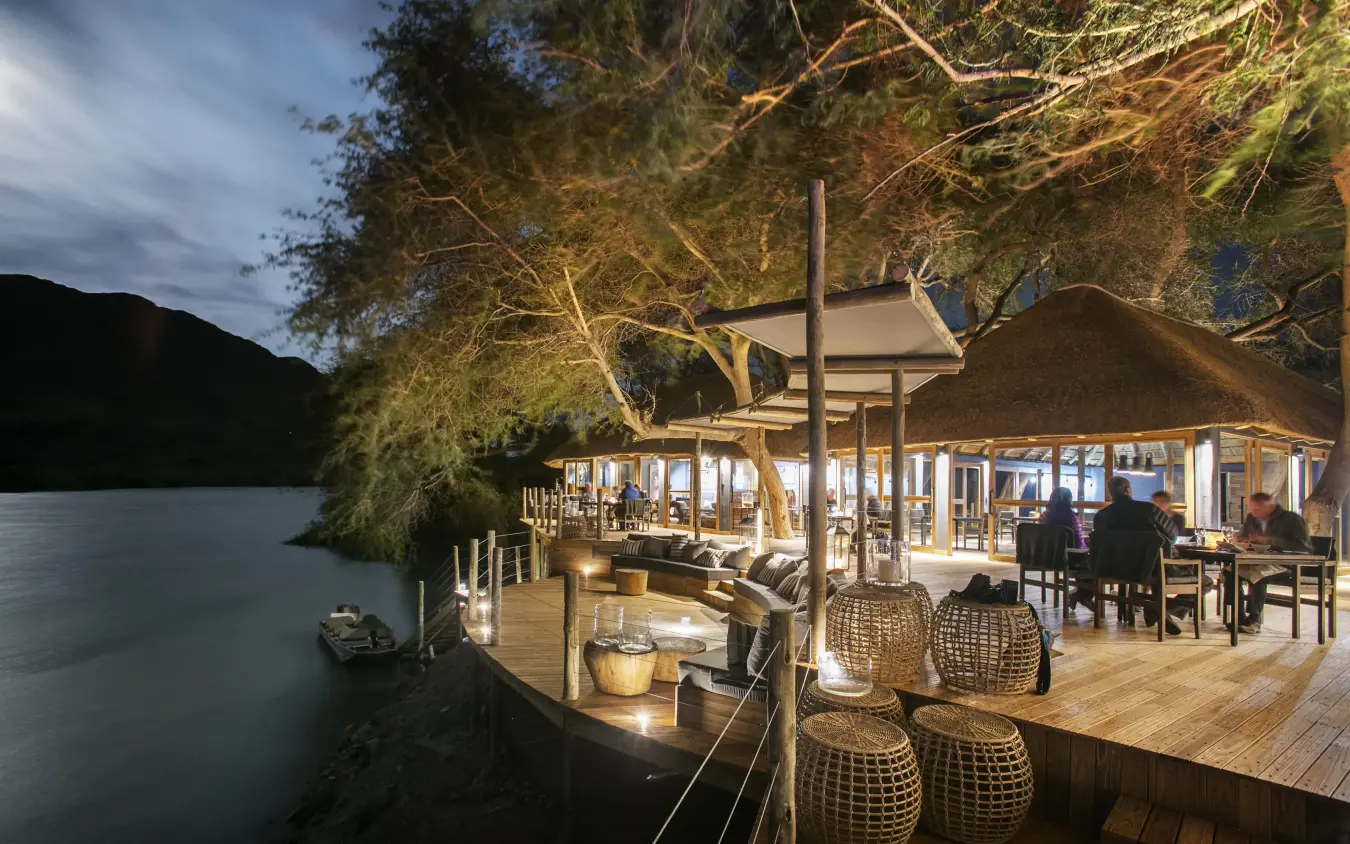
Flights link you on to the Hartmann Valley in Namibia's far north-west, where the Kunene runs as the only permanent water for a wide stretch of desert and forms the border with Angola. Open 4x4s cross gravel plains scattered with fairy circles, quad bikes stay on pre-mapped tracks through the dunes, and full days run into the Marienfluss Valley with a picnic lunch. Nile crocodiles haul out on the rocks below, and Himba women can be seen gathering water across the river. Serra Cafema has eight stilted villas above the rapids, linked by timber walkways that thread between the Ana trees.
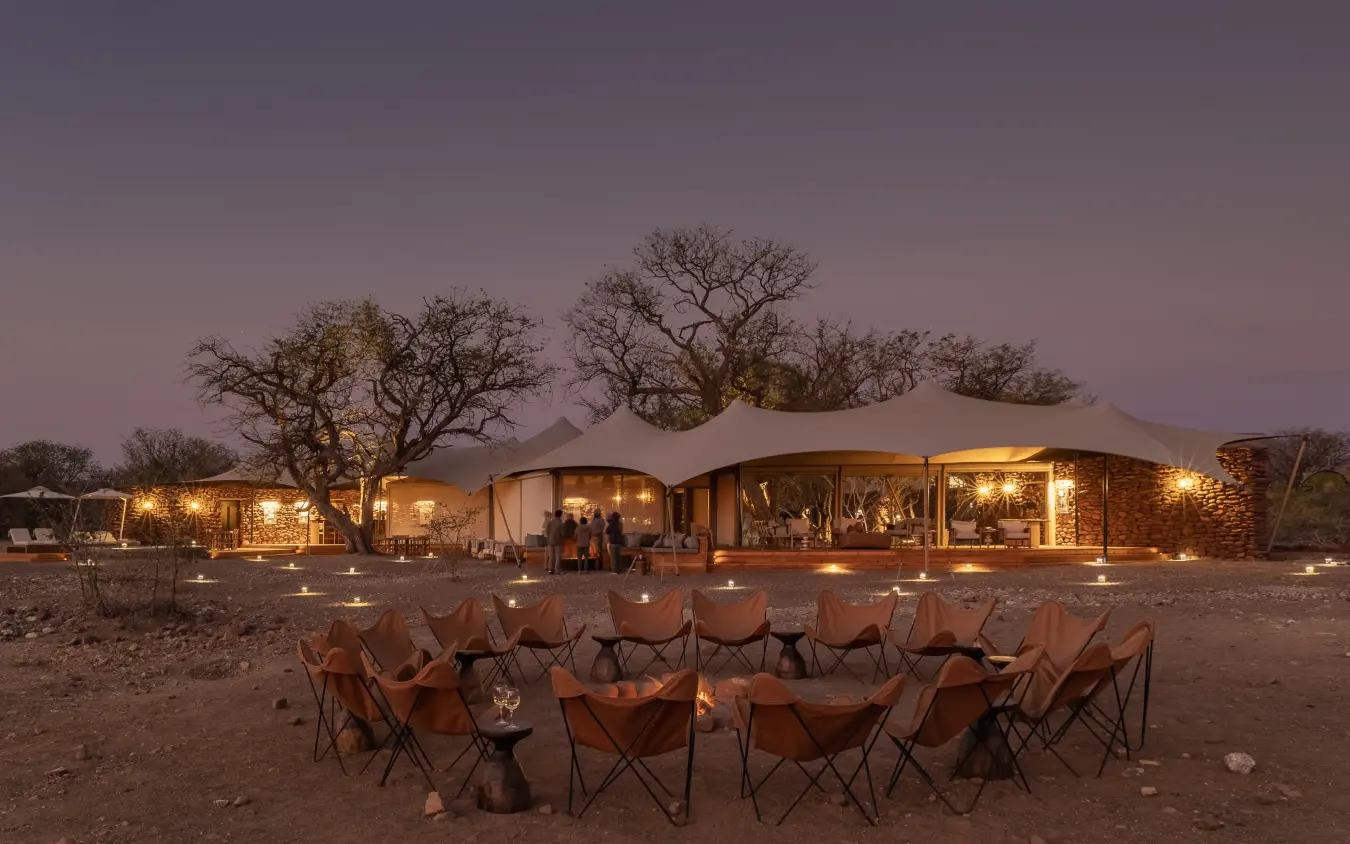
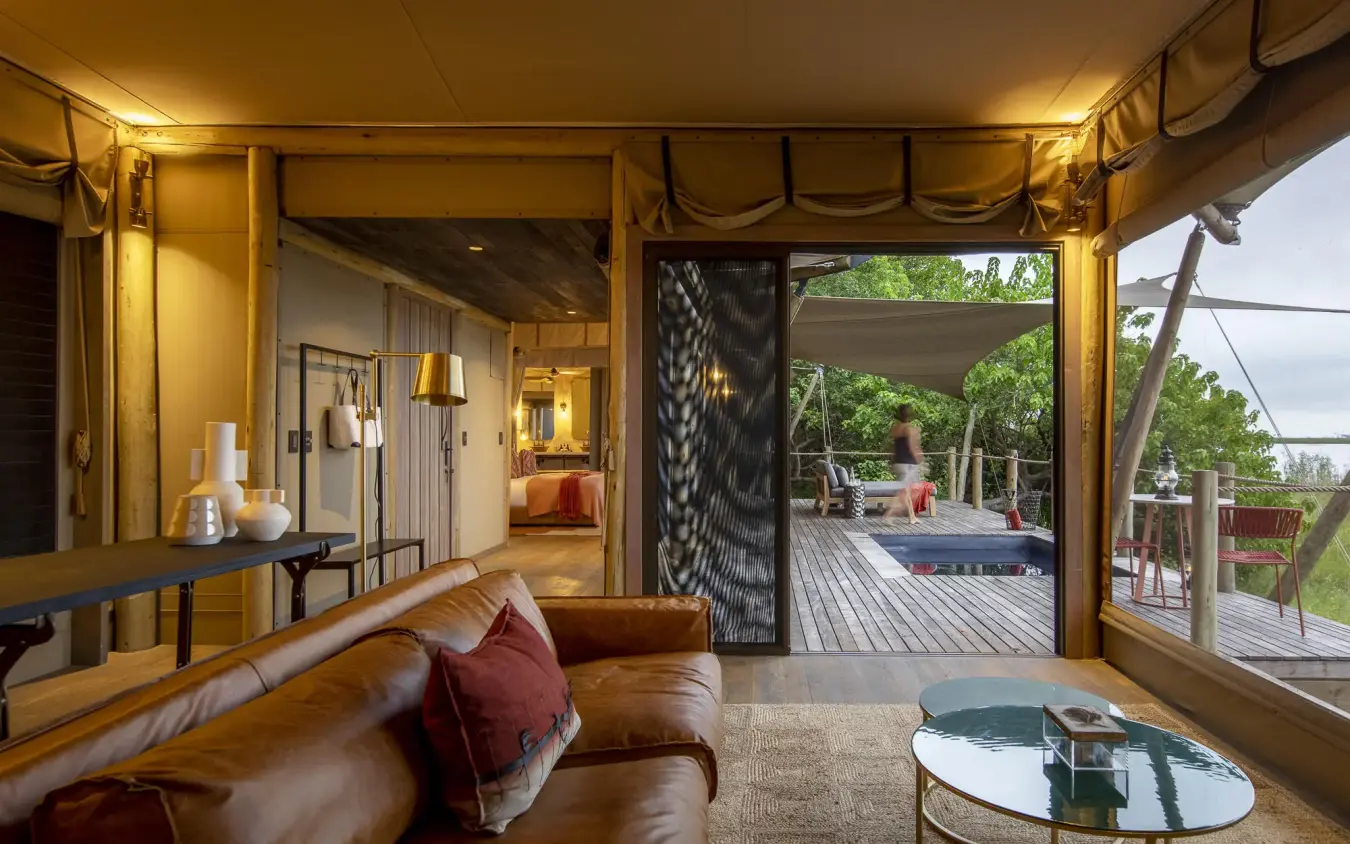
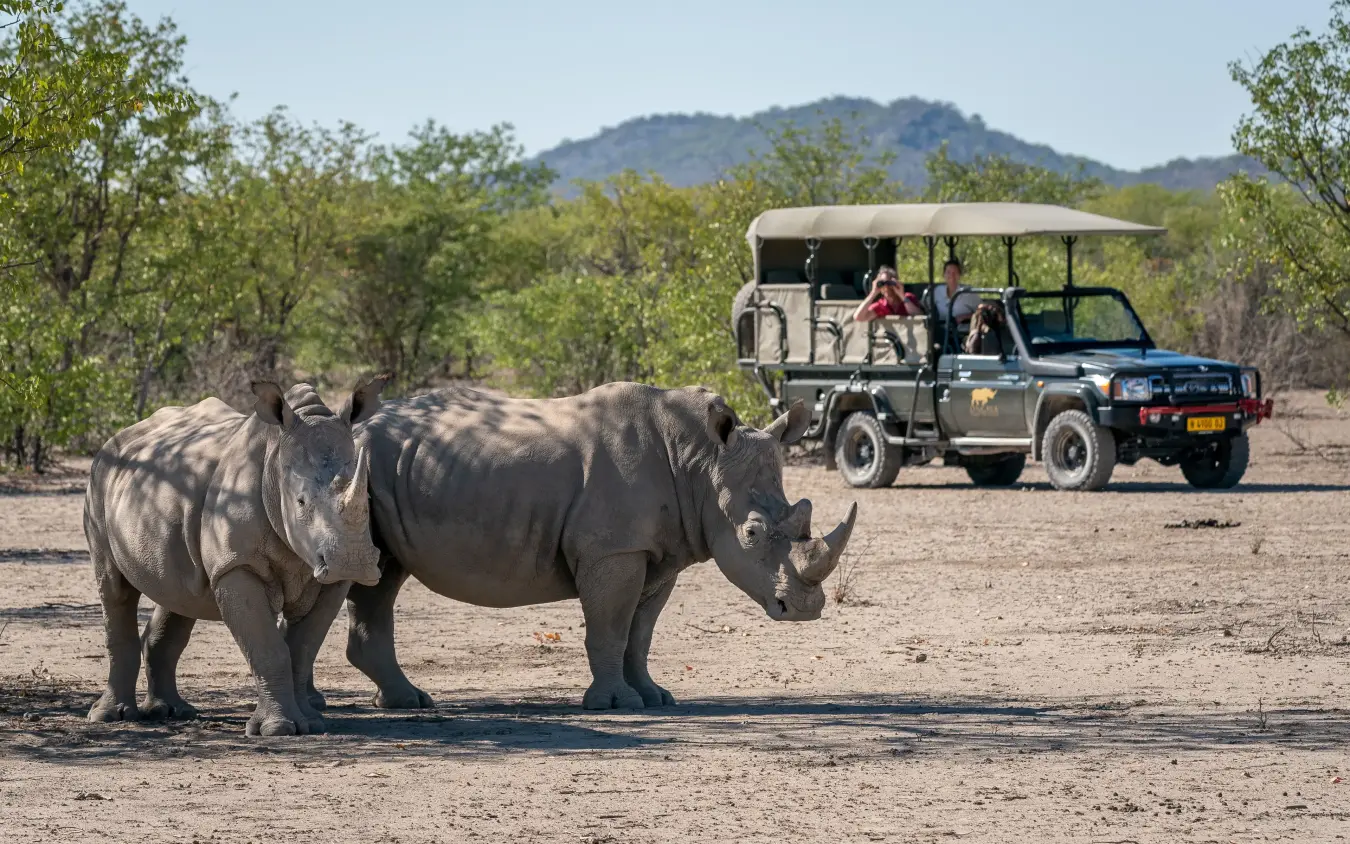
You continue to the private Ongava Game Reserve, on the southern boundary of Etosha National Park. By day you drive into Etosha's plains and salt pan through the Andersson Gate; back on the reserve, night drives, off-road tracking and walking safaris are permitted, and tracking white rhino on foot with an armed guide is the outing most guests remember. A floodlit waterhole below the villas draws black and white rhino, lions, giraffes and spotted hyenas through the night. Horizon by Ongava has just three villas above a dolomite kopje, each booking with a dedicated guide and sole-use vehicle.
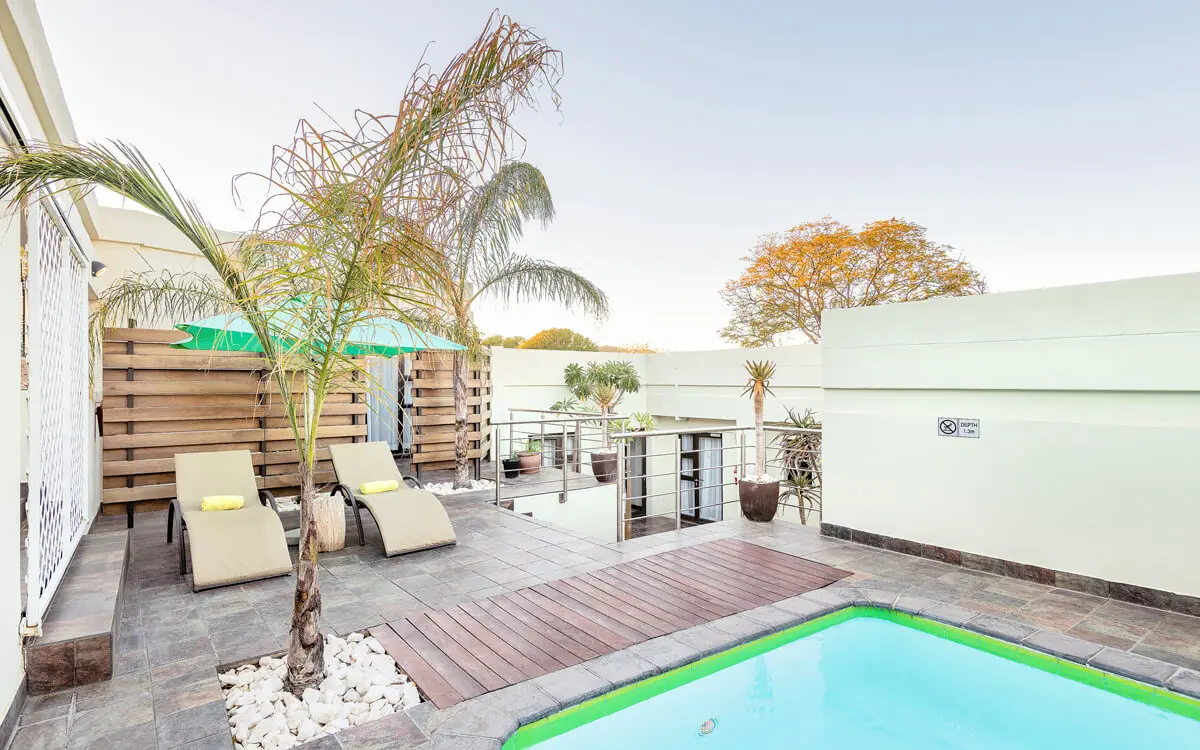
A final night back in Windhoek, on a gentle hill in the leafy Klein Windhoek suburb, a calm counterpoint to the gravel roads and dust of the north. Meals come from an open kitchen working in full view of the room, over dishes that bring Namibian game meats together with international cooking. Olive Grove keeps eleven rooms, tiered private gardens, a plunge pool and a fireplace lounge, with weavers, sunbirds and bulbuls at the aloes at first light.
It is a national park that runs for about 500 kilometres along Namibia's northern shore, from the Ugab River to the Kunene, where the cold Benguela Current meets the desert and throws up dense fog.
The name is usually traced to the whale and seal bones that once littered its beaches, and it stuck after a 1944 book about the wreck of the Dunedin Star.
From Hoanib Skeleton Coast Camp the usual plan is to:
Fog decides the detail: the camp chooses between flying and driving on the day, and the flight back goes only if the fog allows. The camp includes the outing only in stays of three nights or more, so the Hoanib gets three here.
Elephants are a fair expectation in the dry months, and lions are a bonus.
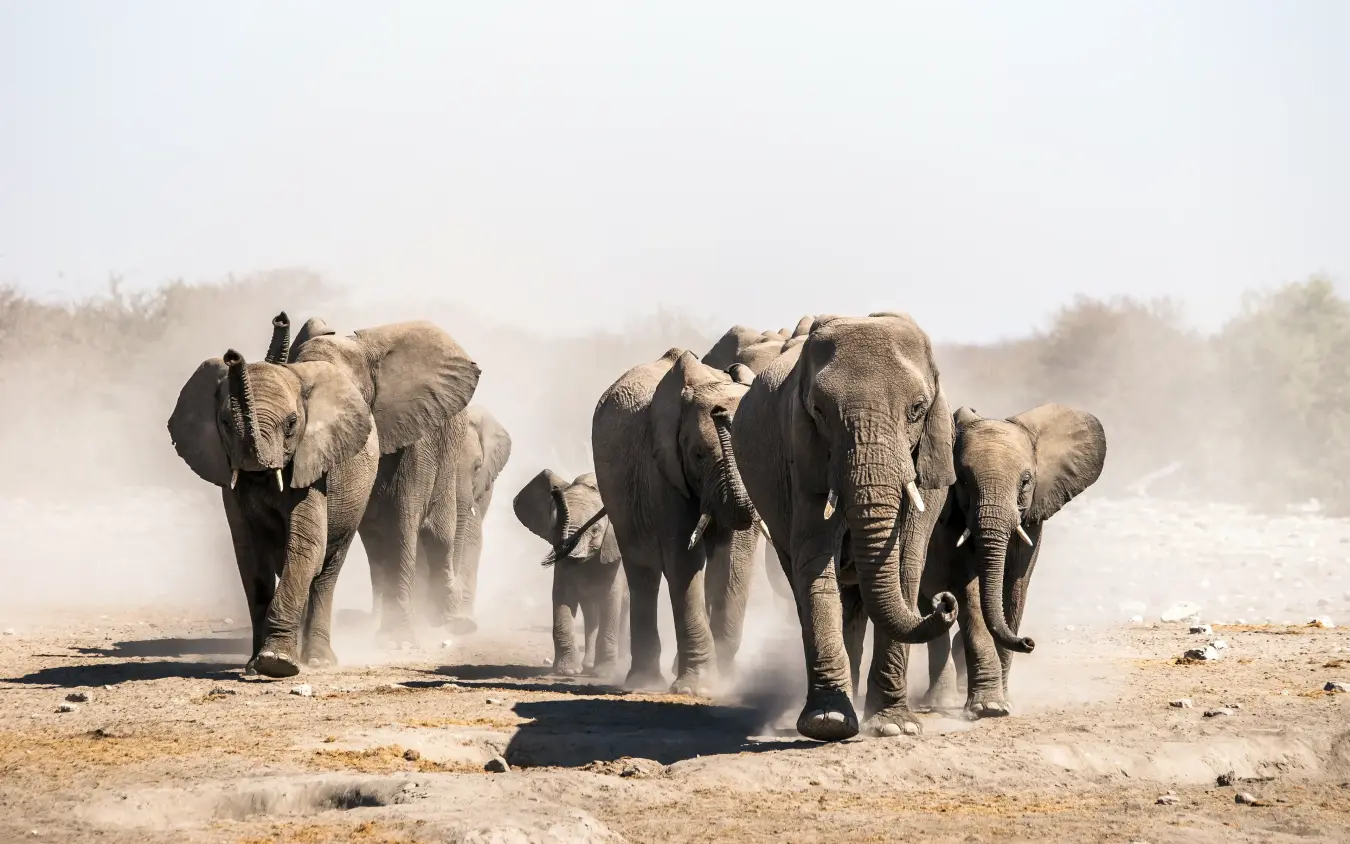
The Hoanib is one of five dry river systems that hold north-west Namibia's desert-adapted elephants, about 150 animals in all. They are savannah elephants that have learned to live here, able to go up to three days without drinking, and the family herds keep close to the riverbed, which is exactly where the camp's drives go.
Elephants move through the Hoanib seasonally, so there are quiet spells, most often after rain, when the herds spread out to feed on new grass.
Desert-adapted lions are the sighting people hope for most and the hardest to get: they are few, and they cover great distances, some as far as the beaches, where they have been recorded feeding on seals. There are no official figures, so be wary of any percentage you are quoted.
Most of this route is flown, and two of its camps, on the Hoanib and at Serra Cafema, can be reached no other way.
The aircraft are small: typically a Cessna Grand Caravan, which seats up to 12, or a five-seat Cessna 210, which is quicker over Namibia's long sectors. A flight can call at another airstrip on the way, so think of it as a bush shuttle more than a point-to-point service.
The luggage rule is strict because it comes down to weight and the size of the hold: 20 kilograms a person, with hand luggage and camera equipment counted in, packed in a soft duffel with no frame or rigid parts, no bigger than 30 by 35 by 70 centimetres. Hard suitcases are refused.
If you need more, for camera kit say, tell us early and we can ask for an extra luggage allowance, which is charged for, or arrange a private charter.
Possibly, and it depends on them, not on the camp.
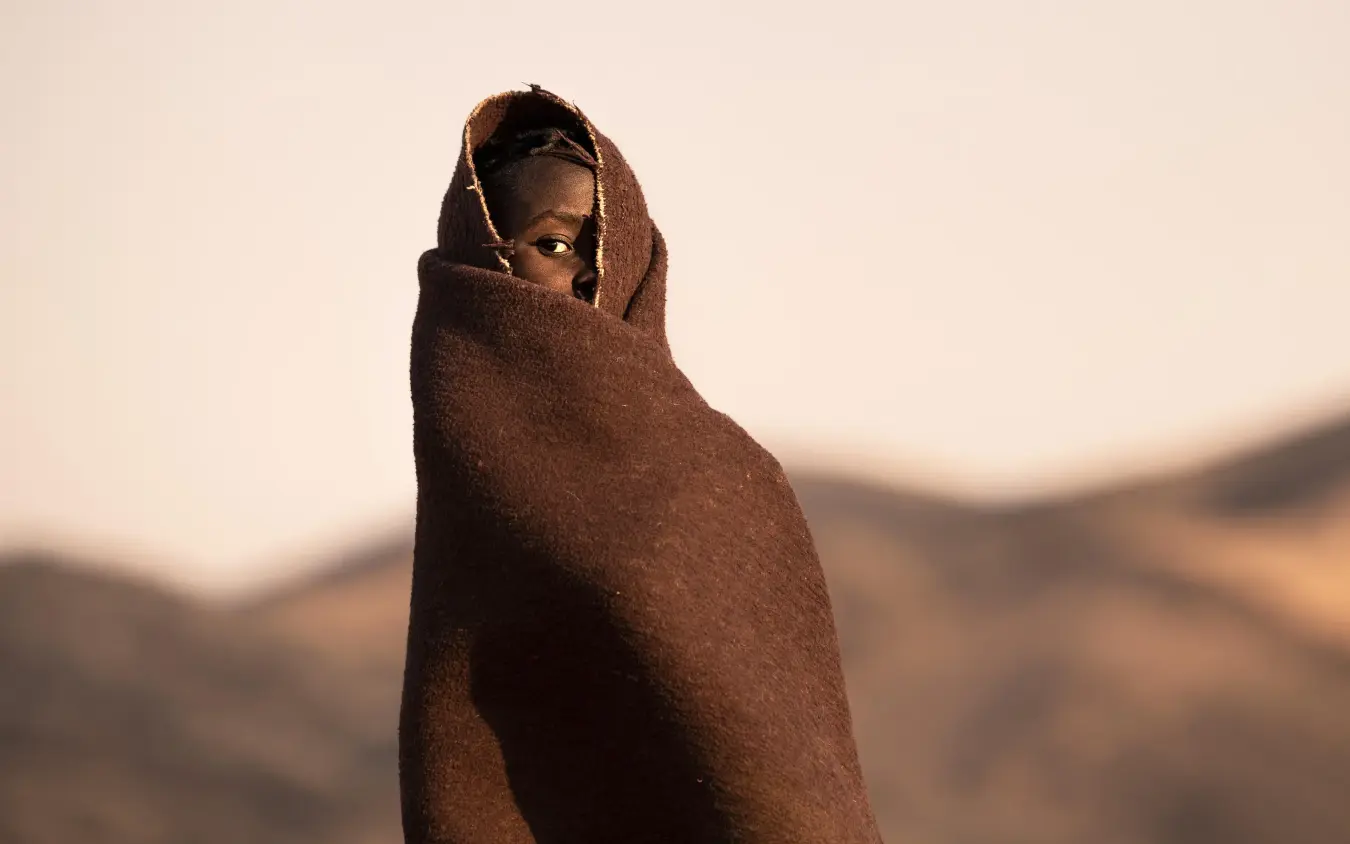
The Himba are semi-nomadic herders who live across Namibia's Kunene Region and over the river in southern Angola, and families move with their cattle and goats as grazing allows.
Serra Cafema stands inside a conservancy owned by the Himba, and when a family is living within reach the camp arranges a visit to the homestead, a ring of huts and shelters around a sacred fire and a livestock enclosure. Not every stay includes one, because it depends on where the community is at the time.
You may well see Himba women collecting water on the Angolan bank in any case. If a visit does happen, go to listen as much as to look, and ask your guide before taking photographs.
Ongava is a private reserve of about 30,000 hectares on Etosha's southern edge that holds both white and black rhino, and the white rhino are the ones you walk to.
They are grazers that feed on open grass and often keep together in small groups, which suits an approach on foot. After a safety briefing you leave the vehicle and walk in single file behind an armed guide, slowly and quietly, because a rhino sees poorly but hears and smells very well.
White rhino are found regularly on the reserve, though never to order. Black rhino are another matter: they browse in thicker bush, are often alone and do most of their feeding and drinking after dark, so the floodlit waterhole below the villas is where they are most often seen.
The reserve sets minimum ages for walking and for rhino tracking, so tell us the ages of any children when you enquire.
Come between June and September if you can.
Every stop from Sossusvlei to Etosha carries our top rating in those months, with dawn at the dunes still cool, elephants held to the Hoanib riverbed and animals crowding Etosha's waterholes. Desert nights in July and August can fall below freezing, so pack for winter as well as for sun.
May runs those months close and is quieter. October is clear but hot, most of all at Etosha, though its waterholes are then at their busiest.
From December to February we rate most of the route as challenging, and the Kunene through March as well: heat at the dunes by mid morning, storms that spread Etosha's game across the park, and the Kunene valley at its hottest.
In return the camps are quiet, the desert can turn briefly green, Etosha's pan sometimes fills and draws flamingos, it is calving time for the antelope, and the coast stays cool throughout.
Ed Charles, BBC Producer
Fitzroy are true specialists in accessing the wilderness. They know where to go and importantly, when to go there. Highly recommended.
namibia
Eleven nights across Namibia, from the Sossusvlei dunes and the Atlantic coast to the granite ridges of Damaraland.
namibia
Twelve nights across Namibia, from the Namib dunes and the Atlantic coast to rhino tracked on foot in Damaraland and at Ongava.
namibia & botswana
Ten nights from northwest Namibia's deserts and the Kunene to Botswana's Linyanti and its elephant corridors.
rated five stars by our clients

our approach
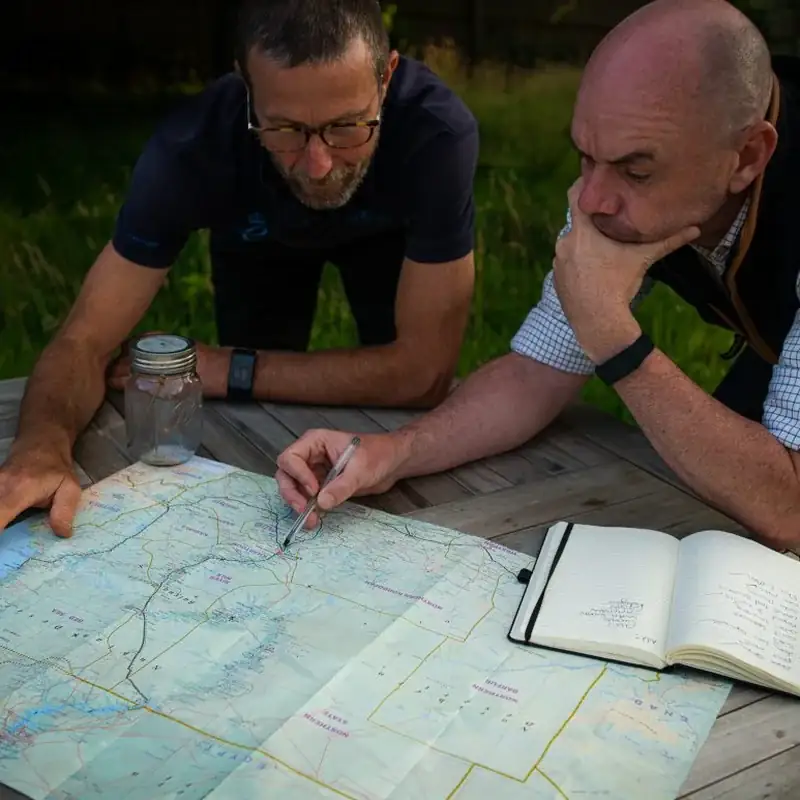
Every journey starts with a conversation. We take the time to understand your vision before we start planning.
Whether by phone or in person, we work with you directly to shape something that is considered, personal, and expertly delivered.
Every journey starts with a conversation. We favour a direct, personal approach: understanding your vision before anything else.
Whether by phone or in person, we work with you directly to shape a journey that is both thoughtfully considered and expertly delivered.
Get in touch to start planning yours.