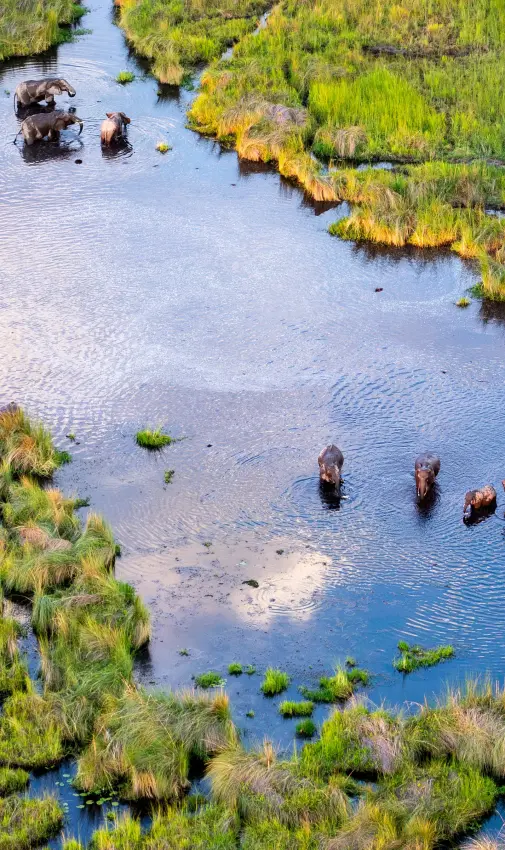
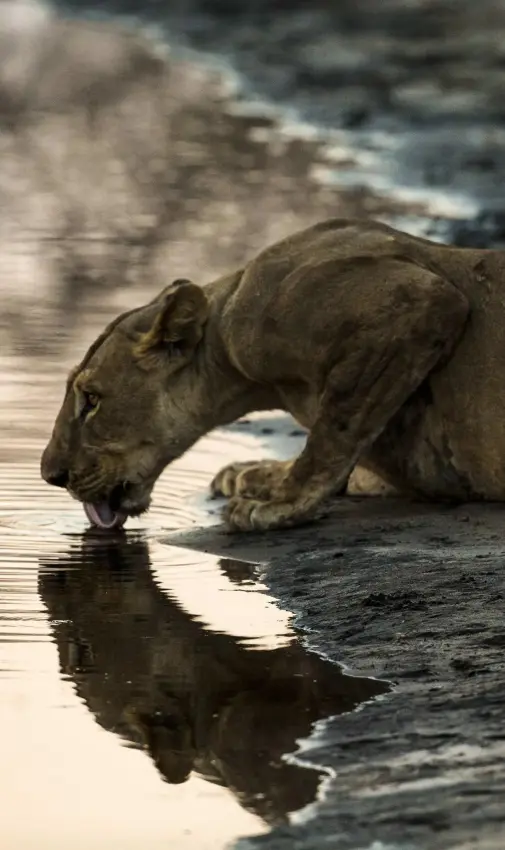
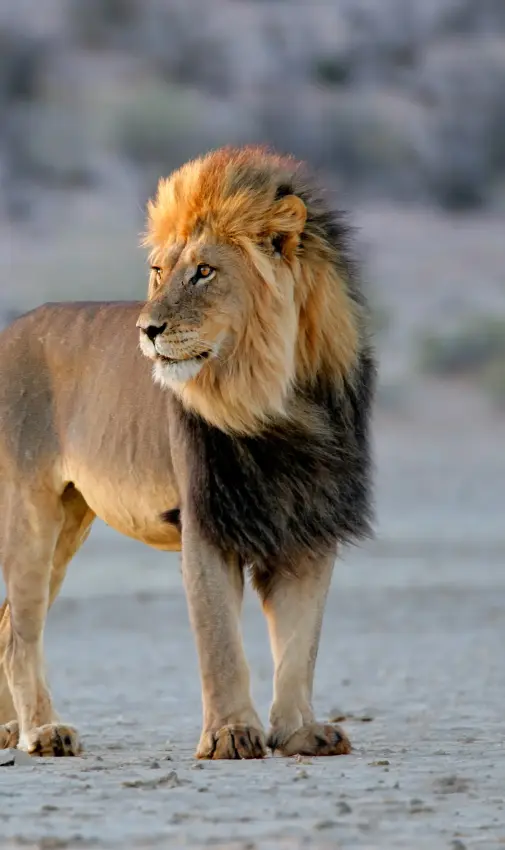
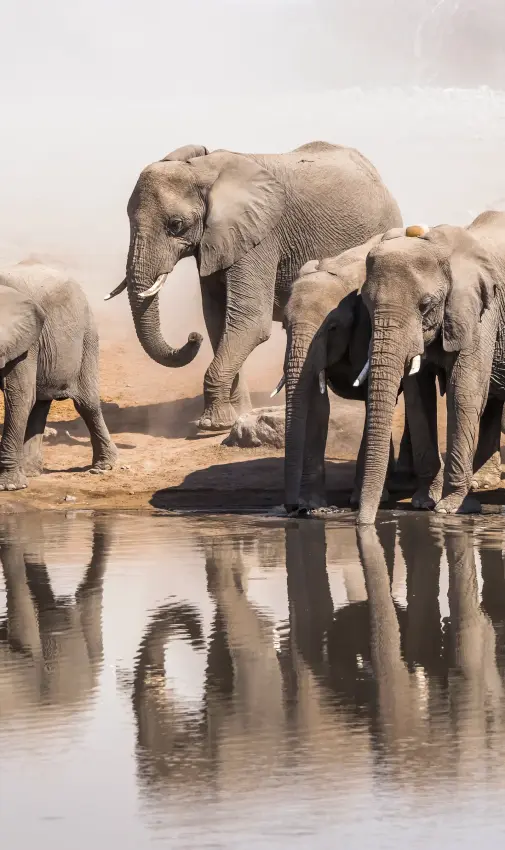
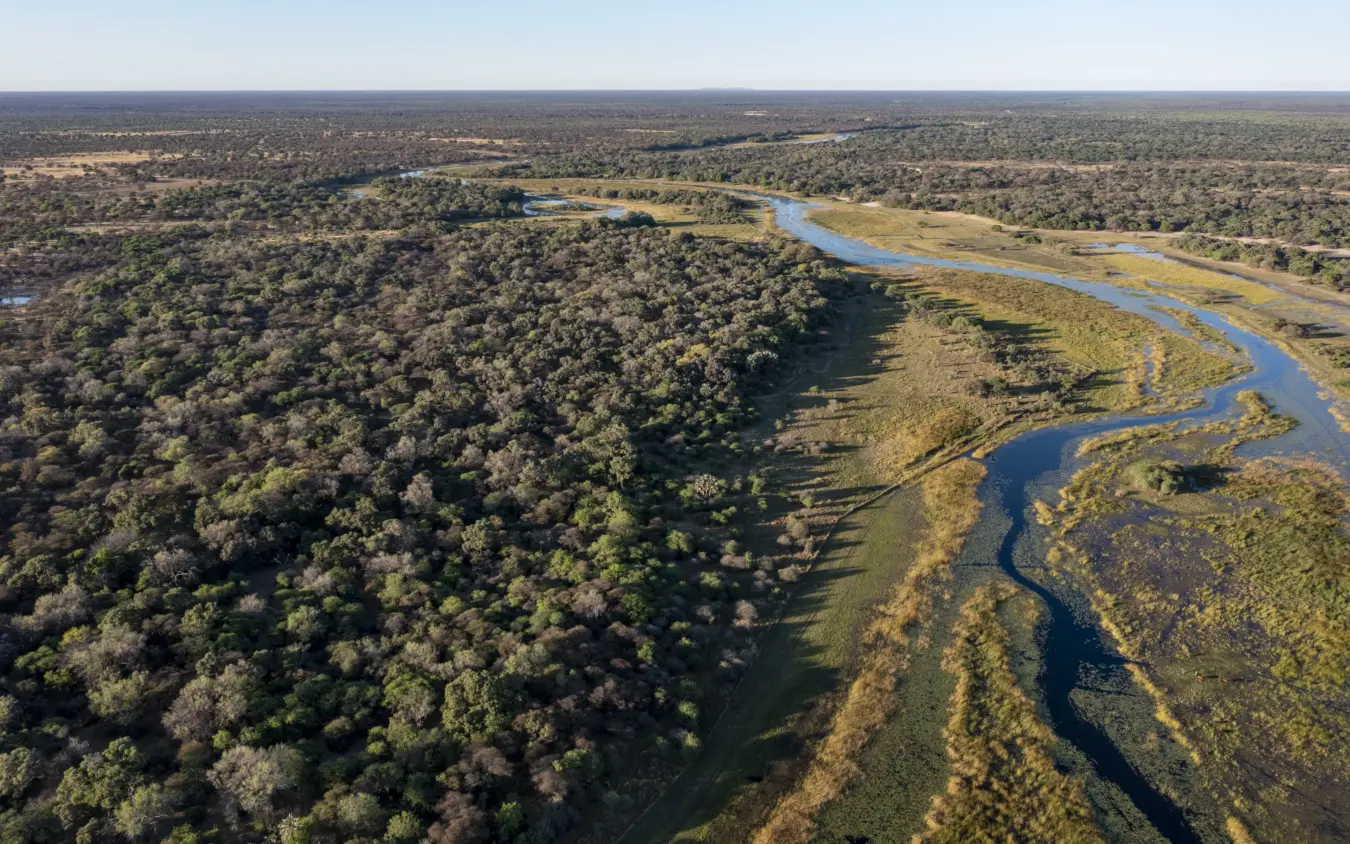
The Mashatu Game Reserve covers 42,000 hectares of private land where the Limpopo and Shashe rivers meet, with Zimbabwe and South Africa across the water. Its elephants, the old relic herds of the Shashe, gather in some of the largest concentrations on private land in southern Africa. Lion prides are resident and cheetahs hunt the open savanna, while leopards lie up in the riverine Mashatu trees or along rocky drainage lines. On private land, guides may leave the track to follow the big predators, and no more than three vehicles are allowed at any one sighting.
The days here are not spent only in the vehicle. The sunken Matebole hide brings cameras down to ground level at a busy waterhole, close enough to watch the elephants crowd in to drink. Walks go out on the same ground with experienced guides, and riders with experience can cover it on horseback. Not every outing is about wildlife, either: village visits lead to neighbouring communities such as Motlhabaneng. Even the meals move around, with dinner and brunch set up in different spots across the reserve. Then, after dinner, a night drive goes out with a spotlight, looking for owls and other night creatures, and for leopards on the hunt.
After dark, the rasp of a leopard and the rumble of elephants carry up from the gorge.
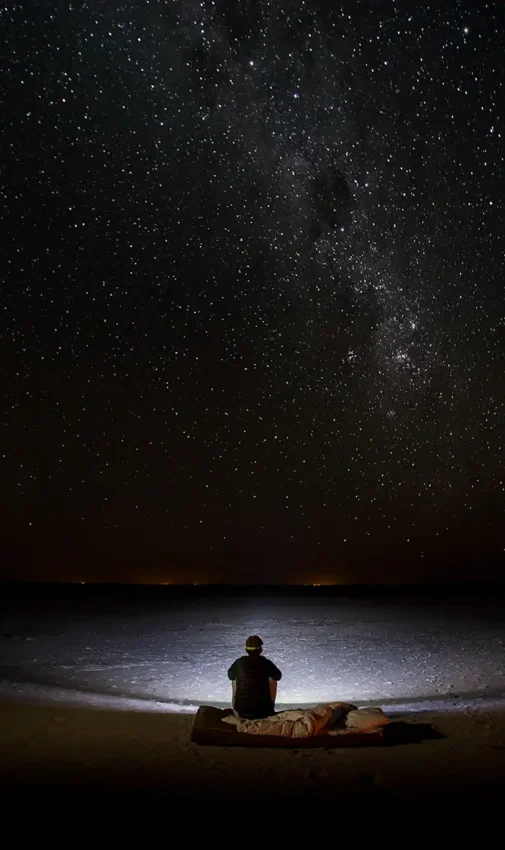
Back at camp, dinner is served outdoors or in the boma, and the kitchen cooks dishes with an African twist. Lit from below, the euphorbias stand out against a night sky without light pollution. After dark, the rasp of a leopard and the rumble of elephants carry up from the gorge. Owls call through the night, under the scrape of the herds digging at the sand. At dawn, the baboons take over, chattering along the rocks.
The journey in is short. A scheduled flight from Johannesburg lands at Limpopo Valley Airfield, the reserve’s own airstrip, where customs and immigration are cleared on arrival. From there, camp is about thirty minutes away by road, across country with a human story far older than the reserve, marked by hundreds of Stone Age and Iron Age sites. The camp is built to sit lightly on that ground. It runs on solar power and treats its own water, and nearly all of the team are from Botswana.