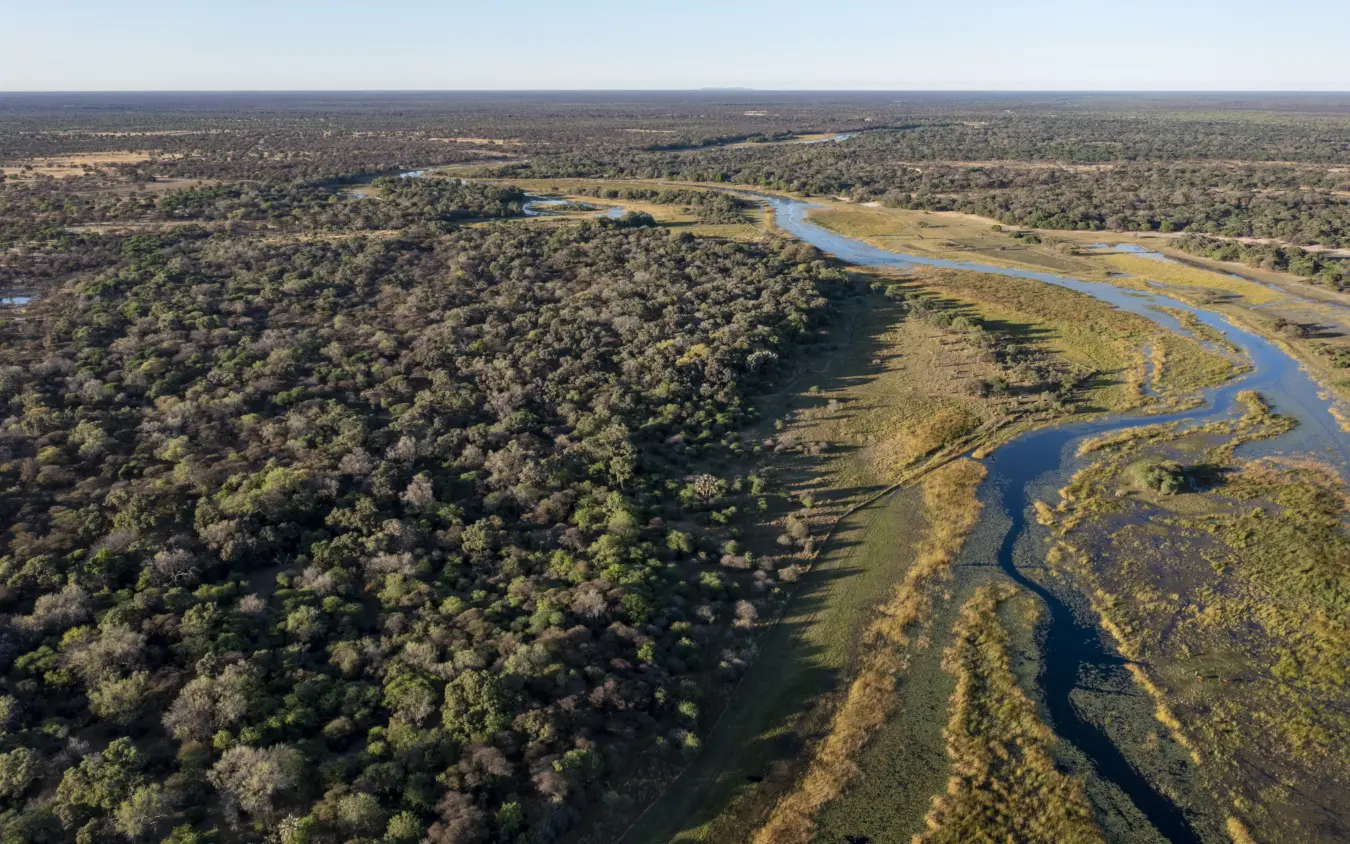
Dereck and Beverly Joubert built Zarafa Camp in 2008 as their idea of a safari camp done properly, old-world styling matched to a genuinely light environmental footprint. Both are National Geographic filmmakers and conservationists, and their decades in Botswana’s wilderness run through the camp’s design and its way of working. The name comes from a giraffe presented to Charles X of France in 1826, and Zarafa went on to become Botswana’s first Relais & Châteaux member, a standard that reaches its kitchen and its service as surely as its rooms.
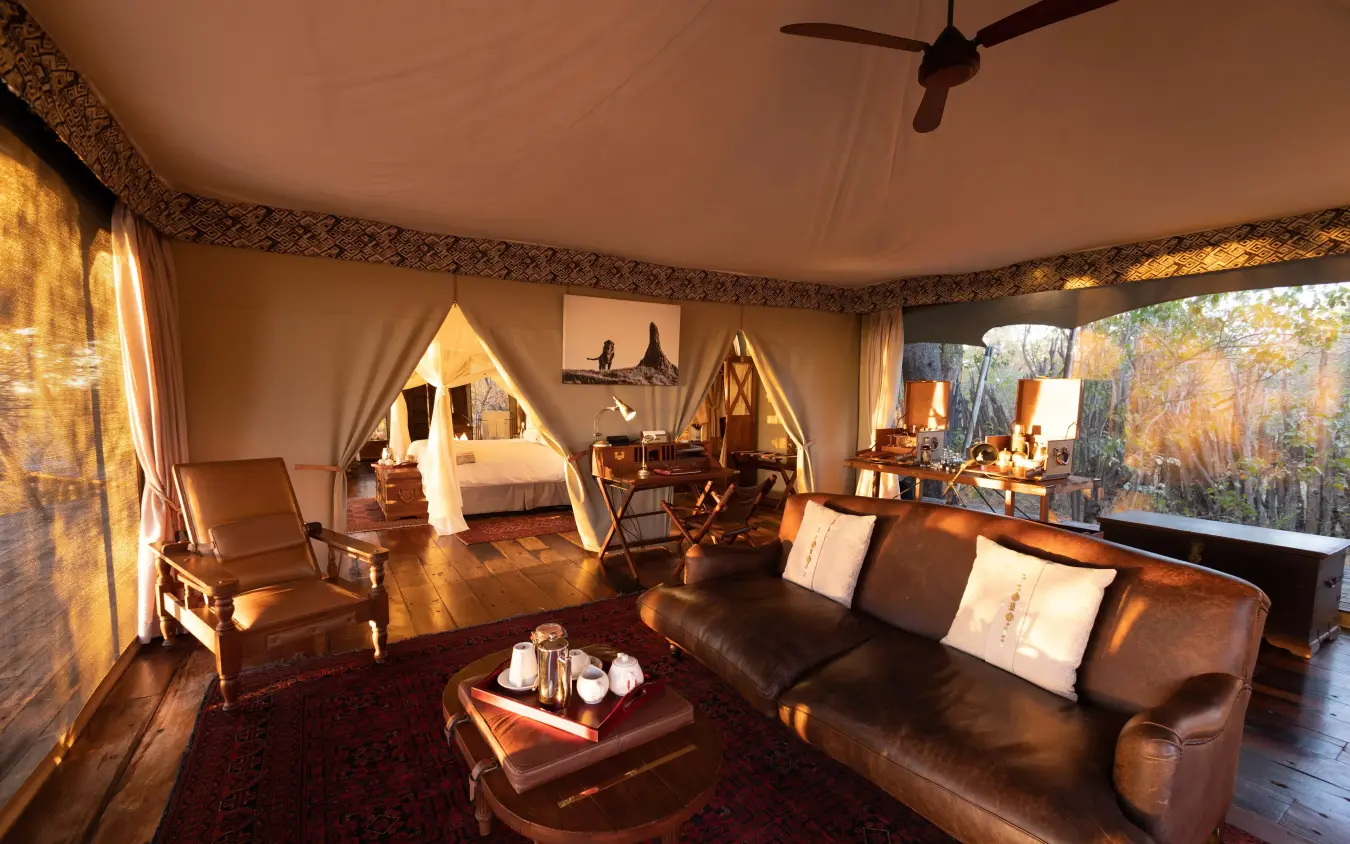
Each of the four suites runs to 100 square metres, raised on decking built from century-old teak railway ties beneath a canopy of ebony trees. A bedroom opens onto a full lounge and an open-plan bathroom, where a copper claw-foot bath is positioned for the lagoon view. There are indoor and outdoor showers, and a fireplace for the cold winter mornings. Zanzibari carved doors, Persian rugs and leather armchairs set the tone alongside hardwood furniture handcrafted from reclaimed timber, and each suite has its own plunge pool and a deck over the water.
There are indoor and outdoor showers, and a fireplace for the cold winter mornings
The separate Dhow Suite is a private villa within the same camp, its two en-suite bedrooms opening onto a shared lounge and dining area, with a plunge pool of its own and a dedicated vehicle, guide, chef and camp manager. It suits families or small groups who want the seclusion of a private camp without leaving Zarafa’s setting. Children are welcome in the main camp too, where a Young Explorers programme fills the younger days with birding and tracking, cooking and art.
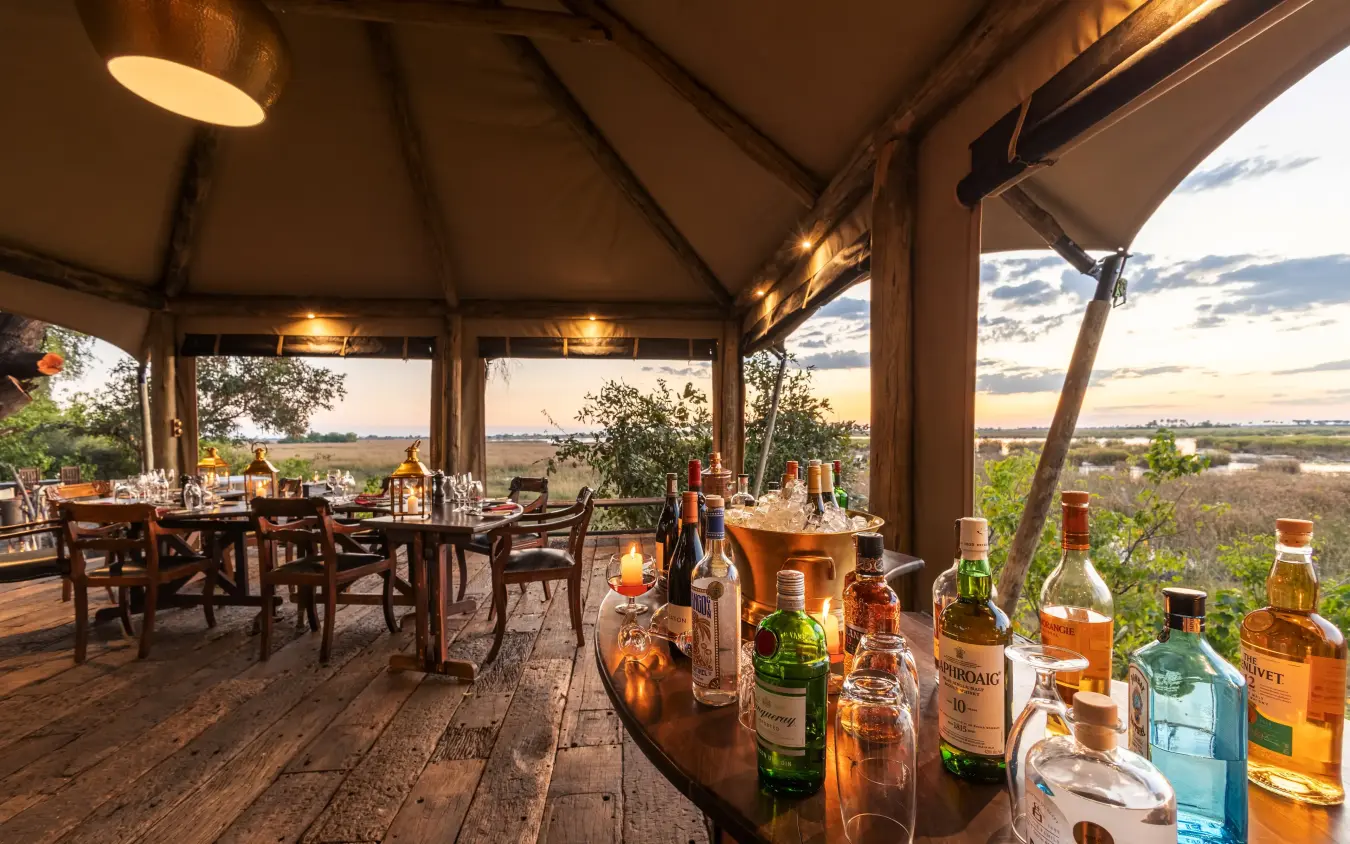
As a Relais & Châteaux property, the kitchen answers to a defined standard rather than a general safari-camp average, and meals move with the mood of the day. You might eat in the main dining area, on the deck under the ebony canopy, at a fireside boma or over a private dinner on your own suite deck, with a wine cellar for tastings. The camp runs entirely on solar power and filters its own drinking water to do away with single-use plastic, while an on-site biogas system turns kitchen waste to cooking gas. A conservation and community levy on each stay supports the Great Plains Foundation’s wider work across the region.