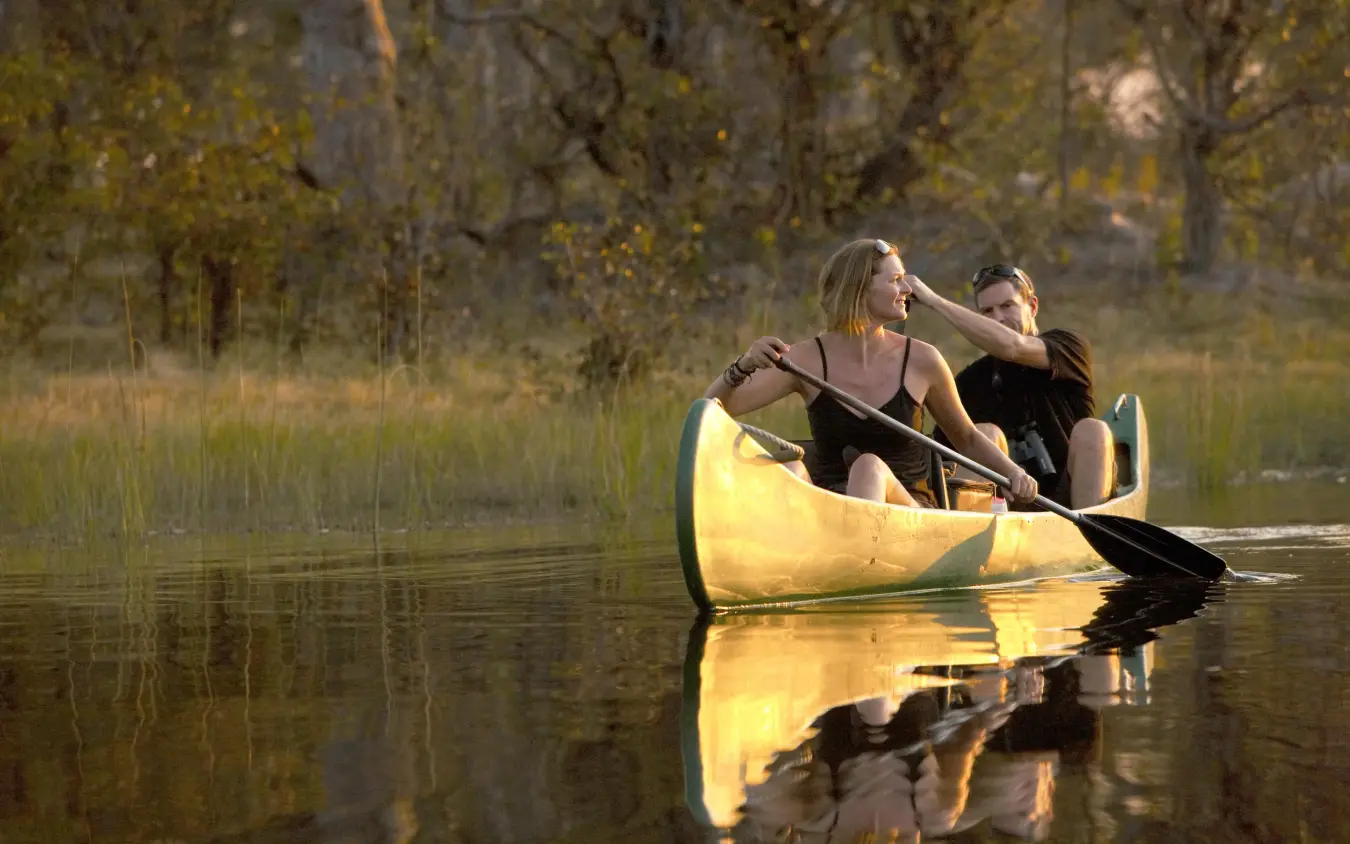
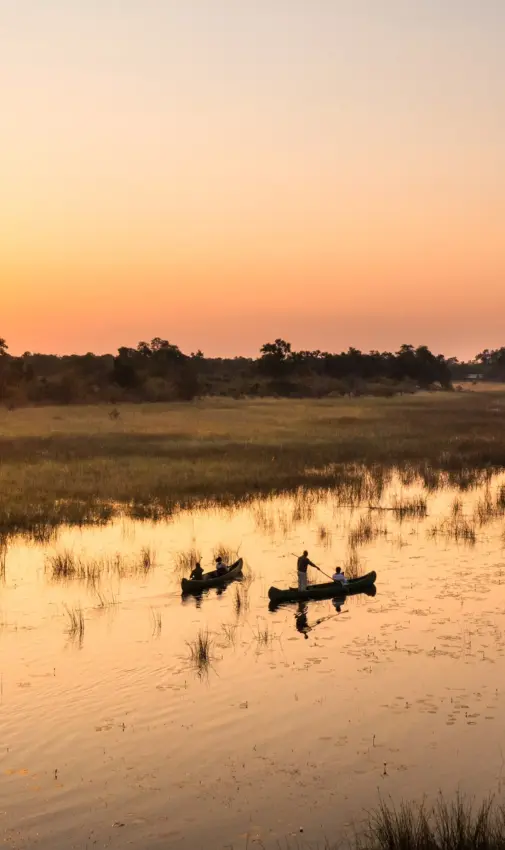
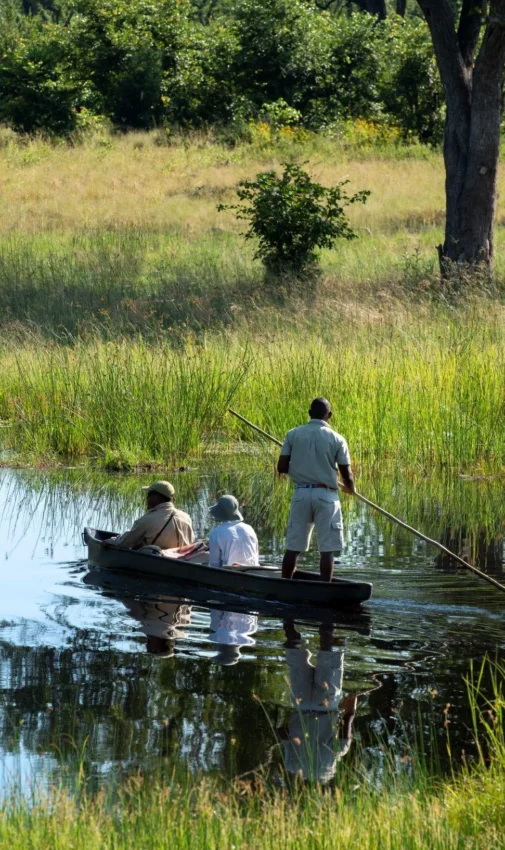
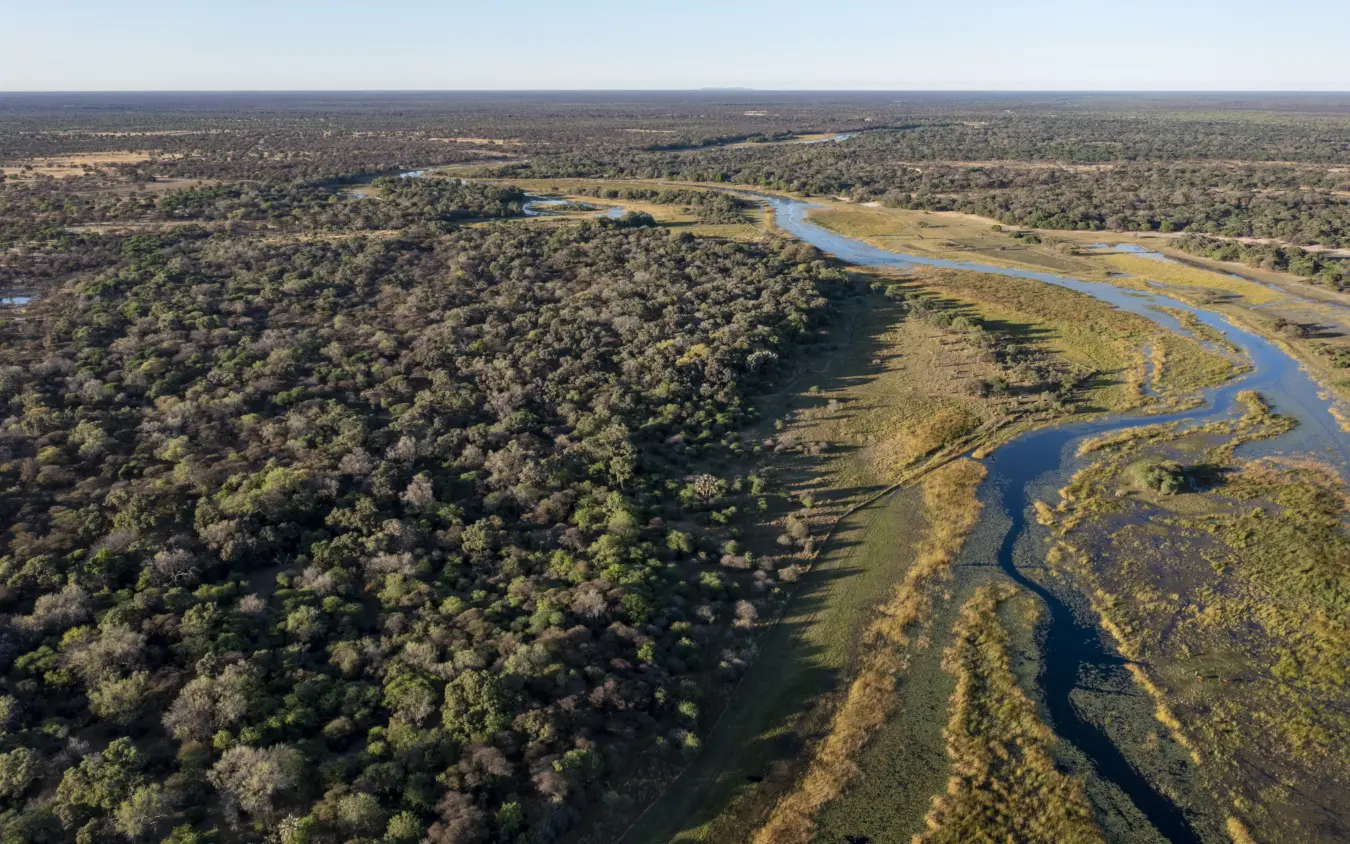
The Selinda Reserve runs between the Okavango Delta and the Linyanti wetlands, and the spillway threads through its centre as an ephemeral channel, sometimes a dry bed, sometimes a flowing river, depending on how far the annual floodwaters reach. That variability sets the rhythm of a stay. When the spillway carries water, canoeing opens up and birdlife concentrates along its banks. When it dries, walking and driving cover the same ground on foot and by 4×4, and the days shift with the season.
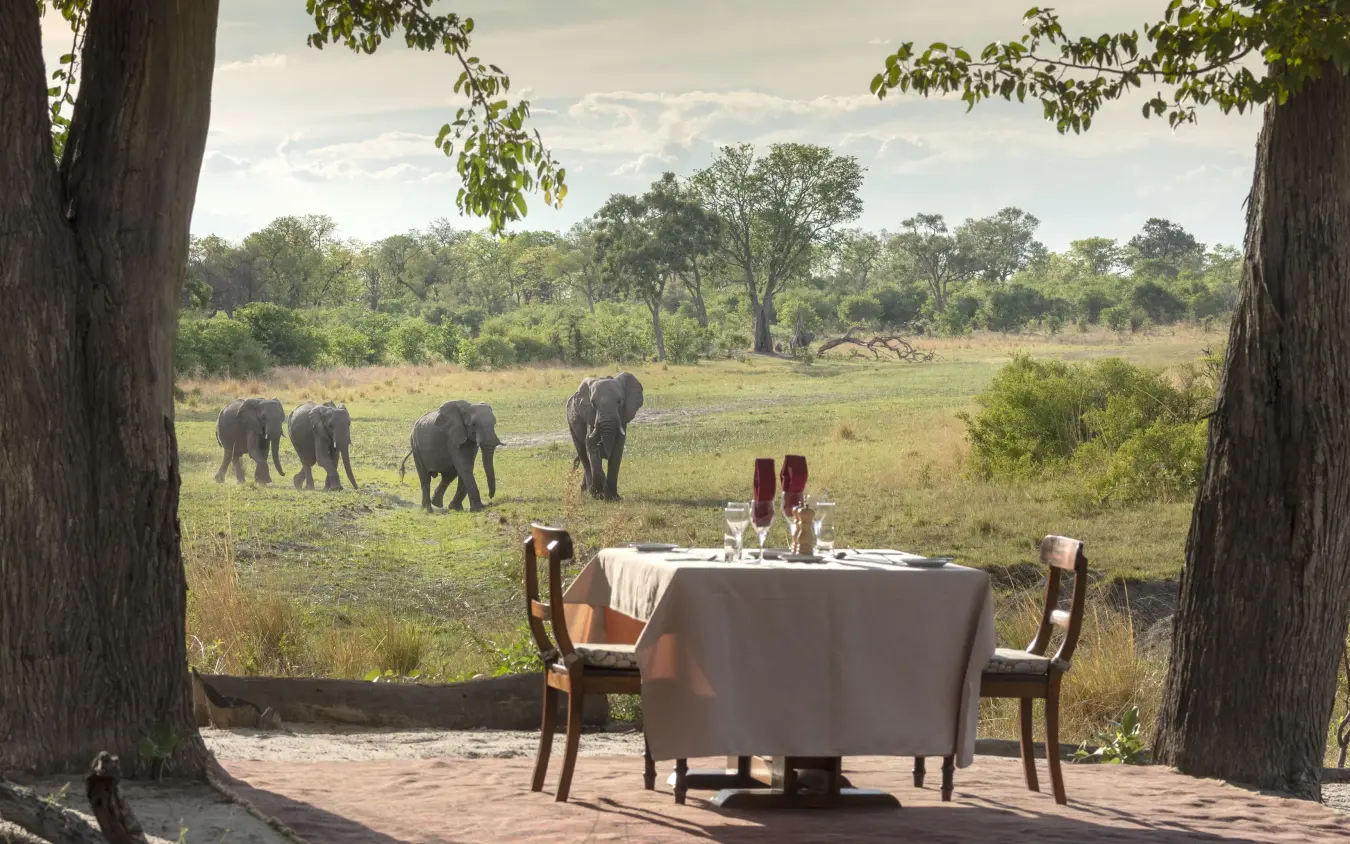
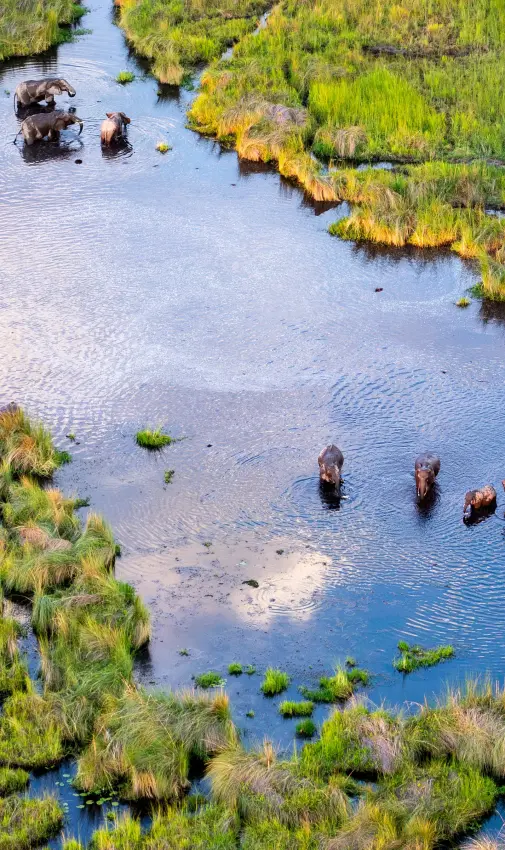
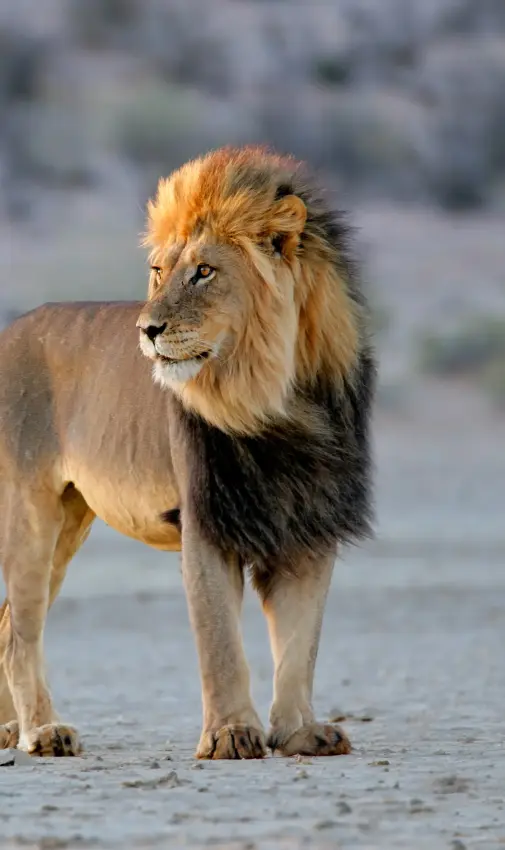
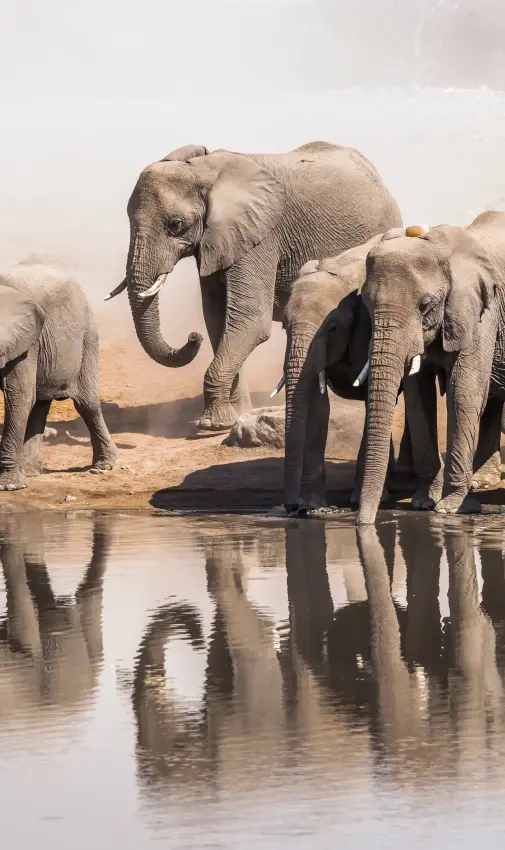
This is dense predator country, where lions, leopards and cheetahs turn up regularly on walks and drives, and where a strong population of African wild dogs makes this one of the more reliable places in Botswana to track the species on foot. At the peak of the dry season the elephants gather, more than 9,000 moving through the reserve, and the plains fill out with buffalo and giraffe, with eland, roan and sable among the antelope.
When the spillway carries water, canoeing opens up and birdlife concentrates along its banks
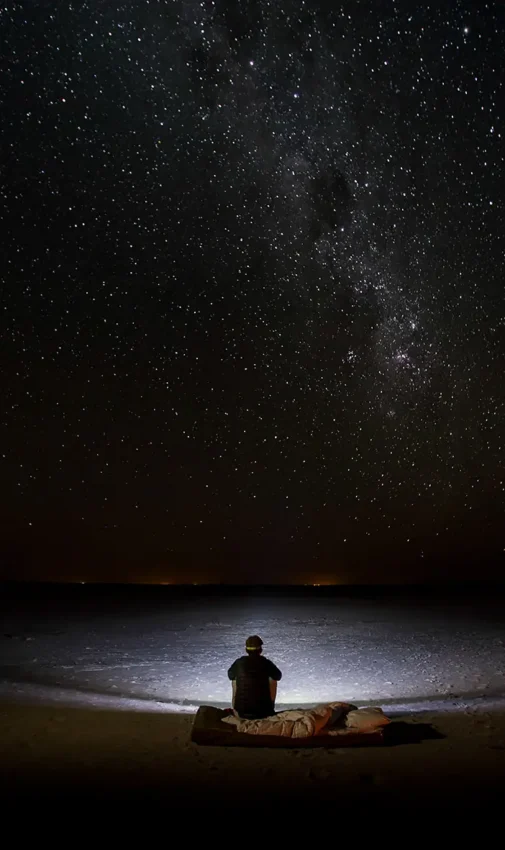
Because the reserve is privately held rather than a public park, the days can hold what a national park would not permit: night drives, off-road tracking, walking safaris. Around them come catch-and-release fishing on the spillway, birdwatching and astronomy under dark skies, and helicopters that open up ground far beyond an ordinary reach. A Young Explorers programme adapts it all for children, so the walking and canoeing carry down a generation.
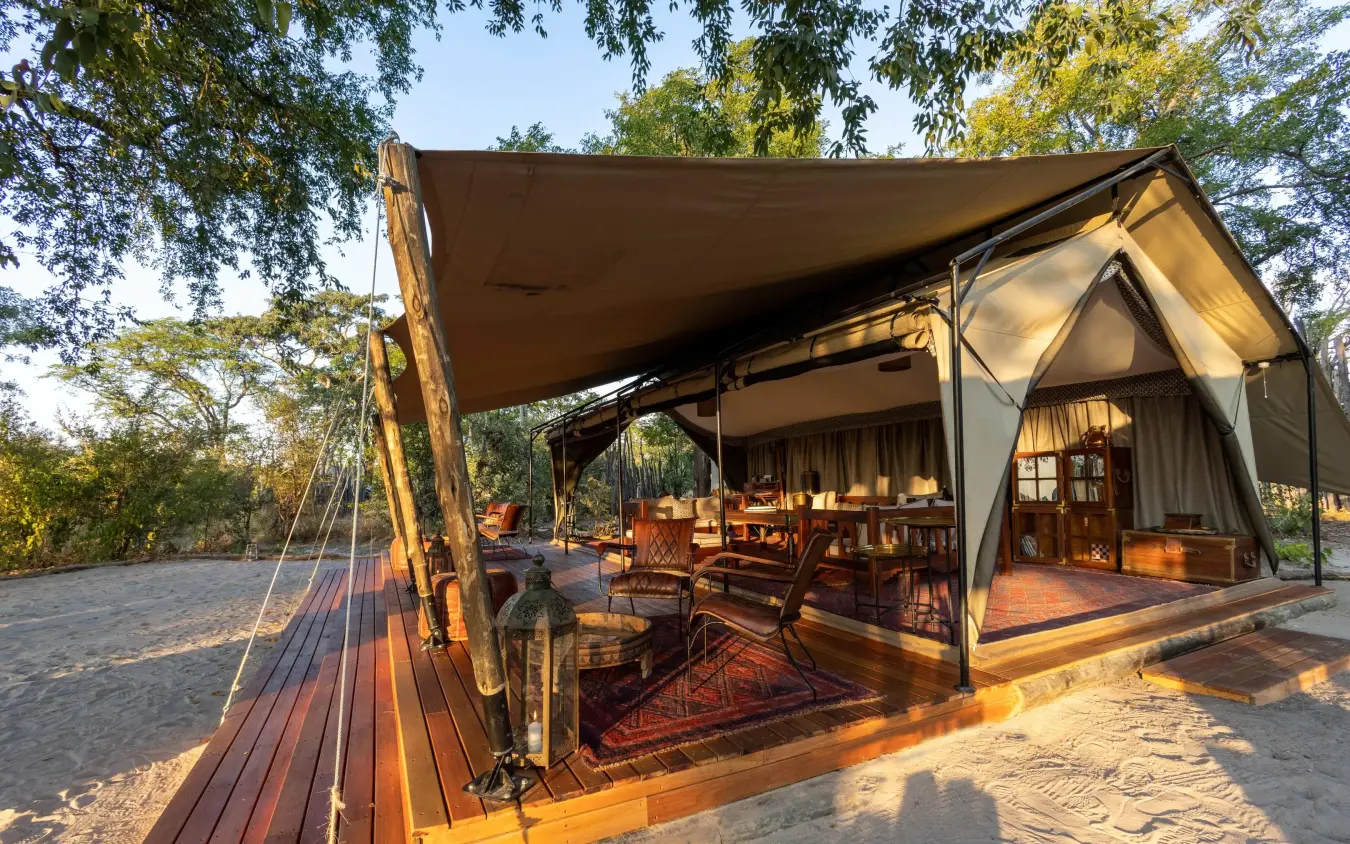
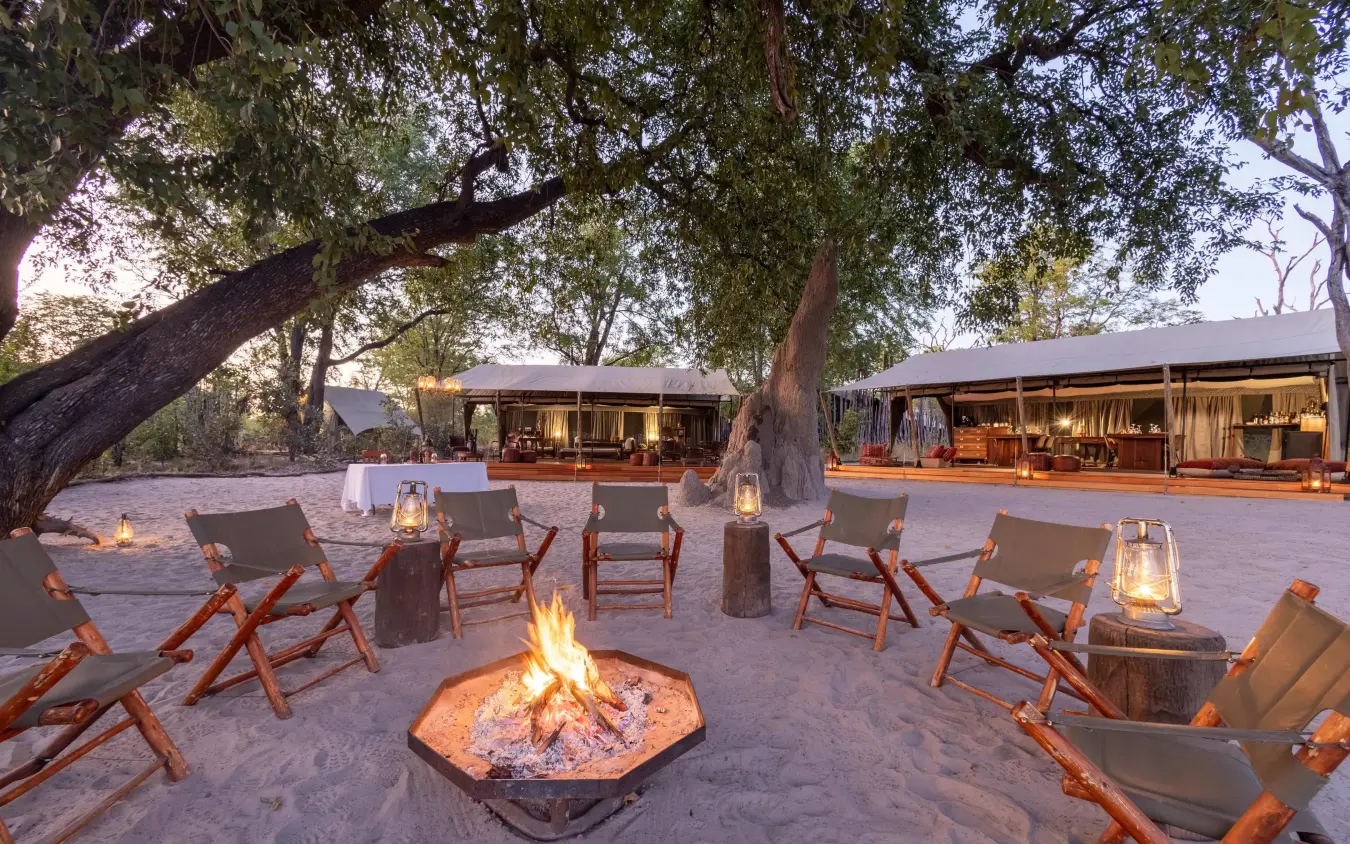
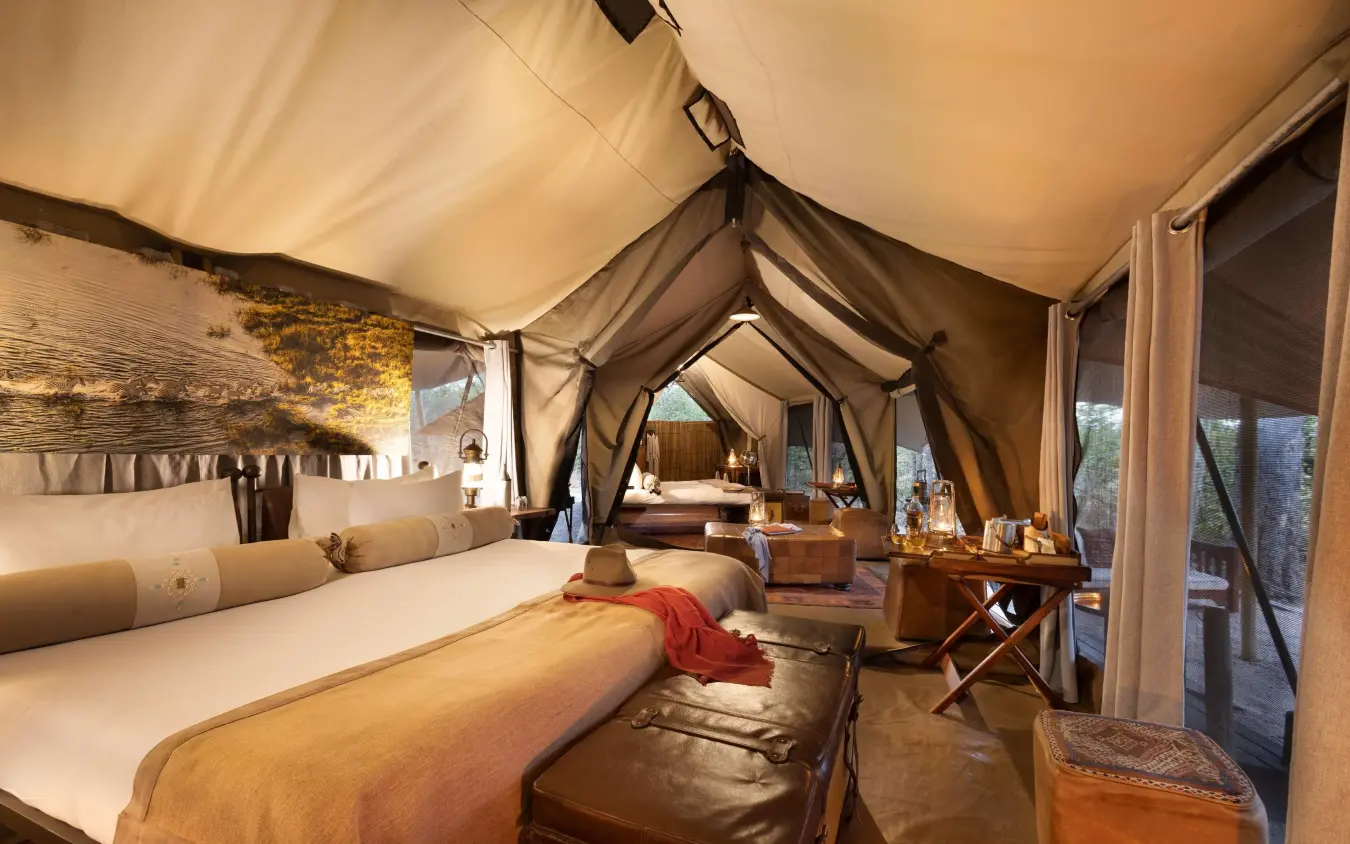
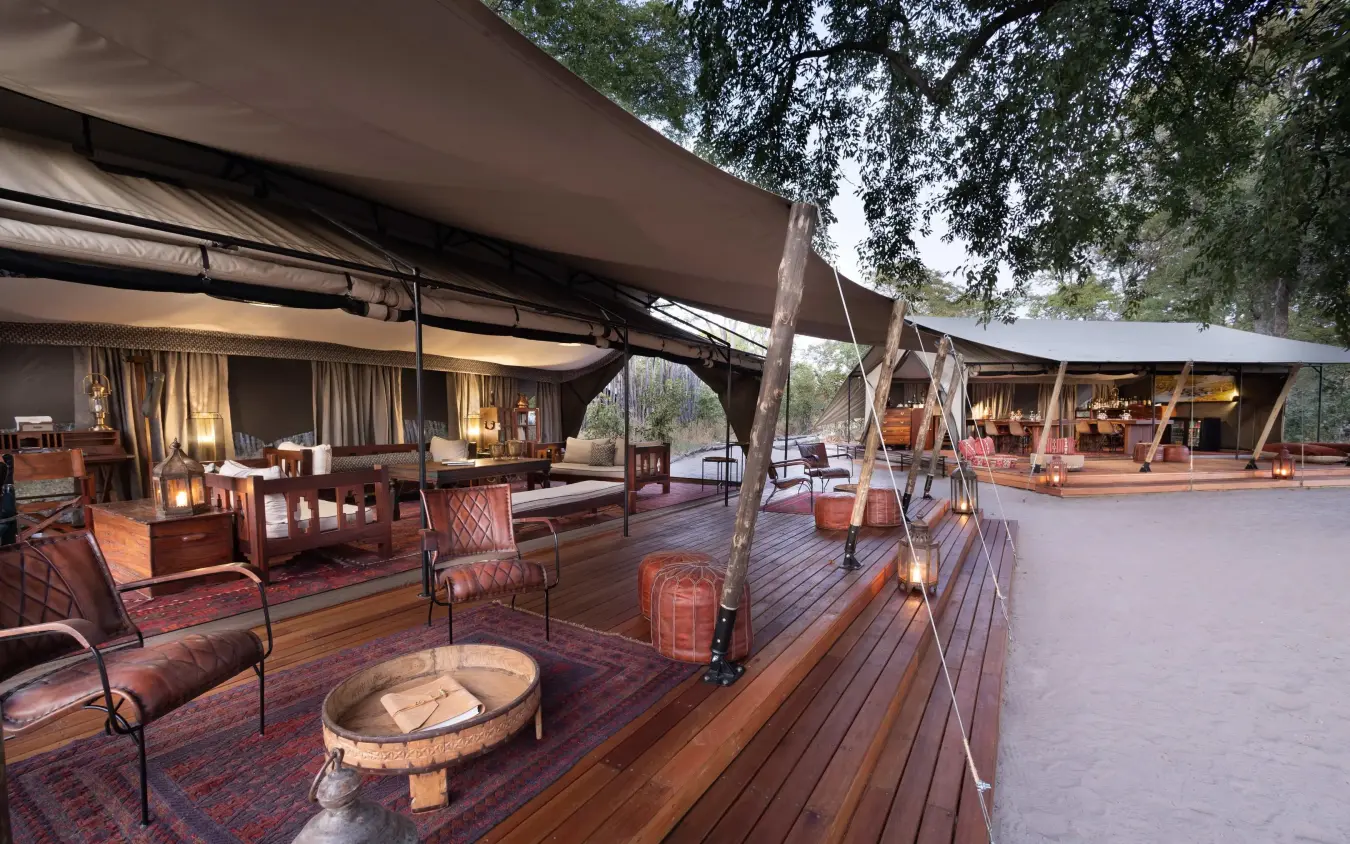
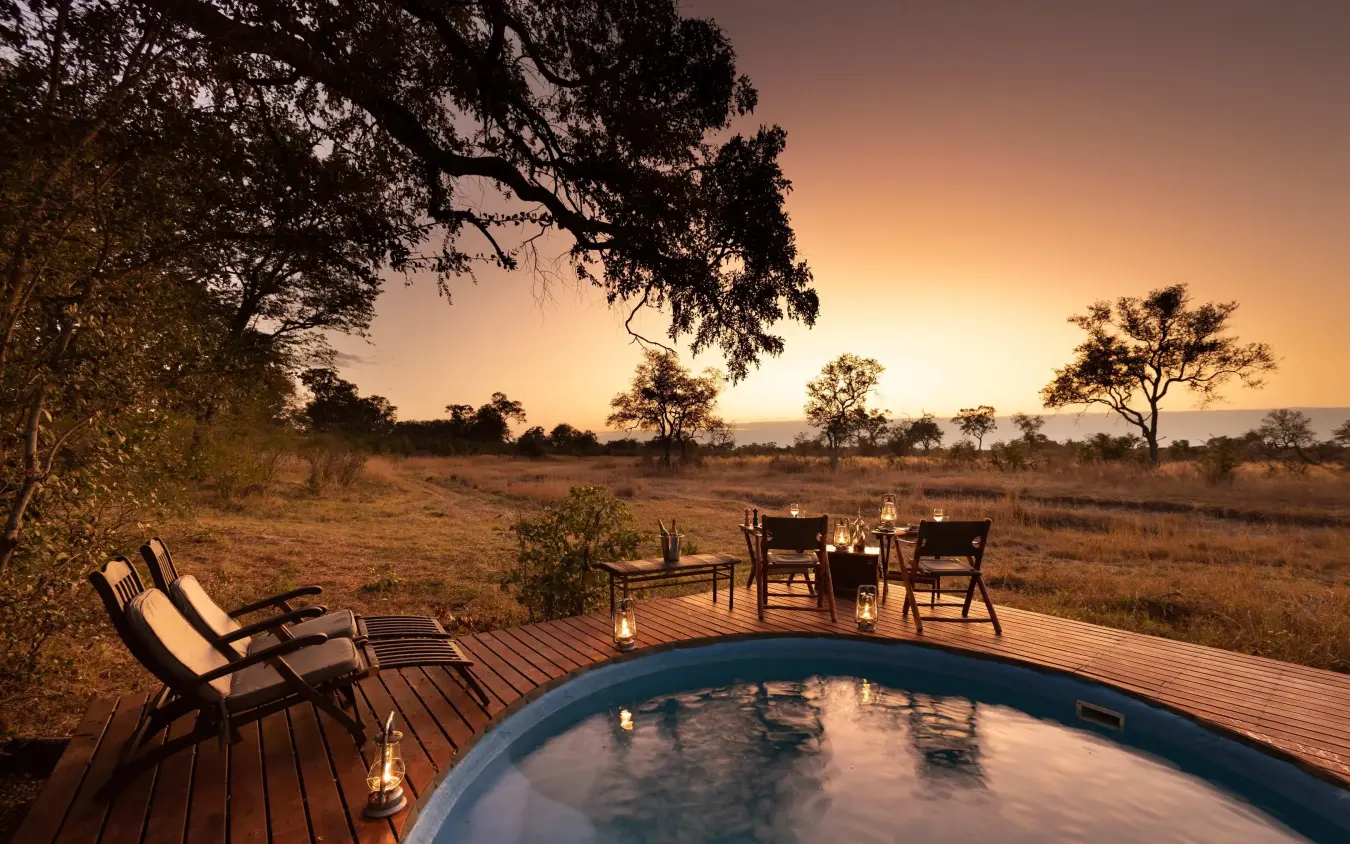
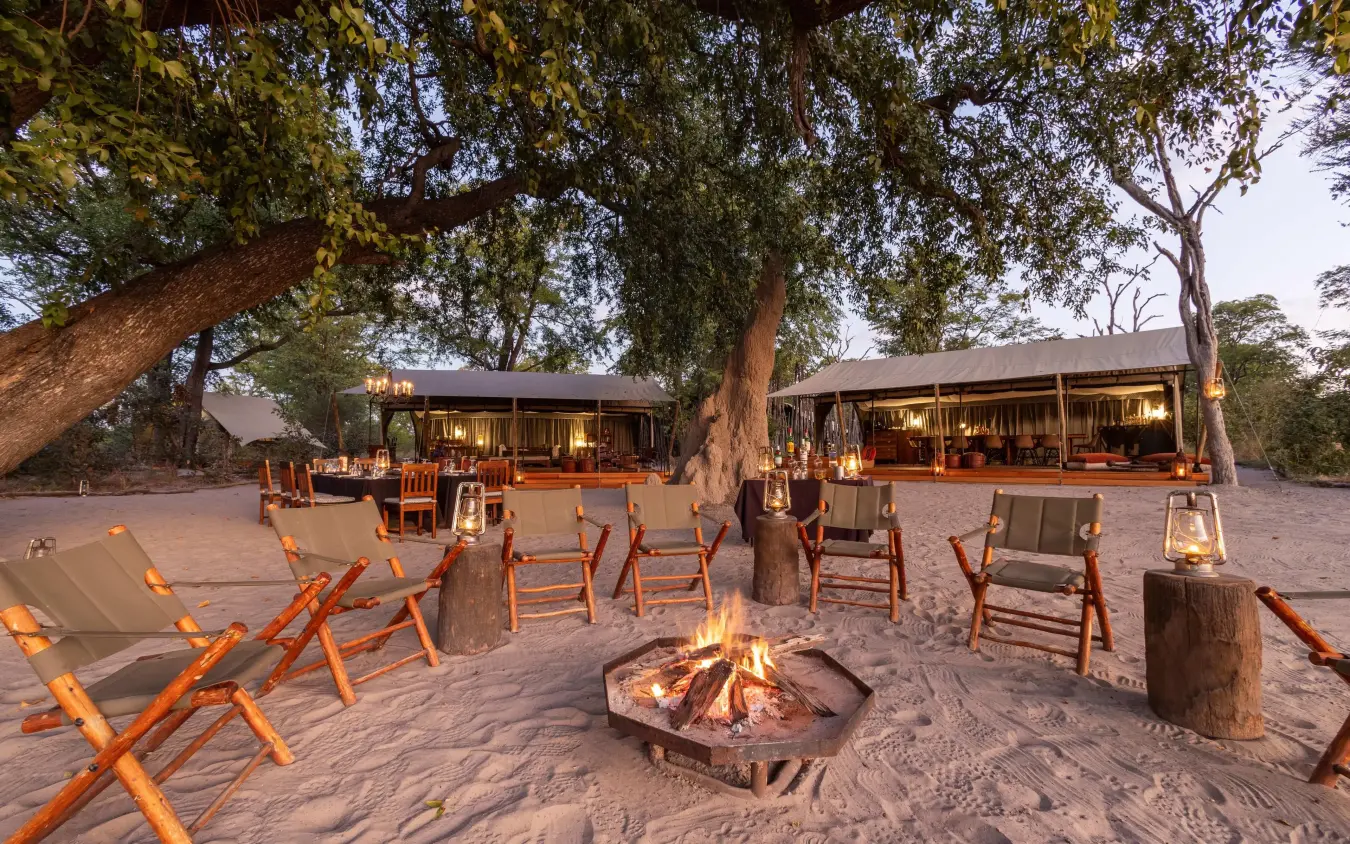
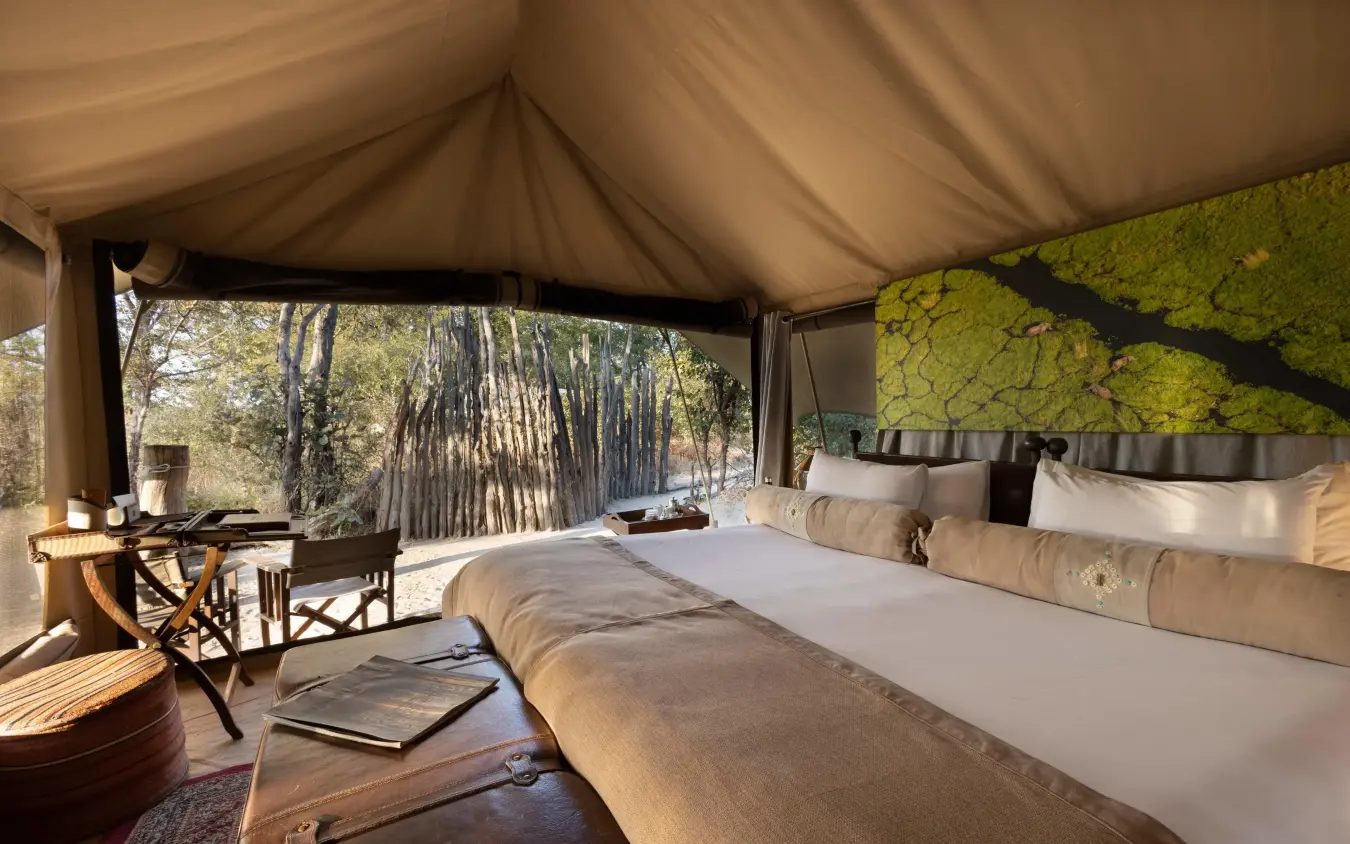
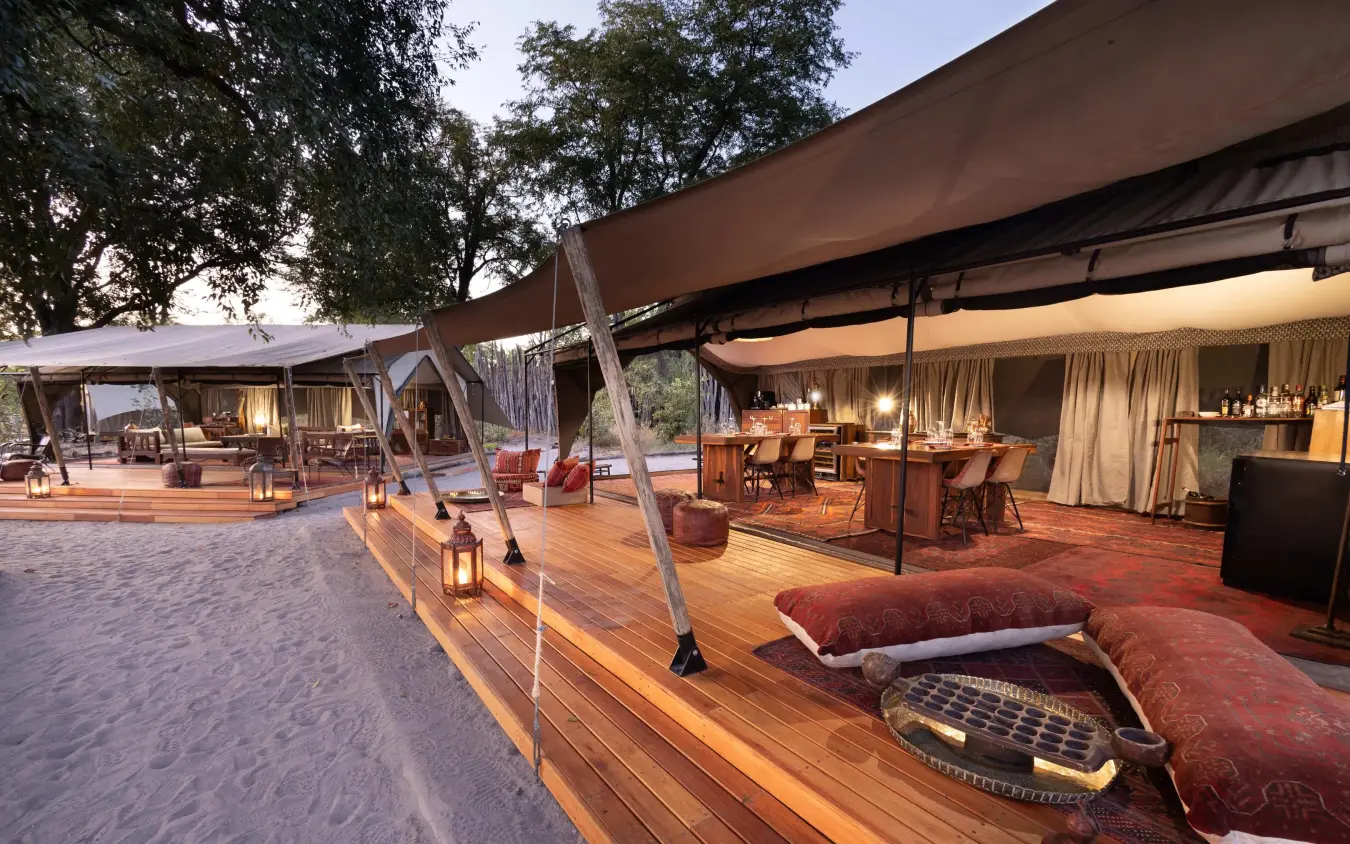
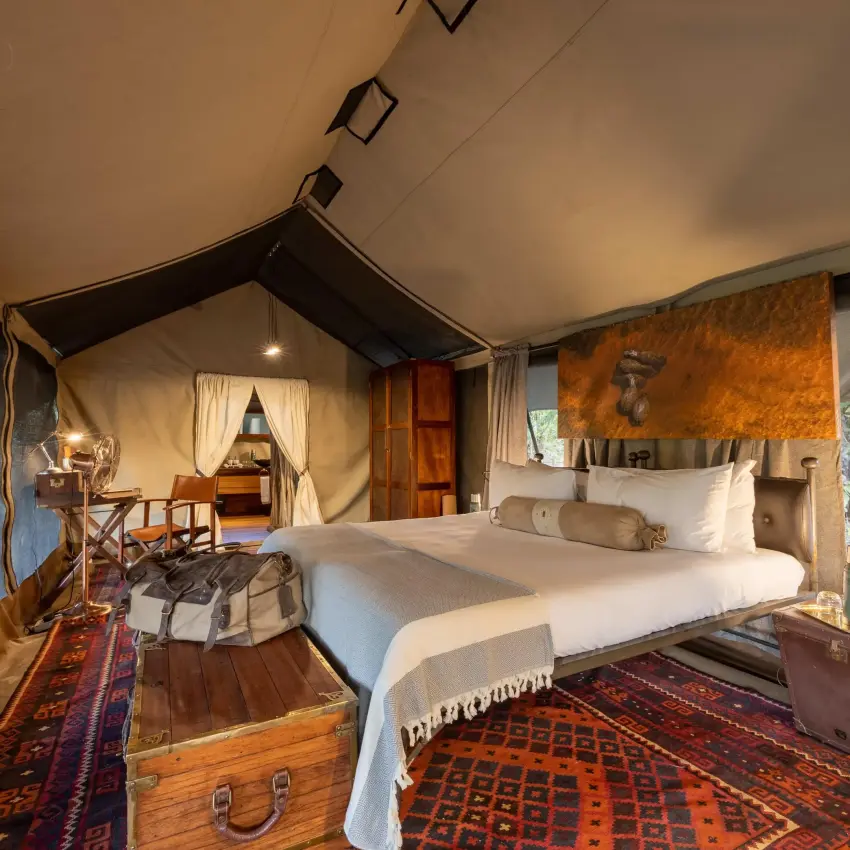
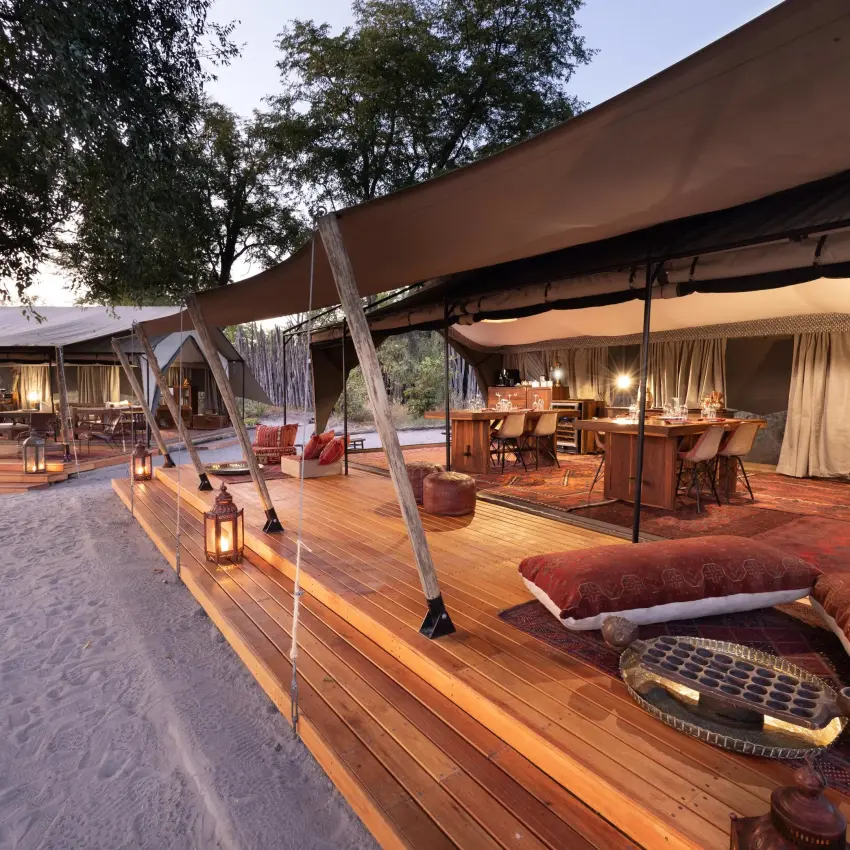
The camp holds to its expedition character throughout. Each tent stands on a wooden platform with a private veranda facing the spillway, and inside the campaign spirit continues, vintage kilims underfoot, trunk-style bedside tables and a reading lantern within reach, a writing desk for the day’s notes and a standing fan turning against the heat, while the bathroom offers twin copper basins, a walk-in rain shower and a flush toilet. Beyond the tents, the two open-fronted communal tents divide the lounge from the dining and bar area, and the operation stays light on the land, favouring the experiential detail over heavyweight infrastructure.