Lodge

Dinaka

Dinaka Lodge sits on a private conservancy on the northern edge of Botswana’s Central Kalahari Game Reserve.
Country: Botswana
Location: Central Kalahari
Number of rooms: 8

Meet the animals from below

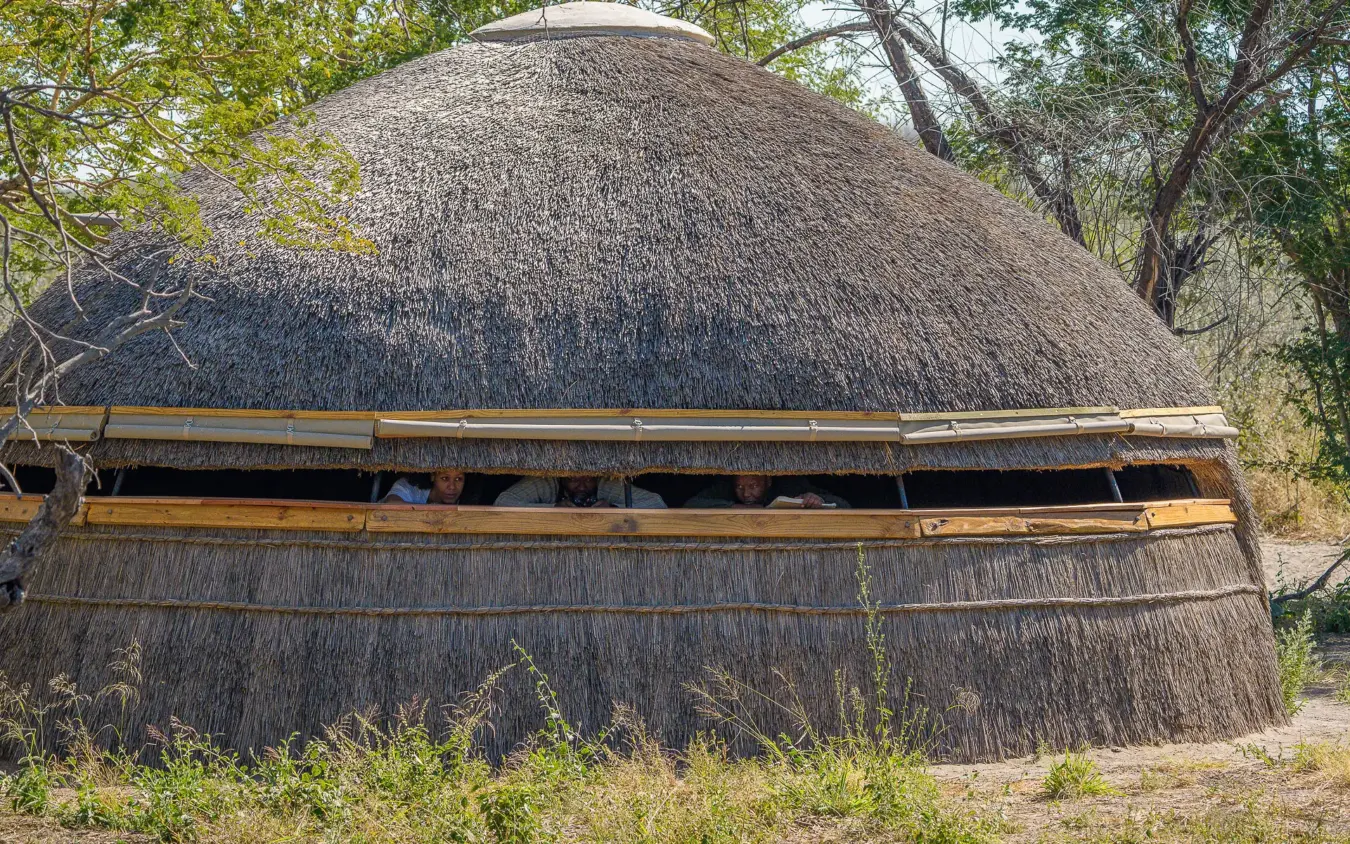
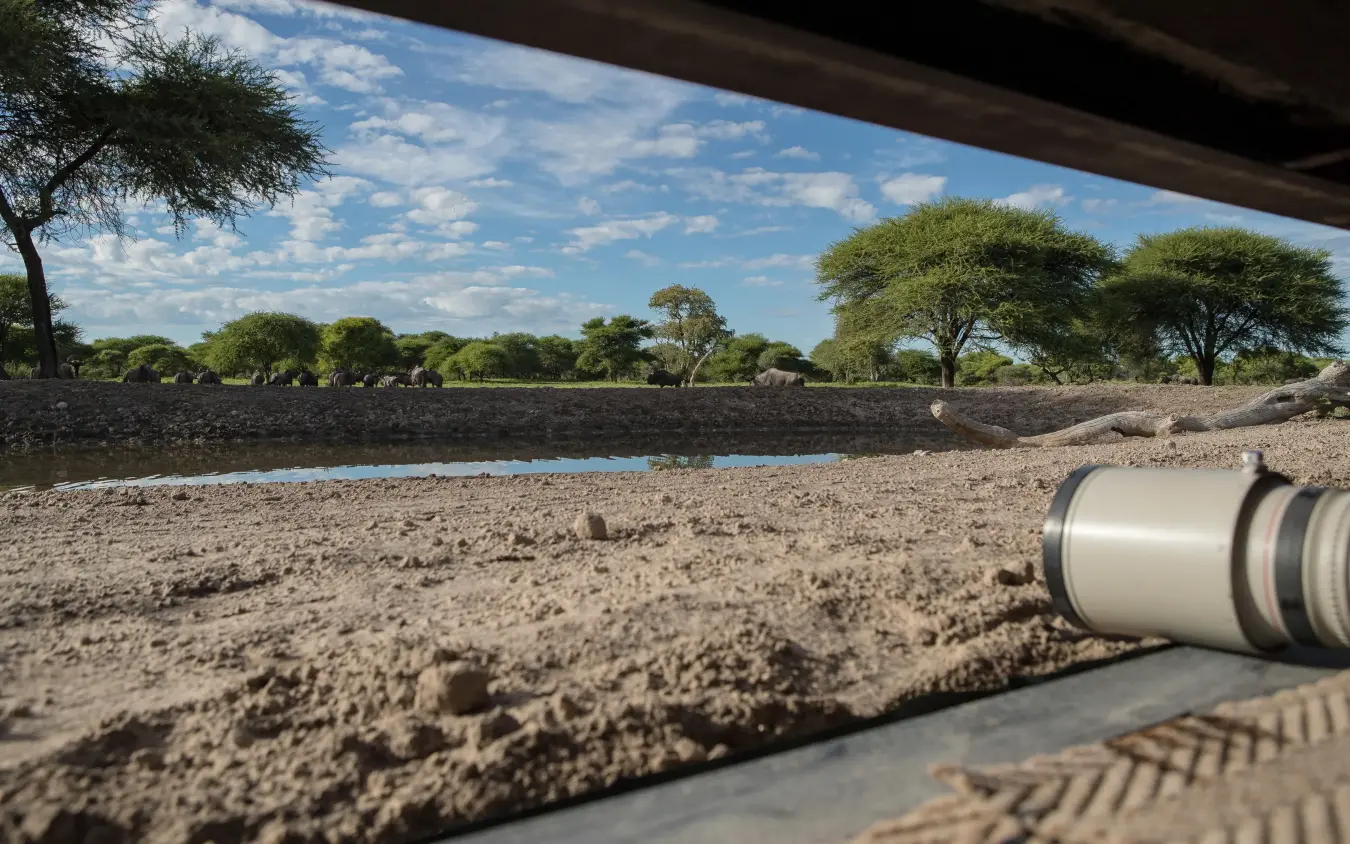
Dinaka’s defining feature sits partly underground. On a private conservancy at the northern edge of Botswana’s Central Kalahari Game Reserve, a bunker-style photographic hide is set into the ground at water level, a few metres from a permanent waterhole. You meet the animals from below rather than looking down on them. From inside, oryx and giraffe fill the frame at eye height, close enough to hear them drink.

Here you can take night drives, approach a sighting off-road

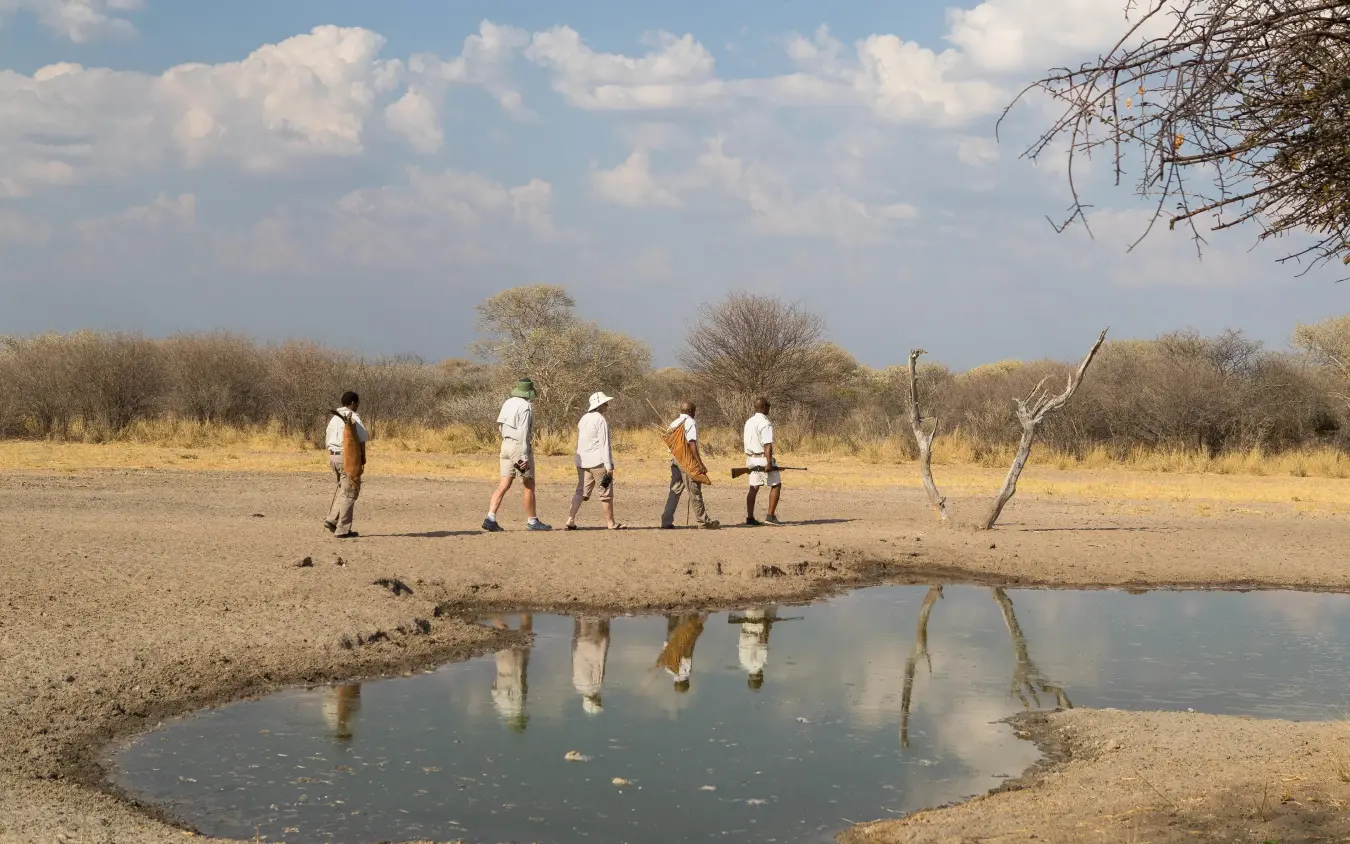
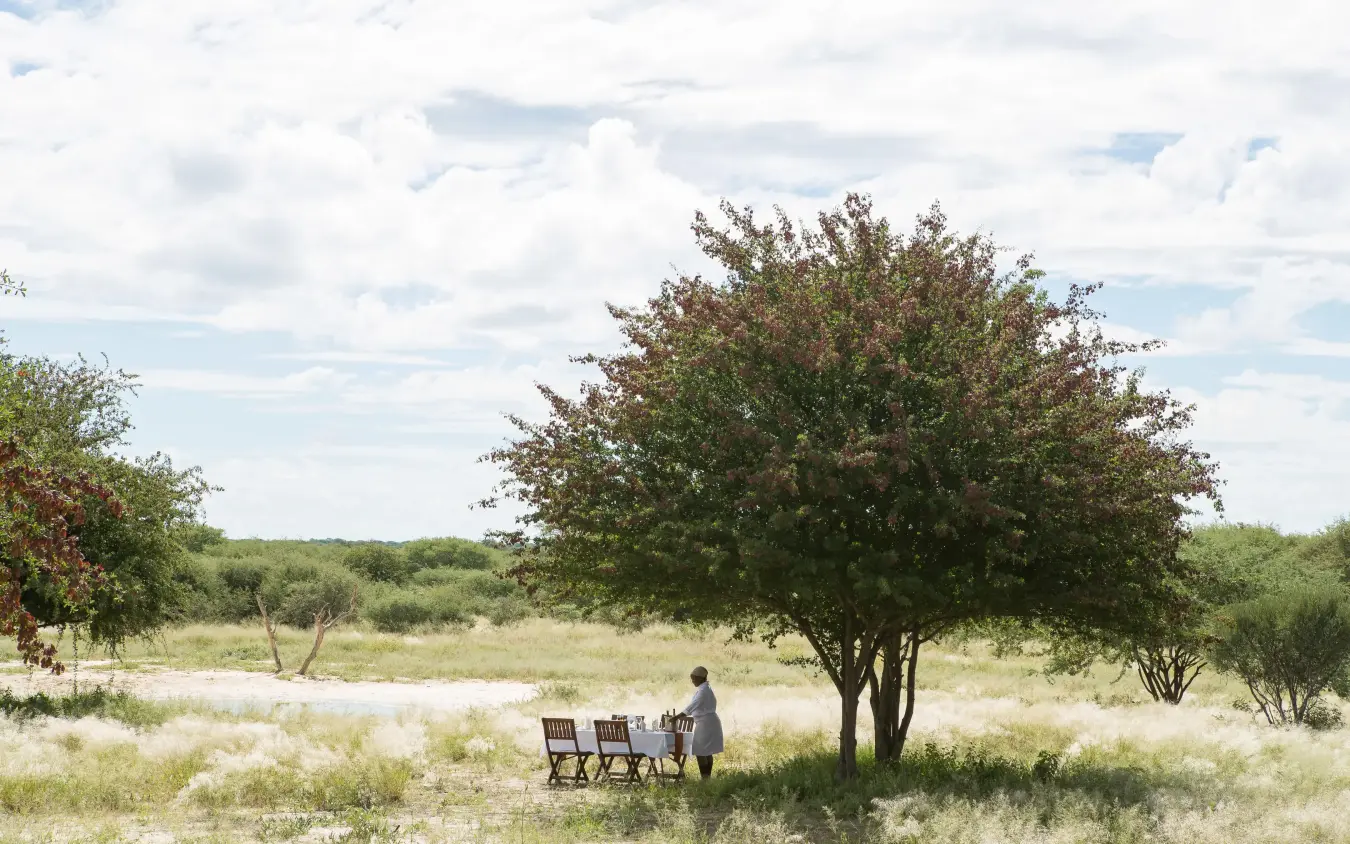
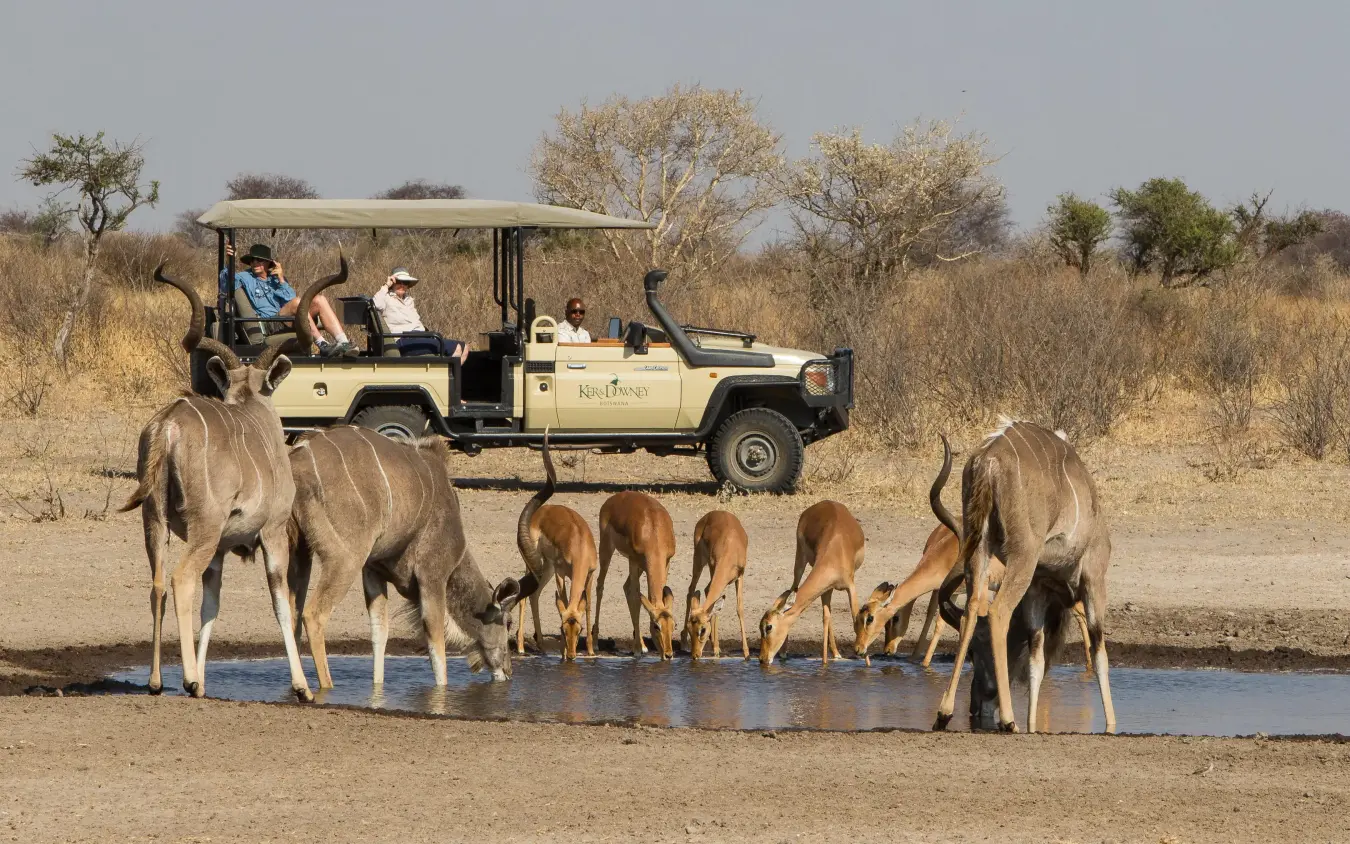
It is the private land, rather than the national park, that makes all of this possible. The wildlife and the flat, open Kalahari horizons run on unbroken from the reserve next door, yet the conservancy permits what the park does not. Here you can take night drives, approach a sighting off-road, and walk on foot. The vehicles carry no more than four guests, each with a window seat and a camera mount built into the armrest.

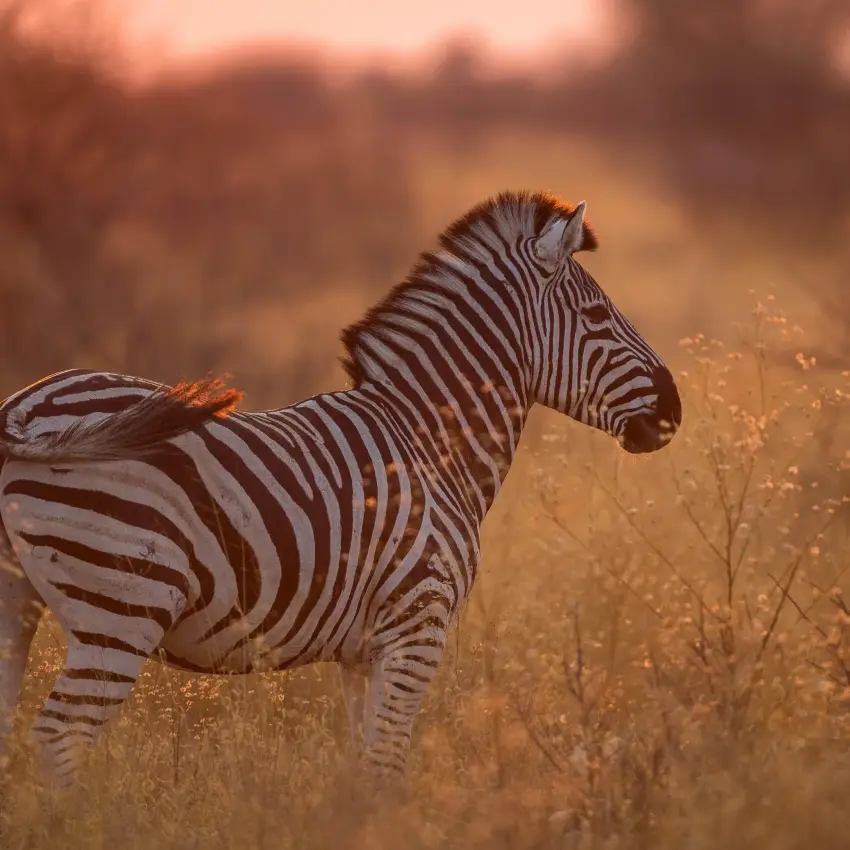
Zebra standing in golden grassland at sunset, Dinaka, Central Kalahari, Botswana
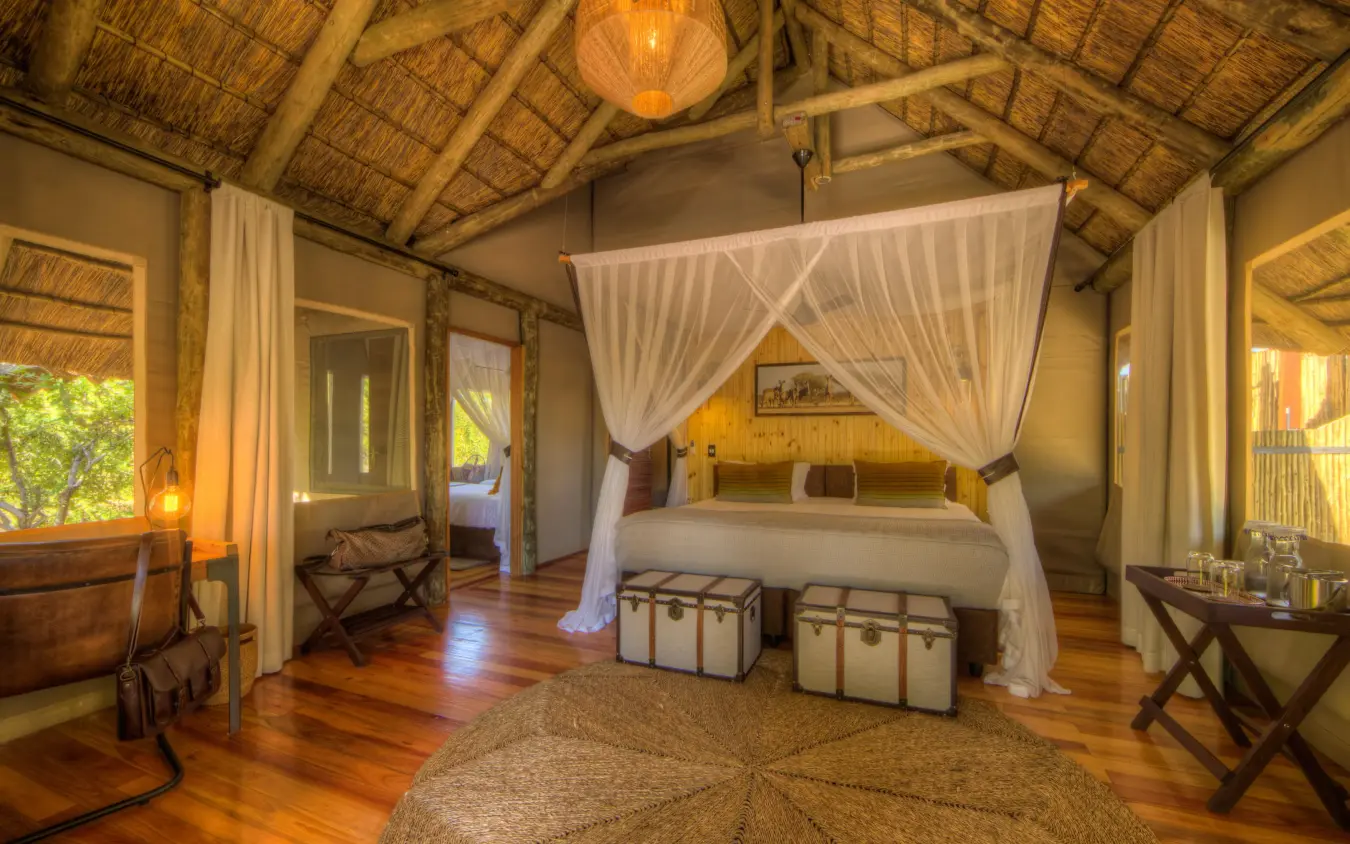
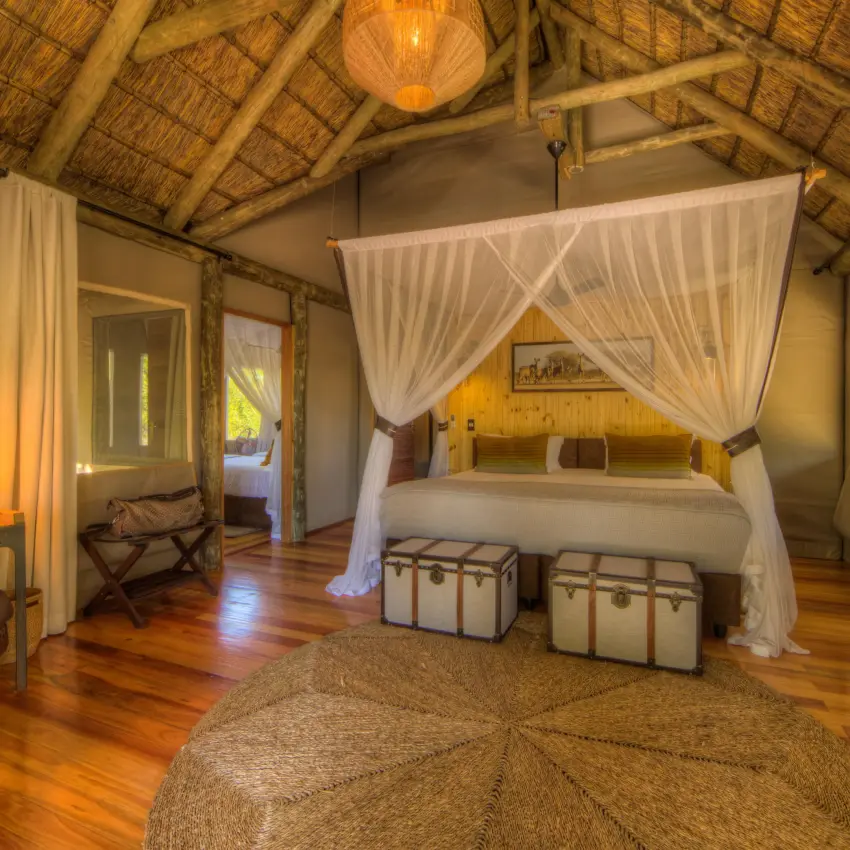
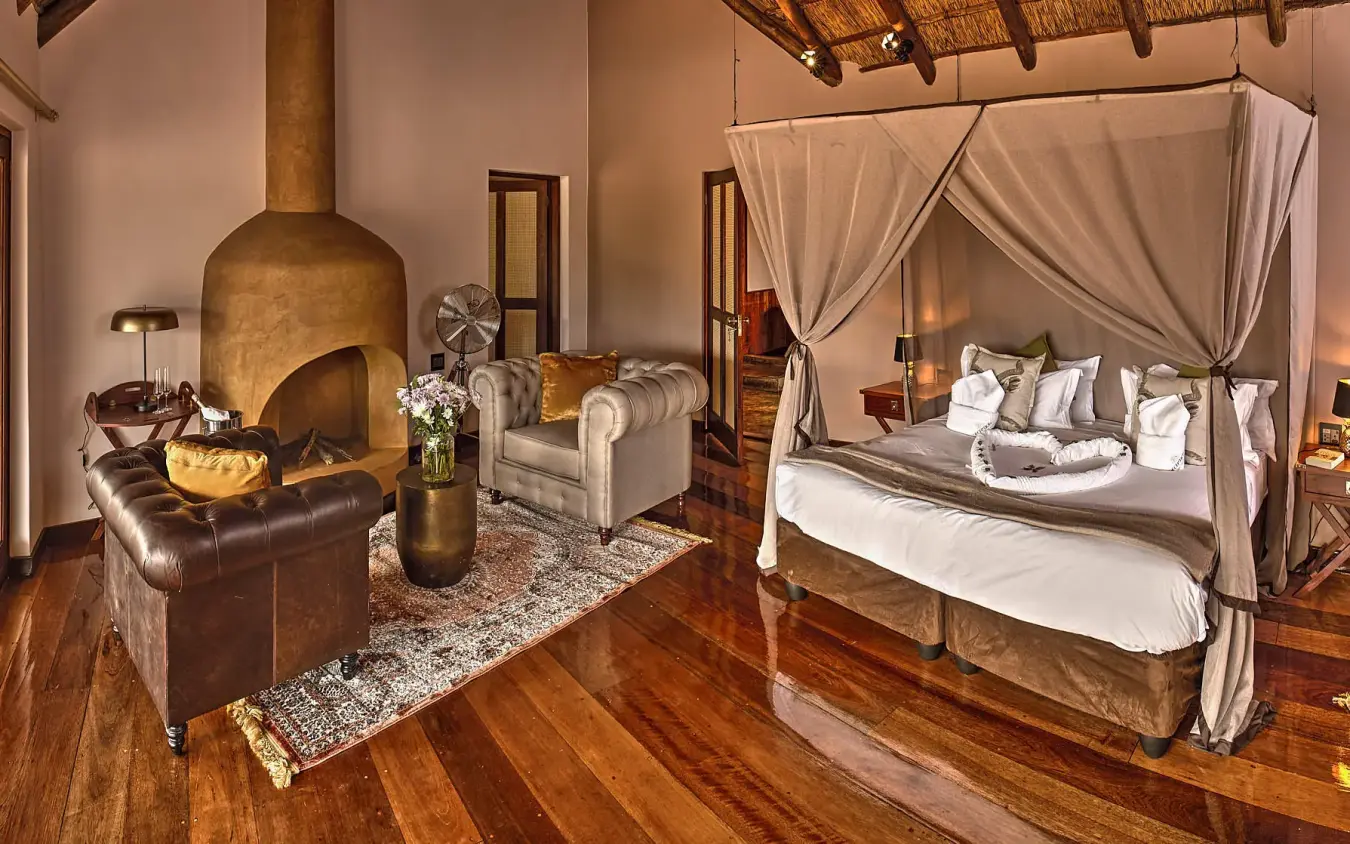
Spacious bedroom suite with four-poster canopy bed and wooden furnishings, Dinaka, Central Kalahari, Botswana

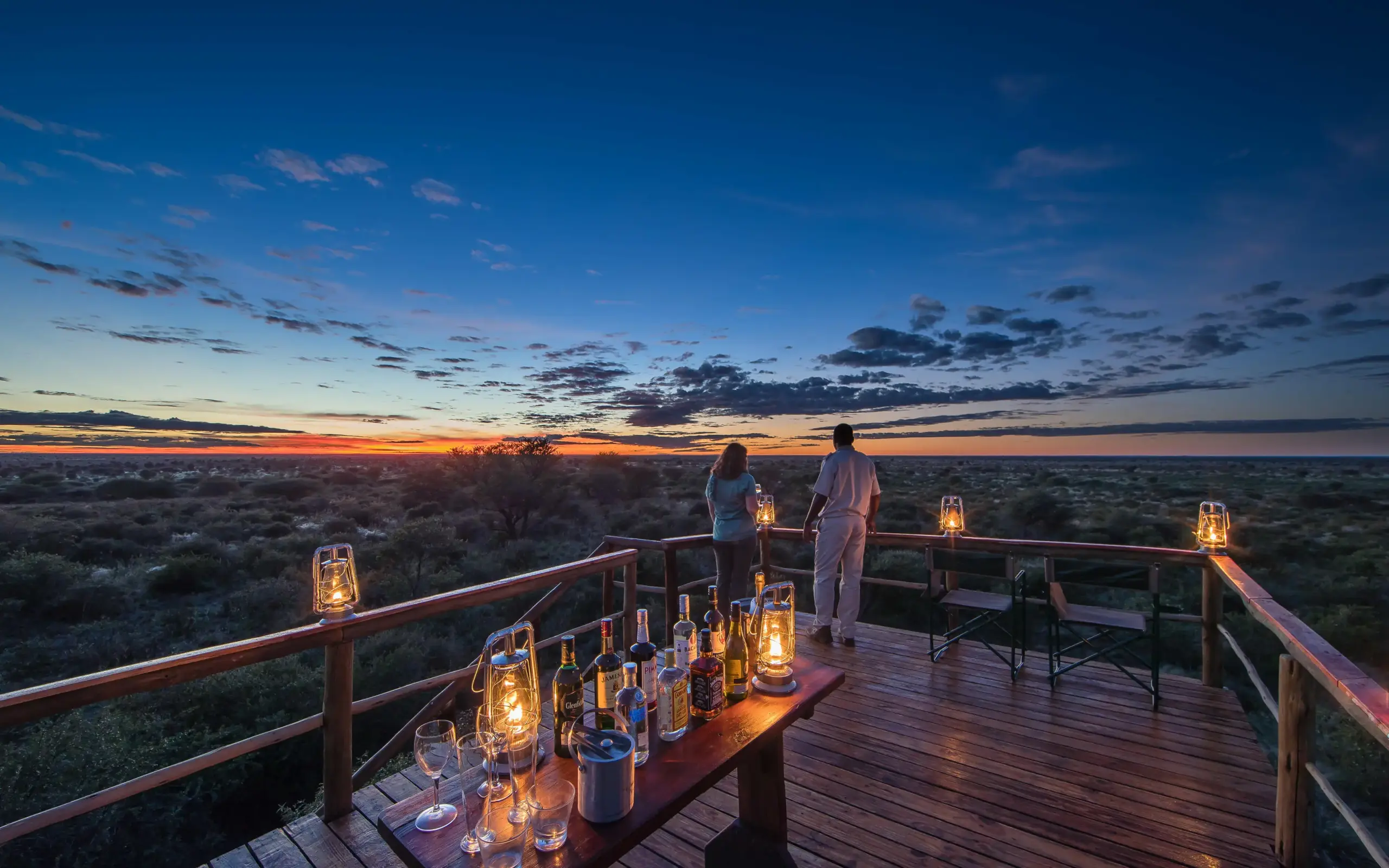
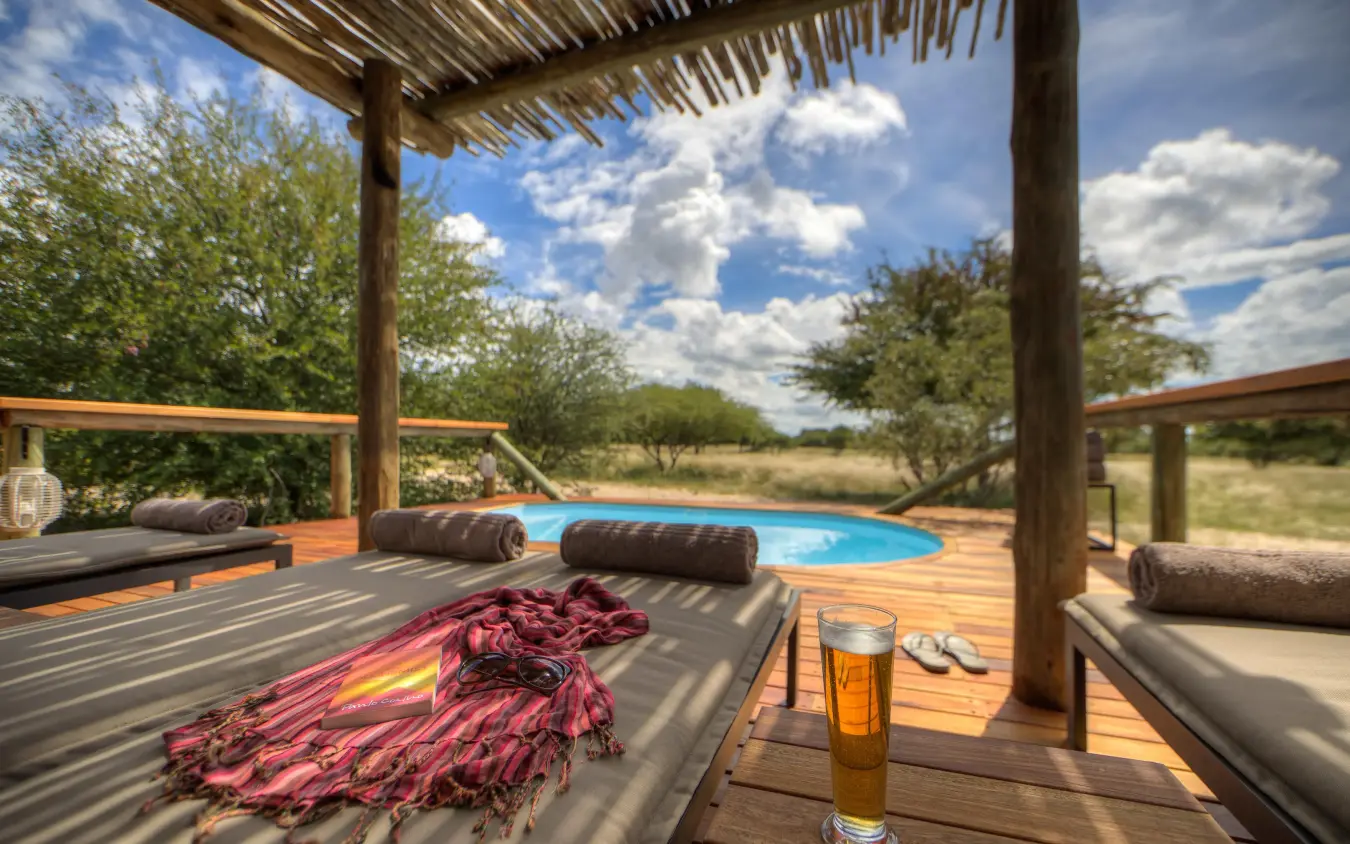
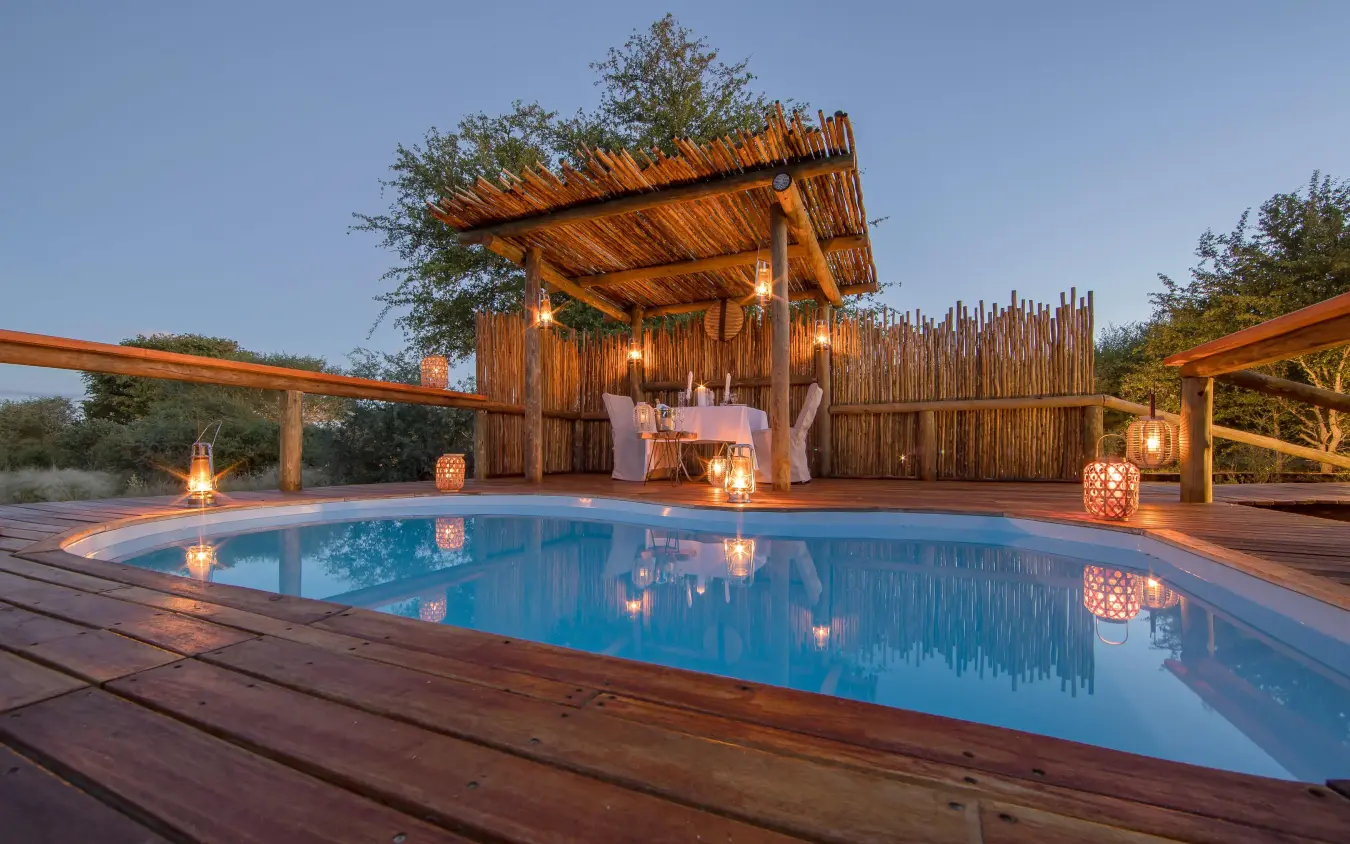
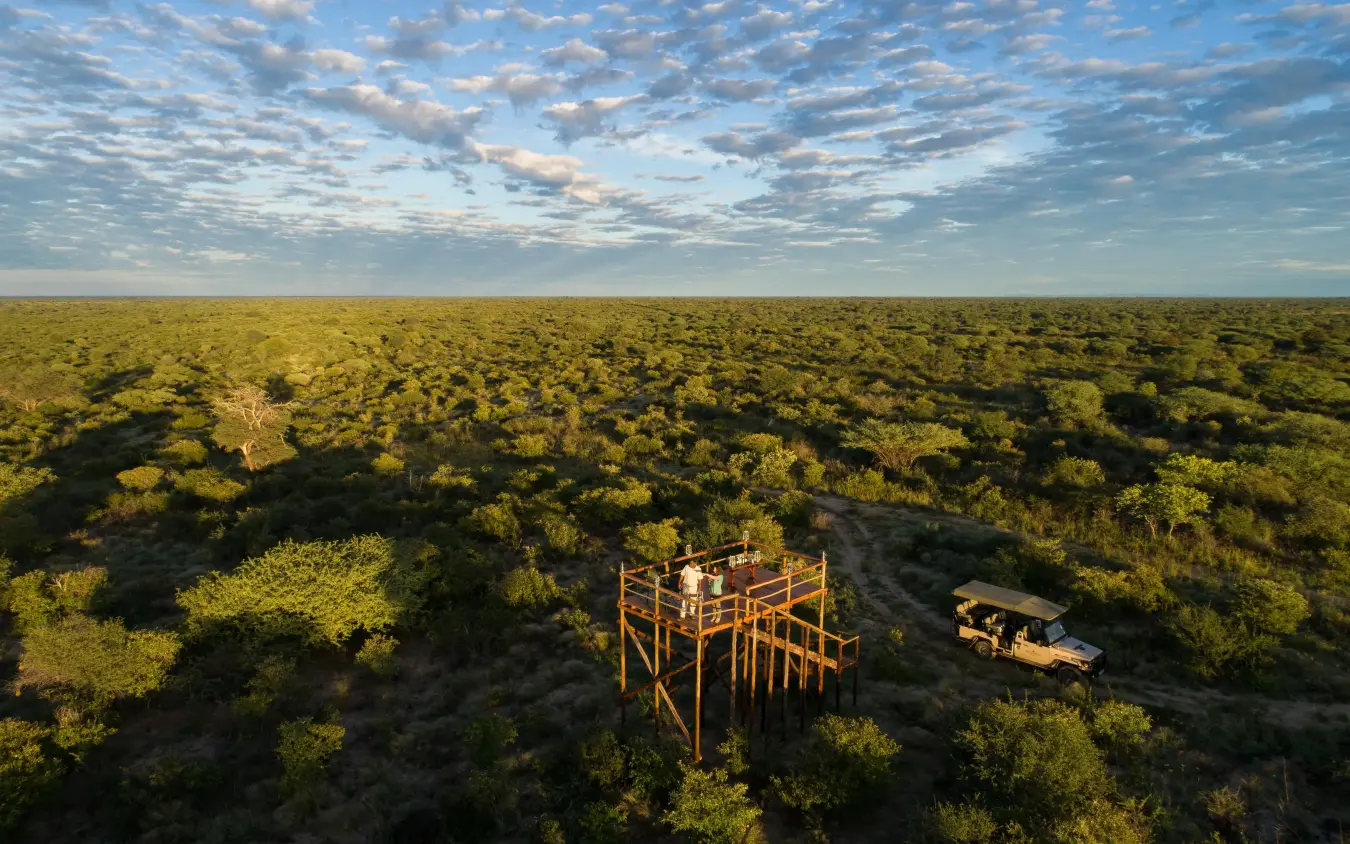
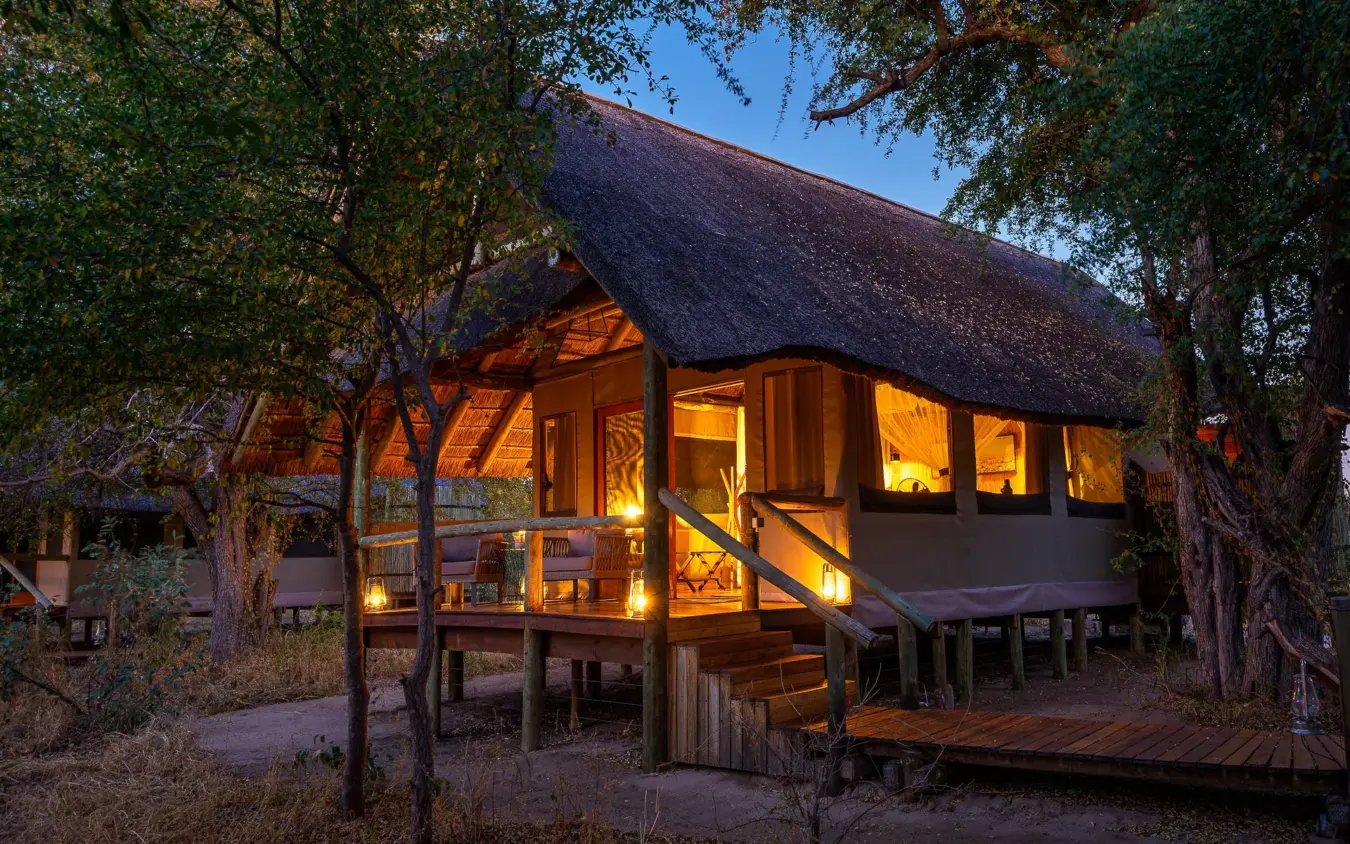
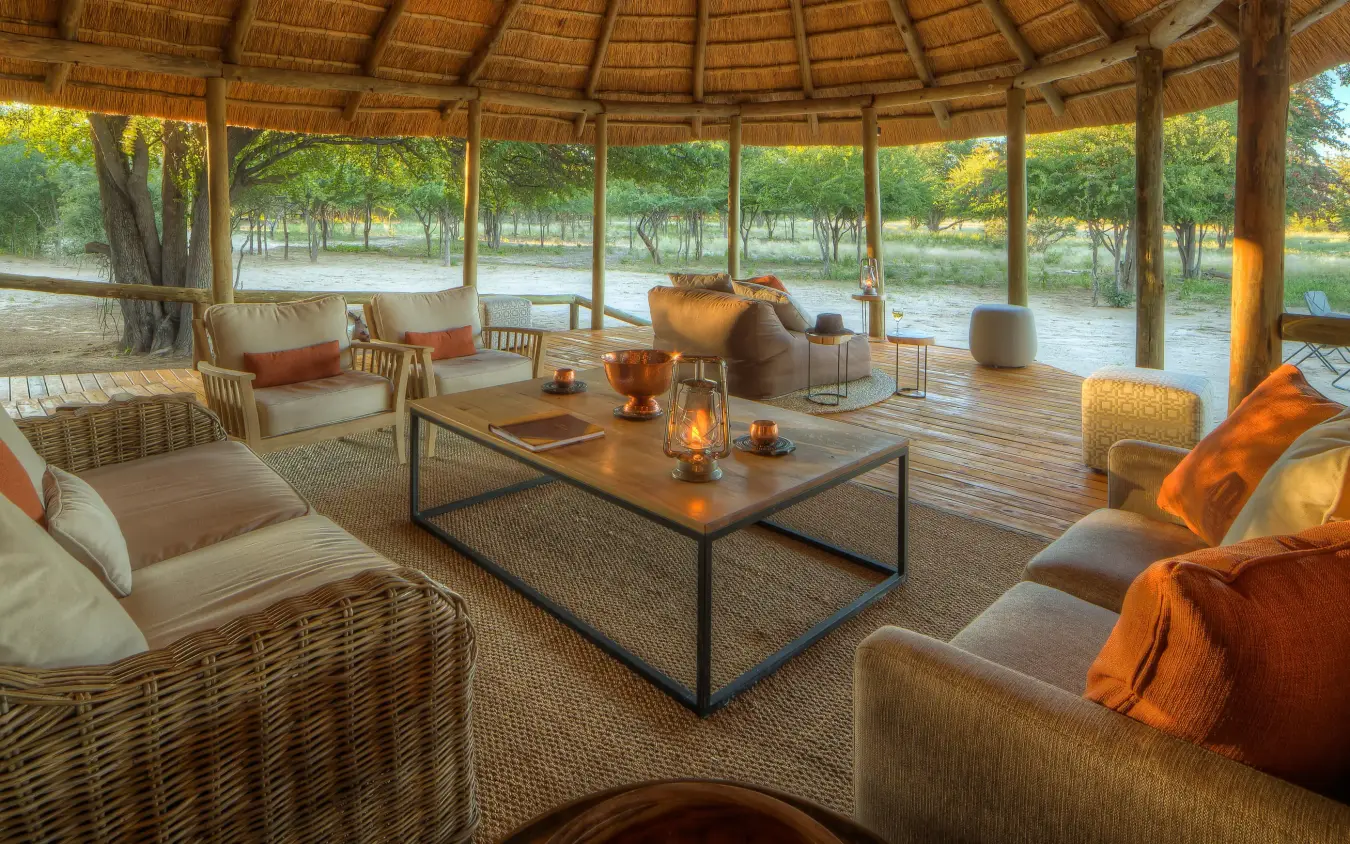
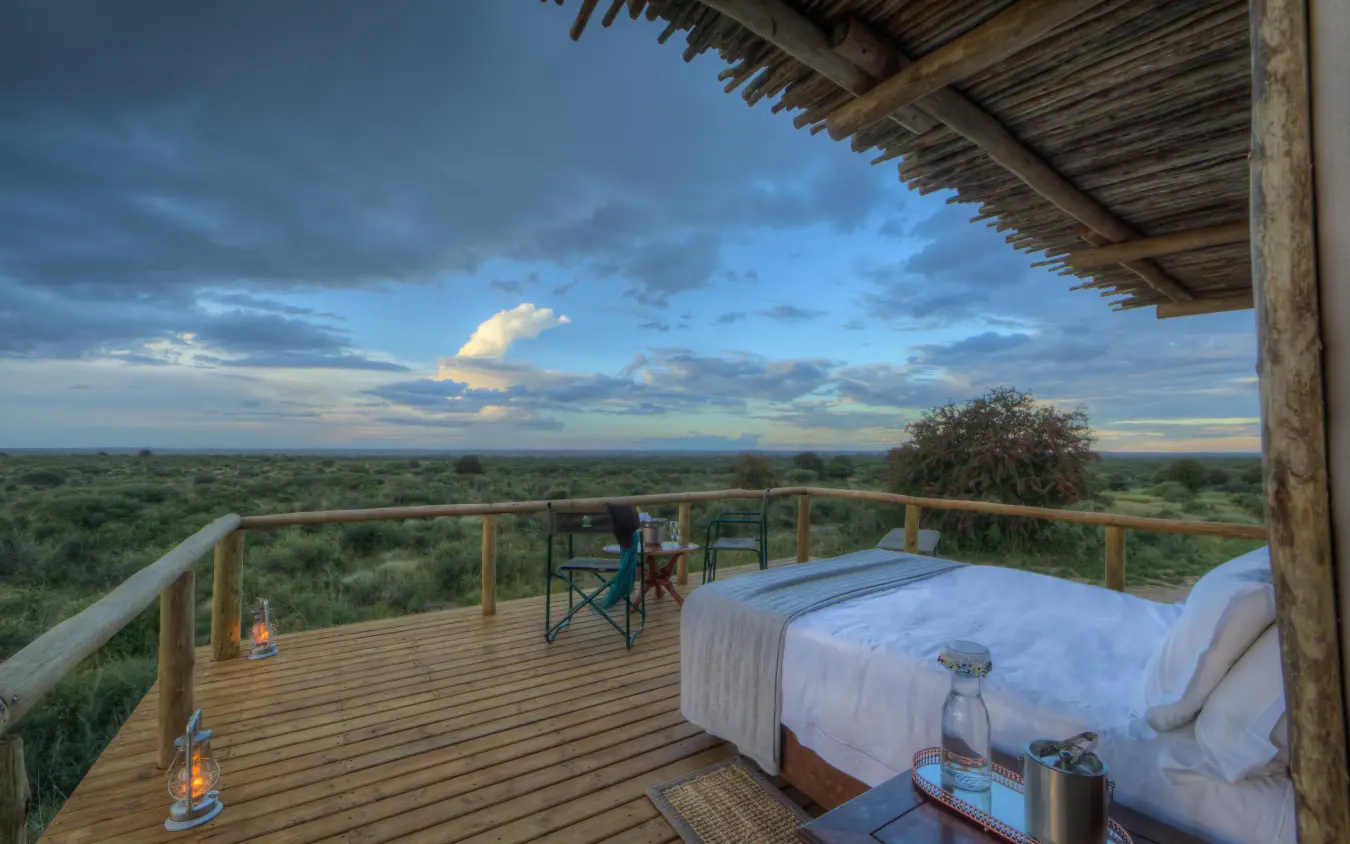
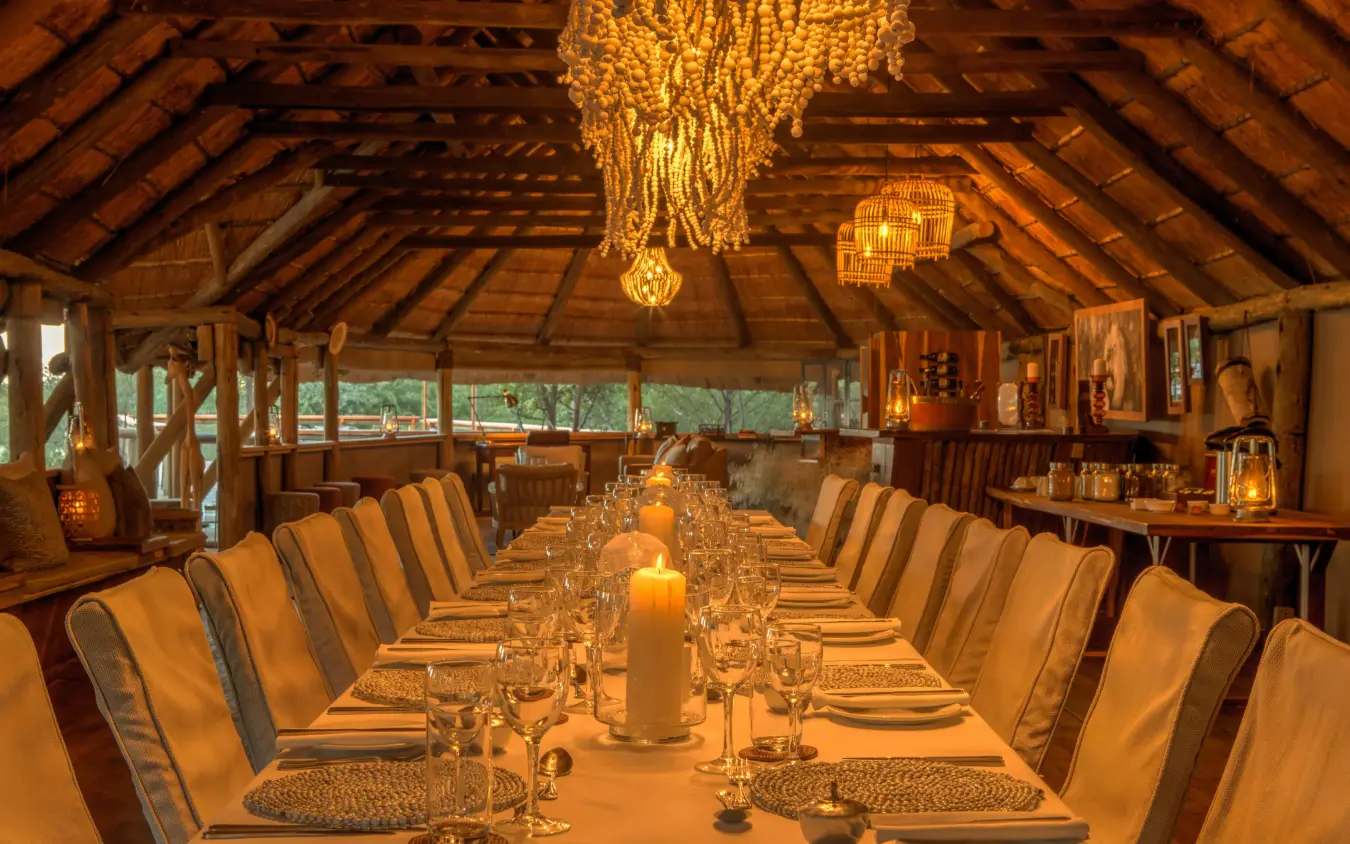
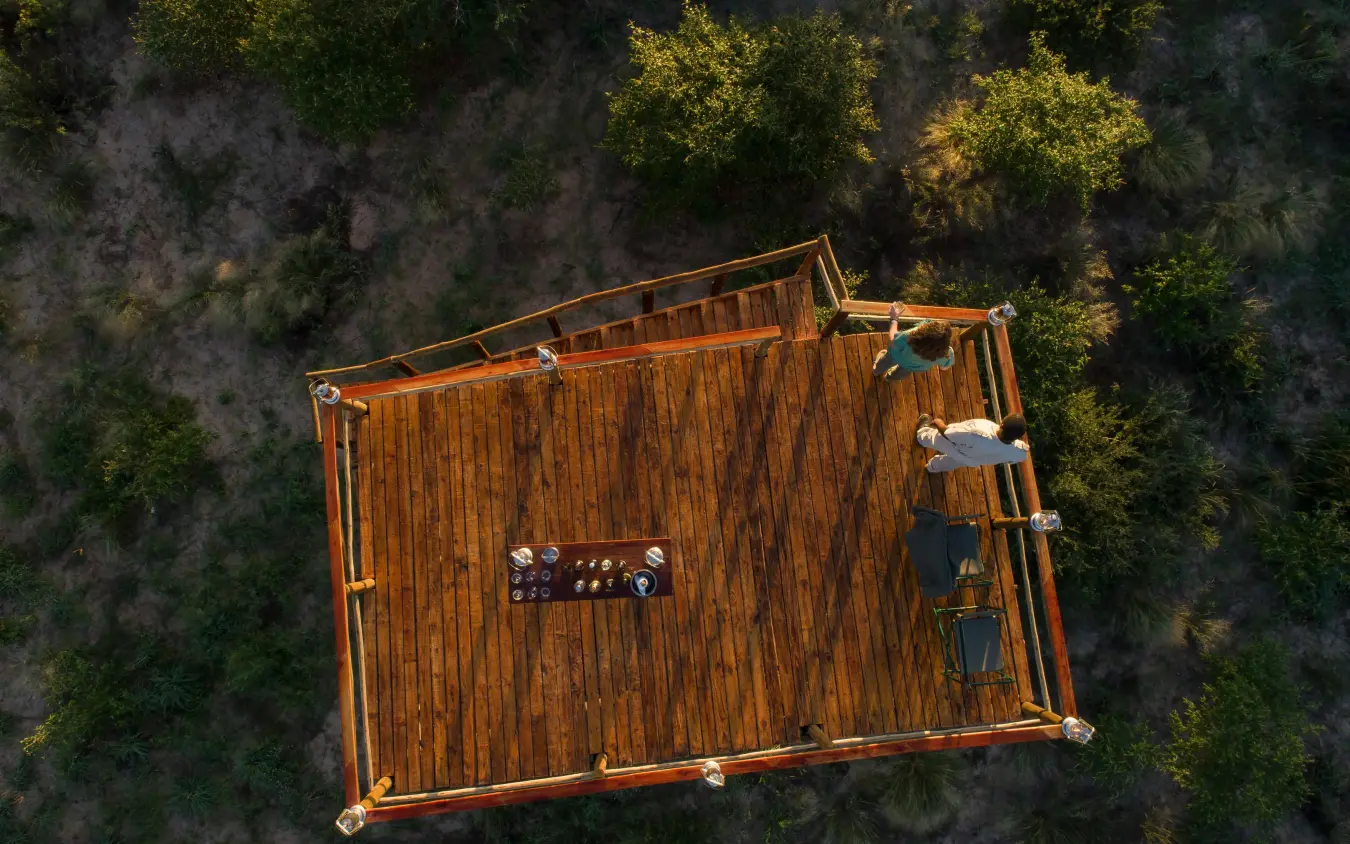
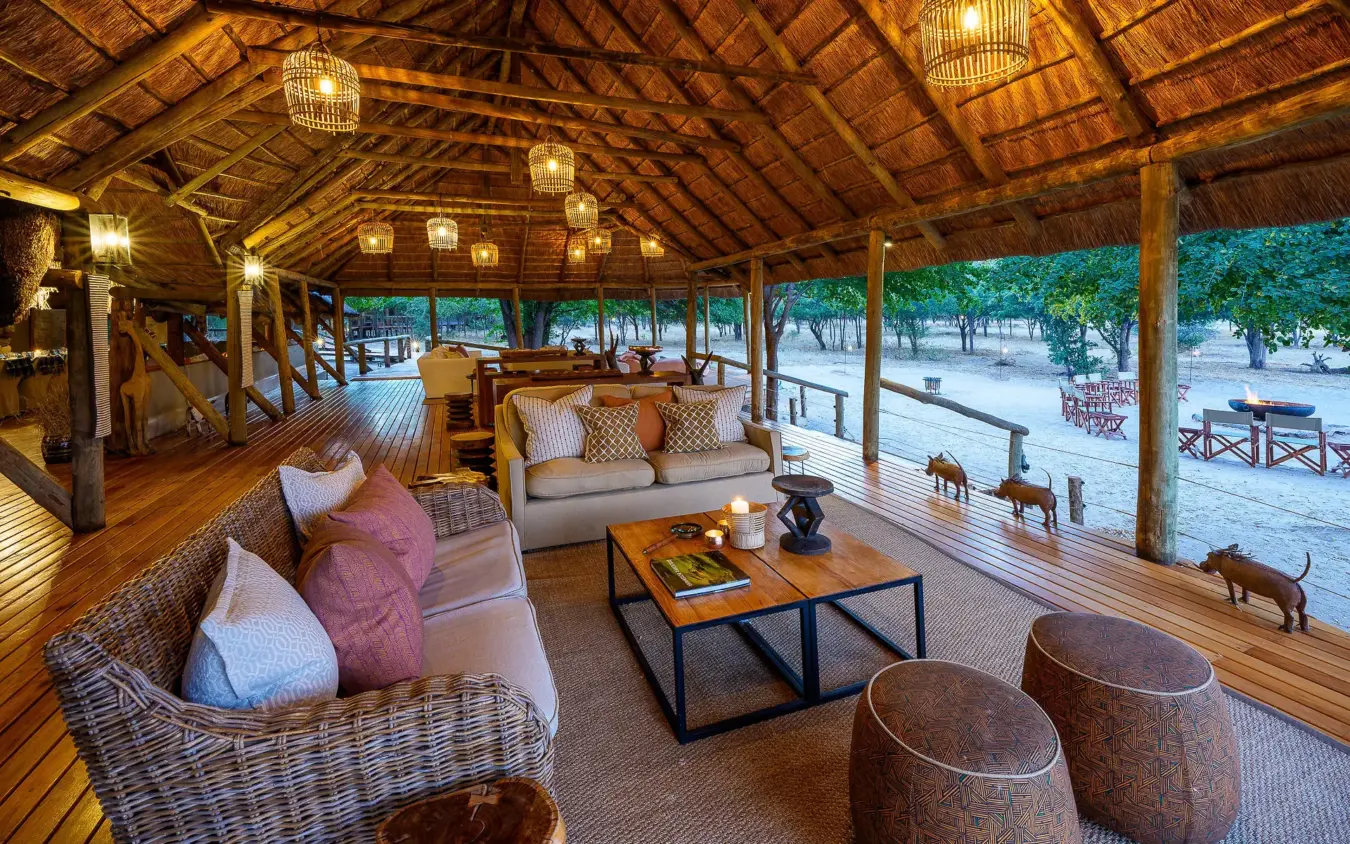
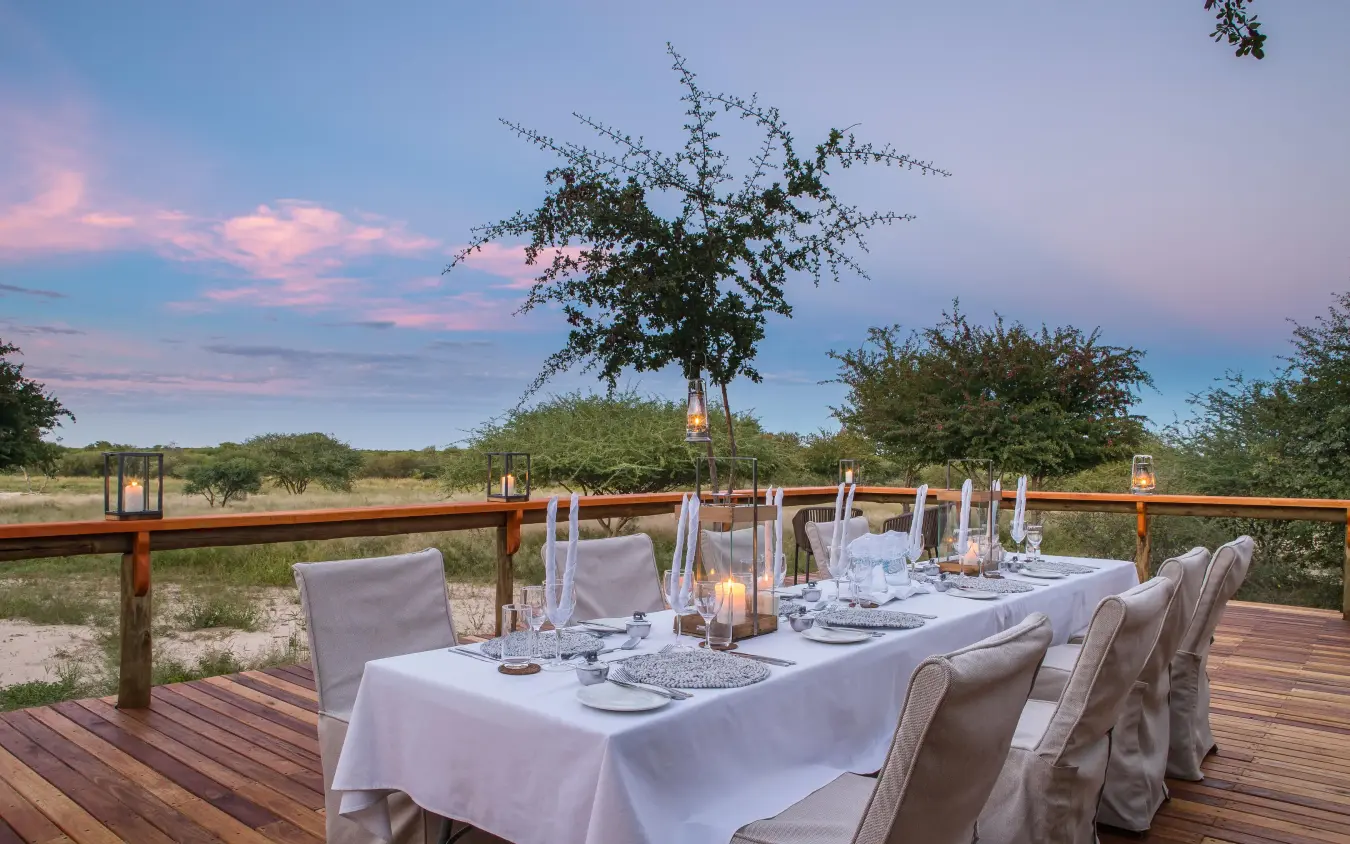
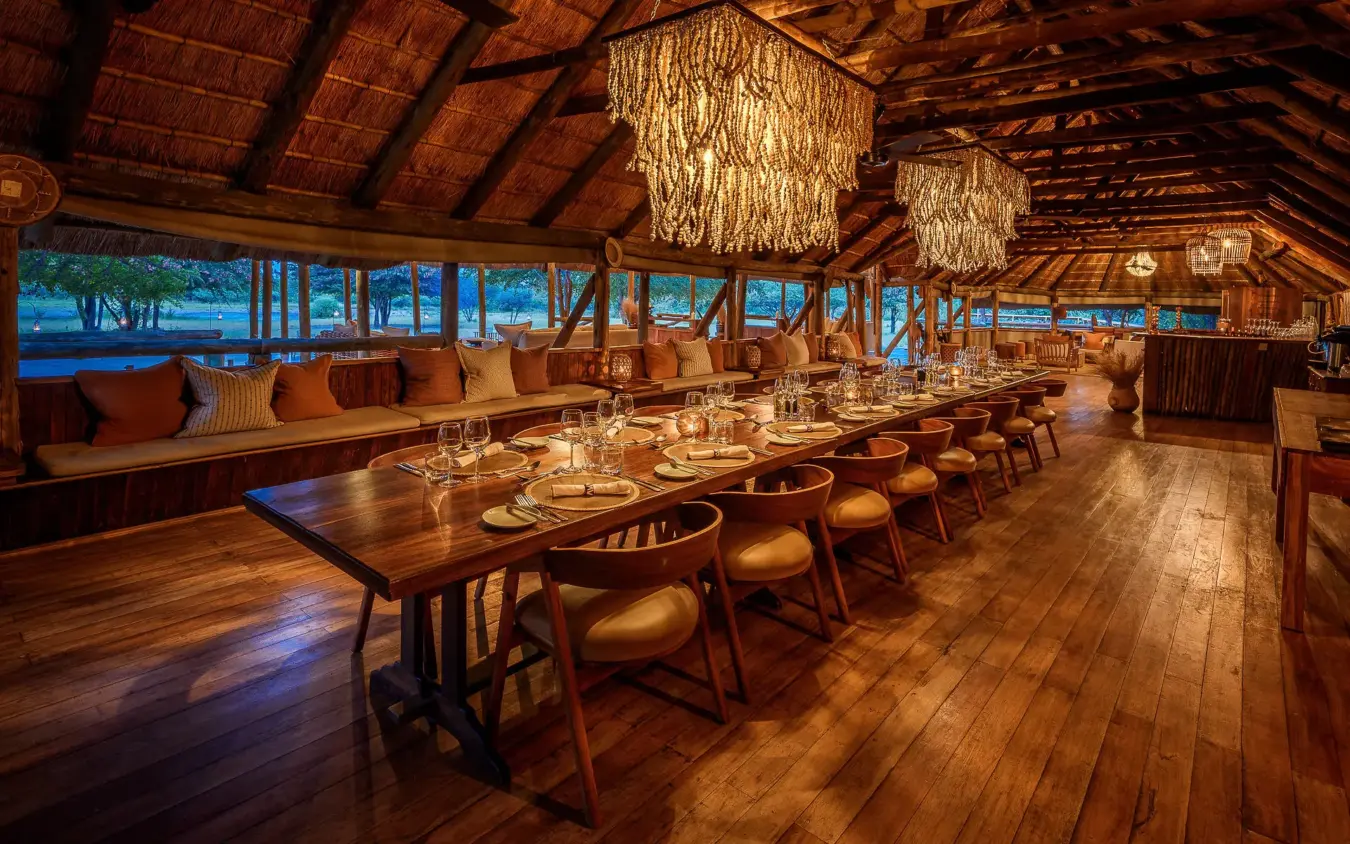
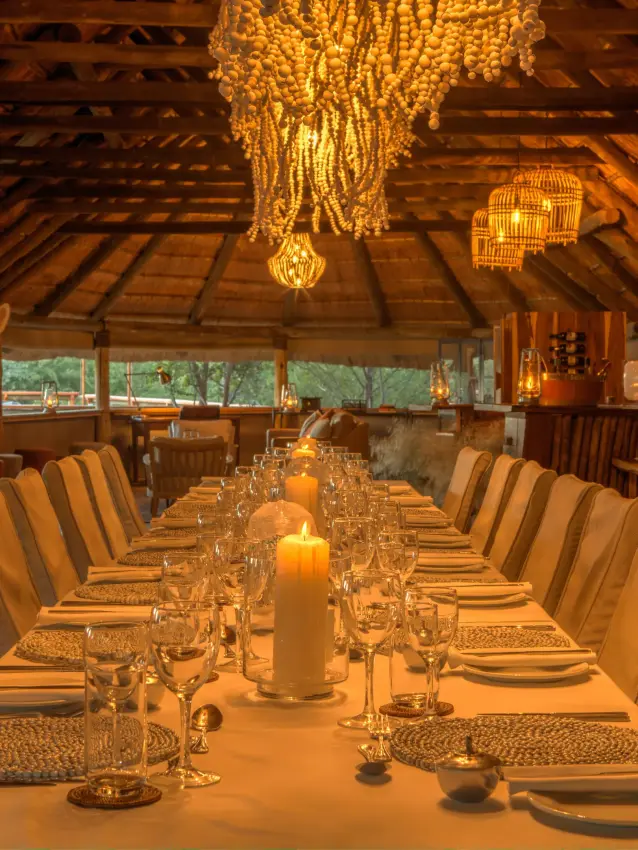
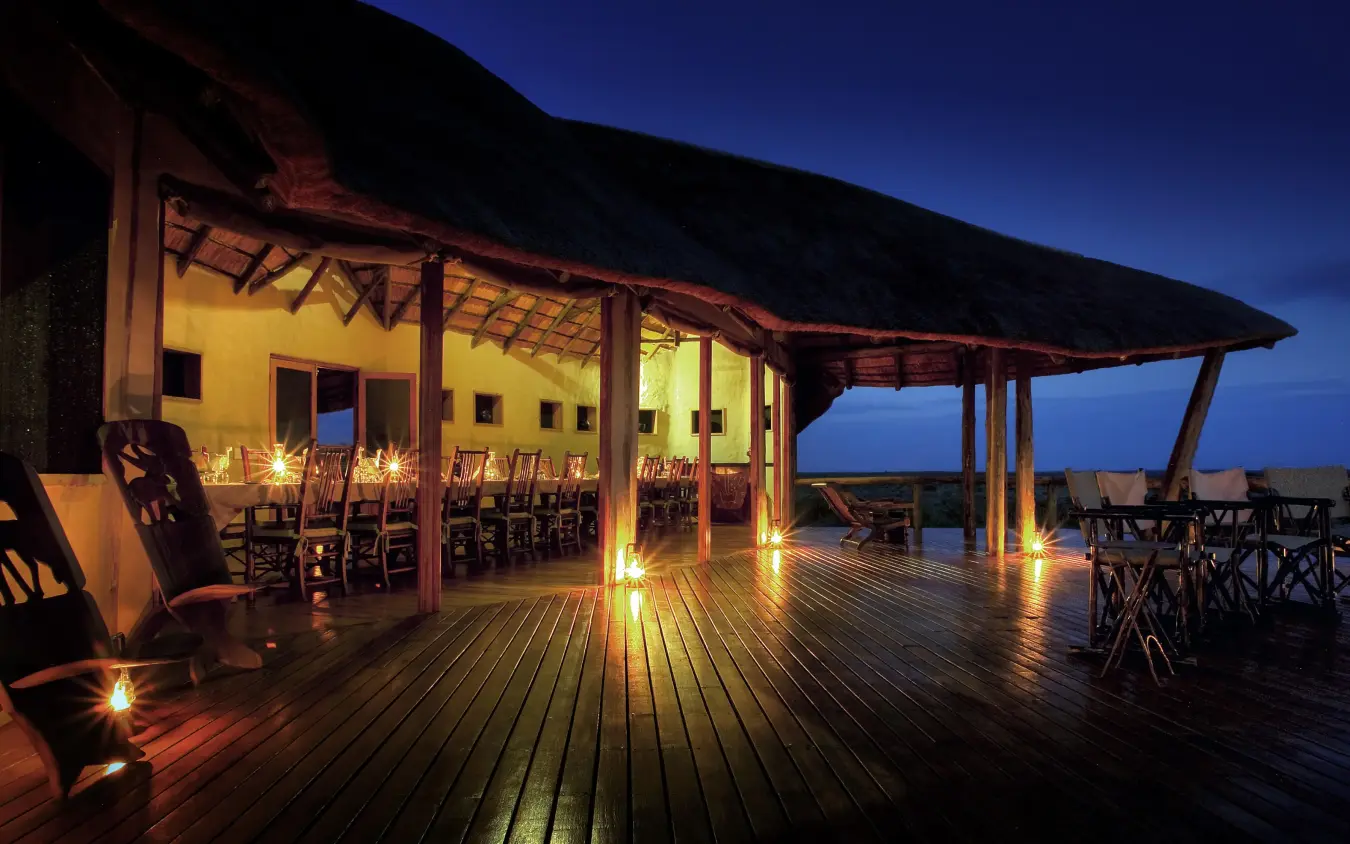
Thatched tents on raised timber decks arc out from a central lounge, the dining area, pool and campfire all turned toward the same waterhole. Wooden walkways thread the camp together. A lookout deck some fifteen metres high opens a wide view over ground so flat the horizon barely moves. Dinaka’s current custodians took it on in 2017, folding it into a portfolio that traces back to the original East African outfitters of the 1940s.

Thatched tents on raised timber decks arc out from a central lounge

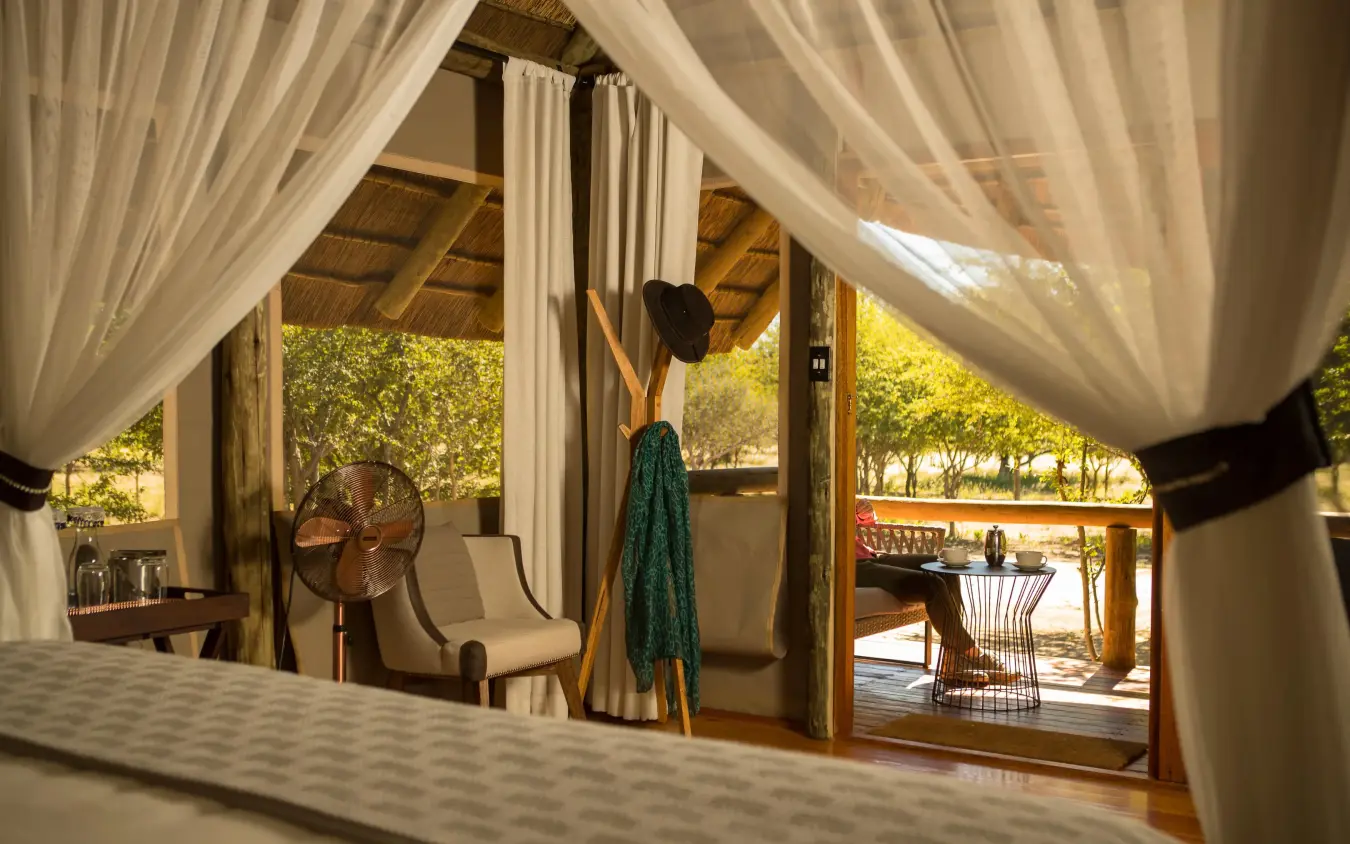
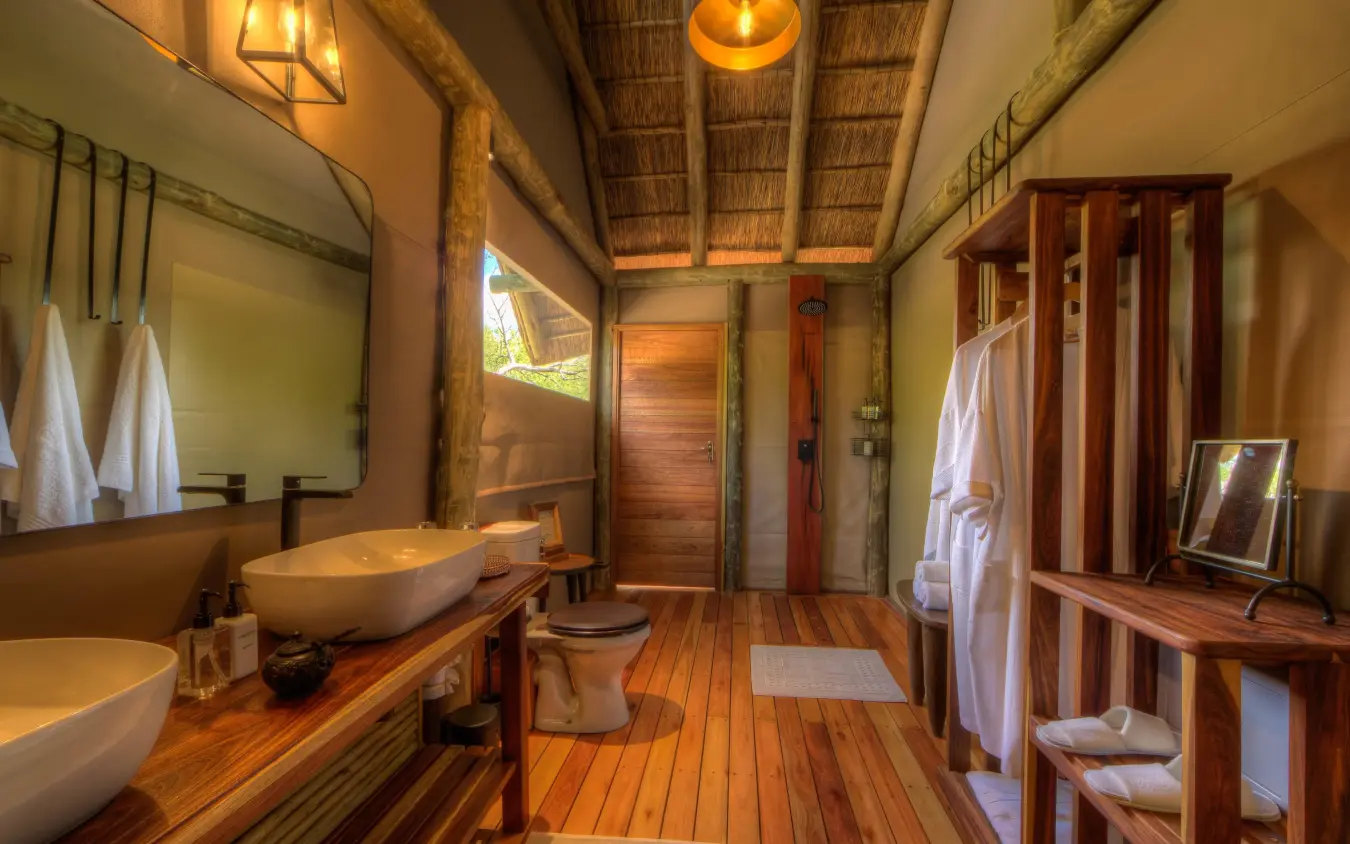
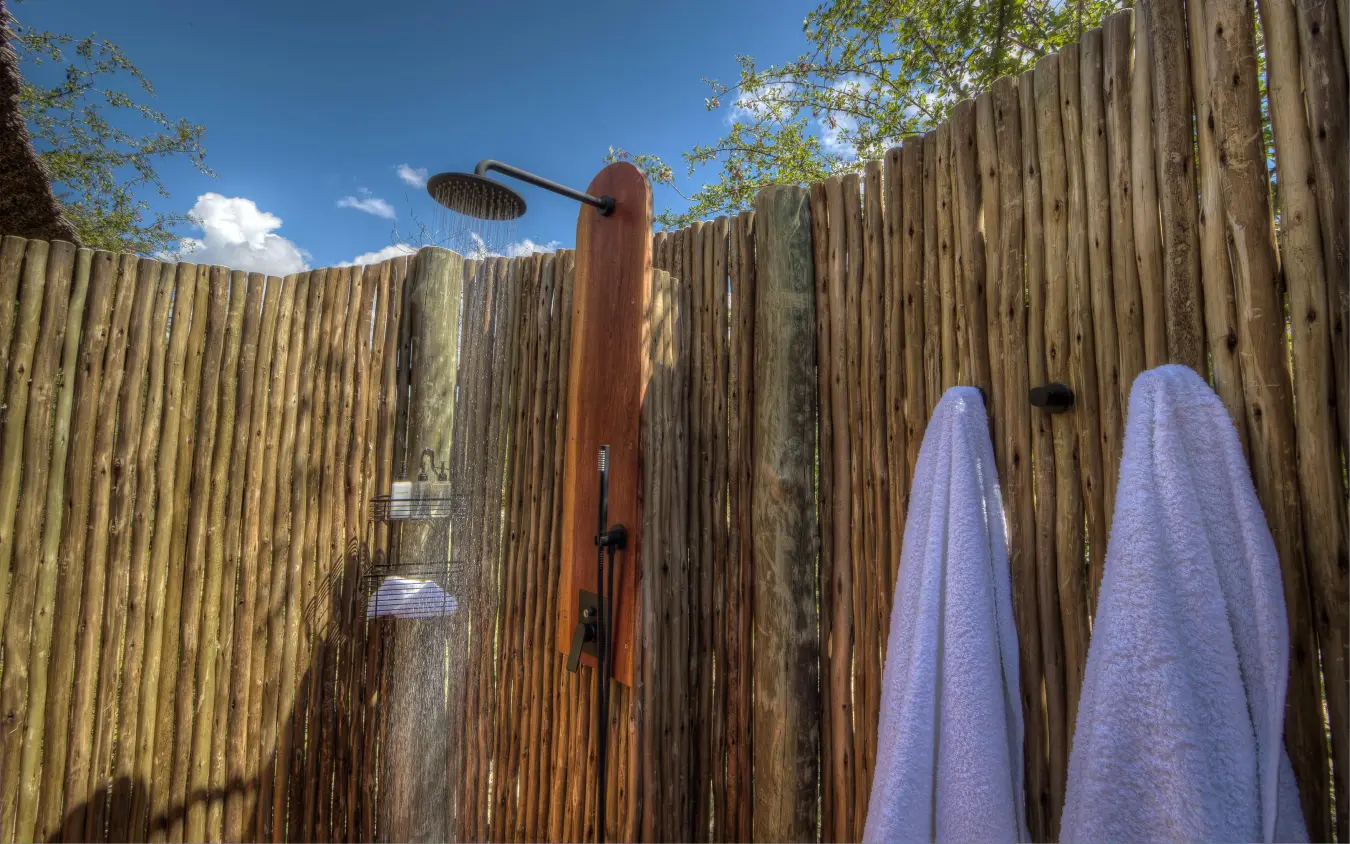
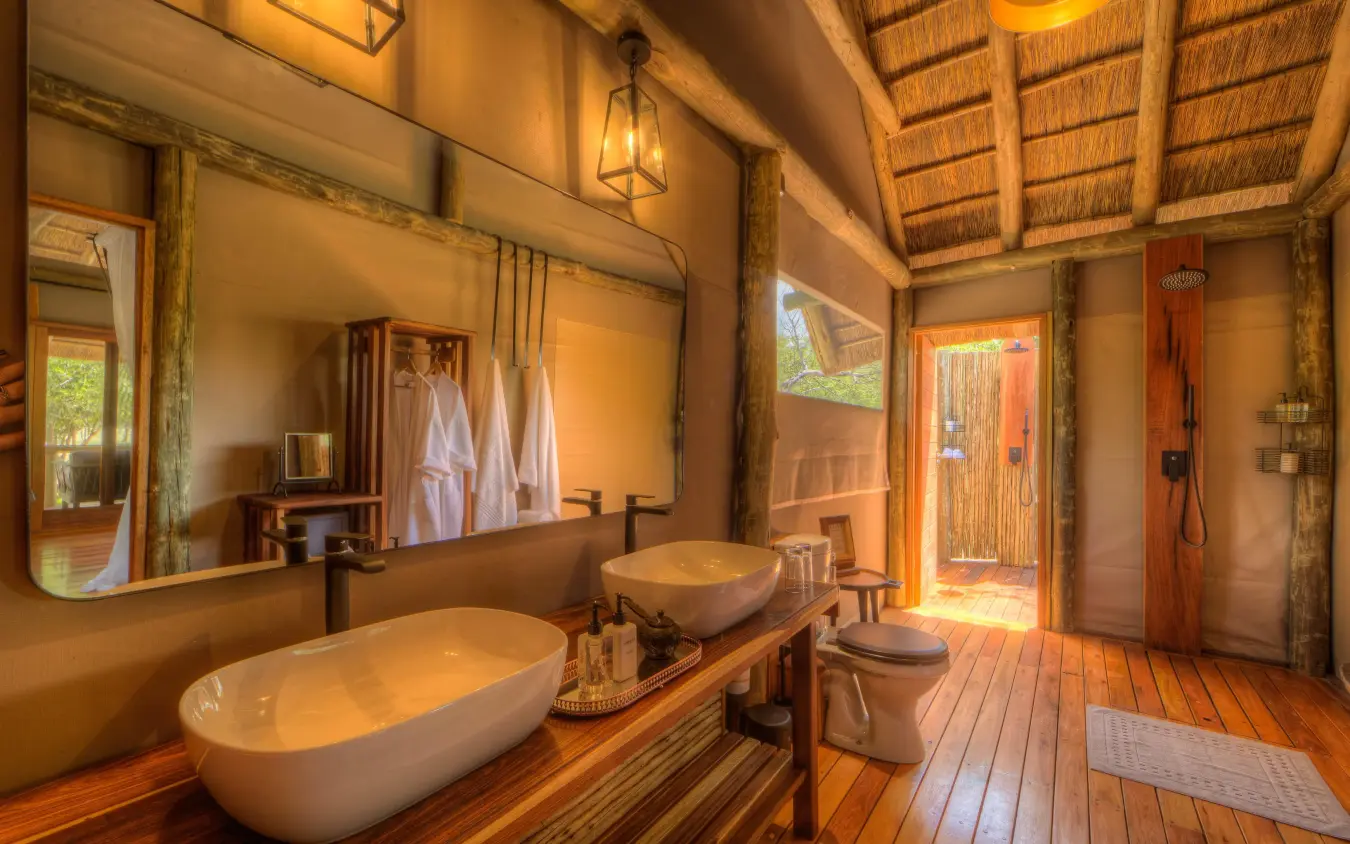
Inside, the tents run to hardwood floors, timber beams and jute rugs, with explorer trunks in the corners and large windows keeping everything light. Each has an indoor and an outdoor shower, and a veranda that sits out over the water. The pace is slower here than at most Botswana camps, weighted toward hide time, image review and long walks with San guides rather than a run of back-to-back drives.

Twin beds with white linens and sheer canopy drapes, Dinaka, Central Kalahari, Botswana 01

accommodation

Seven Twin Tents Around The Waterhole

Seven twin or double tents and one two-bedroom family tent, sleeping up to twenty guests, arc around the waterhole on raised timber decks. Each has hardwood floors, timber beams, jute rugs, large windows, an en-suite indoor bathroom, an outdoor shower and a private veranda facing the water.

Couple watching sunset from elevated wooden deck platform, Dinaka, Central Kalahari, Botswana 02

activities

Game Drives With Maximum Four Guests

Morning, afternoon and night game drives run across the private conservancy, with off-road access and a maximum of four guests per vehicle. Walking safaris, San-guided bush walks, birding and photographic hides are offered throughout. A sleep-out deck and a fifteen-metre lookout deck add star-gazing and night-sky photography.

Safari vehicle observing antelope herd at waterhole, Dinaka, Central Kalahari, Botswana 03

conservation

Kalahari Lion Habitat On Solar Power

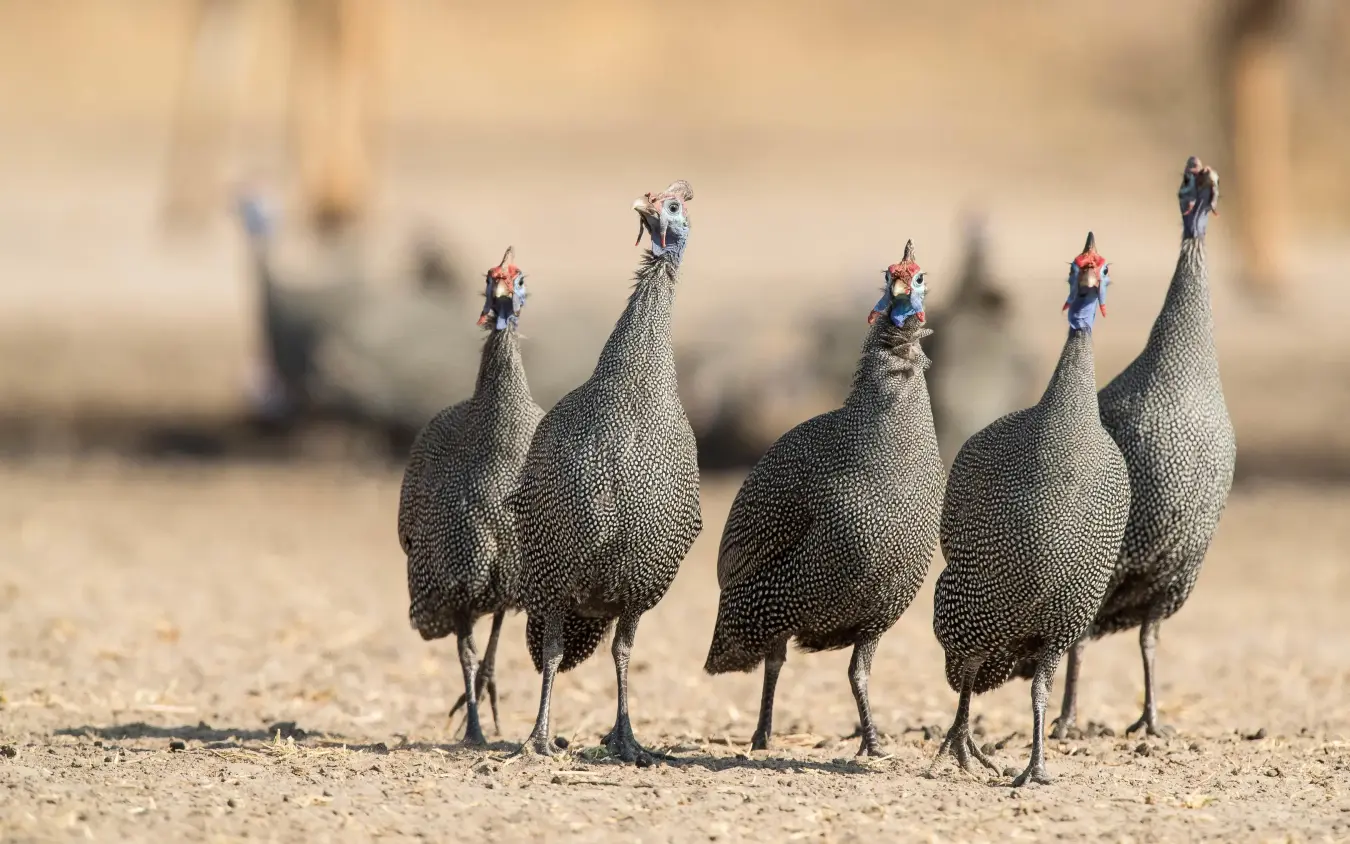
The conservancy provides habitat for Kalahari lion, brown hyena and desert-adapted plains game alongside the Central Kalahari Game Reserve. The camp runs on solar power with on-site water purification and holds an Eco-Tourism certification from the Botswana Tourism Board. San guides are employed directly for tracking and cultural walks.

ready to get started?

Get in touch and let’s start the conversation. An initial consultation helps us understand what you’re looking for, whether that’s specific experiences, luxury touches, or marking a special occasion, and from there we’ll guide you through what’s possible so you can decide if we’re the right fit.

frequently asked questions

Almost everyone arrives by light aircraft. A charter flight from Maun to Dinaka's own airstrip takes about thirty-five minutes, then a ten to fifteen minute drive brings you into camp. We build these charters into your itinerary so they line up with your other camps and flights. If you would rather fly privately, we can arrange your own charter, typically a Cessna Caravan or Pilatus PC-12, timed to your international arrival and flown direct to the strip.

Driving is possible too, at roughly three hours from Maun, but most guests fly, both for the time it saves and for the view over the Kalahari on the way in.

It is a low-risk malaria area. The dry, arid climate leaves little standing water for mosquitoes, and the risk is at its lowest in the dry winter months from June to October, rising only slightly in the green summer.

Health guidance can shift from year to year, so we always suggest checking the current position with a travel clinic or your doctor before you travel, and taking the usual precautions against bites after dark.

Yes. There is a dedicated two-bedroom family tent sleeping up to five, and younger guests are welcome, usually from around six or seven years old. Tell us your children's ages and we will confirm what works for your dates.

It suits families who are happy with genuinely remote, guided travel rather than a resort. The water-level hide, the small vehicles and the walks with San guides tend to hold children's attention in a way few places manage.

There is wifi in camp, though it can be patchy, so you can reach home or the office if you need to. There is no mobile phone signal, which most guests quickly come to count as part of the appeal.

If you do need to stay contactable during your stay, let us know in advance and we will make sure the arrangements suit you.

The Kalahari runs to extremes. In the dry winter, from June to August, the days are mild and clear but the nights are cold and can fall close to or below freezing, so warm layers for early starts matter more here than almost anywhere in Africa.

The green summer, from November to March, is hot, with short afternoon storms. Light, neutral clothing, a warm layer, good sun protection and closed shoes serve you across the year, and we send a full packing list with your final documents.

Two nights is the usual minimum, but three or more is where the place rewards you. The hide, the walks and the drives all repay patience, and a longer stay means you are not pinning your hopes on a single afternoon at the water.

Because Dinaka sits alone on its own conservancy, it also pairs well with a contrasting camp elsewhere in Botswana, which we are glad to plan around it.

rated five stars by our clients

other areas in botswana

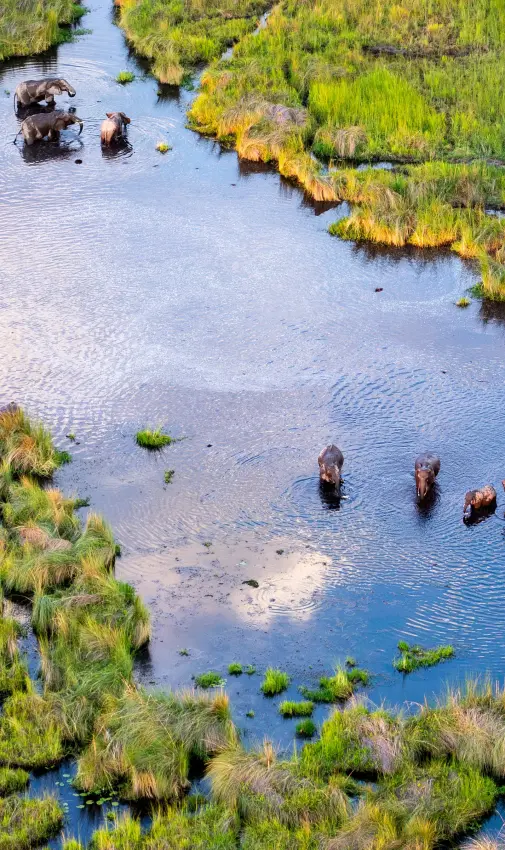
Aerial view of elephants wading in shallow water surrounded by vegetation 01

The Okavango Delta

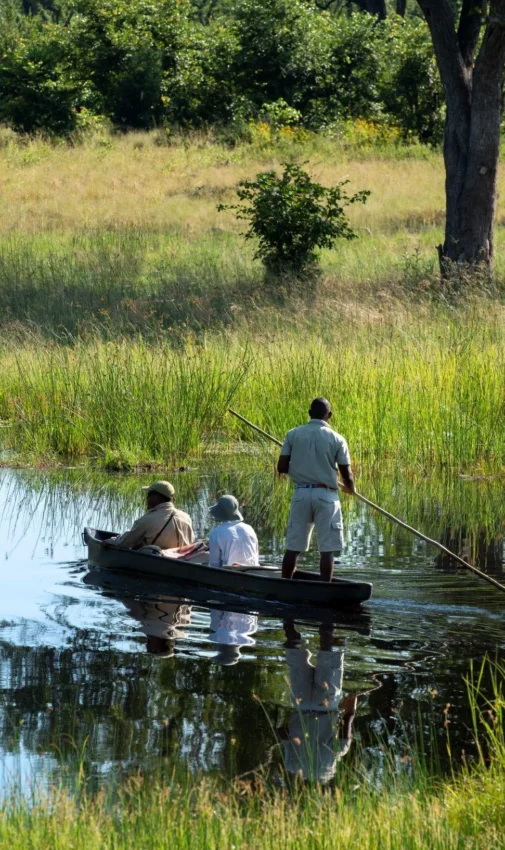
Guests poling traditional boat through wetland waterway, Linyanti Wildlife Reserve, Botswana 02

Linyanti Wildlife Reserve

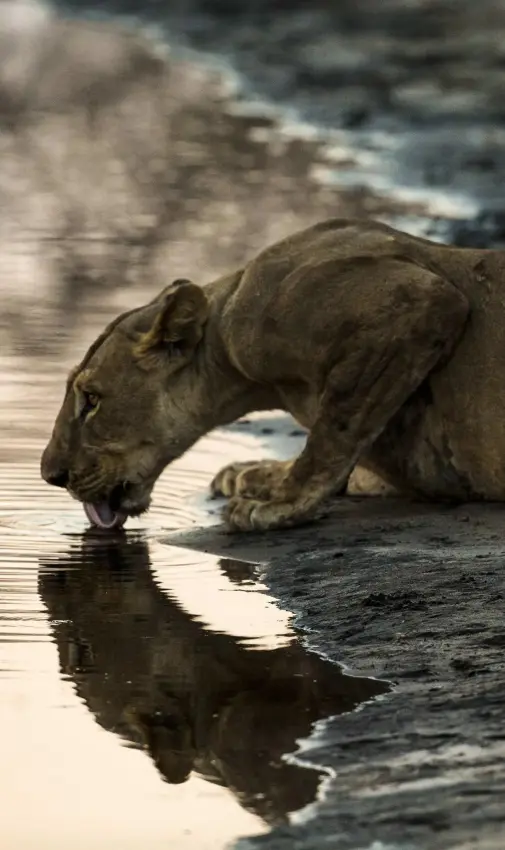
Lion drinking from water's edge at sunset, Selinda Reserve, Botswana 03

Selinda Reserve

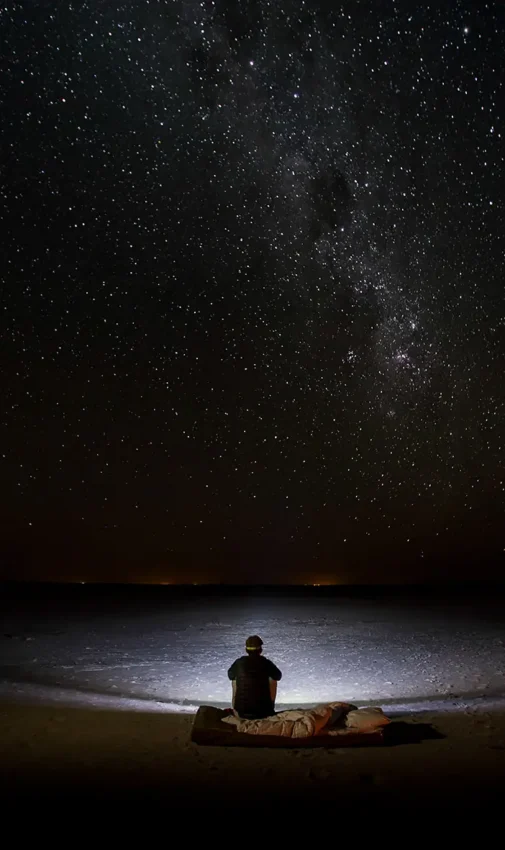
Person sitting alone under starry night sky, Makgadikgadi Pans, Botswana 04

Makgadikgadi Pans

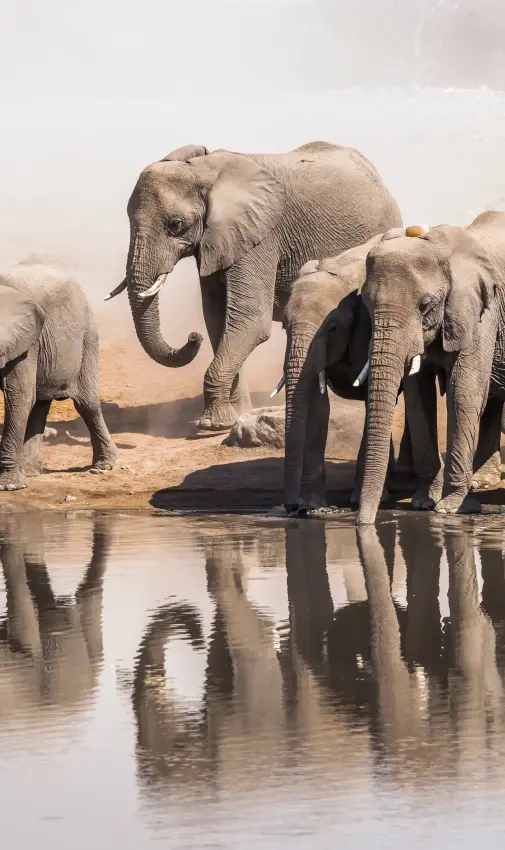
Herd of elephants drinking at waterhole with reflections 05

Chobe

Planning a journey together

our approach

remote, exclusive
& personal

Every journey starts with a conversation. We take the time to understand your vision before we start planning.

Whether by phone or in person, we work with you directly to shape something that is considered, personal, and expertly delivered.

get in touch
destinations ideas & inspiration our process about us contact us