







namibia
dunes, the hoanib and the kunene
Thirteen nights linking the Sossusvlei dunes, the Skeleton Coast, the Kunene River and Etosha's rhino country.
- Private Safari
- From $17,960 pp
- 2 guests
- 13 nights
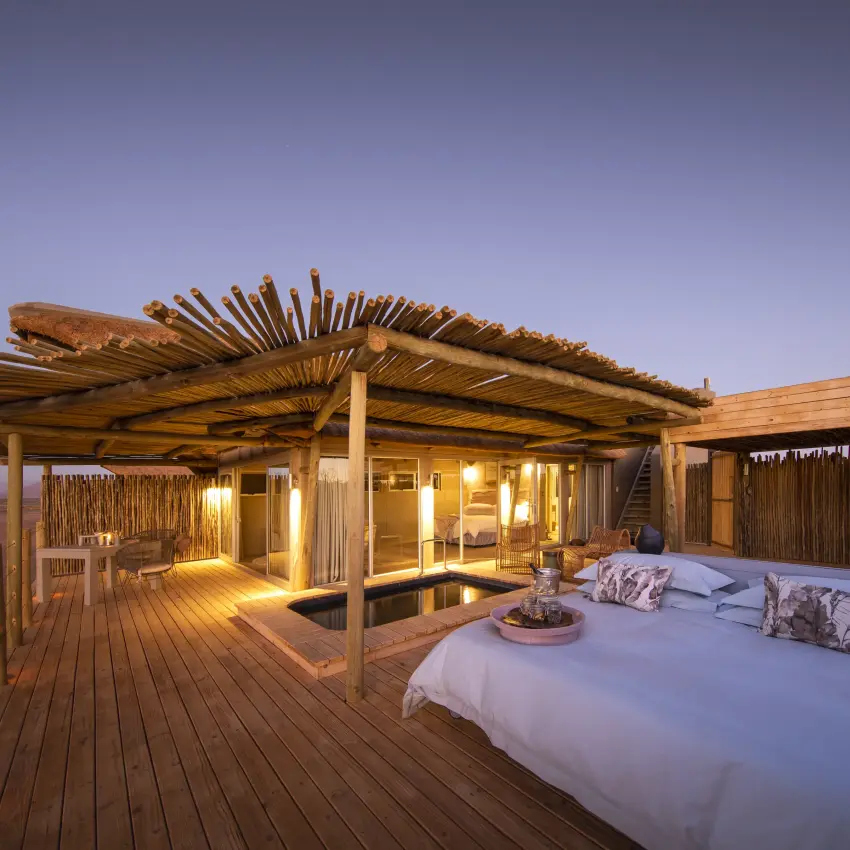
This eleven-night route runs from Windhoek across three distinct parts of Namibia. It opens with a night on the Khomas Highland plateau, then crosses to the Sossusvlei dunes and Deadvlei in the Namib-Naukluft, moves to the Atlantic at Swakopmund, and turns north into the granite country of southern Damaraland before a final night on a savannah reserve near the airport.
You travel by a mix of light aircraft and guided vehicle, with days built around early starts at the dunes, the coast and the plains. The stays are chosen for each setting: a hill guesthouse in the capital, a desert lodge with its own gate, a beachfront hotel on the Mole, a ridge camp among boulders, and thatched huts above a rhino reserve.
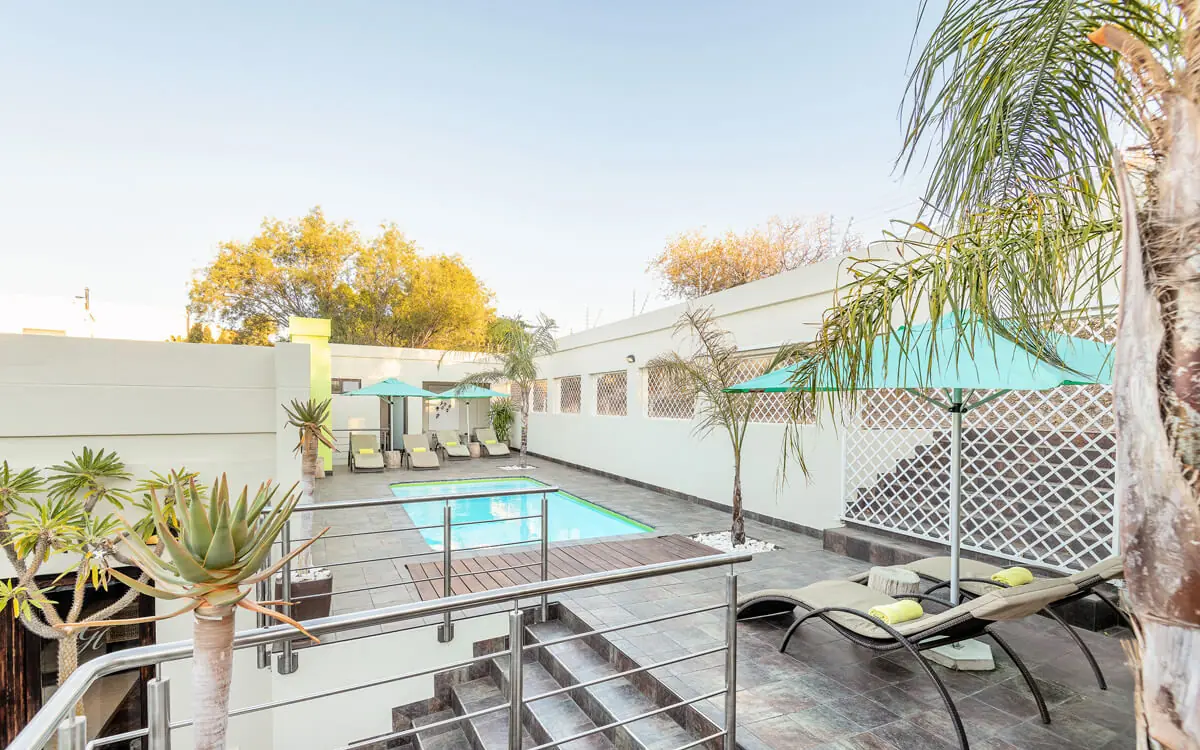
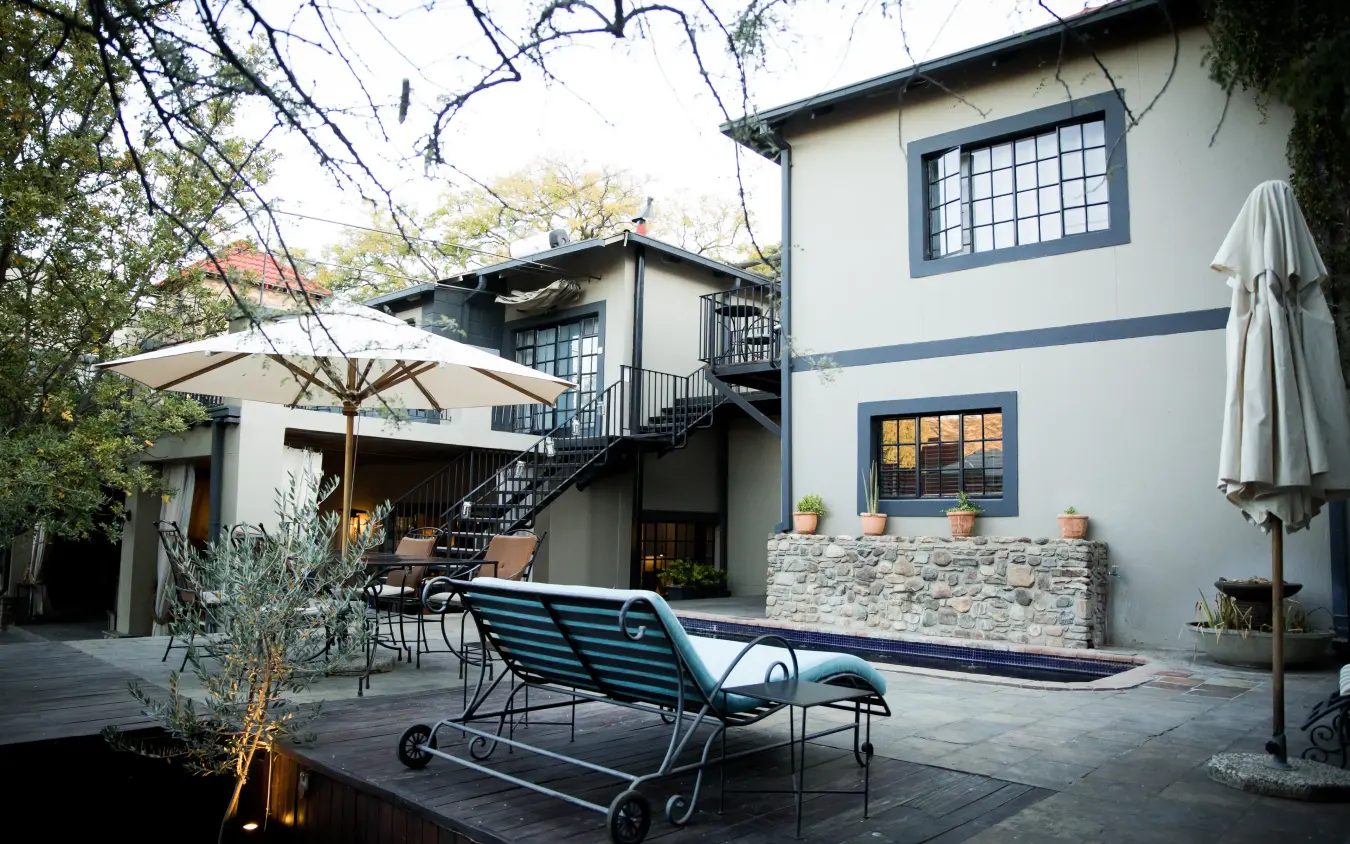
Namibia's capital sits on the Khomas Highland plateau at roughly 1,700 metres, and for most safari guests it plays one role: a comfortable night between an international arrival and the flight onward. The walkable centre holds the Christuskirche, the Tintenpalast and the Independence Memorial Museum, an hour or two rather than a full day. Your stay is on a gentle hill in the leafy Klein Windhoek suburb, where an à la carte kitchen works in full view of the room over Namibian game meats and international dishes. Tiered private gardens, a plunge pool and a fireplace lounge give it a residence-like calm.
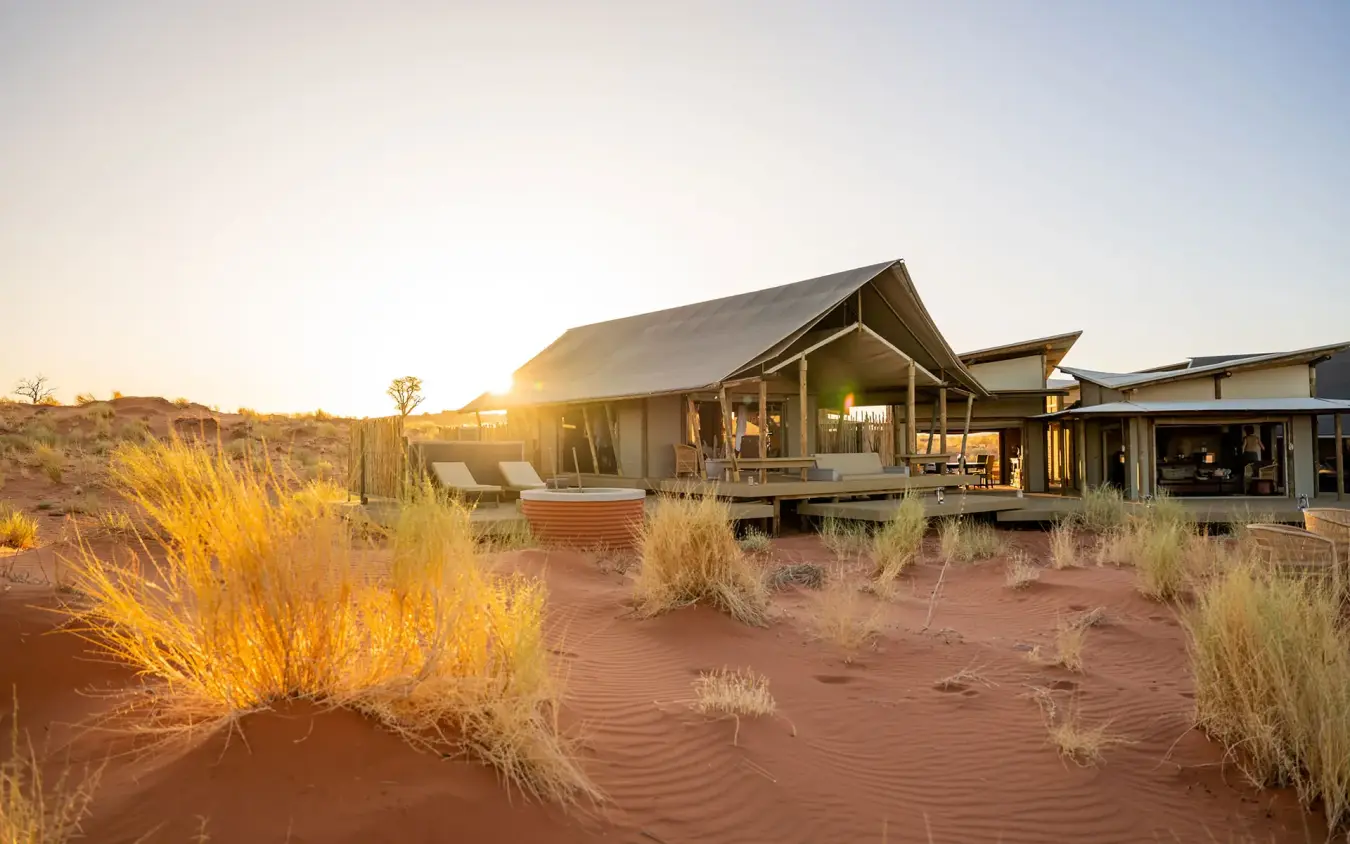
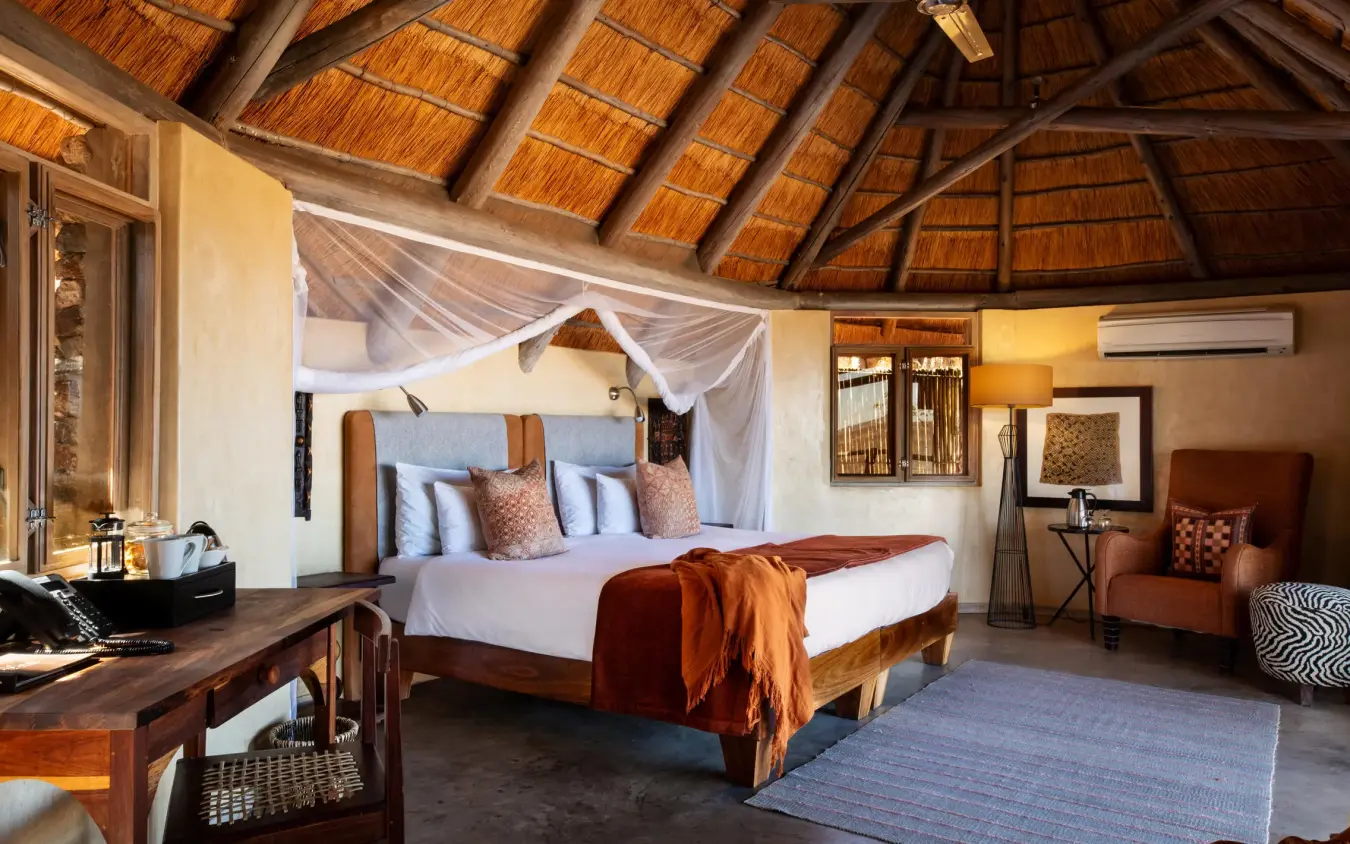
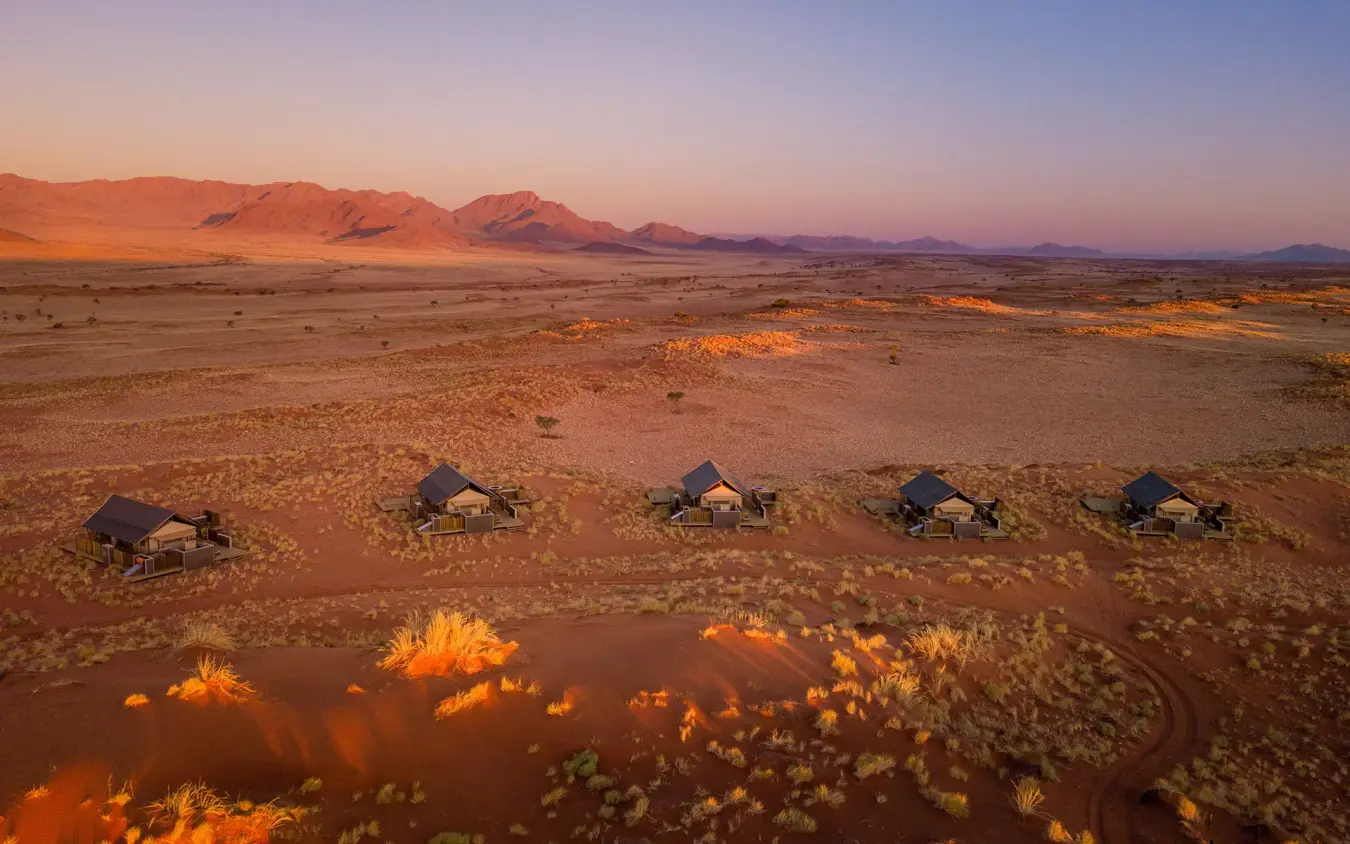
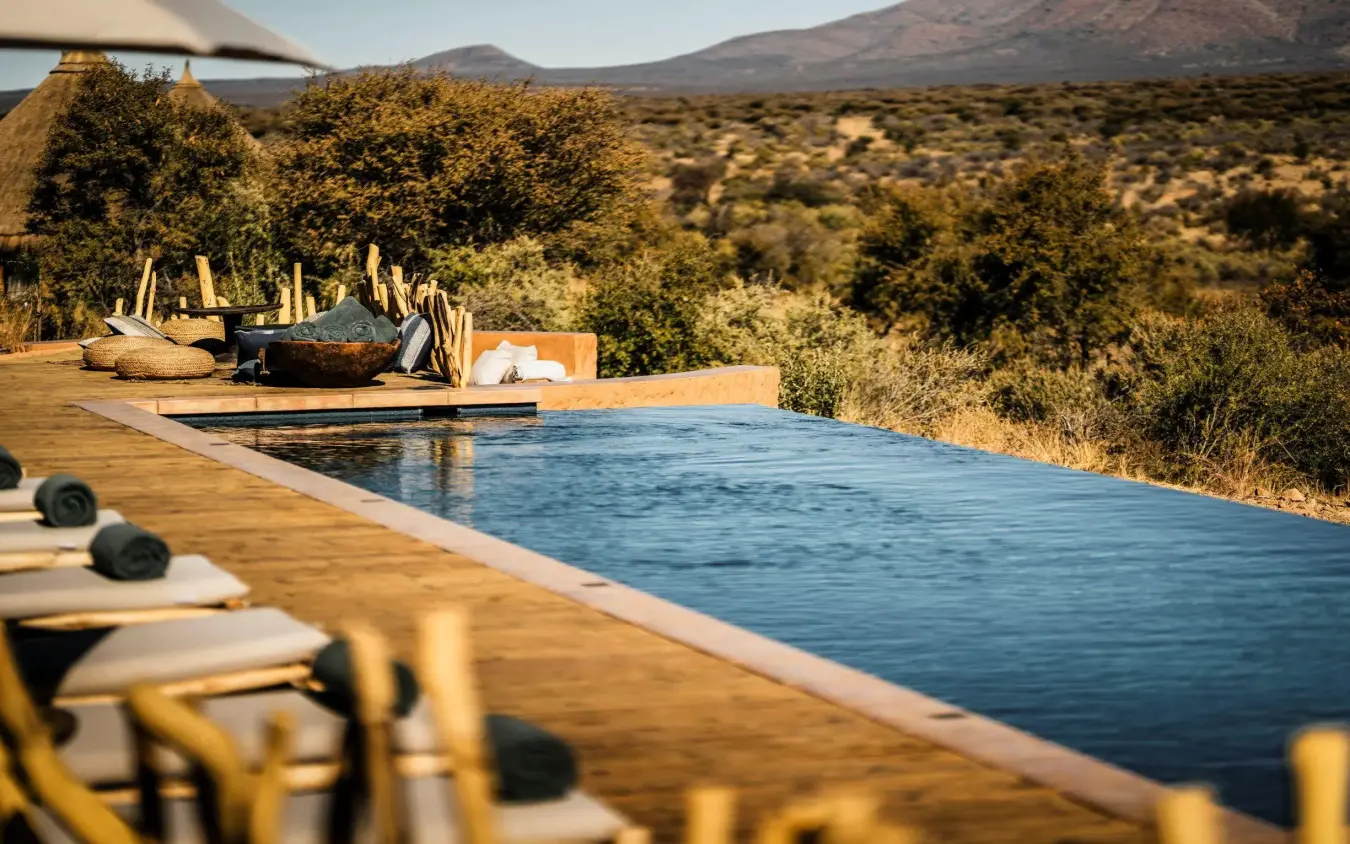
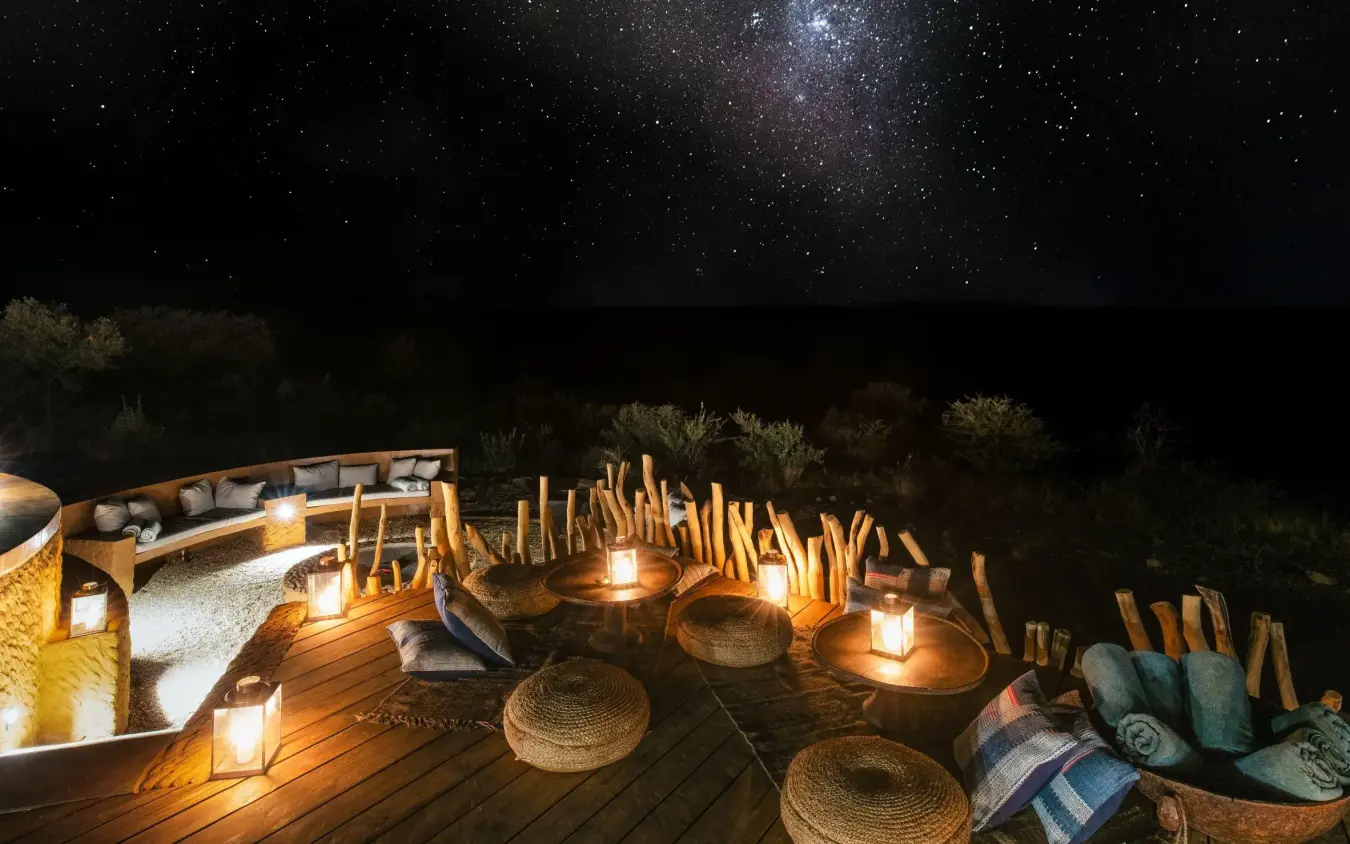
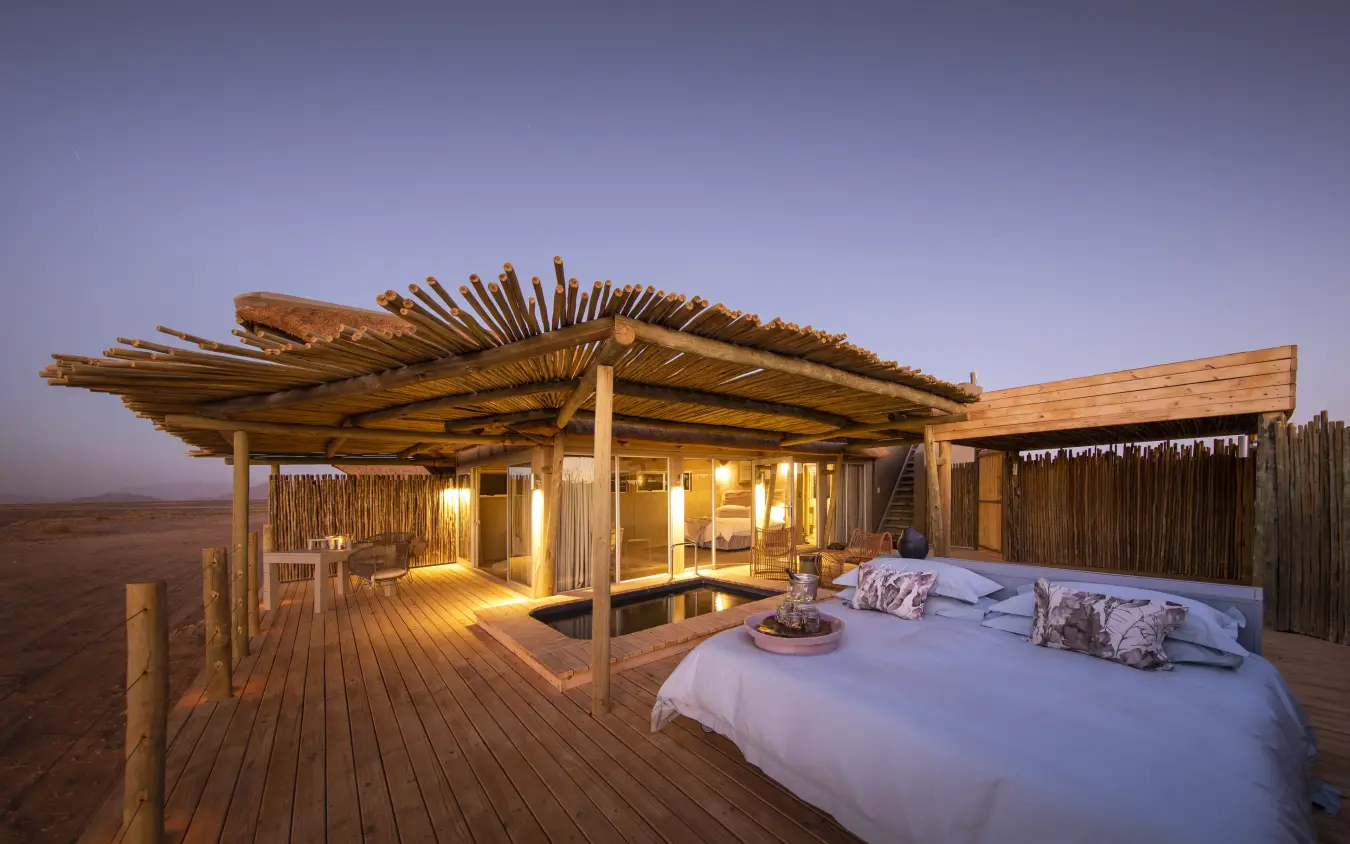
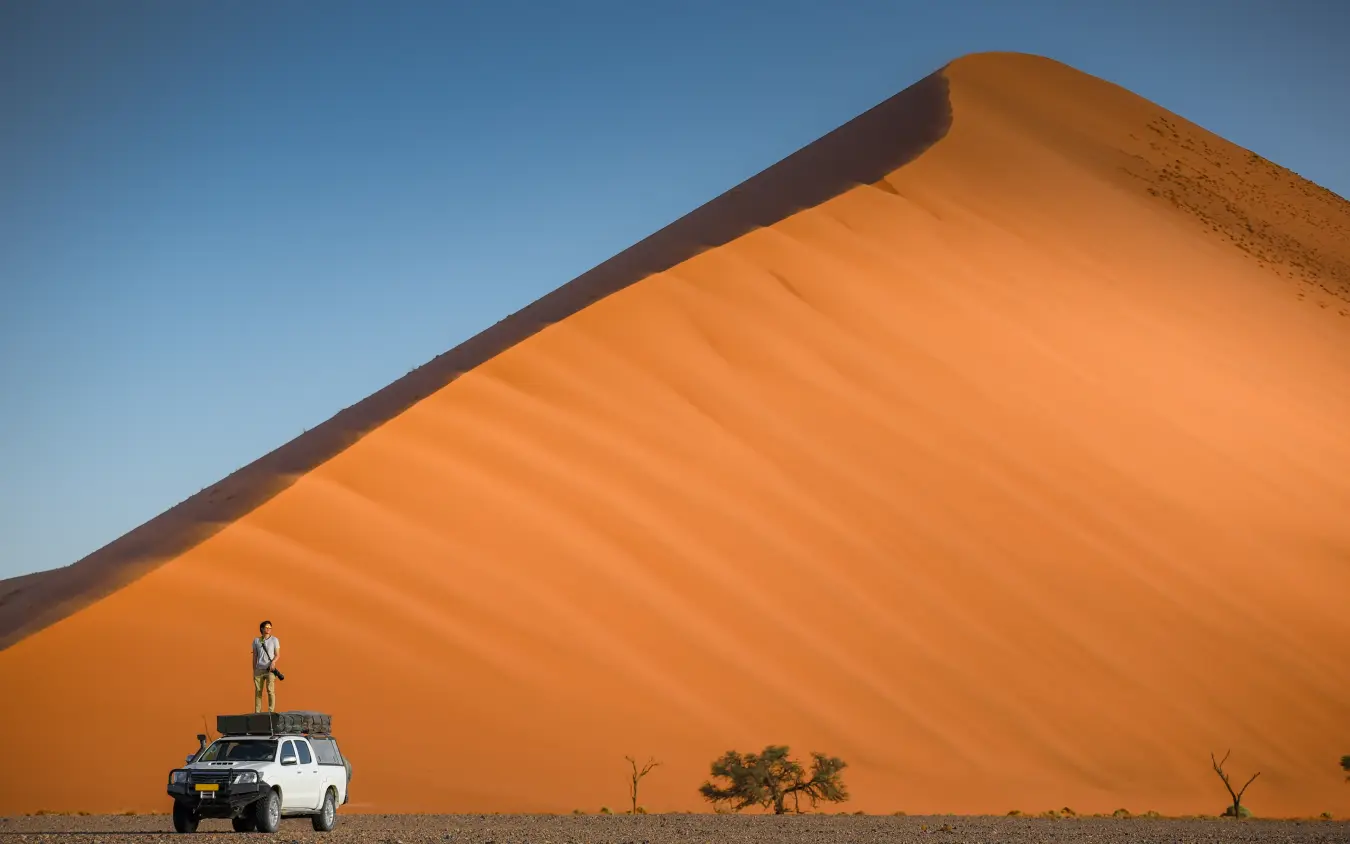
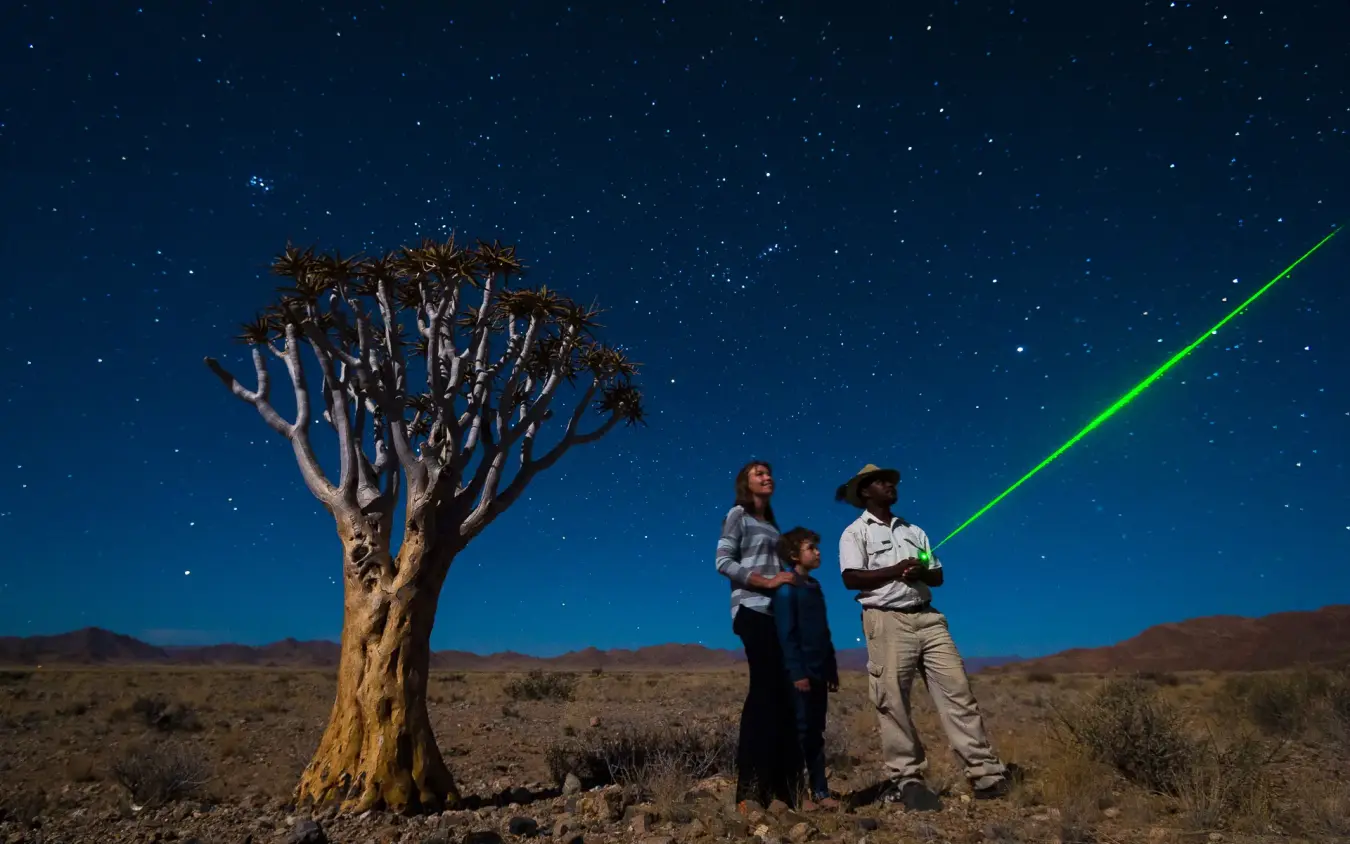
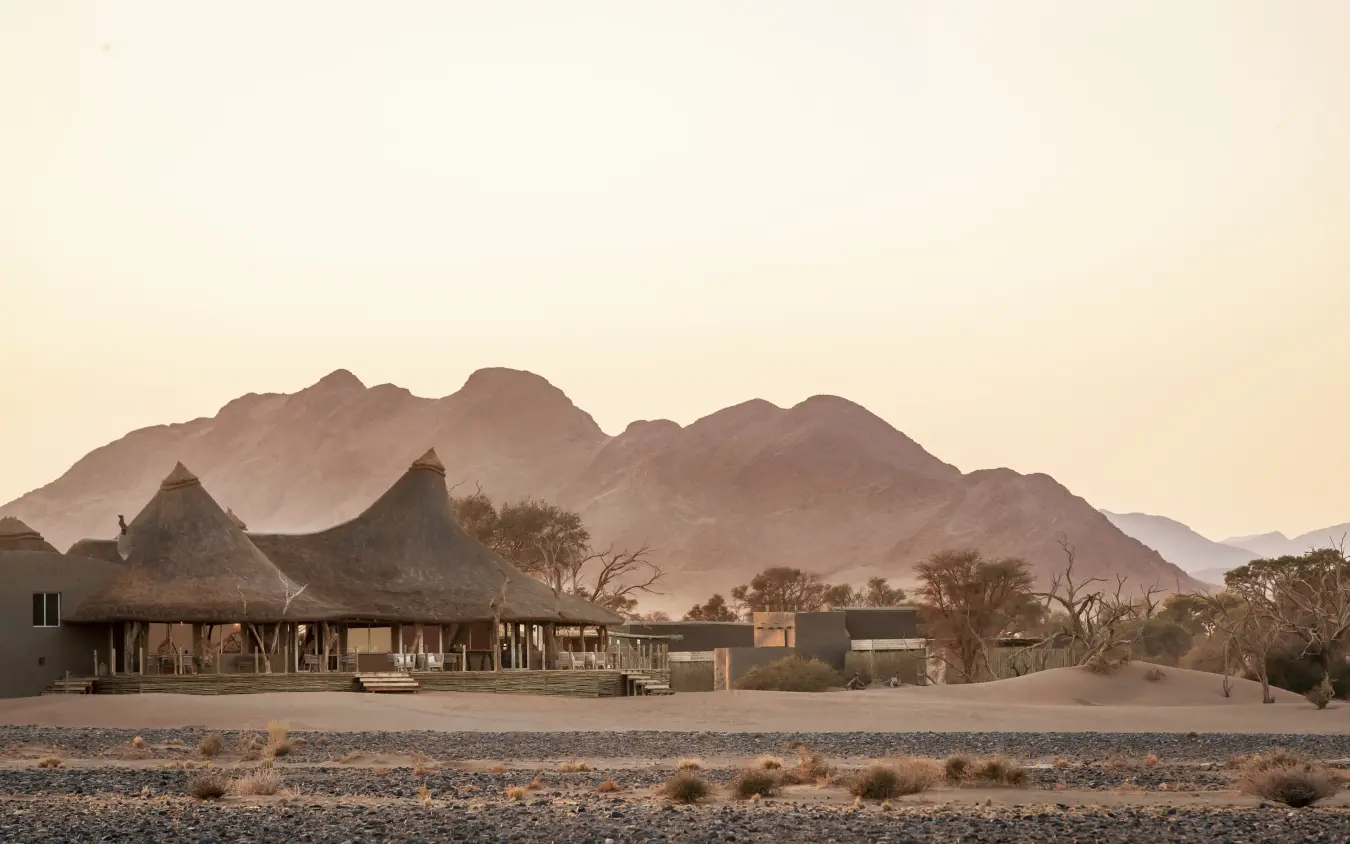
Three nights in the Namib-Naukluft, with days built around early starts at the great dunes. Guided vehicles pass through a private gate into the park, reaching Sossusvlei and Deadvlei in the low light of sunrise while visitors at the public Sesriem gate are still queuing. You can climb the 325-metre Big Daddy dune before the sand heats, photograph the black camelthorns of Deadvlei, and drive out to Sesriem Canyon. This is desert-adapted country, home to gemsbok, springbok and the dune lark. Each of the eleven thatched suites stands alone on a raised deck with a plunge pool and a rooftop skybed for sleeping under skies dark enough to show the Milky Way.
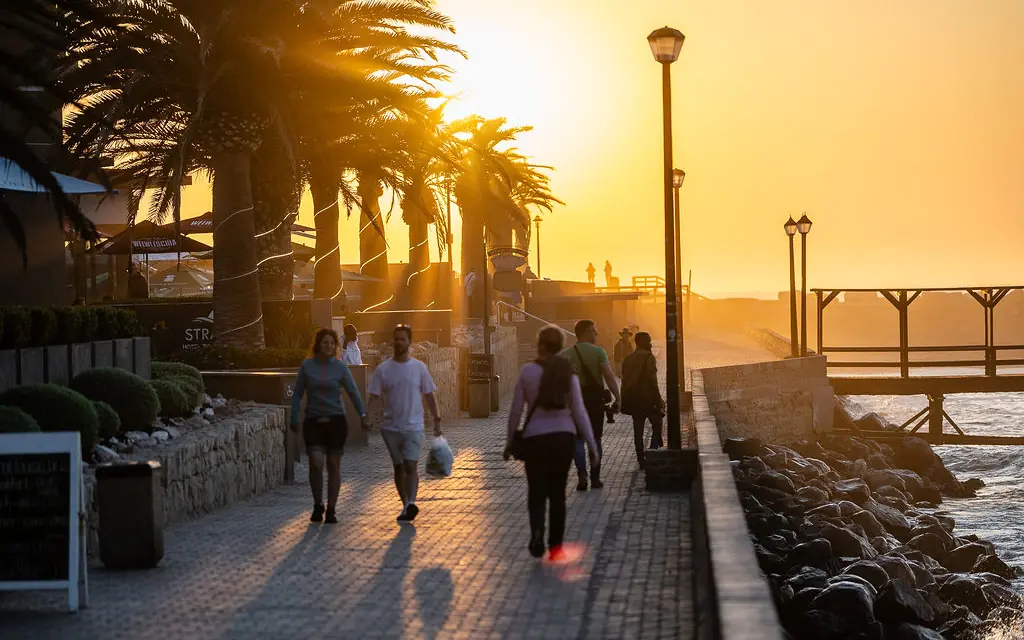
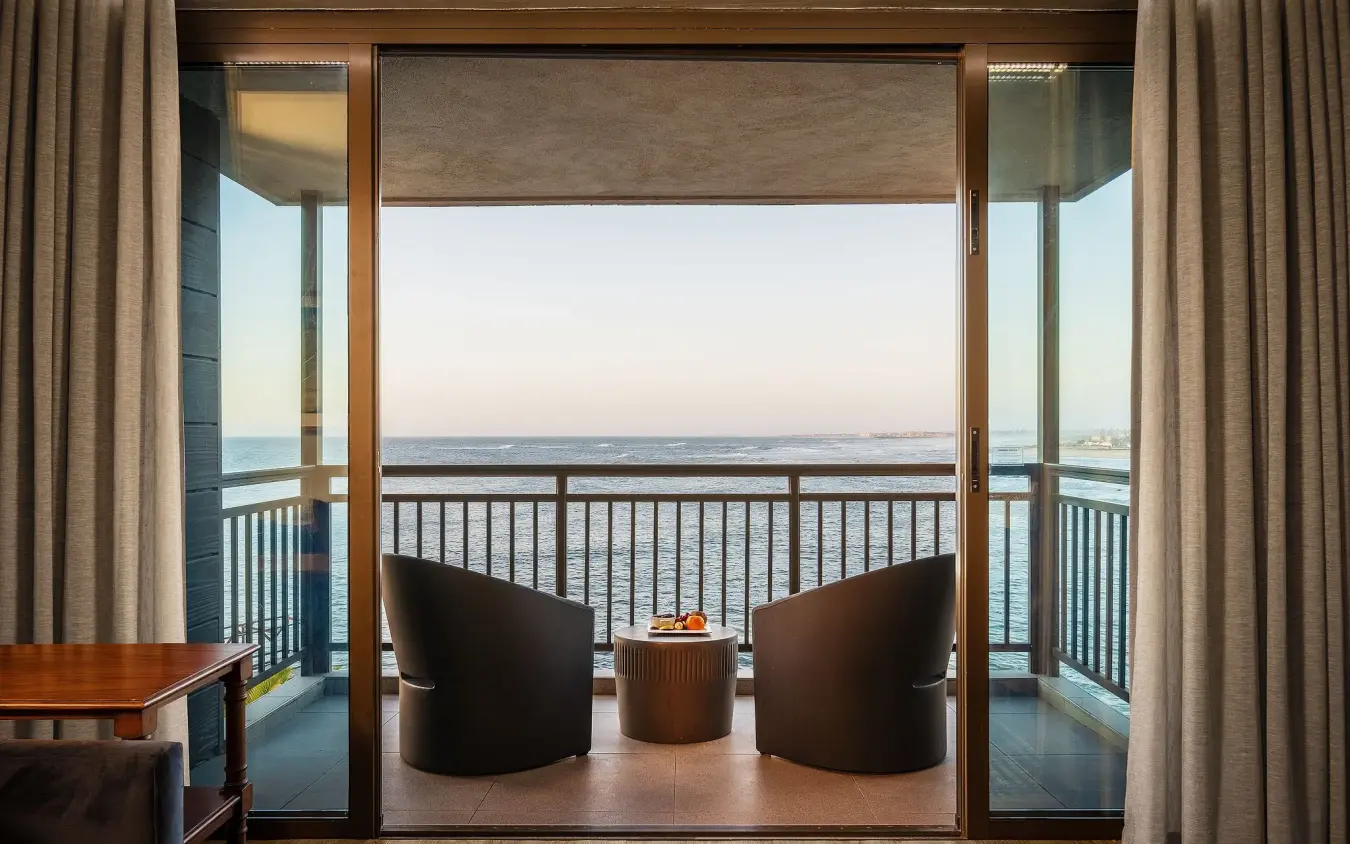
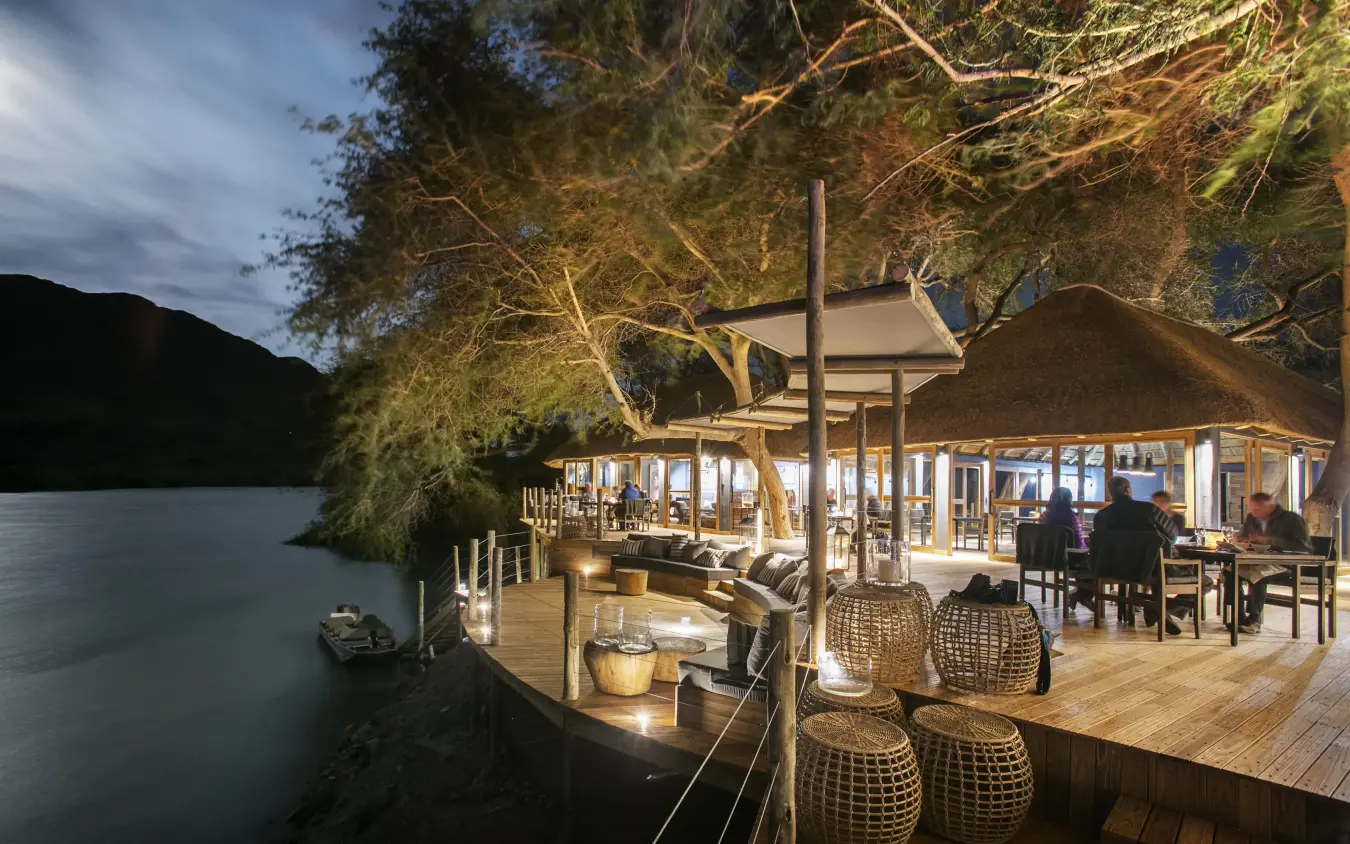
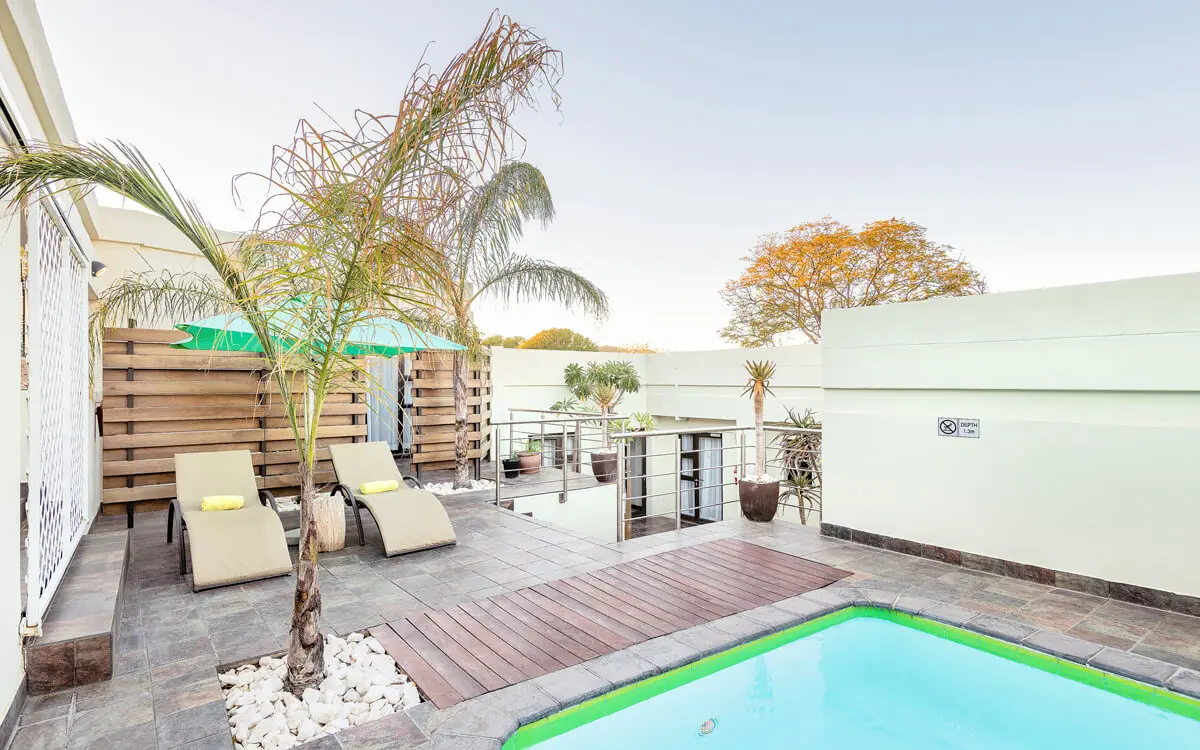
From the desert you move to the coast at Swakopmund, where the Namib dunes give way to the Atlantic and the town's German colonial seafront. Morning fog drifts in off the water and burns off by midday, and the flat centre is a five-minute walk with its museum and shops. Your hotel sits out on the Mole, the historic breakwater, with water on three sides and waves breaking below the balconies. Three restaurants, a beer garden and a beach pavilion line the seafront, and an on-site microbrewery serves Eisbein and grills beside an open fire.
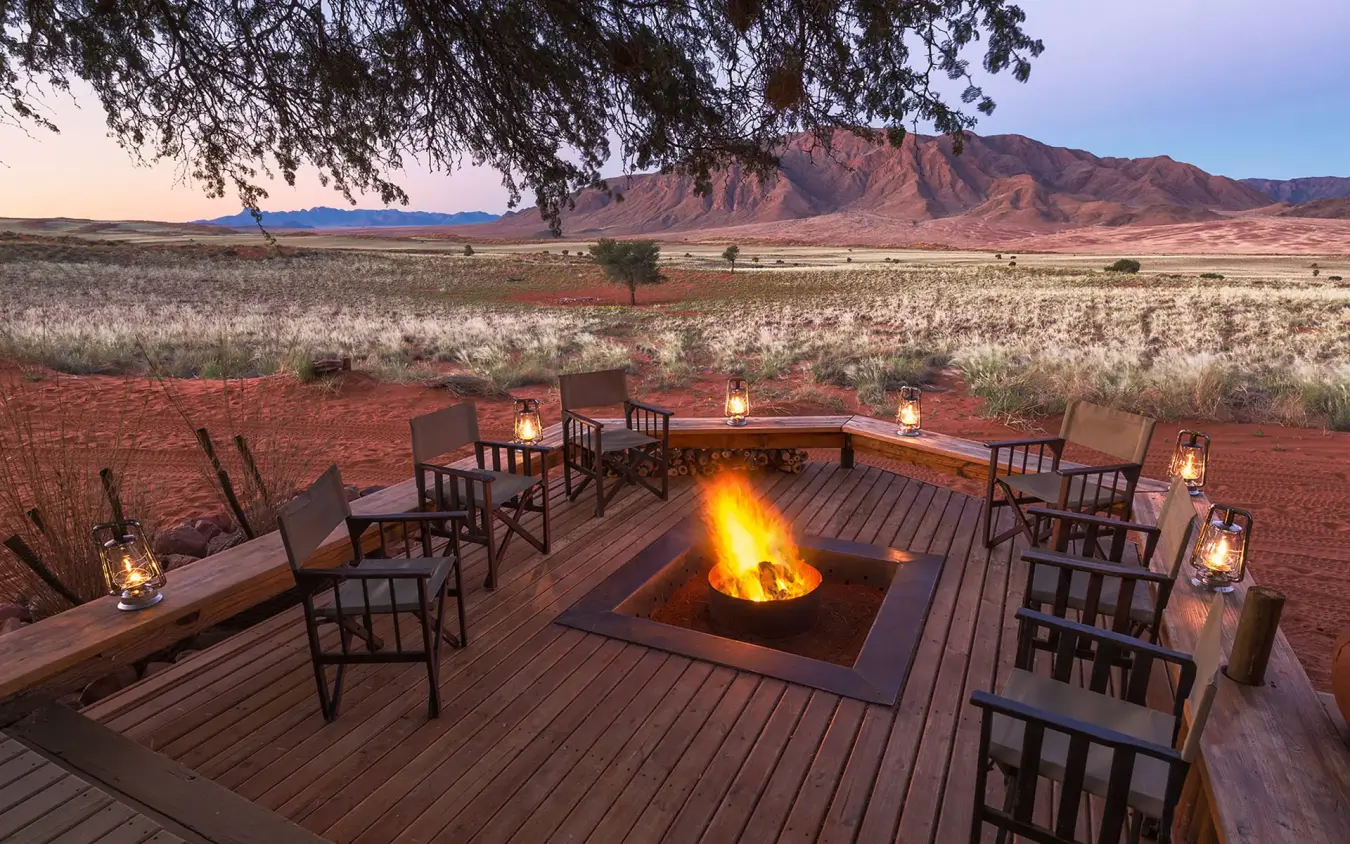
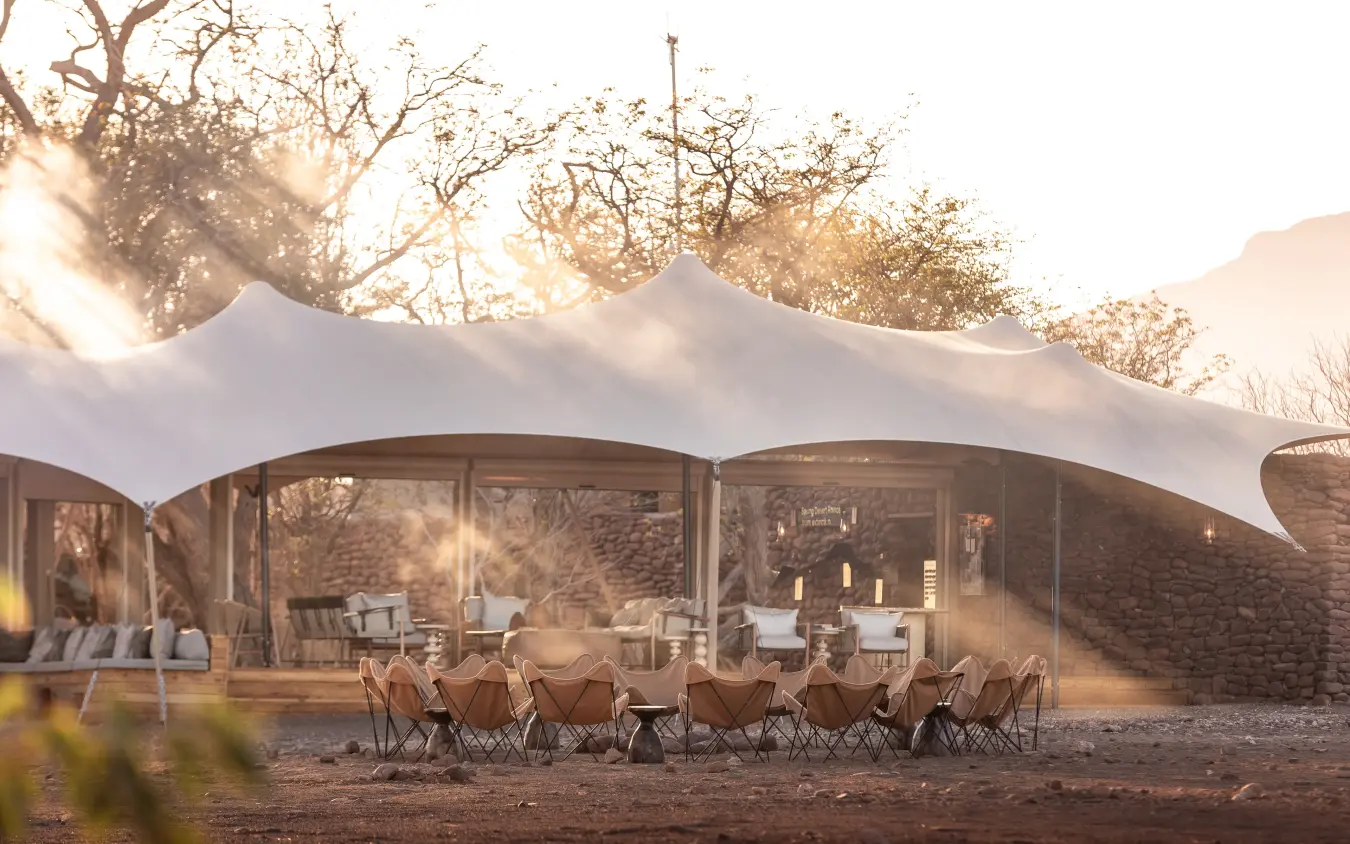
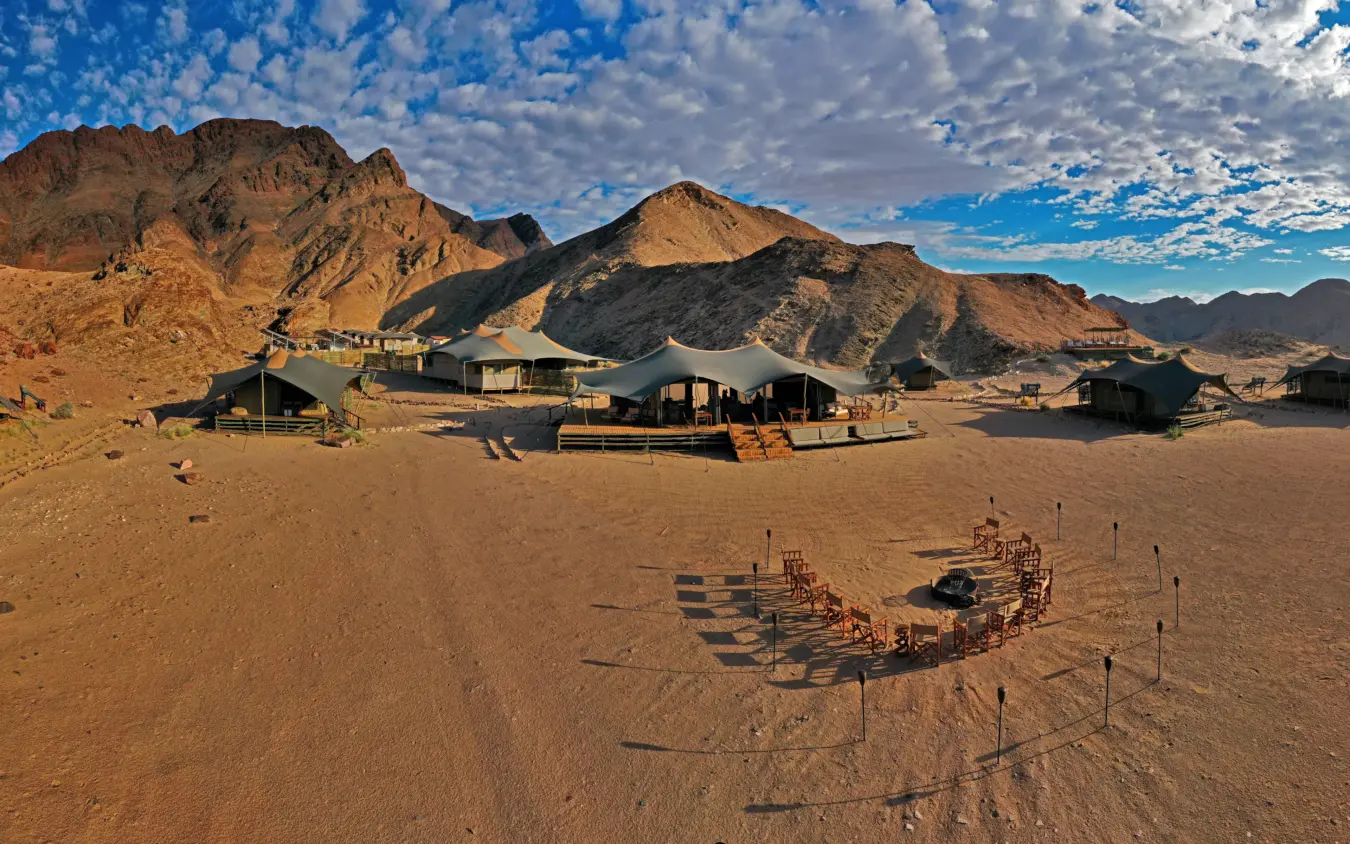
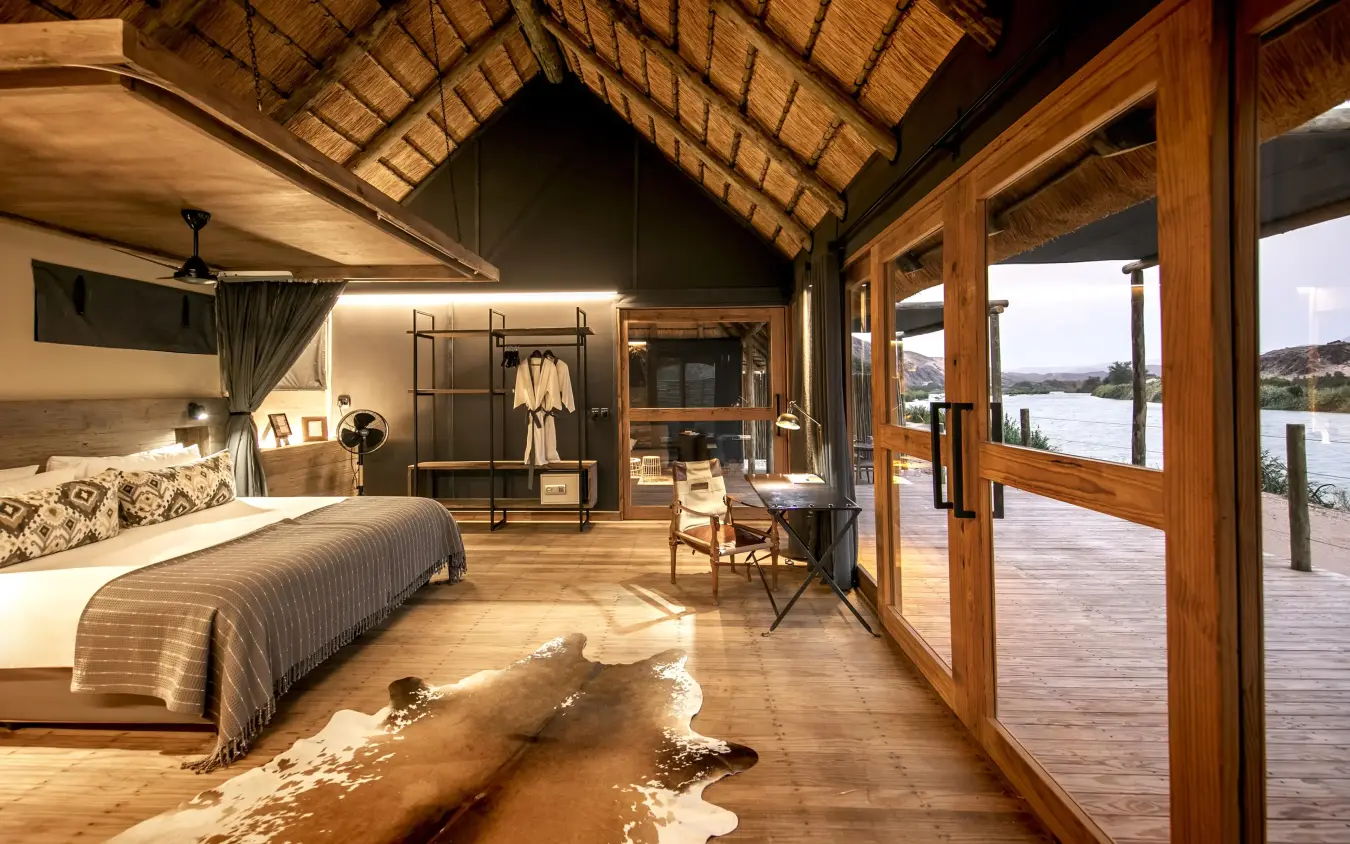
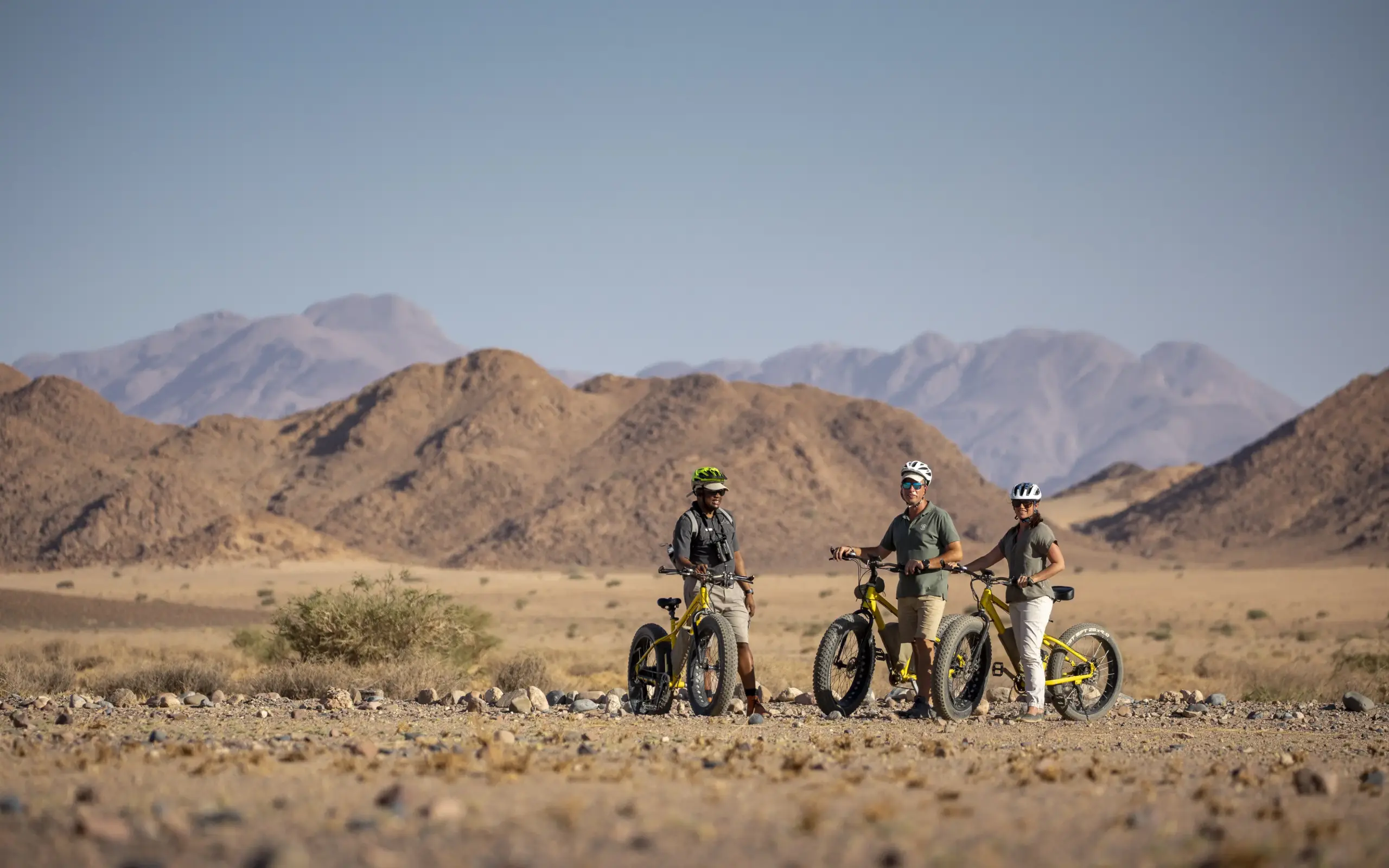
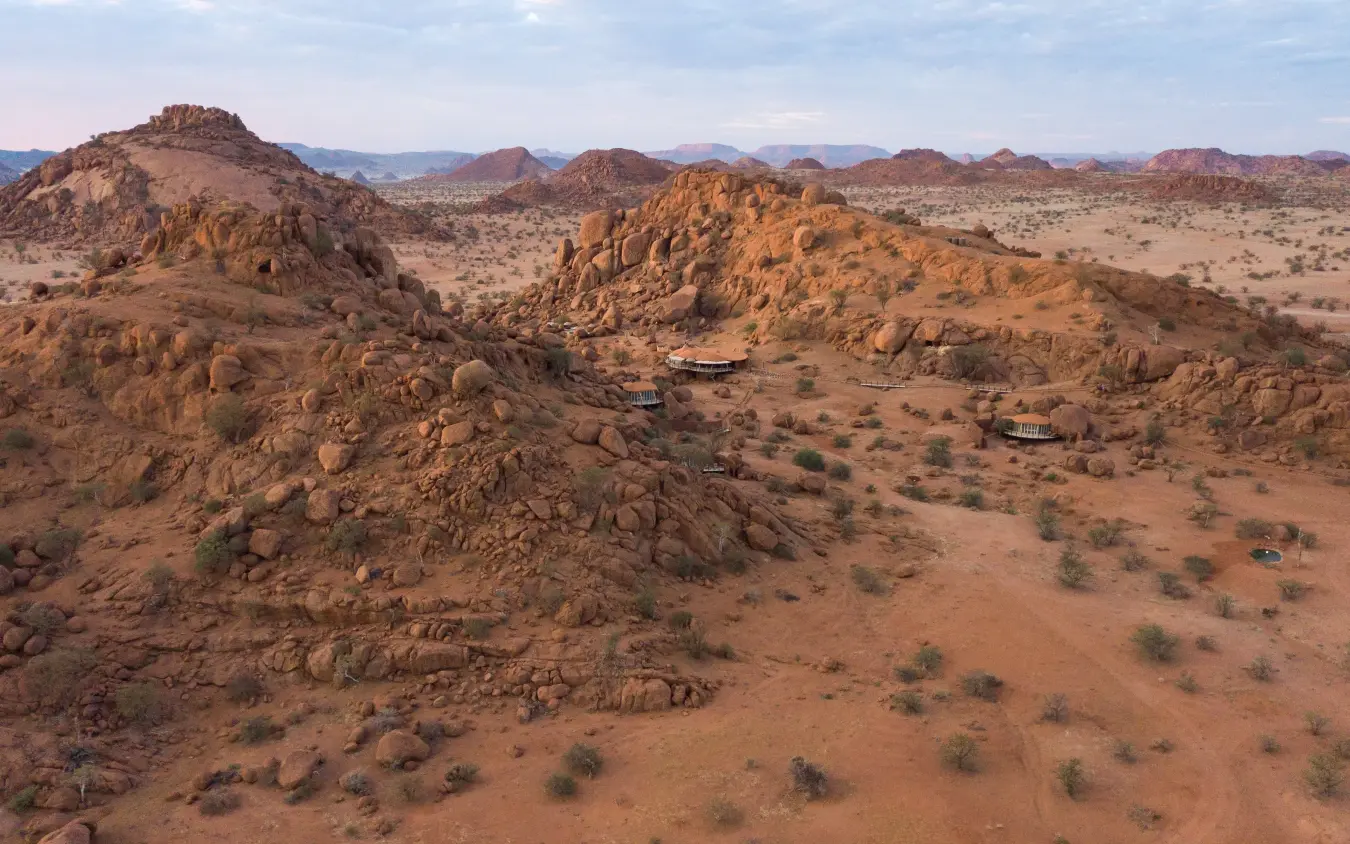
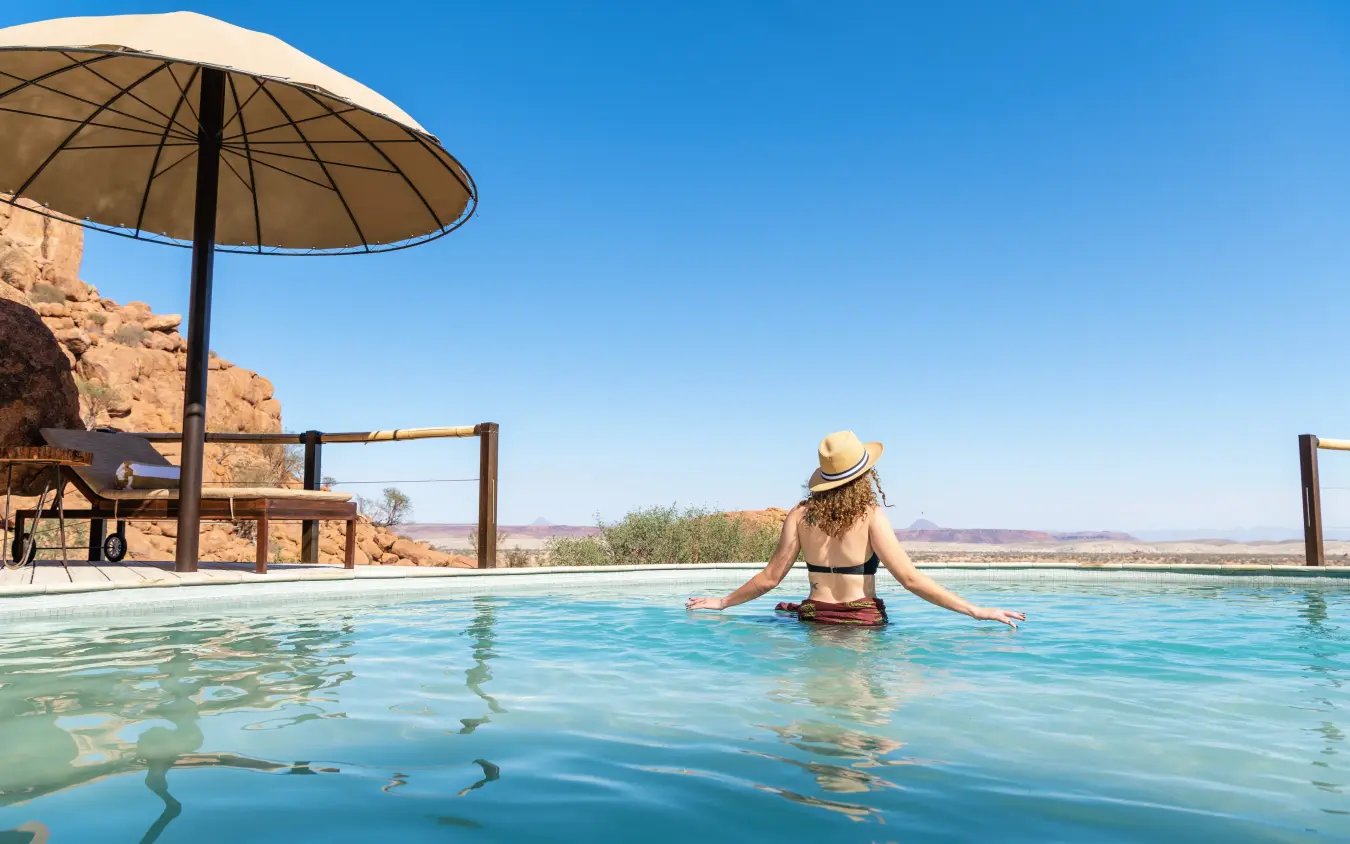
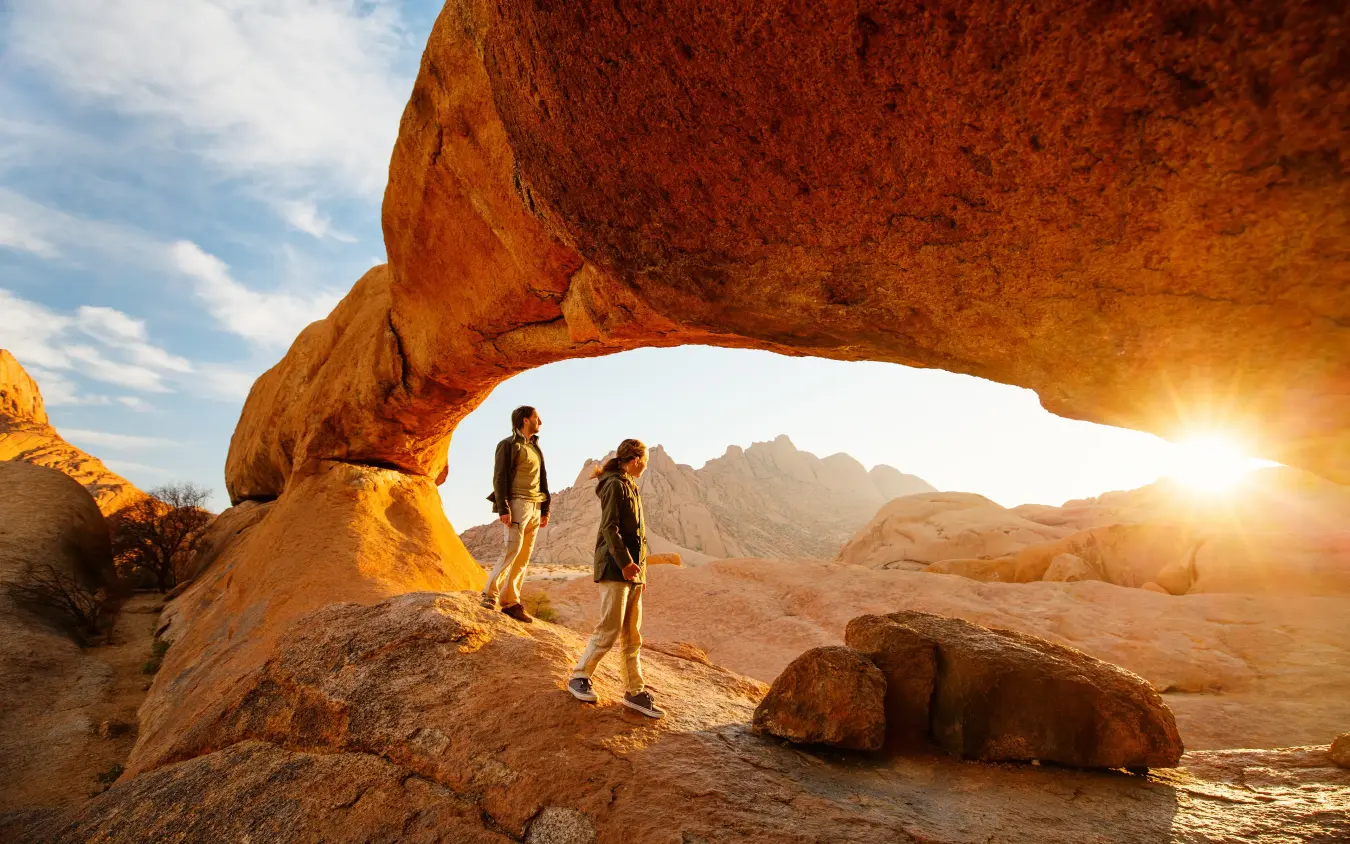
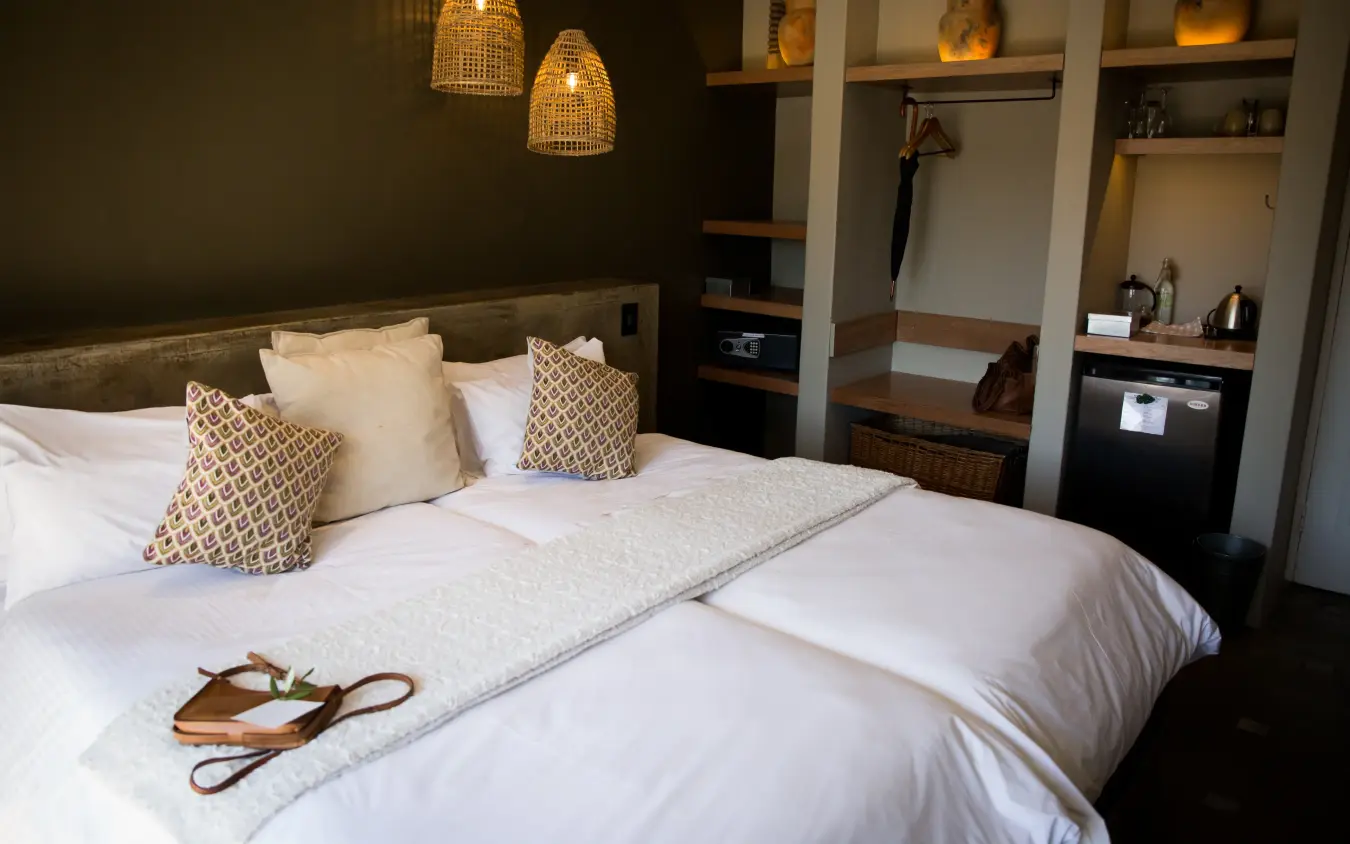
Three nights in southern Damaraland, on a private concession in the Doro !Nawas Conservancy with Brandberg, Namibia's highest mountain, closing the southern horizon. Because the ground is private rather than national park, guides can leave the road to follow desert-adapted elephants by vehicle and track free-roaming black rhino on foot, and run drives after dark. Solar-powered e-bikes and guided walks reach rock formations and engravings, with Twyfelfontein about twenty minutes away. Six suites sit high among granite boulders, each with louvred doors that open the bedroom to the plains and a king bed that rolls onto a private deck.
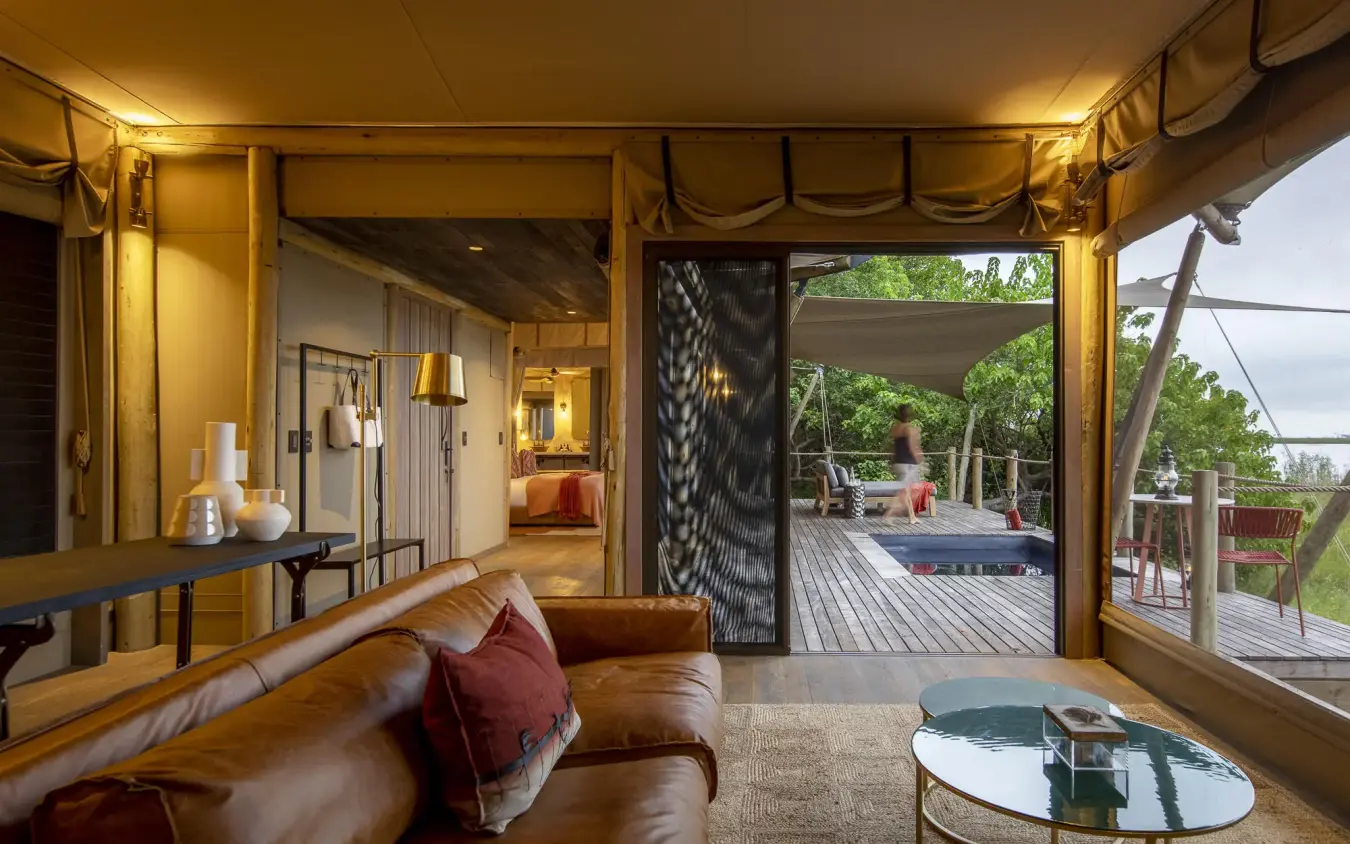
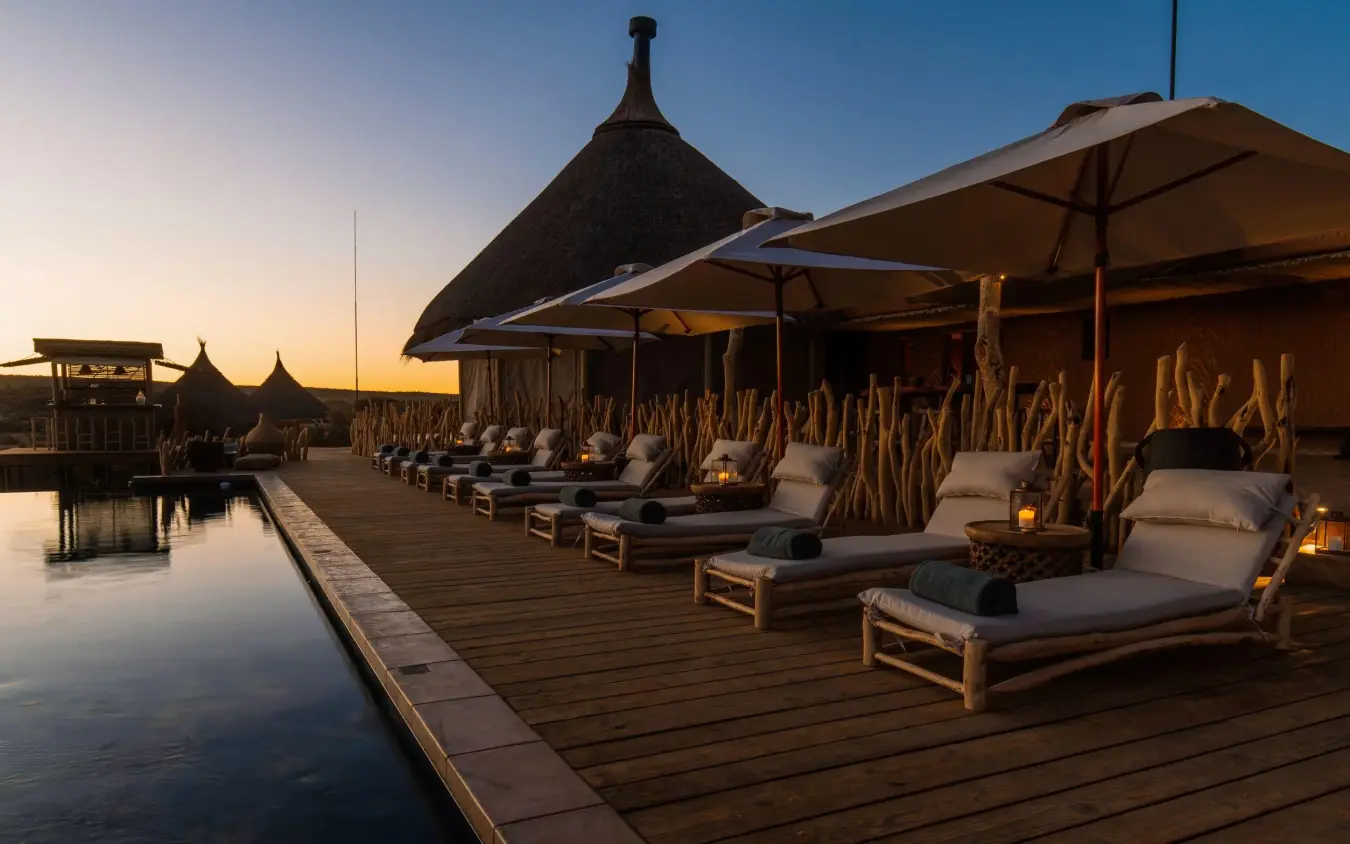
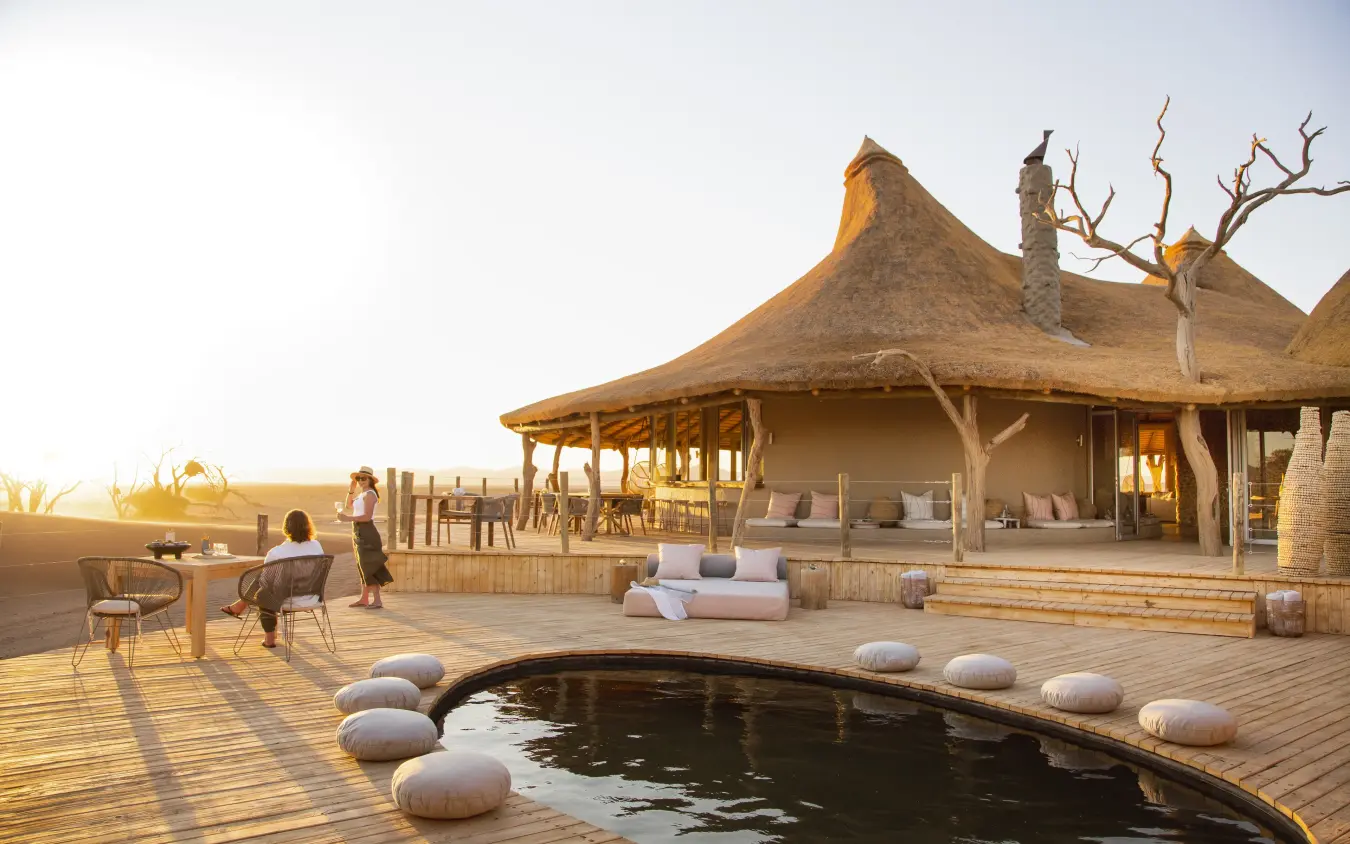
The trip closes on the private Zannier Reserve, roughly 9,000 hectares of savannah thirty to forty minutes from Windhoek and the international airport. The reserve absorbs the city from view, and the wildlife watching begins before any drive leaves camp, with a waterhole drawing giraffe and antelope below the pool. Game drives at sunrise and sunset turn up lion, leopard, giraffe and antelope, and you can track rhino and elephant on foot with the N/a'an ku sê Foundation. Round thatched huts drawn from Owambo homestead architecture each open onto a private terrace with a fireplace and a bathtub set for the view.
It is real tracking, so it can succeed or fail.
The black rhino here are free-roaming animals on unfenced community land, part of the last truly wild rhino population, in a country that holds about a third of the world's black rhino.
You go out with the conservancy's rhino rangers, who find tracks and follow them, and the last stretch is on foot, slowly and quietly: a black rhino struggles to make out a person beyond about 30 metres, but its hearing and sense of smell are excellent.
The animals range widely, so a day can end with tracks and no rhino, and no success figures have been published for this lodge that we can find. The lodge offers rhino tracking only on a stay of three nights, which is why this route has three.
Desert-adapted elephants are searched for separately, by vehicle along the dry riverbeds, and are easiest to find from about June to October.
Three nights gives you three dawns, which is the luxury of this route.
Dawn matters because a dune only shows its shape when the sun is low and strikes it from the side: one flank glows, the other falls into shadow, and the crest between them becomes a sharp line. With the sun high, both sides are lit alike and the red goes pale.
Visitors using the public gate at Sesriem cannot enter until sunrise and then face a 60-kilometre drive, while Little Kulala's guides go in through the reserve's own gate, which is how you are in place for first light.
A sensible plan:
Not if you use them.
After the heat and the early starts of the desert, the coast is cool, often foggy until midday, and a good place to slow down, but there is more to do than the town suggests. The sample route leaves these days open, so ask us to book what appeals.
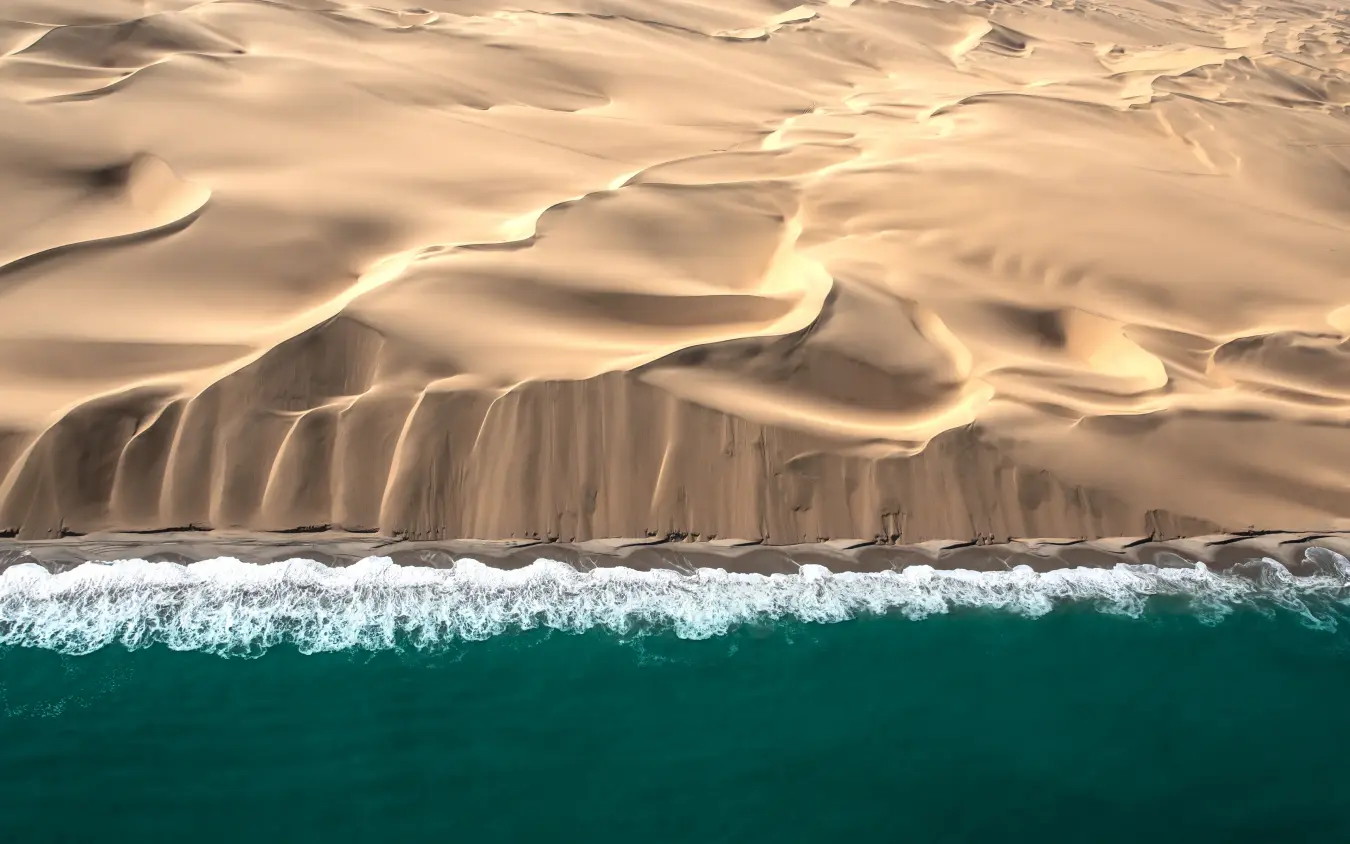
The classic outing is a 4x4 trip from Walvis Bay to Sandwich Harbour, where tall dunes drop straight into the Atlantic beside a lagoon. Whether the vehicles reach the lagoon itself depends on the tide and the weather, and at high tide you see it from the dunes above instead.
Kayaking among the Cape fur seals at Pelican Point needs no experience and fills a morning. Living Desert drives go looking for the chameleons and lizards of the dune belt on the edge of town.
If three nights still feels like one too many, that night can go towards adding Etosha.
June to September is the window we recommend for every part of this route: clear skies, cool mornings on the dunes, and Damaraland's elephants and rhino keeping to the riverbeds and springs.
July to September is also the coolest stretch for tracking rhino on foot. Winter nights are cold, at times below freezing in the desert, and Swakopmund's mornings are foggy.
For photographers two other windows deserve a look.
April and May follow the rains: in-between months on most of this route, though May already has our top rating at the dunes, with green still in the landscape and air clearer of dust than later in the year.
December to March we rate as challenging here, for the heat and for rain that scatters the wildlife, but those months bring the storm clouds and rare showers that make the dunes look like nobody else's pictures.
By October the air is hazier and dustier, and the vegetation has lost its colour.
Easily, and Etosha is the obvious addition, because this route has desert wildlife but no big game park.
Two or three nights on a private reserve beside Etosha fit naturally after Damaraland, which is four to four and a half hours away by road or a short flight, and you return to Windhoek from there. To make room without lengthening the trip, take a night from Swakopmund.
Two things are better left alone. Onduli Ridge offers black rhino tracking only on a stay of three nights, so cutting Damaraland to two loses the rhino.
And Little Kulala's own gate into the park is the point of staying there, since most lodges outside the park start the day at the public gate at sunrise. Both places are small, with eleven and six suites, so dates from July to October need booking well ahead.
The first and last nights can be switched between lodges freely.
Ed Charles, BBC Producer
Fitzroy are true specialists in accessing the wilderness. They know where to go and importantly, when to go there. Highly recommended.
namibia
Thirteen nights linking the Sossusvlei dunes, the Skeleton Coast, the Kunene River and Etosha's rhino country.
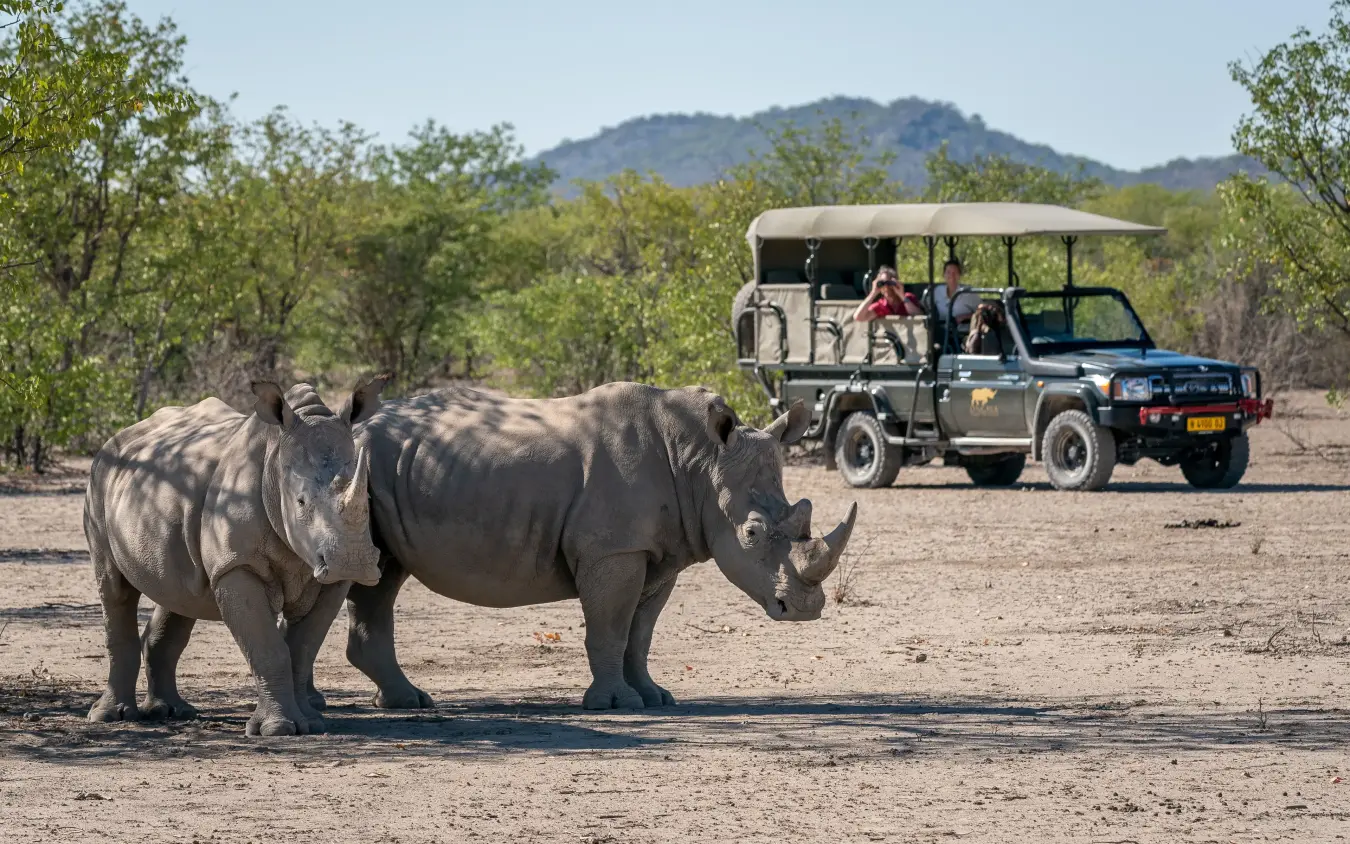
namibia
Twelve nights across Namibia, from the Namib dunes and the Atlantic coast to rhino tracked on foot in Damaraland and at Ongava.
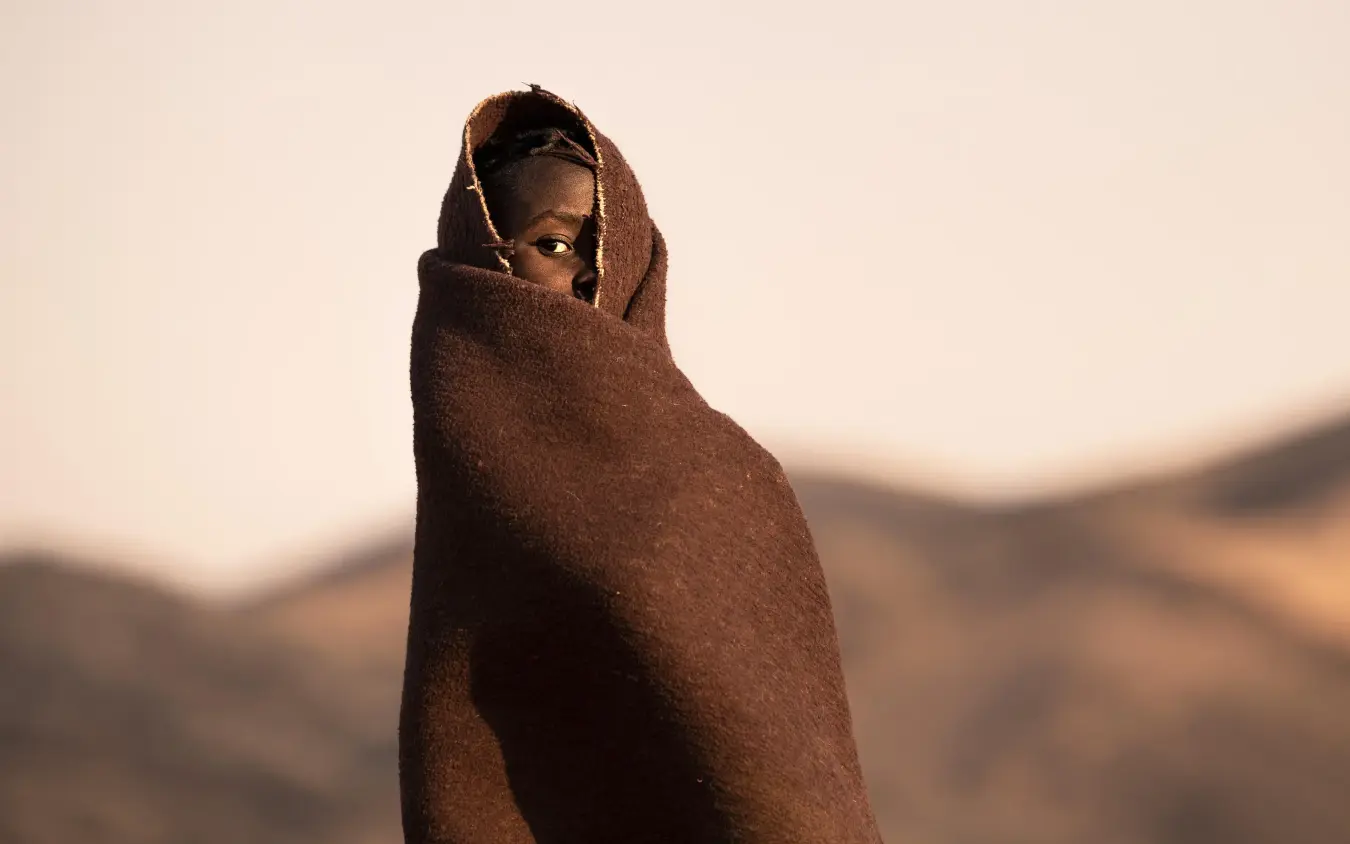
namibia & botswana
Ten nights from northwest Namibia's deserts and the Kunene to Botswana's Linyanti and its elephant corridors.
rated five stars by our clients

our approach
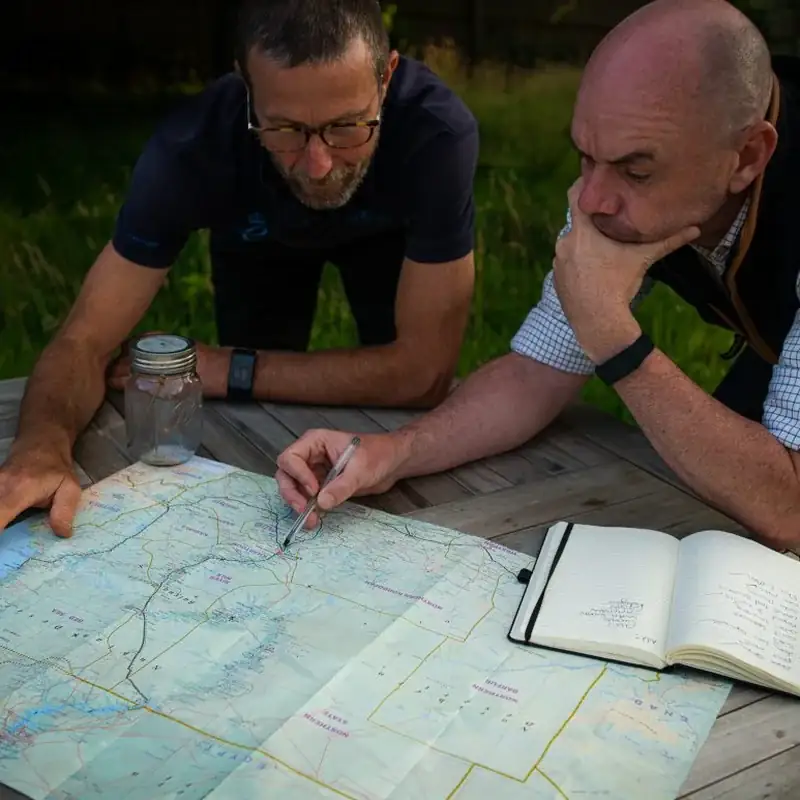
Every journey starts with a conversation. We take the time to understand your vision before we start planning.
Whether by phone or in person, we work with you directly to shape something that is considered, personal, and expertly delivered.
Every journey starts with a conversation. We favour a direct, personal approach: understanding your vision before anything else.
Whether by phone or in person, we work with you directly to shape a journey that is both thoughtfully considered and expertly delivered.
Get in touch to start planning yours.