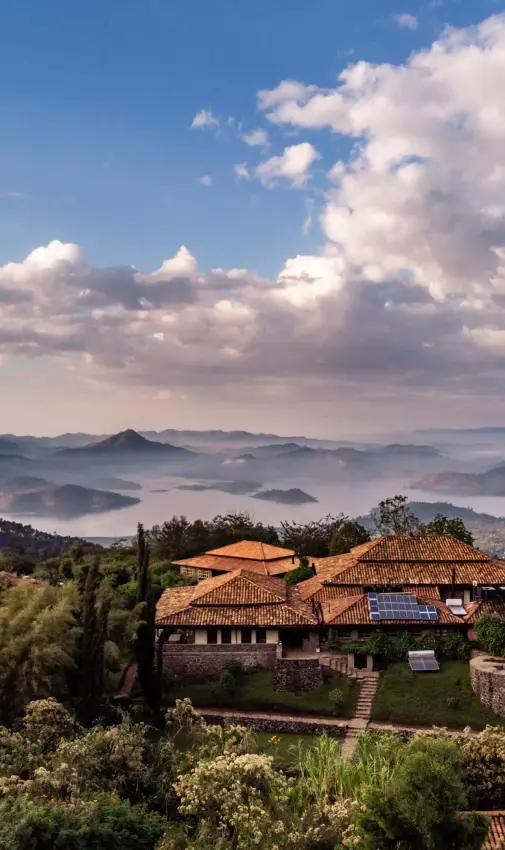
Before the concession existed, this slope was potato fields and smallholdings. It was pieced together plot by plot, bought from the farming families who formed the Tuzamurane Co-operative. Since then around 100,000 indigenous trees have gone into the ground, widening the forest edge that the gorillas of Volcanoes National Park can use. Invasive eucalyptus is cut out and burned as firewood, and the replanting extends to Gishwati.
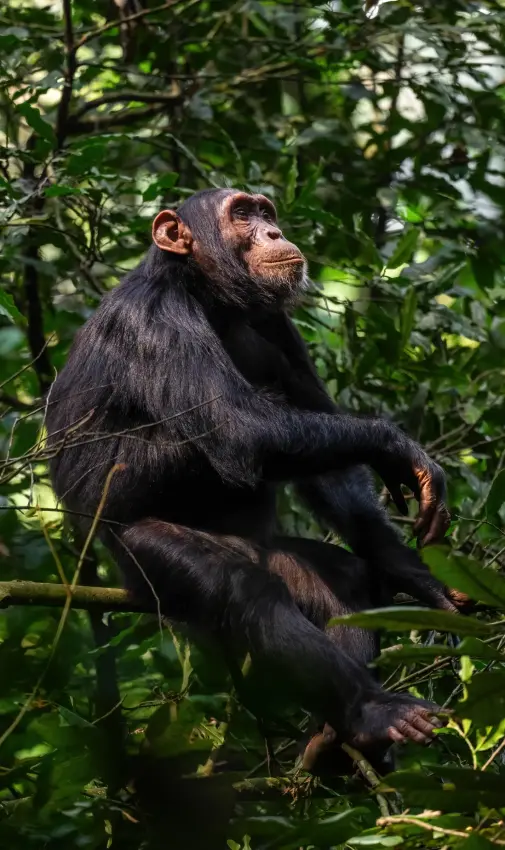
Trails wind through the young forest and along the crater rim, and the wildlife has followed the trees in. The camera traps have caught serval and side-striped jackal, and even a mountain gorilla. Golden monkeys and tree hyraxes have been recorded too, as have chameleons. Birders watch the canopy for the African pitta and the Rwenzori batis, the white-starred robin and the yellow-bellied waxbill. Guests can plant a sapling from the on-site nursery and leave with a certificate giving its GPS coordinates.
The camera traps have caught serval and side-striped jackal, and even a mountain gorilla.
From Kinigi, the walk in to a gorilla family can take anything from half an hour to four hours or more over demanding ground. Every trekker aged fifteen or over needs a permit, at USD 1,500 each, and the time with the family itself is held to one hour. Other days in the park bring golden monkey treks, or the climb up Mount Bisoke to the lake in its summit crater. A hike leads to the ruins of Dian Fossey’s Karisoke camp, where her grave lies beside Digit’s. The Virunga weather is unpredictable, and a clear morning on the deck can turn to rain on the trail.
A resident chef cooks health-conscious, seasonal food from what is grown locally, and guests can pick ingredients themselves. The Tuzamurane Co-operative, formed by the families who sold the land, supplies produce as well as labour. Its members also run a nursery that grows saplings for the national park. Six-year scholarships support local students. Community visits lead into the neighbouring villages, where a water project completed in 2019 with the Fossey Fund and the Rwanda Development Board now brings clean water to several of them.