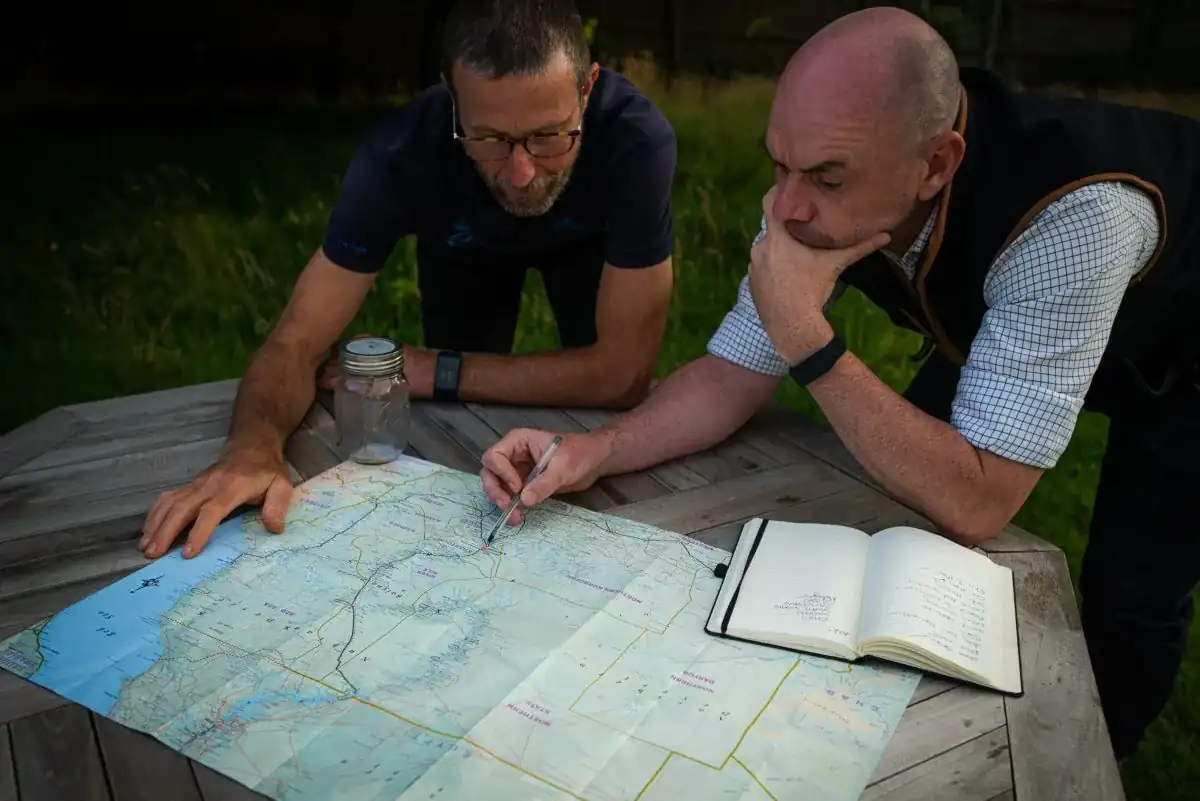
Trekkers report to the Volcanoes National Park offices at Kinigi by seven, for the briefing and the assignment of a gorilla family, and the short drive means breakfast can be taken slowly beforehand. Permits are issued by the Rwanda Development Board, guides are compulsory, and the minimum age for gorilla trekking is fifteen. The same offices send people off in other directions too: golden monkey tracking, the long climbs up Bisoke and Karisimbi, and the walk to Dian Fossey’s grave at Karisoke.
The Amakoro Women’s Association grew out of the lodge’s early years. The baskets they weave are sold in the lodge boutique, with the proceeds returned to the weavers. A linked youth association trains the teenagers of those same weaving families for work in hospitality and conservation. Guests plant and name an indigenous tree during their stay.
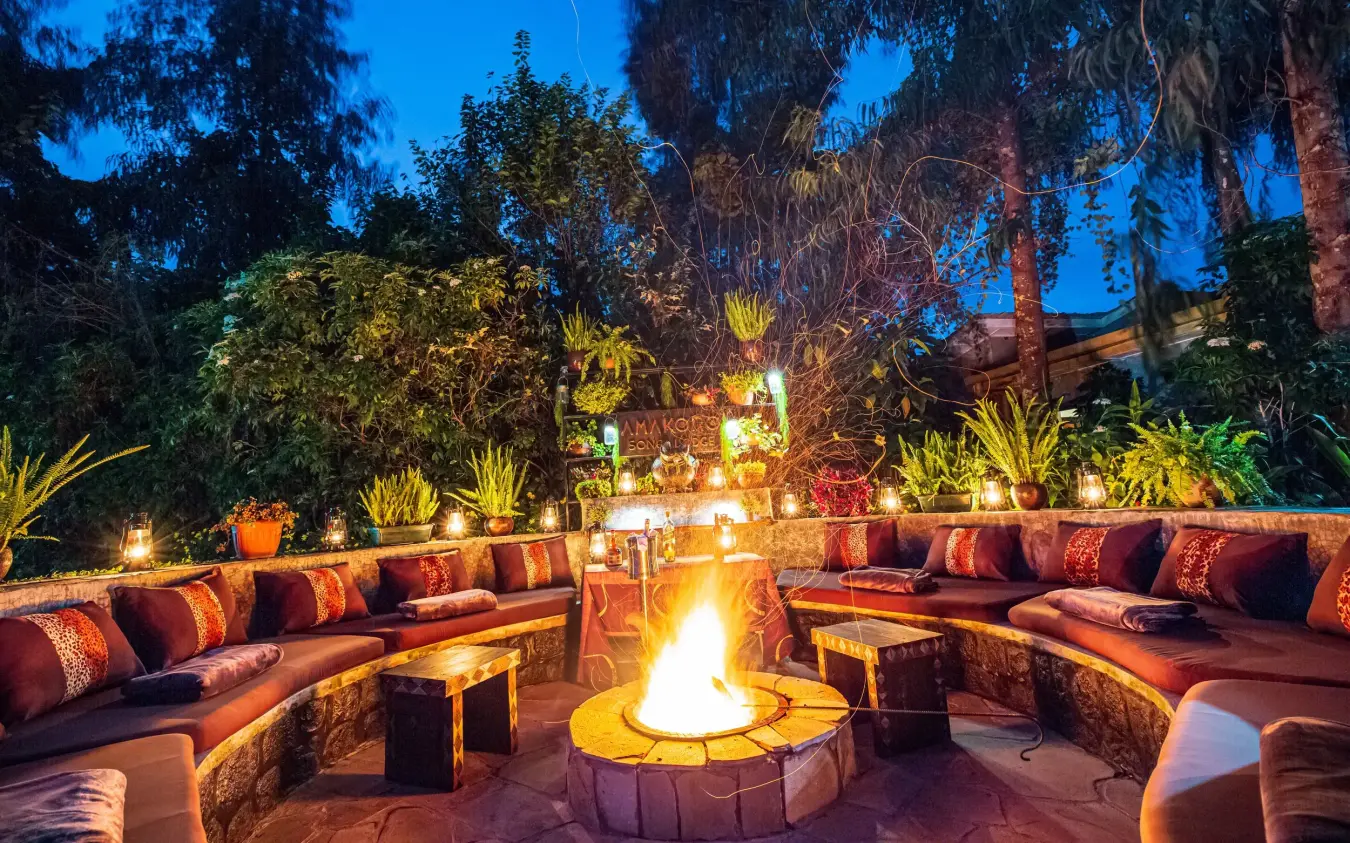
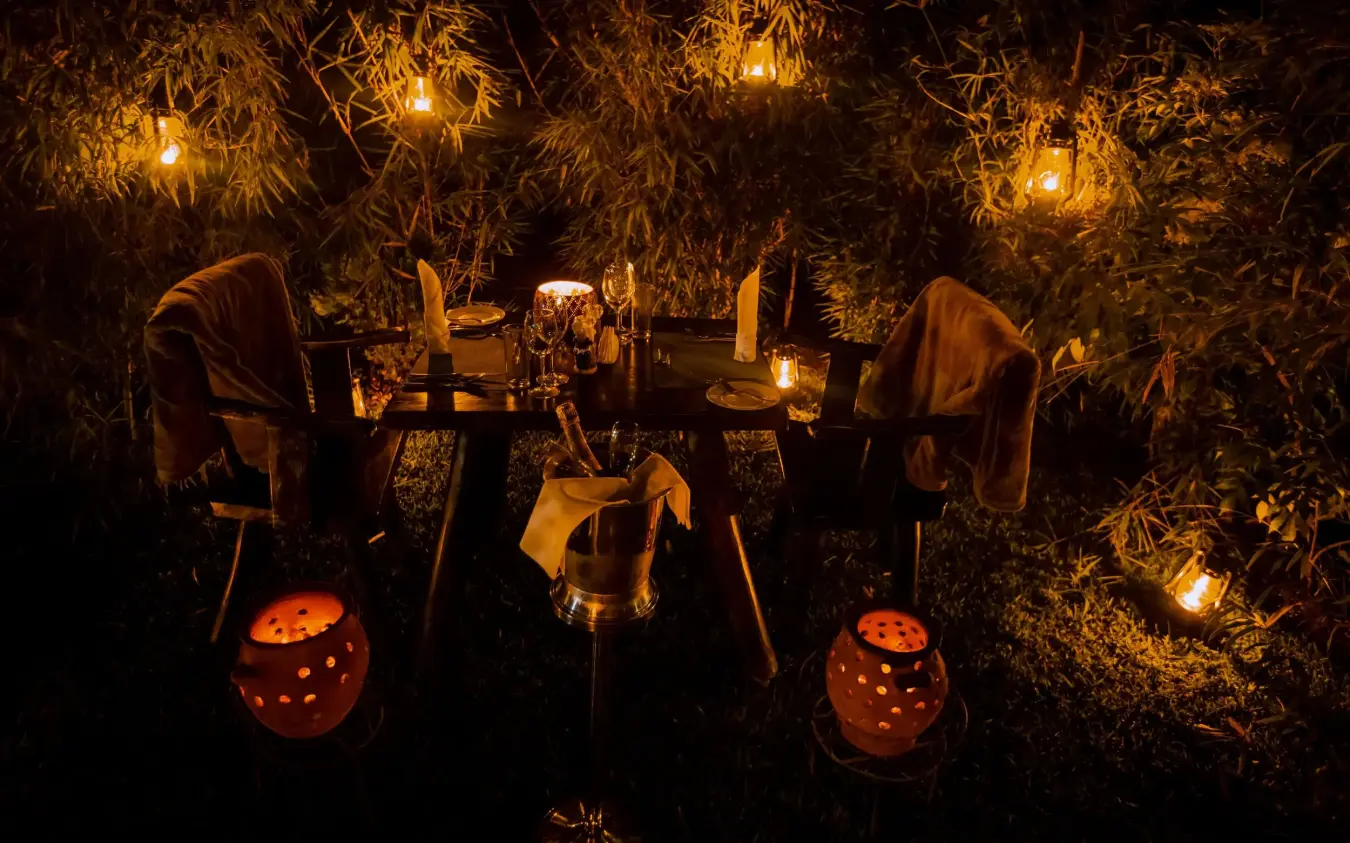
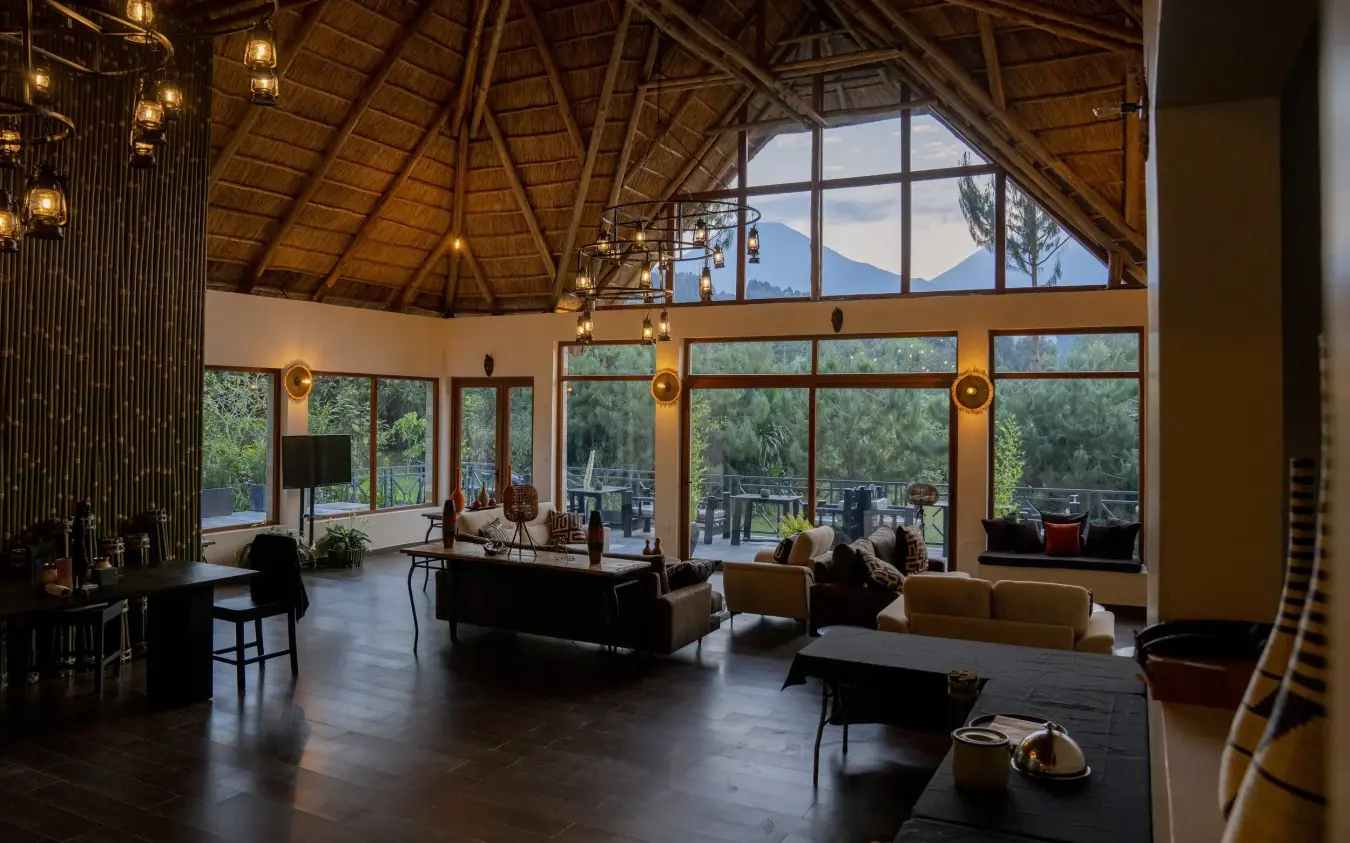
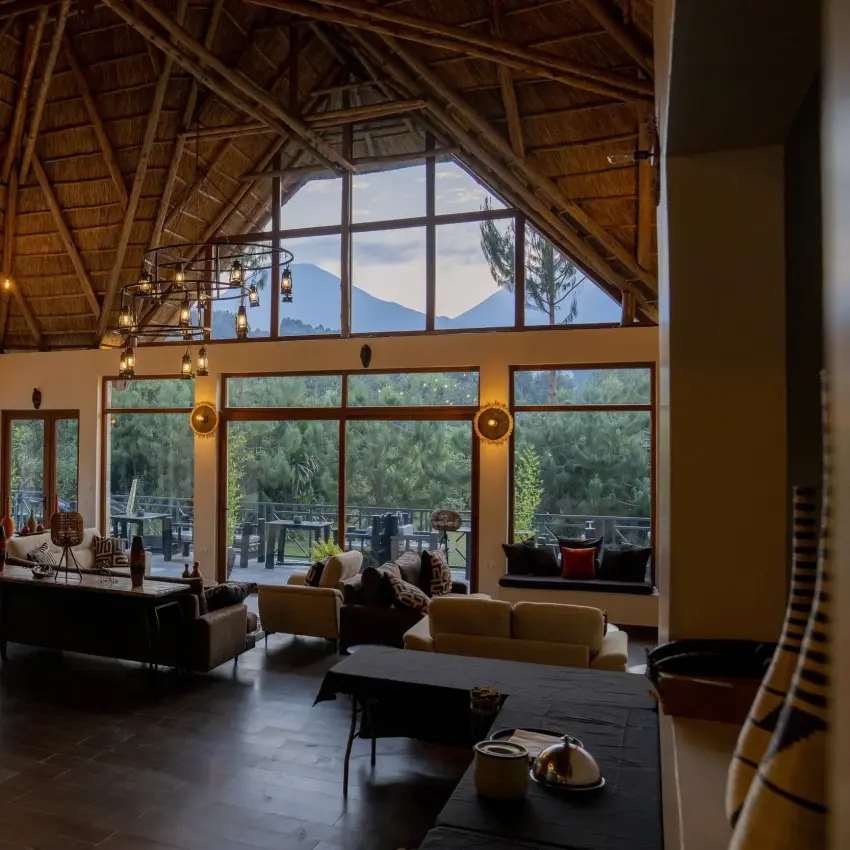
Evenings at this altitude turn cold enough for the fire and an extra blanket.
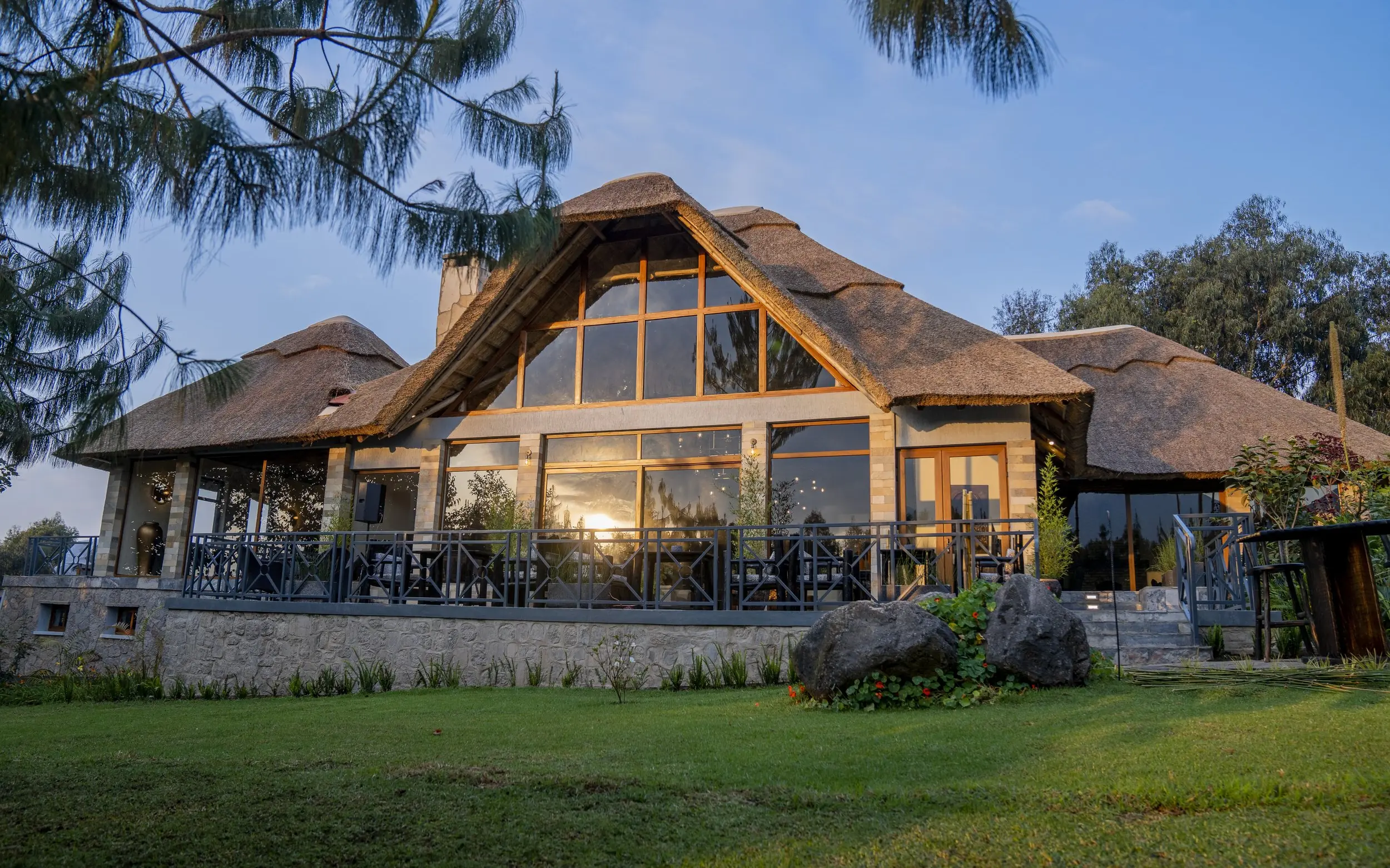
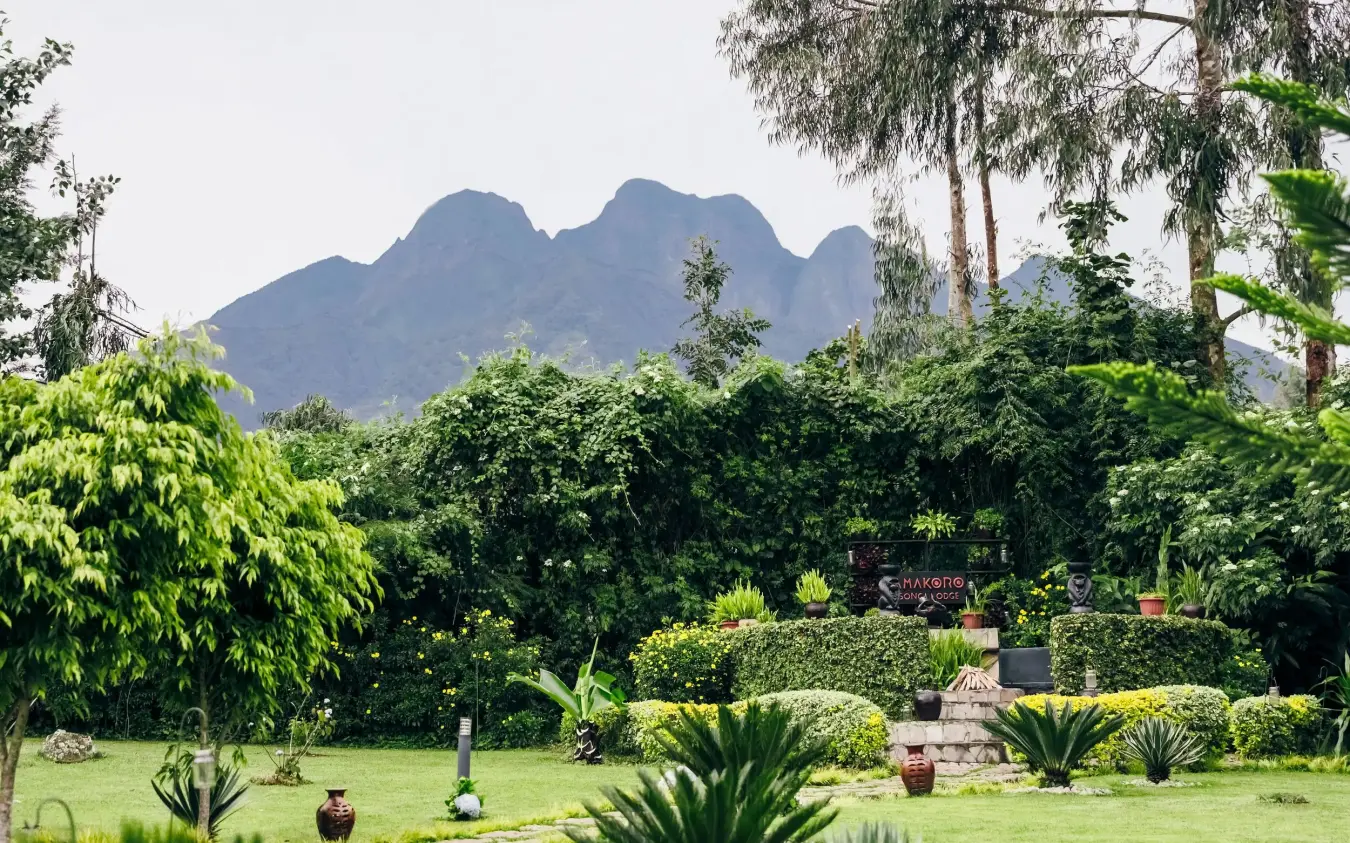
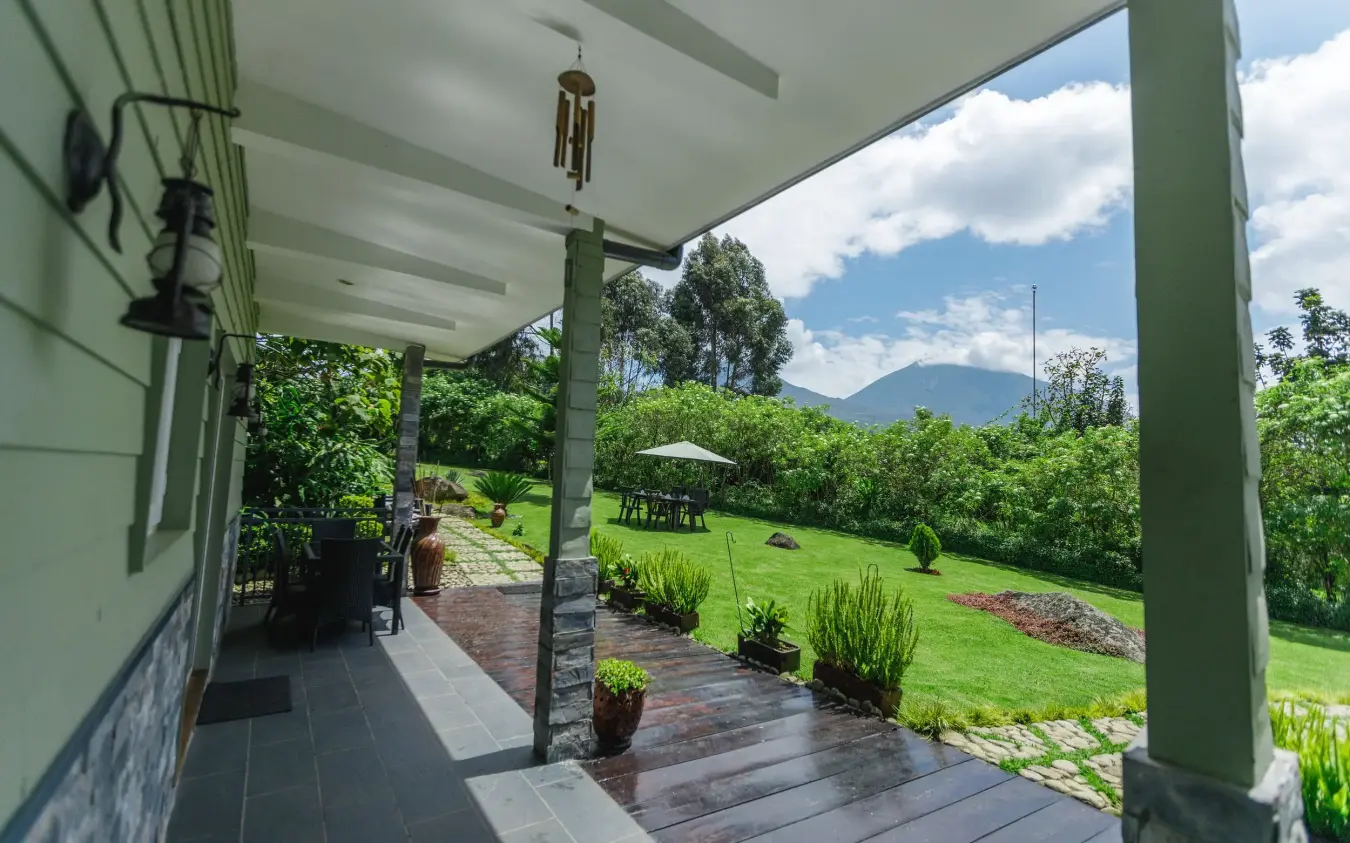
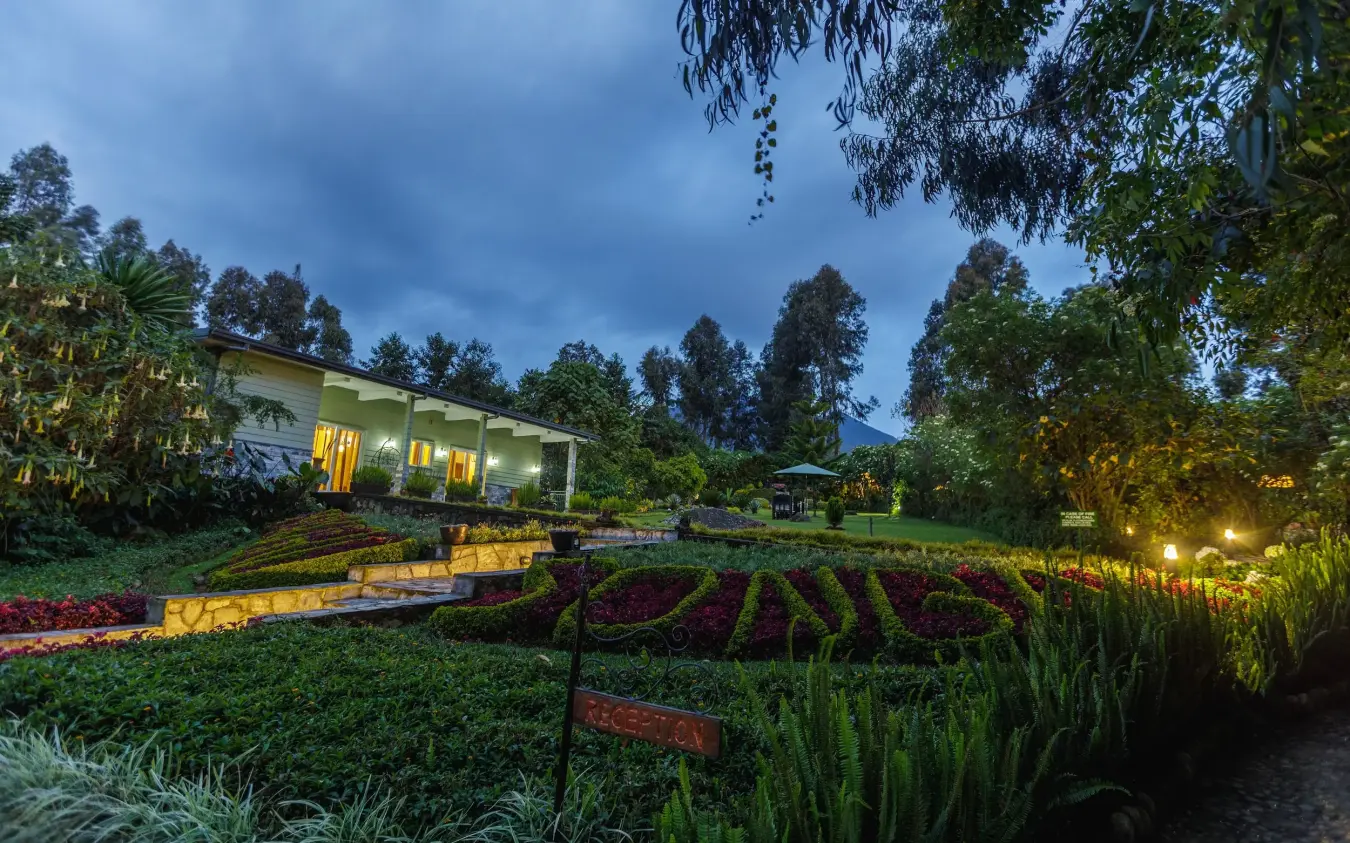
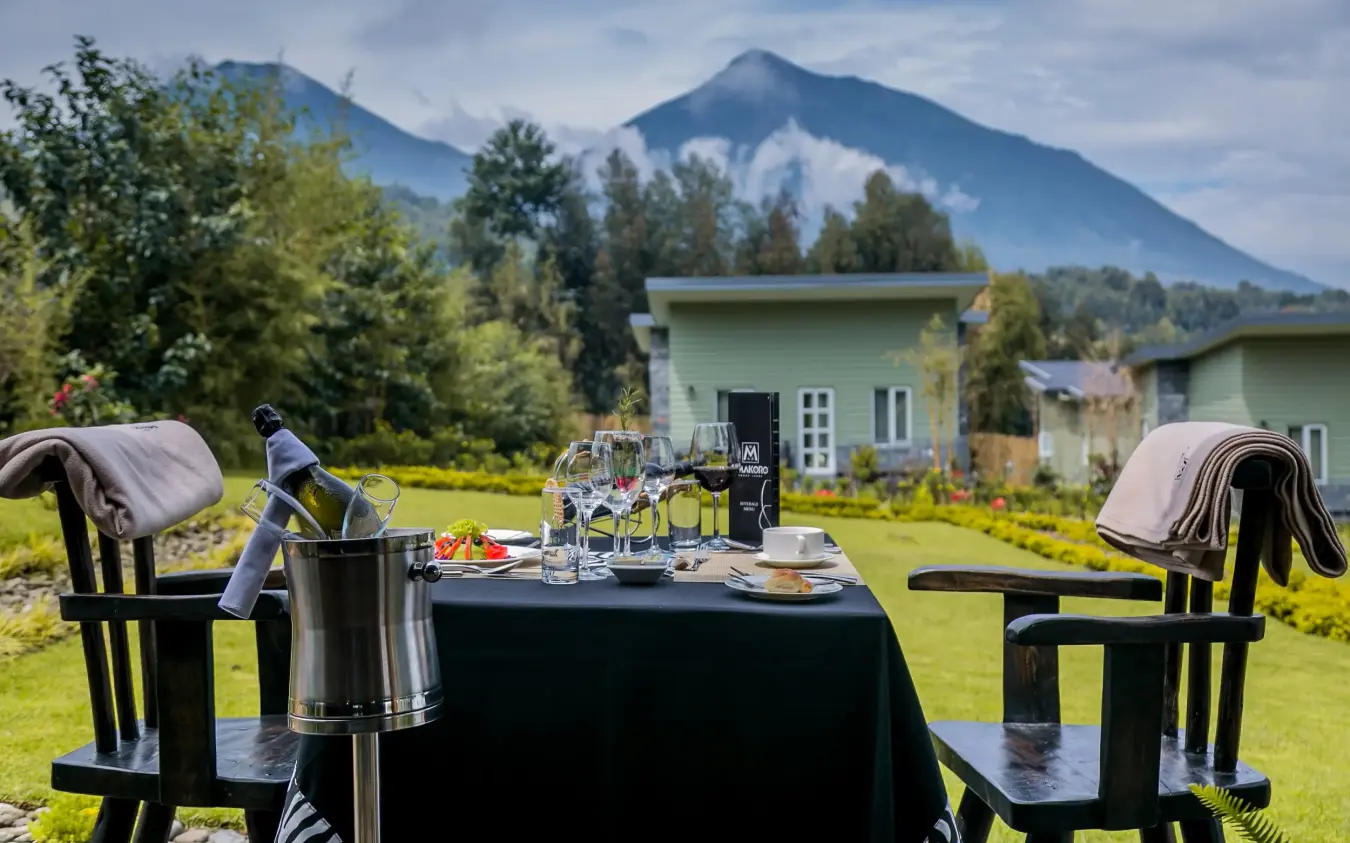
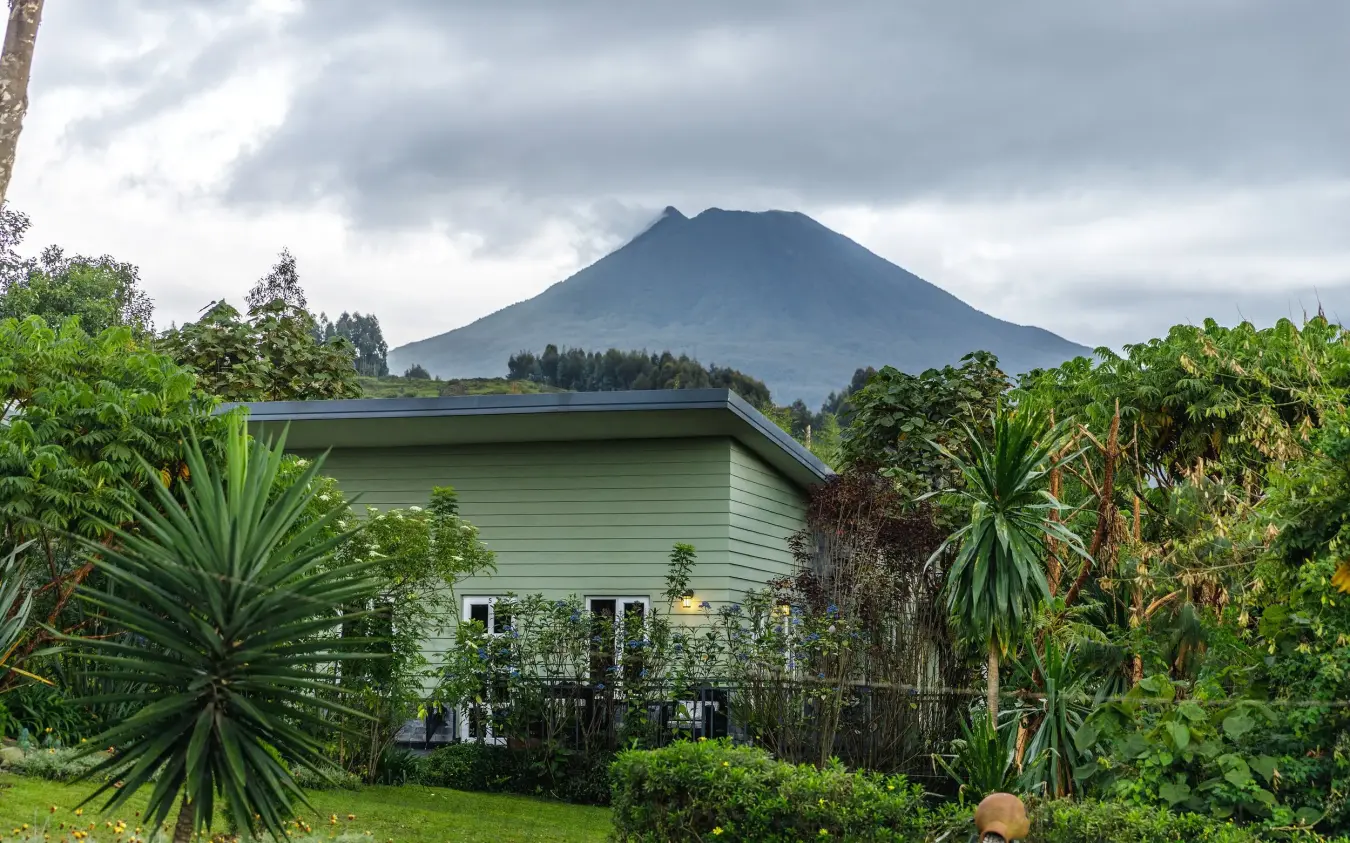
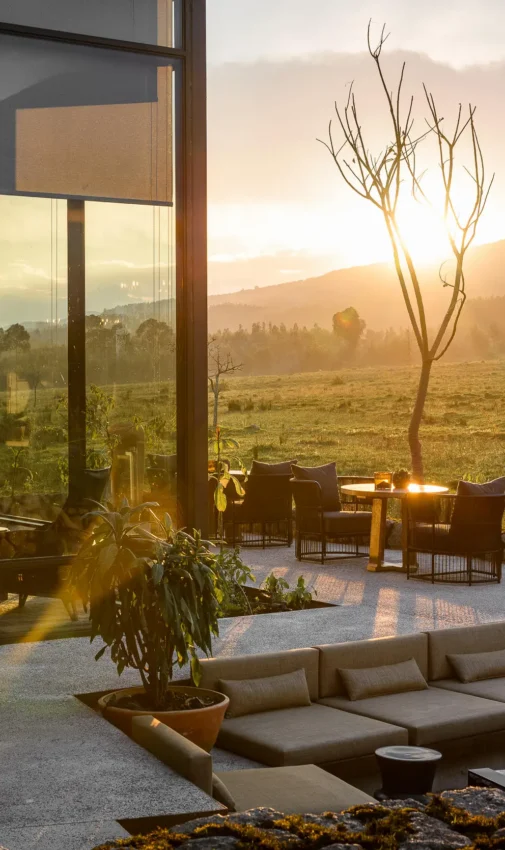
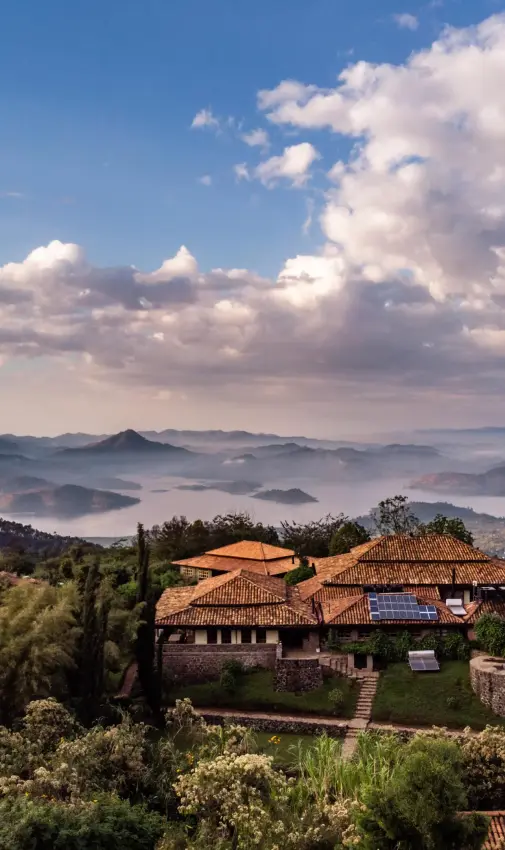
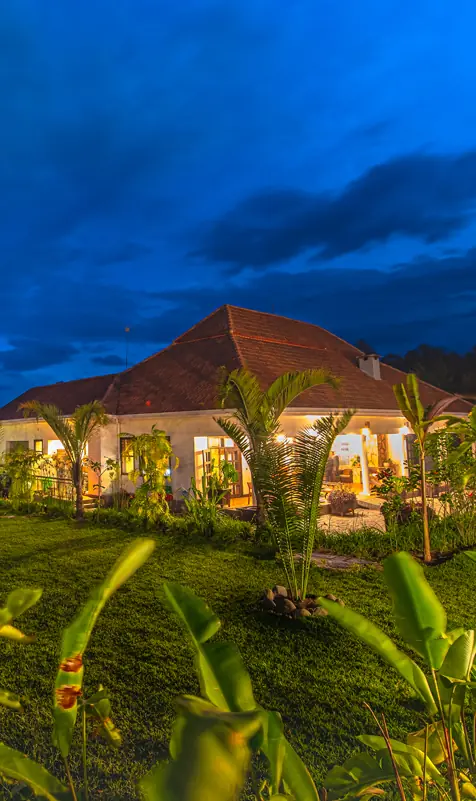
Montane birds work the hedges and the vegetable beds, and small monkeys move through the trees. On clear mornings the mist lifts off the peaks, seen from the lawns or a cottage terrace over coffee before the drive to Kinigi. The land beyond the hedges is farmed by the village, so there is no large wildlife on the grounds themselves. Evenings at this altitude turn cold enough for the fire and an extra blanket. The black volcanic rocks were left where they were found when the gardens were laid out, breaking through the grass among the flower beds.
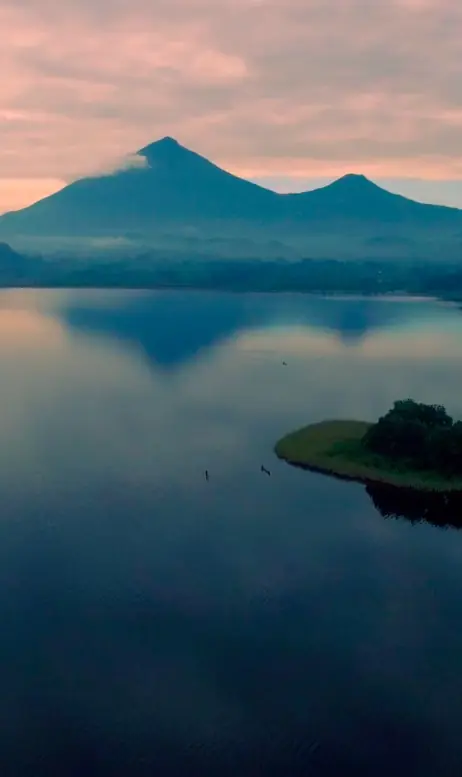
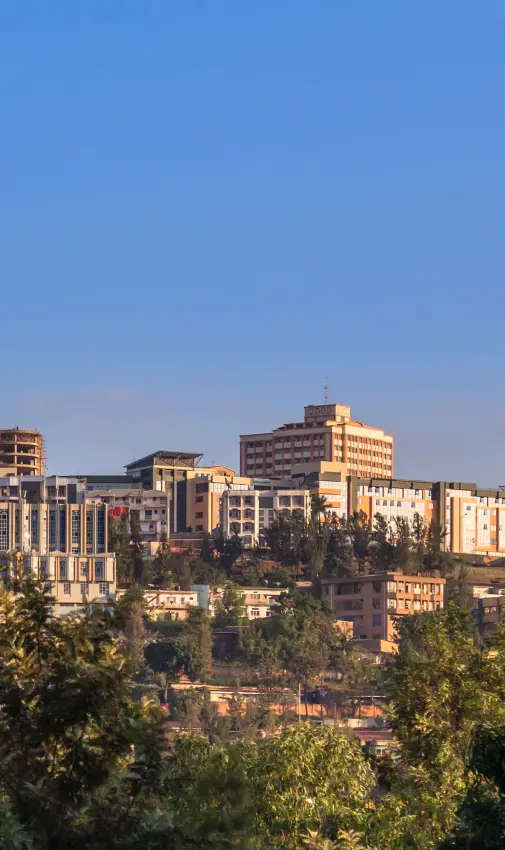
Kigali lies roughly 103 kilometres south, close to three hours by road through terraced hills, or a helicopter transfer to Musanze followed by a short drive up to Kinigi. Days that do not involve the park fill easily. There are the Twin Lakes of Burera and Ruhondo and the Musanze caves, a morning of birding along the hedges, an afternoon weaving with the women’s cooperative, or a walk through the village lanes with one of the guides. Families tend to plan the week around the permit age of fifteen, which keeps the youngest out of the forest.