
 01
01
Rwanda's Capital and Safari Gateway
Kigali sits at the geographic centre of Rwanda, spread across a series of ridges and valleys that give the city its rolling, terraced profile. Established in 1907 as a German colonial post and now home to more than 1.7 million people, it is widely regarded as the cleanest city in Africa, and the order is apparent the moment you arrive.
The cleanest city in Africa
That reputation is earned, not claimed. Rwanda banned single-use plastic bags in 2008, and on the last Saturday of every month citizens aged 18 to 65 take part in Umuganda, a nationwide morning of community work that ranges from street cleaning to tree planting.

Kigali is a base and an arrival point rather than a wildlife destination in itself. The city rewards the days you give it. Walk the textile stalls of Kimironko Market, browse the makers at Caplaki Craft Village, or visit the Inema Arts Center, founded in 2012 by two self-taught Rwandan painters and now central to the city’s contemporary scene.
A base for the parks, and a city worth its own days
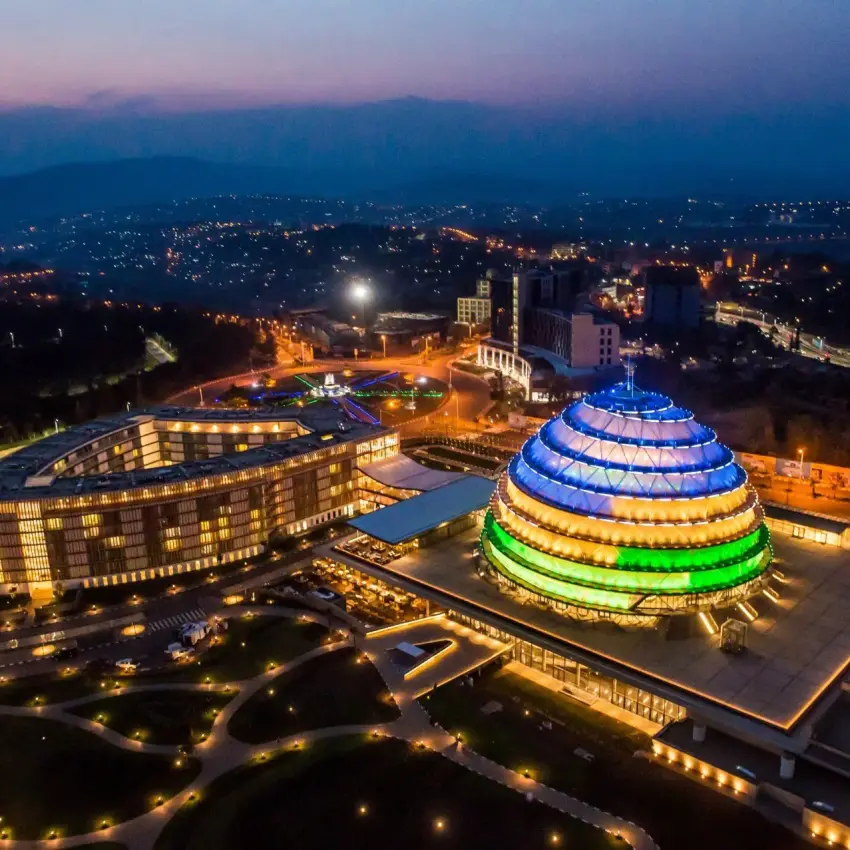
The Kigali Genocide Memorial at Gisozi is the most significant site. Inaugurated in 2004, it is the resting place of more than 250,000 victims of the 1994 Genocide against the Tutsi, and its Wall of Names and gardens make for a quiet, essential few hours. By night, the dome of the Kigali Convention Centre, modelled on a traditional Rwandan king’s palace, glows above the ridges. Moving around is straightforward by private driver-guide.
Memory, Art and Trails
Kigali was established in 1907, when Richard Kandt, Rwanda’s first German colonial resident, chose Nyarugenge Hill for its central position and views. For most of the colonial era it remained a modest administrative post, becoming the national capital later. Today it is both the capital and a province-level administrative unit, divided into three districts: Nyarugenge, Kicukiro and Gasabo.
The city’s defining quality is its sense of order. Rwanda was among the first countries in the world to ban single-use plastic bags, in 2008, and Umuganda, the mandatory community-work morning held on the last Saturday of every month, keeps streets, parks and public buildings cared for. The result is a calm, walkable capital that surprises first-time visitors.
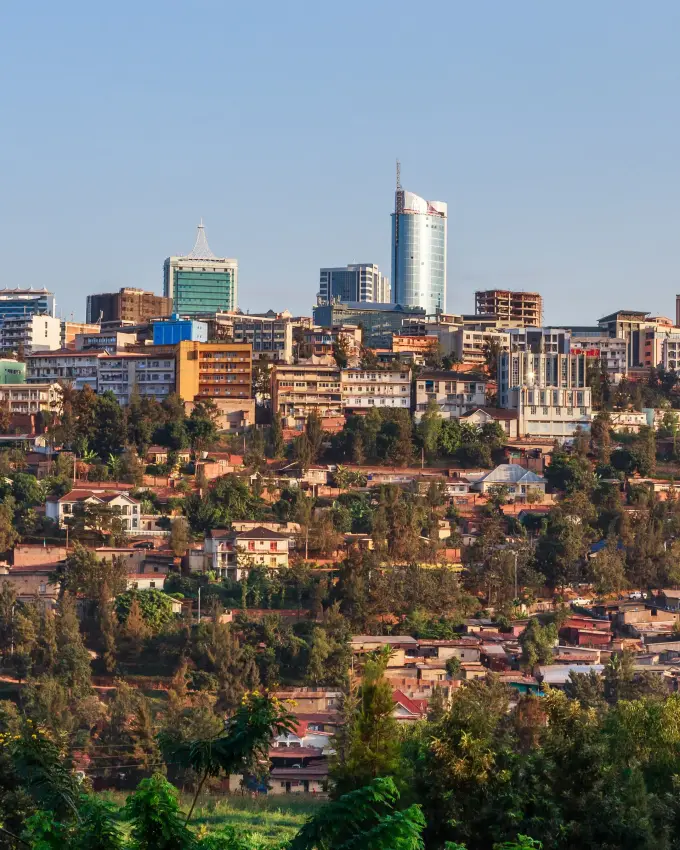
Rwanda is the Land of a Thousand Hills, and Kigali sits among them.
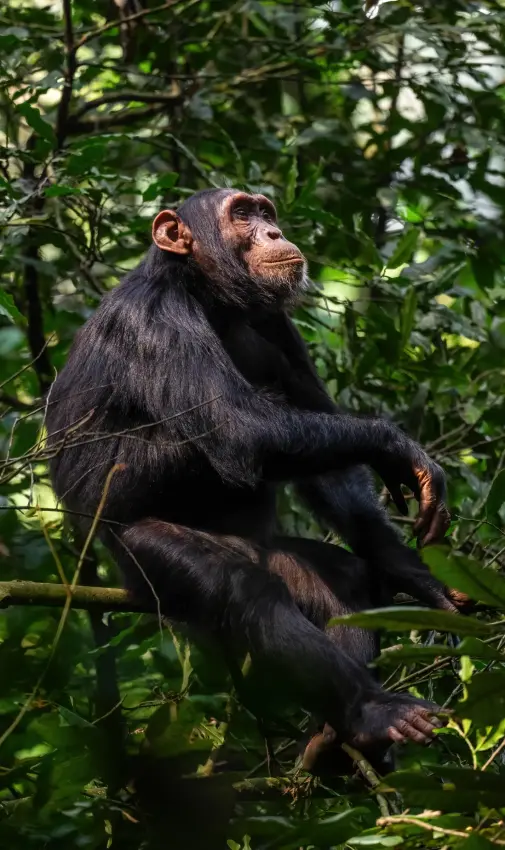
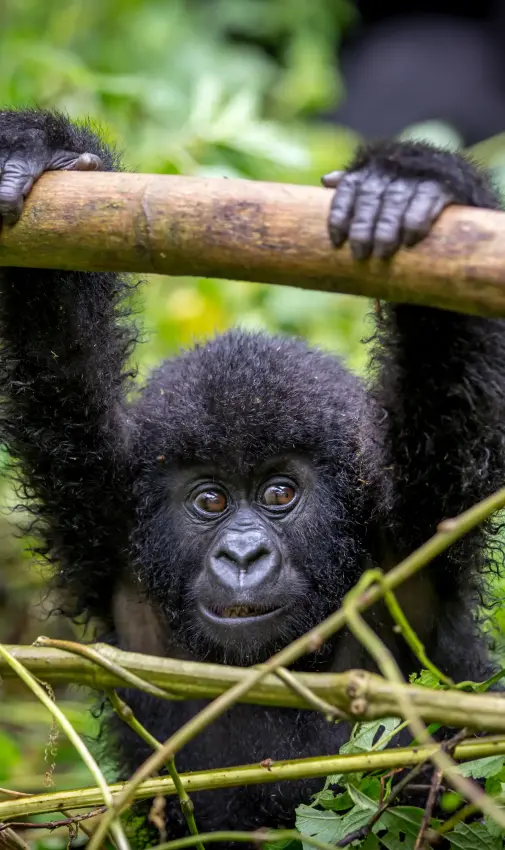
Kigali is the gateway to Rwanda’s national parks, each reached by road or air transfer. Volcanoes National Park, around 105 kilometres to the north-west, is home to mountain gorillas and golden monkeys and lies two to three hours away. Akagera National Park, to the east, is the country’s only Big Five savannah park, spanning 1,122 square kilometres of grassland, lakes and wetlands with around 500 bird species. Nyungwe, a montane rainforest in the south-west, offers chimpanzee tracking and a canopy walk.
Conservation and community sit close together here. The Kigali Genocide Memorial is managed by the Aegis Trust, while the Nyamirambo Women’s Centre, founded by eighteen Rwandan women, runs neighbourhood walking tours, cooking and craft experiences. Akagera, once depleted, is now cited as one of Africa’s best-managed parks, a genuine conservation turnaround.
Kigali International Airport, in Kanombe, is the main gateway, served by RwandAir, Qatar Airways, Ethiopian, Brussels and Turkish, with London around eight to nine hours away. Within the city, moto-taxis in green vests and orderly public buses move residents about, while most visitors travel by private driver-guide in a 4×4. From the capital, the parks, Lake Kivu and the southern hills are all within comfortable reach.

The best time to visit Kigali
Jan
Feb
Mar
Apr
May
Jun
Jul
Aug
Sep
Oct
Nov
Dec
Recommended
Transitional
Challenging conditions
The most reliable weather falls in the long dry season from June to mid-September, with July the driest and August the clearest, and it carries Kigali's busiest calendar of festivals and ceremonies. The short dry season from mid-December to February is a good second choice. April is the wettest month; March, May, October and November are the city's other wet stretches.
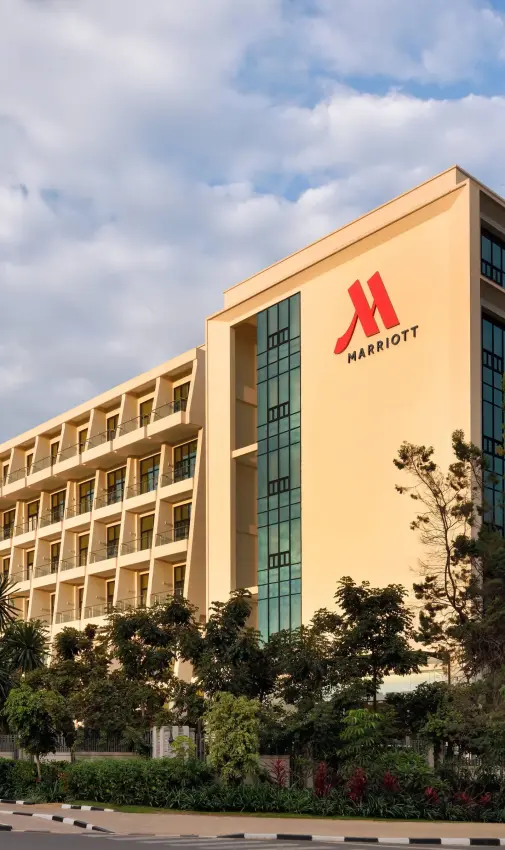
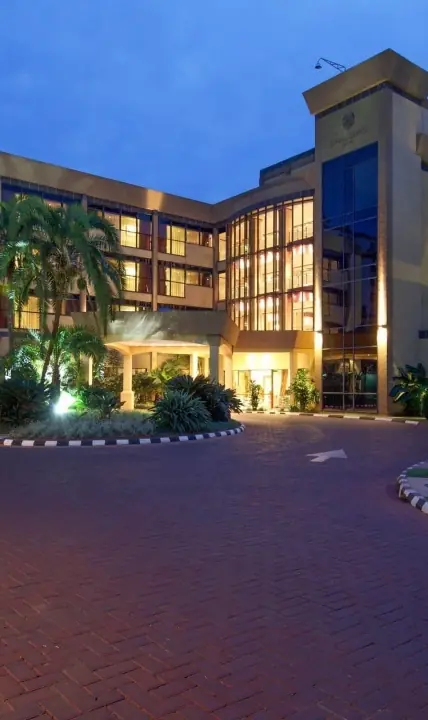
accommodation in kigali
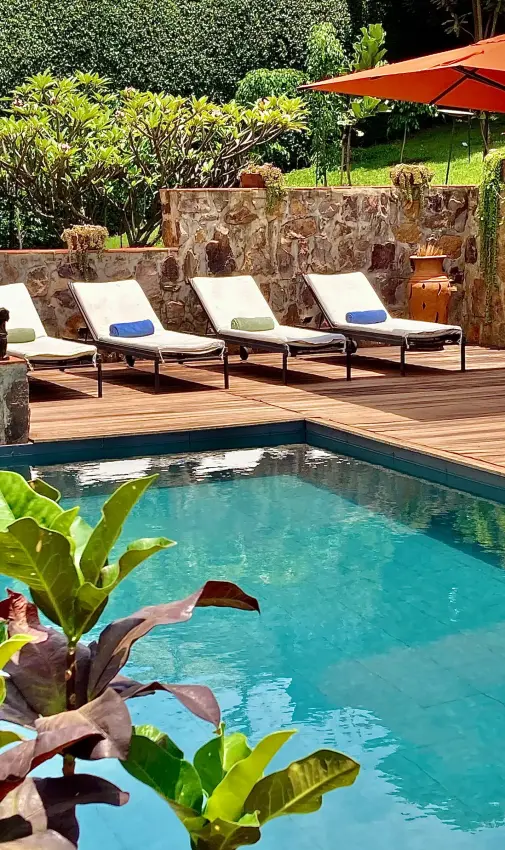
Kigali's places to stay range from full-service international hotels near the convention district to boutique, locally rooted retreats in the city's quieter neighbourhoods. The two we feature below offer comfortable, well-placed bases for your first and last nights in Rwanda.



activities
A City Worth Exploring
Give Kigali a day or two of its own. Visit the Kigali Genocide Memorial at Gisozi, browse the textile stalls of Kimironko Market and the makers at Caplaki Craft Village, then see contemporary Rwandan work at the Inema Arts Center. The Kandt House Museum and the Rwanda Art Museum adds further depth to a city tour.
 02
02
conservation
A Clean and Ordered Capital
Kigali sets Rwanda's conservation tone. The 2008 plastic-bag ban and monthly Umuganda community mornings keep the city clean, while the Aegis Trust manages the Genocide Memorial. The Nyamirambo Women's Centre, founded by eighteen Rwandan women, supports gender equality through tours and craft training, and nearby Akagera is a noted park turnaround.
getting around
Access and Transfers
Kigali International Airport in Kanombe is the country's main gateway, with direct flights from London in around eight to nine hours via RwandAir and others. In the city, moto-taxis in green vests and orderly buses serve residents, while most visitors use a private driver-guide in a 4x4 to reach the parks, two to three hours out.
other areas in rwanda
Kigali is the natural starting point for a Rwandan journey. From here the road and air routes lead to Volcanoes National Park for gorillas, Akagera for Big Five savannah game, and Nyungwe's rainforest, each an easy onward leg from the capital.

frequently asked questions
Kigali International Airport takes direct flights from Europe and the Gulf, and it is the easiest arrival in the region.
The airport sits about twenty minutes from the city centre, and the drive north to Volcanoes National Park is two and a half to three hours on good tarmac. Nyungwe in the south is five to six hours, or a short flight to Kamembe.
A helicopter charter cuts either journey to well under an hour.
Because there is no light-aircraft leg, Rwanda has no soft-bag limit, which most clients are glad of.
Yes, and most of our Rwanda trips build one in at each end.
It lets you arrive, sleep and start the drive to the gorillas rested rather than off an overnight flight, which matters before a day of steep walking.
The city itself is clean, calm and genuinely interesting, and the food is good.
A second night on the way out gives you time for the Genocide Memorial, the craft markets and the coffee houses without rushing to an aircraft.
More than a transit city usually offers, and a full day is easily spent.
- The Kigali Genocide Memorial, which is sobering and important
- The art and craft cooperatives, and the markets
- A guided walk through the neighbourhoods with a local guide
- The coffee houses, which are part of Rwanda's own story
The city is built across a series of hills, so the views change street by street.
We will arrange a guide for the memorial rather than leaving you to it, because the visit lands better with someone to talk to afterwards.
The whole of Rwanda is treated as a malaria risk area by both TravelHealthPro, the UK's official travel health service, and the CDC, and antimalarial cover is recommended countrywide.
Kigali sits at about 1,500 metres, which means fewer mosquitoes than the lowlands, but it is not a malaria-free city.
We do not make medical recommendations. That is a conversation between you and your own doctor or a travel clinic.
On the practical side, cover up at dusk and carry repellent.
A few practical things that catch people out.
Plastic bags are banned in Rwanda and are taken off you at the airport, so pack with fabric or paper instead. The city sits at 1,500 metres, so evenings are cooler than you expect and a light layer is worth having.
Dress is smart-casual, and something respectful for the Genocide Memorial: covered shoulders and knees.
The coffee is excellent and locally grown, which surprises people who think of Rwanda only for the gorillas.
At both ends, usually one night on arrival and one before you fly home.
A typical route runs Kigali, then Volcanoes for the gorillas, then either straight back or south to Nyungwe and Lake Kivu, with a final night in the city.
Rwanda is small, so no drive is punishing and nothing needs an internal flight unless you want one.
Tell us how long you have and we will say whether the south is worth adding or whether to keep it simple.
rated five stars by our clients

our approach
remote, exclusive
& personal
Every journey starts with a conversation. We take the time to understand your vision before we start planning.
Whether by phone or in person, we work with you directly to shape something that is considered, personal, and expertly delivered.
Every journey starts with a conversation. We favour a direct, personal approach: understanding your vision before anything else.
Whether by phone or in person, we work with you directly to shape a journey that is both thoughtfully considered and expertly delivered.
Get in touch to start planning yours.