








tanzania
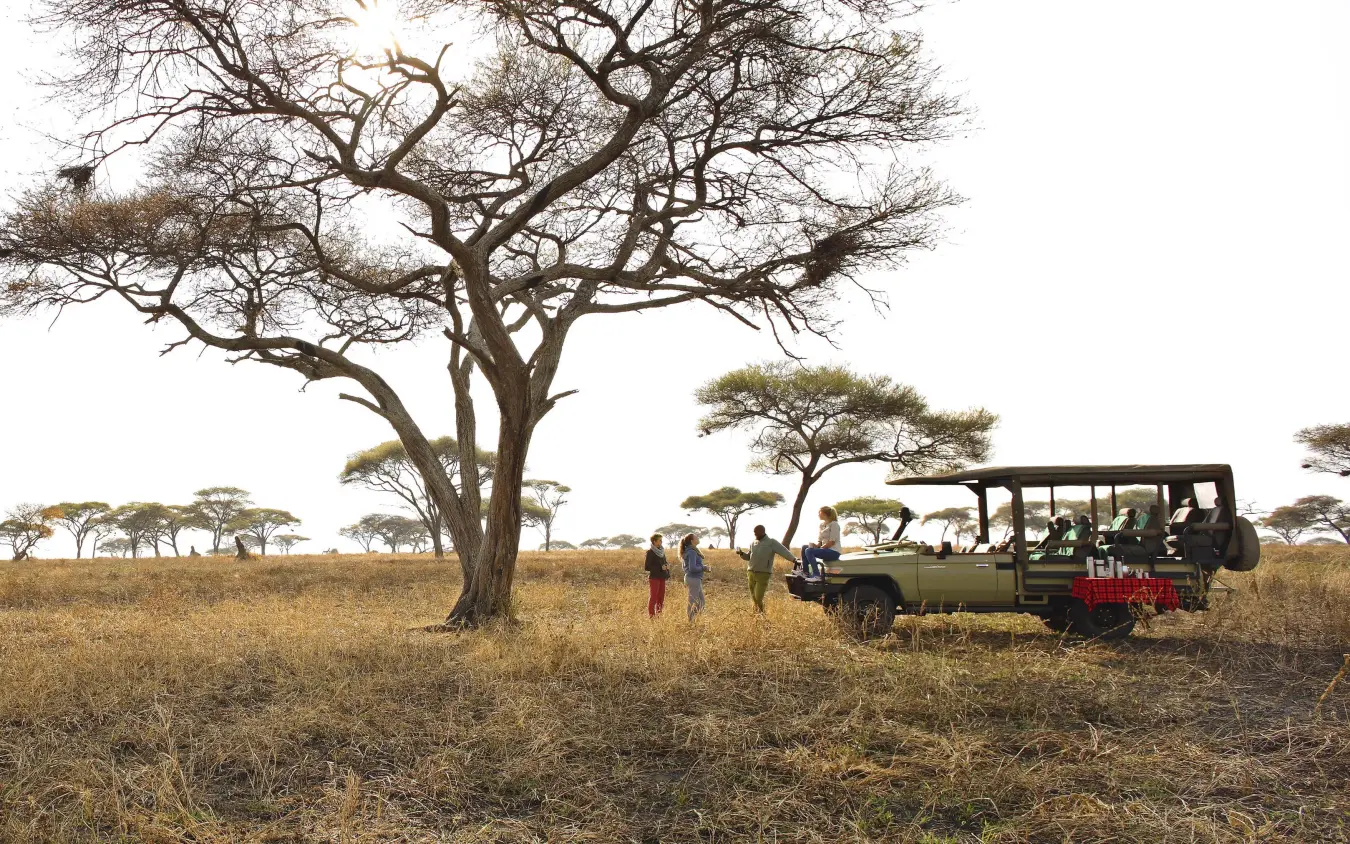
mobile camping with the migration
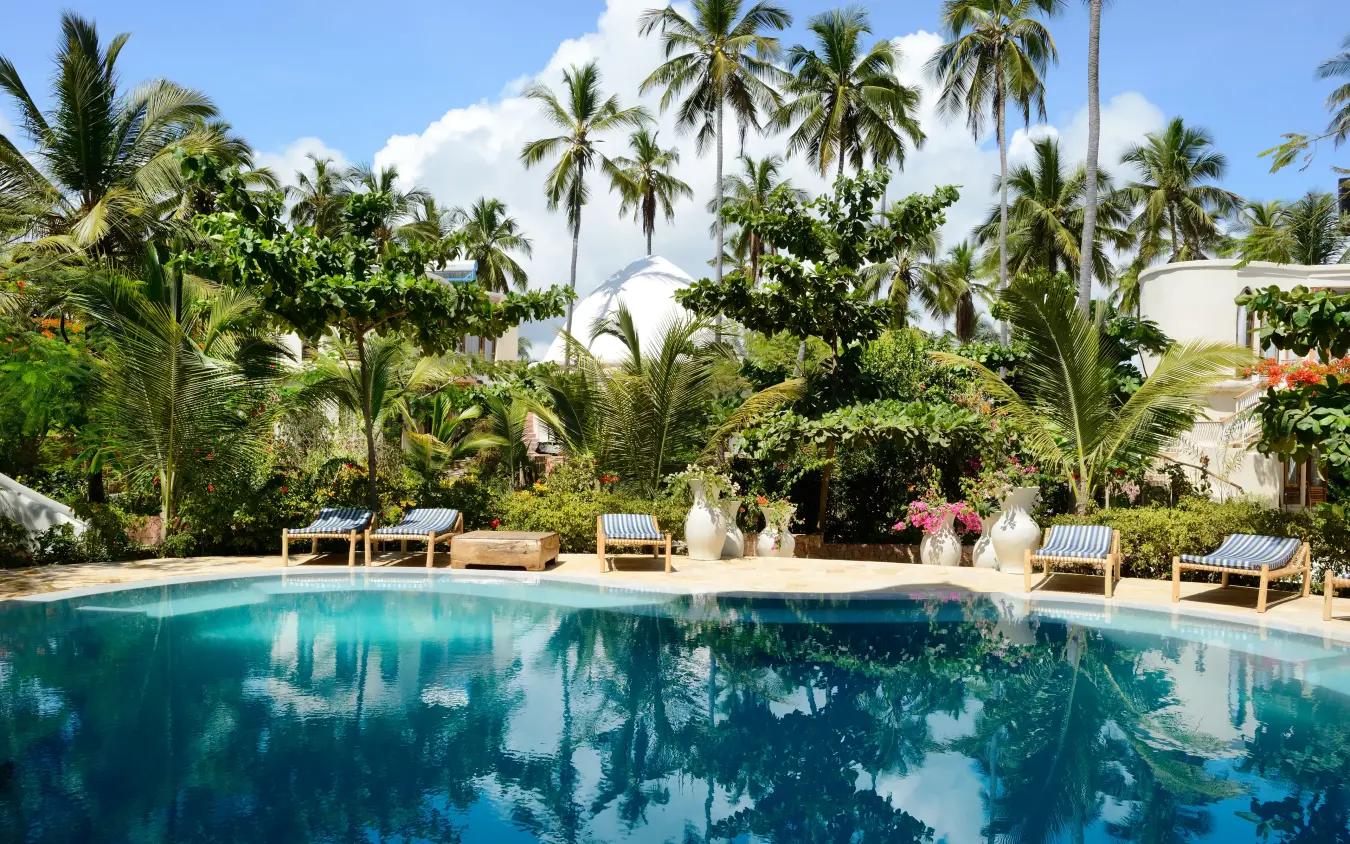
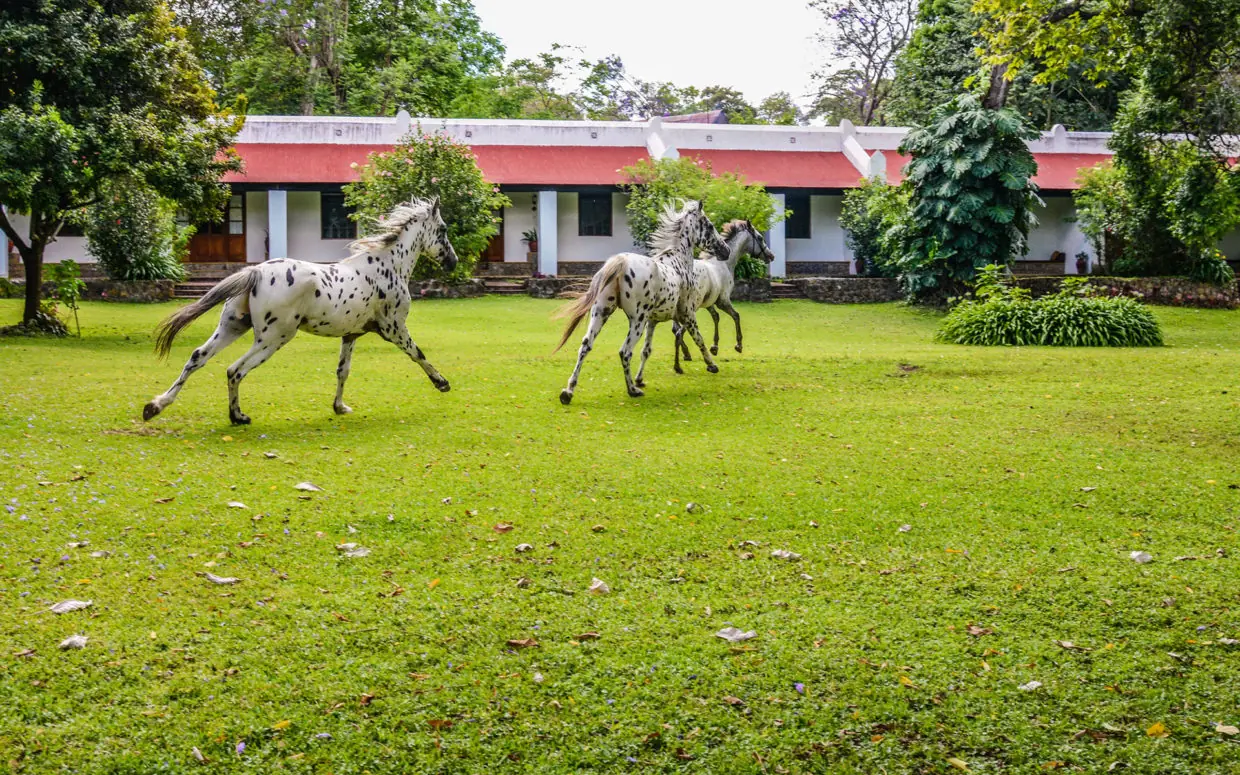
Ten nights across Tanzania, from a predator-free estate near Arusha to the Serengeti migration and Zanzibar's reef coast.
- Private Safari
- From $8,200 pp
- 2 guests
- 10 nights
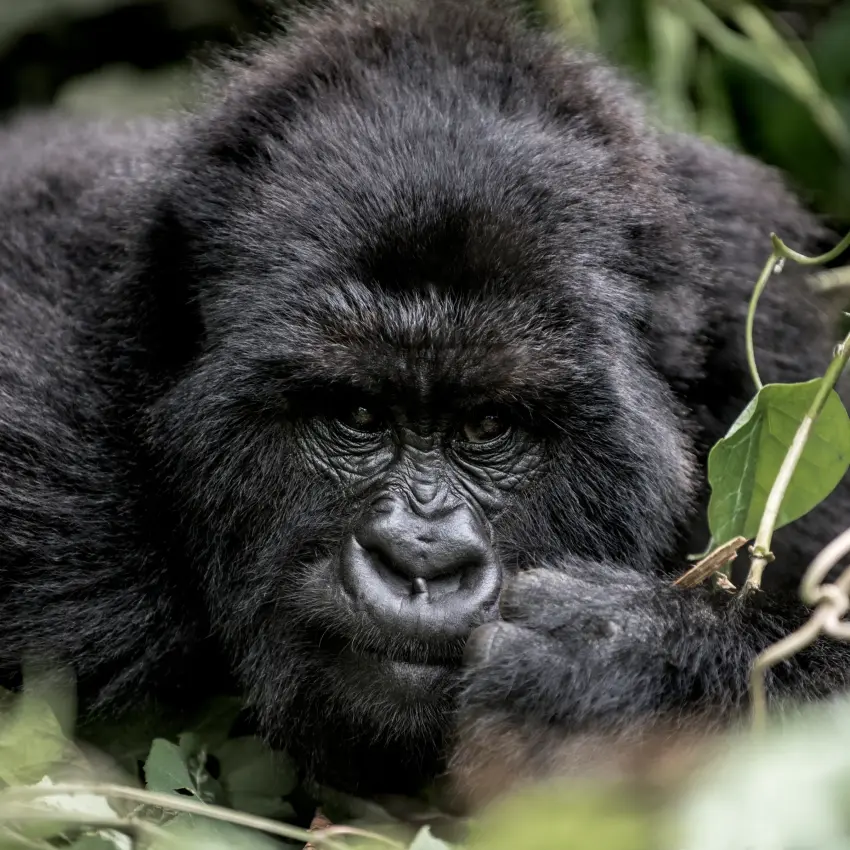
This ten-night trip links Rwanda and Tanzania. It opens in Kigali, Rwanda’s hill-spread capital of memorials, markets and arts, then climbs north to Volcanoes National Park for three nights of gorilla trekking in the Virunga chain. A night back in Kigali breaks the road before the flight south to Kogatende, in the far northern Serengeti, where the Mara River curves close to camp.
A private driver-guide shows you Kigali, with road and air transfers between the parks. Days hold early gorilla briefings, all-day walks through bamboo and forest, and long mornings at the river banks in Tanzania. The Kigali Marriott bookends the trip on arrival and return, Five Volcanoes puts you minutes from the trek headquarters, and Sayari Camp sits closest to the crossings.
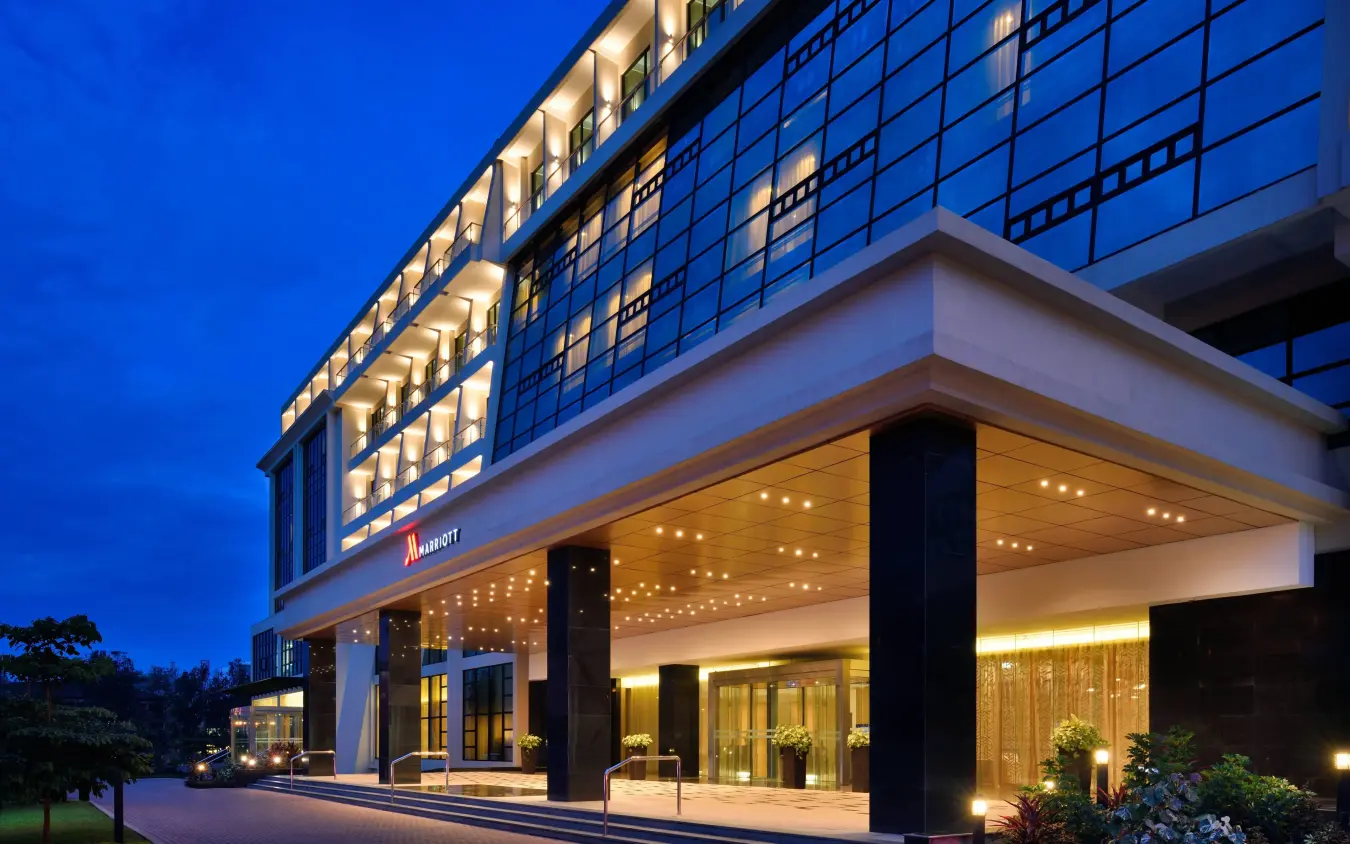
You land in Rwanda's capital, a clean city spread across ridges and valleys at the country's centre. The first night is for settling in after transit rather than sightseeing, with cars and guides arranged for anything ahead. The Kigali Marriott holds a downtown block in Nyarugenge, minutes from the financial district. Rooms are large and quiet, floor-to-ceiling glass frames the ridges the city is built across, and the beds are deep, which counts after a long flight.
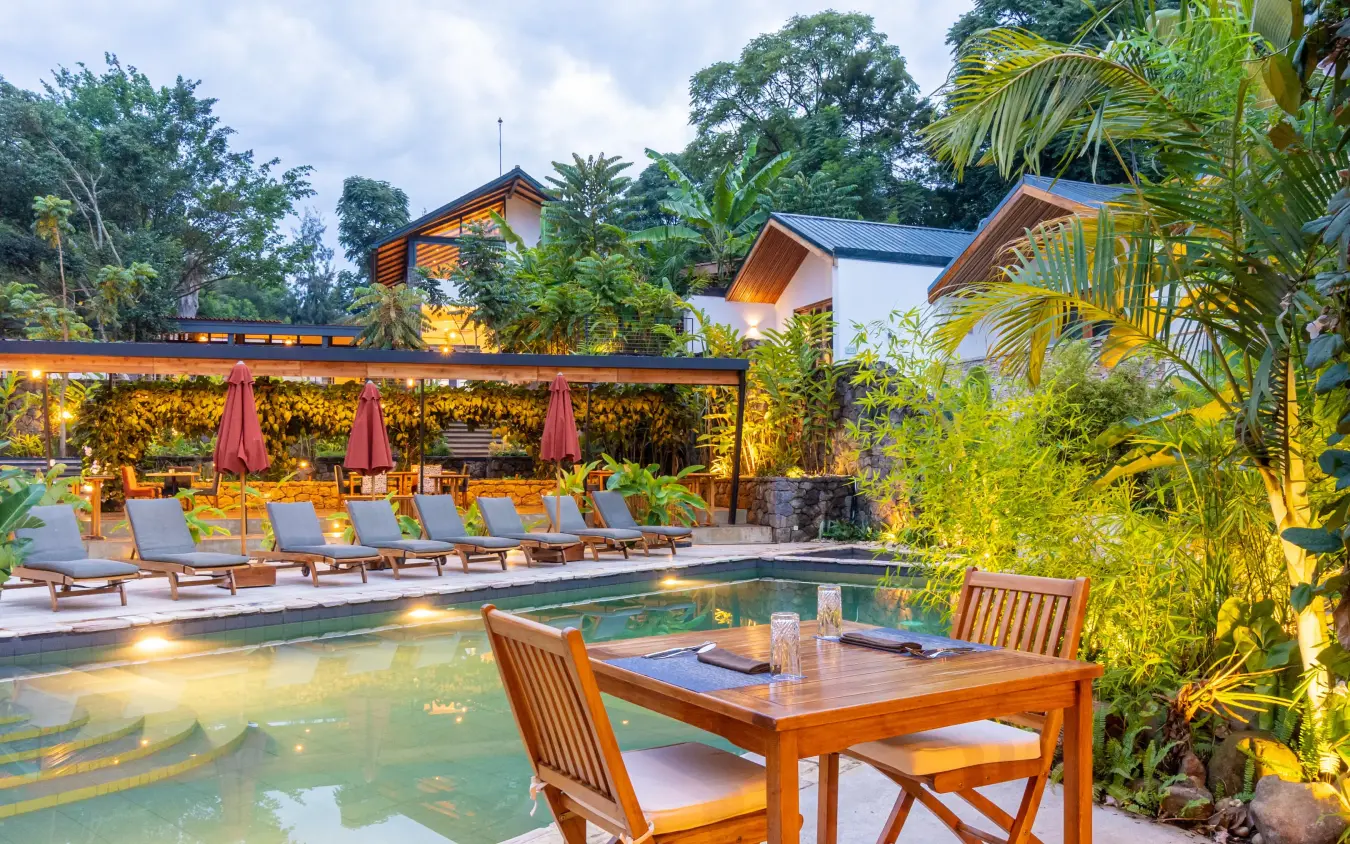
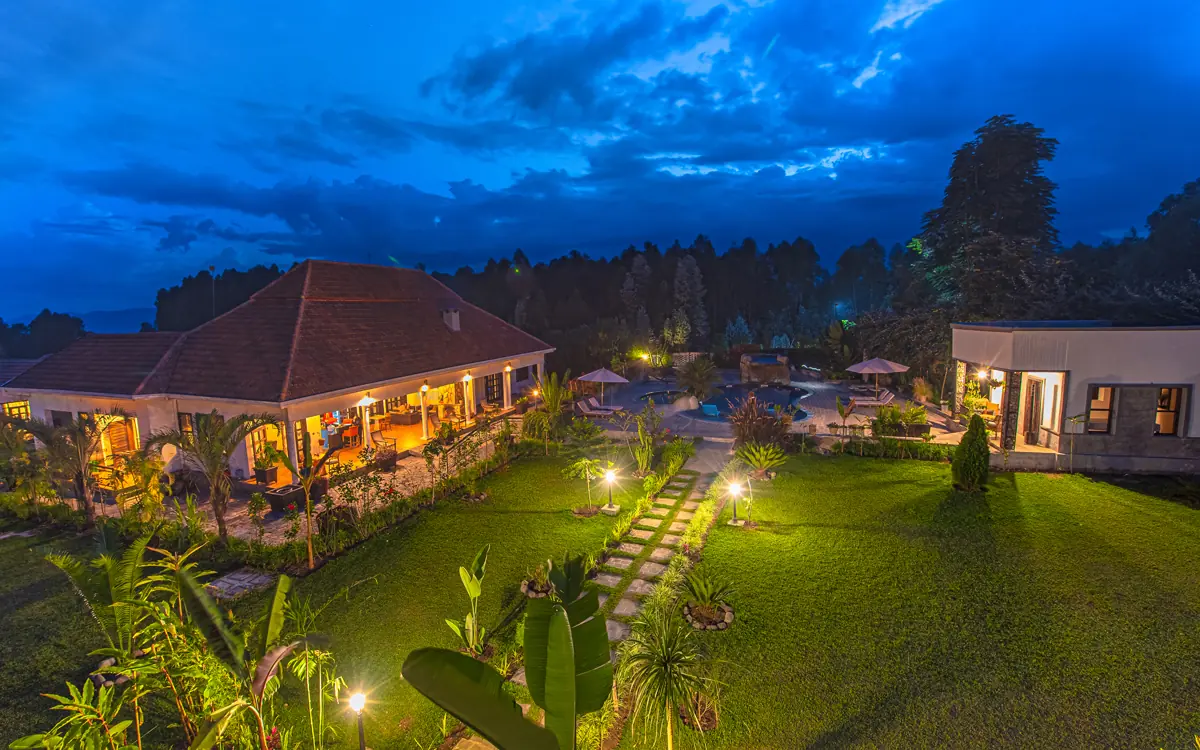
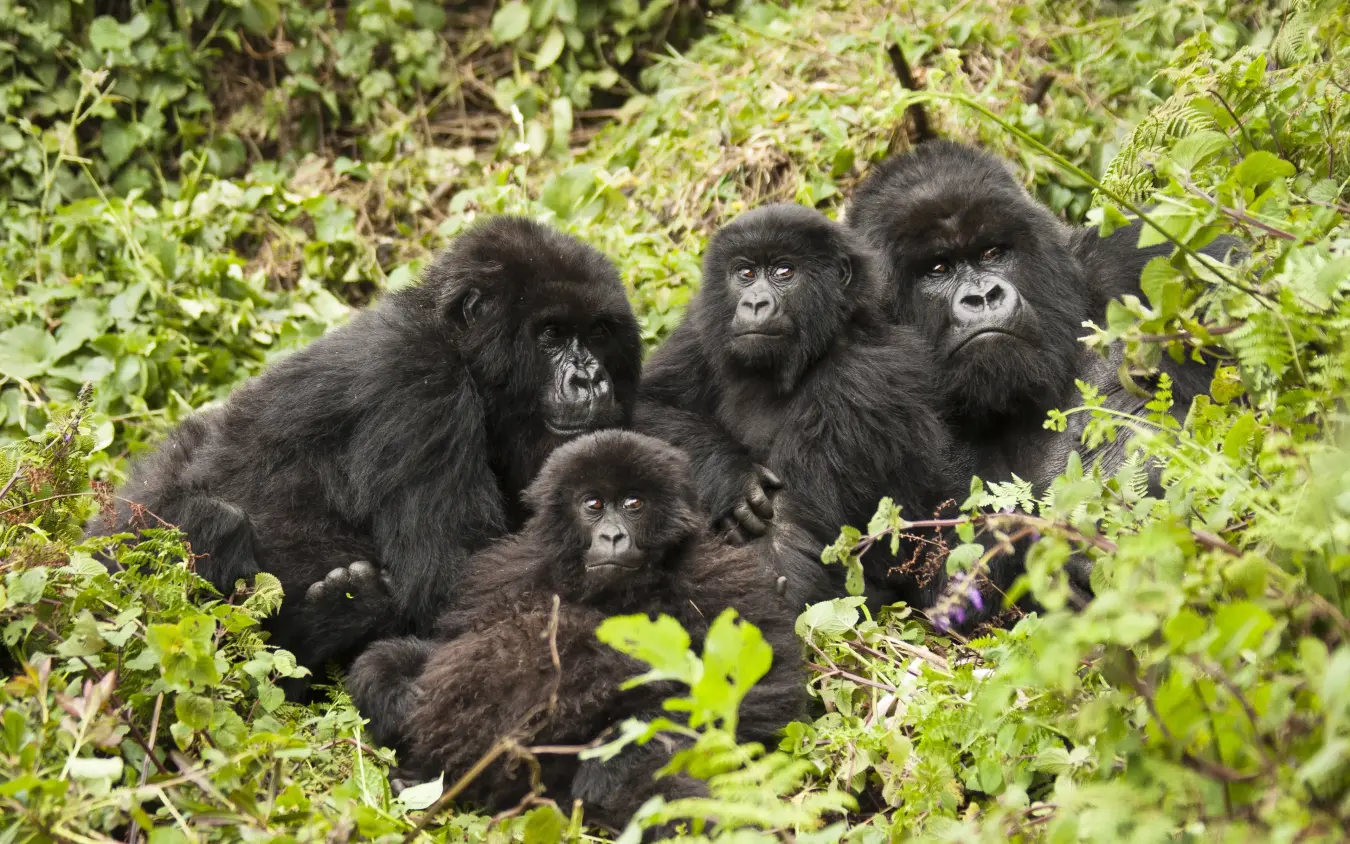
These days are given to gorilla trekking in Volcanoes National Park. Trekkers leave before sunrise and climb through bamboo and native forest to reach one of the park's habituated gorilla families, granted a strictly regulated hour in their company before the descent. The routes can run steep and muddy. Five Volcanoes sits on the Kinigi road outside Musanze, a short drive from the trek headquarters, which hands the morning back to you. Return brings a hot shower, a sauna or massage, and the pool terrace, with the Virunga peaks sometimes visible past the gardens.
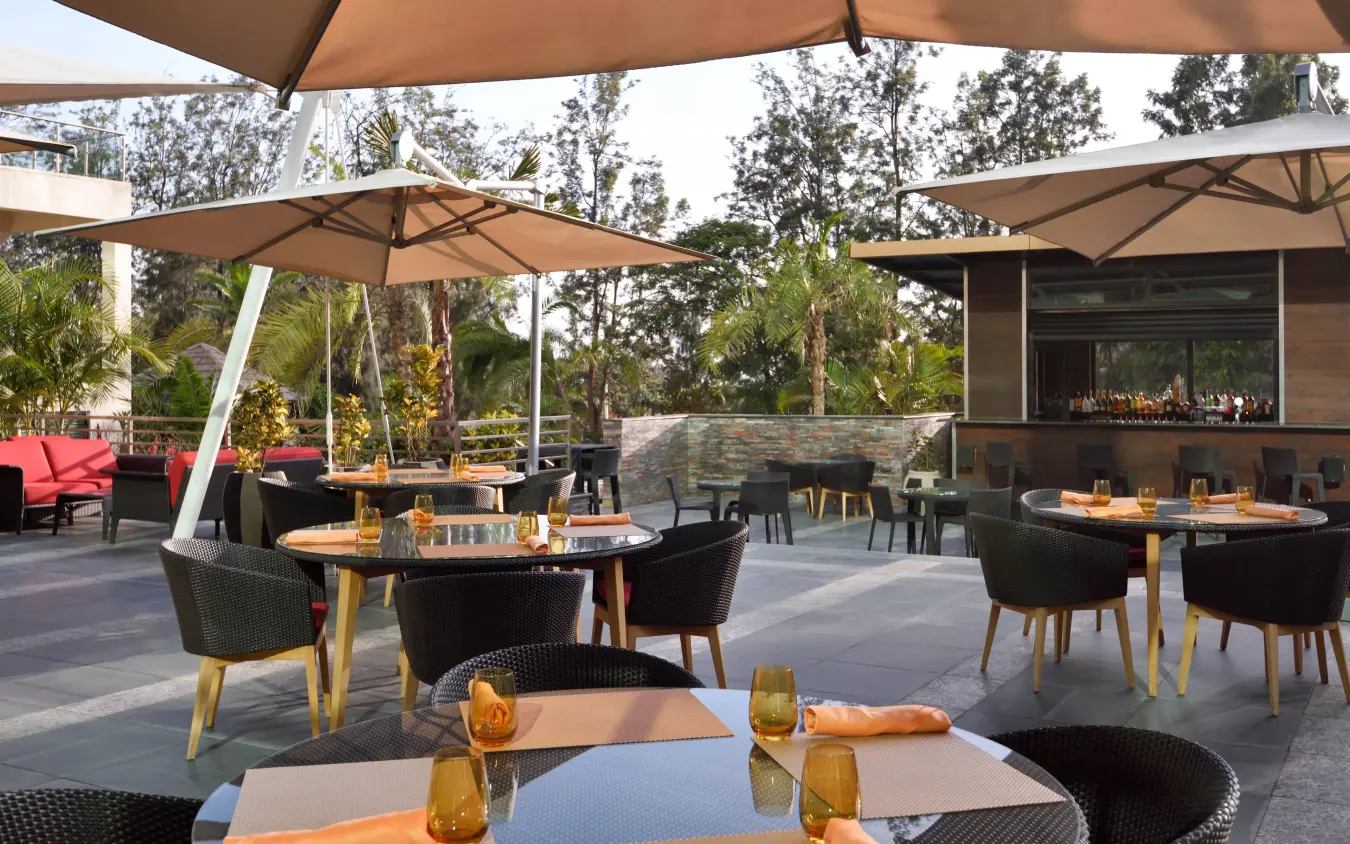
You come back down from the Northern Province to Kigali for a night that breaks the road before the flight to Tanzania. With one evening in the city, we can arrange a private driver-guide for the Genocide Memorial at Gisozi, the Inema Arts Center or Kimironko Market. The Kigali Marriott again holds its downtown block, with the heated pool, marble bathrooms and dinner at the Soko buffet or wood-fired pizza and pasta at Cucina.
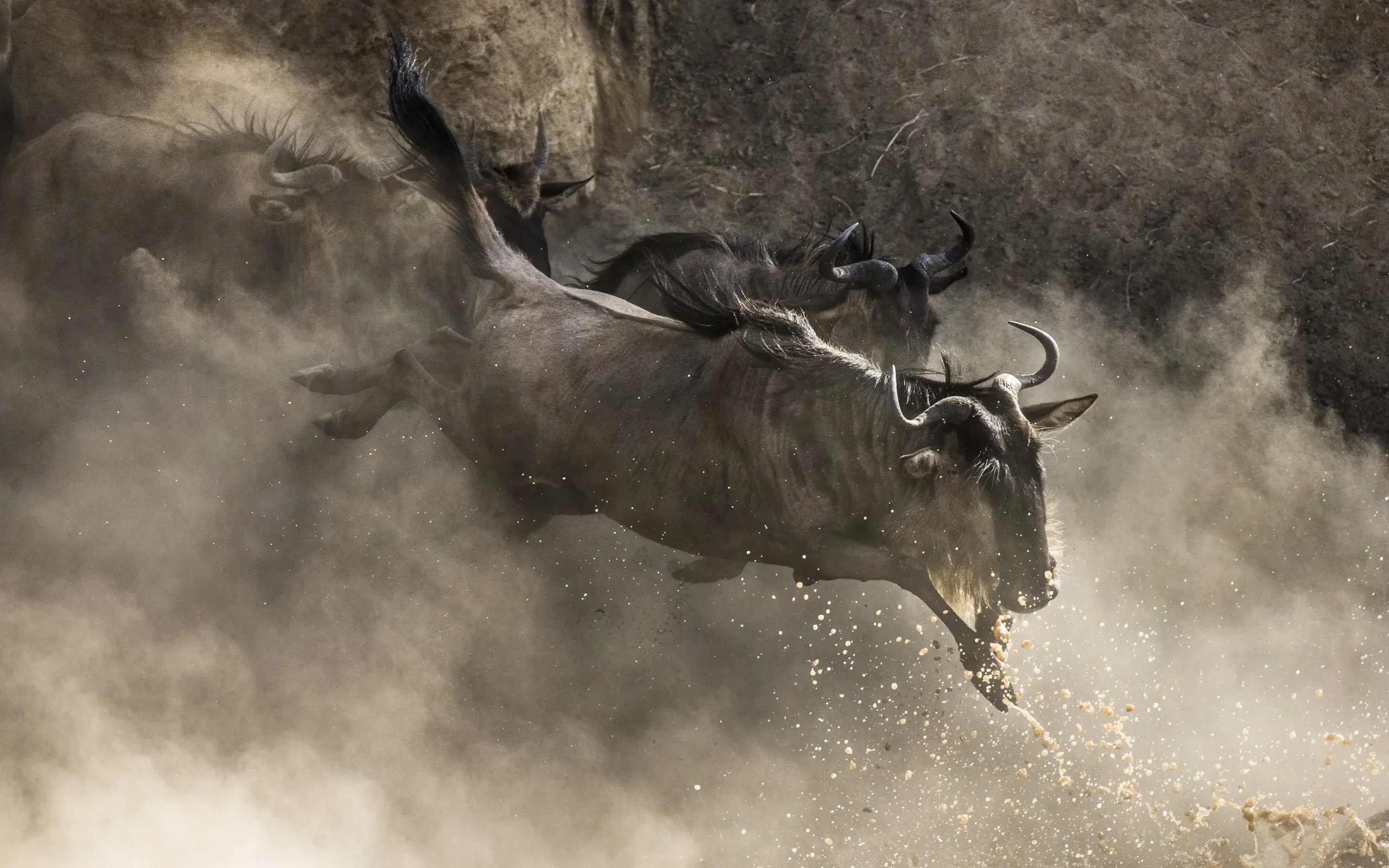
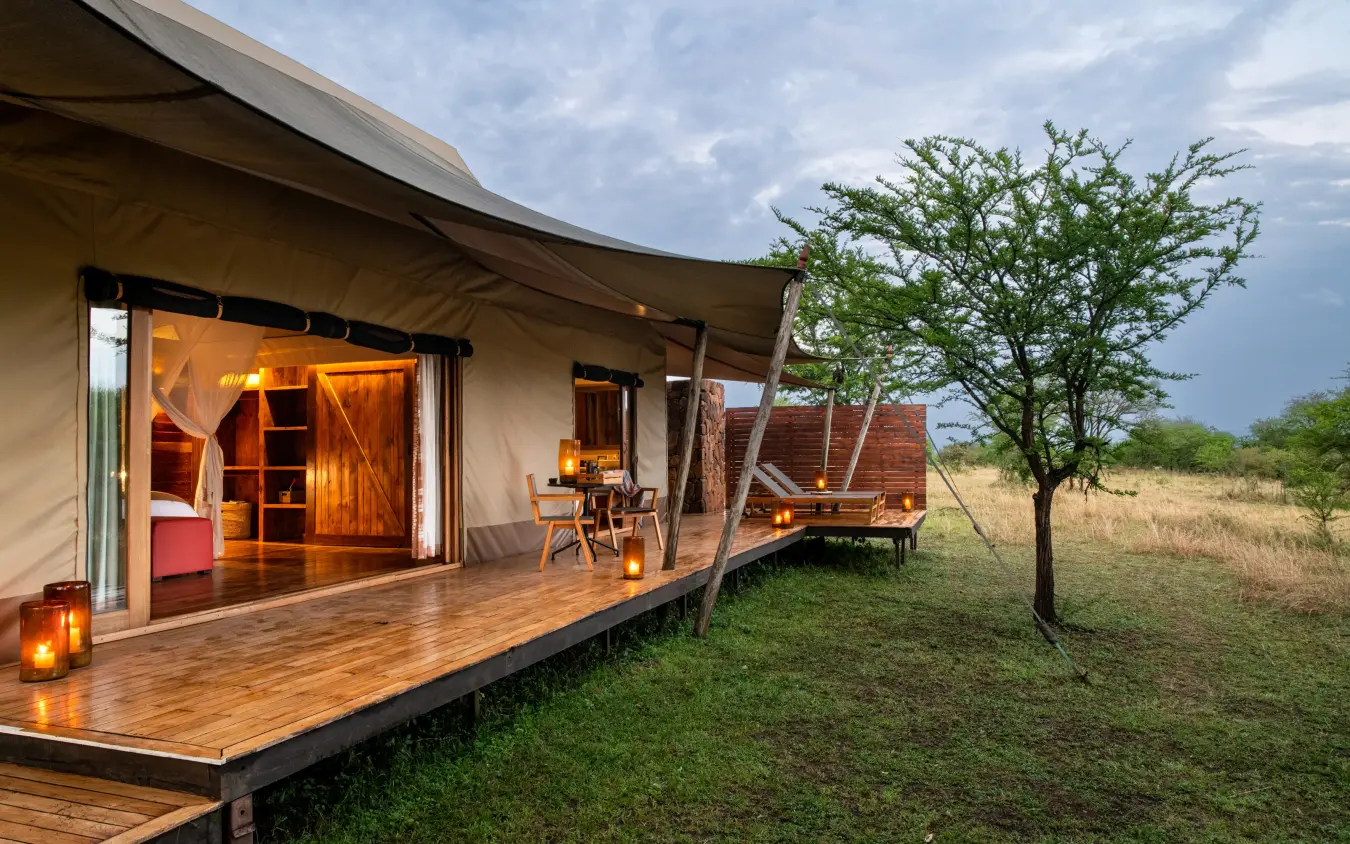
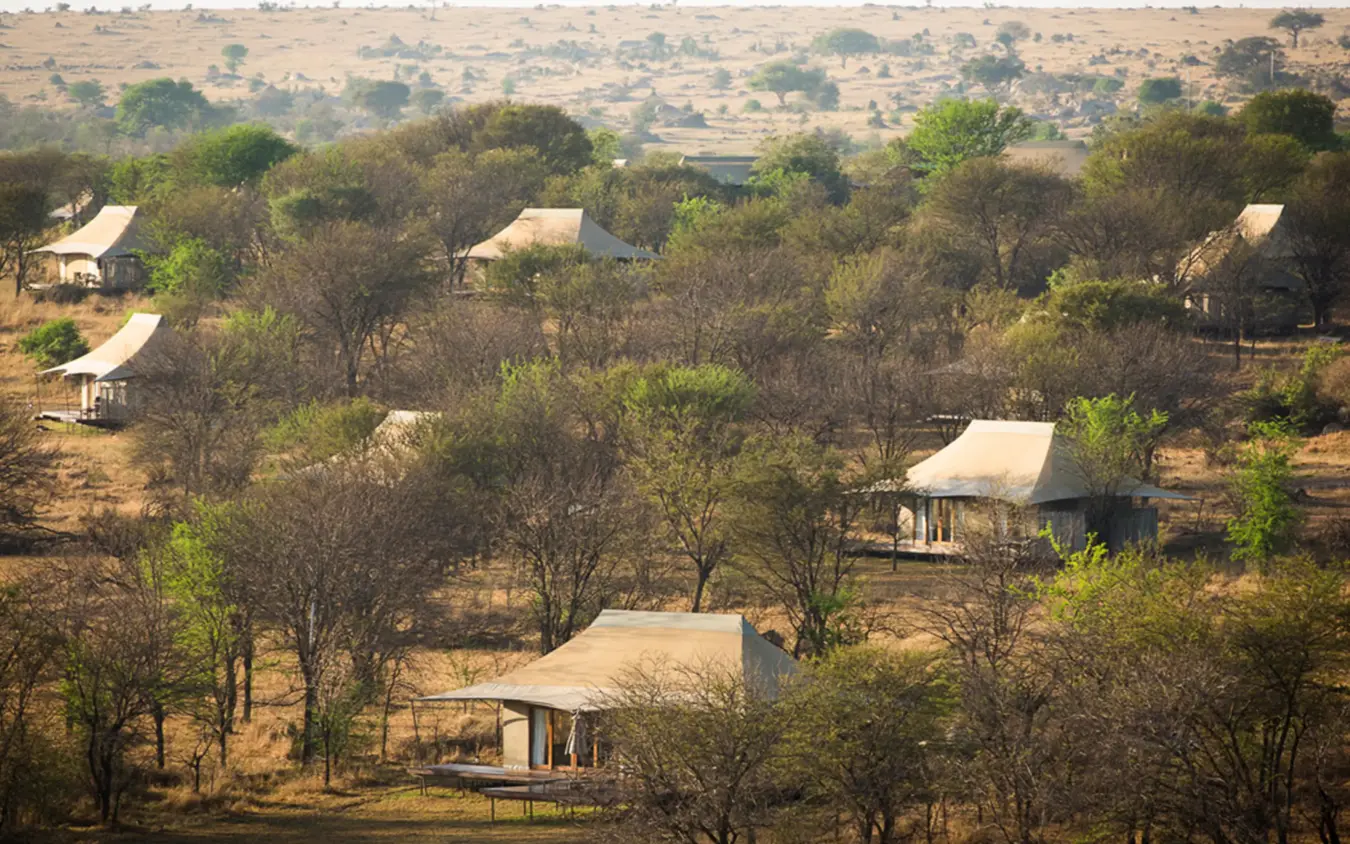
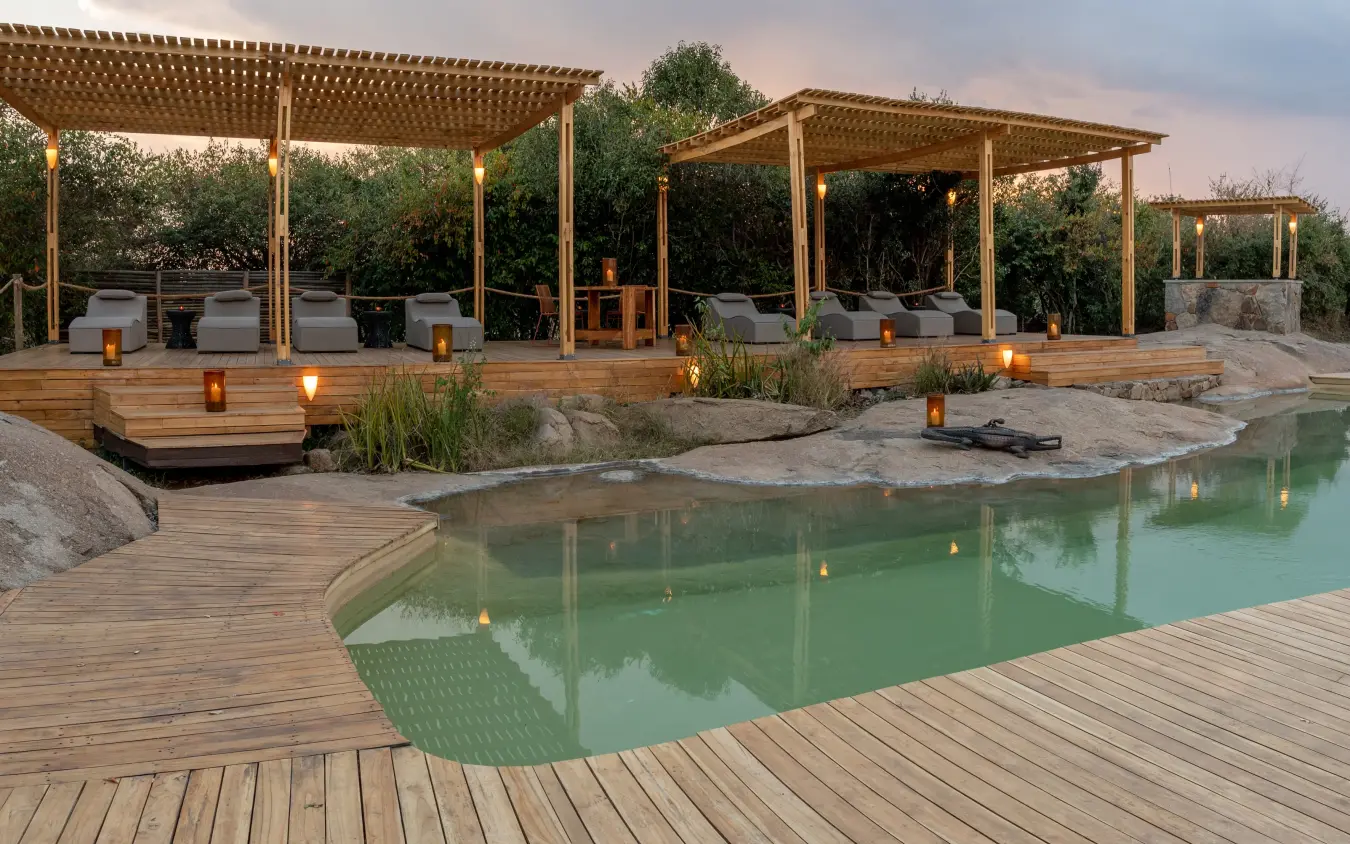
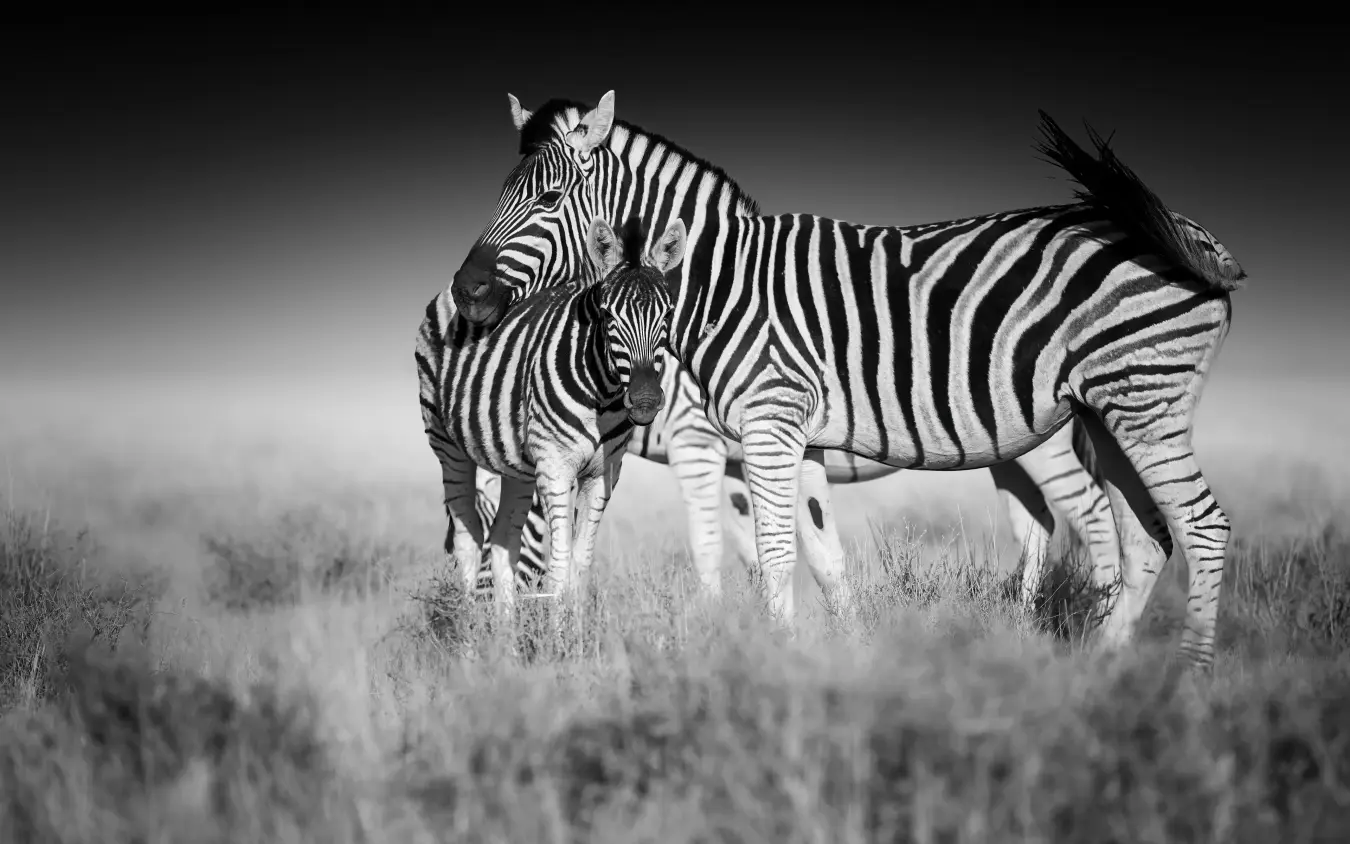
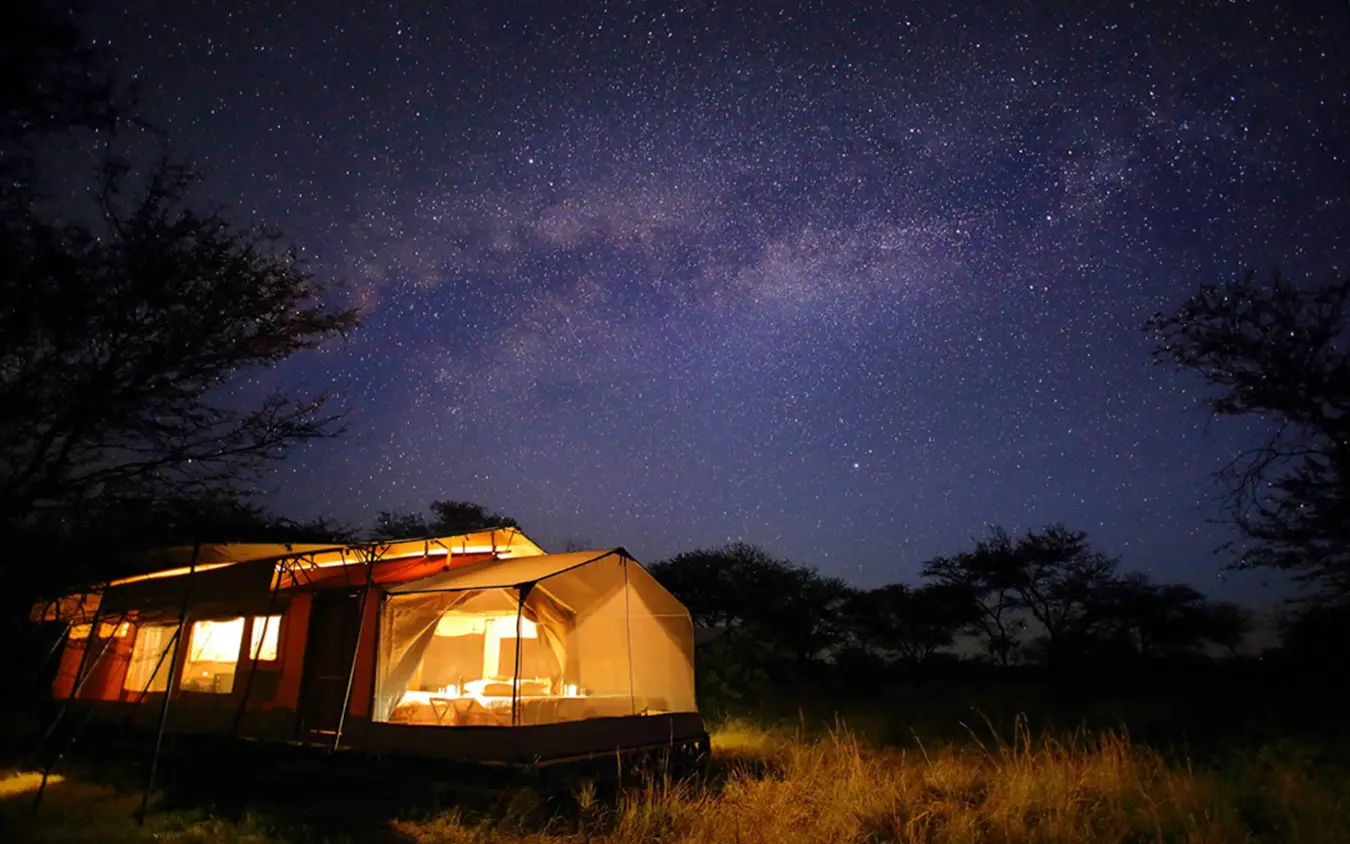
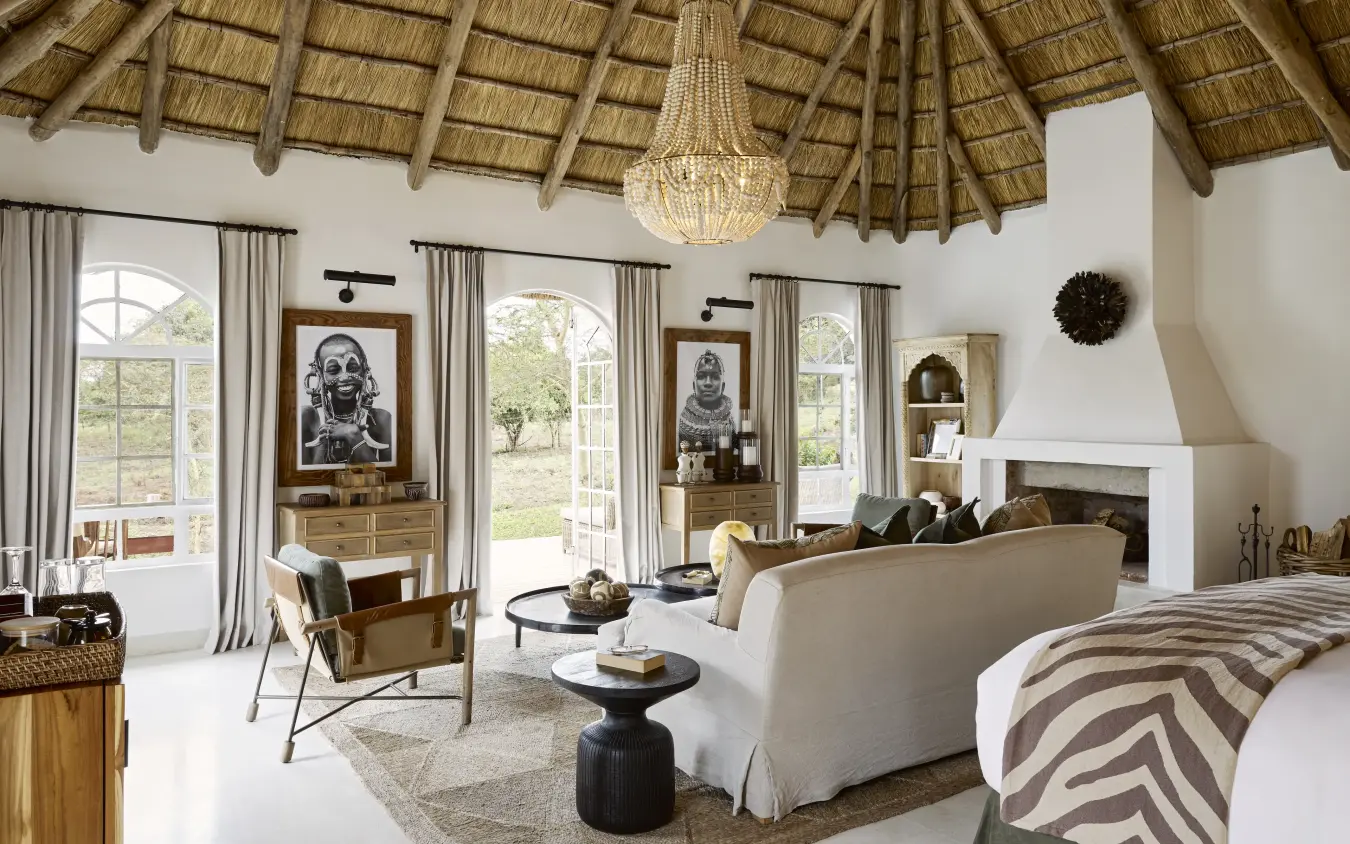
You fly south to Kogatende in the far northern Serengeti, where the Mara River curves close enough that guides can reach several crossing points in a single morning. From July to October the plains gather wildebeest and zebra before the water; from November to March resident lion, leopard, cheetah, elephant and a small population of black rhino remain as vehicle numbers drop. Long mornings at the river are broken by packed picnics. Sayari Camp has fifteen tented suites split across two wings, with a rim-flow pool looking toward the Maasai Mara on the horizon.
Five nights is the best thing this route does for your chances, and even then a crossing can never be promised.
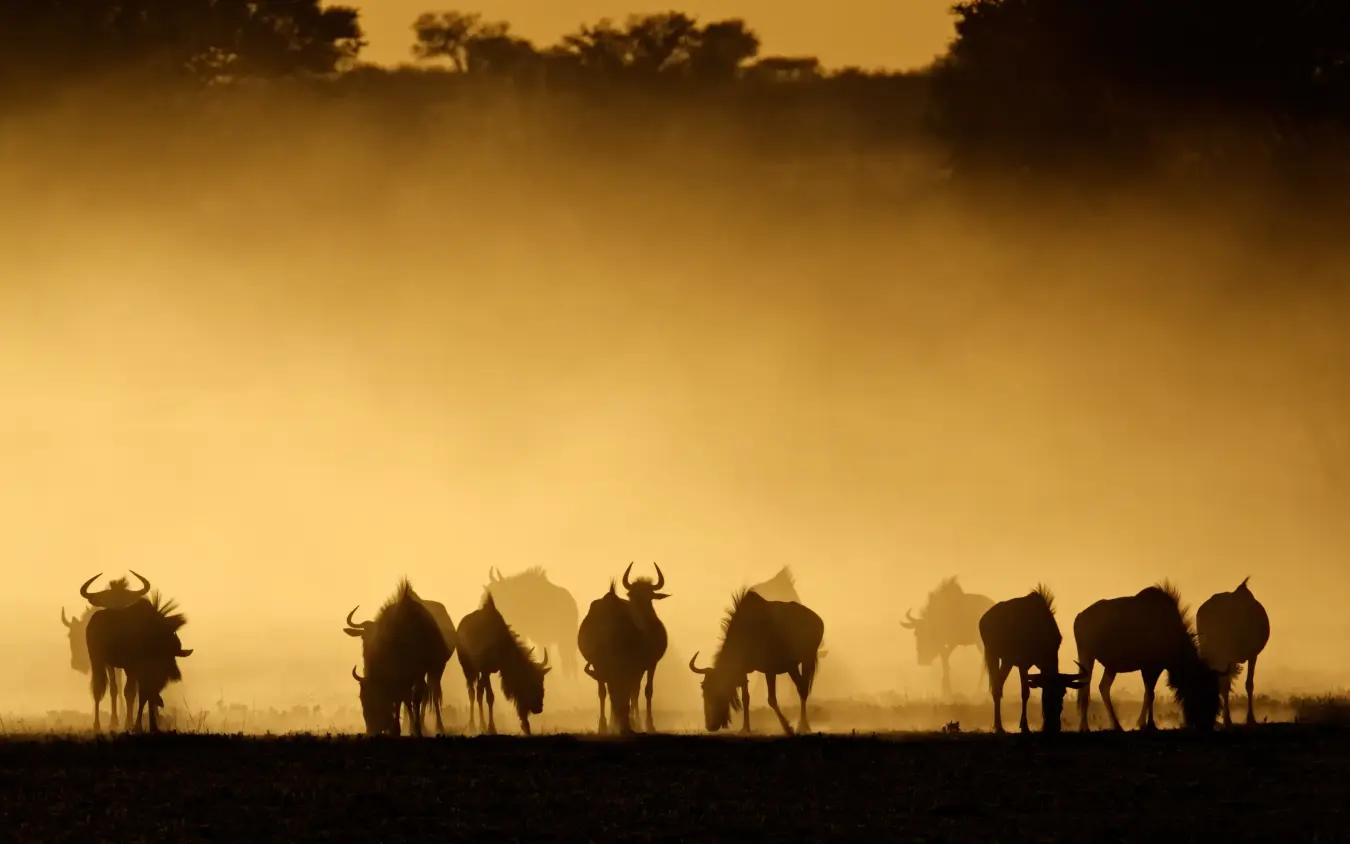
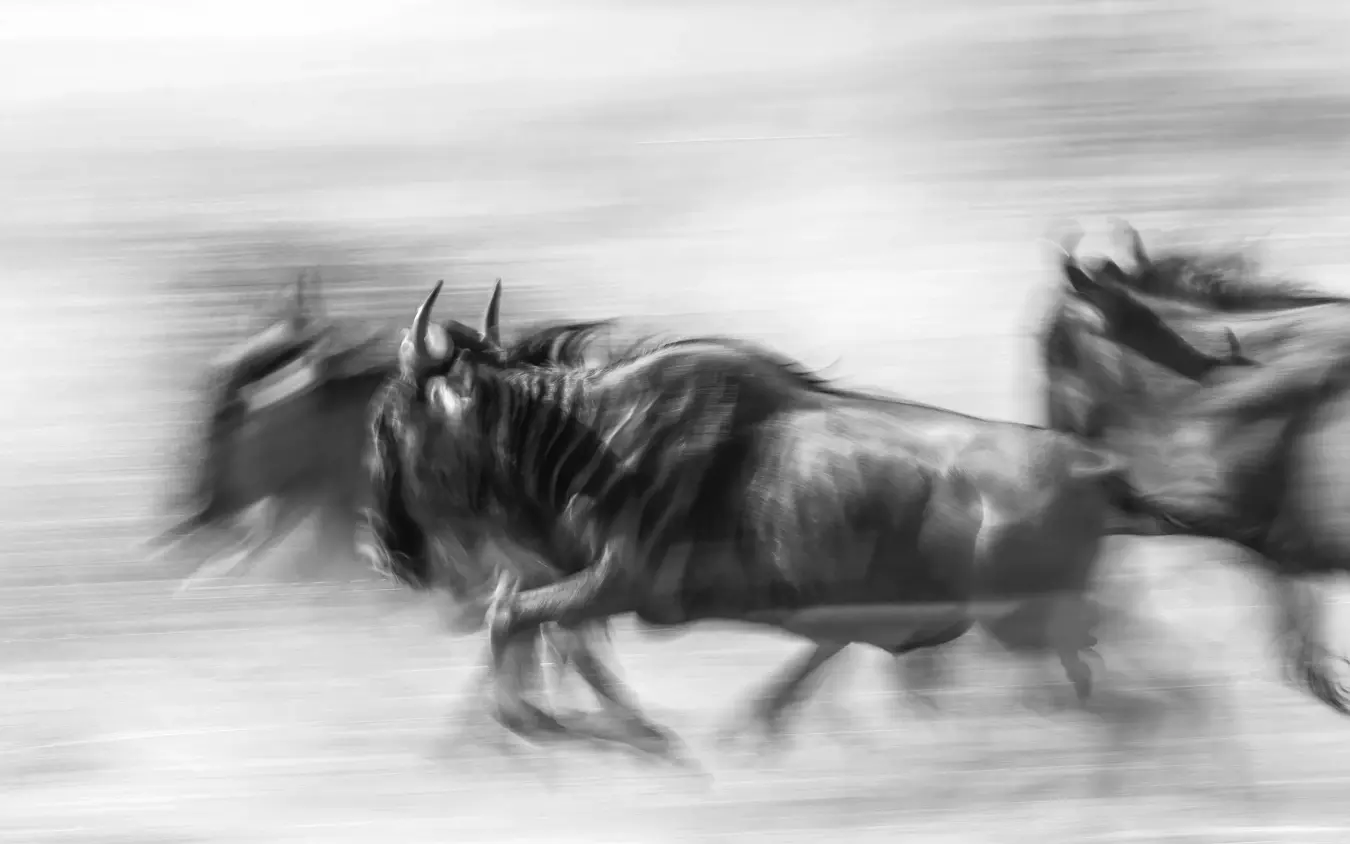
The wildebeest are normally on the northern plains from about July into October, August and September being the peak, and the Kogatende stretch holds the marked crossing points. What nobody can arrange is the moment itself: a herd may stand at the water all morning, drift away, change its mind at dusk, or go in a mile downstream.
We suggest three or four nights to anyone whose trip depends on a crossing, so five leave room to spend a whole morning waiting and still feel the days were well used. No honest percentage exists.
The camp is twenty minutes from the airstrip, so arrival days are not lost to driving.
Early, then unpredictable.
Everybody gathers at the park headquarters at Kinigi for a 7am briefing, and the lodge is a short drive along the Kinigi road, so the alarm goes at a reasonable hour by the standards of this trip. Families are allocated at the briefing with fitness in mind, so speak up there.
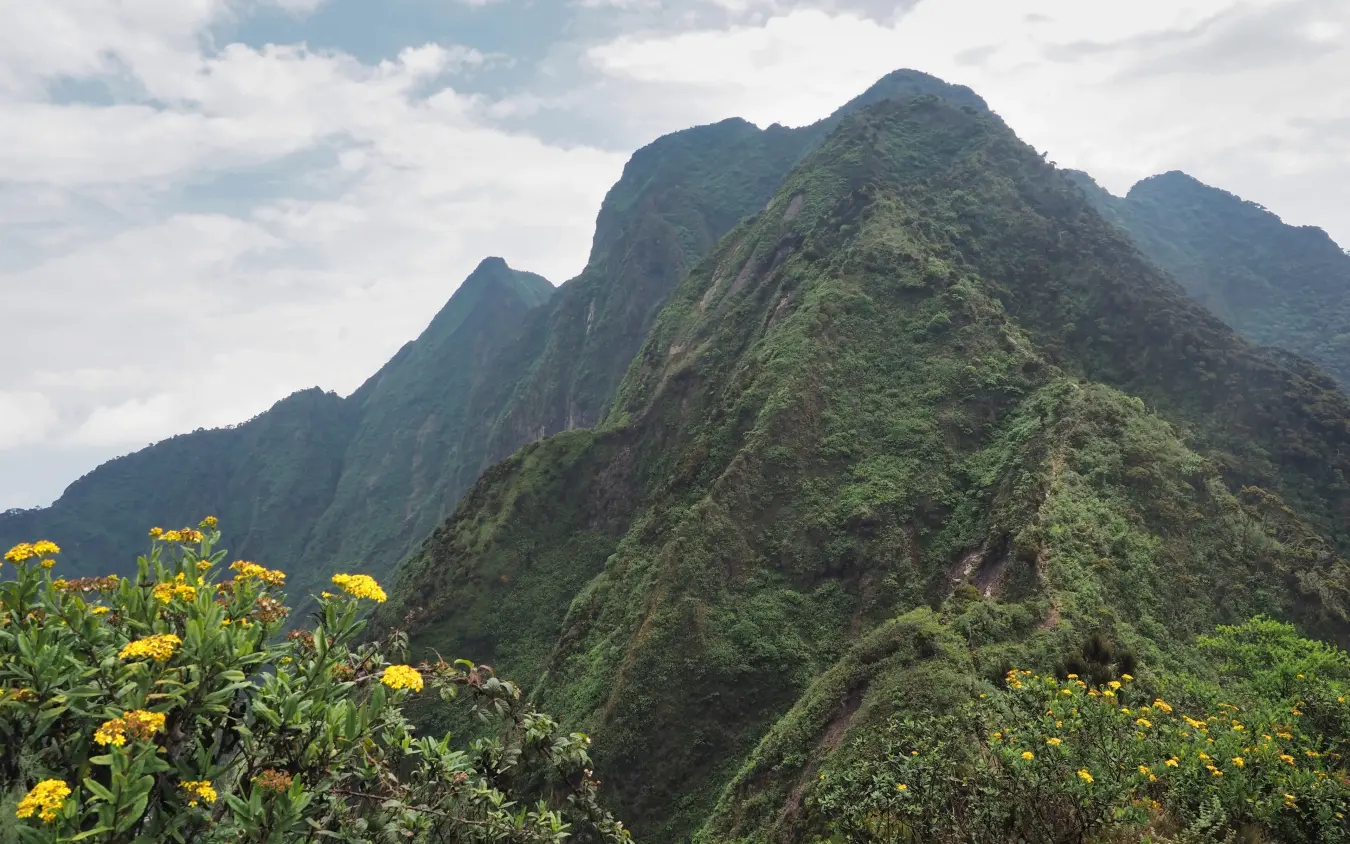
After that the gorillas decide: the walk may take half an hour or the best part of a day, climbing through bamboo and nettles on soil that never quite dries, at anything from about 2,500 metres upward, which is why it feels harder than the gradient looks.
Boots with grip, waterproofs and old gloves earn their place. There are porters at the trailhead; take one, for the bag and for a hand on a wet slope.
It is there to protect the flight.
The road down from Kinigi takes the better part of three hours in the mountains and the flight to Tanzania leaves from the capital, so that night turns a pre-dawn drive into an evening with something in it: the memorial at Gisozi, the arts centre or the market, with a driver-guide on hand.
It can go if your flight times allow, and we look at that once we have your dates. The quicker alternative is to fly the leg altogether.
Helicopters work out of Kigali and the hop to the volcanoes takes about half an hour, which suits anyone short of time or wary of winding roads. It costs more and it depends on the weather, so we would keep the night in reserve.
Quieter, and still worth the flight.
From about November to March the wildebeest are far to the south and the vehicles thin right out, leaving resident lion, leopard, cheetah and elephant on ground that few people are working. The river changes character too, from a crossing point into a stretch of water with hippo and crocodile in it.
What you give up is the spectacle, and there is no pretending otherwise: if a crossing is the reason for the trip, travel between July and October and accept the company at the sightings.
If it is not, those months hand you the north almost to yourselves, with greener plains, migrant birds and newborn antelope. We would usually move a night or two south in that half of the year, closer to where the herds have gone.
Partly, and the gorillas are why it is only partly.
Rwanda will not take anyone under 15 into the forest with the gorillas, and that rule does not bend, so younger children would spend those mornings elsewhere while the adults trek, which we can arrange, or the Rwandan half waits a few years.
In Tanzania the camp takes children of five and over and has two family tents, and it sets a minimum of 12 for walking safaris, which matches how the national park itself prices walks. Long mornings parked at the river ask a good deal of a small child, with no shade and nowhere to run about.
Give us the ages when you first write, and we will have each camp's own rules in writing before anything is booked.
July and August, if the crossings are the point: both carry our top rating on the volcanoes and in the Serengeti, and they are the heart of the crossing period.
September is close behind at either end. October keeps the herds in the north while Rwanda turns wetter, and in most years it is the last of the crossing months.
The camp closes for April and May, which settles the long rains for you, and April is also the hardest month underfoot on the volcanoes.
January and February are dry months and good ones for the gorillas, but the wildebeest are calving far to the south by then, so we would move the Tanzanian nights to follow them.
March and November bring rain to Rwanda, with quieter forest and easier permits in exchange.
Ed Charles, BBC Producer
Fitzroy are true specialists in accessing the wilderness. They know where to go and importantly, when to go there. Highly recommended.
tanzania
Ten nights across Tanzania, from a predator-free estate near Arusha to the Serengeti migration and Zanzibar's reef coast.

tanzania
Ten nights through Arusha, the Ngorongoro highlands and Tarangire's Silale Swamp, closing on Zanzibar's south-east coast.

tanzania & rwanda
Climb Kilimanjaro's Lemosho route, recover on Mount Meru, then trek mountain gorillas in Rwanda's Volcanoes National Park.
rated five stars by our clients

our approach
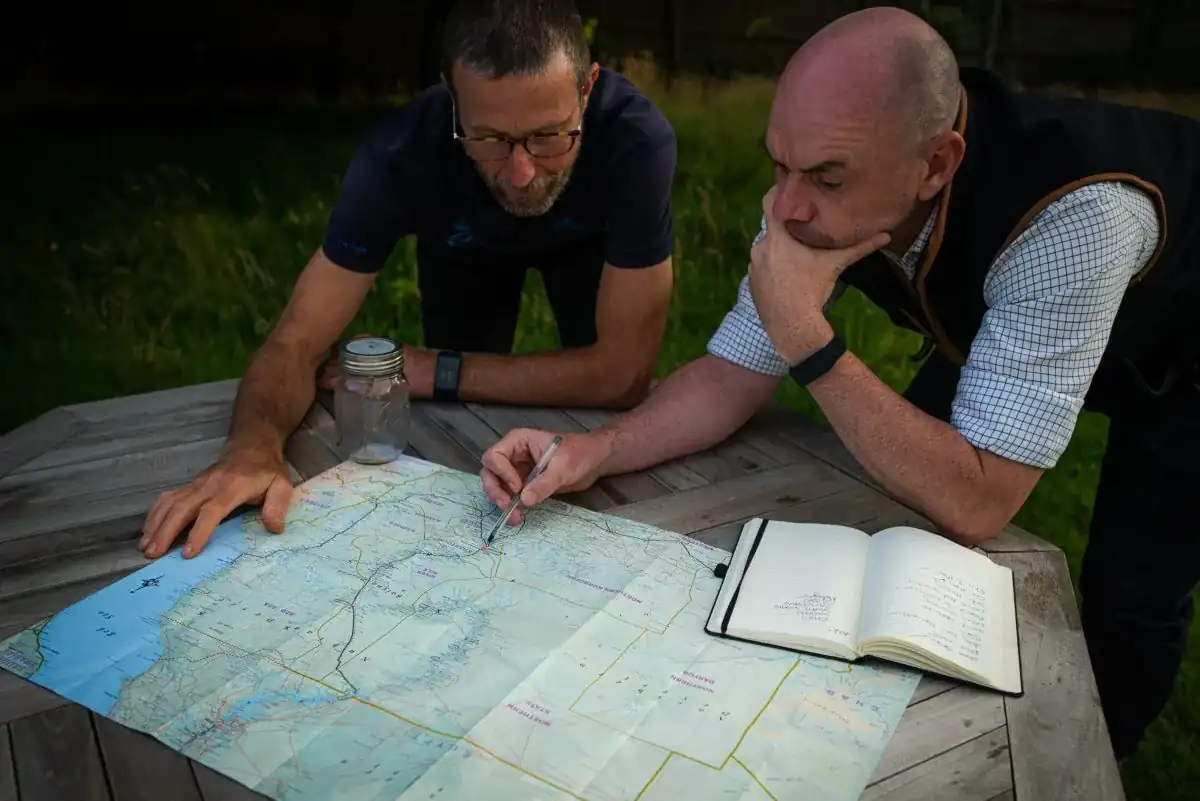
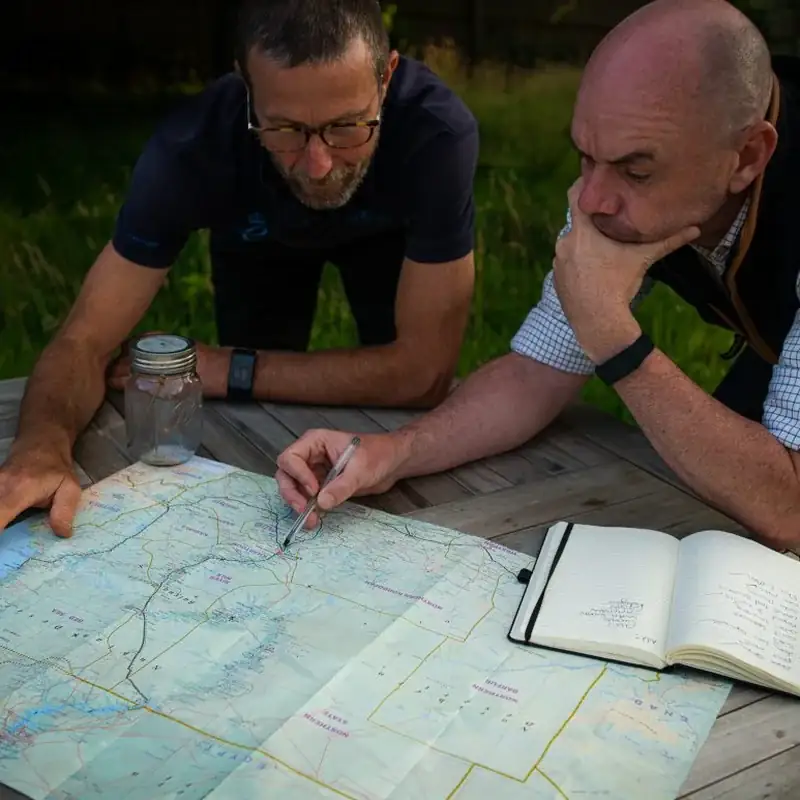
Every journey starts with a conversation. We take the time to understand your vision before we start planning.
Whether by phone or in person, we work with you directly to shape something that is considered, personal, and expertly delivered.
Every journey starts with a conversation. We favour a direct, personal approach: understanding your vision before anything else.
Whether by phone or in person, we work with you directly to shape a journey that is both thoughtfully considered and expertly delivered.
Get in touch to start planning yours.