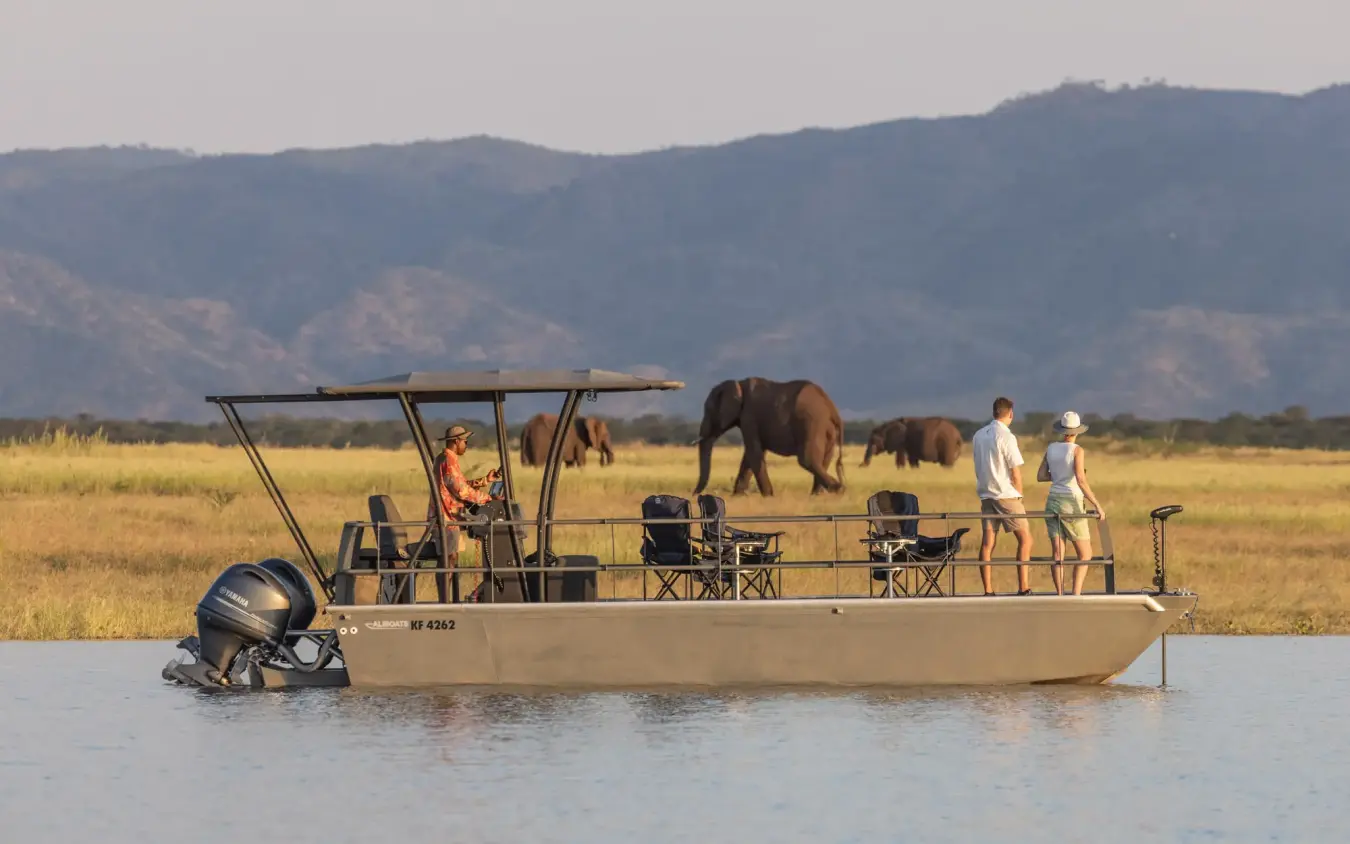
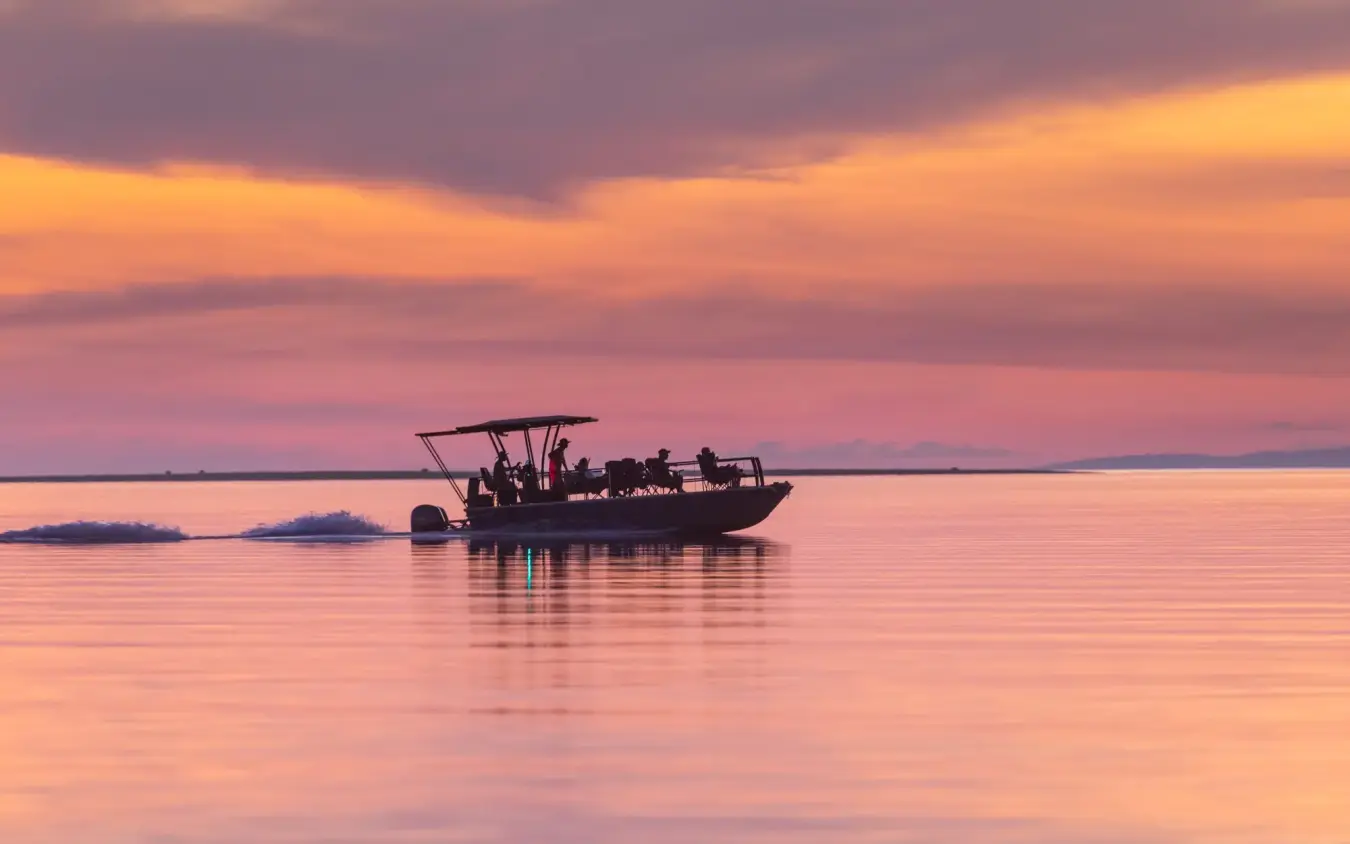
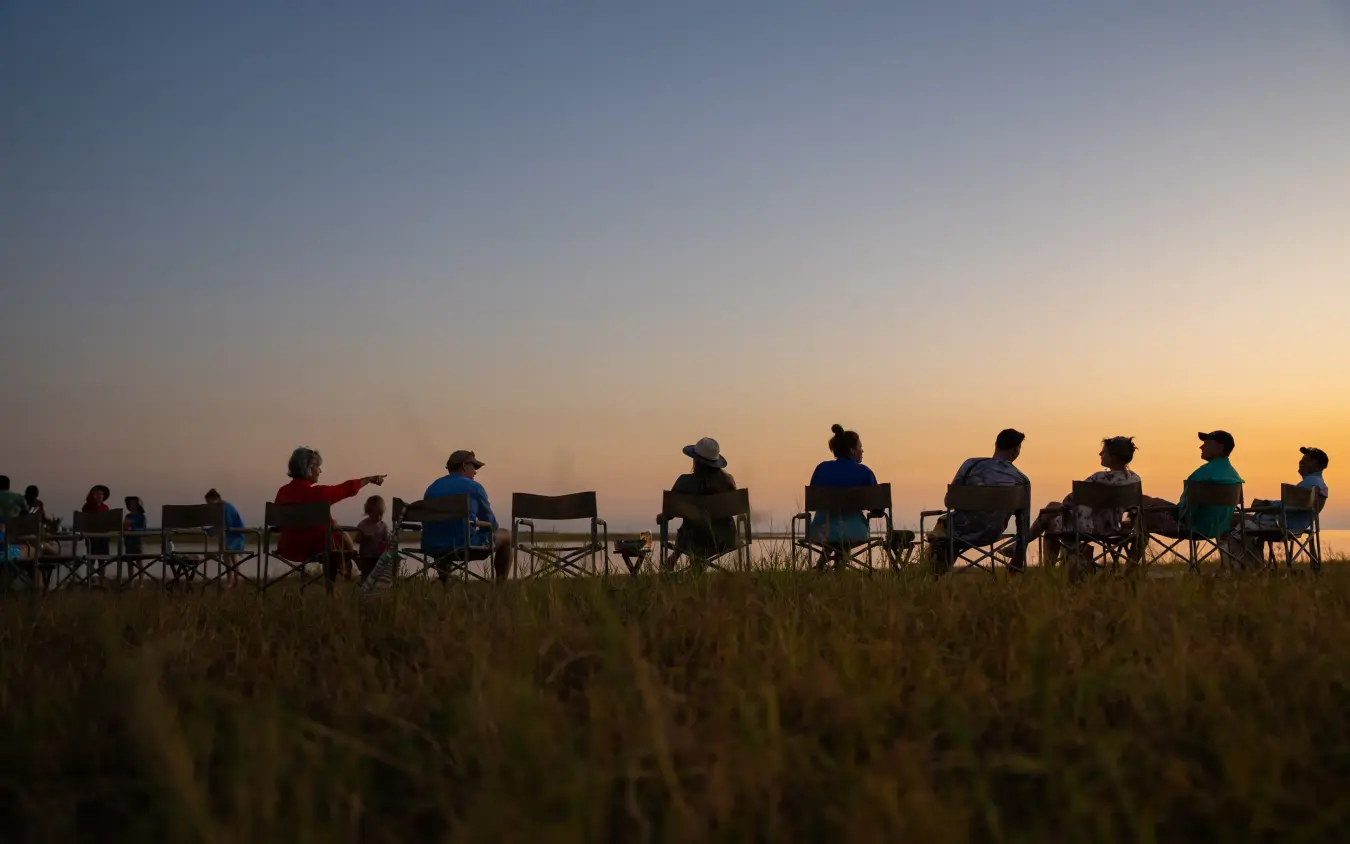
Kariba’s fishing is the reason a good number of guests come at all. The boats are rigged with sonar, and the guides know where tigerfish hold along the drop-offs and the drowned timber; whatever is caught goes back into the water, along with the vundu and bream the lake also holds. Longer runs cross to Sanyati Gorge, where the cliffs close in and the water goes still. Other afternoons the boat simply follows the shoreline, past crocodiles hauled out on the sand and elephants feeding in the shallows, and ends with drinks out on open water as the light turns.
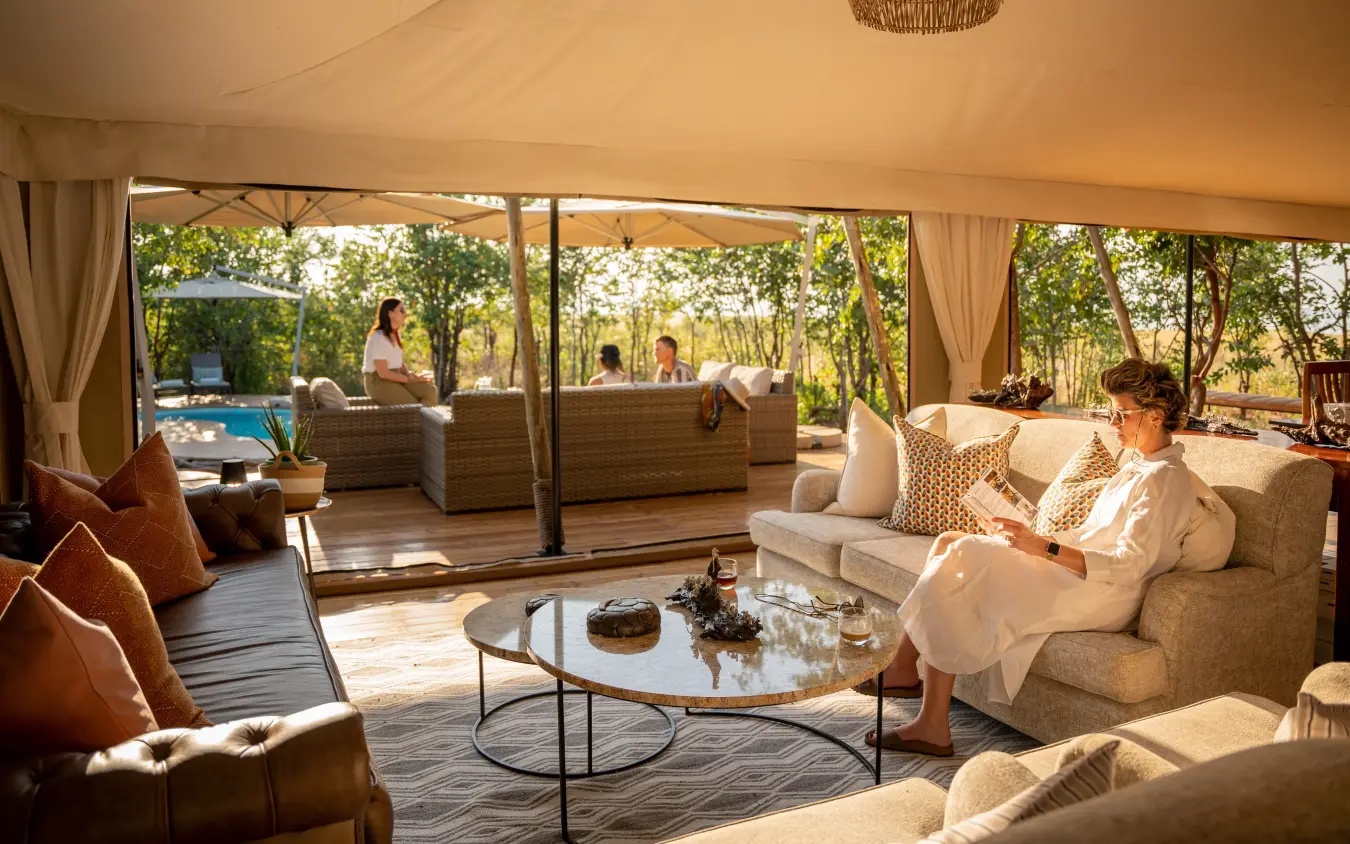
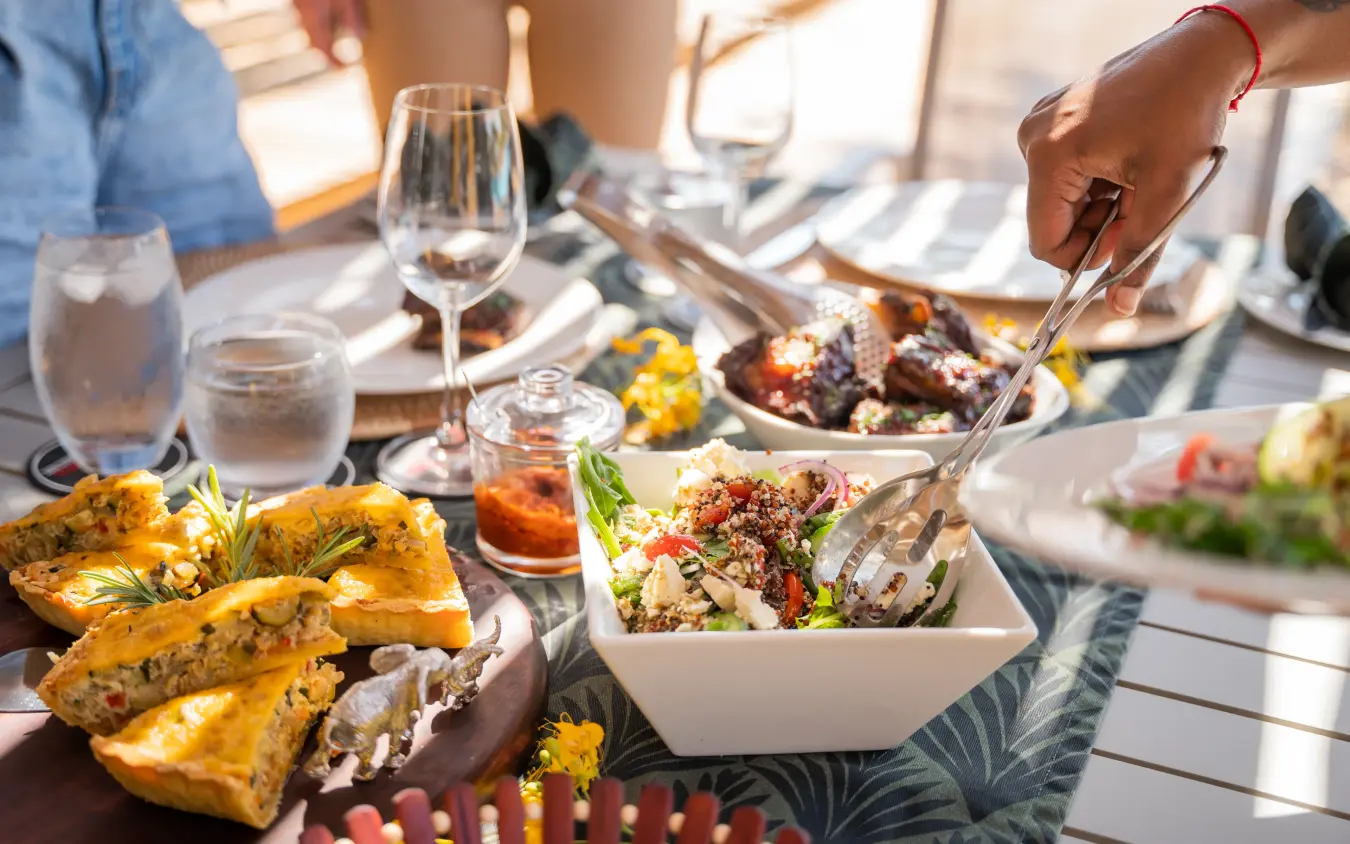
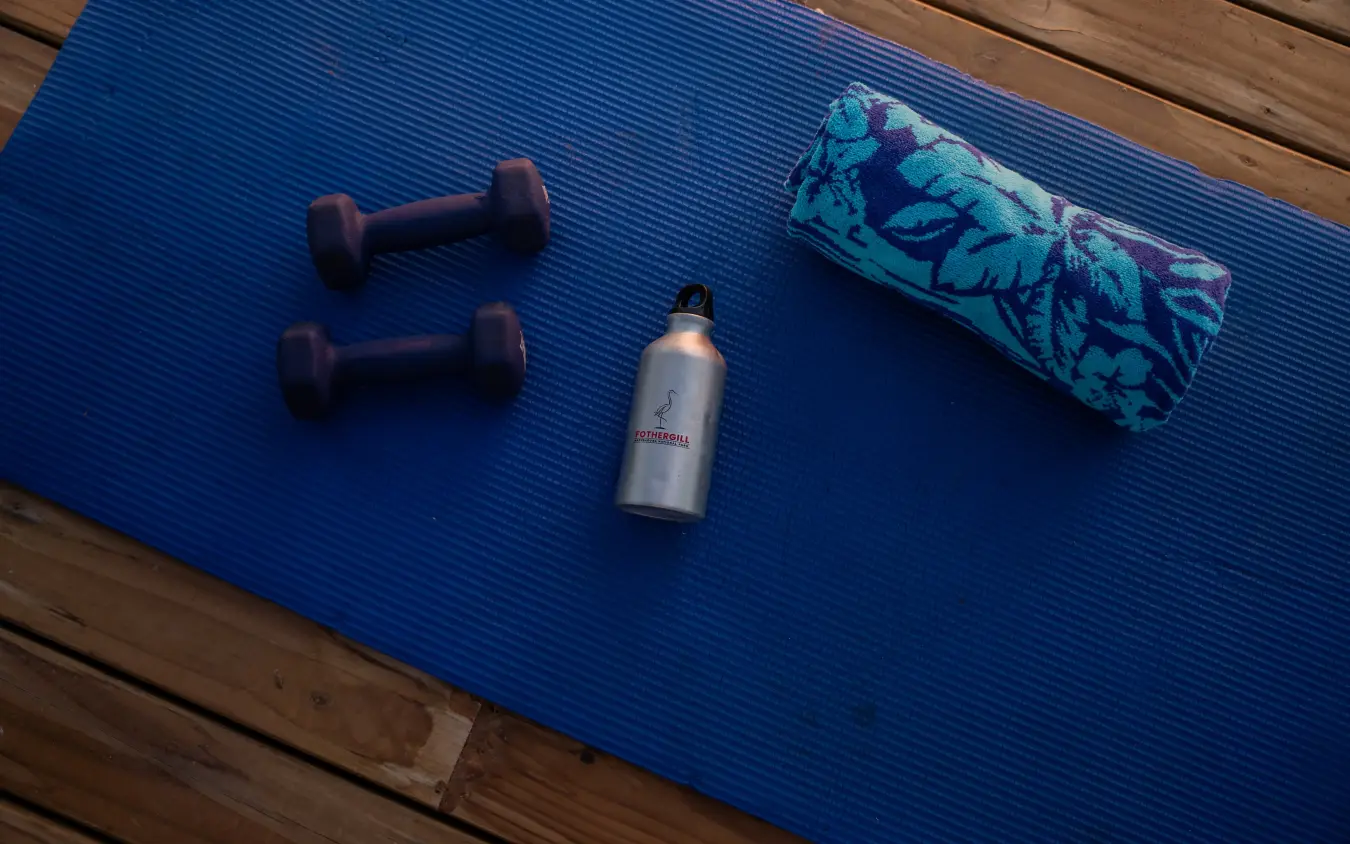
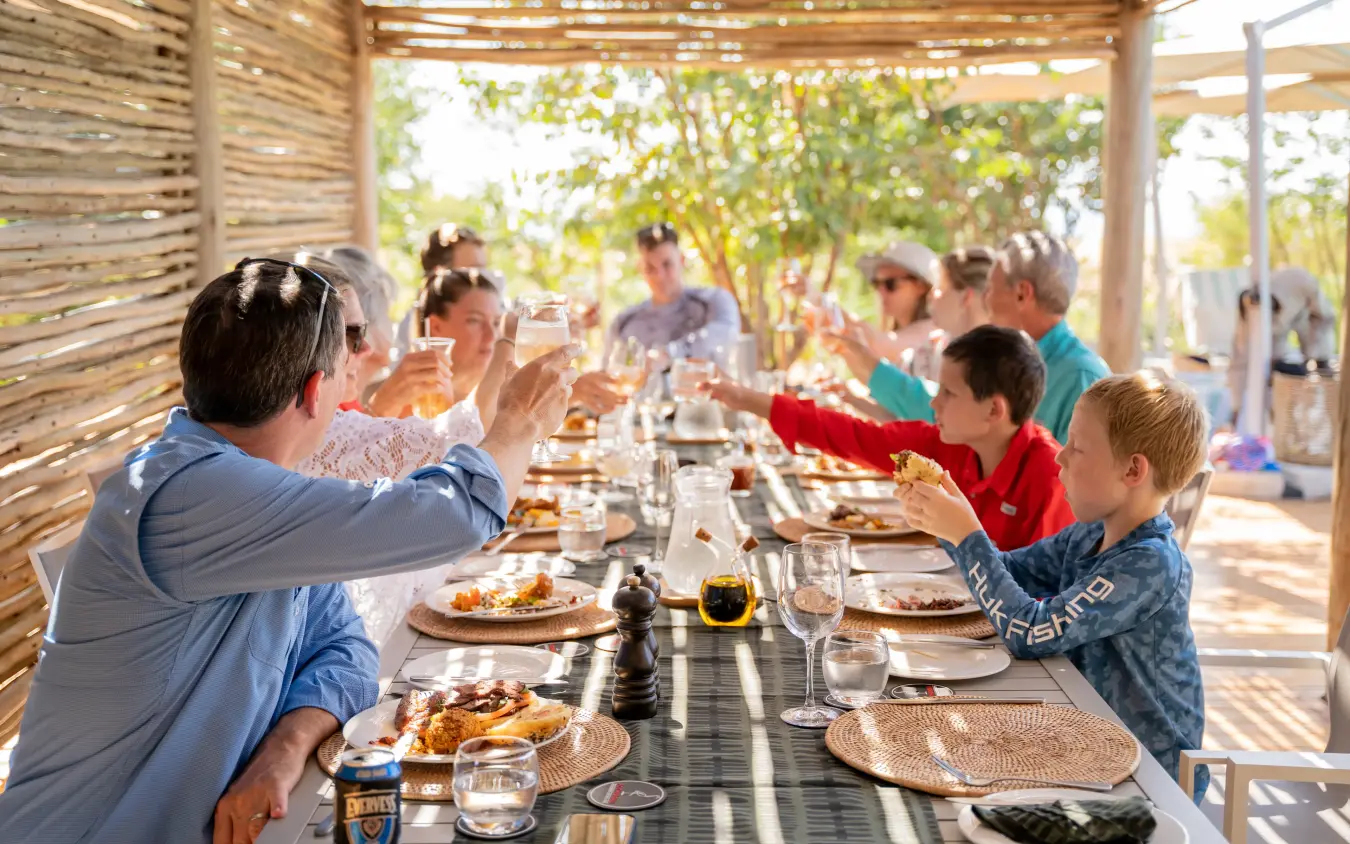
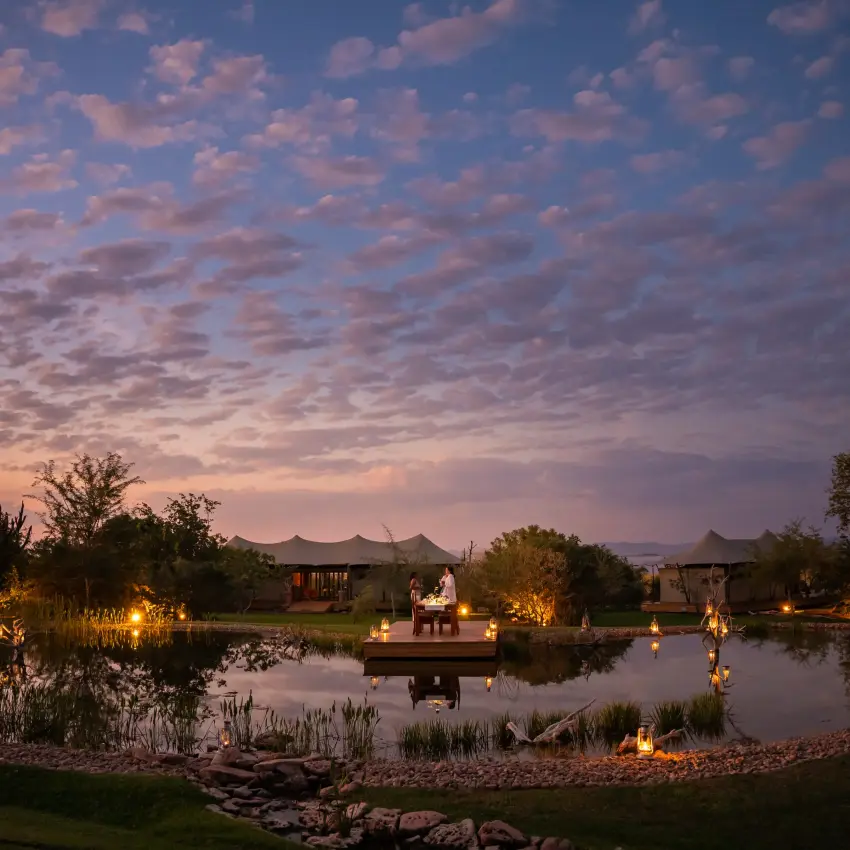
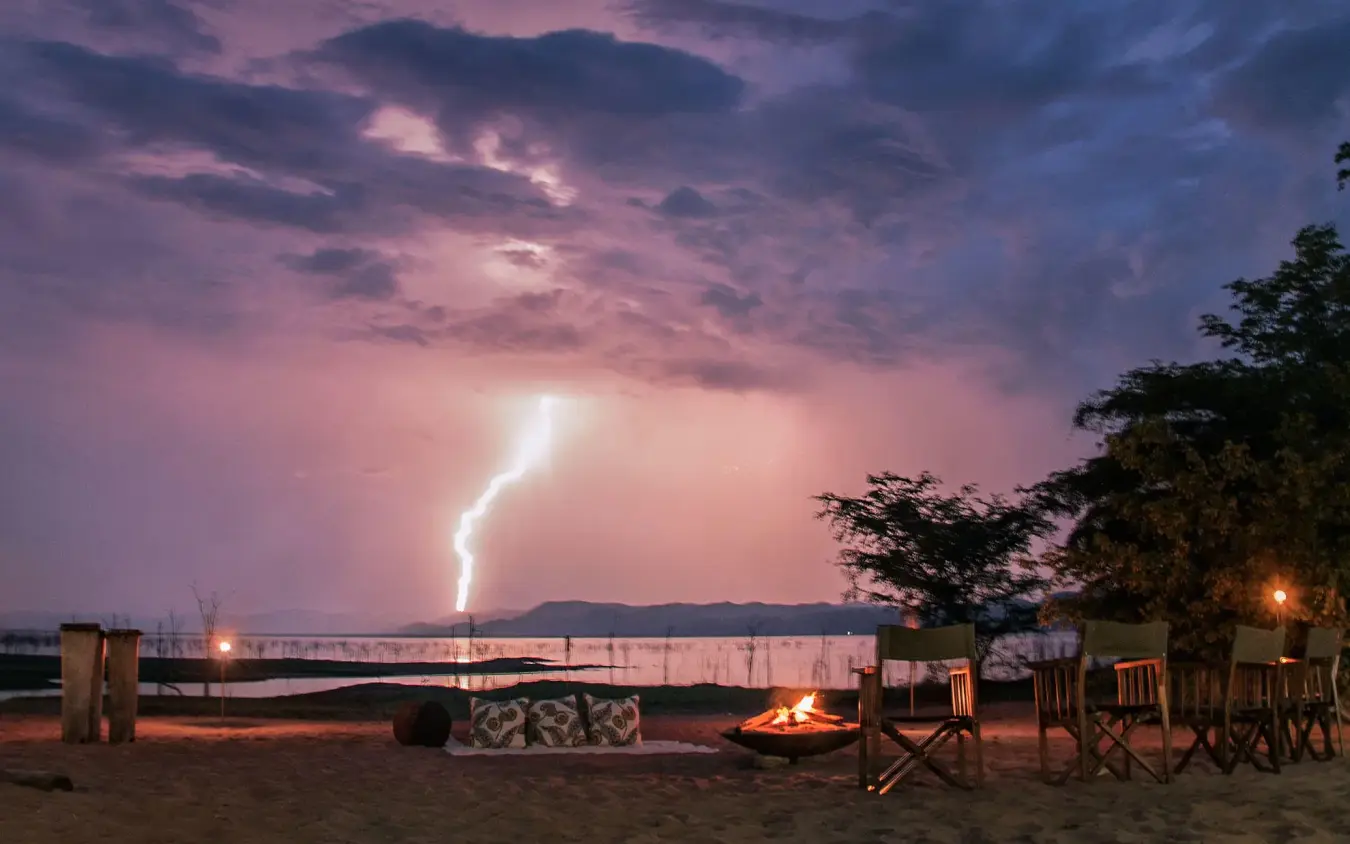
Meals rarely happen twice in the same place. Breakfast might be laid out on a shaded, dry riverbed inside the park after a morning drive, and dinner comes in the open-sided dining tent, around the fire, or on the sand at the lake’s edge. The cooking draws on Zimbabwean flavours worked through a contemporary kitchen. Children eat when they want to, off their own menu. Afterwards a telescope is set up on the lawn, and a lake-facing gym waits with exercise bikes, kettlebells and yoga mats.
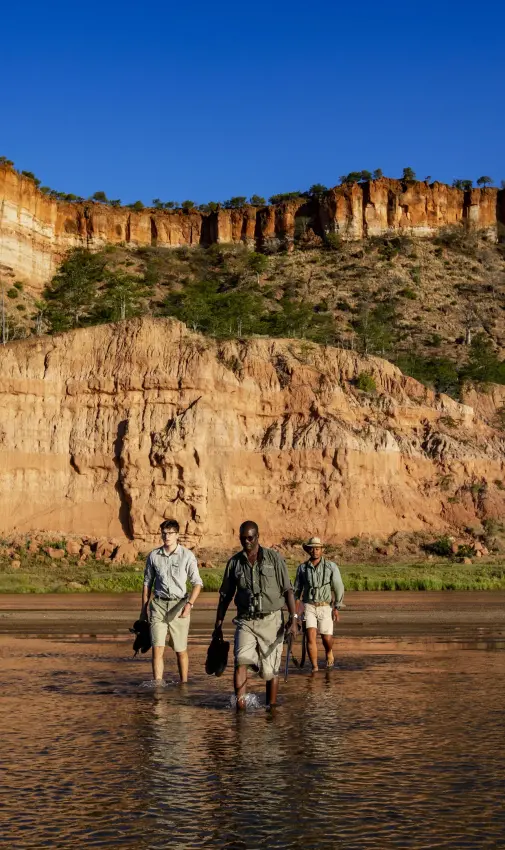
Longer runs cross to Sanyati Gorge, where the cliffs close in and the water goes still.
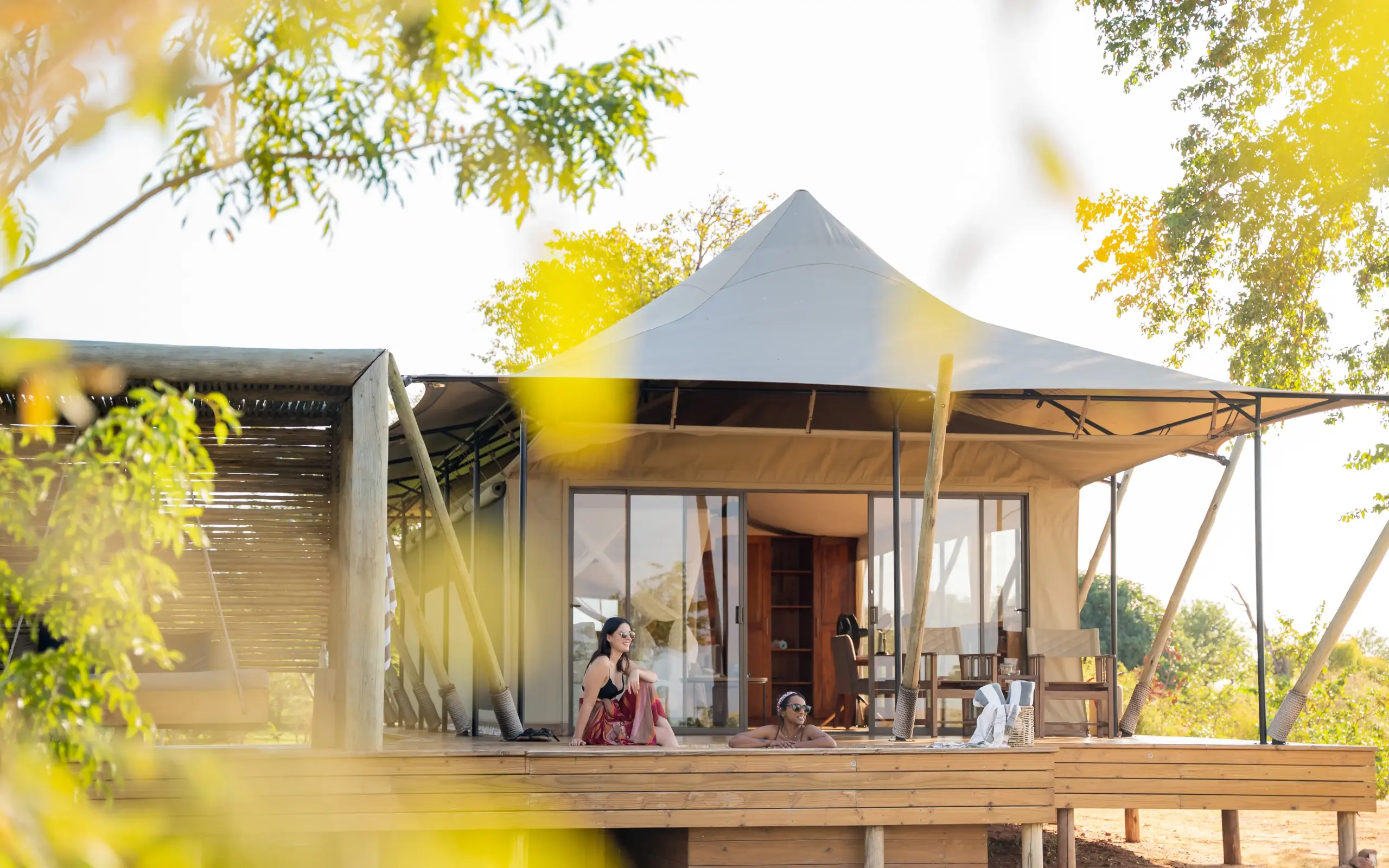
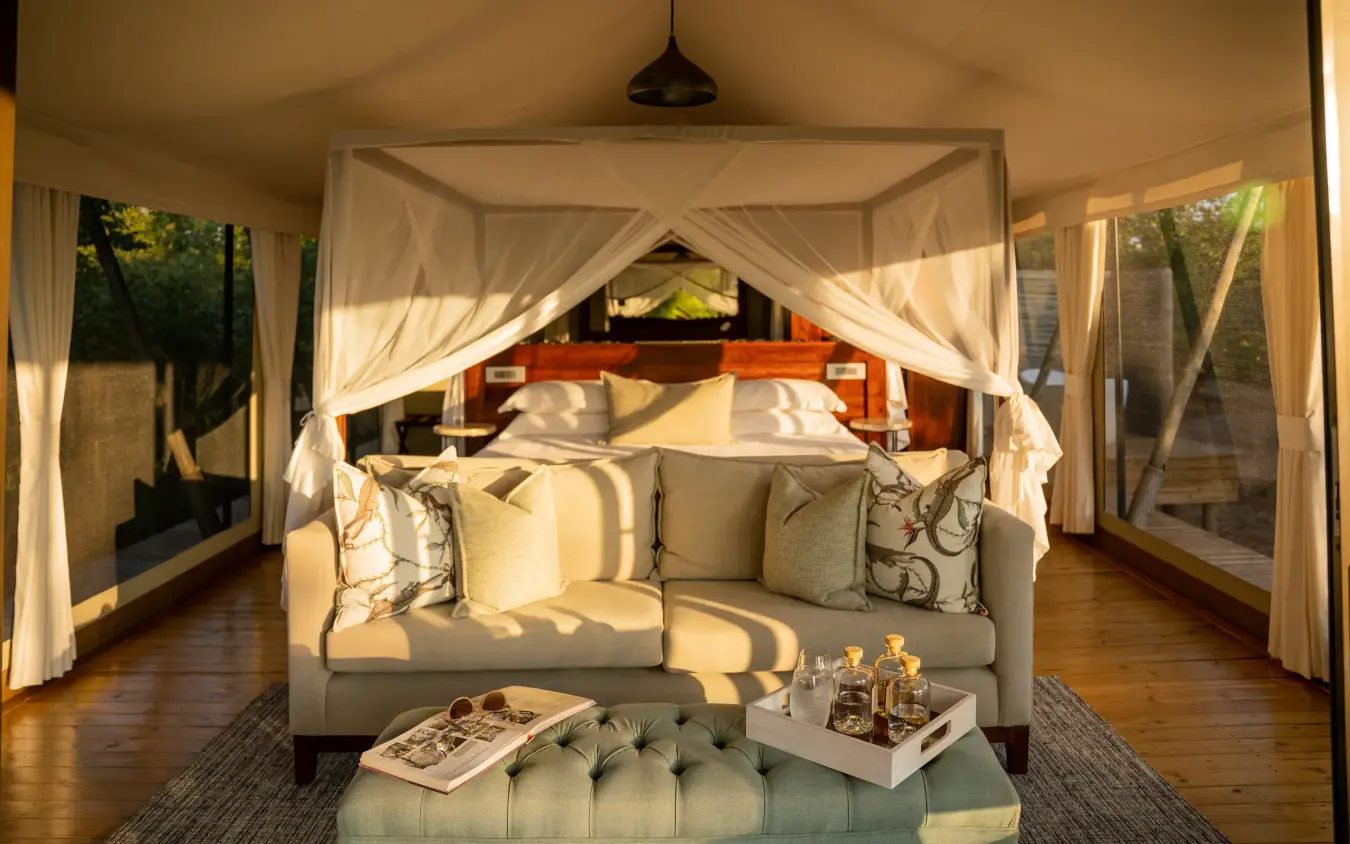
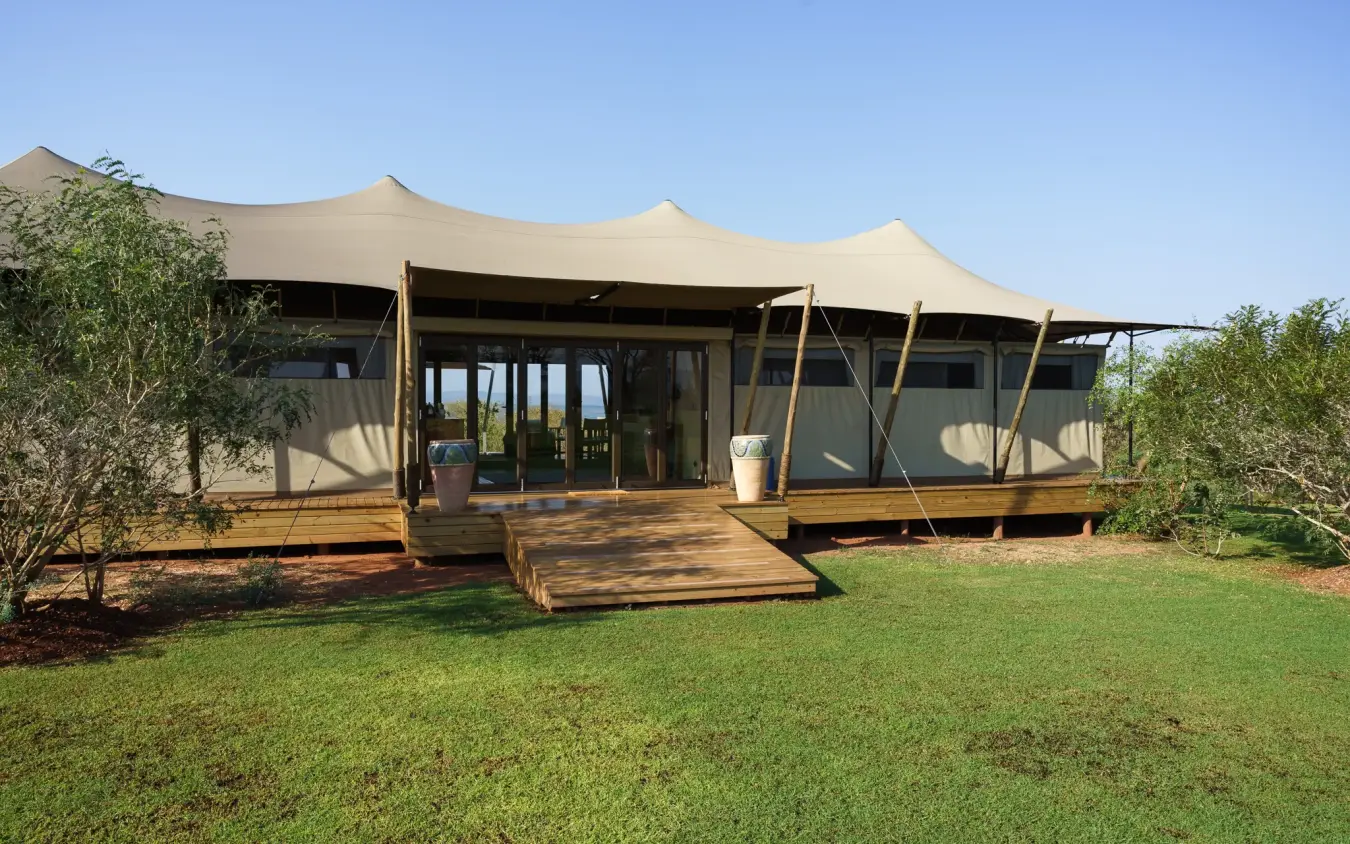
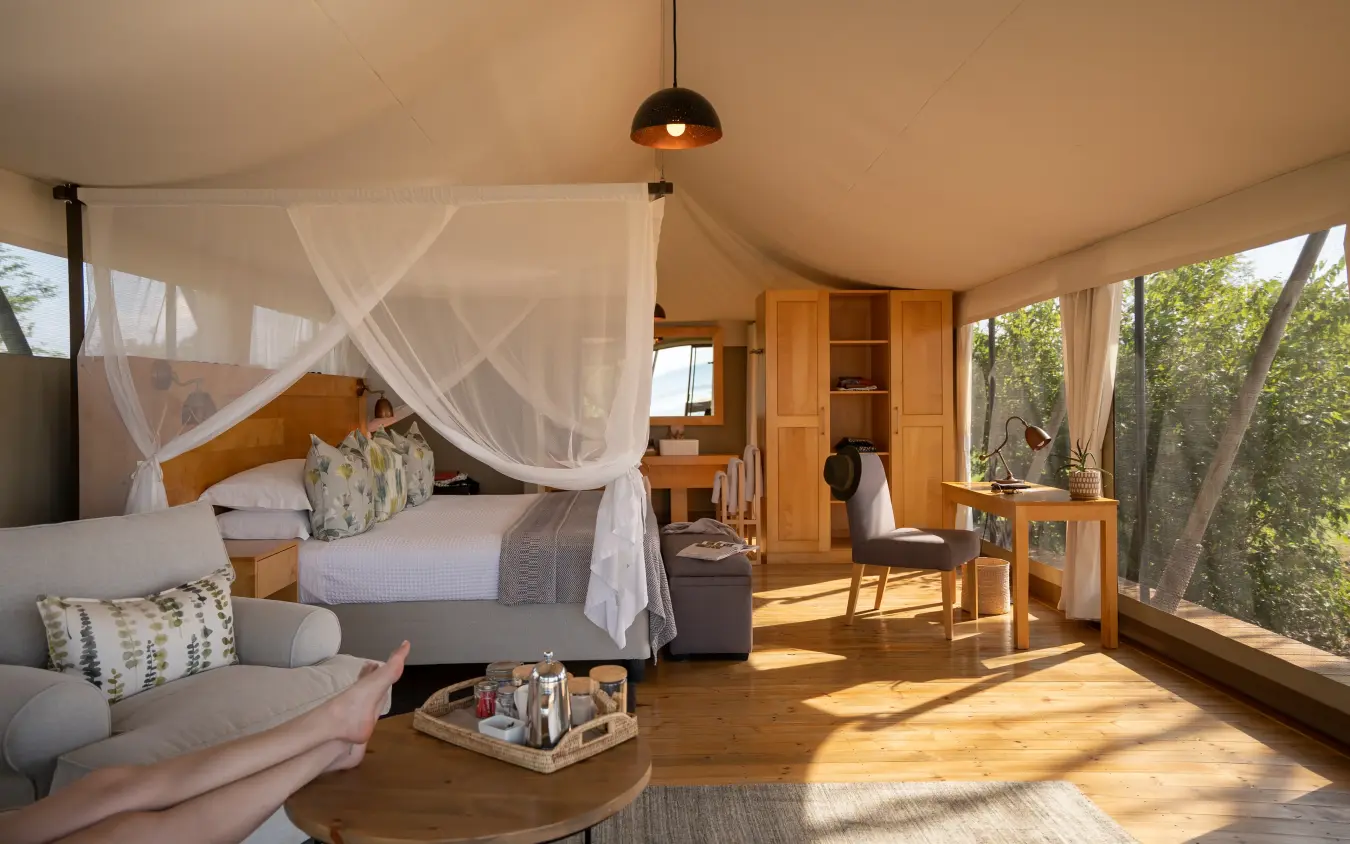
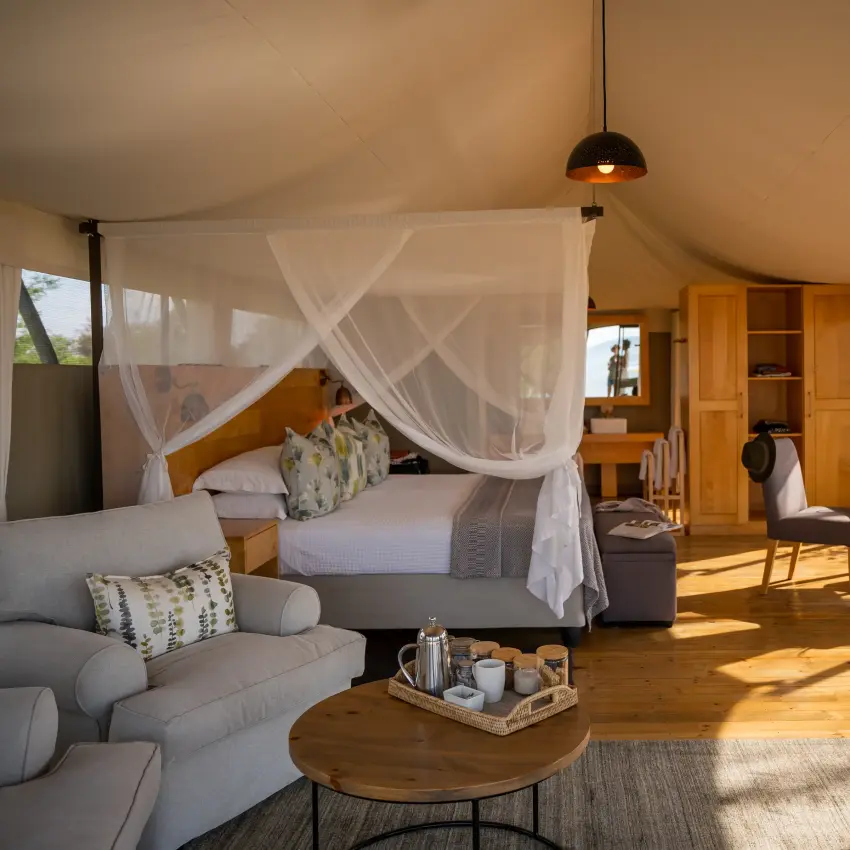
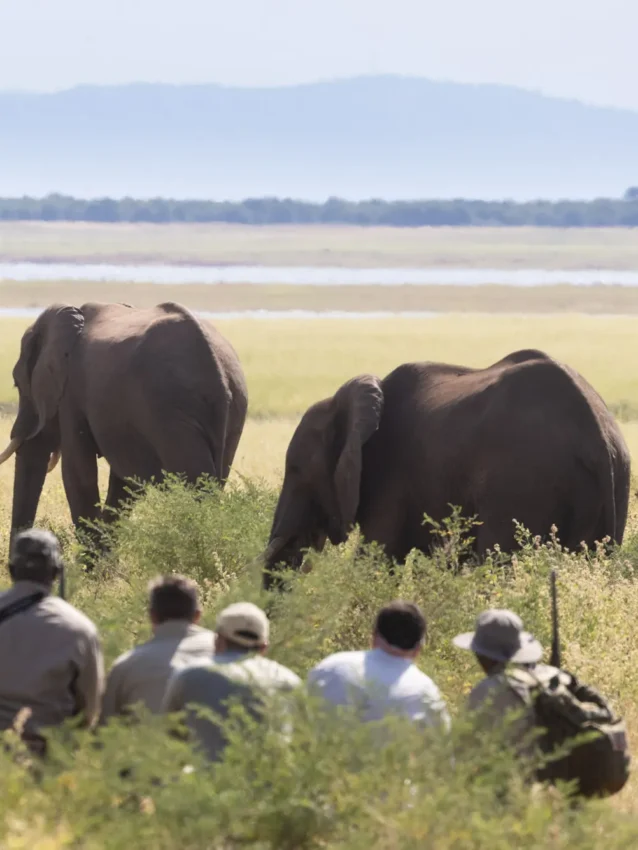
Children of all ages are welcome here. A Mini Ranger course teaches them tracks and basic bushcraft, trail walks are open to anyone over five, and the lawns absorb archery and lawn cricket, while guided walking safaris begin at sixteen. Two of the suites are built for families, a bedroom at either end of a shared sitting room, each with its own plunge pool. Three more stand apart as Little Fothergill, with a lounge, chef and pool, taken privately by a family or combined with the main camp.
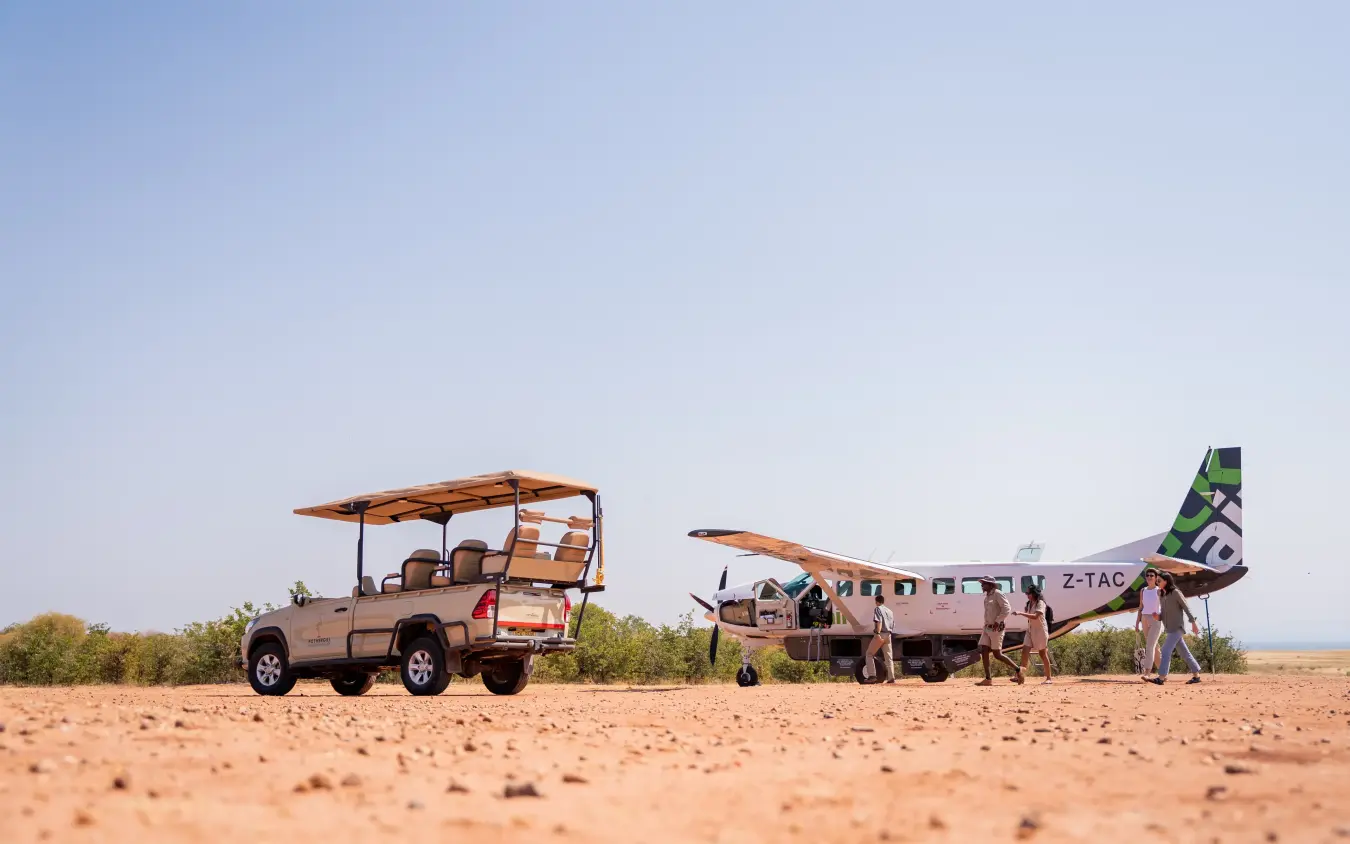
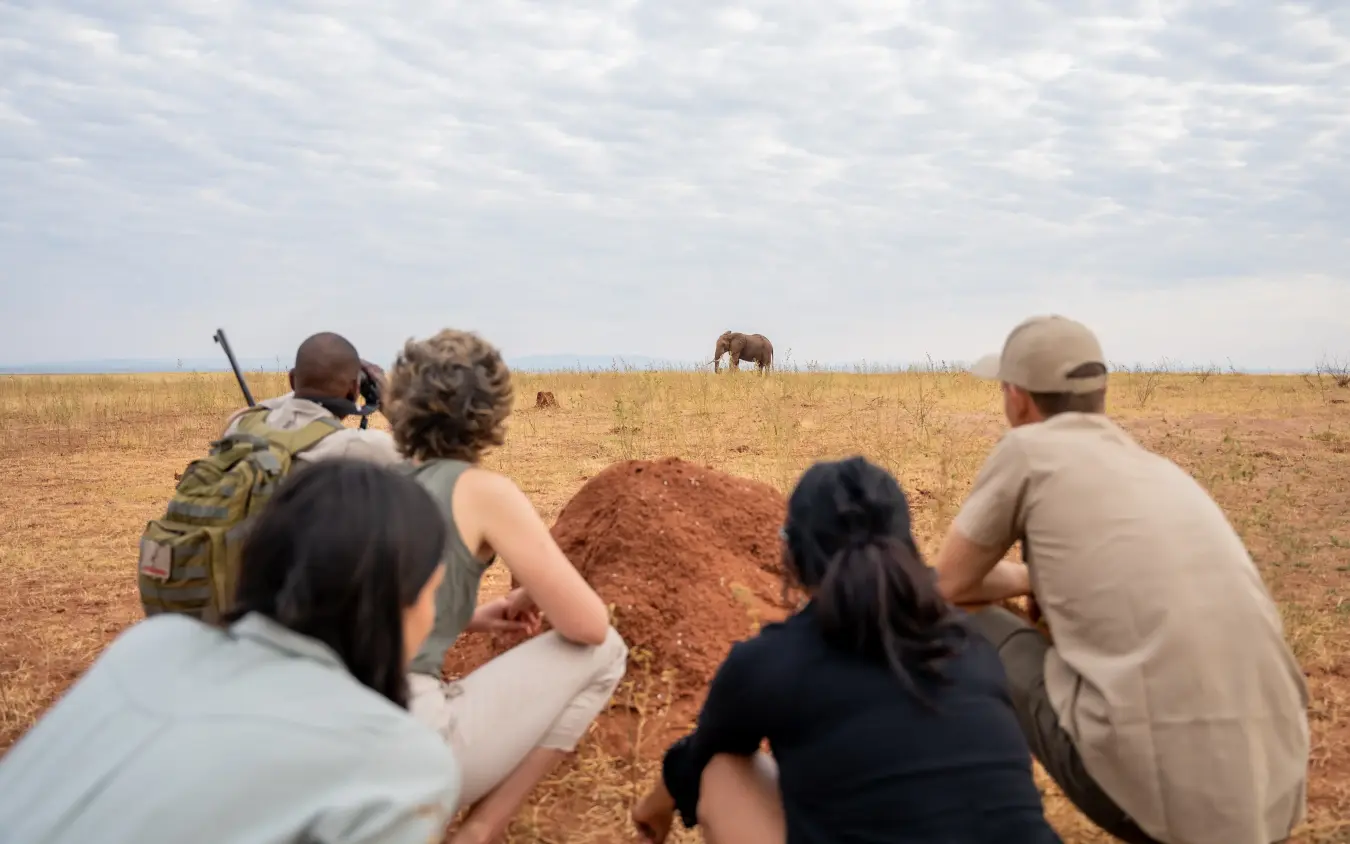
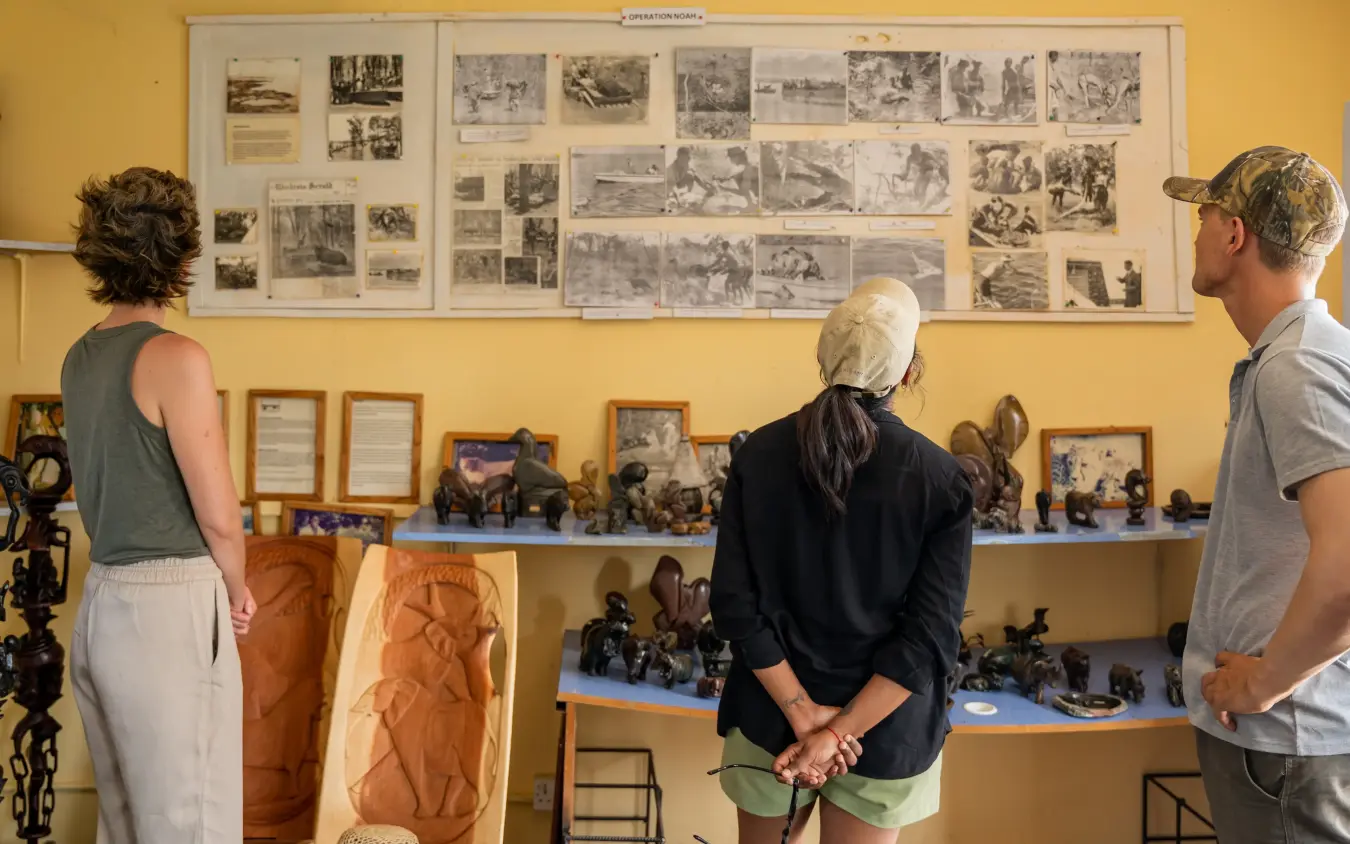
Guests reach Fothergill either by light aircraft onto the island’s own airstrip or by boat from Kariba town, and for much of the year it is not strictly an island at all: as the lake falls, dry lakebed opens tracks through to the mainland. Drives range across mopane woodland, grassland and riverine forest thick with leadwood and sausage trees, and half-day trips run over to Kariba town and the dam wall. Out on the lake, drowned leadwood branches still stand where the flood caught them in 1958.