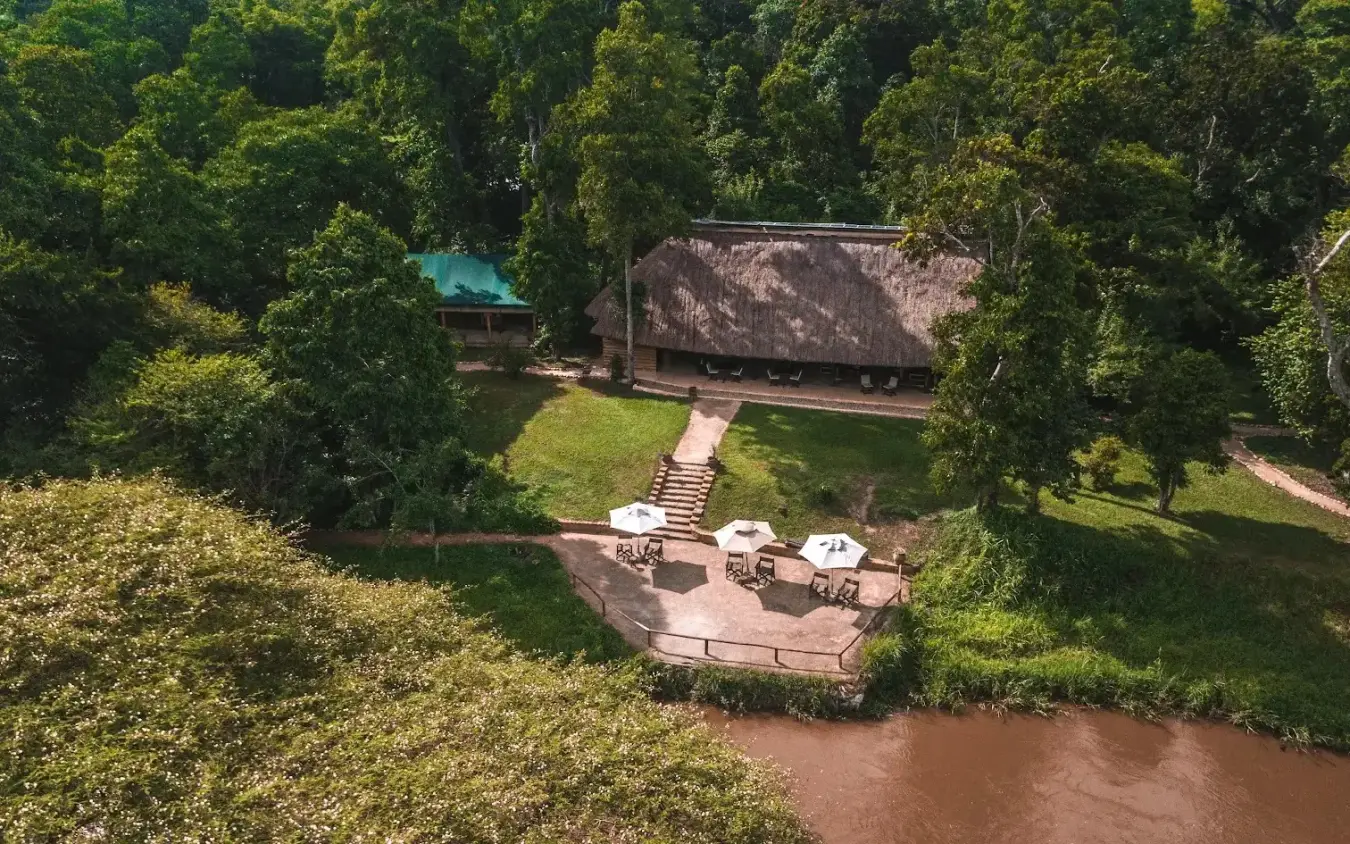
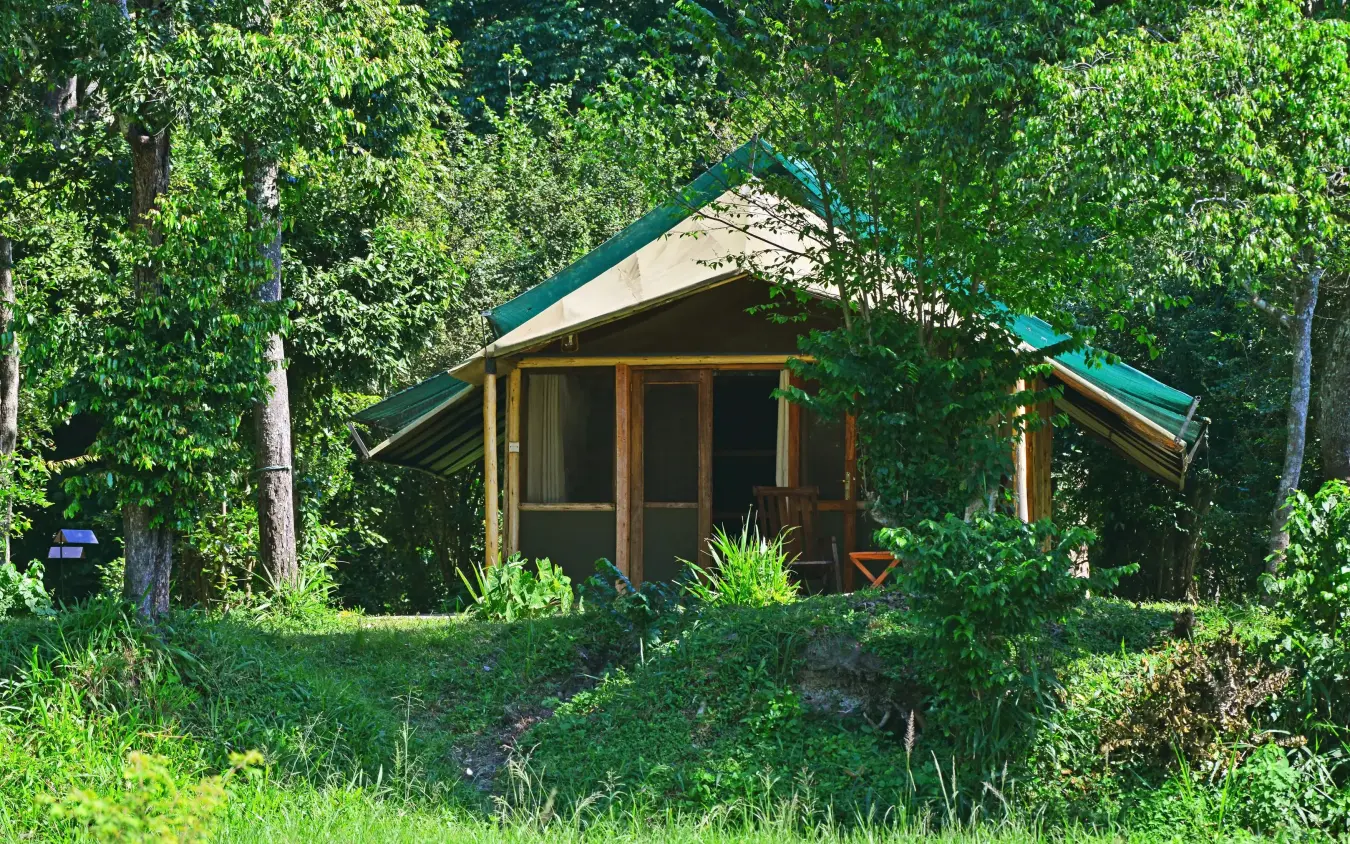
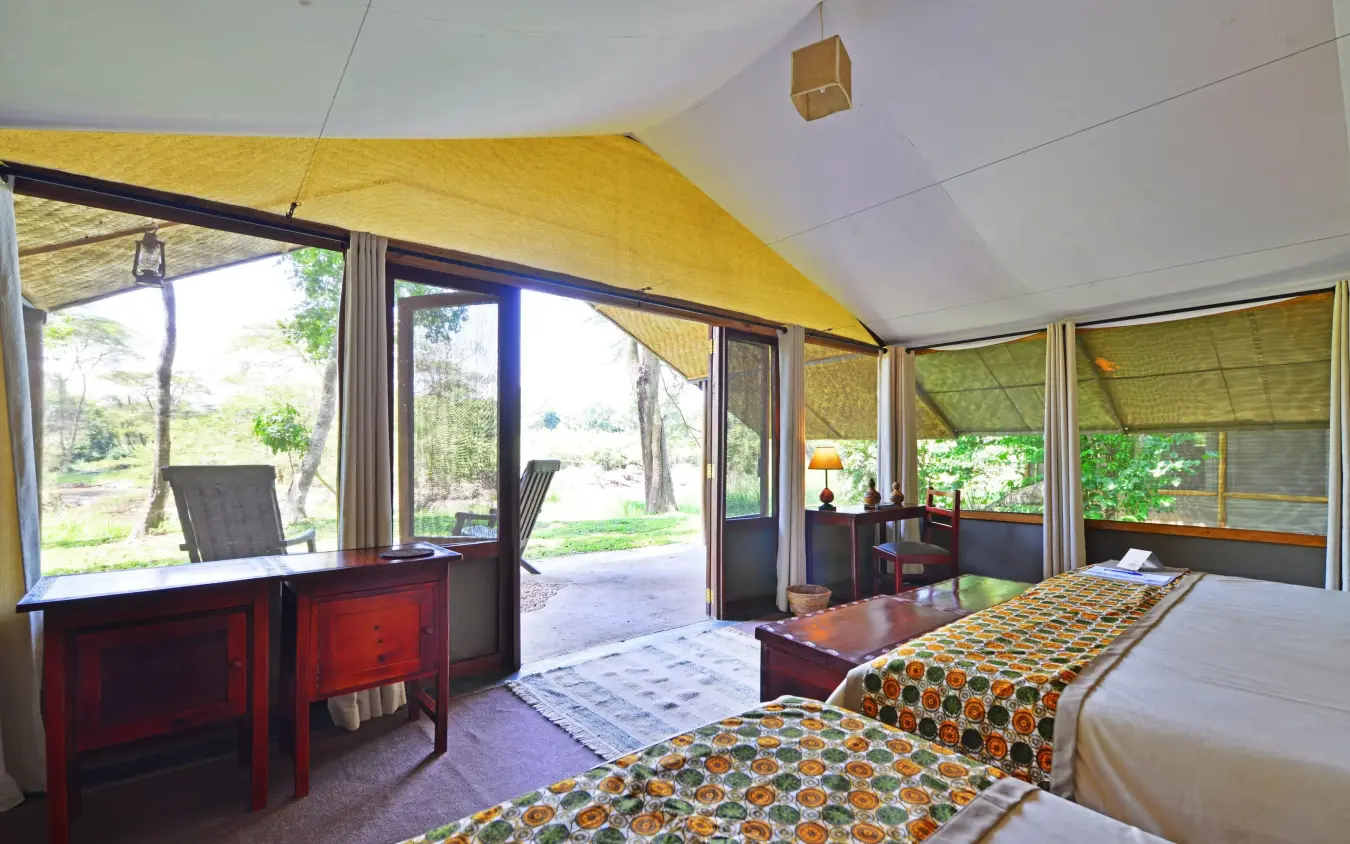
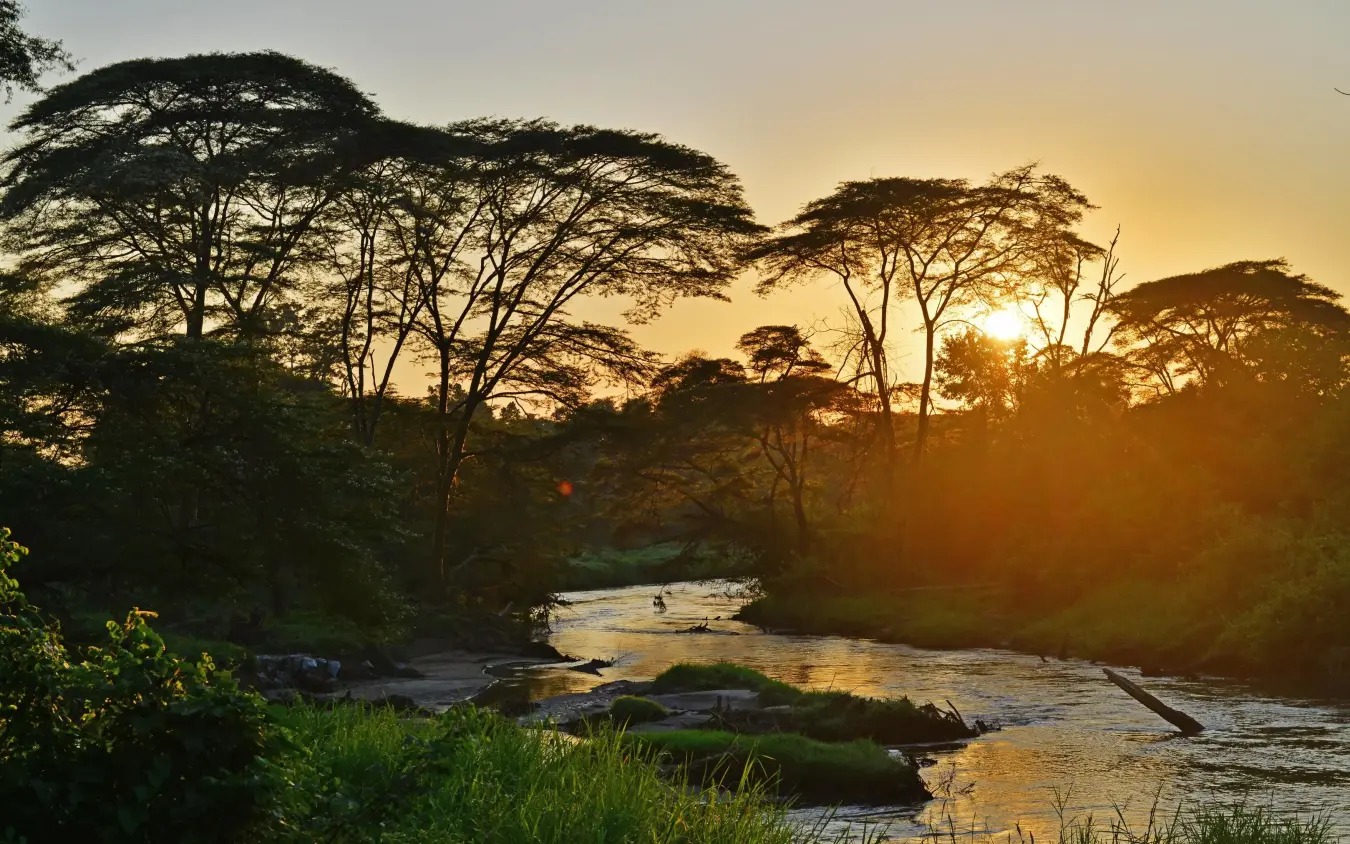
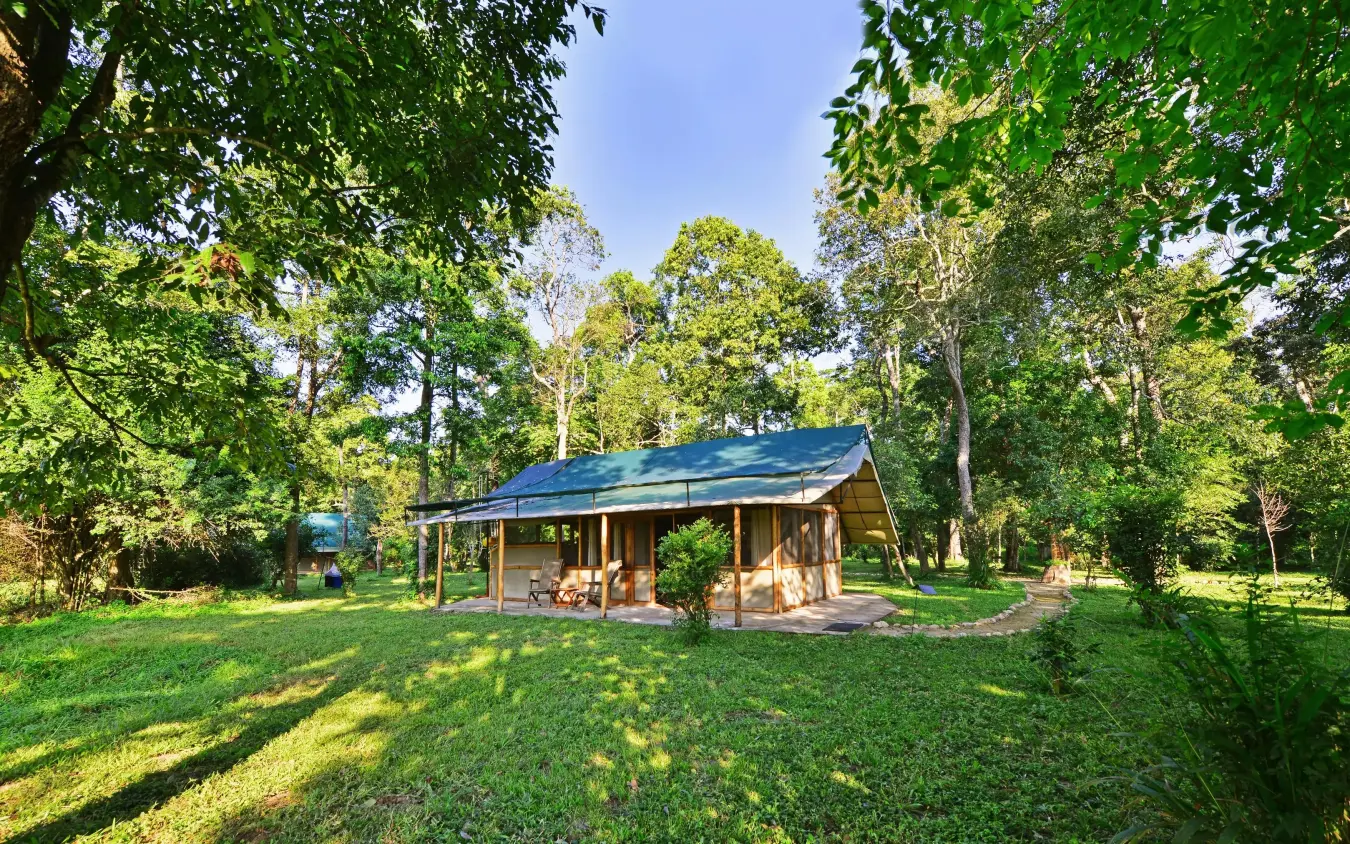
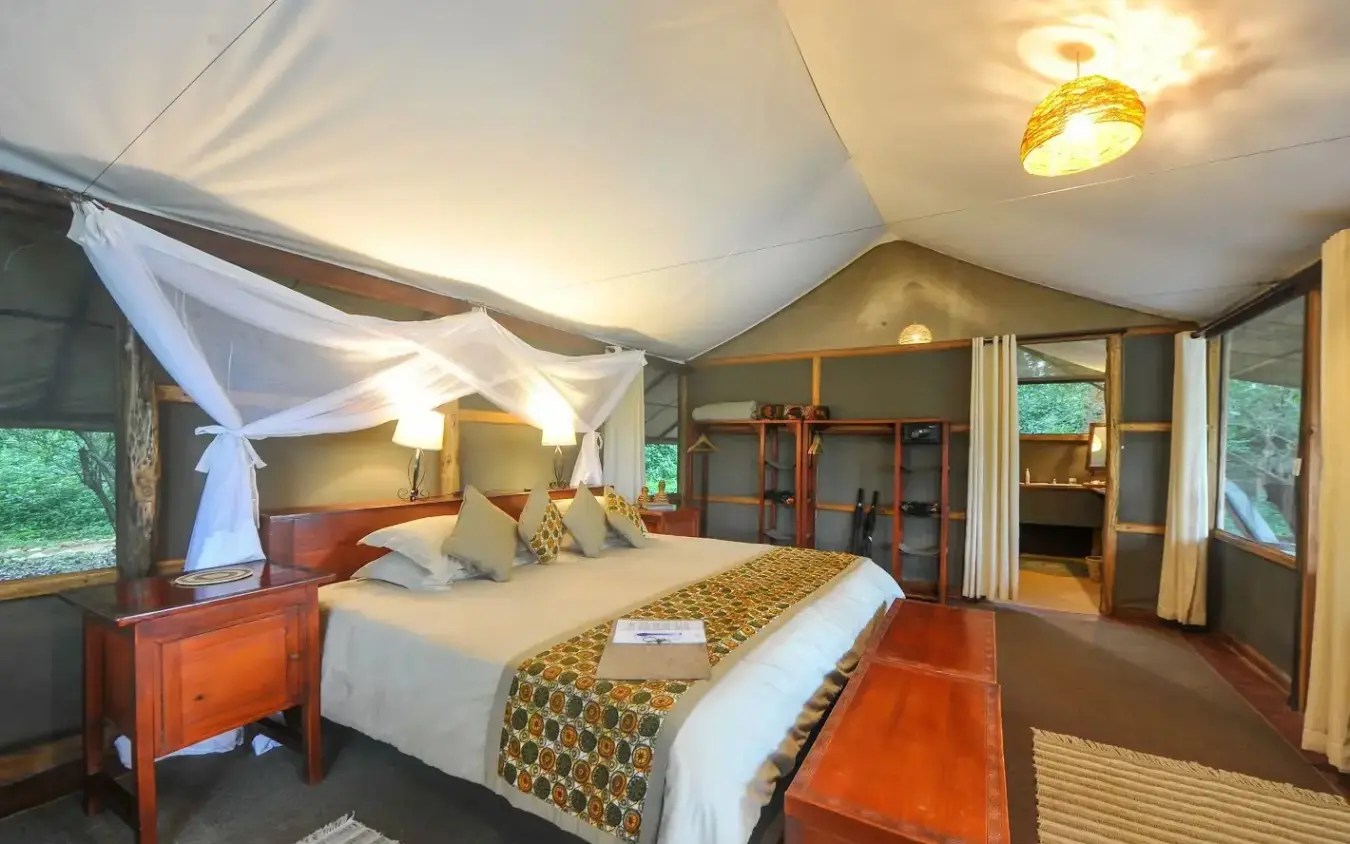
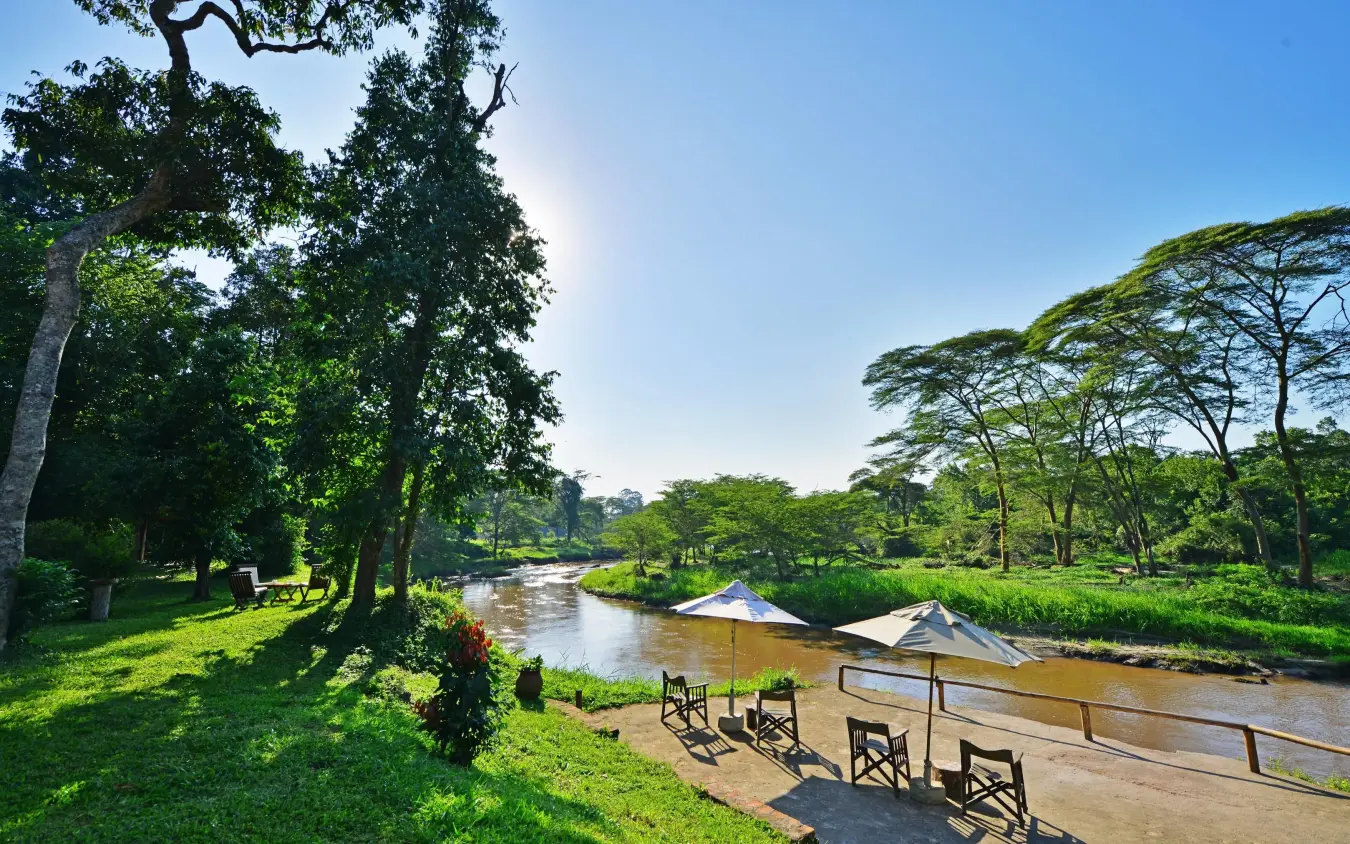
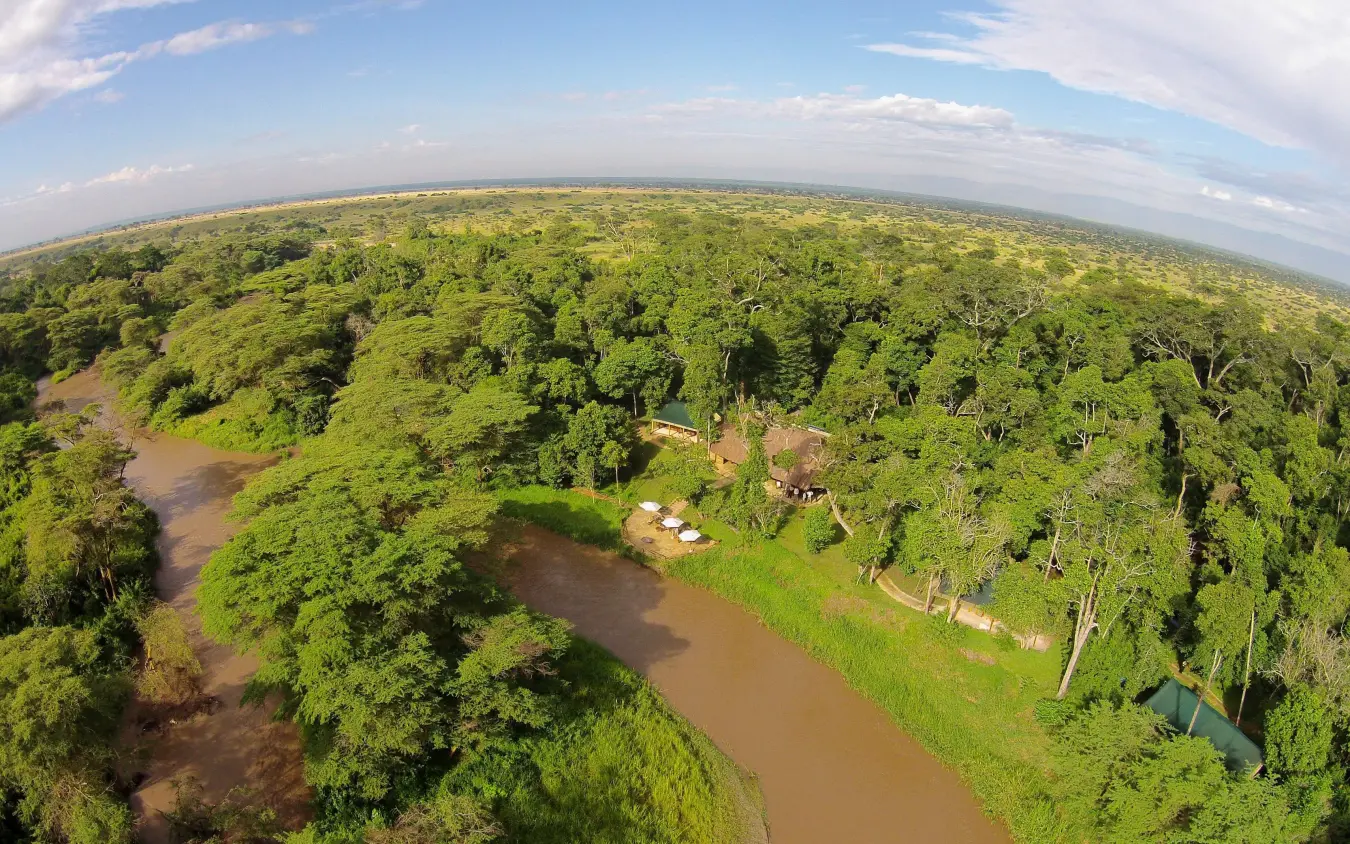
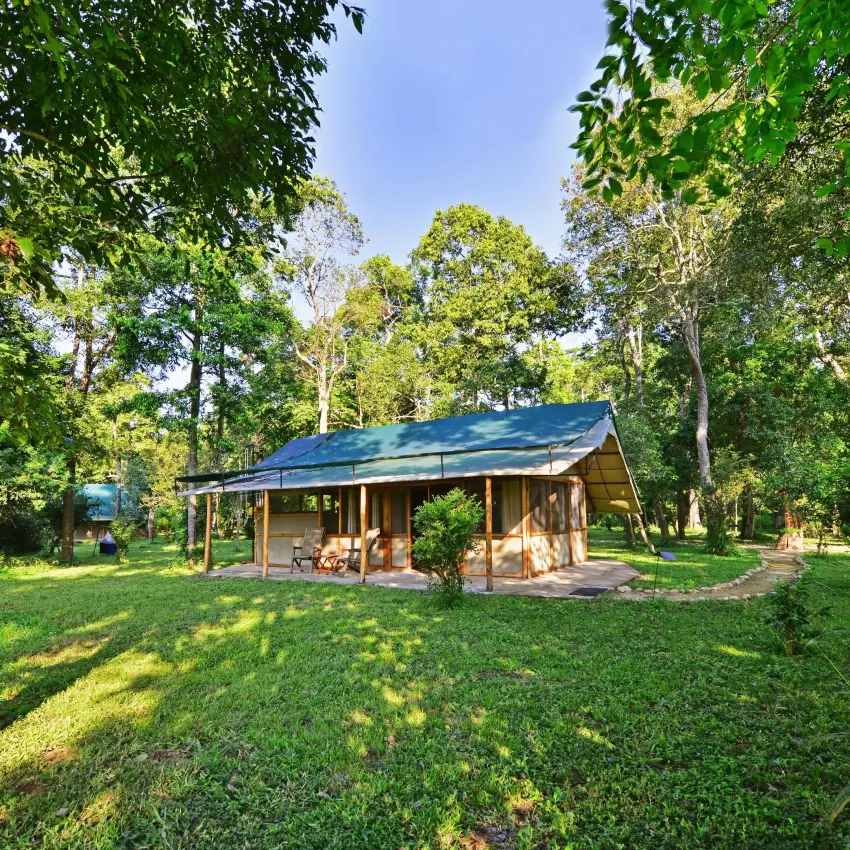
Ishasha Wilderness Camp lies on the Ntungwe River beneath a riverine forest canopy, in open savannah dotted with large sycamore fig trees. The Ishasha sector forms the southern reach of Queen Elizabeth National Park, a protected area of 1,978 square kilometres in the western arm of the Great East African Rift Valley.
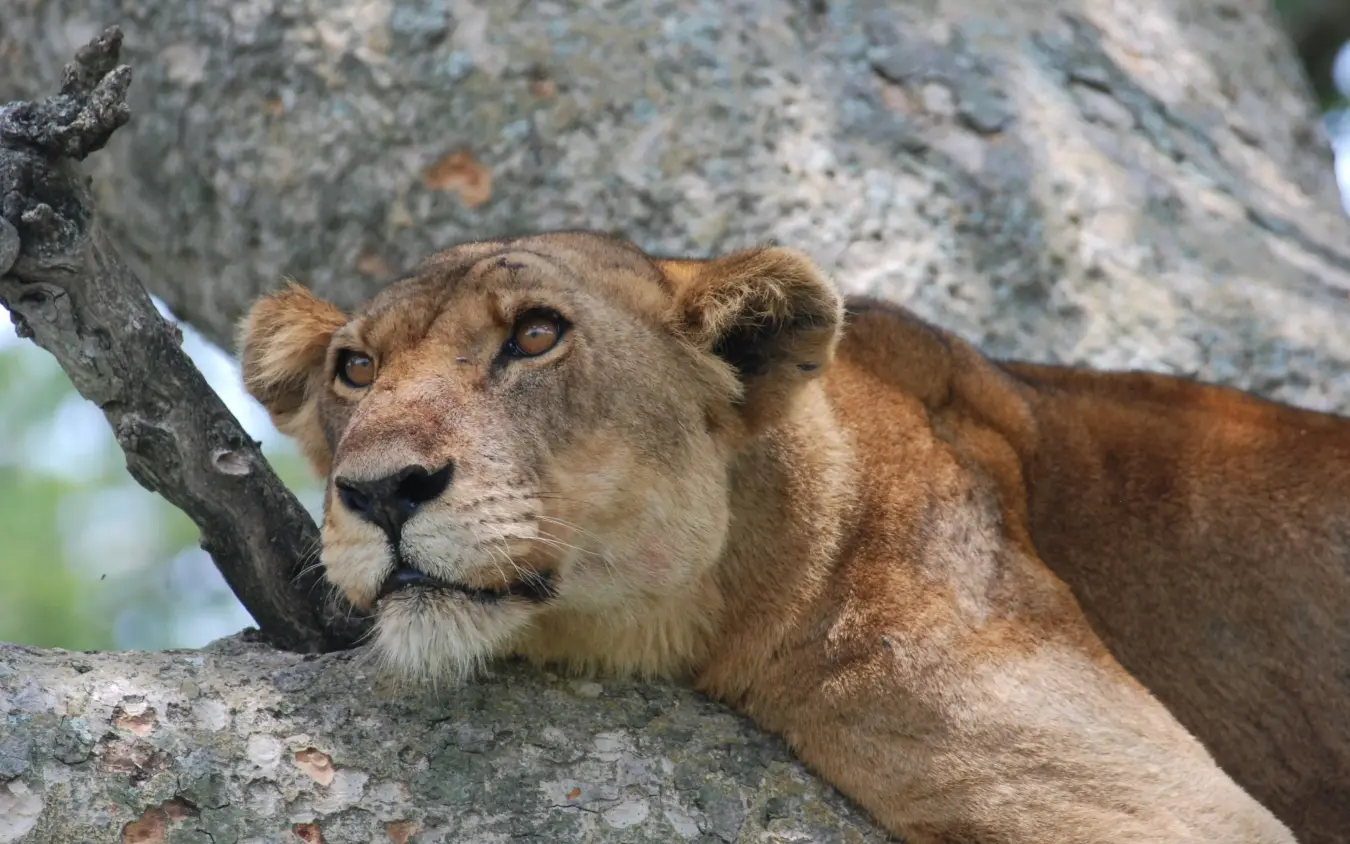
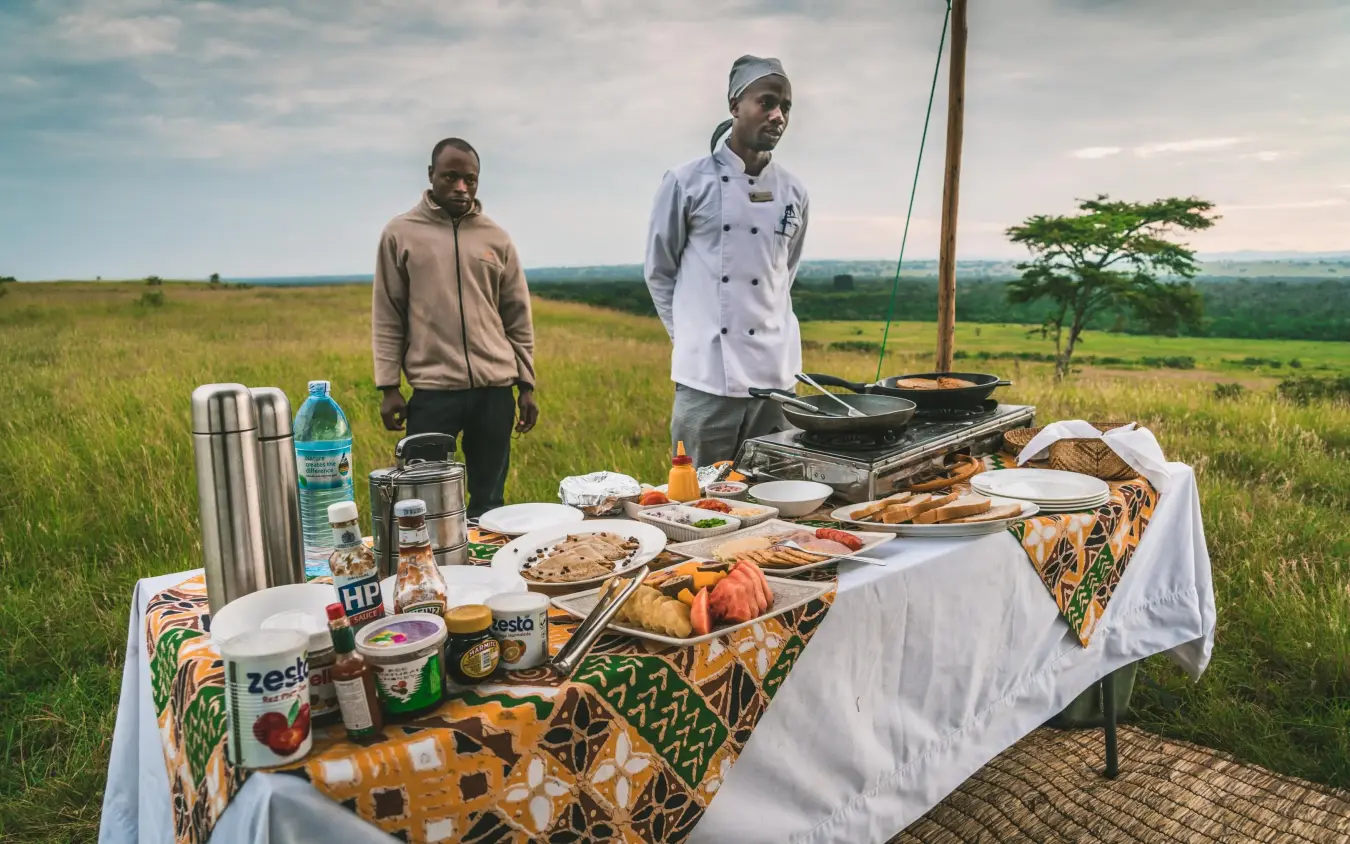
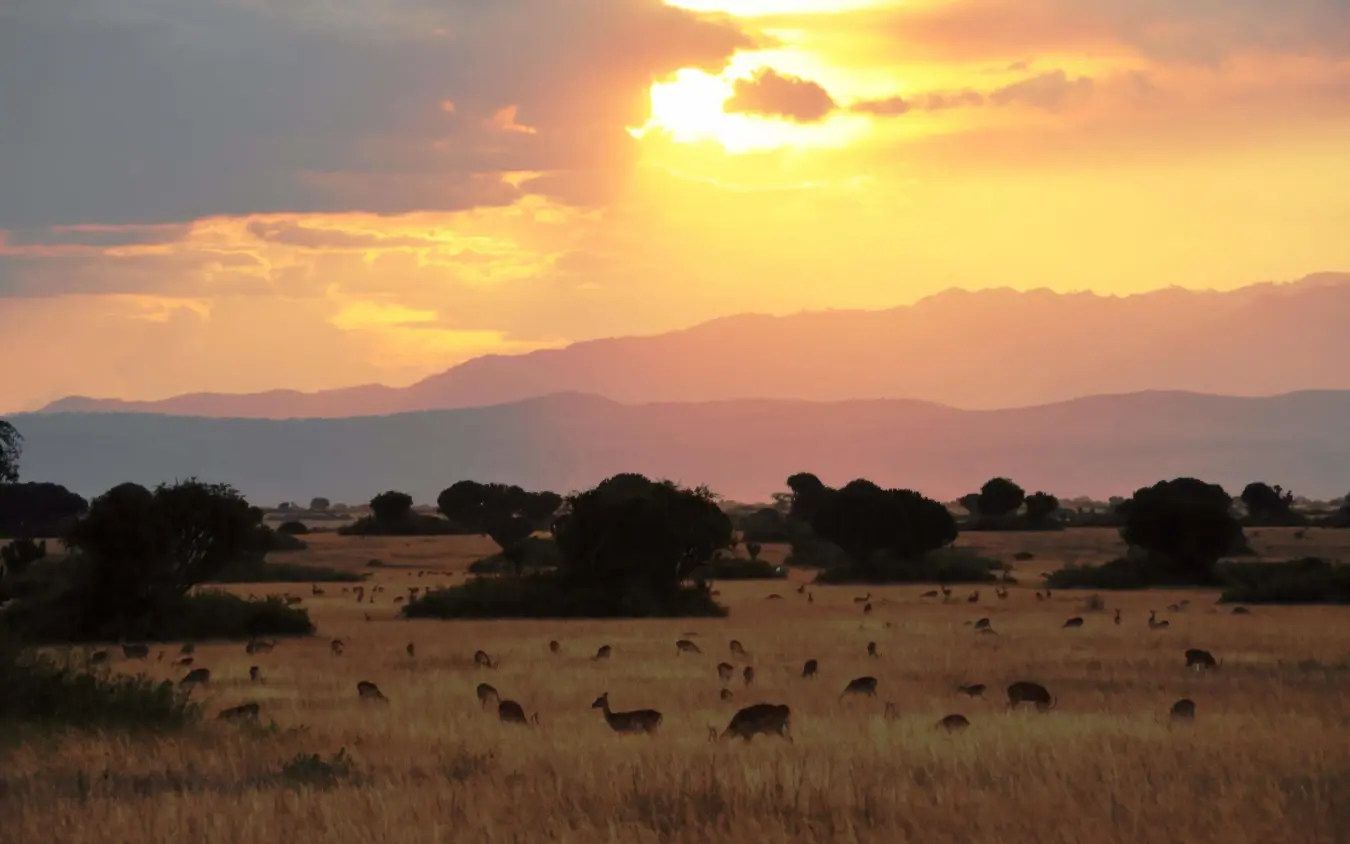
Game drives explore the area’s circuits in search of the tree-climbing lions and the herds that draw them, with fly-in guests using the camp’s dedicated open safari vehicle. Bush breakfasts and sundowners are set out along the ridge above the river, while guided walks for close hippo viewing are escorted by Uganda Wildlife Authority staff, as park rules require.
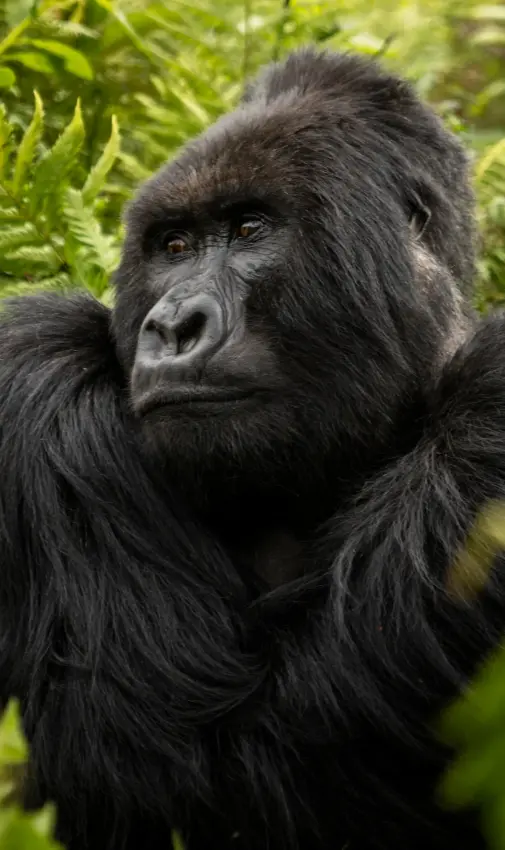
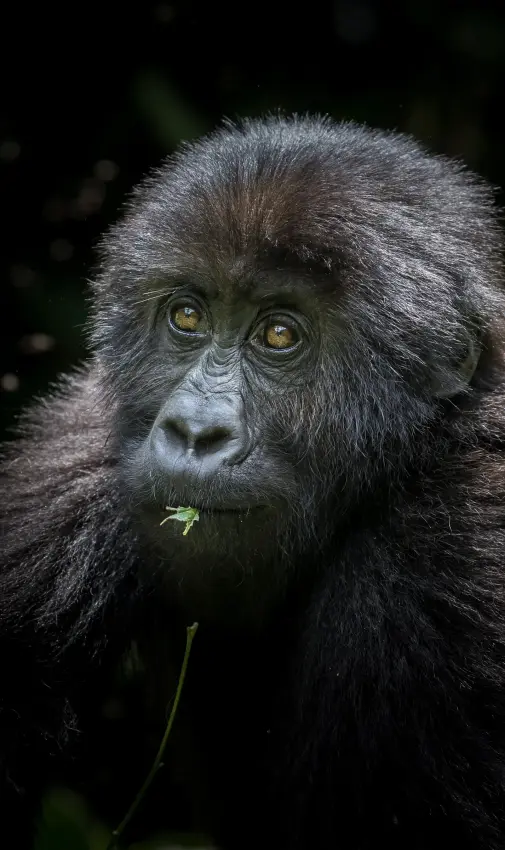
Two hours south lies Bwindi Impenetrable Forest, putting mountain gorillas within a day’s reach.
The position makes the camp a natural stopover between gorilla trekking in Bwindi and the rest of the park. Further afield, the Kazinga Channel boat cruise and chimpanzee trekking in Kyambura Gorge sit within greater Queen Elizabeth National Park, both accompanied by park rangers.
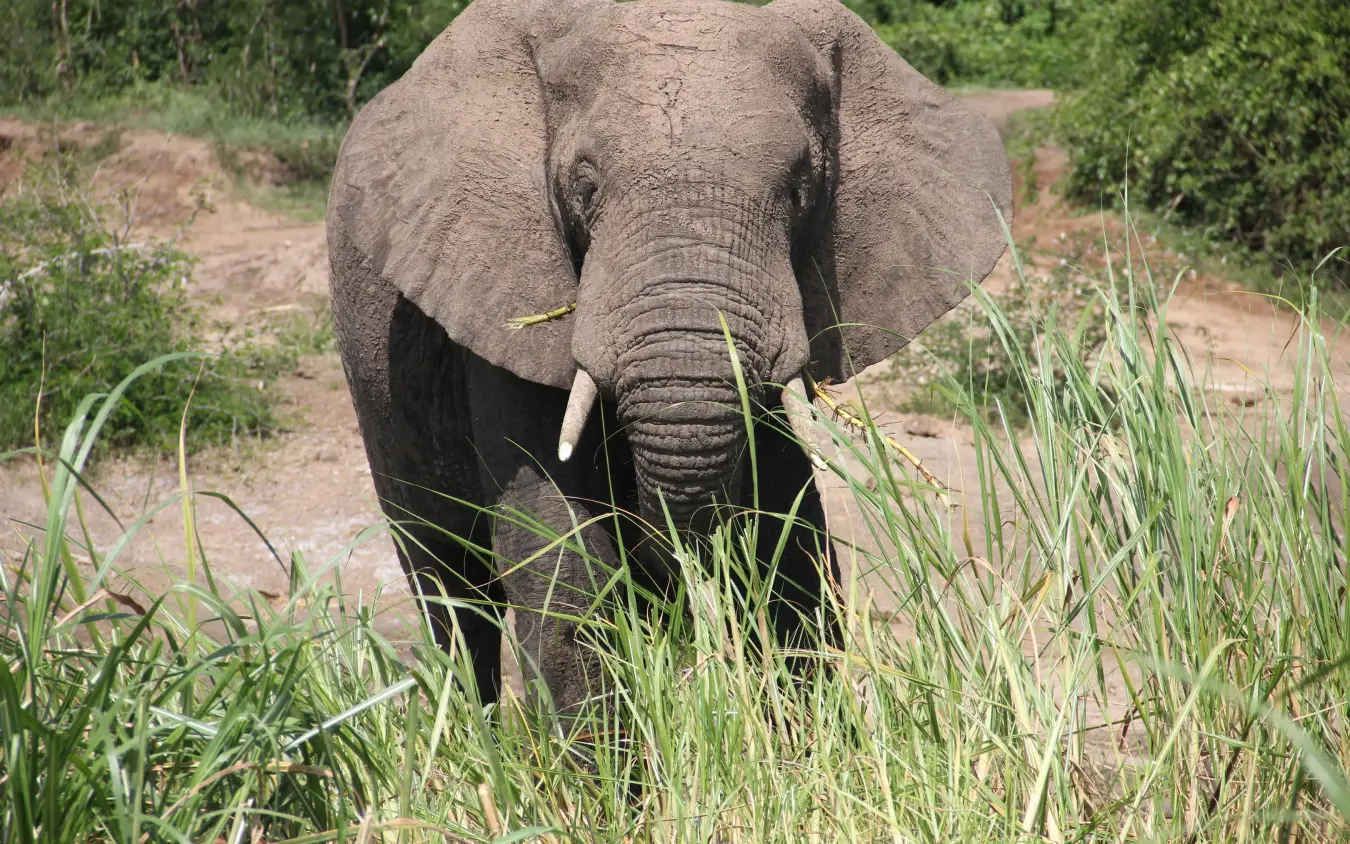
Conservation work is central. A nightly levy funds the Future Generations Trust, supporting community and wildlife projects, while a hands-on Large Carnivore Monitoring Project counts and protects the major predators of the Ishasha sector. The Ishasha Community Uplift Group helps park-edge farmers through crafts marketing, savings schemes and training, and was voted Best Community Tourism Initiative in 2015.
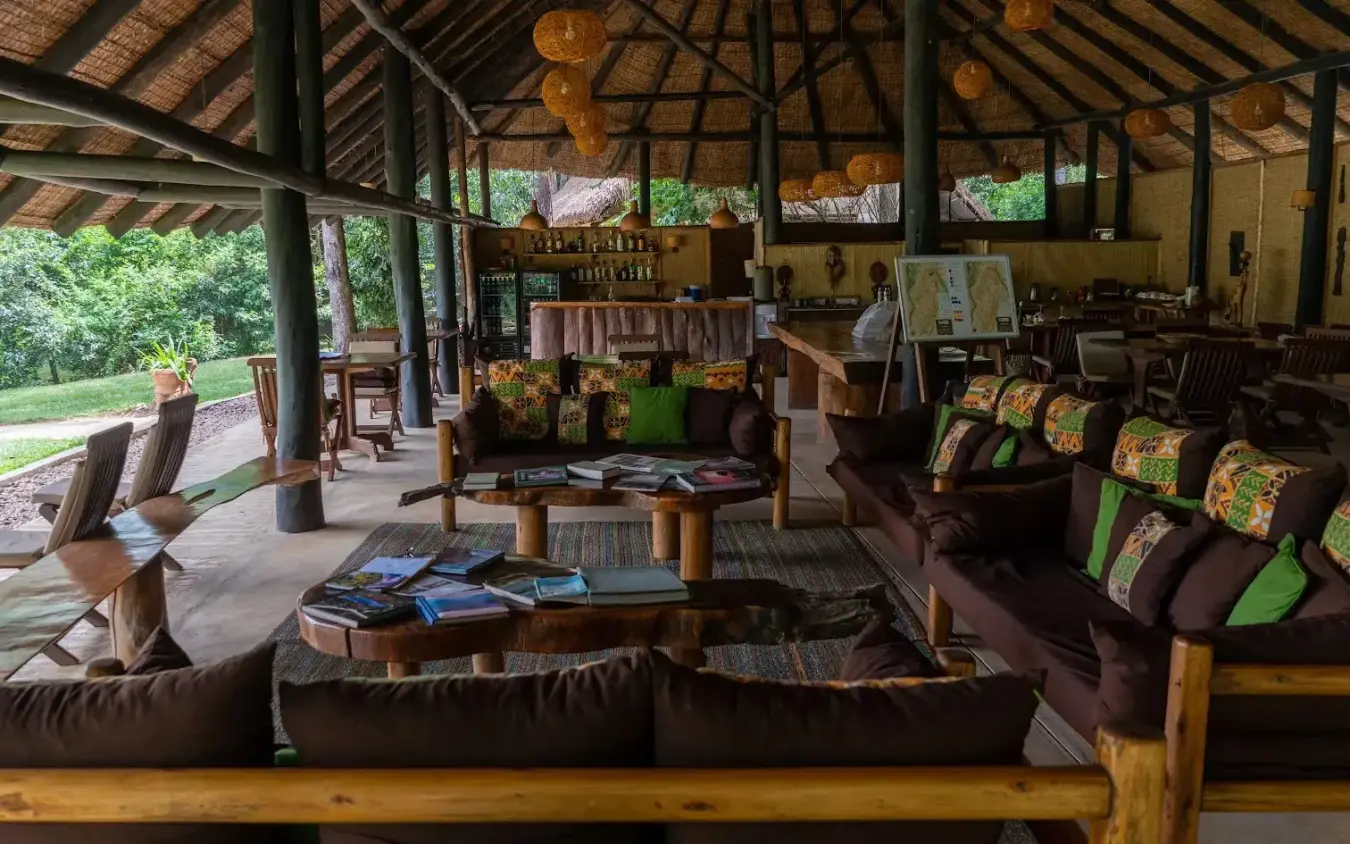
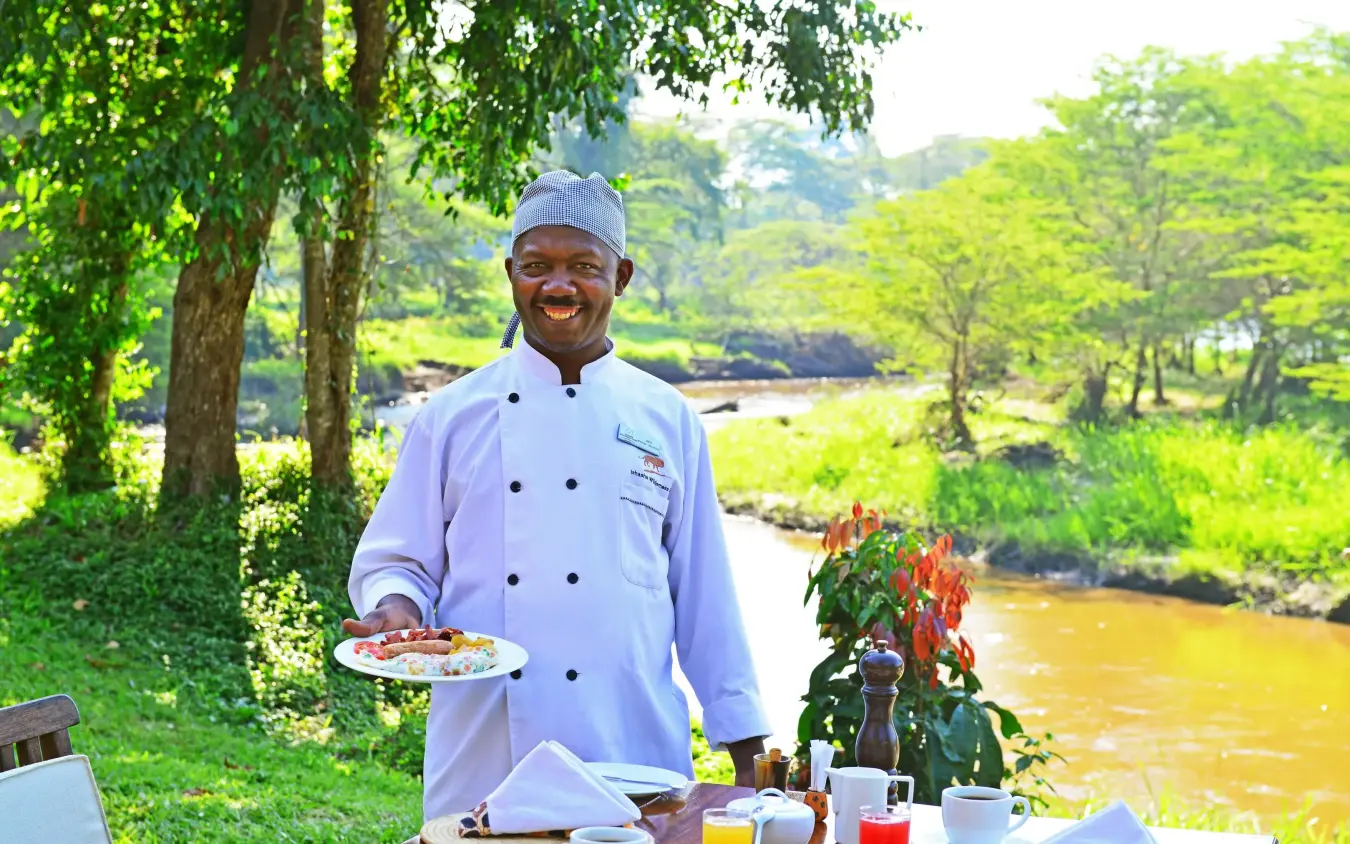
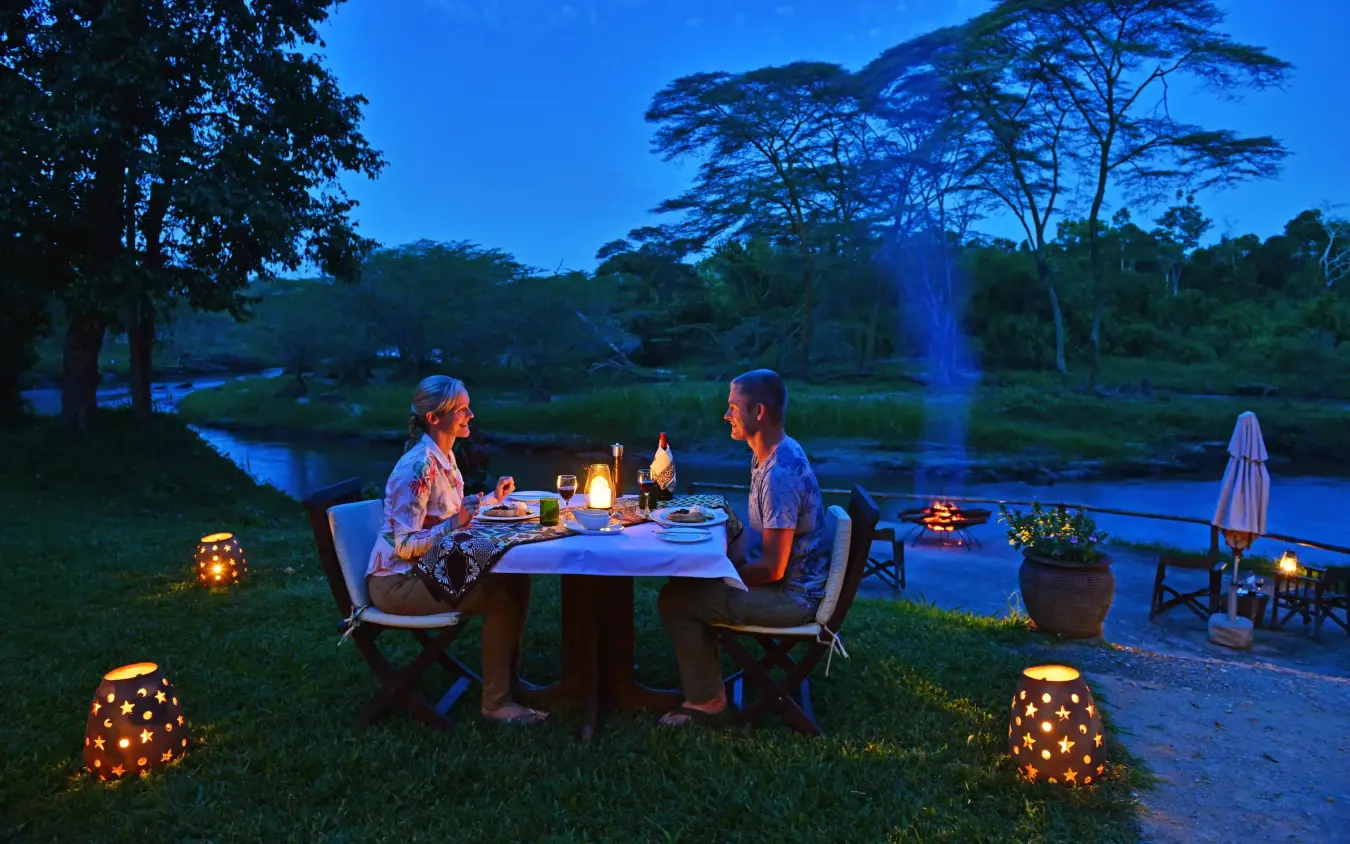
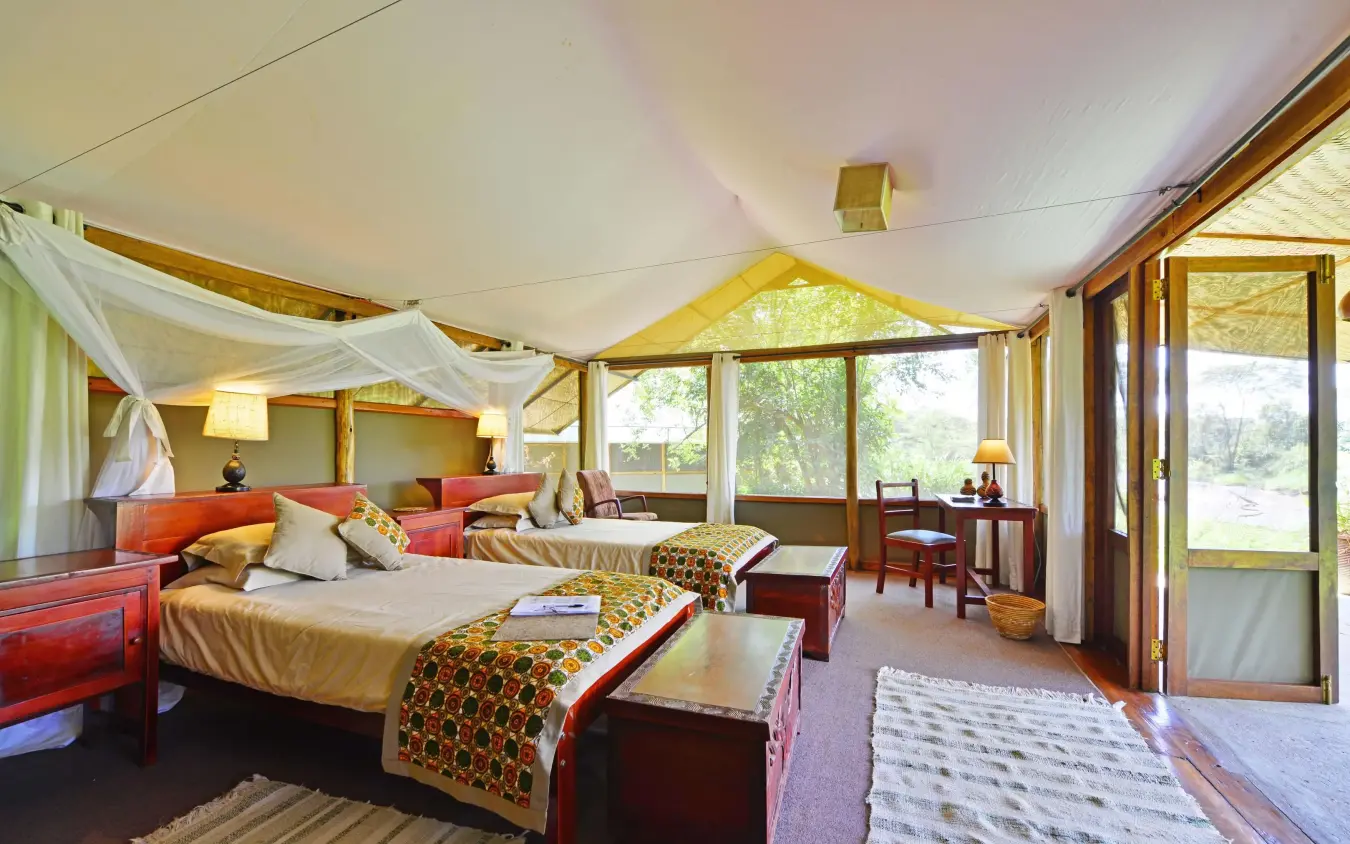
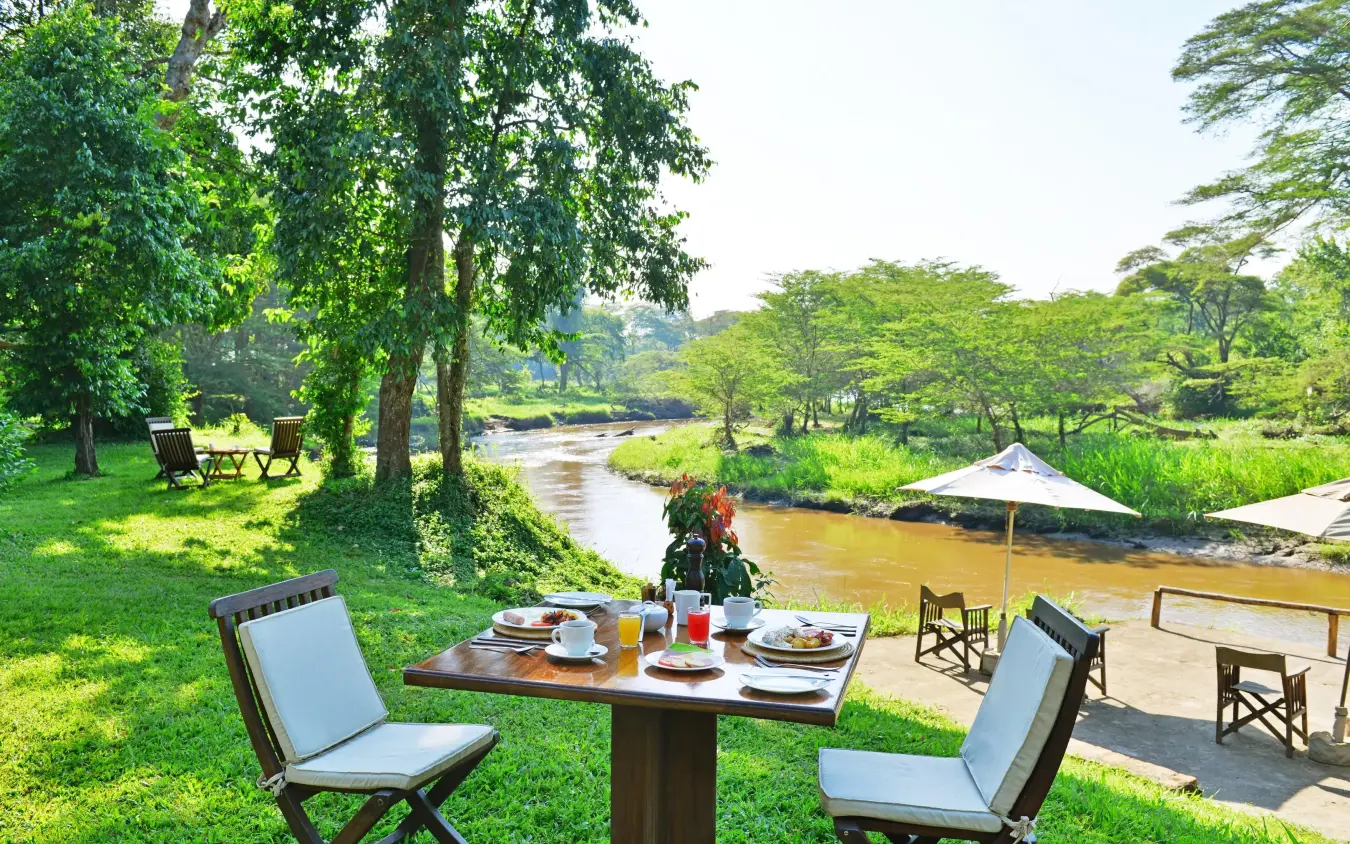
Community visits include village and school walks, meetings with traditional herbalists, and an elephant trench built with the Uganda Conservation Foundation to reduce crop-raiding. Back at camp, meals are served al fresco beside the river, prepared largely from local ingredients, with early tea or coffee delivered to the tent at dawn.