










uganda
gorilla trekking adventure
Trek into Bwindi for mountain gorillas, then track chimpanzees in Kyambura Gorge and Kibale Forest.
- Group Departure
- From $8,348 pp
- 7 guests
- 9 nights
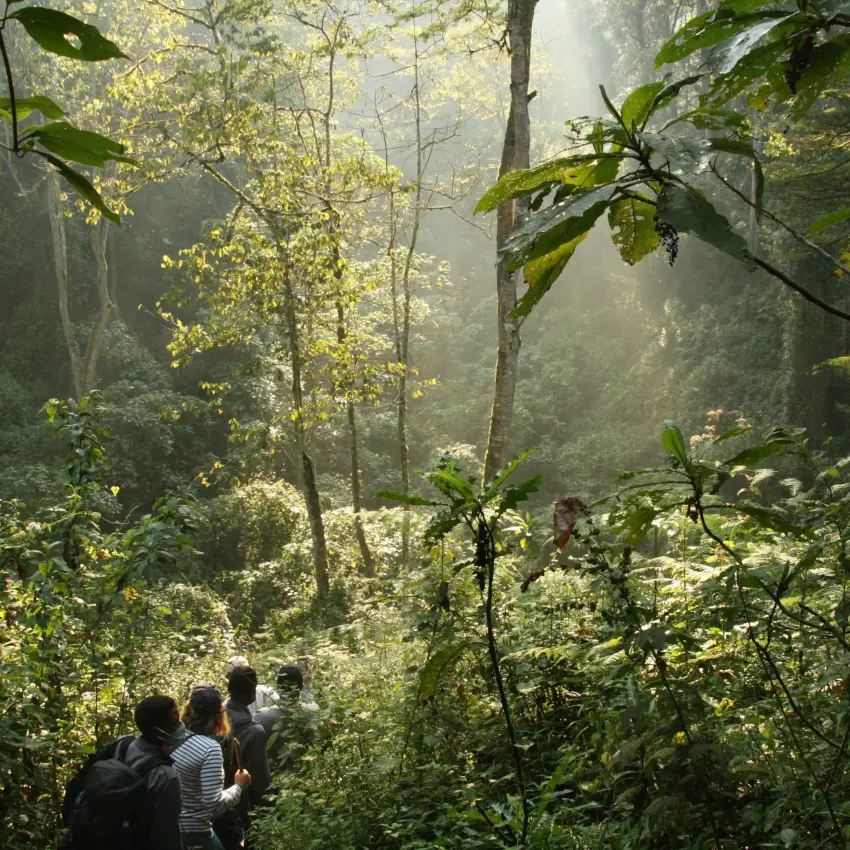
This 11-night trip begins in Kigali, Rwanda’s hill-spread capital, then crosses into south-western Uganda to Lake Bunyonyi, a lava-dammed lake of 29 islands. From there you walk the Kigezi highlands toward Lake Kayumbu, before tracking gorillas at Mgahinga, the country’s smallest gorilla park, beneath three Virunga volcanoes. The route then continues on foot to the Nkuringo ridge and finishes at Buhoma on the edge of Bwindi Impenetrable Forest.
You travel by road and on foot, with two multi-day walks linking the lakes and the forest. Days hold canoe crossings, community walking, golden monkeys in the bamboo and gorilla treks governed by Uganda Wildlife Authority permits. Accommodation runs from a boutique city hotel and a Belgian-run lakeside lodge to stone bandas by the park gate, a ridge-top lodge above the Kashasha Valley and a forest-edge lodge at Buhoma, with a lightweight mobile camp on the highland walk.
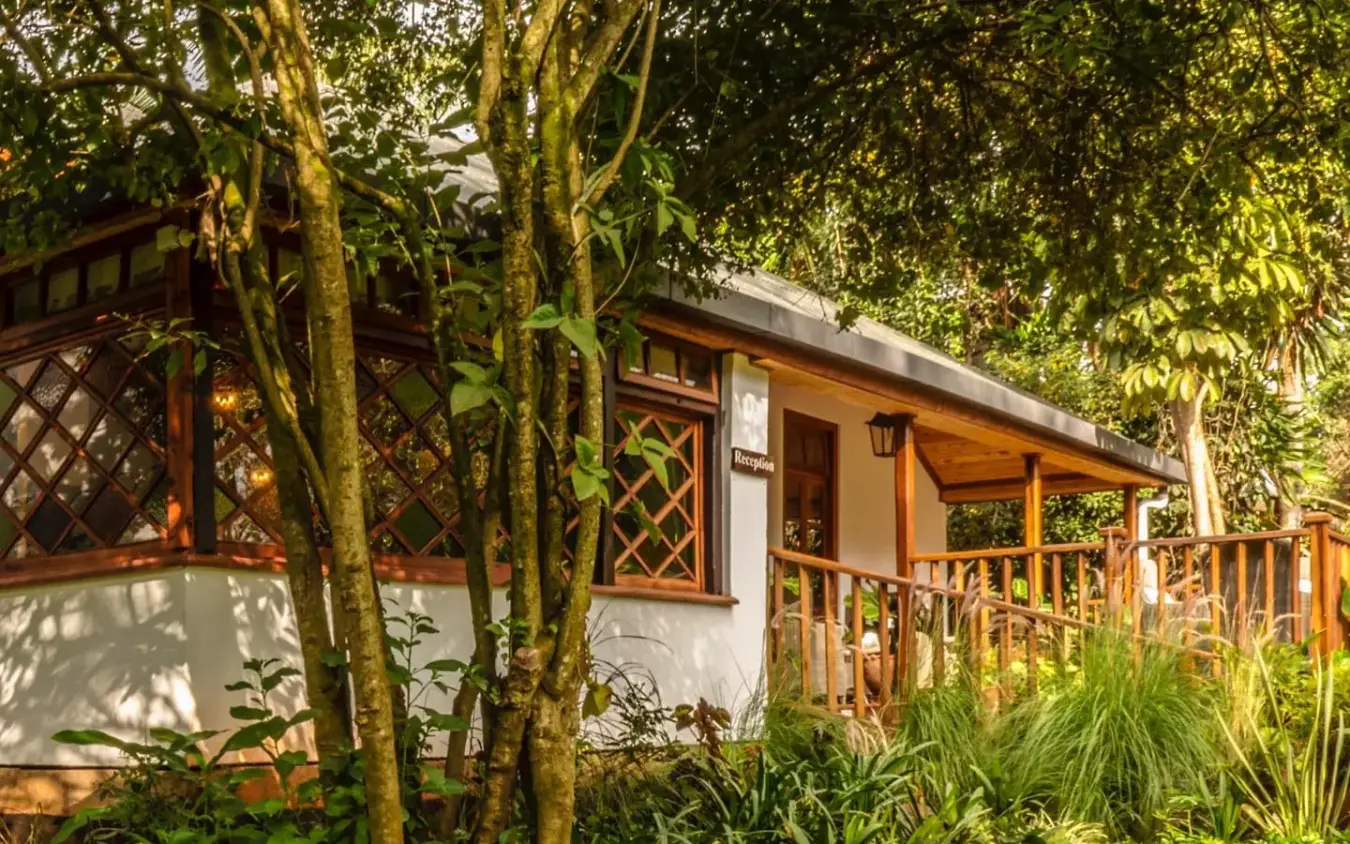
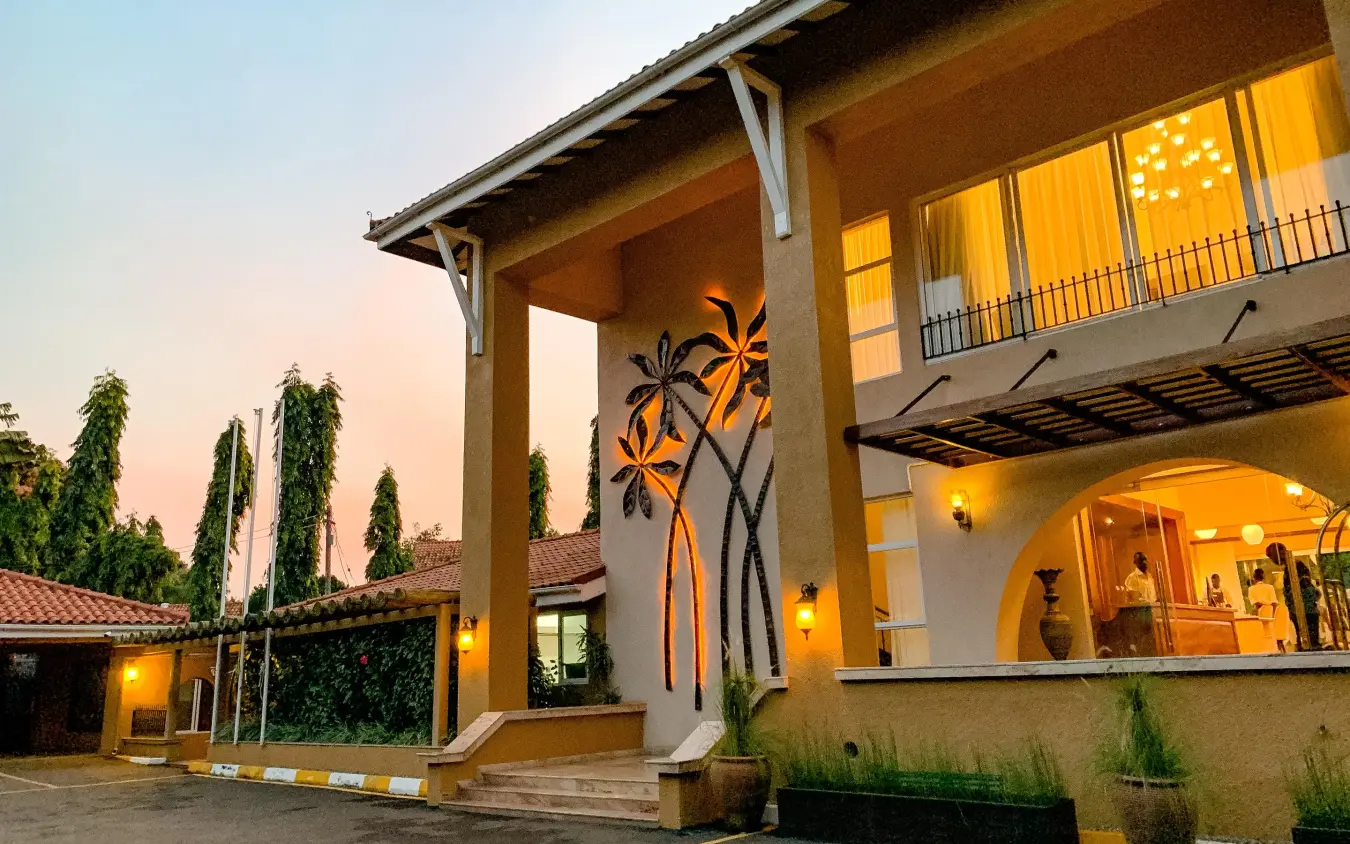
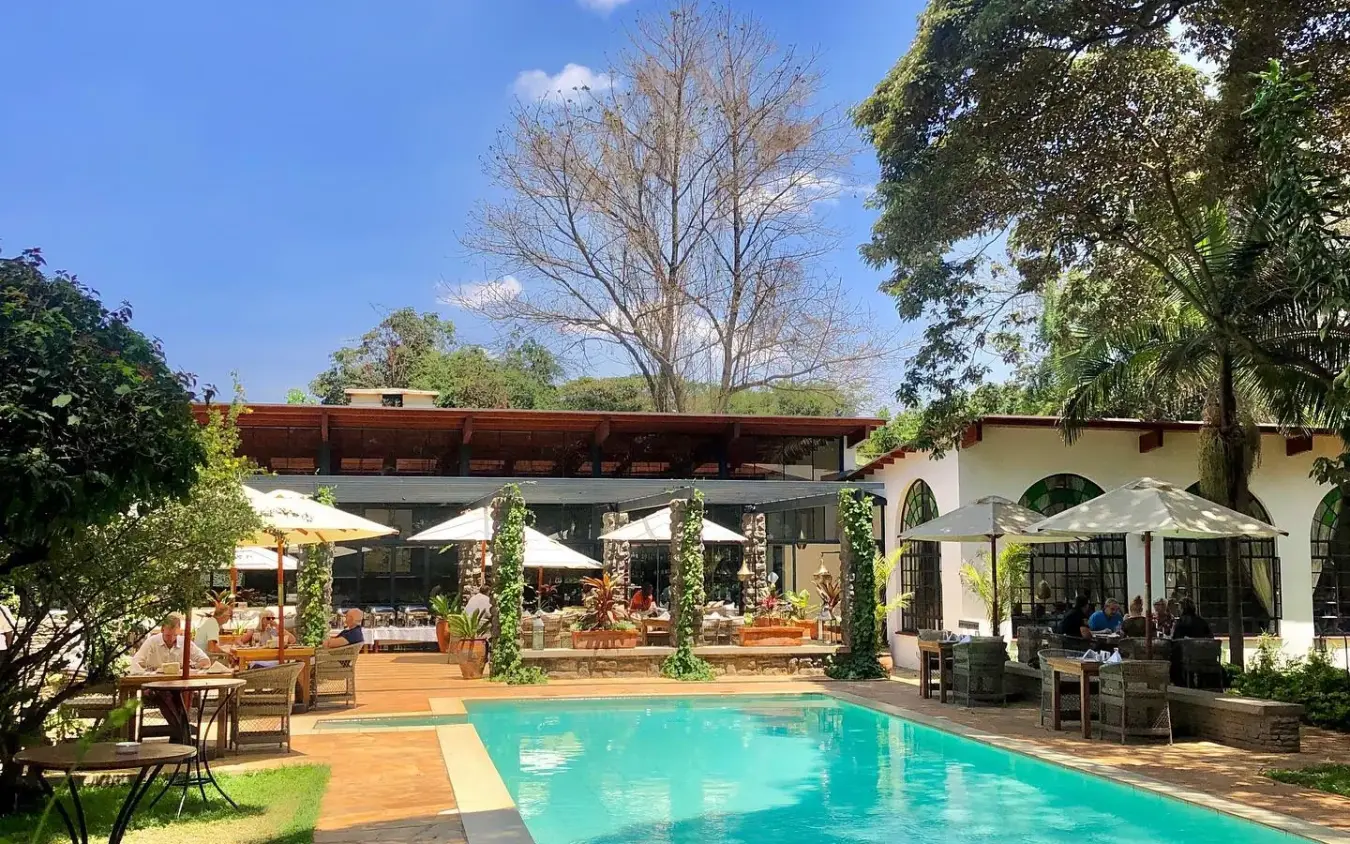
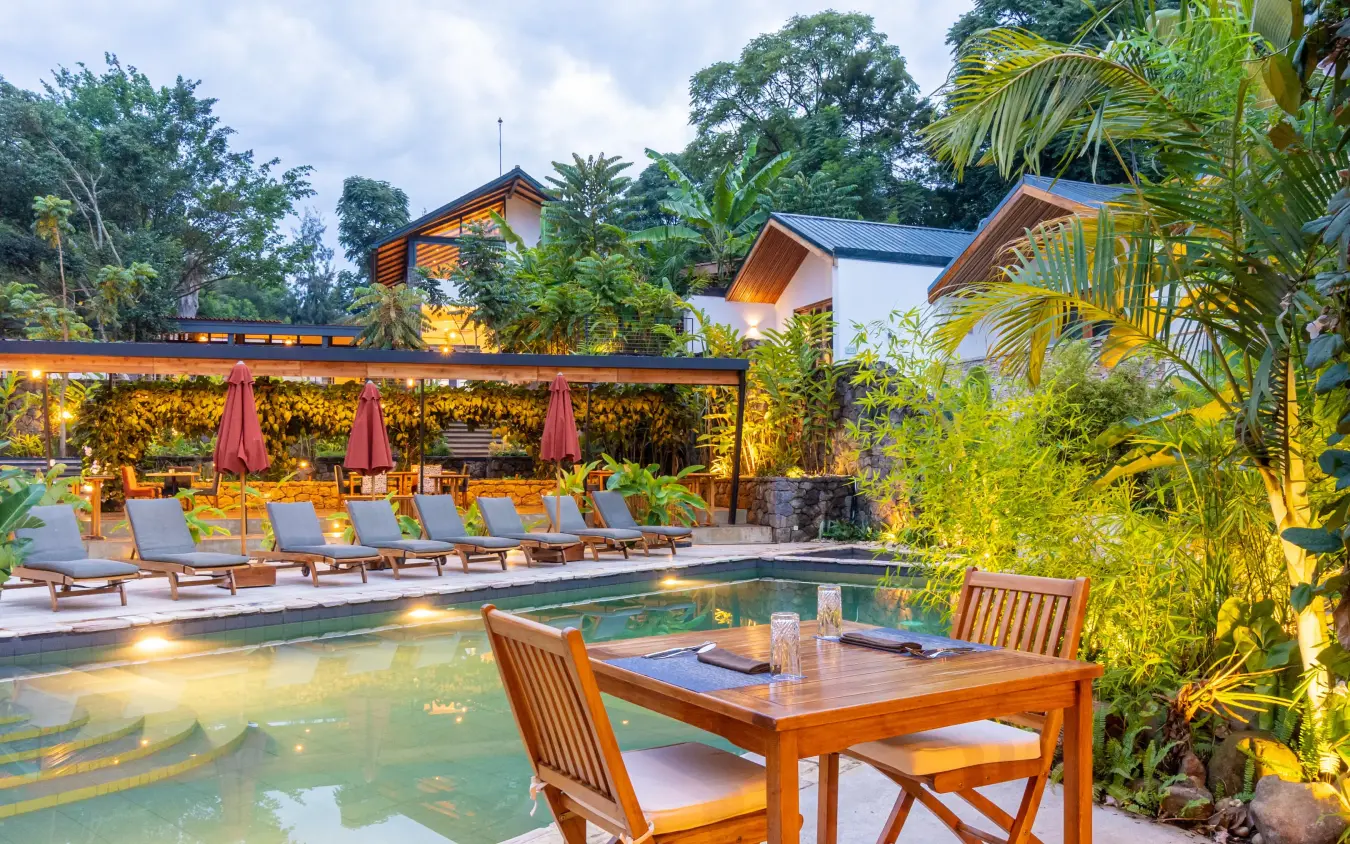
You arrive in Kigali, Rwanda's capital, spread across the ridges and valleys at the centre of the country. There is time to walk the textile stalls of Kimironko Market, visit the Inema Arts Center or spend a quiet few hours at the Kigali Genocide Memorial at Gisozi. A boutique hotel of stone and teak in the leafy Kiyovu district, Hemingways Retreat Kigali holds twenty rooms and suites, a solar-heated saltwater pool and two restaurants, a calm base at either end of a Rwandan trip.
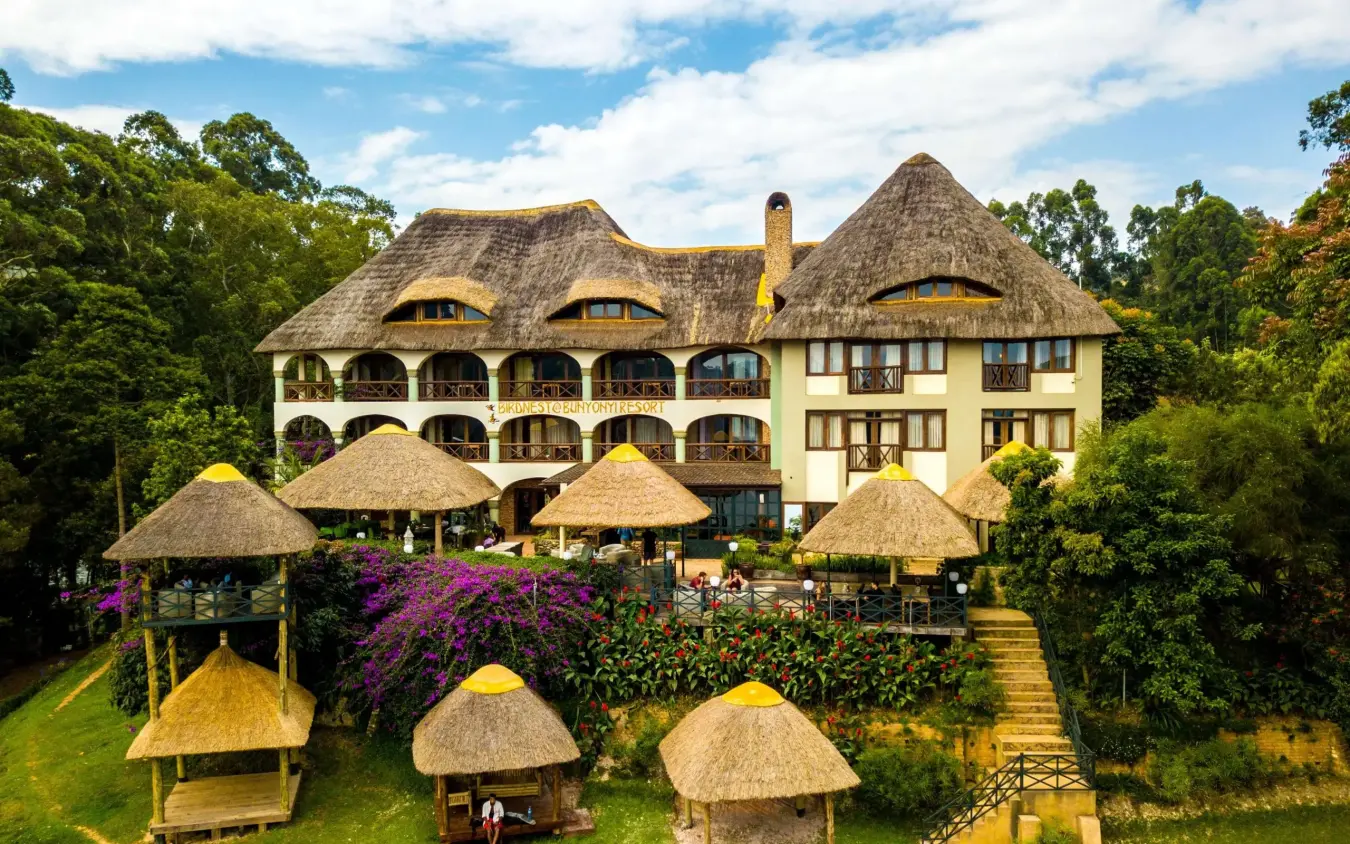
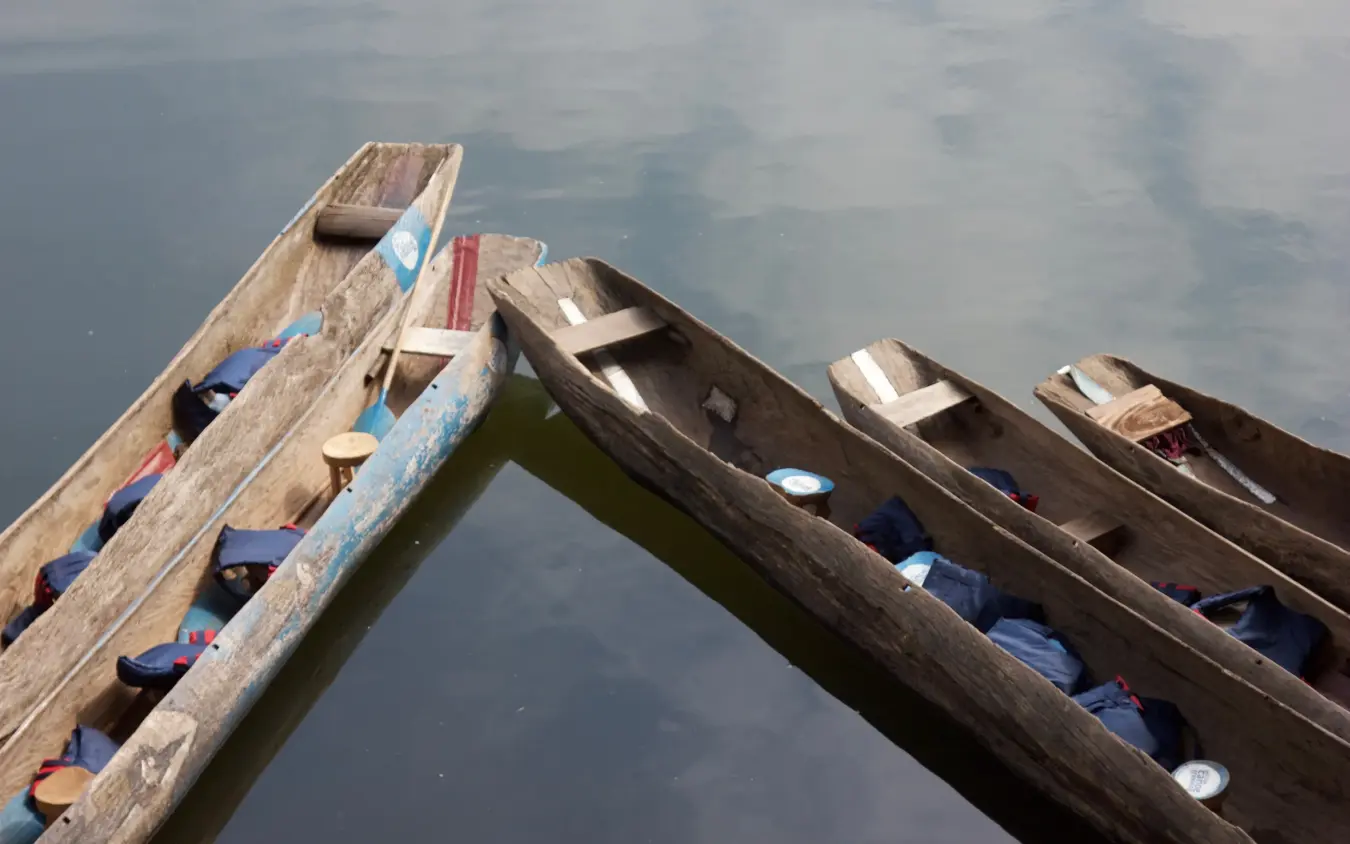
From Kigali you cross into south-western Uganda to Lake Bunyonyi, a high lava-dammed lake fingered by 29 islands and ringed by terraced hills. The water is safe to swim and holds no hippos or crocodiles, and days move at the pace of the dugout canoes that cross between the islands. Grey-crowned cranes, weavers and herons work the reeds, part of more than 200 recorded bird species. On a terraced hillside above the water near Kabale, Birdnest at Bunyonyi Resort is a Belgian-run lodge of fourteen rooms, known for lake crayfish and terrace dining over the islands.
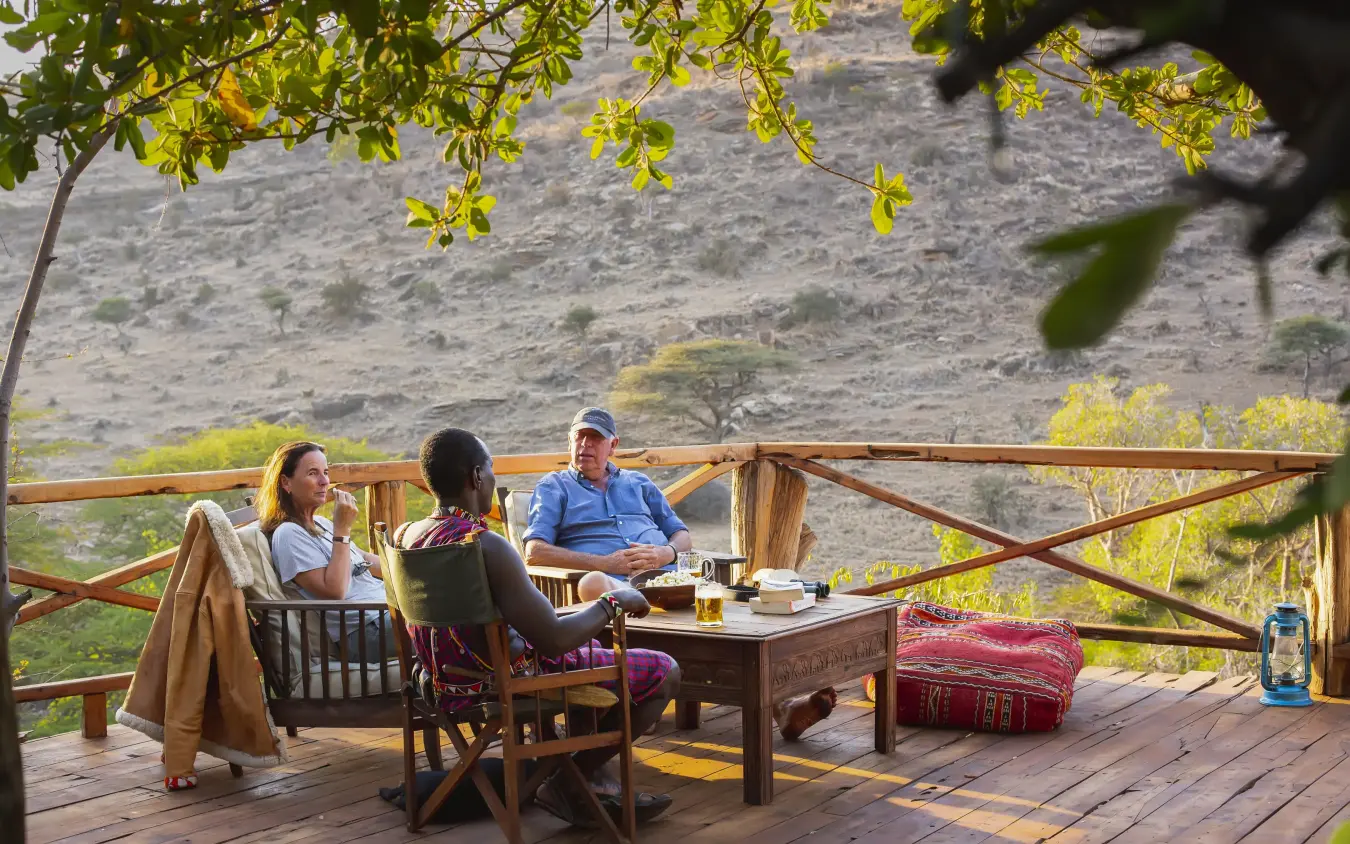
On foot you leave the lakeshore and walk the Kigezi highlands toward Lake Kayumbu, crossing the terraced ridges the Bakiga have farmed for generations. The route is built from village-to-village walking rather than a single signposted trail, with arms of water crossed by dugout canoe and daily life close at hand. Nights are spent under canvas at Simple Lightweight Camp, a mobile camp set up along the walk rather than a permanent lodge.
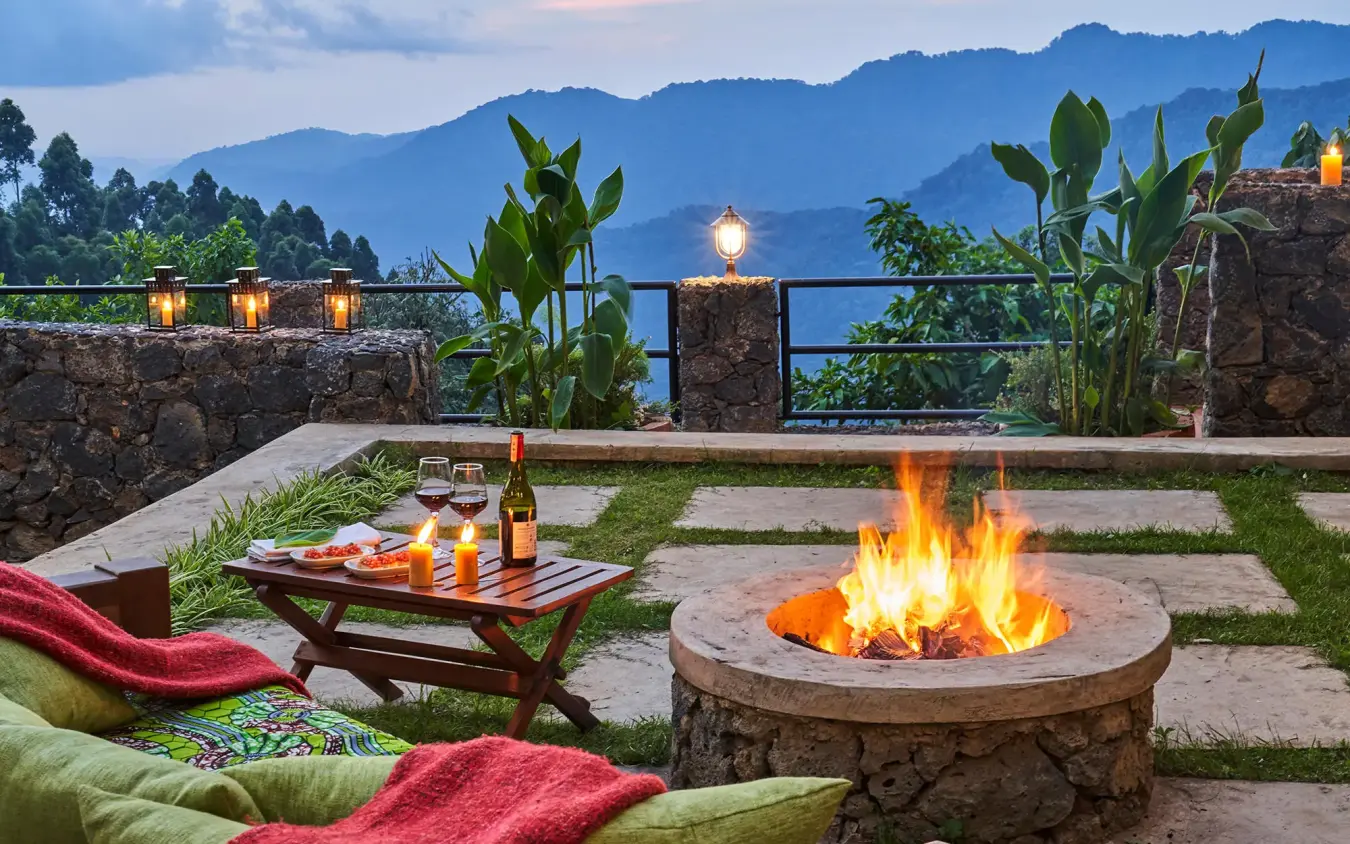
You reach Mgahinga, Uganda's smallest gorilla park, where a single habituated gorilla family, the Nyakagezi group, lives against the backdrop of Muhabura, Gahinga and Sabyinyo. Because the park holds one family and receives few trackers, the forest feels unhurried; treks are strenuous at altitude, and golden monkeys move through the bamboo. A short walk from the park gate, Mount Gahinga Lodge holds eight stone-and-thatch bandas that look out at the volcanoes, each with a fireplace and a private veranda.
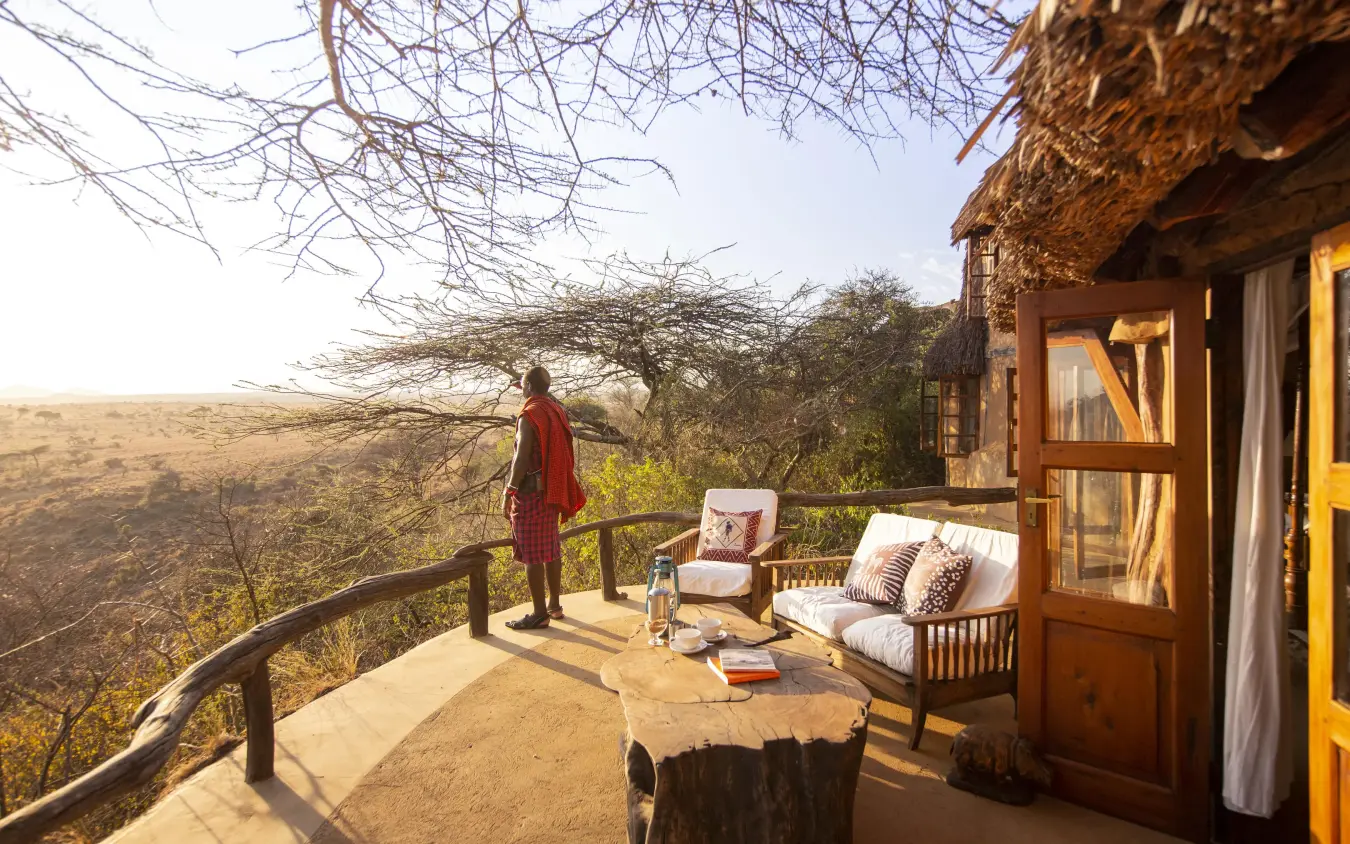
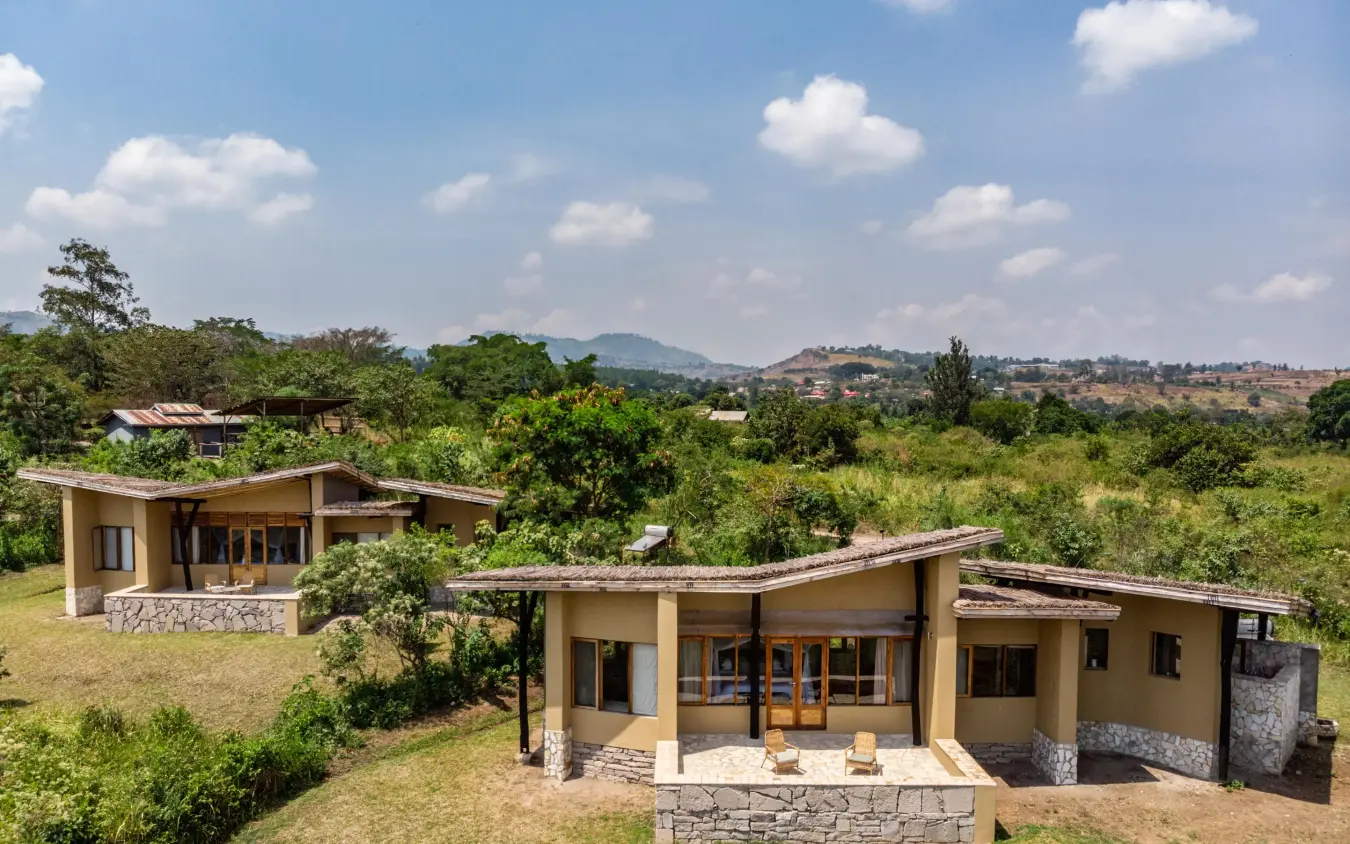
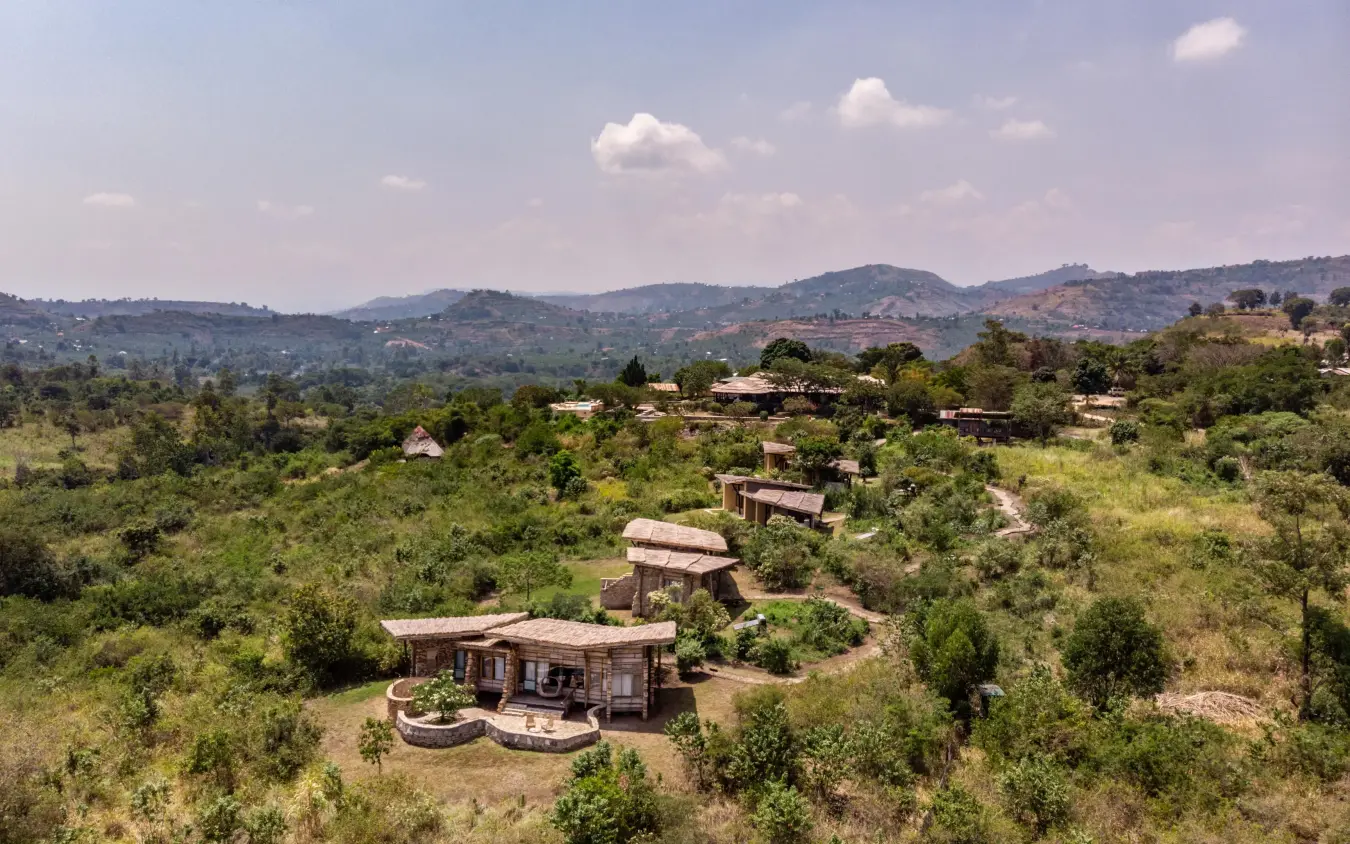
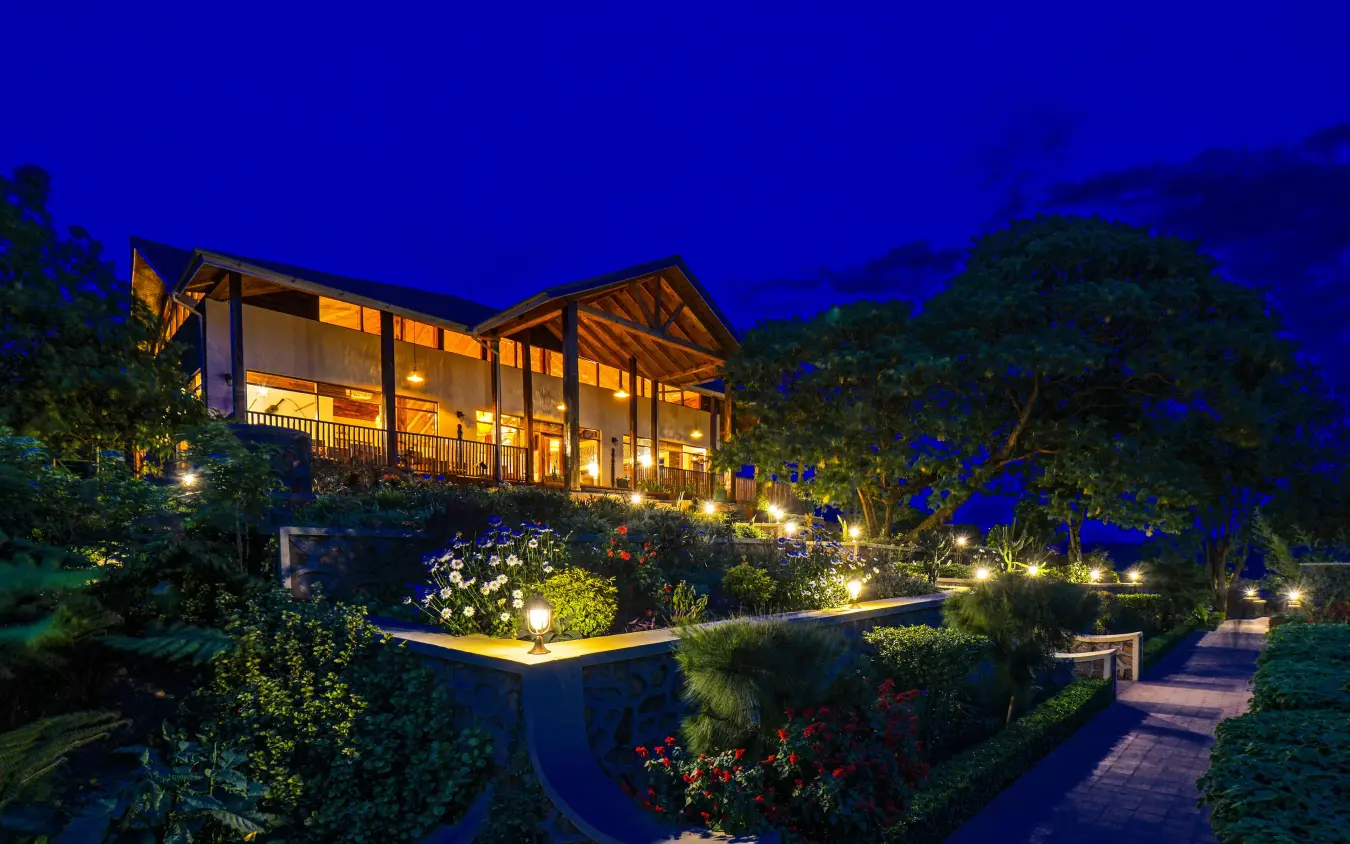
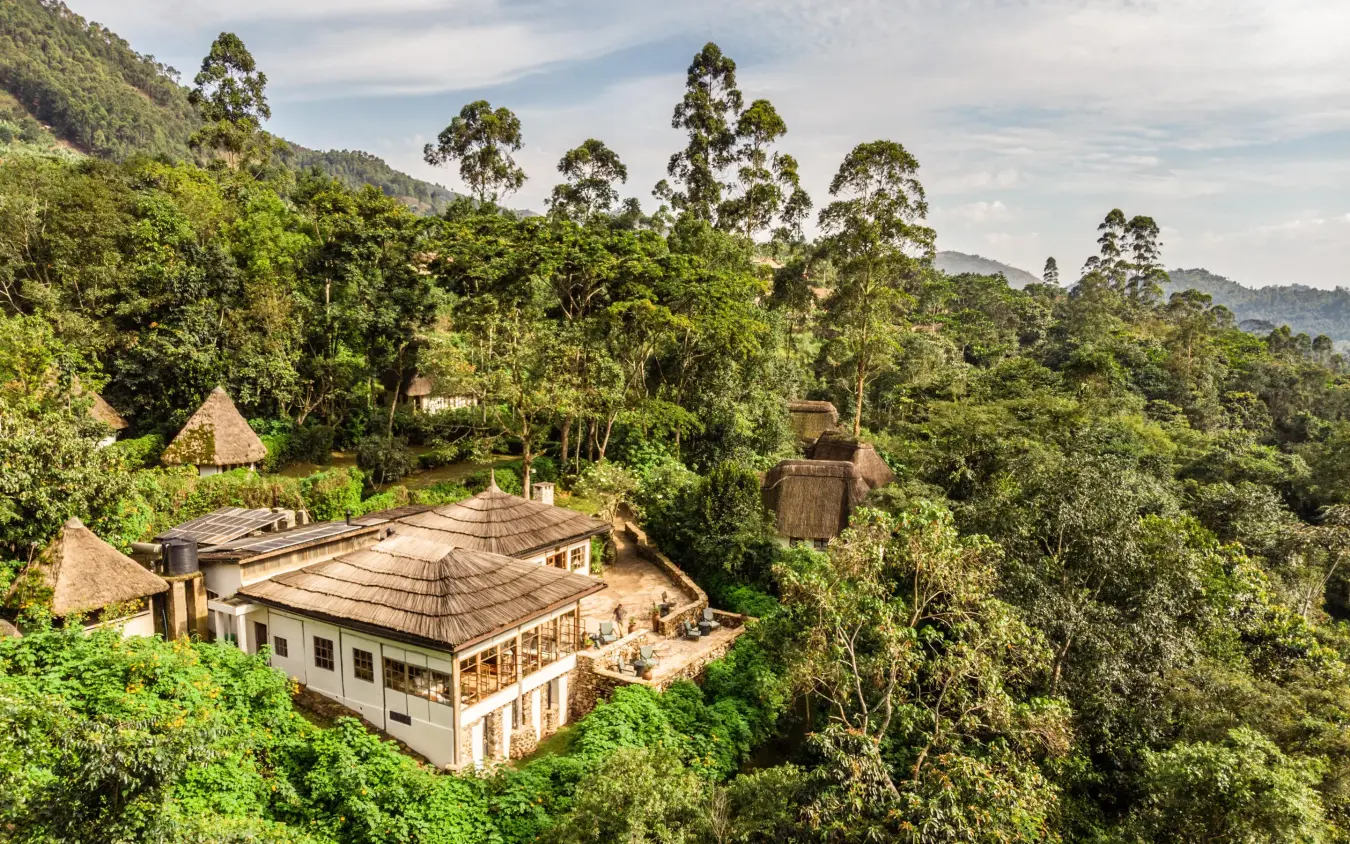
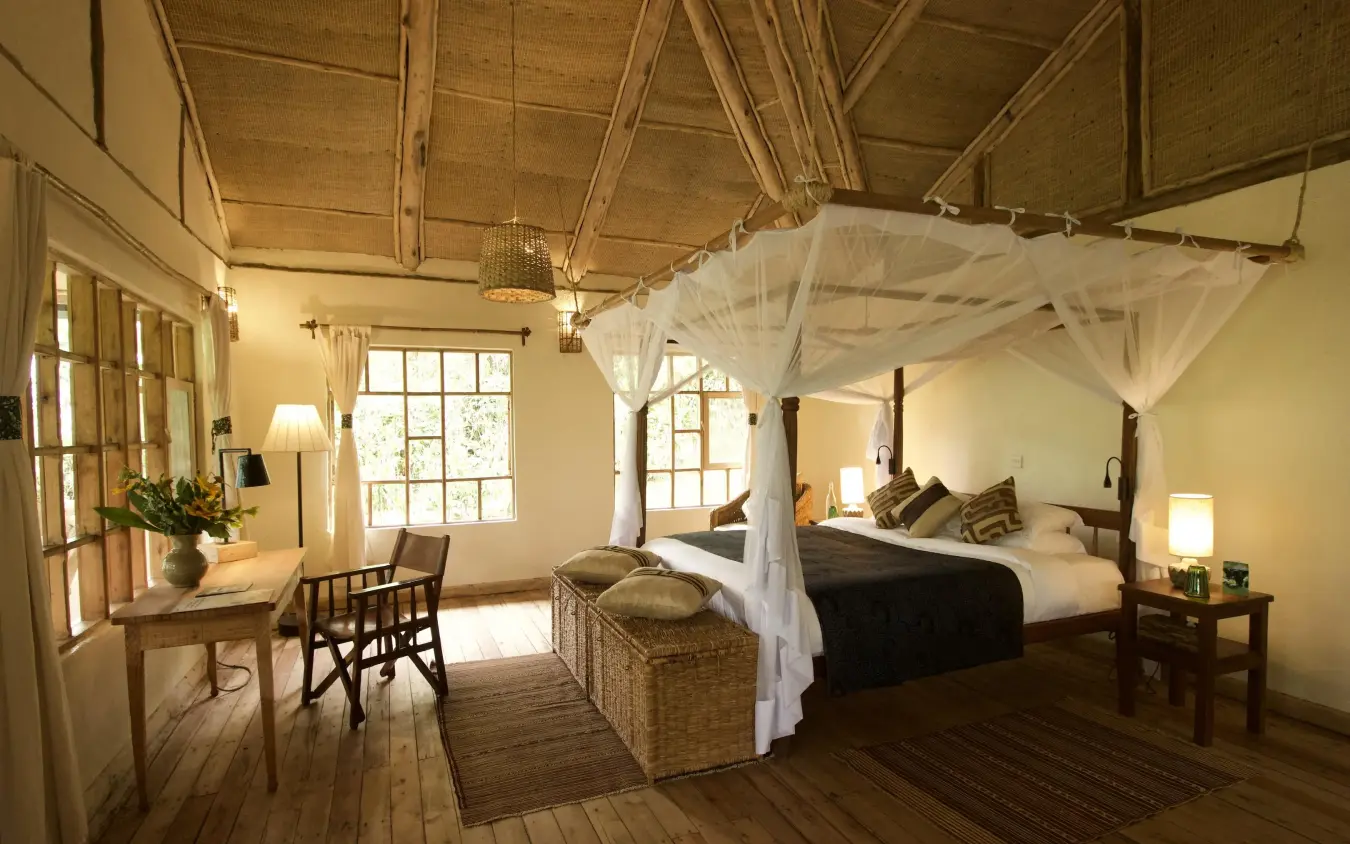
On foot again you make your way to Nteko Ridge in the southern Nkuringo sector of Bwindi Impenetrable Forest, at roughly 2,160 metres. Three habituated gorilla families are open to trekking in this sector, with a fourth still coming through habituation, and the trekking drops steeply into the forest and climbs back out, among the more demanding terrain in Bwindi. The briefing point sits about 300 metres from the door of Nkuringo Gorilla Lodge, a Ugandan-owned, family-operated lodge of volcanic-stone and timber cottages, each with a veranda and fireplace, looking across the Kashasha River Valley.
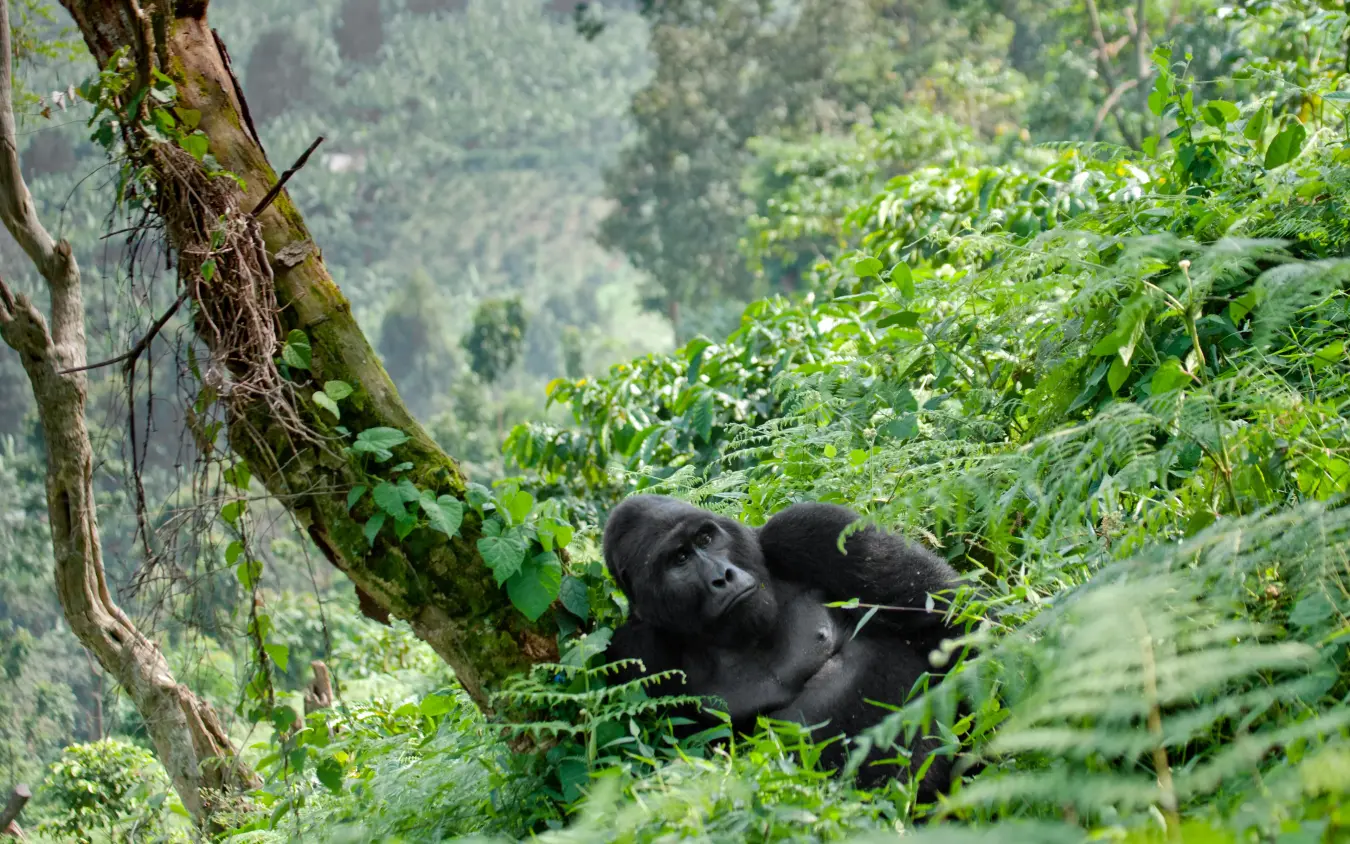
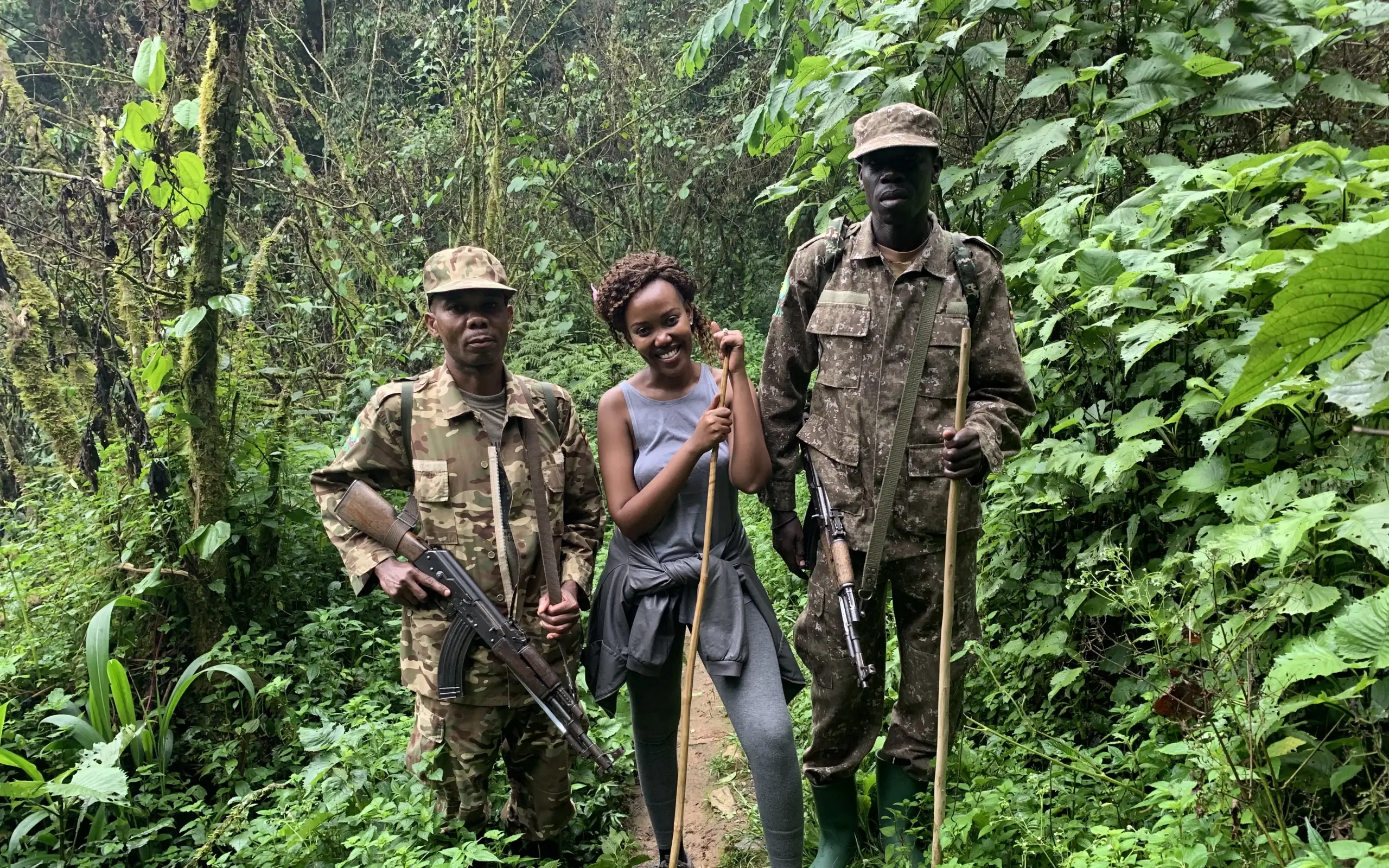
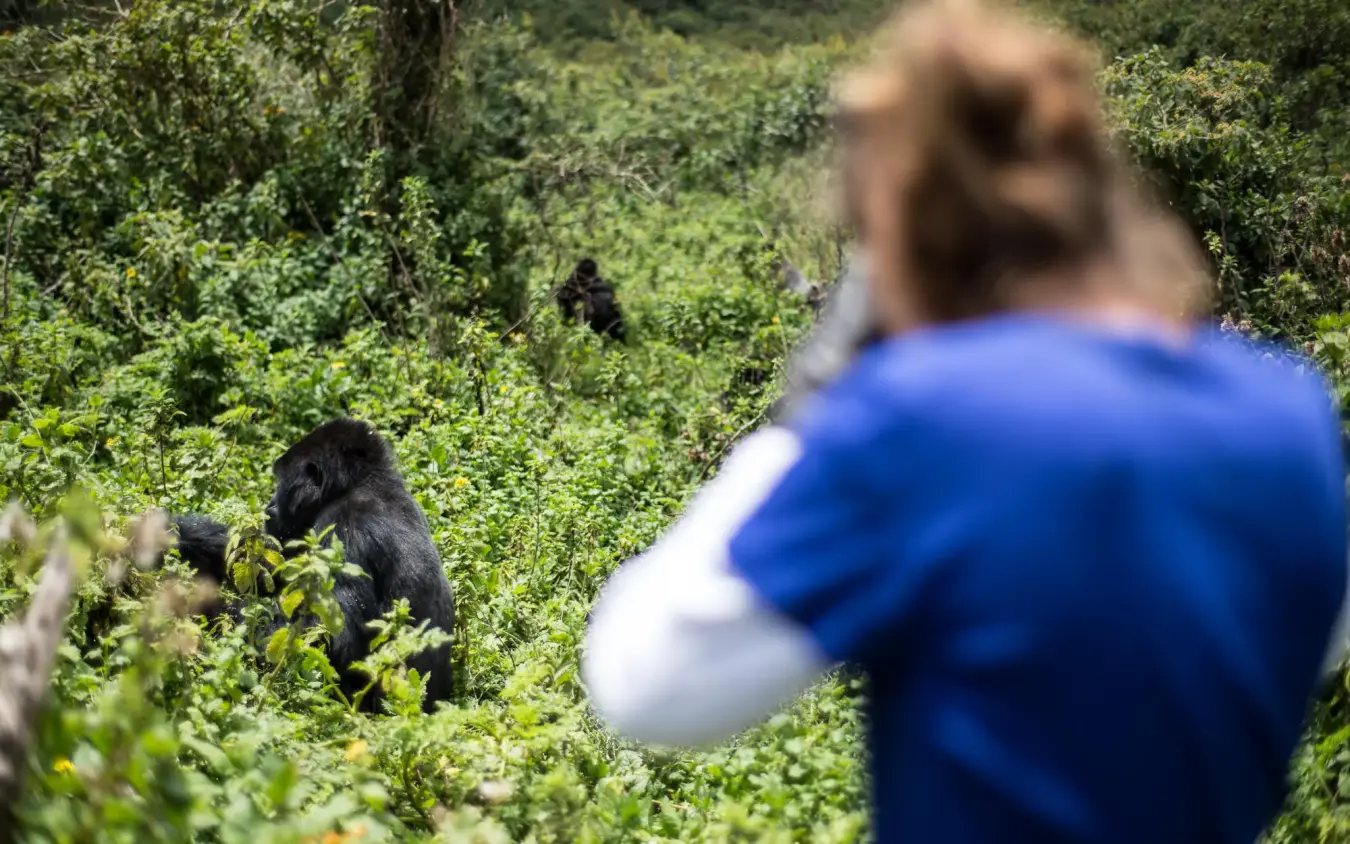
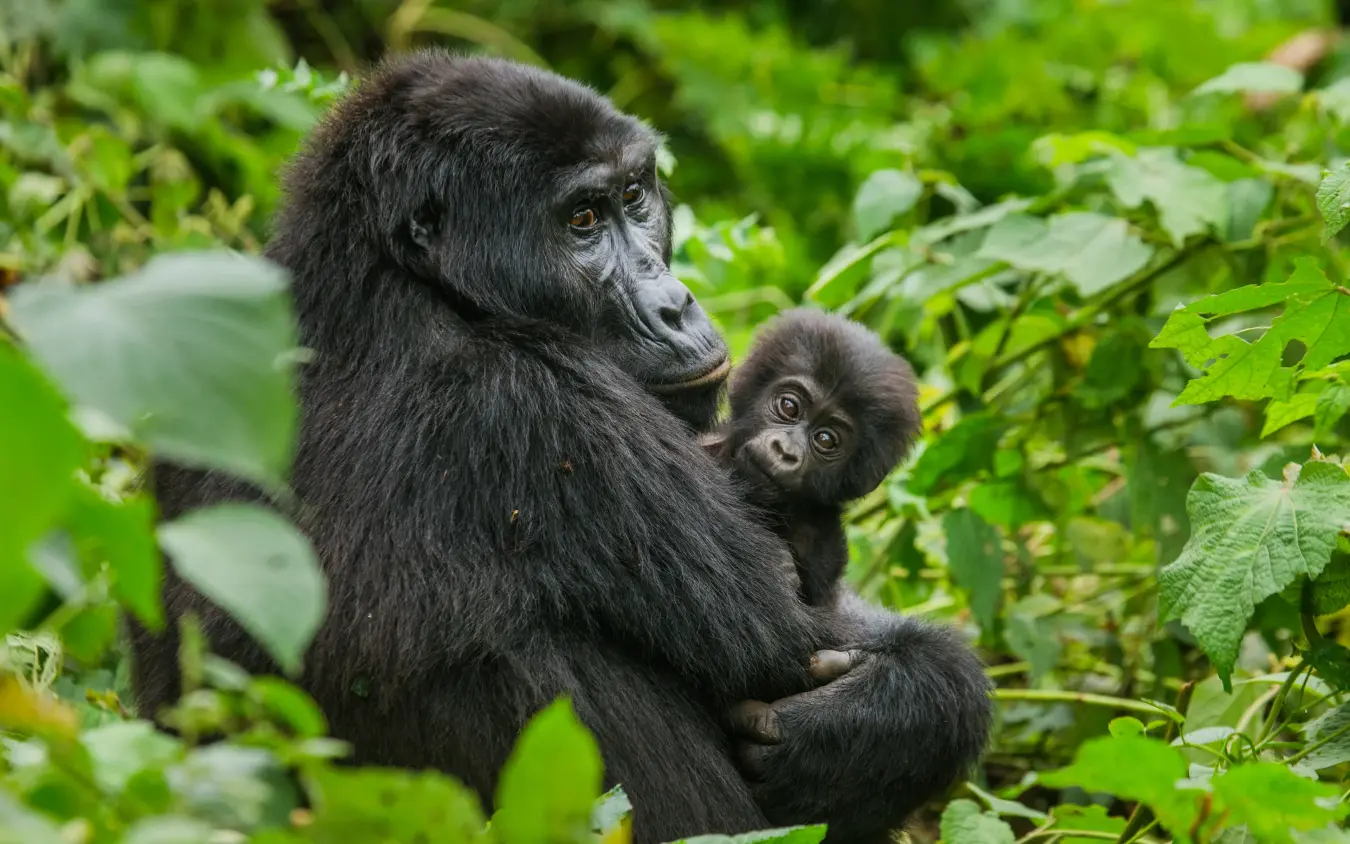
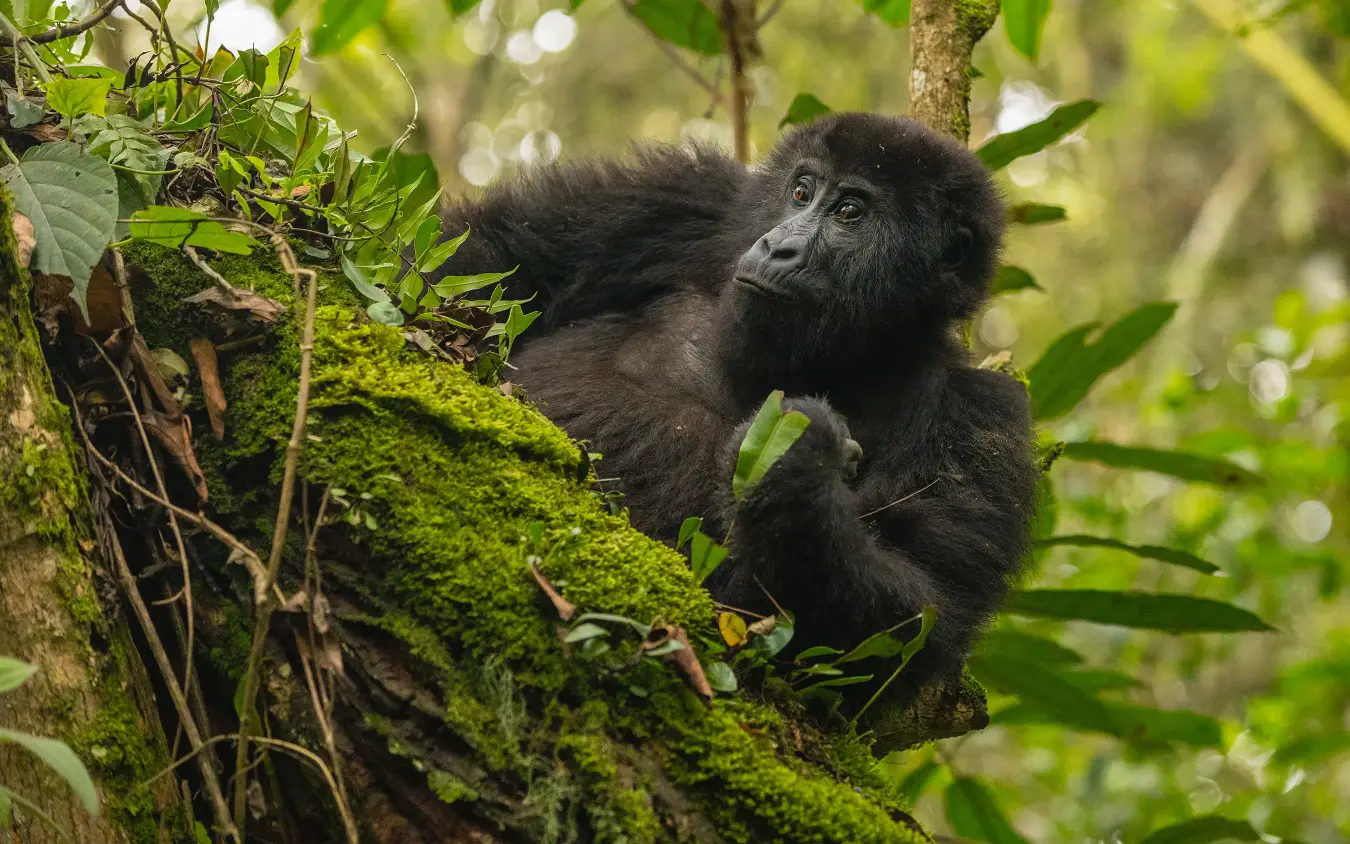
You move north to Buhoma, the first sector of Bwindi opened to trekking and the base for walks into a forest that holds close to half the world's remaining mountain gorillas. Rangers lead you in to a habituated family, with eight visitors permitted per group and a strict hour in their company. On the forest edge above the Munyaga River, every banda balcony at Bwindi Lodge looks onto the forest, and the Rushegura group frequently visits the grounds.
We put gorilla treks in Uganda at better than 95 per cent successful, since trackers set off at dawn for the place each family slept.
This route improves on that by not relying on a single morning: it passes three trailheads, Mgahinga, Nkuringo and Buhoma, in two national parks.
They make for different days out:
Each trek needs its own permit, issued for a named area on a named date, with eight visitors to a family, so tell us whether you want one trek, two or all three and we will book them before anything else.
As ever with wild animals, no sighting is promised, by us or by the park.
Both are hill walks on village paths, with nothing technical, but they are full days and you should be used to walking.
For the first, between Lake Bunyonyi and Lake Kayumbu, the trail's stages run from about six kilometres to about 21 in a day, part of each by dugout canoe, between roughly 1,900 and 2,500 metres, and are graded moderate.
For the second, up to the Nteko ridge at Nkuringo, the usual route from the Kisoro side is 10 to 18 kilometres on foot plus a stretch by canoe on Lake Mutanda, four to eight hours in all, also graded moderate, with bags going round by vehicle.
The ridge stands at about 2,160 metres, so that day finishes uphill. The two nights on the first walk are spent in a simple lightweight camp, the only nights of the trip under canvas.
Distances on a private trip can be adjusted, so have us send the stage plan before you commit.
Yes, and on a trip built around walking it is the change we would suggest first.
As written, the route simply moves you north to Buhoma, and by road that means a long loop around the outside of the park. On foot there is a way straight through it.
The Uganda Wildlife Authority's River Ivi Trail follows an old road through the forest and comes out near Nkuringo; it is about 14 kilometres and six to seven hours, graded moderate, and walked with a park ranger.
A second route along the Kashasha River is steeper and graded strenuous, though kinder from Nkuringo to Buhoma than the other way, because the big climb is on the Nkuringo side. We recommend the Ivi trail to birdwatchers.
Bags can go round by vehicle and meet you at Buhoma. We arrange it with the park in advance, so ask when you enquire. It is a forest walk, not a gorilla trek, and you should not expect to meet gorillas on it.
For a route with two multi-day walks and up to three gorilla treks, dry ground matters more than anything.
June, July and August are recommended on every one of our best time pages for this route, Kigali's included, and give the firmest paths in the Kigezi highlands and on the forest slopes.
September, December, January and February are close behind; Kigali can be showery in those months but the walking country is settled. October sits between the two, with softer ground.
The wet months are March to May, with November wet again, and then the village paths turn slick, the climb to the Nkuringo ridge becomes a slog and a night under canvas is a damp one, and we rate those months as challenging in Bwindi and at Mgahinga.
If those are the only months you can travel, the forest is at its greenest, the birding around Lake Bunyonyi is strong, permits open up at short notice and the soft light suits gorilla photography; we would simply suggest swapping the camp nights for a lodge.
The trip starts in Kigali and ends at Buhoma, in a different country, so both ends need planning.
Going in, the road north from Kigali meets the Ugandan border at Katuna after about 100 kilometres, and Lake Bunyonyi is reached the same day.
Coming out, the scheduled flight from Kihihi airstrip, 90 minutes to two hours by road from Buhoma, takes 70 to 75 minutes to Entebbe direct and longer when it stops elsewhere on the way, in a Cessna Grand Caravan seating eleven whose 15 kilogram soft-bag limit includes what you carry on.
Or you can drive back to Kigali, which takes about seven hours.
On paperwork, one joint tourist visa is good across all three of Rwanda, Uganda and Kenya for repeated entries over 90 days, as both the UK Foreign Office and Rwanda's immigration service set out. The country you apply through has to be the one you enter first, which on this route means Rwanda. Entry rules change, so check them again before you travel.
They are separate from the walking days and harder to predict.
A gorilla trek lasts as long as it takes to reach the family: two to seven hours in Bwindi and typically three to five at Mgahinga, off the paths, on steep and often wet ground. Bwindi's forest spans roughly 1,160 to 2,600 metres in height and Mgahinga's trailhead is at 2,227.
Nkuringo is the stiffest of the three, because the climb back up to the ridge comes at the end of the day. Anyone comfortable on the two highland walks has the fitness for it; what changes is the footing, which is mud, roots and undergrowth where the walks have paths.
At the morning briefing the rangers will usually steer anyone who asks towards a family that is closer in, a walking staff is provided, and porters from the villages by the trailhead can be taken on for the day. Gorilla trekkers must be 15 or over.
Ed Charles, BBC Producer
Fitzroy are true specialists in accessing the wilderness. They know where to go and importantly, when to go there. Highly recommended.
uganda
Trek into Bwindi for mountain gorillas, then track chimpanzees in Kyambura Gorge and Kibale Forest.

uganda & kenya
Fourteen nights linking Uganda's gorilla forests with riding and rhino country on Kenya's Lewa Wildlife Conservancy.
uganda
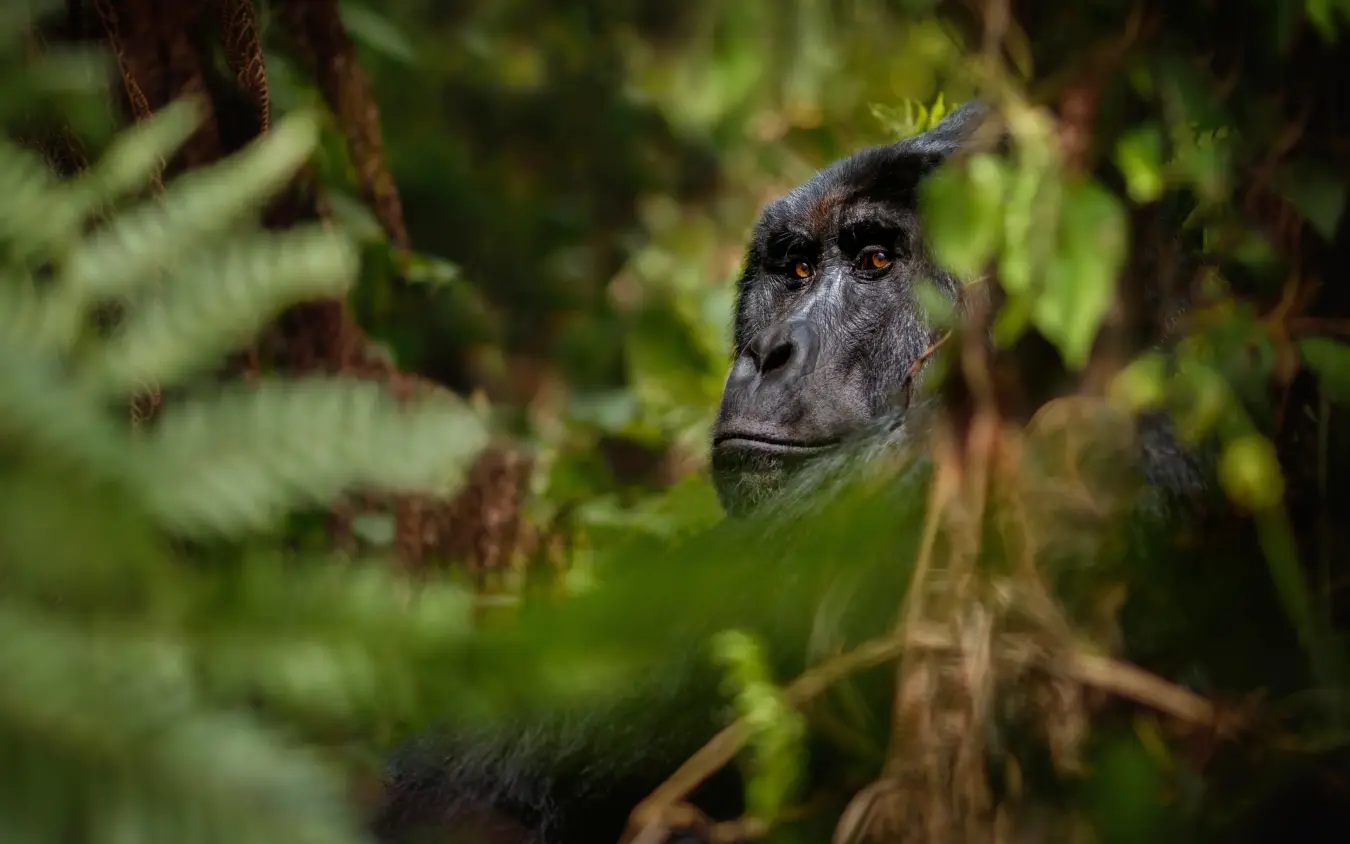
Eleven nights across Uganda, tracking chimpanzees in Kibale and Kyambura and gorillas at Mgahinga, via Queen Elizabeth's plains.
rated five stars by our clients

our approach
Every journey starts with a conversation. We take the time to understand your vision before we start planning.
Whether by phone or in person, we work with you directly to shape something that is considered, personal, and expertly delivered.
Every journey starts with a conversation. We favour a direct, personal approach: understanding your vision before anything else.
Whether by phone or in person, we work with you directly to shape a journey that is both thoughtfully considered and expertly delivered.
Get in touch to start planning yours.