










tanzania
migration and great rift hike
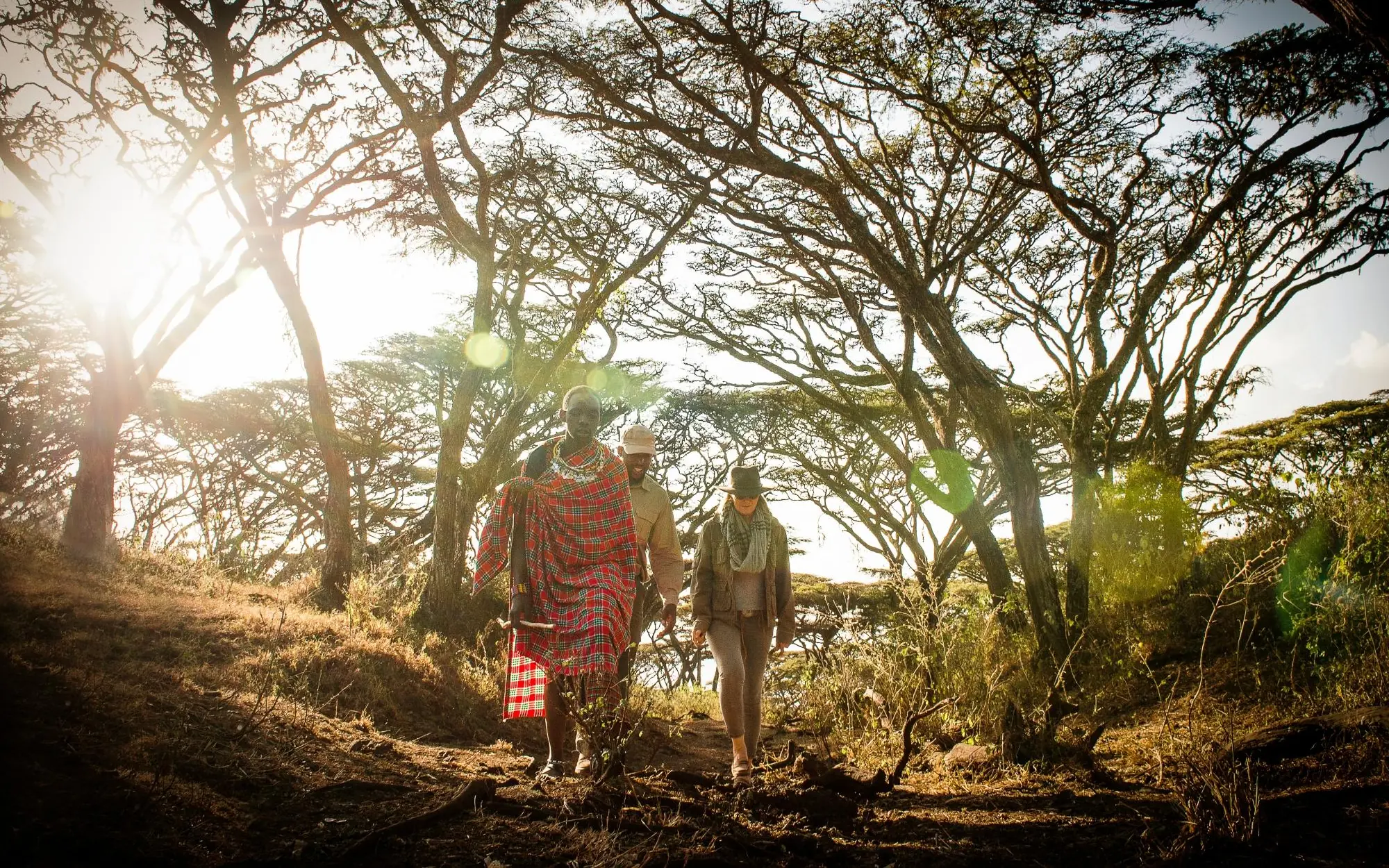
Walking safaris through Tanzania's Rift Valley and Serengeti, then five nights in a private villa on Zanzibar's coast.
- Private Safari
- From $16,900 pp
- 4 guests
- 19 nights

This is eleven nights across northern and western Tanzania, beginning with a night on a coffee estate at Arusha beneath Mount Meru. From there you climb to the north-western rim of the Ngorongoro Crater, then out onto the Serengeti plains with the migrating herds, before flying west to the forests of the Mahale Mountains above Lake Tanganyika.
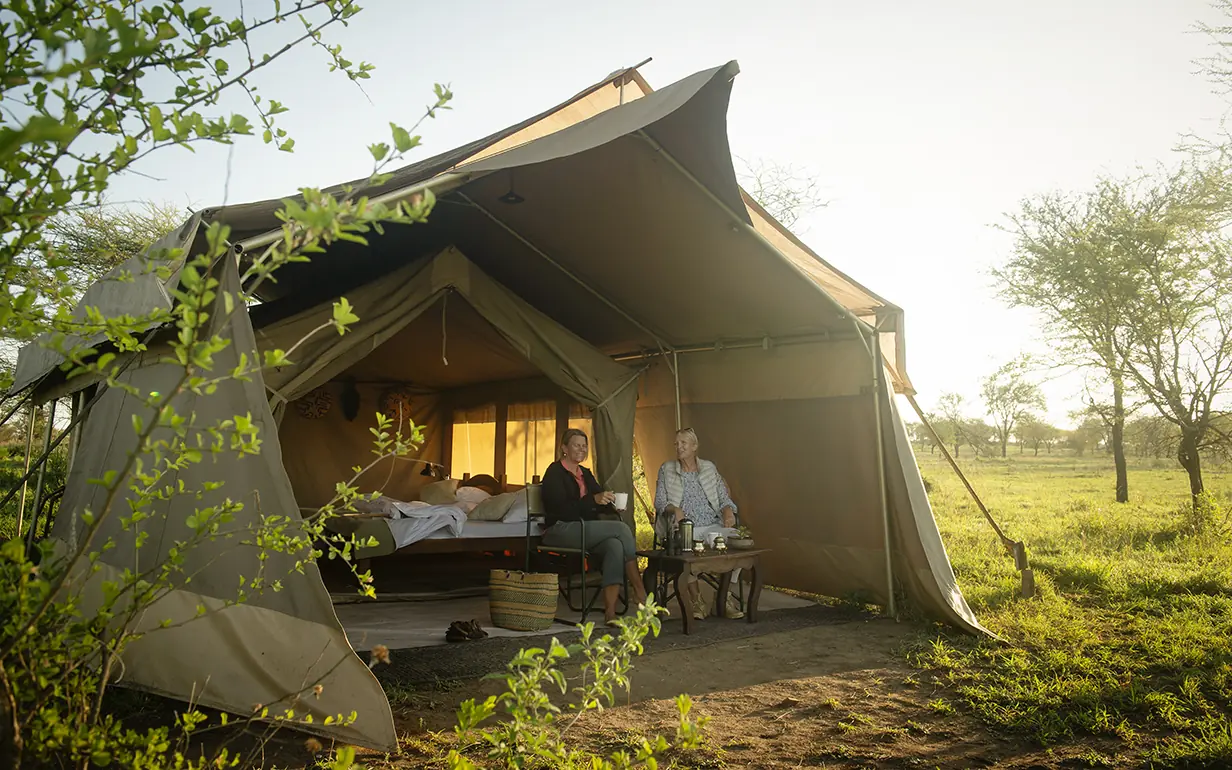
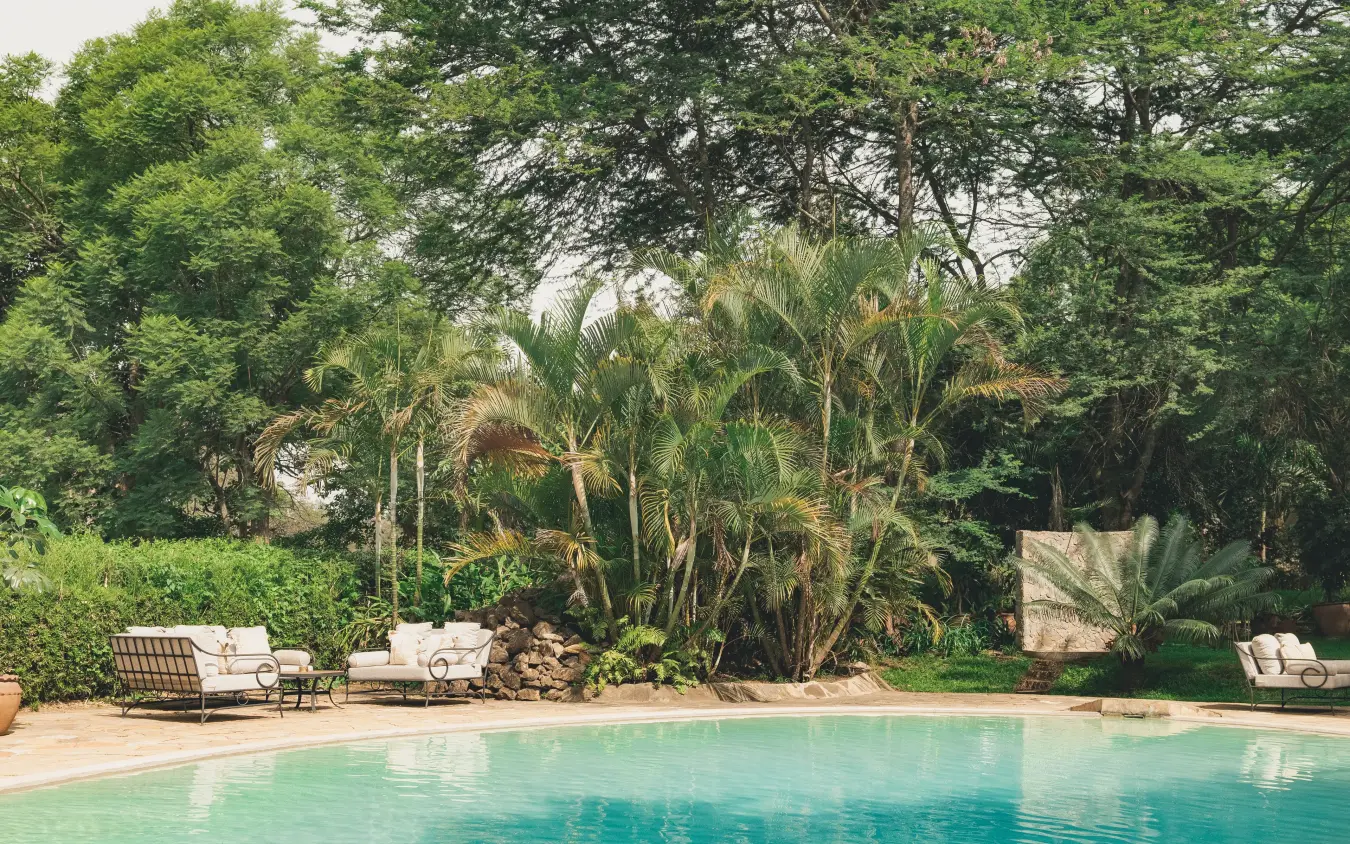
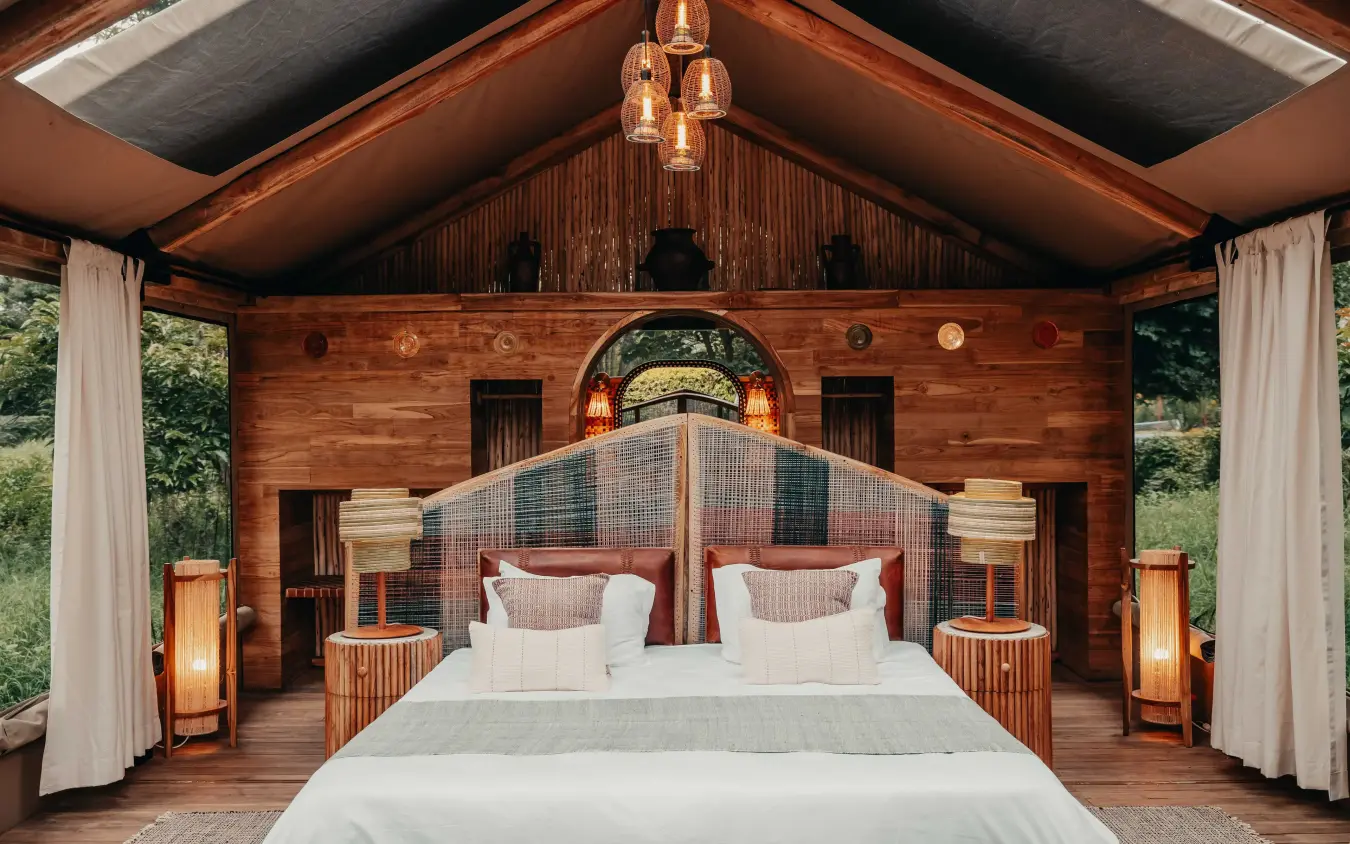
You travel by road through the northern highlands and by light aircraft to Mahale, where a dhow completes the arrival. Days hold full-day game drives on the crater floor, drives among the herds in the Serengeti and chimpanzee tracking on foot at Mahale. The camps range from a plantation lodge to a mobile tented camp and a beach lodge of dhow-wood bandas.
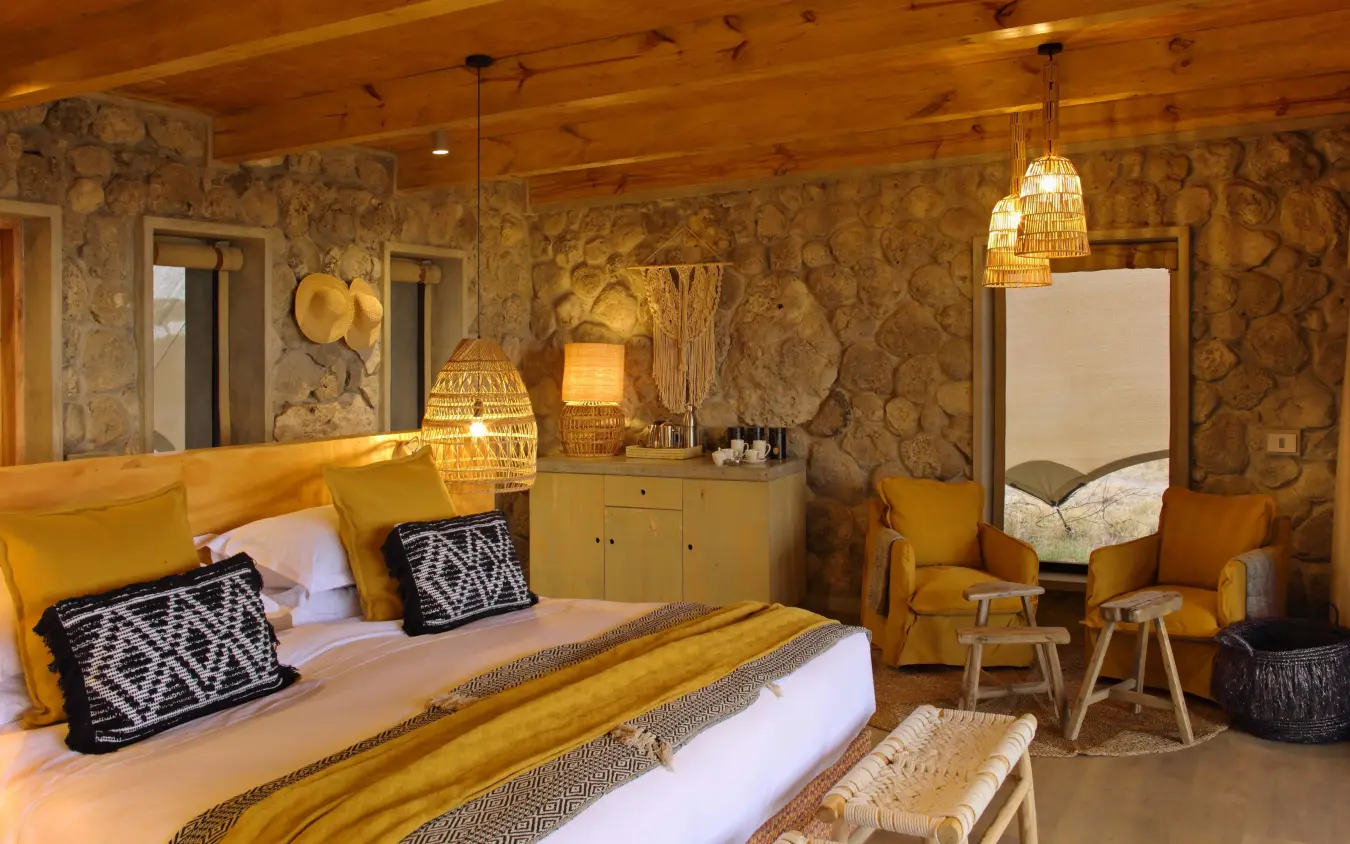
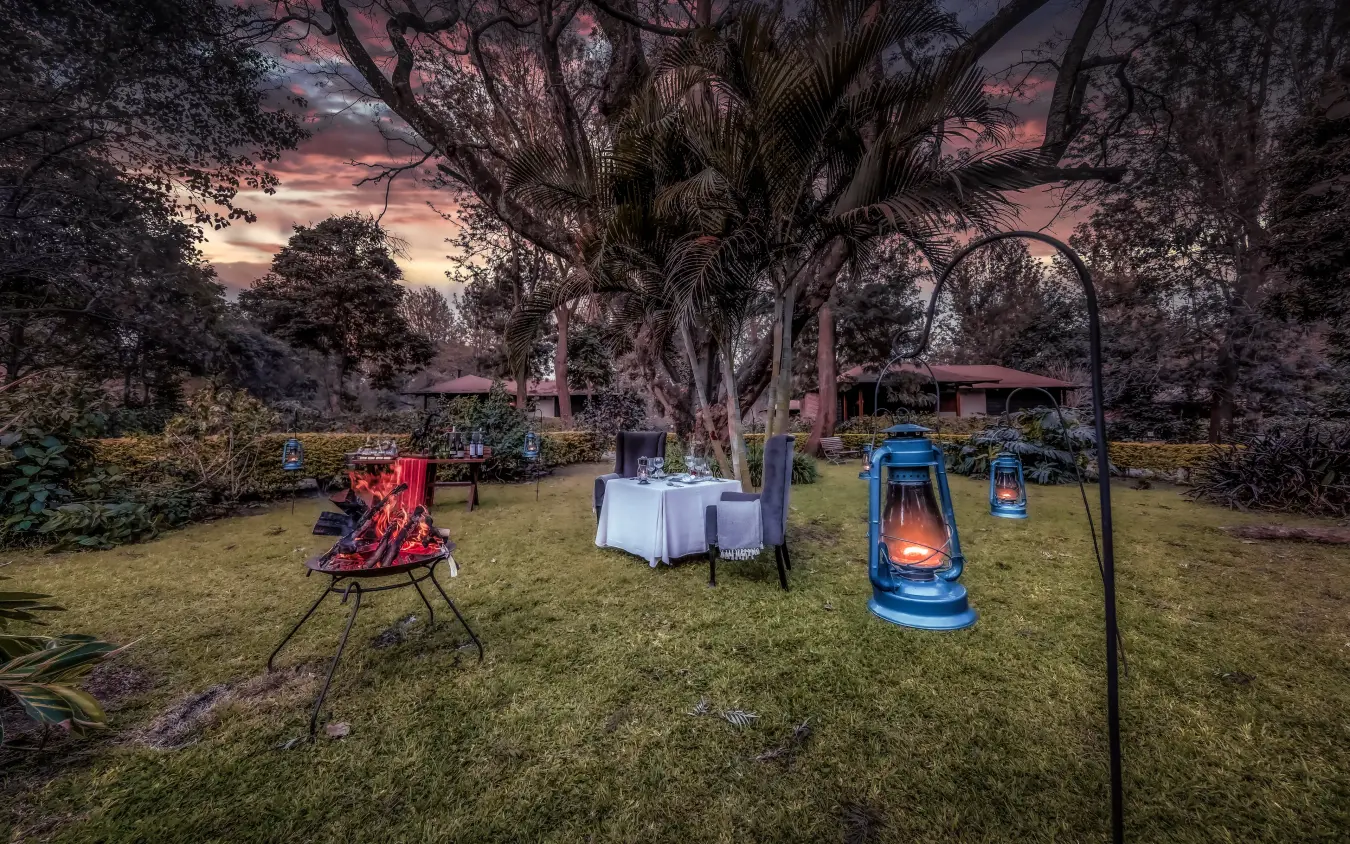
You land at Kilimanjaro International, often after dark, and wake to the outline of Mount Meru. The first day is a slow one on a working Arabica coffee estate, where a guided walk follows the bean from tree to cup, through planting and harvesting, drying and live roasting, and finishes with a tasting of the estate's own coffee. Arusha Coffee Lodge sets cottages and suites among the coffee rows at the foot of Meru, built around an early-1900s homestead in red brick and terracotta, about five minutes' drive from Arusha Airport.
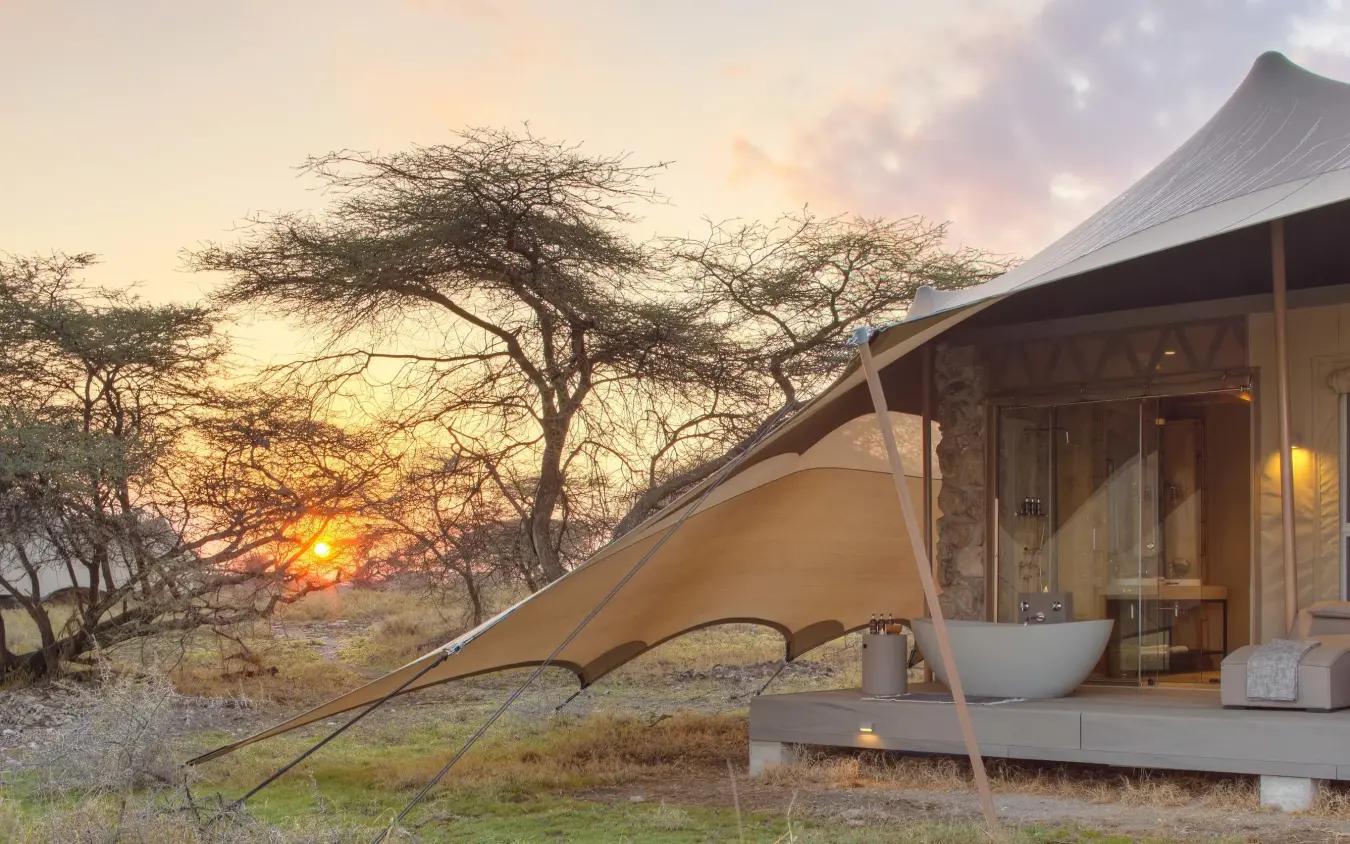
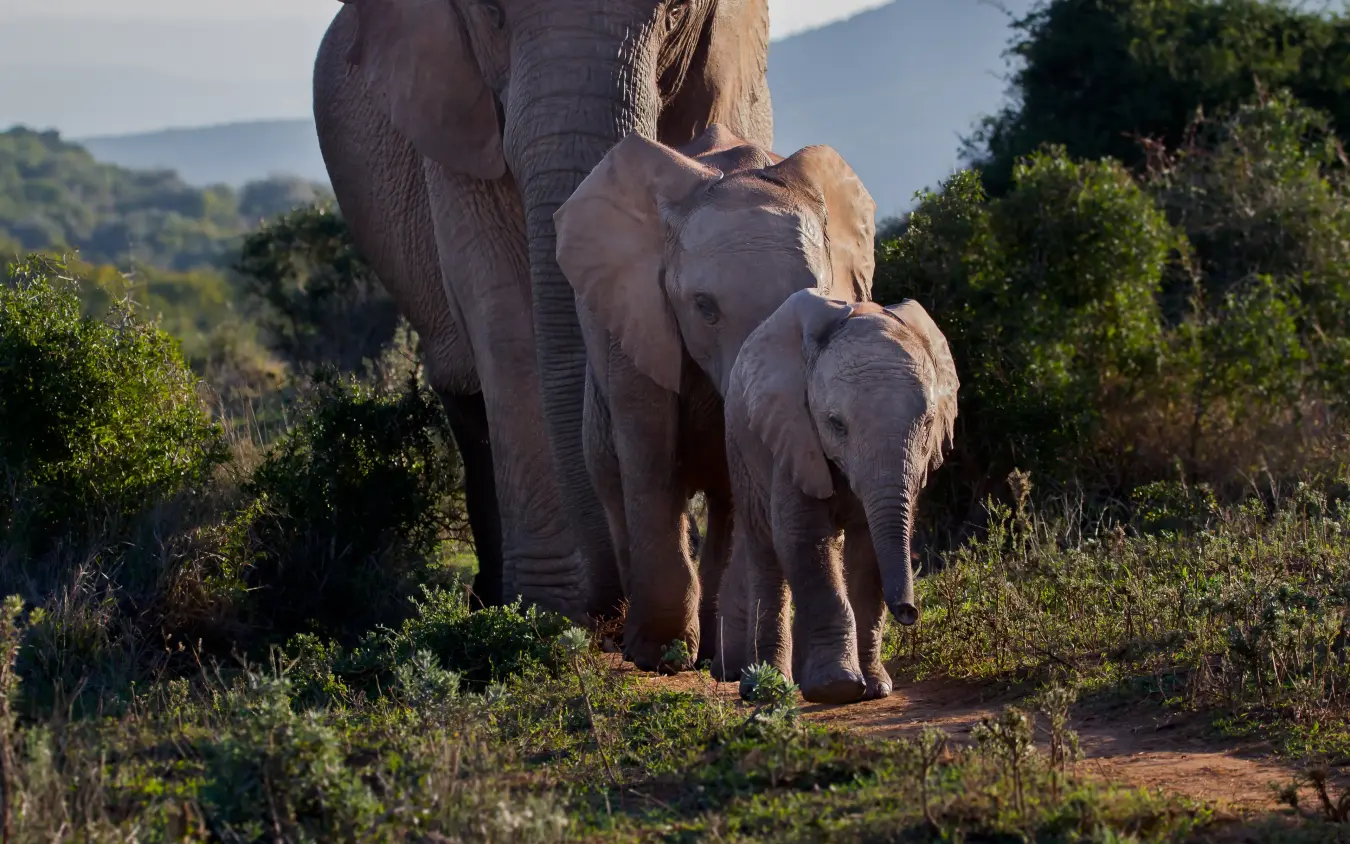
A drive from Arusha brings you up to the north-western rim of the Ngorongoro Crater. Days run to full-day game drives on the crater floor, where lion, spotted hyena, elephant, buffalo and black rhino share the grass with zebra, wildebeest and gazelle, with an early descent by the Seneto road ahead of the day-trippers. Rim and forest walks, longer trips to the Olmoti and Empakai craters, and an unhurried visit to a Maasai boma fill the rest of the time. Entamanu Camp faces the crater sunrise to the east and the Serengeti sunset to the west, high and cold at night and open to the highland wind.
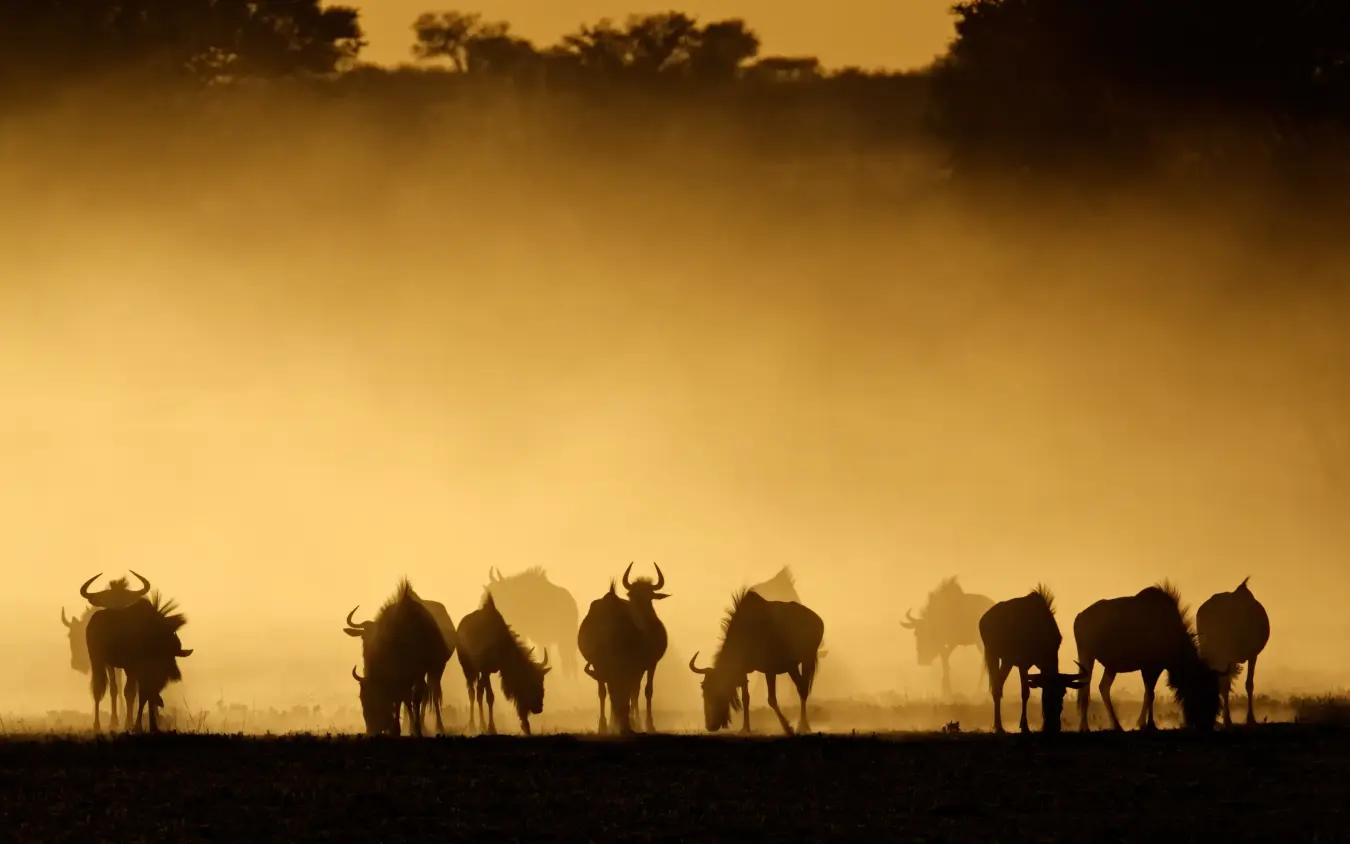
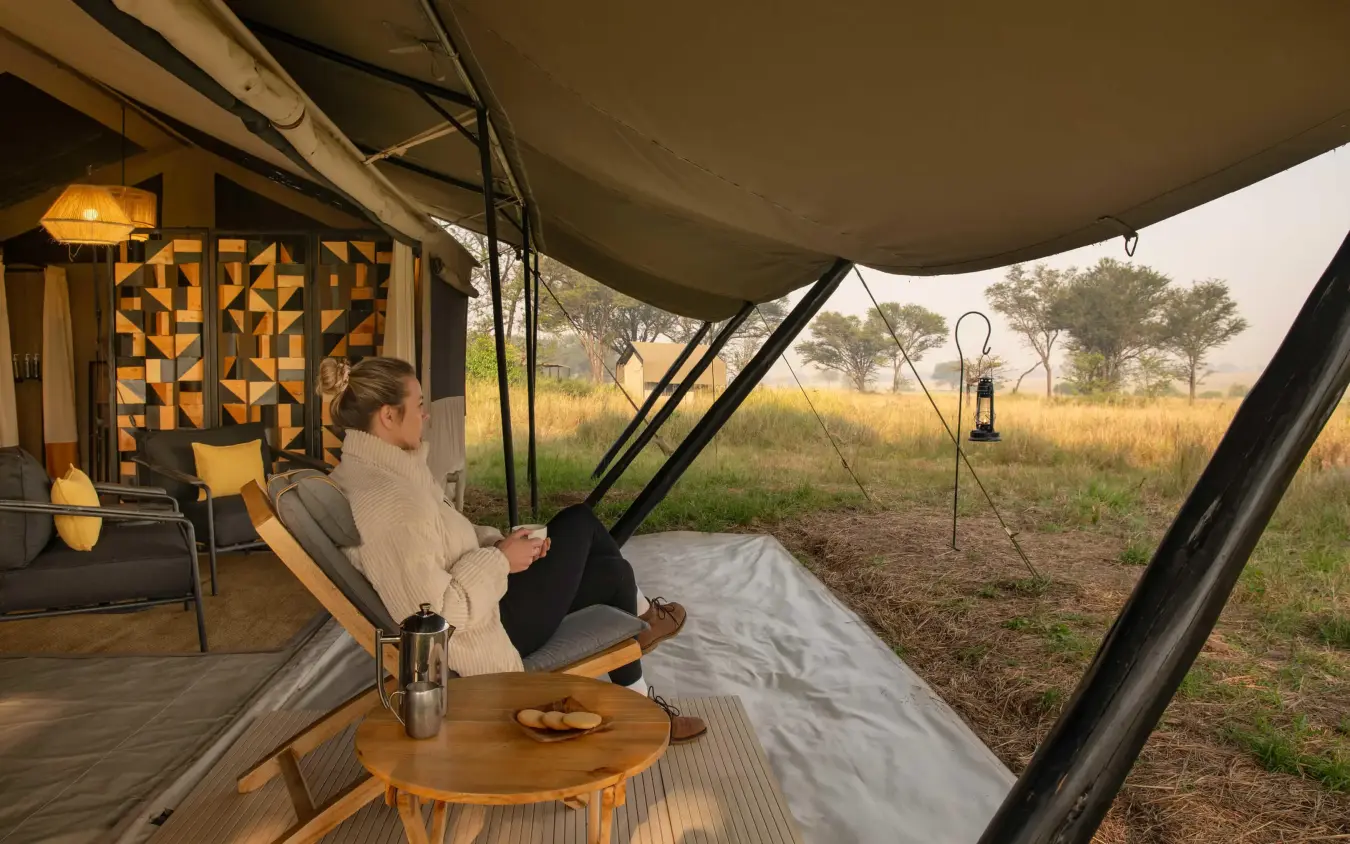
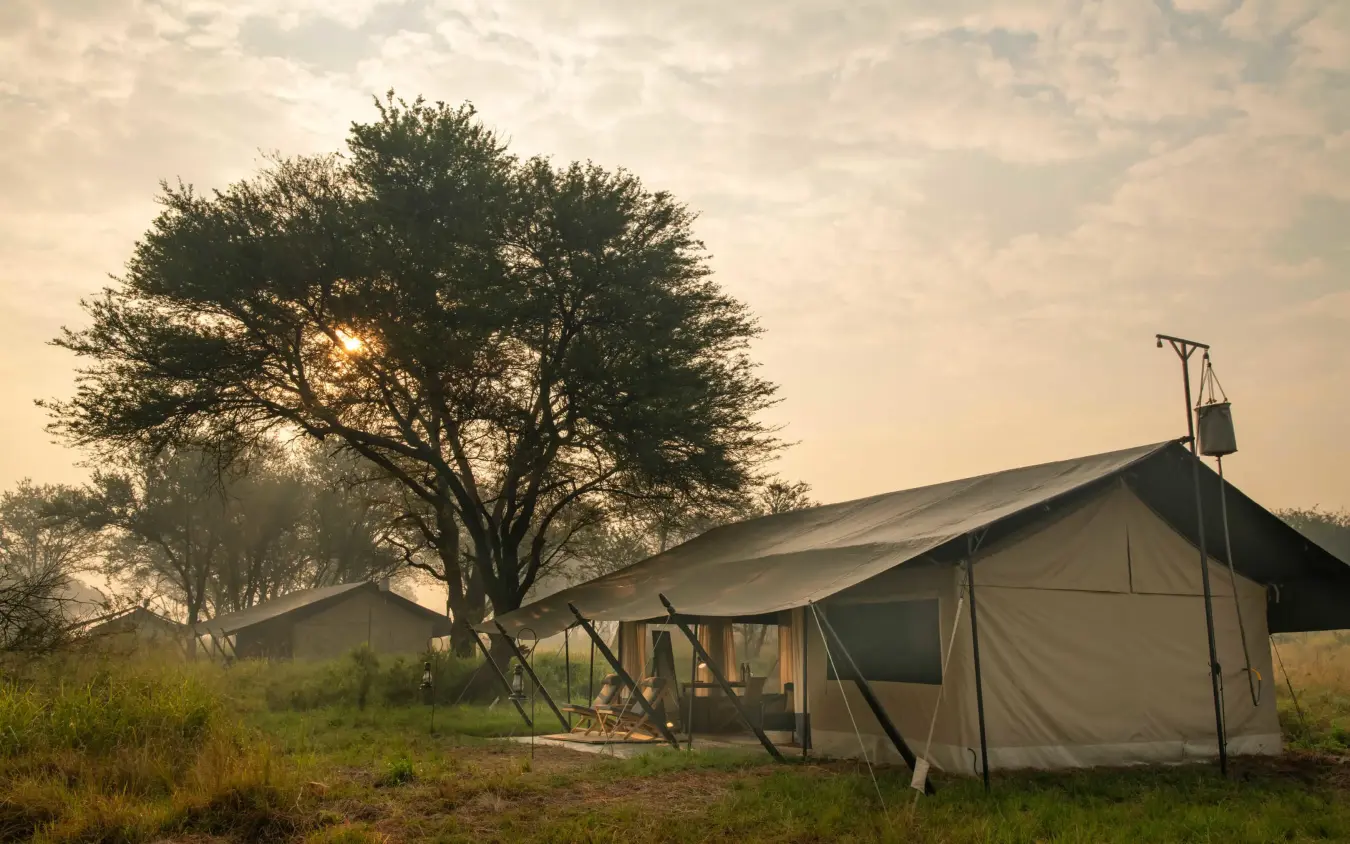
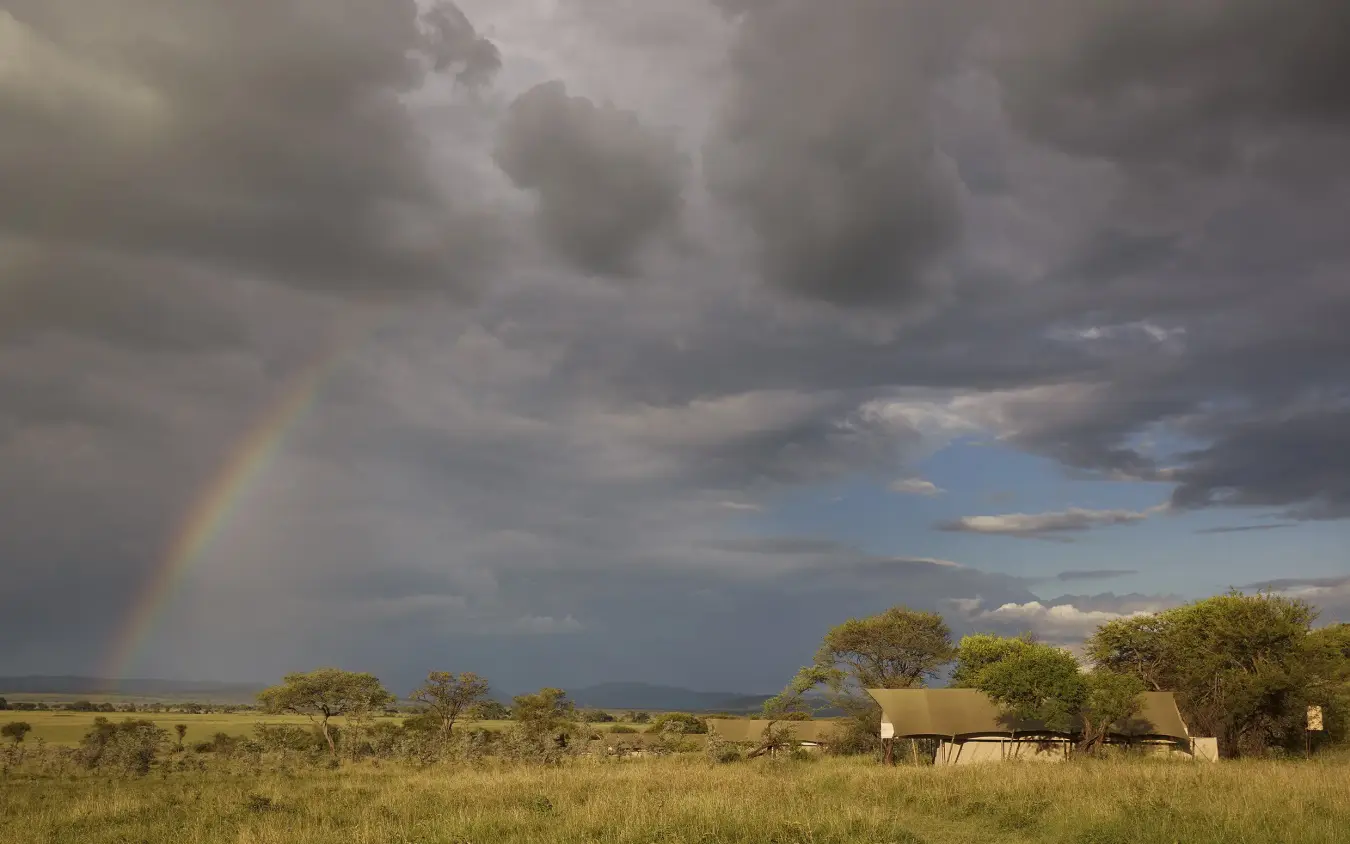
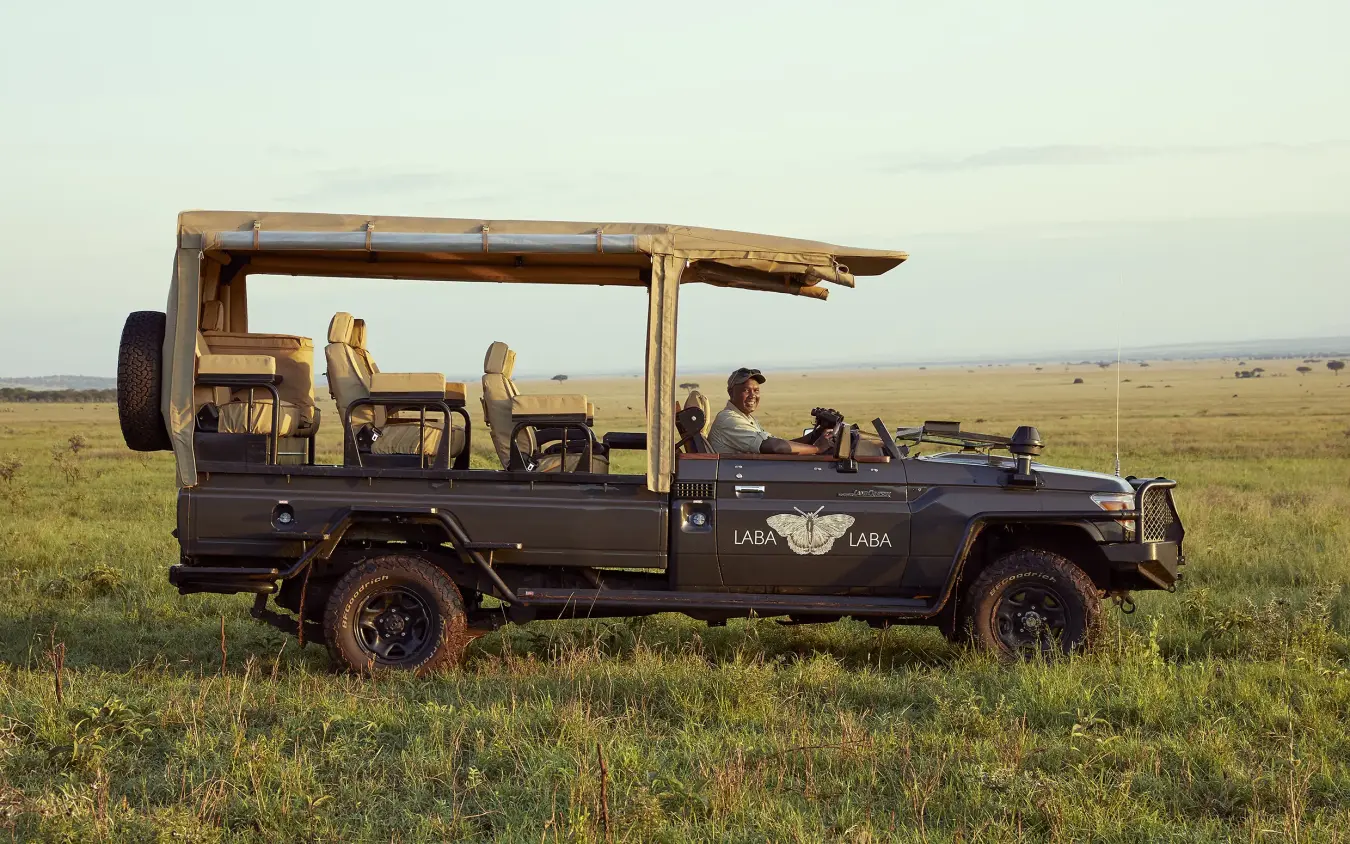
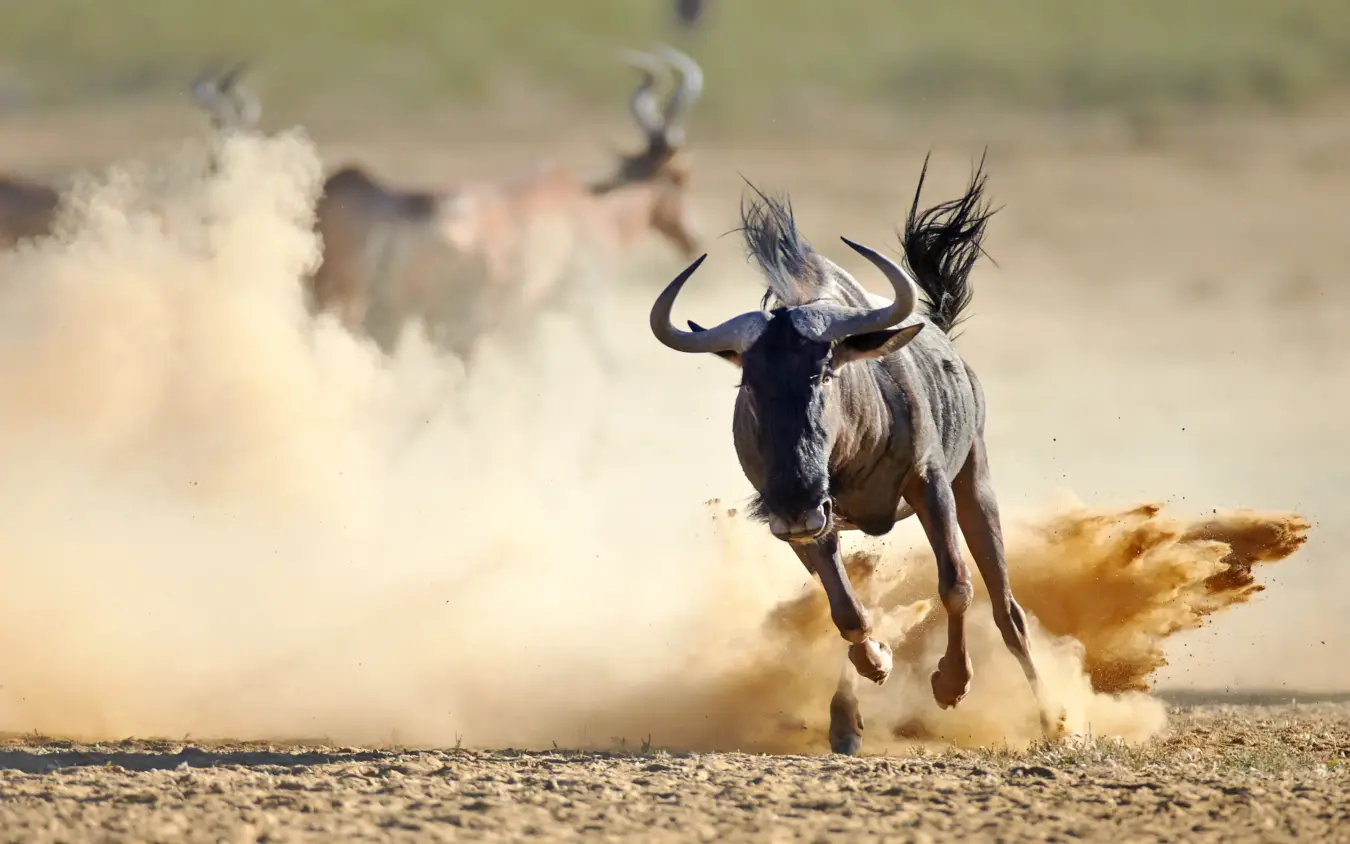
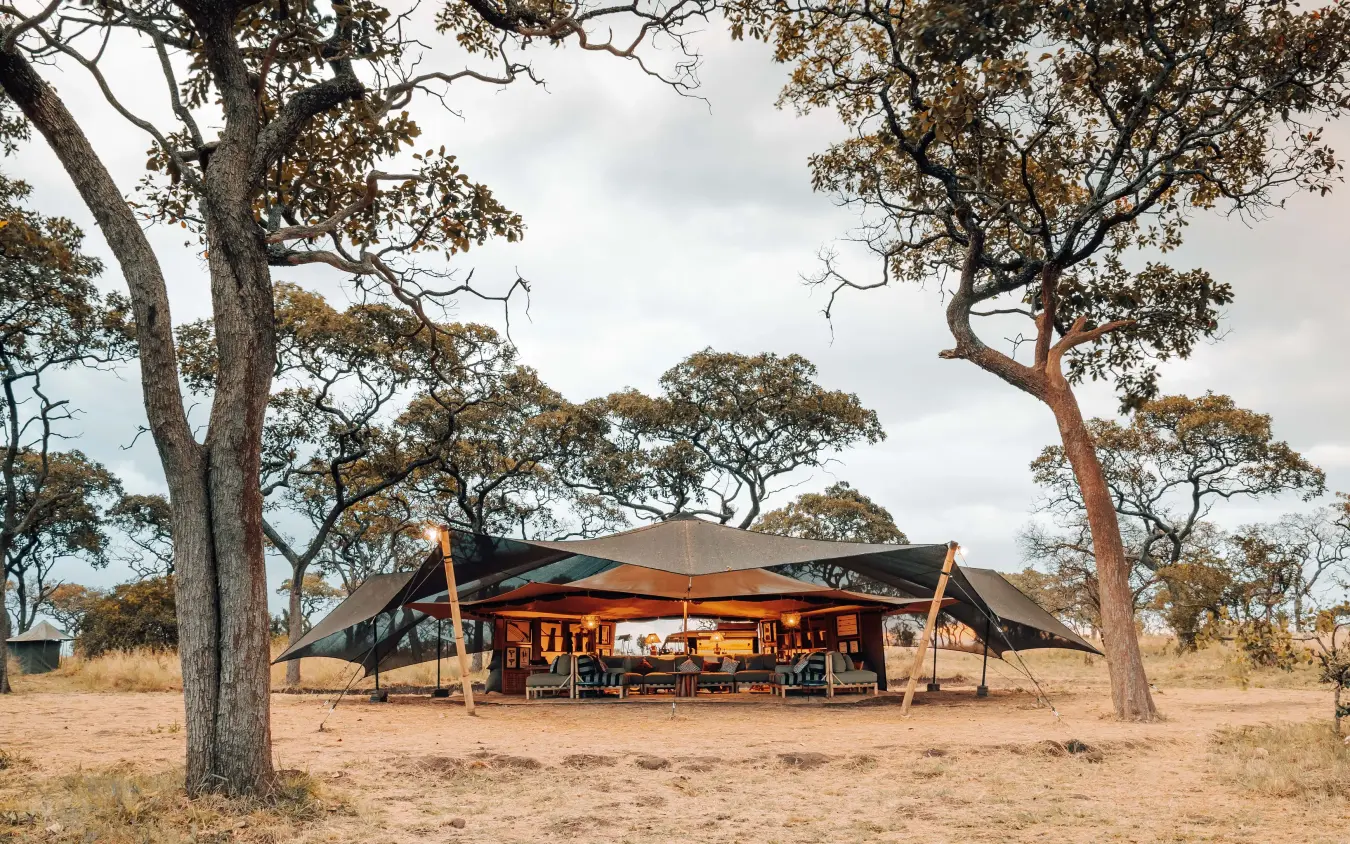
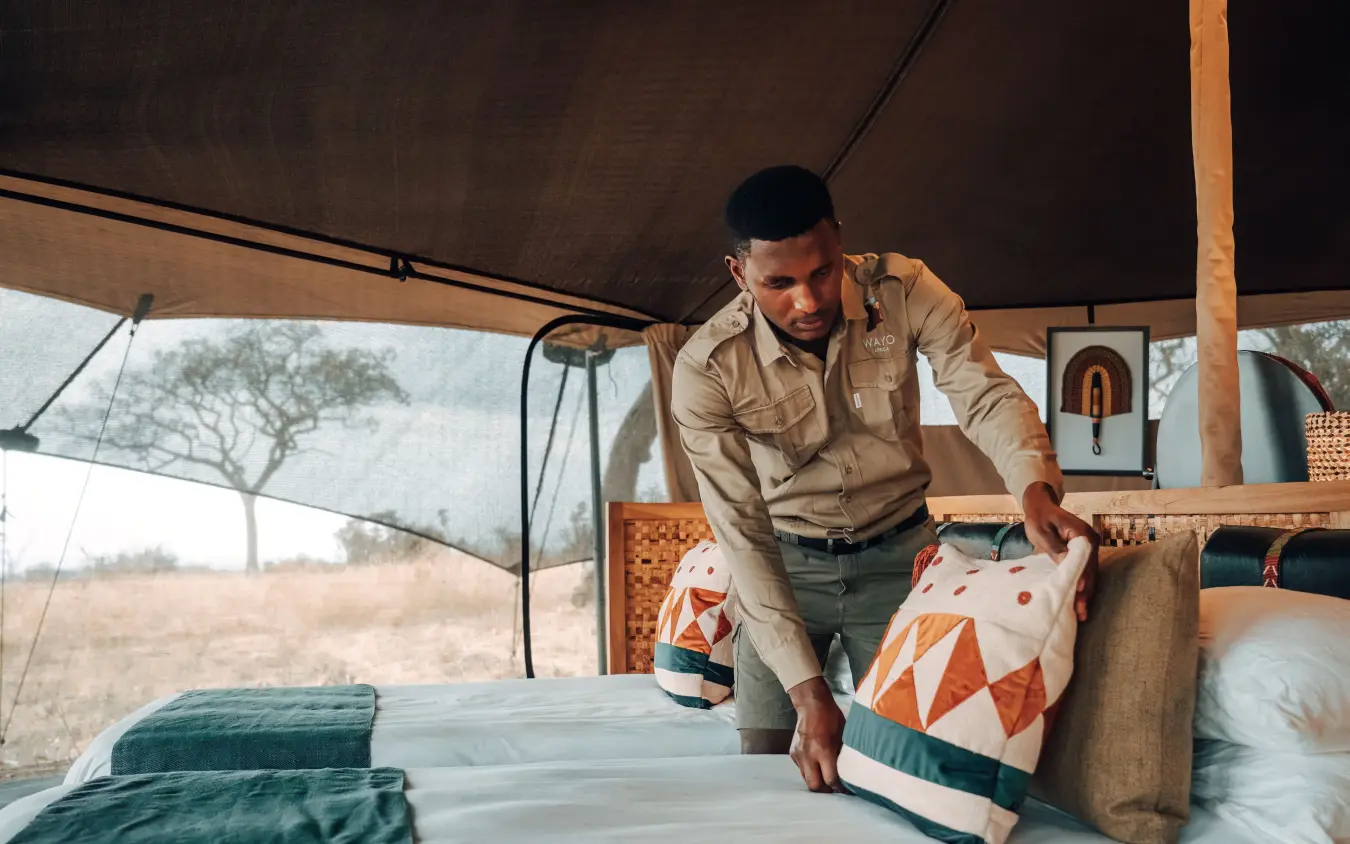
You move out onto the Serengeti plains, where wildebeest and zebra track fresh grass and water. Days are given to game drives among the herds, with lions, cheetahs and hyenas working the same ground, and at night the animals are audible from the tents. Where the camp stands depends on the season, from the Ndutu calving grounds to the Grumeti and north to the Mara River. Laba Migration Camp is a mobile tented camp that relocates three times a year to stay with the migration, holding up to 22 guests, with leather armchairs, brass finishes and a mess tent of rare books, fossils and meteorites.
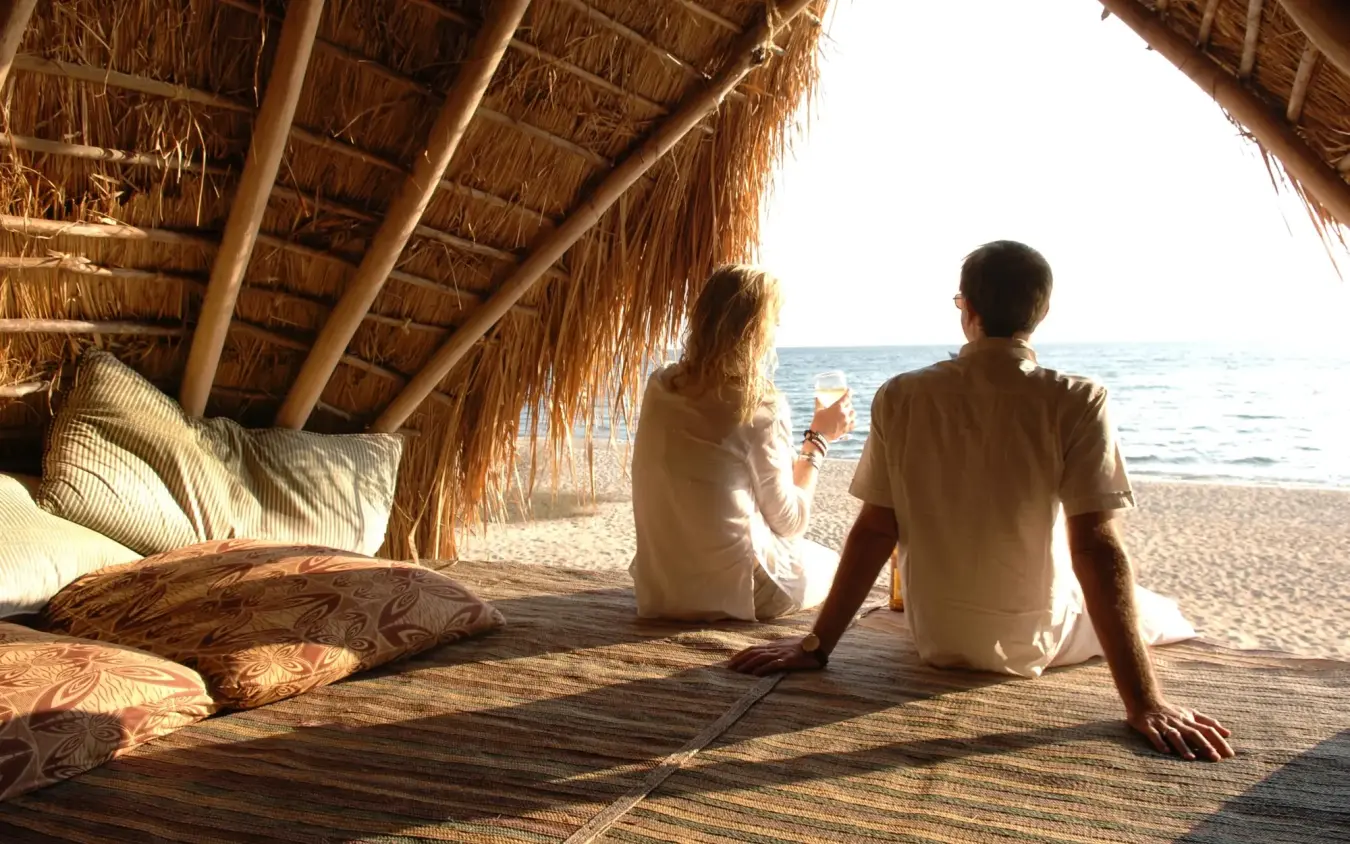
A light aircraft carries you west to Lake Tanganyika, then a dhow runs along the shore to the foot of forest-clad mountains. Mornings begin with a trek into the rainforest, guides and park rangers reading the signs until the habituated chimpanzees are found, for close, unhurried observation at a regulated distance and for limited time. Afternoons belong to the lake, with swimming off the beach, snorkelling among the cichlids, kayaking the shoreline or drifting out on the dhow at sunset. Greystoke Mahale is a dhow-wood lodge of eight bandas on a white-sand beach, no roads reaching it and the forest climbing steeply behind.
That depends on the month, and the camp is built to follow them.
It comes down and goes up again three times a year:
So the camp is placed where the herds usually are, which is the whole point of a mobile camp rather than a fixed lodge. What nobody can fix is the animals, whose movement follows the rain and varies from year to year.
The northern months place the camp near the Mara River, and crossings are likeliest from late July into October, but one is a wait of hours or days and never a certainty.
You go down early.
The camp sits on the north-western rim, and the Seneto road drops you onto the floor ahead of most of the traffic. The descent gate shuts at four in the afternoon and the gates themselves at six, so the day is built around an early start and a picnic below.
The floor gathers lion, spotted hyena, elephant, buffalo, zebra and wildebeest into a small area, which is exactly why it draws crowds, and it is crowded all year rather than only in high season.
Black rhino live down there and are easily seen, though usually as a distant shape across the grass rather than one close up. Counts of them vary widely, from twenty-six in one count to fifty-five in another. Binoculars matter more than a long lens.
By shared charter, on a Monday or a Thursday. Those are the only two days the western service runs.
It flies from Arusha and the Serengeti to Mahale in about four hours, calling at Katavi on the way, so the Serengeti nights are built to finish on one of them.
No road reaches that shore at all, so the last hour and a half is by boat from the airstrip, running down the lake to the beach in front of camp. Everything before that is driven, up through the conservation area to the crater rim and on to wherever the mobile camp is standing that month.
The charter allows about 15 kilograms each, soft bags only and hand luggage counted in, so anything bulky waits for you in Arusha.
Different in almost every way.
There is no vehicle in it: you walk from camp into rainforest that climbs straight up off the beach, and the animals are found by trackers reading signs rather than by driving to a sighting.
Once the group is found the park authority's rules take over. Its viewing regulations:
Tracking also stops three hours from the first sighting, even if that hour has not been used up.
One trek goes out each full day, and four nights here give you more than one attempt, which counts, because the walk might be under an hour or most of a morning depending on where the group slept.
Two wardrobes, and they barely overlap.
The rim camp gives five to twenty-three degrees from July to September, with mist most mornings and the temperature dropping away sharply after sunset, so a fleece, a windproof shell, gloves and a hat all earn their place. The cottages have indoor heating for a reason.
Mahale runs nineteen to twenty-seven degrees over the same months and is humid with it, so light long sleeves, quick-drying trousers, shoes with grip for wet forest trails and something to swim in.
Add neutral colours for the game drives and binoculars for the crater floor. The real constraint is the western charter, about 15 kilograms a person in soft bags, so pack for that and leave the rest in Arusha.
July to October, without much argument.
Every stop on this route carries our top rating in those months, the herds are usually in the northern Serengeti then, the crater is clear, and the chimpanzees sit lowest on the Mahale slopes, with August and September the best of it. That is also when the twice-weekly western flights fill up, so we book them early.
February is the other case worth hearing: the calving is on the short-grass plains near Ndutu, where the mobile camp stands from December to the end of March, and we rate the crater as highly in February as in the dry months. The trade is Mahale, wetter underfoot with the chimpanzees higher up.
March, April and May do not work here, since the lake camp shuts from mid March.
Ed Charles, BBC Producer
Fitzroy are true specialists in accessing the wilderness. They know where to go and importantly, when to go there. Highly recommended.
tanzania
Walking safaris through Tanzania's Rift Valley and Serengeti, then five nights in a private villa on Zanzibar's coast.

tanzania
Ten nights across Tanzania, from the eastern and southern Serengeti to chimpanzee trekking at Mahale on Lake Tanganyika.

tanzania
Ten nights from Mount Meru across the eastern and southern Serengeti to the Ngorongoro Crater rim.
rated five stars by our clients

our approach
Every journey starts with a conversation. We take the time to understand your vision before we start planning.
Whether by phone or in person, we work with you directly to shape something that is considered, personal, and expertly delivered.
Every journey starts with a conversation. We favour a direct, personal approach: understanding your vision before anything else.
Whether by phone or in person, we work with you directly to shape a journey that is both thoughtfully considered and expertly delivered.
Get in touch to start planning yours.