









kenya & tanzania
the mara to the crater
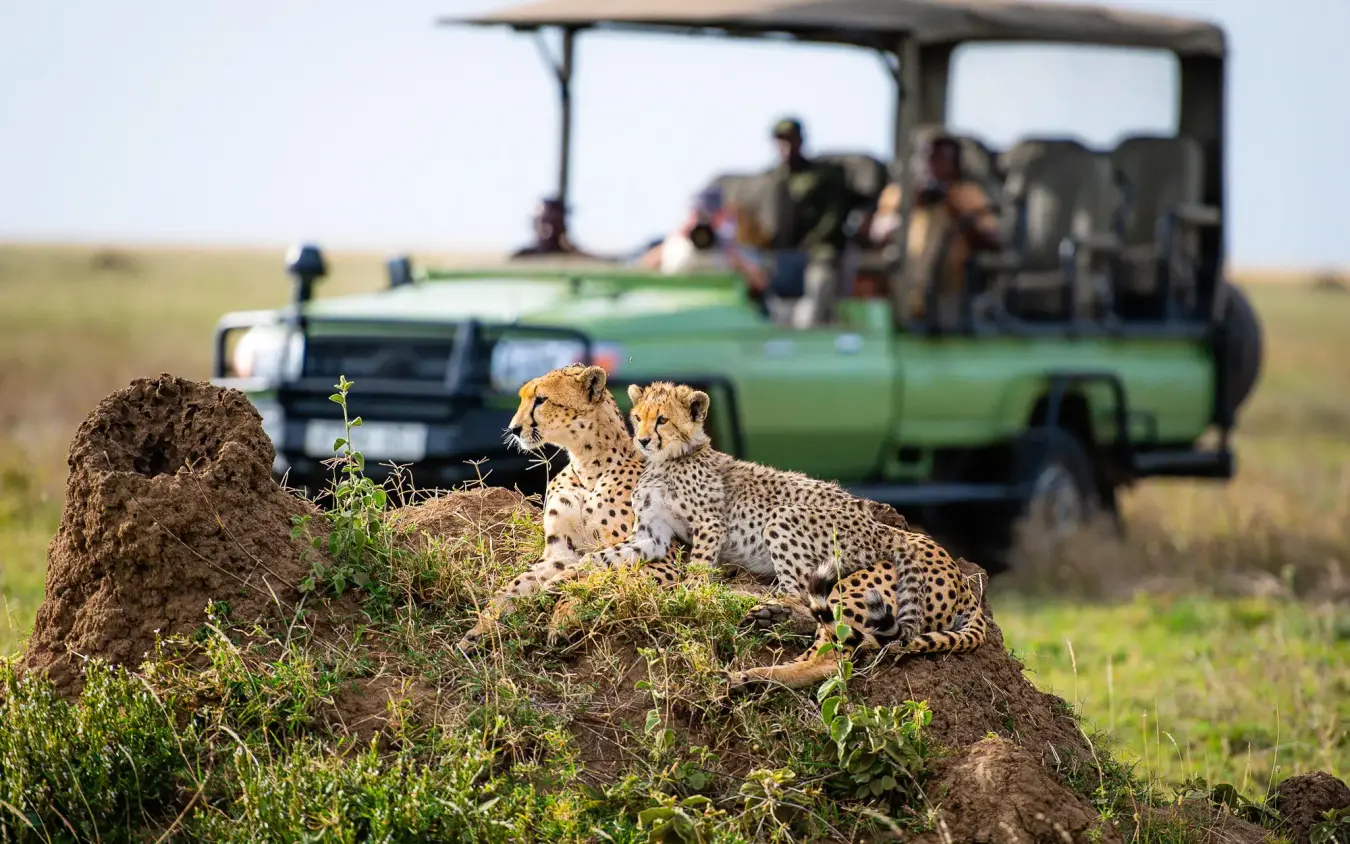
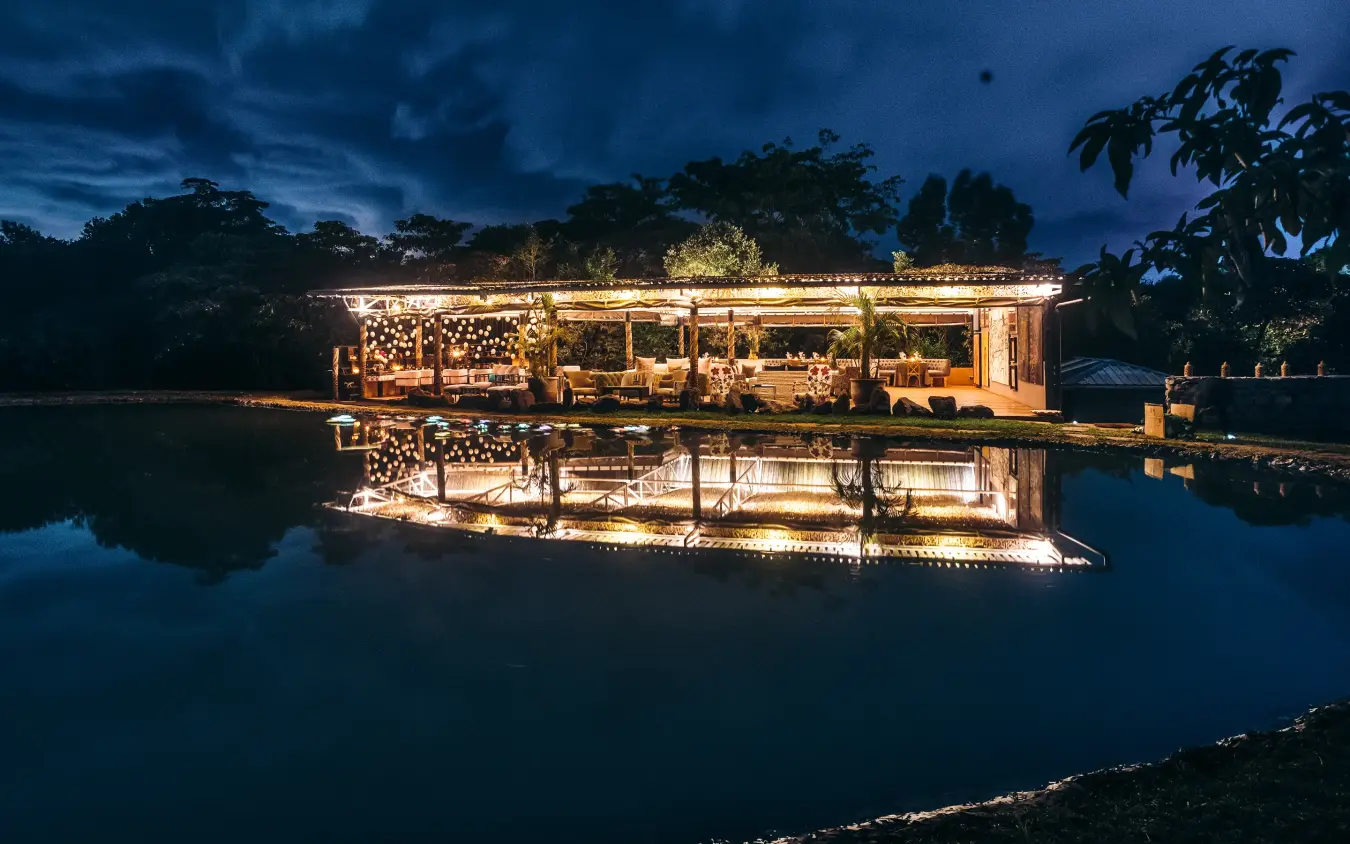
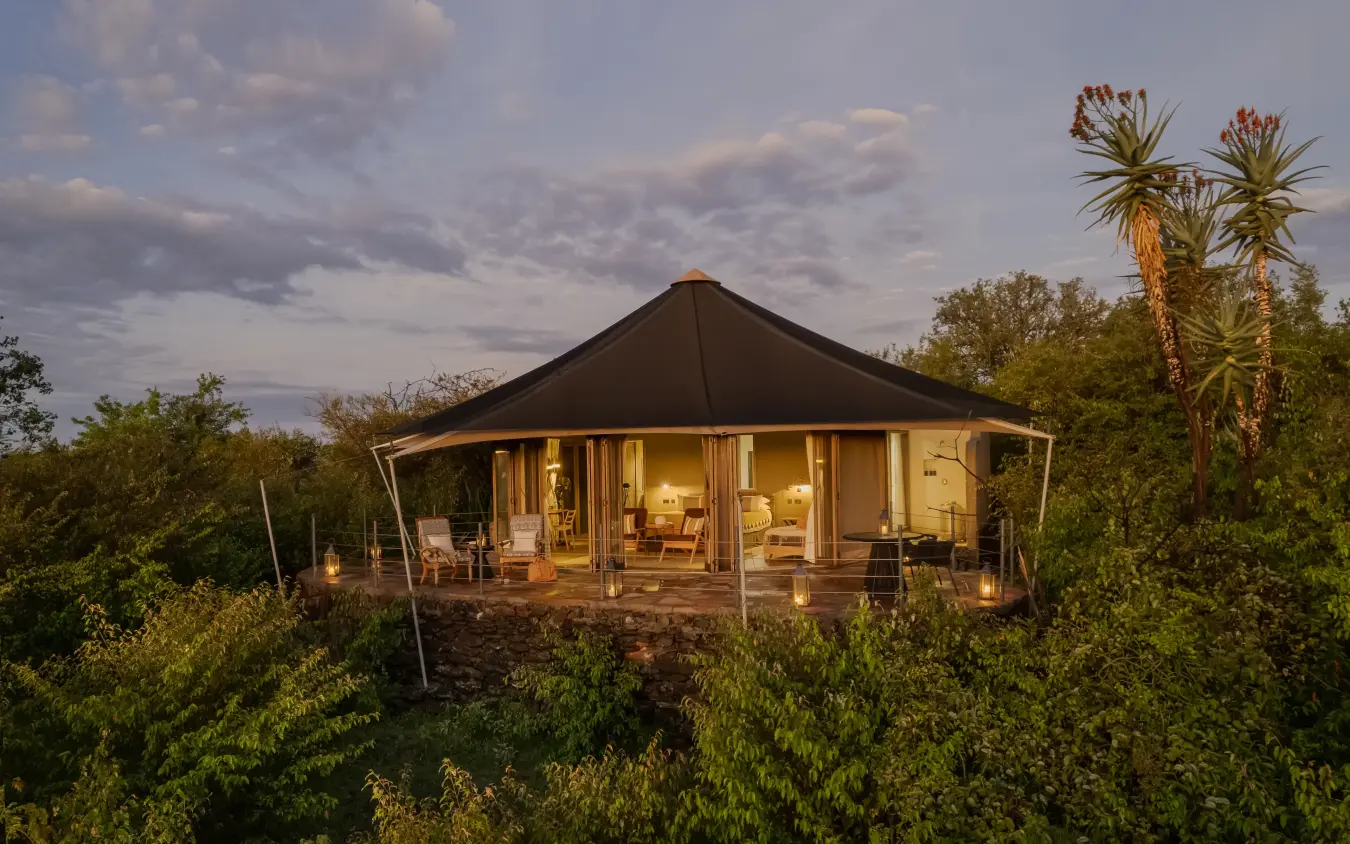
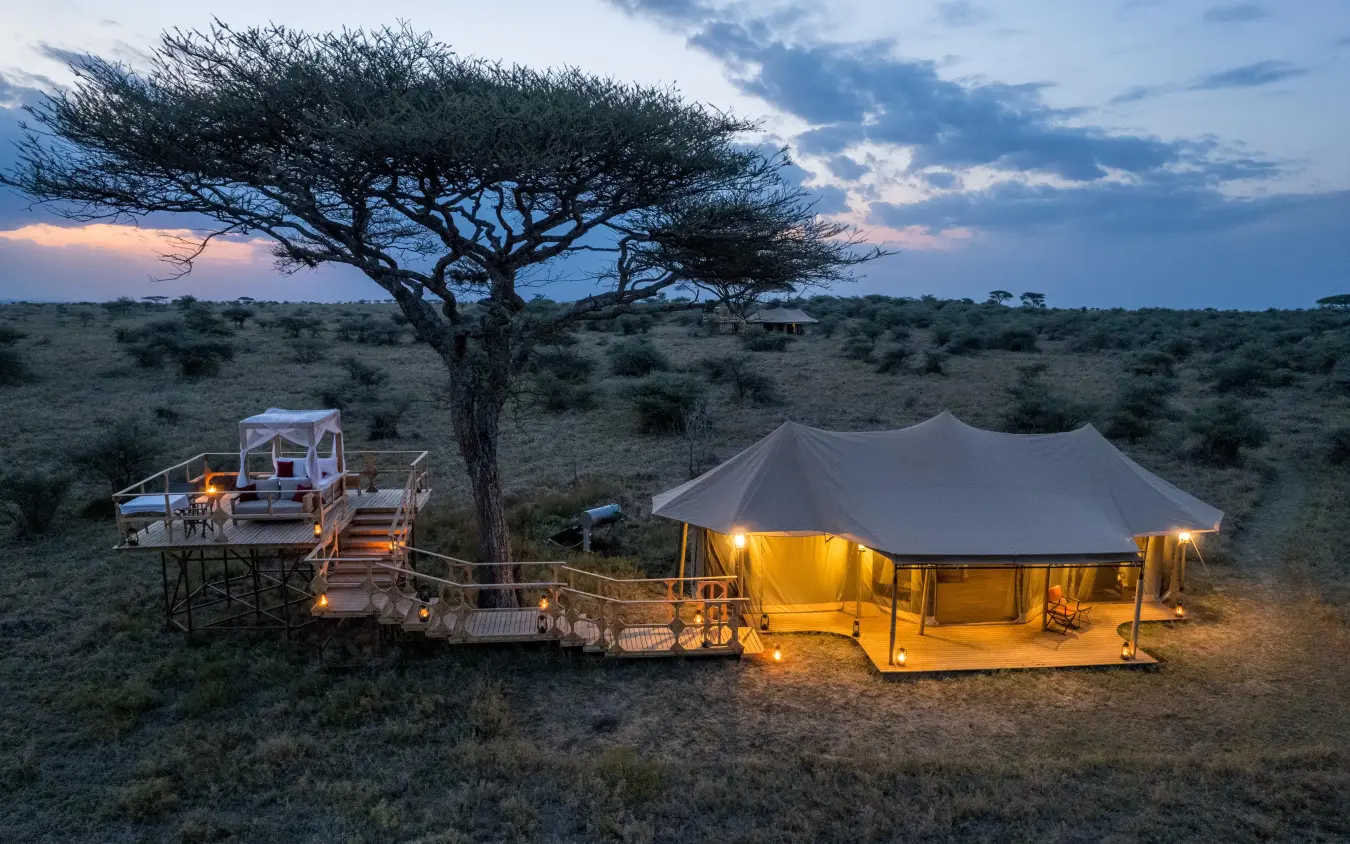
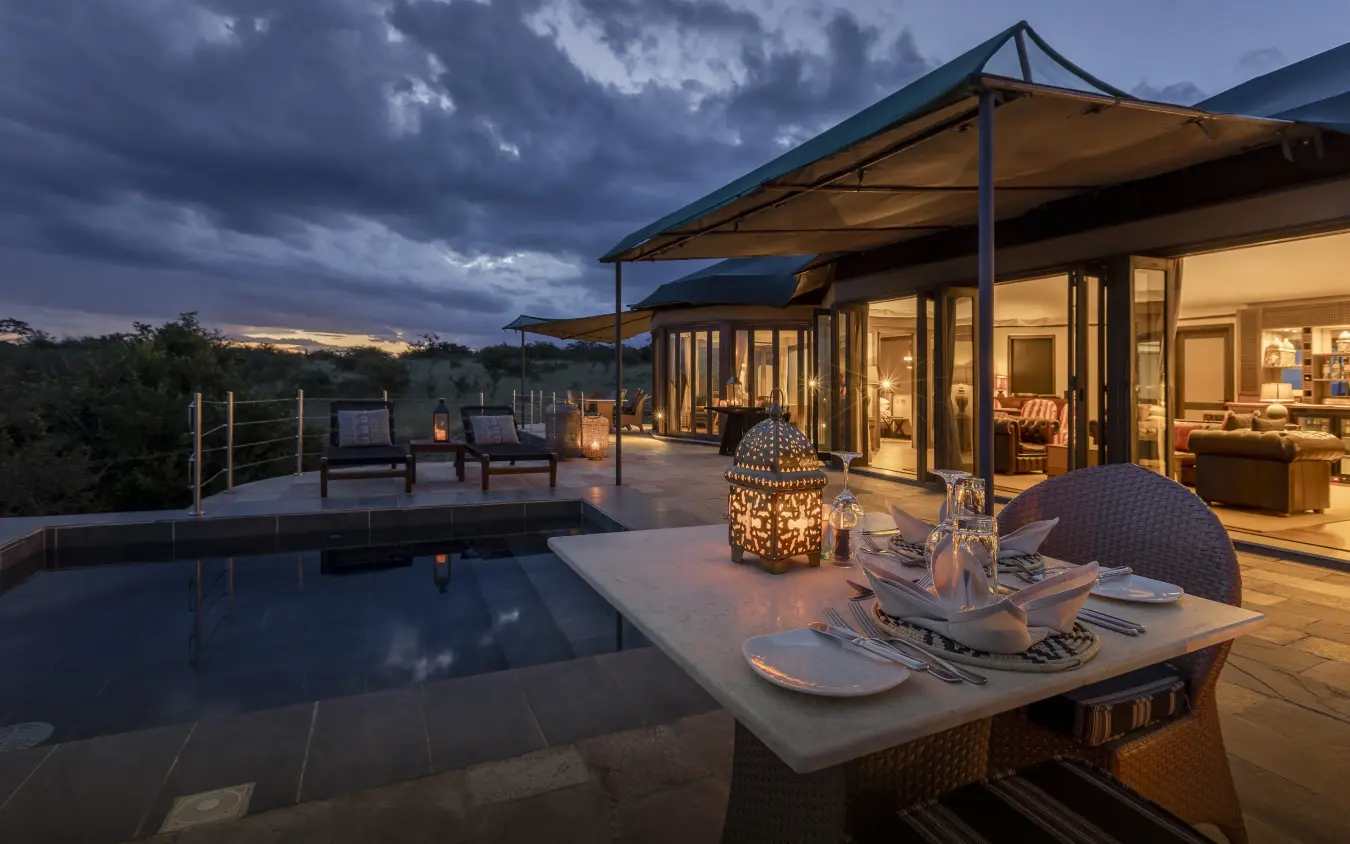
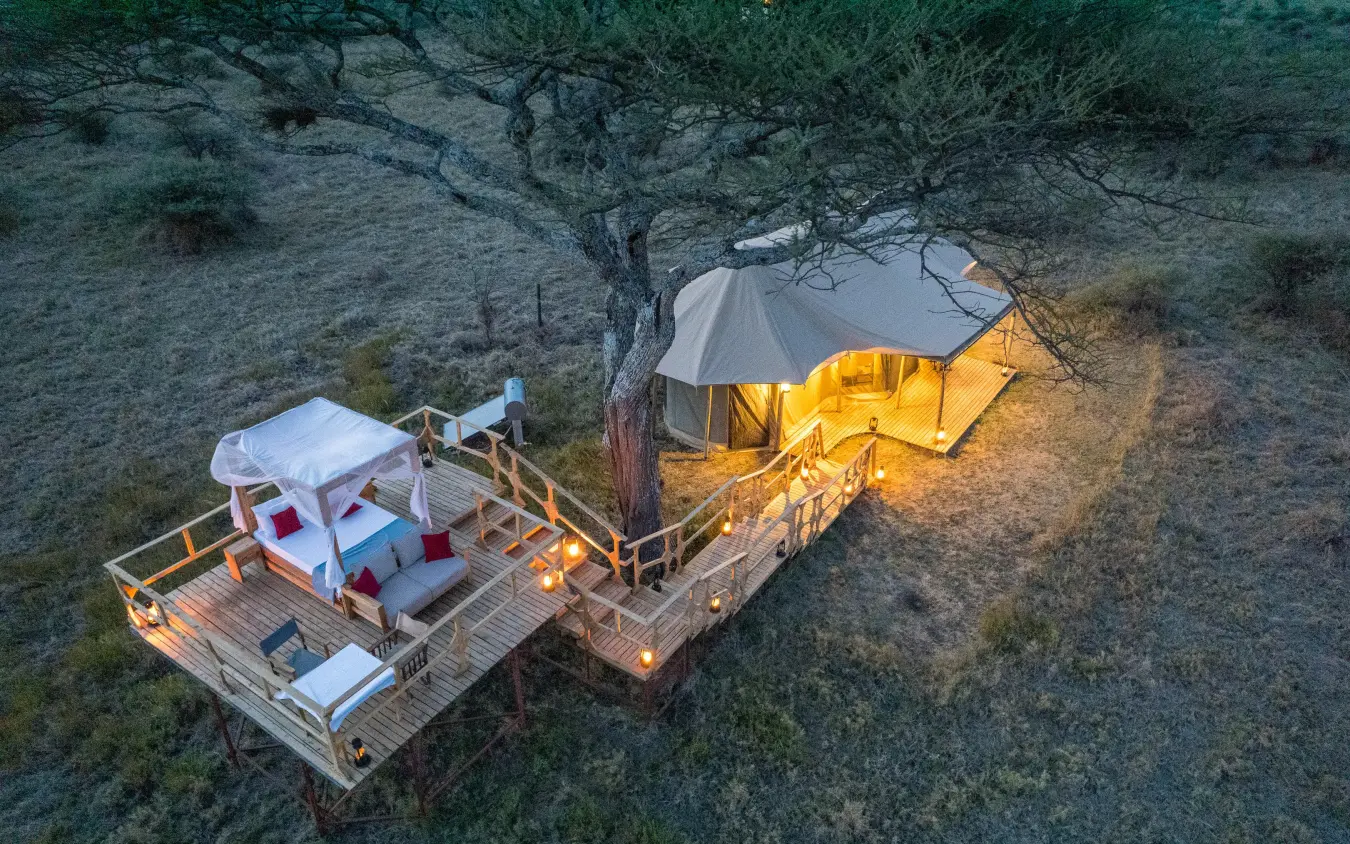
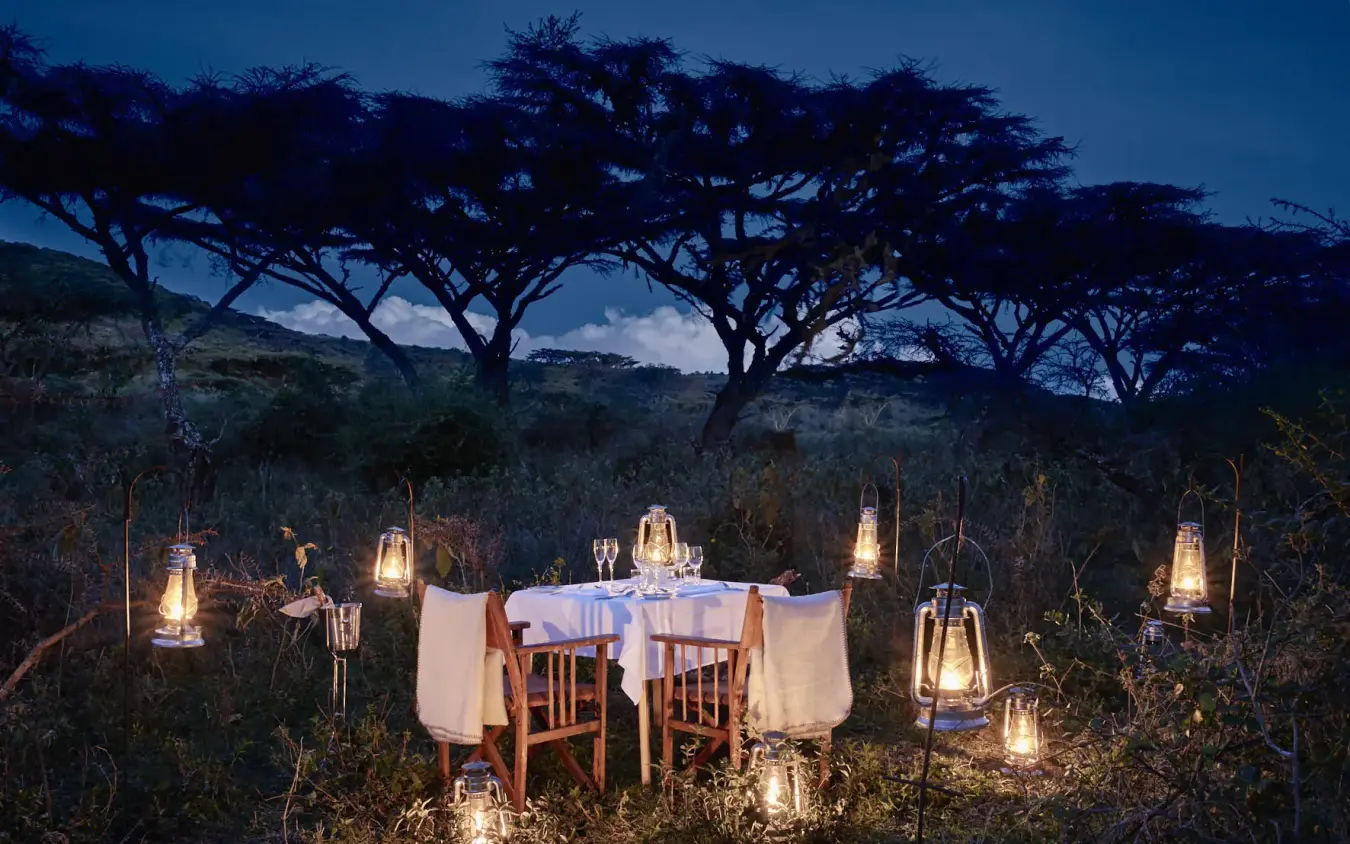
Ten nights from Nairobi through the Mara's Naboisho Conservancy and the eastern Serengeti to the rim of the Ngorongoro Crater.
- Private Safari
- From $12,580 pp
- 2 guests
- 10 nights
The route begins in Kigali, Rwanda’s ordered capital, before crossing to Uganda’s Mgahinga Gorilla National Park, where a single habituated gorilla family lives beneath three Virunga volcanoes. From there it moves to Kenya’s Mara North Conservancy, private land beside the wider Mara, then north to the forested Mathews Range, a walking country of rivers, fig trees and cycads. It ends on the edge of Nairobi.
You travel by road and air transfer between the regions, with guided gorilla and golden monkey tracking in Mgahinga, private 4WD game drives in the Mara and forest walks in the Mathews Range. The stays run from a five-star city hotel to hand-built stone bandas, marquee tents above a river and a forest camp, closing at a 1930s manor house with resident giraffes.
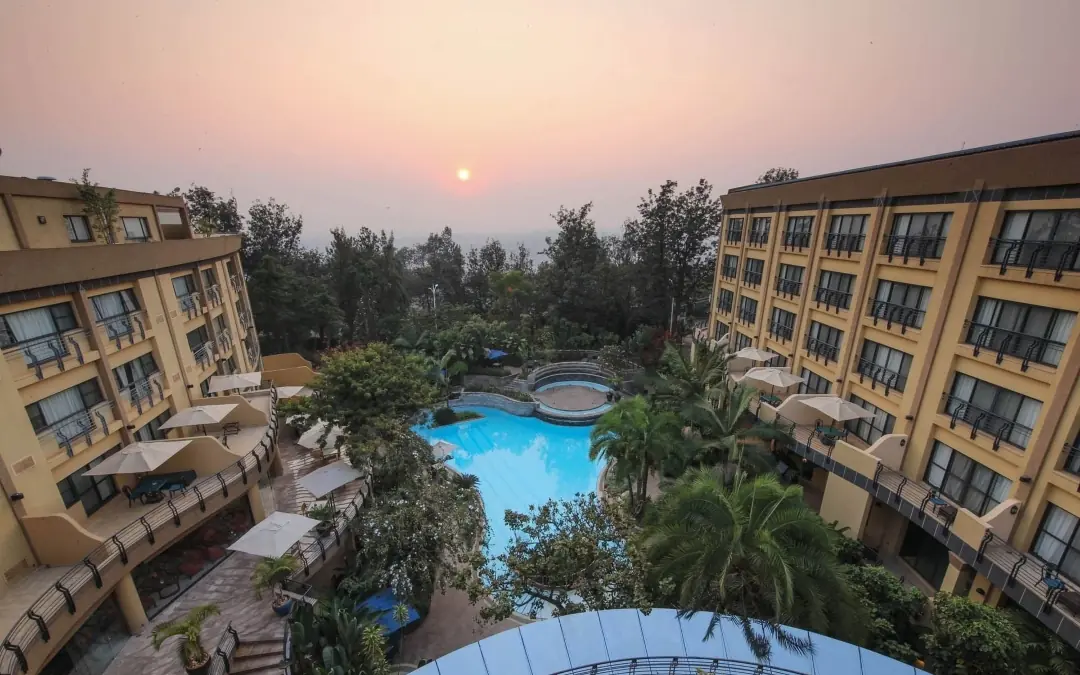
You arrive in Kigali, Rwanda's capital, spread across ridges and valleys and widely regarded as the cleanest city in Africa. There is time to settle after the flight, and the city rewards a walk through the textile stalls of Kimironko Market or a quiet few hours at the Kigali Genocide Memorial. Set on Boulevard de la Révolution, the Kigali Serena is the city's established five-star address, built around a polished granite atrium that displays Rwandese art, roughly twenty minutes from the airport.
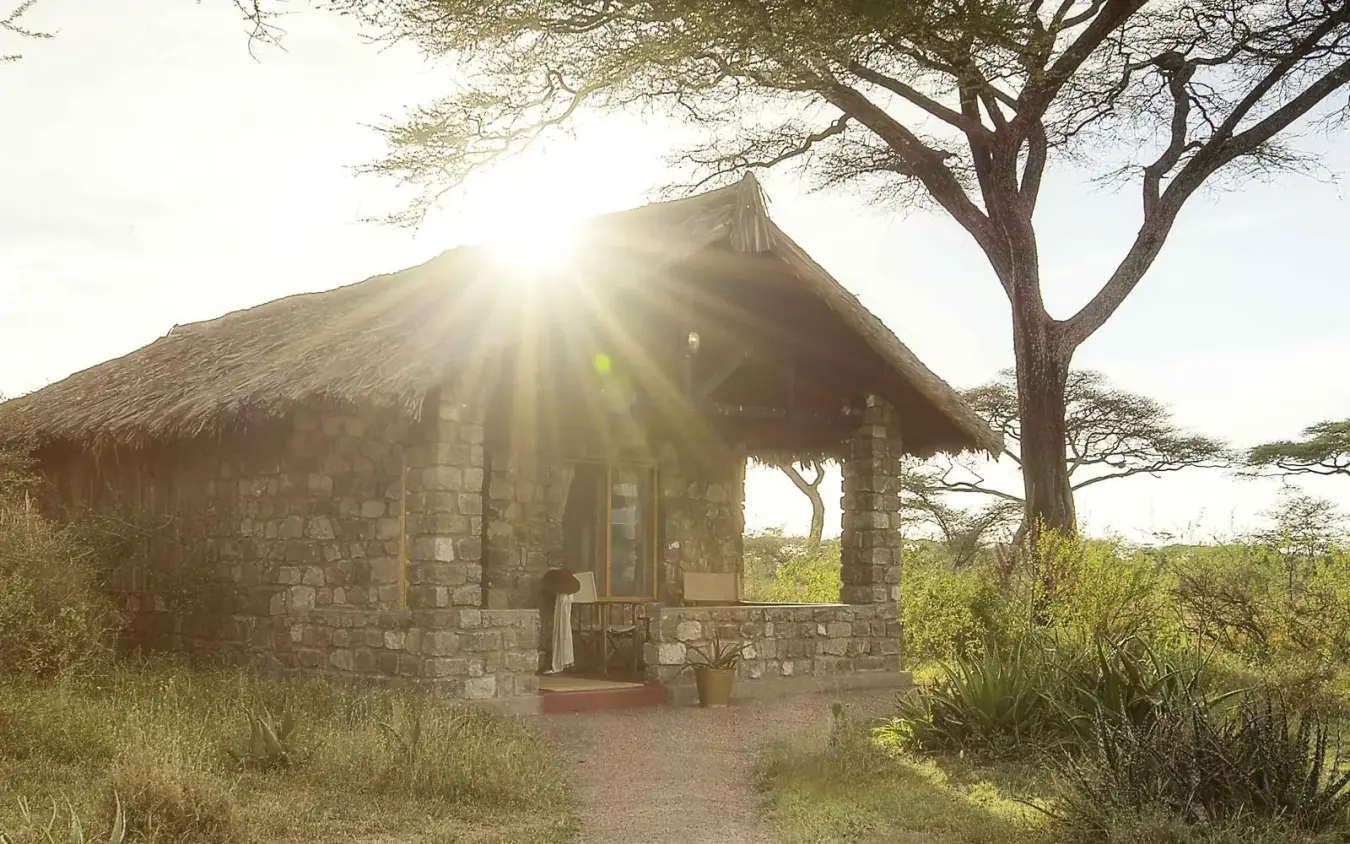
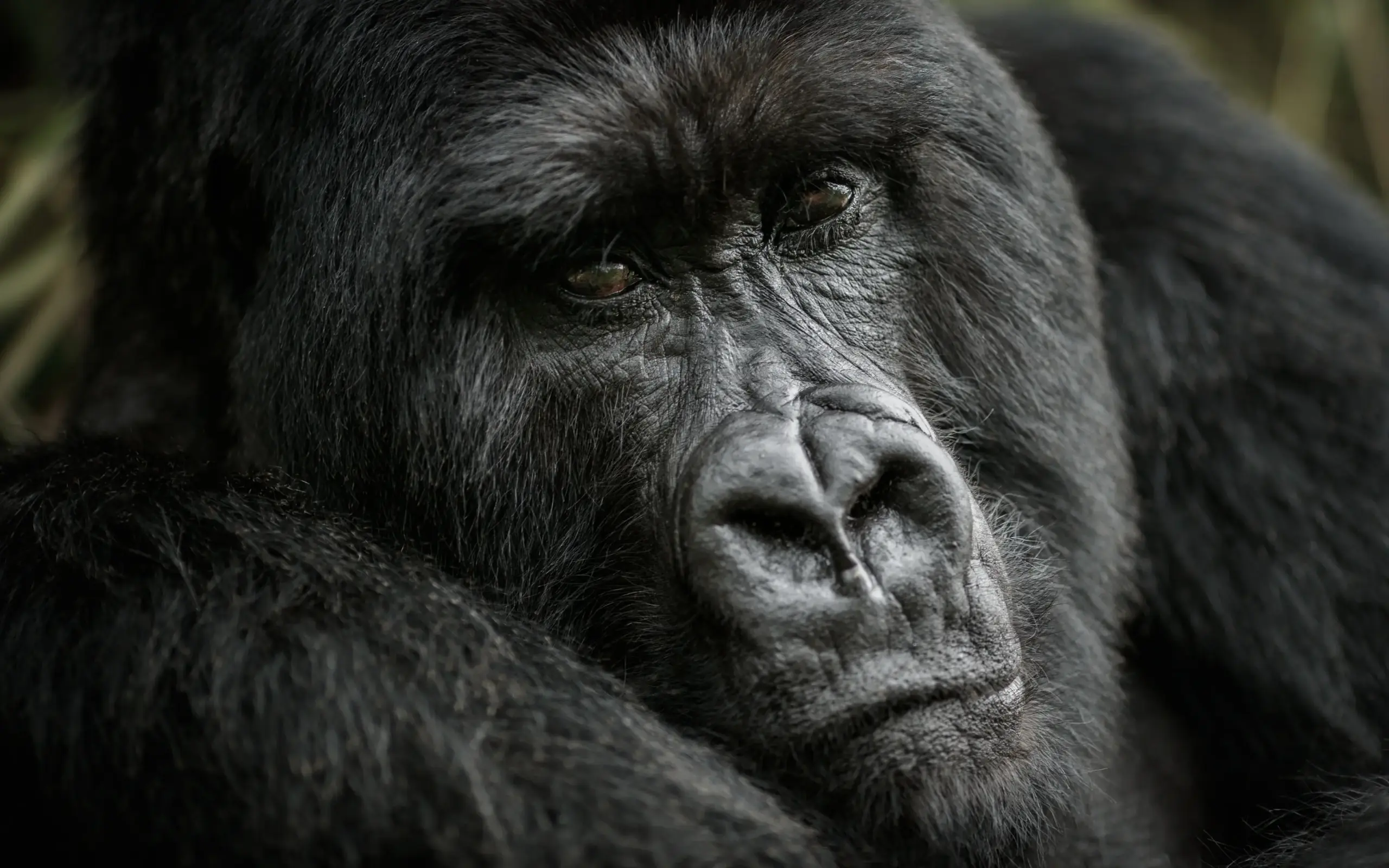
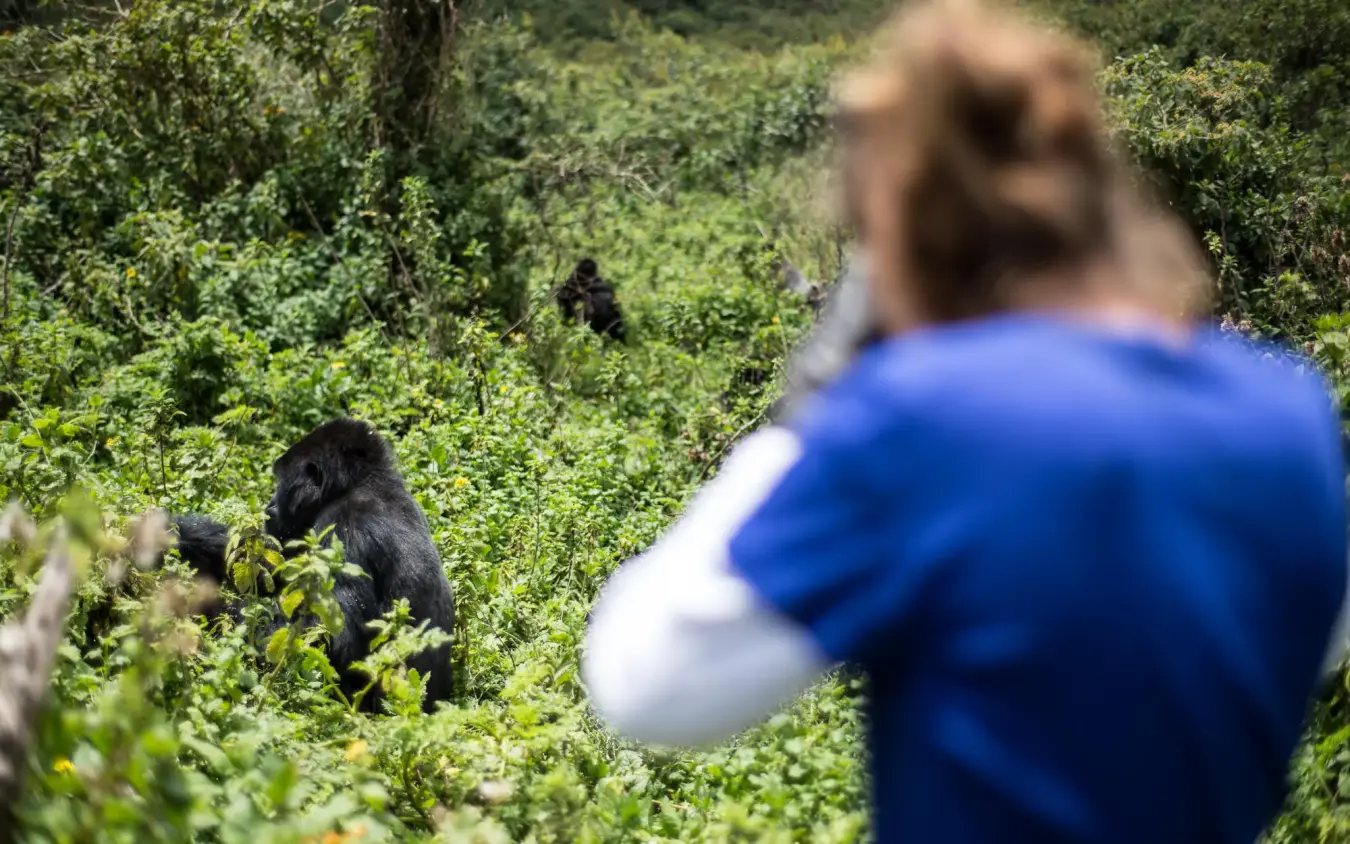
On the edge of Mgahinga Gorilla National Park you track the Nyakagezi family, the single habituated gorilla group here, along with the golden monkeys that move through the bamboo. Because the park holds just one gorilla family and receives far fewer trackers than Bwindi, the forest feels unhurried. A short walk from the park gate, the lodge has eight circular bandas hand-built from local volcanic stone under thatch, each with a fireplace and a private veranda angled toward Sabinyo, Gahinga and Muhavura. Praveen Moman opened it in 2002, the first lodge he built.
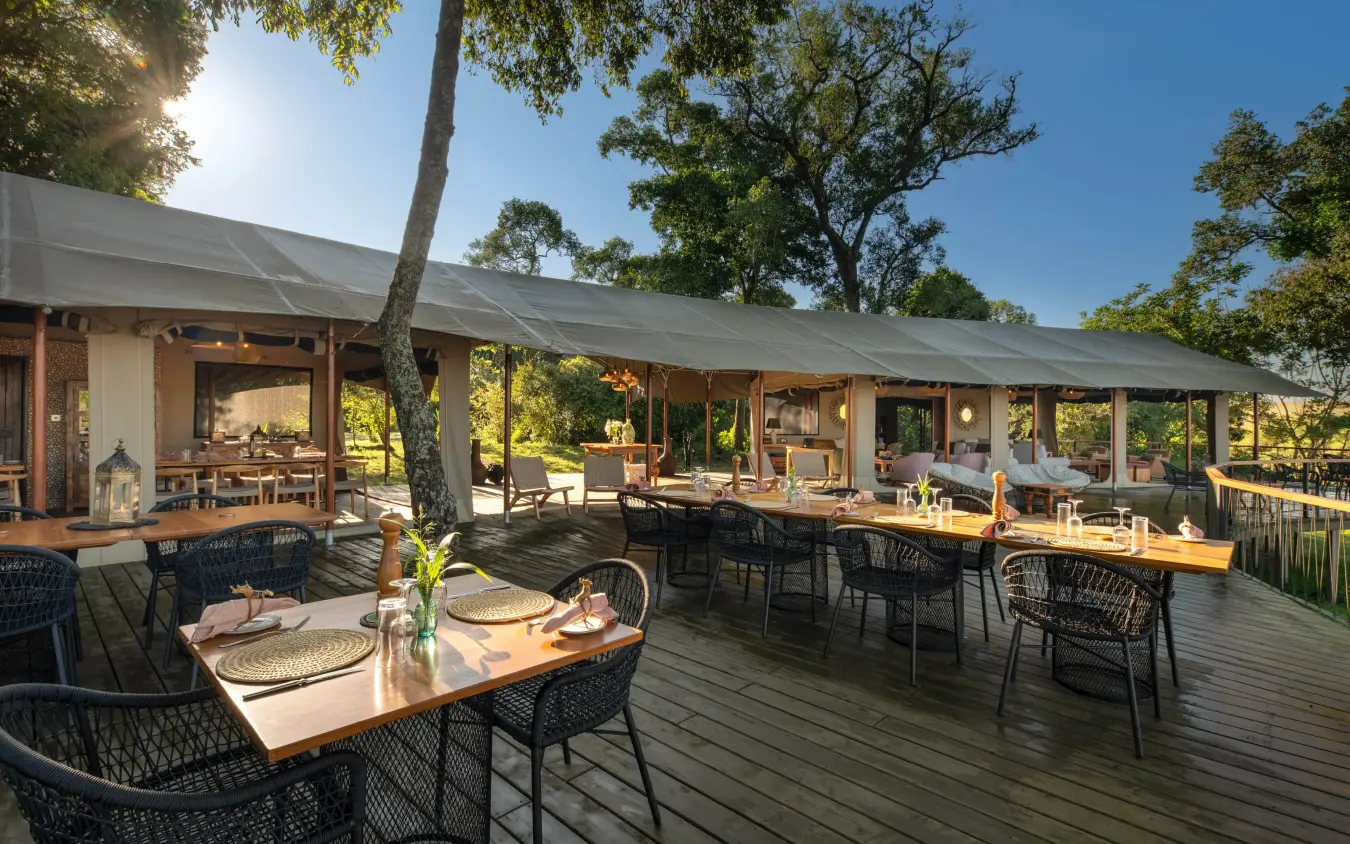
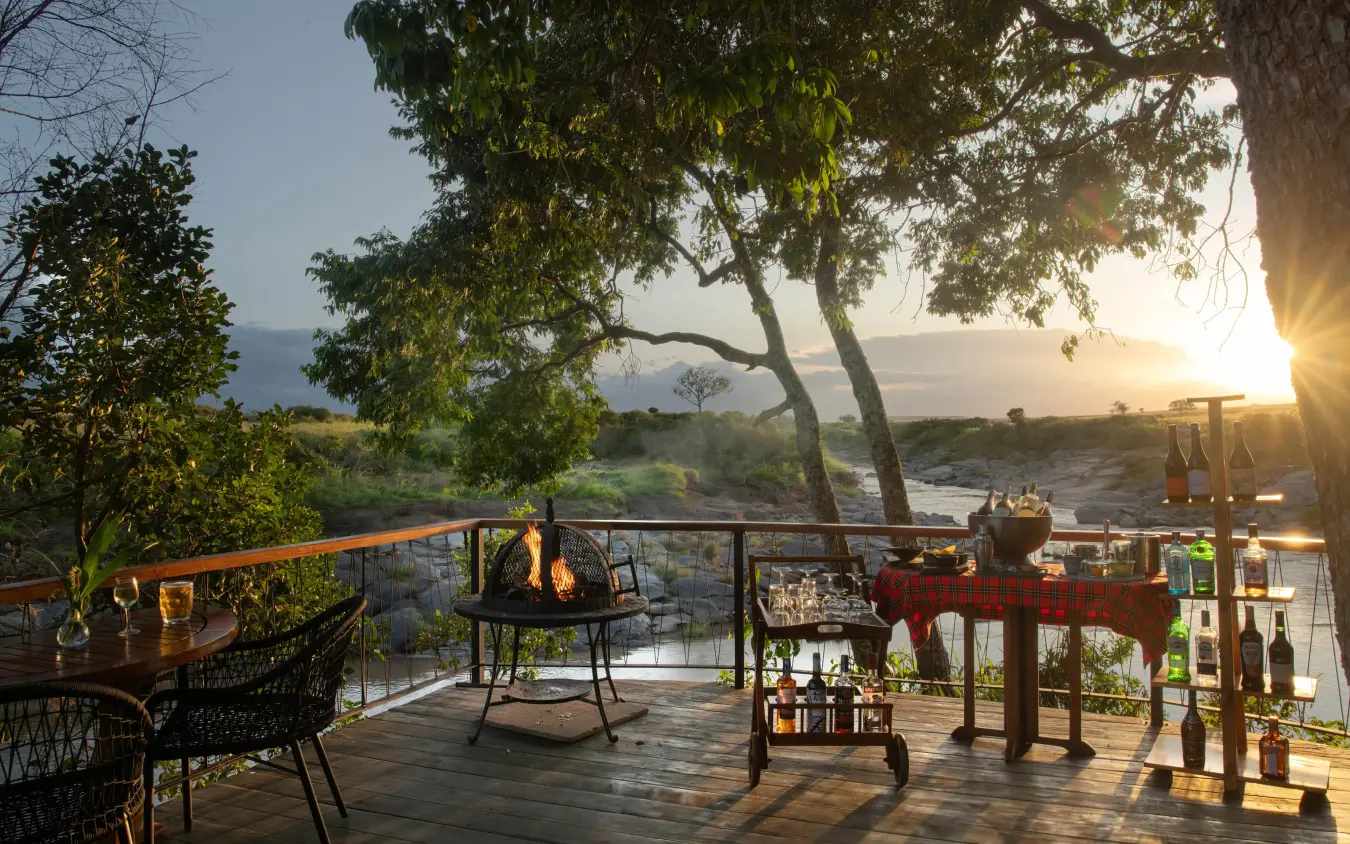
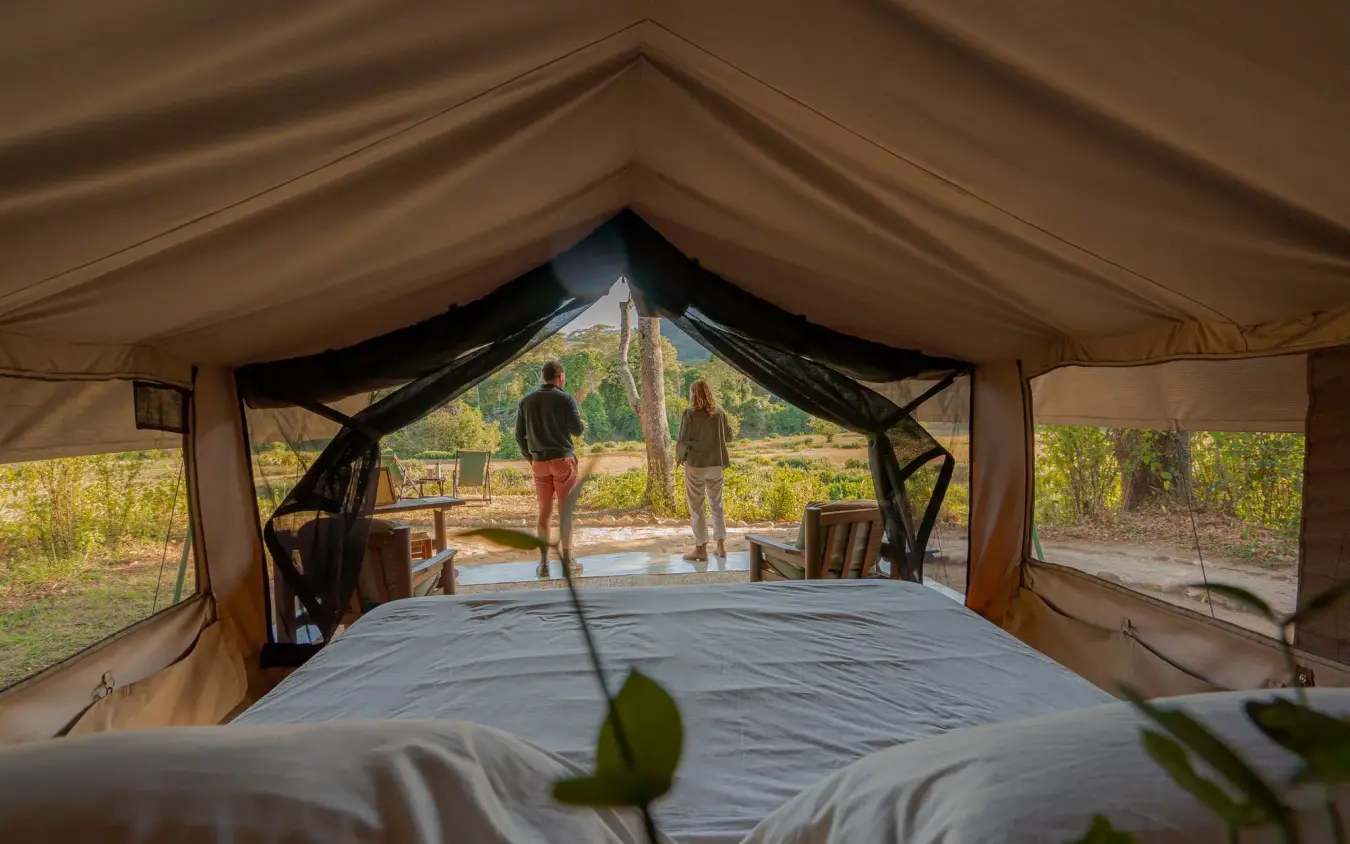
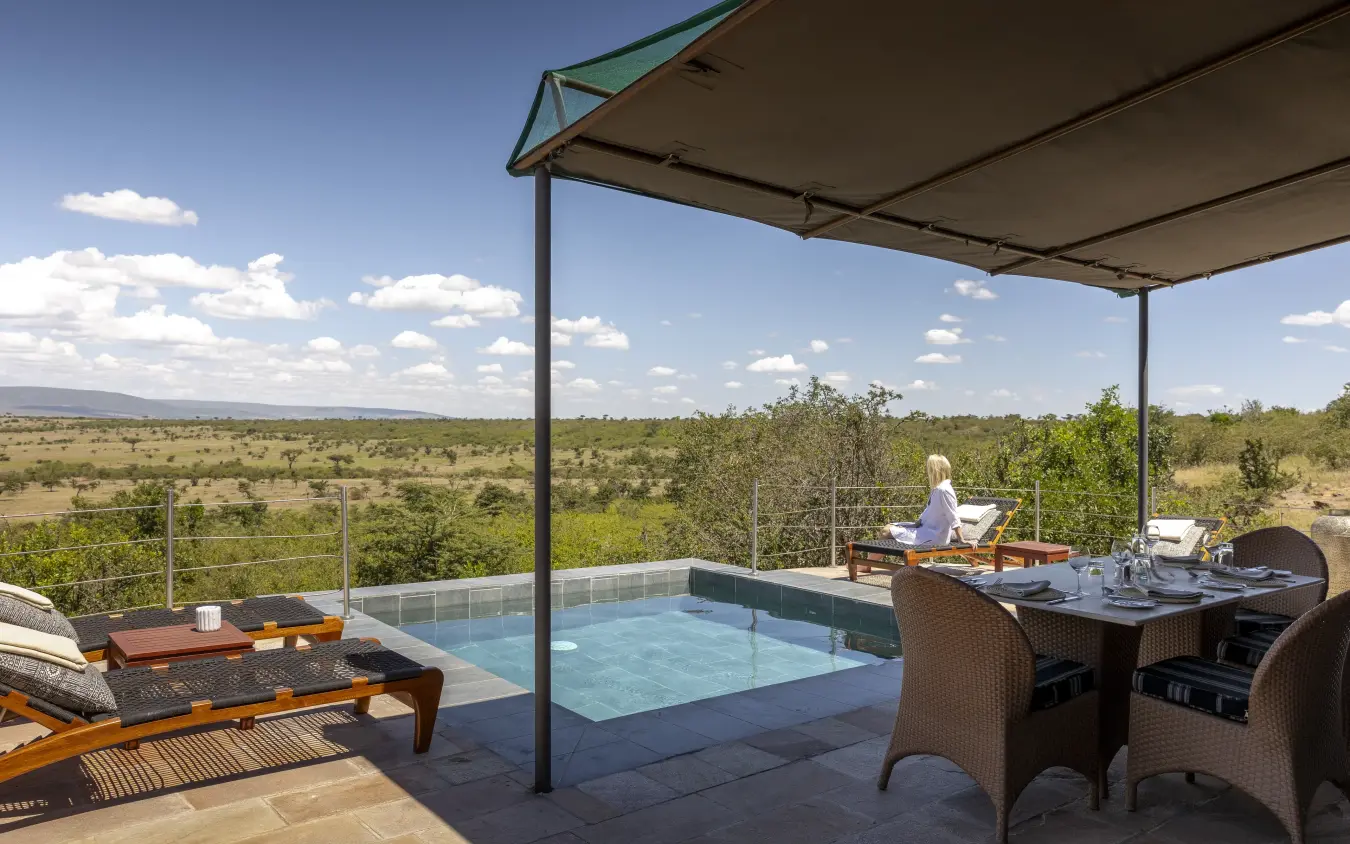
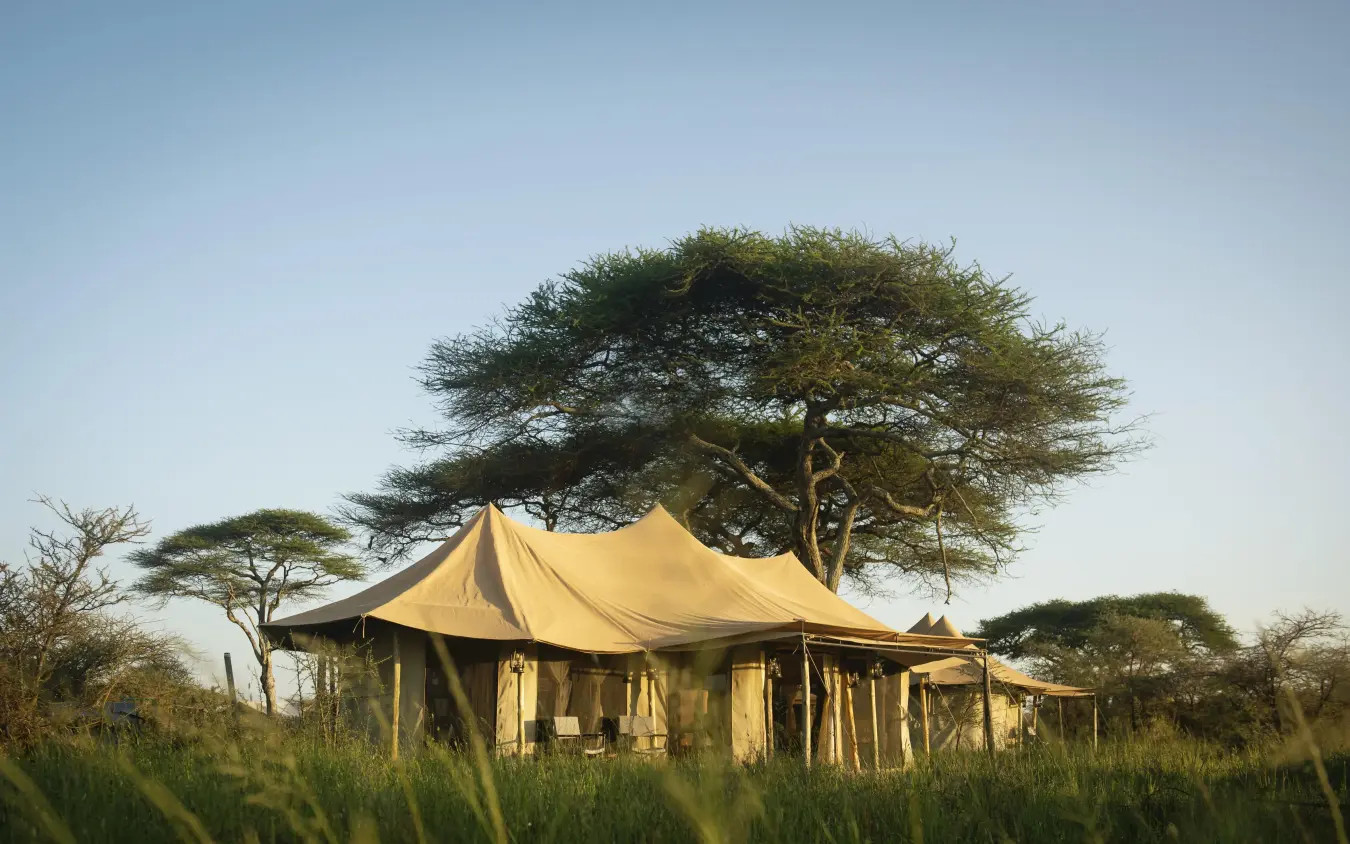
On private conservancy land away from the crowded reserve, the days run on your own schedule rather than a fixed departure time, each booking coming with its own 4WD, a dedicated guide and a spotter. The conservancy holds big cats in high density year-round, and from July to October the great migration moves through the wider Mara; away from the national reserve, drives carry on after dark and guides walk you through the bush on foot. Alex Walker's first camp, Serian sets vast marquee tents under big riverine trees above the Mara River, with an open-sided mess and a wide deck for sundowners above the water.
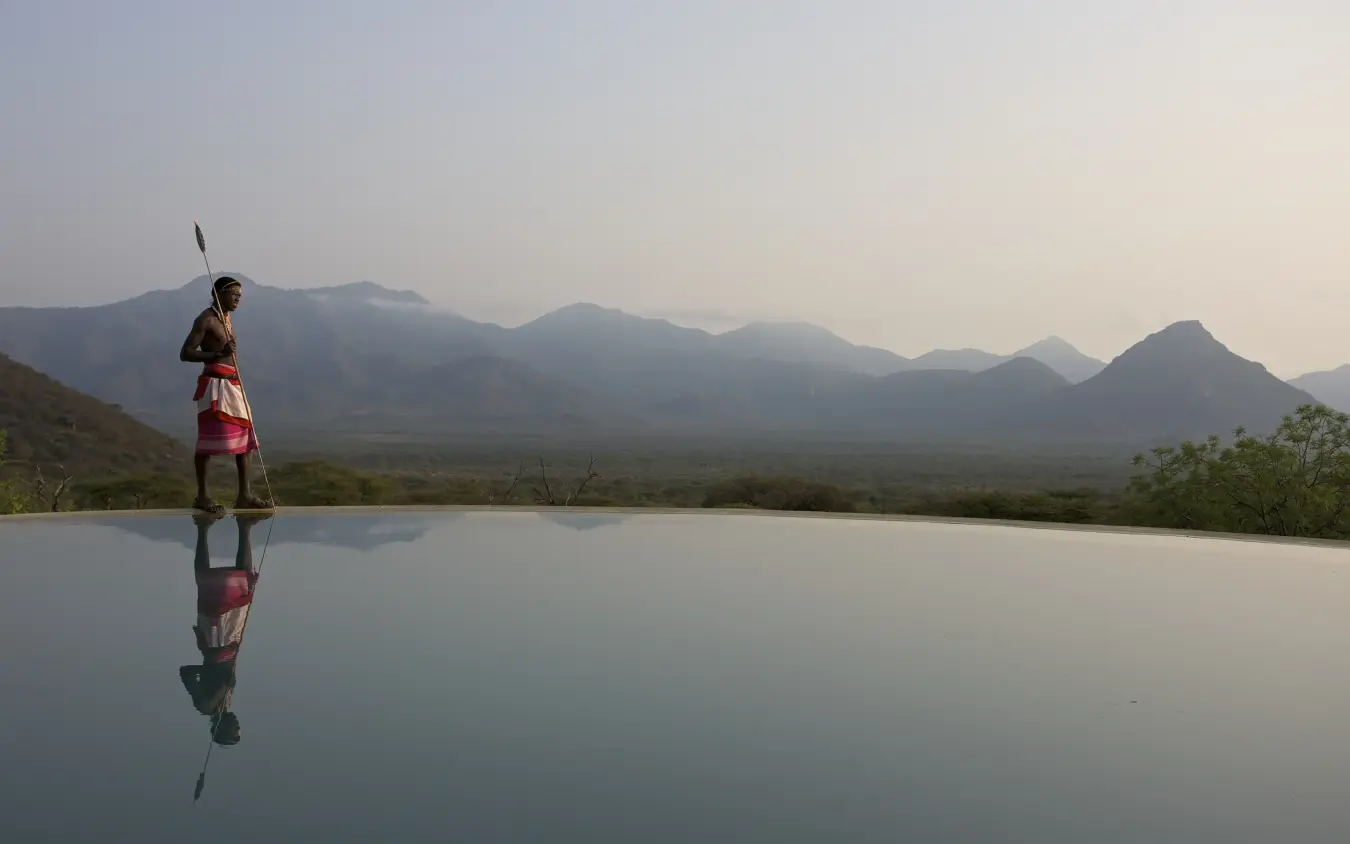
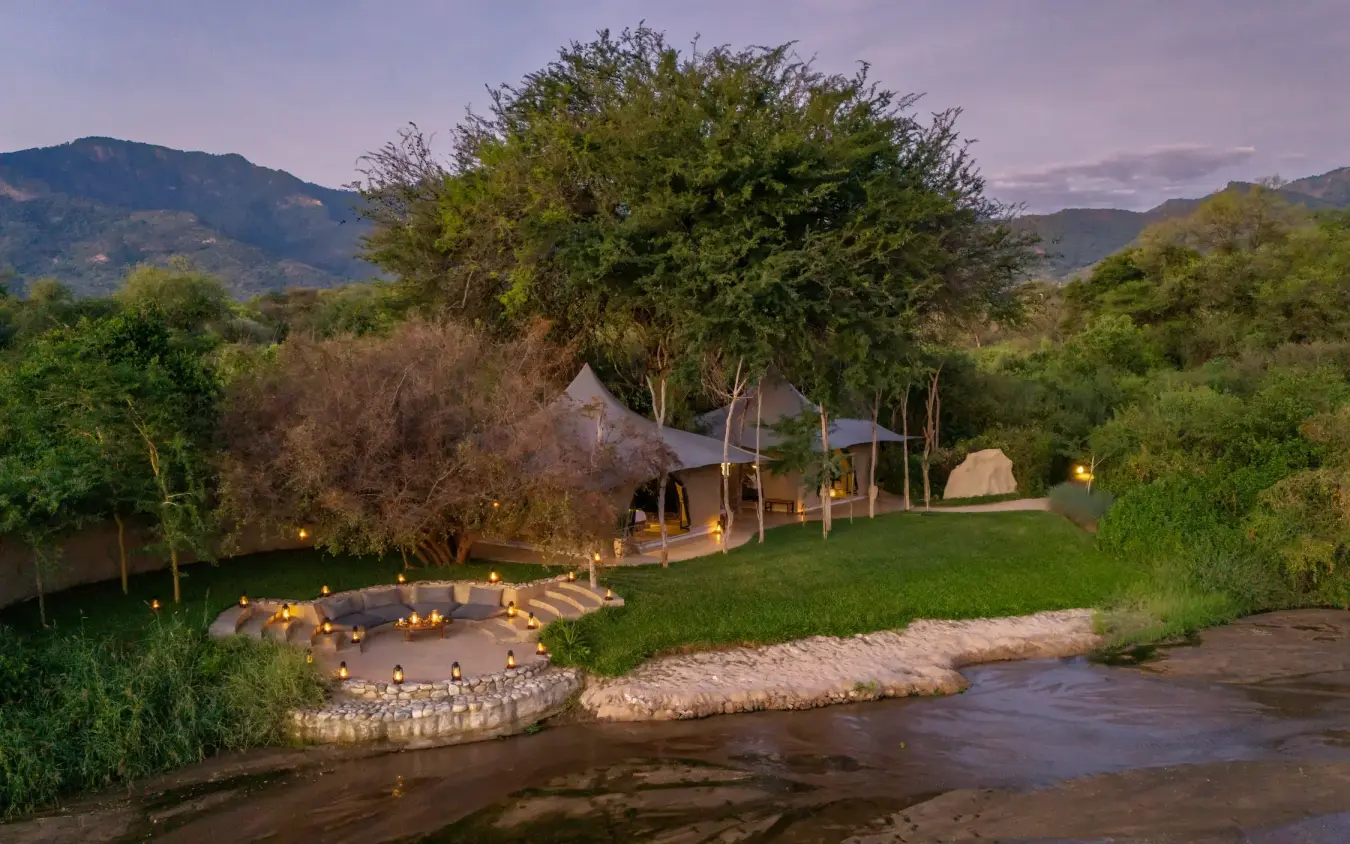
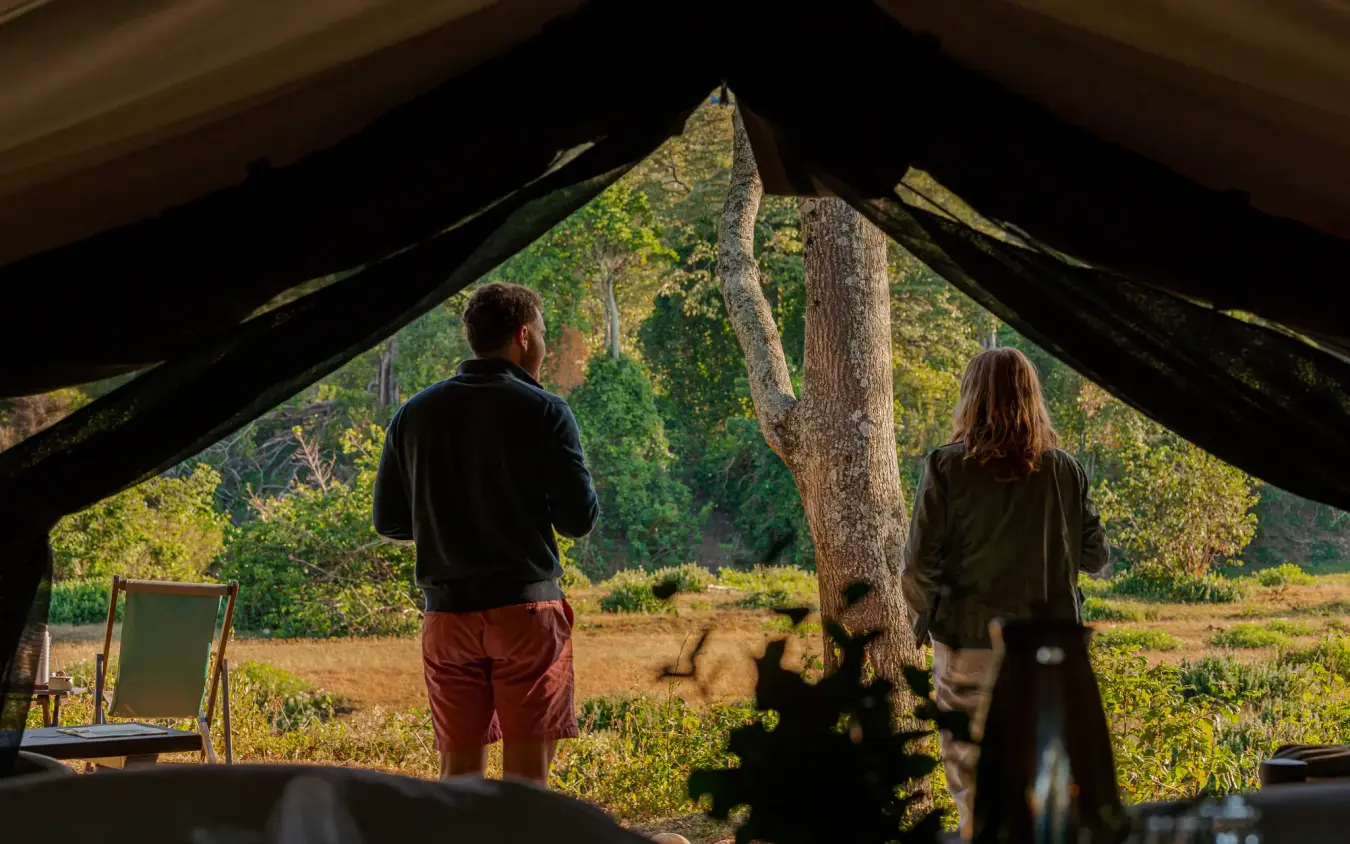
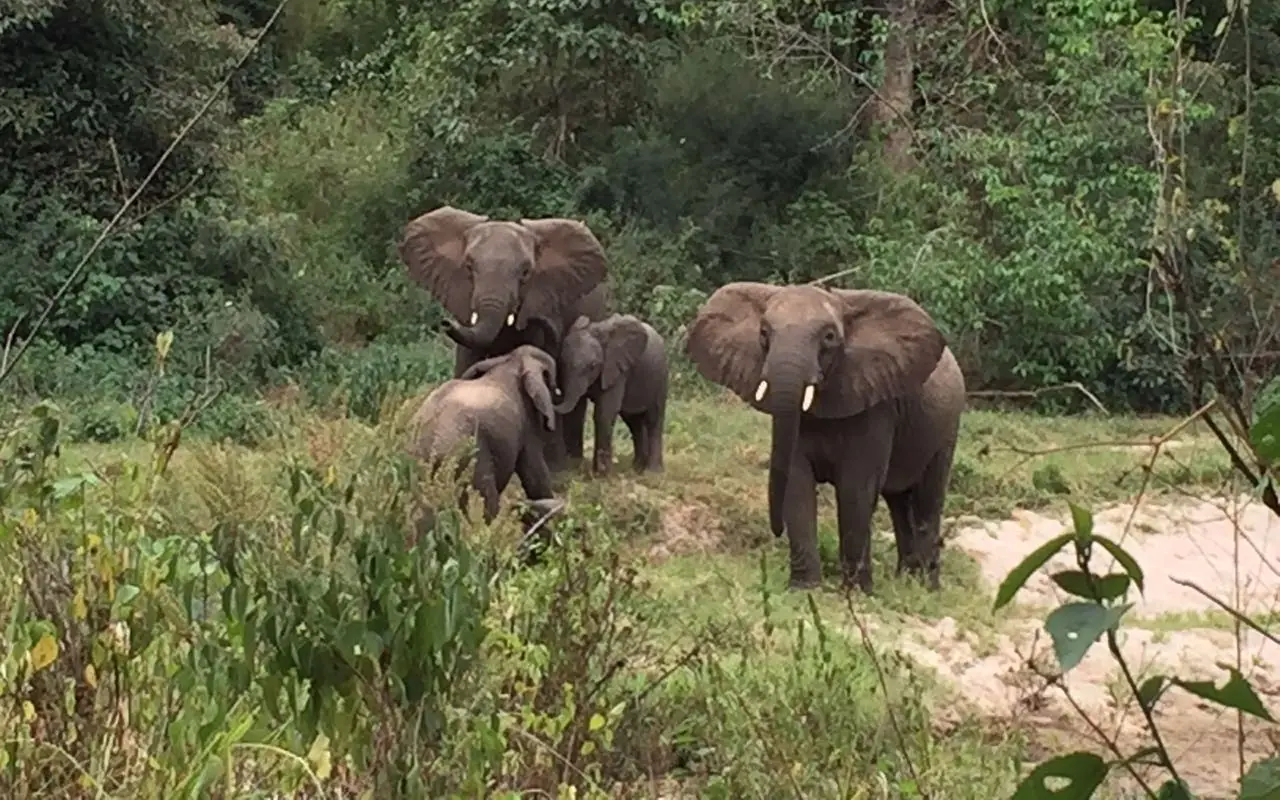
In a forested river glade in the Mathews Range of Northern Kenya, the game drive gives way to walking. You move on foot through indigenous montane forest and along the seasonal Ngeng River with Samburu and Ndorobo guides, tracking elephant sign and following birdsong among more than 350 recorded bird species and over 150 kinds of butterfly. Between walks you swim in natural rock pools, picnic in forest clearings and gather at the firepit. Kitich Camp strings canvas tents along the glade beneath the forest canopy, each with a private veranda facing the Ngeng valley, and offers overnight fly-camping deeper into the mountains for those who want it.
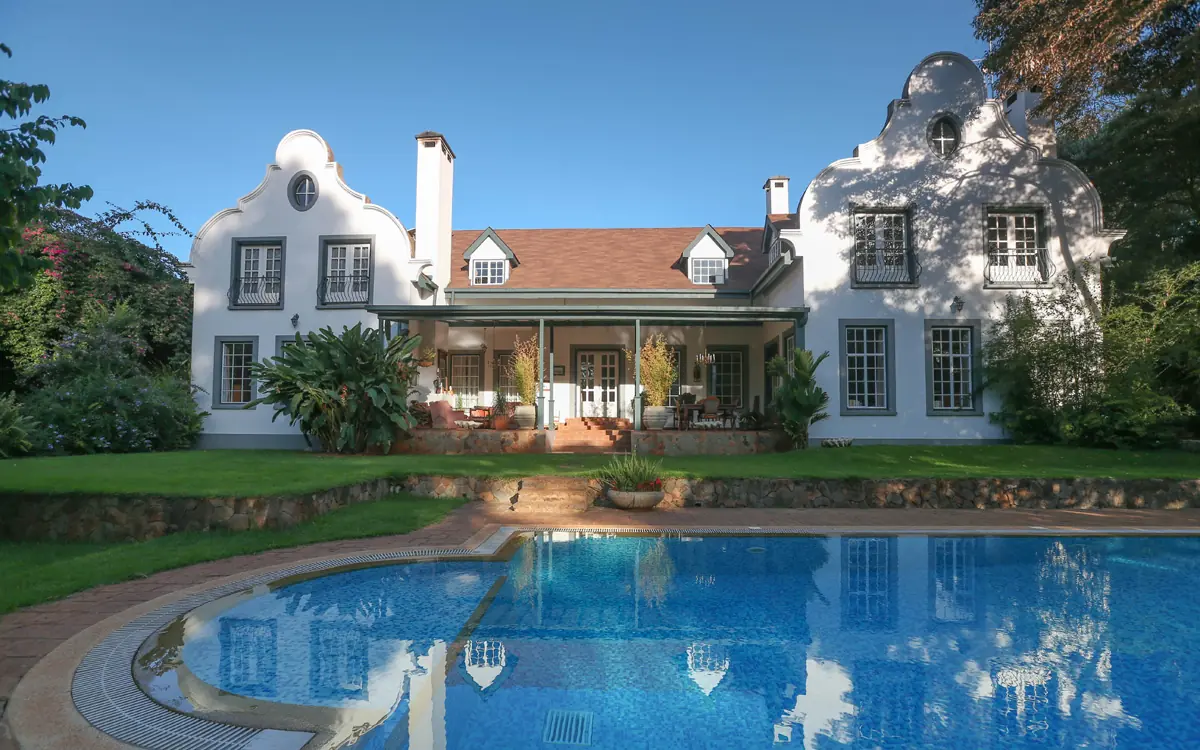
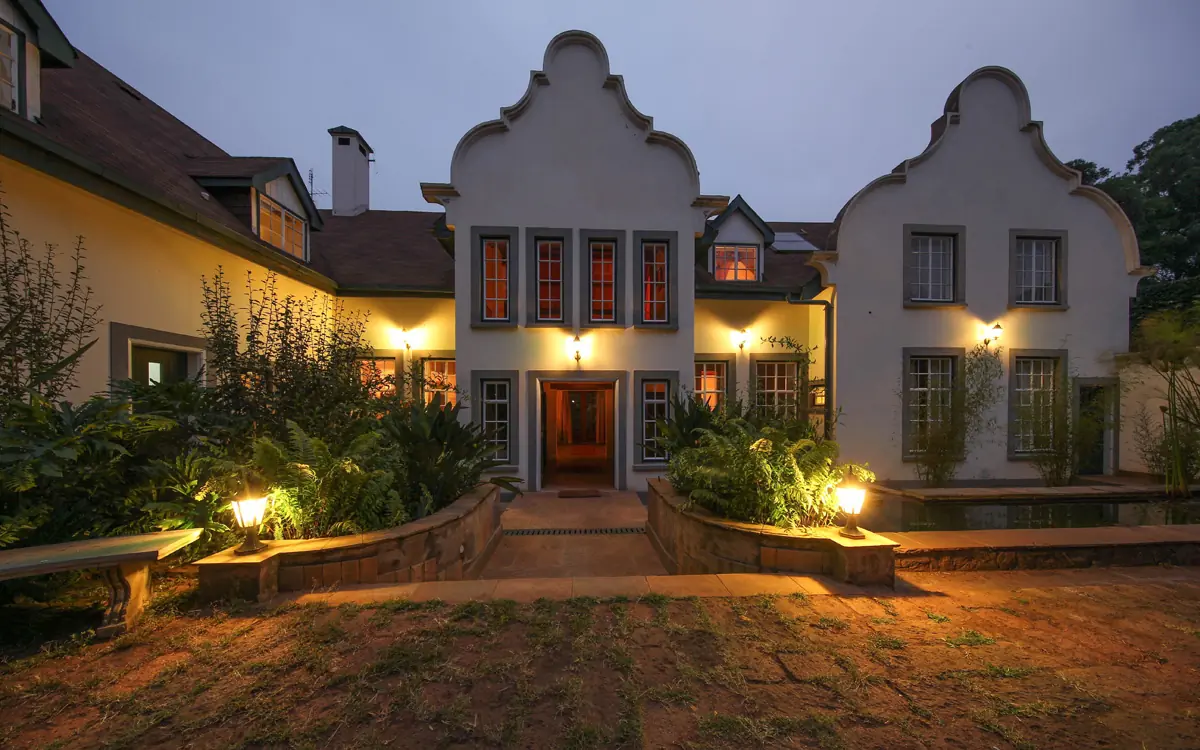
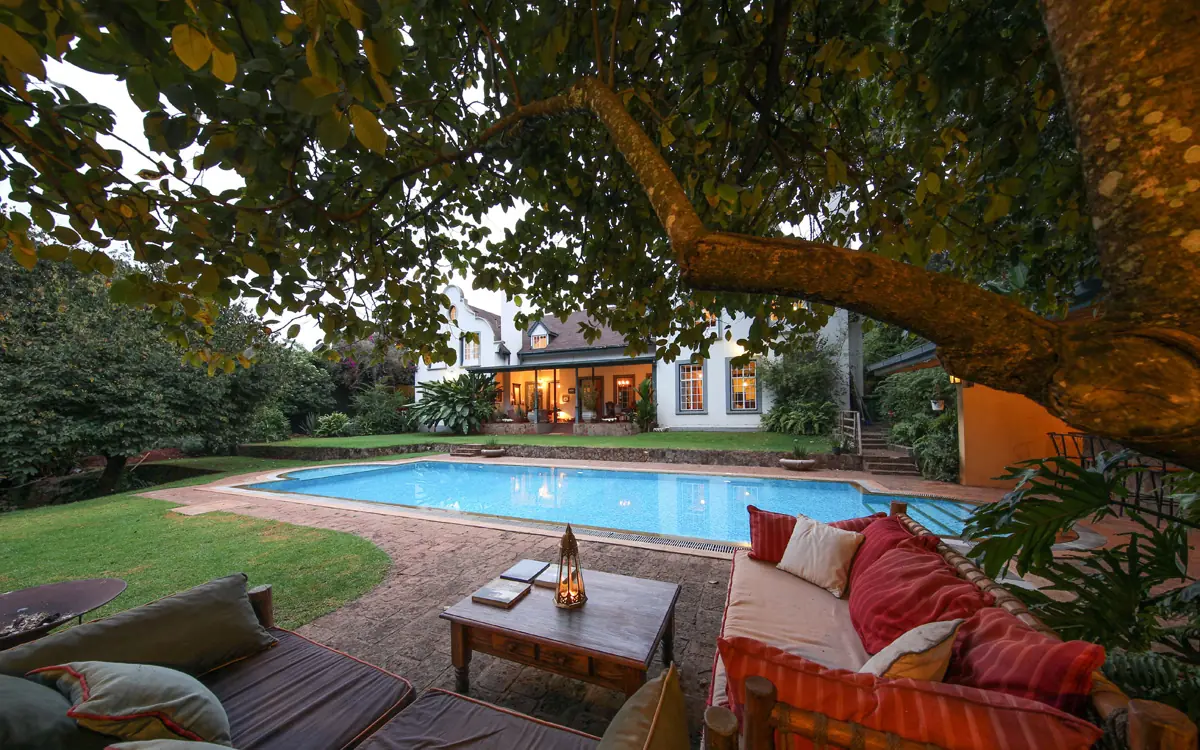
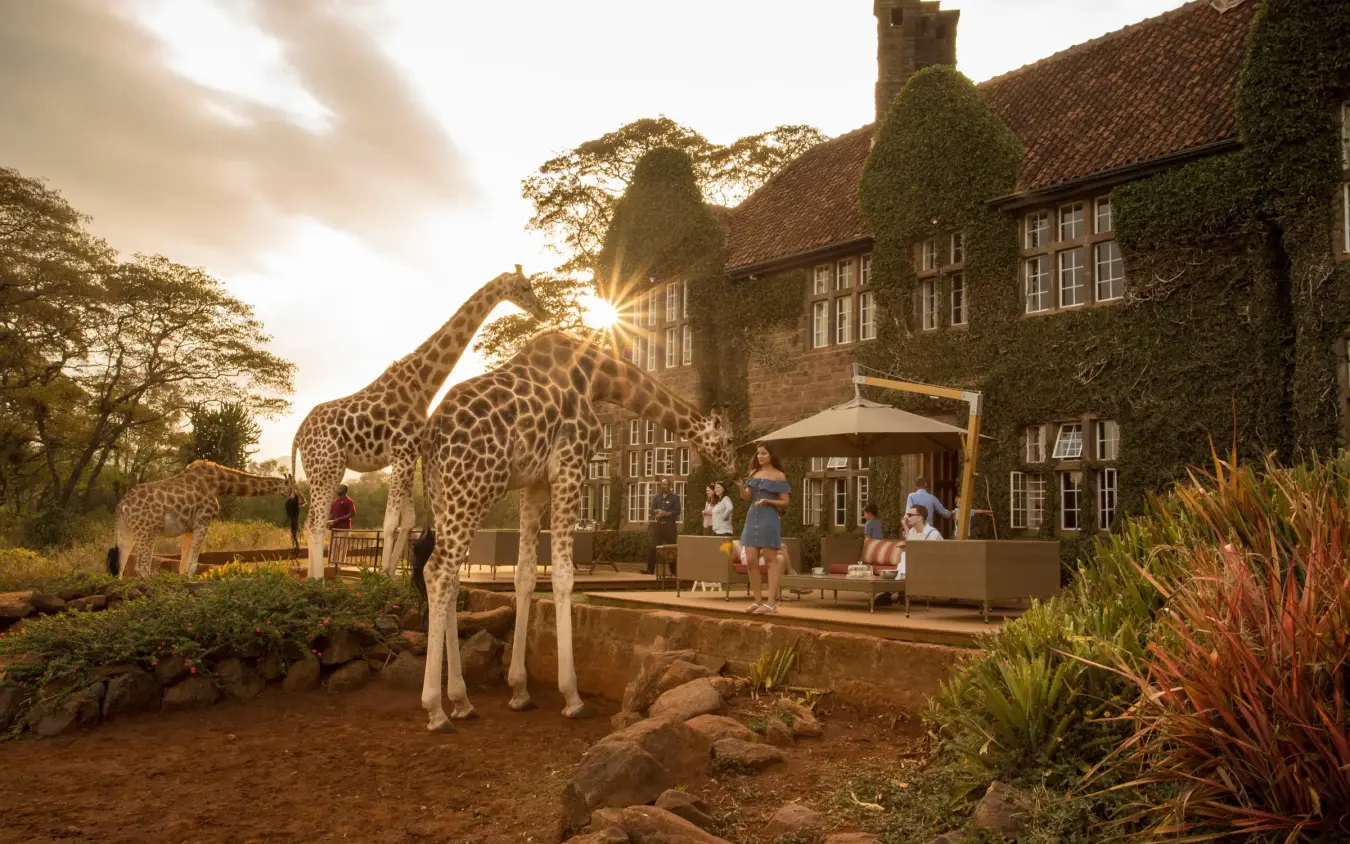
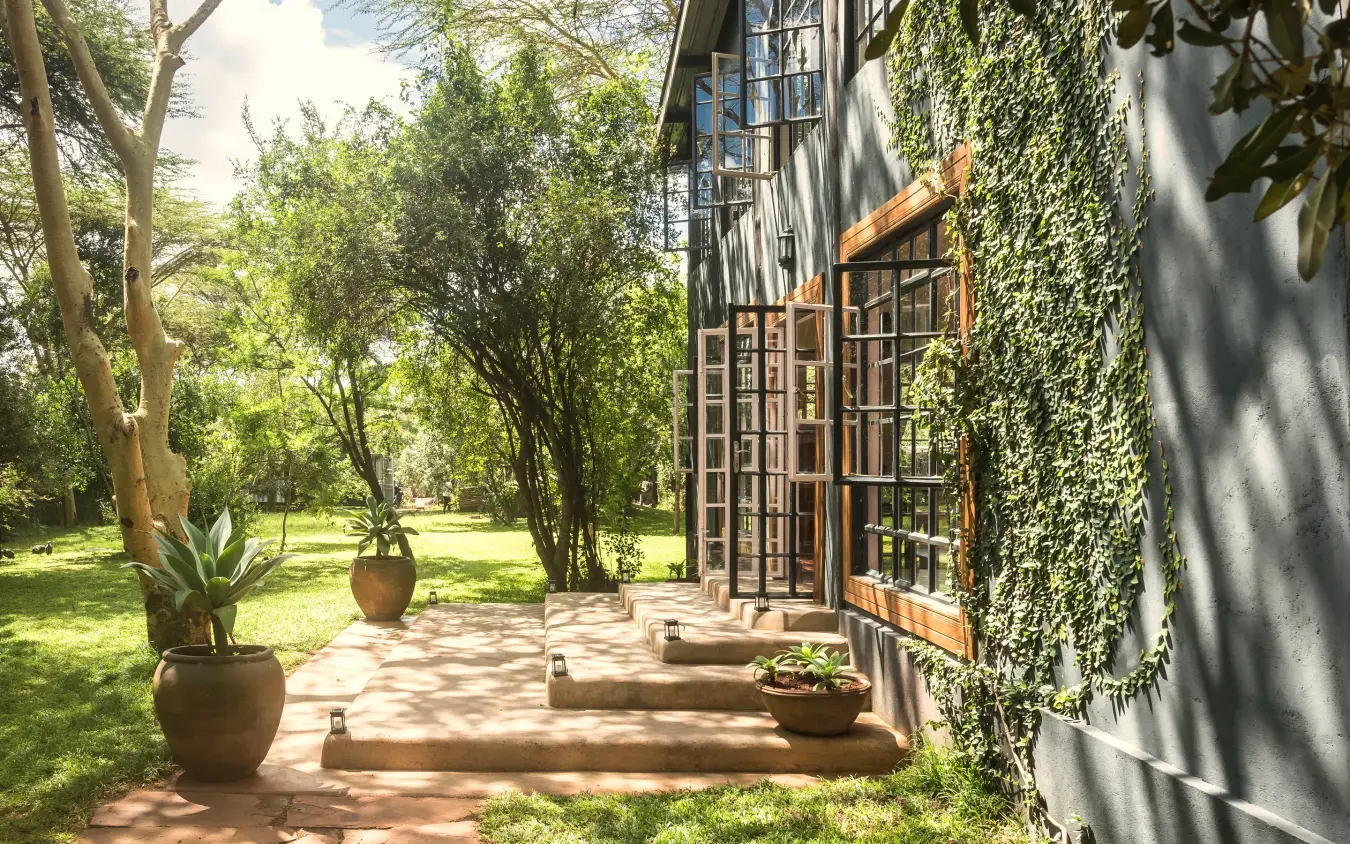
The final night is on the edge of Nairobi, where a resident herd of endangered Rothschild's giraffes lives year-round on the estate and the adjoining sanctuary shared with the AFEW Giraffe Centre. At the morning and late-afternoon feeding times they drift up to the house, pushing their long necks through the windows to take pellets from the table and terrace. Built in 1932 and modelled on a Scottish hunting lodge, Giraffe Manor sits on twelve acres within a much larger stretch of forest in the Karen and Langata suburbs, screened from the traffic and the noise.
This is the longest travelling day of the trip, so it is worth knowing how it works.
There are two ways out of Mgahinga. One is back by road through the Cyanika border to Kigali, about four hours including immigration, for a scheduled flight to Nairobi. The other is the daily light aircraft service from Kisoro airfield, below the park, to Entebbe, and an international flight to Nairobi from there.
Either way you land at Nairobi's main international airport, while safari flights to the Mara leave from Wilson Airport across the city, typically in a Cessna Caravan with a luggage limit of 15 kilograms in soft bags, hand luggage included.
Which combination works depends on the timetables for your dates, so we confirm the flights when we plan the trip. If the connections are tight, we would rather add a night in Nairobi than risk a missed flight.
Possibly not.
The East Africa Tourist Visa was created for this combination: Rwanda's and Uganda's immigration services describe it as a joint tourist visa for Rwanda, Uganda and Kenya and nowhere else, and the UK Foreign Office says it allows multiple entries into the three over 90 days.
It stays valid only while you remain inside those countries, which is no obstacle on this route. If you arrange it before you travel, Rwanda's rules say your first entry must be through the country you applied to. This trip starts in Kigali, so you would apply through Rwanda.
One caution: Kenya has since moved visitors onto its own electronic travel authorisation, and its website does not yet spell out how the joint visa sits alongside it. We check the position for your passport before you apply, and send you the current rules when you book. Requirements vary by nationality and can change at short notice.
Mgahinga is Uganda's smallest national park, under 34 square kilometres on the Ugandan slopes of the Virunga volcanoes, and it is quiet for a plain reason: one habituated family, the Nyakagezi group, and so only eight tracking permits a day for the whole park.
Your chances are very good all the same. No sighting of a wild animal can be promised, but we put success on Uganda's gorilla treks at better than 95 per cent, because trackers locate the family at first light from the previous night's nests.
The day starts at 8am at the Ntebeko visitor centre and tracking typically lasts three to five hours, on steep ground above 2,200 metres, so come ready for a proper walk and hire a porter. The minimum age is 15.
The real risk is availability: with eight places a day, the permits are the first thing we secure.
Expect a forest, not a game drive on foot.
The Mathews Range is a chain of mountains about 150 kilometres long, rising to 2,688 metres, with juniper forest and giant cycads on its upper slopes. At Kitich the days are spent walking: single file on narrow forest paths, with short climbs and descents and rocky stream crossings, led by Samburu guides with an armed ranger.
Anyone comfortable on their feet for a few hours on uneven ground will manage. What you can count on is the small and the close: birds, butterflies, monkeys, fresh tracks and dung.
Elephant, buffalo and bushbuck come to drink at the river by camp, and walkers do meet elephants and other forest mammals, but this is thick cover seen from the ground, not open plains seen from a vehicle, so nobody can say what a given walk will produce. After the Mara's big cats, that change of pace is the reason to come.
The herds are in the wider Mara from about July to October, and their timing follows the rain, so it shifts from year to year.
Serian stands on Mara North, private conservancy land beside the national reserve, and the difference lies in the rules. No more than five vehicles may gather at a sighting in Mara North, and night drives, walking and driving off the tracks are allowed there but not inside the reserve. The big cats are resident, so those rules count in every month.
River crossings are another matter. Nobody can schedule one: herds may plunge in soon after arriving, wait for days or turn back, and a morning can pass on the bank with nothing happening.
If a crossing is your priority, travel in August or September, tell us, and we will plan full days at the river with your guide. In other months, come for the cats and the space.
July and August are the months we rate highest in all three countries: dry trails at Mgahinga, the migration in the Mara and firm tracks in the north. They are also the first to sell out.
September, January and February are close behind, with nothing worse than a few showers in Kigali, and we rate January and February as excellent for northern Kenya too.
June suits the gorillas and the Mathews Range, though it is an in-between month in the Mara, before the herds arrive. October is good in Kenya and showery on the gorilla side.
April is the month to avoid, rated challenging at every stop, and March, May and November bring heavy rain to Mgahinga's steep trails.
Those wet months have real upsides for some travellers:
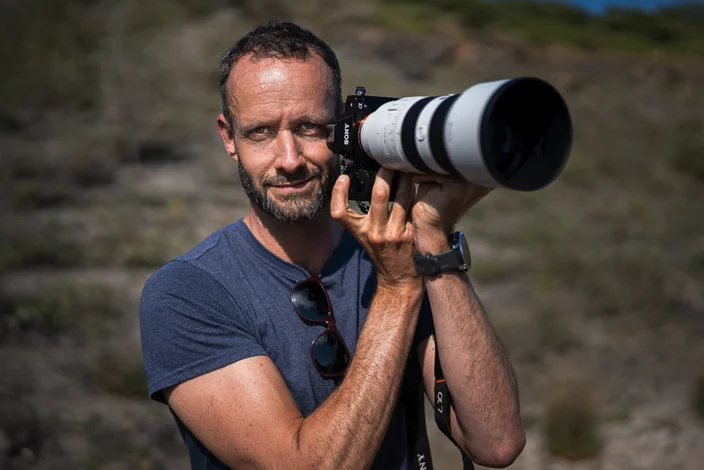
Ed Charles, BBC Producer
Fitzroy are true specialists in accessing the wilderness. They know where to go and importantly, when to go there. Highly recommended.
kenya & tanzania
Ten nights from Nairobi through the Mara's Naboisho Conservancy and the eastern Serengeti to the rim of the Ngorongoro Crater.

kenya & tanzania
Twelve nights linking Nairobi, the Samburu-owned Namunyak Conservancy, the Maasai Mara and Tanzania's Ndutu plains.
kenya
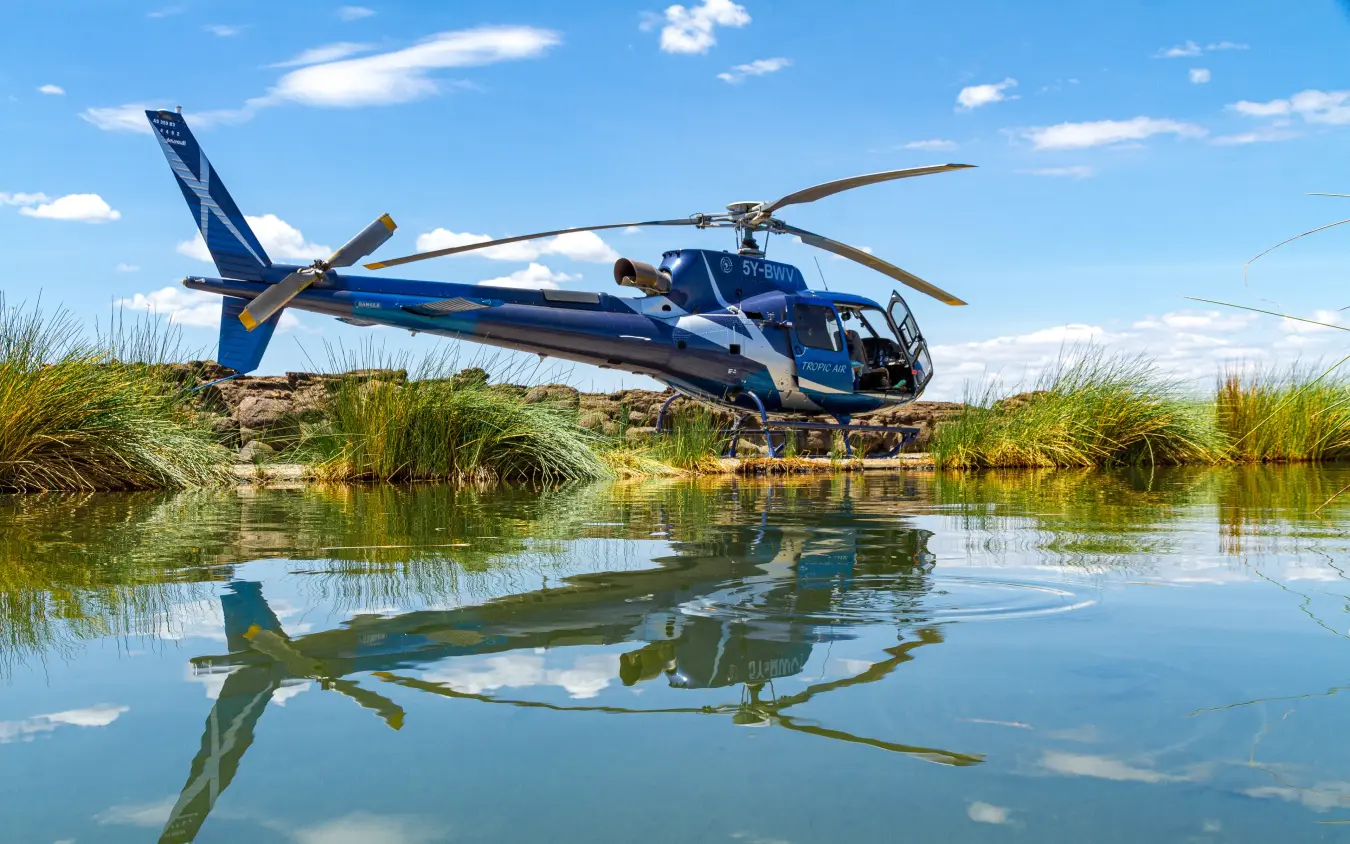
Fourteen nights across Kenya, from Nairobi's park to the Mara, then by helicopter into Samburu and the Laikipia Highlands.
rated five stars by our clients

our approach
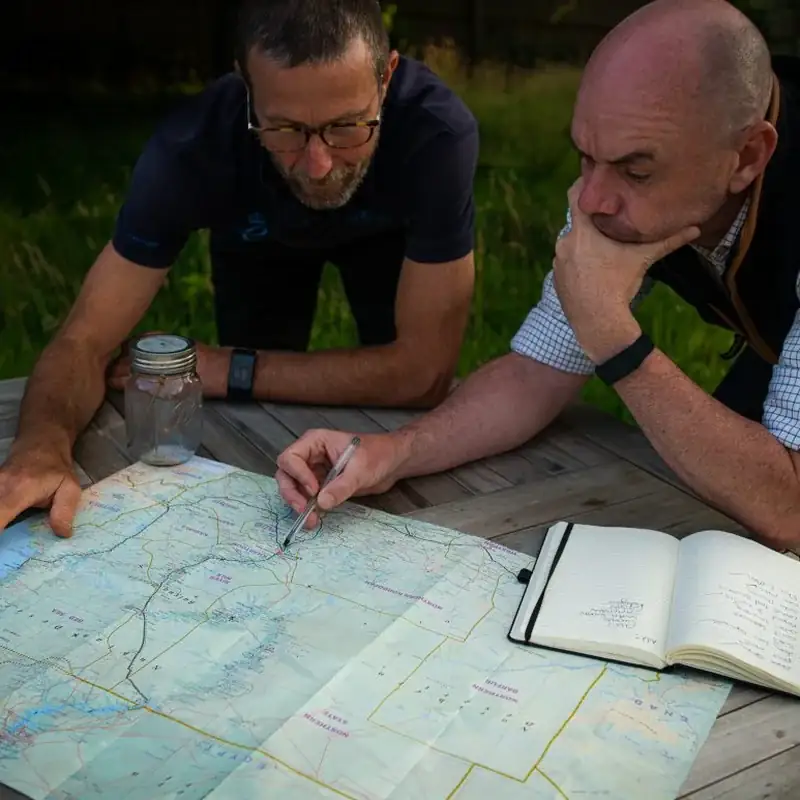
Every journey starts with a conversation. We take the time to understand your vision before we start planning.
Whether by phone or in person, we work with you directly to shape something that is considered, personal, and expertly delivered.
Every journey starts with a conversation. We favour a direct, personal approach: understanding your vision before anything else.
Whether by phone or in person, we work with you directly to shape a journey that is both thoughtfully considered and expertly delivered.
Get in touch to start planning yours.