











rwanda, tanzania & kenya
gorillas, herds and the chyulus
Rwanda's gorillas, the northern Serengeti and Mara plains, then horseback days below Kilimanjaro in the Chyulu Hills.
- Private Safari
- From $24,290 pp
- 2 guests
- 14 nights
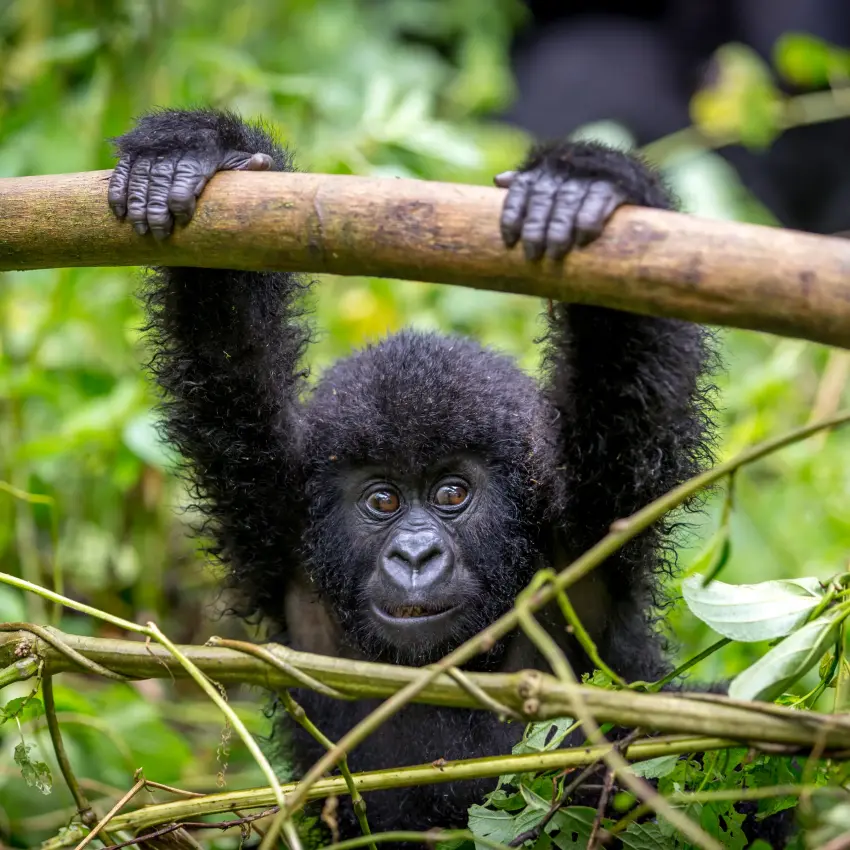
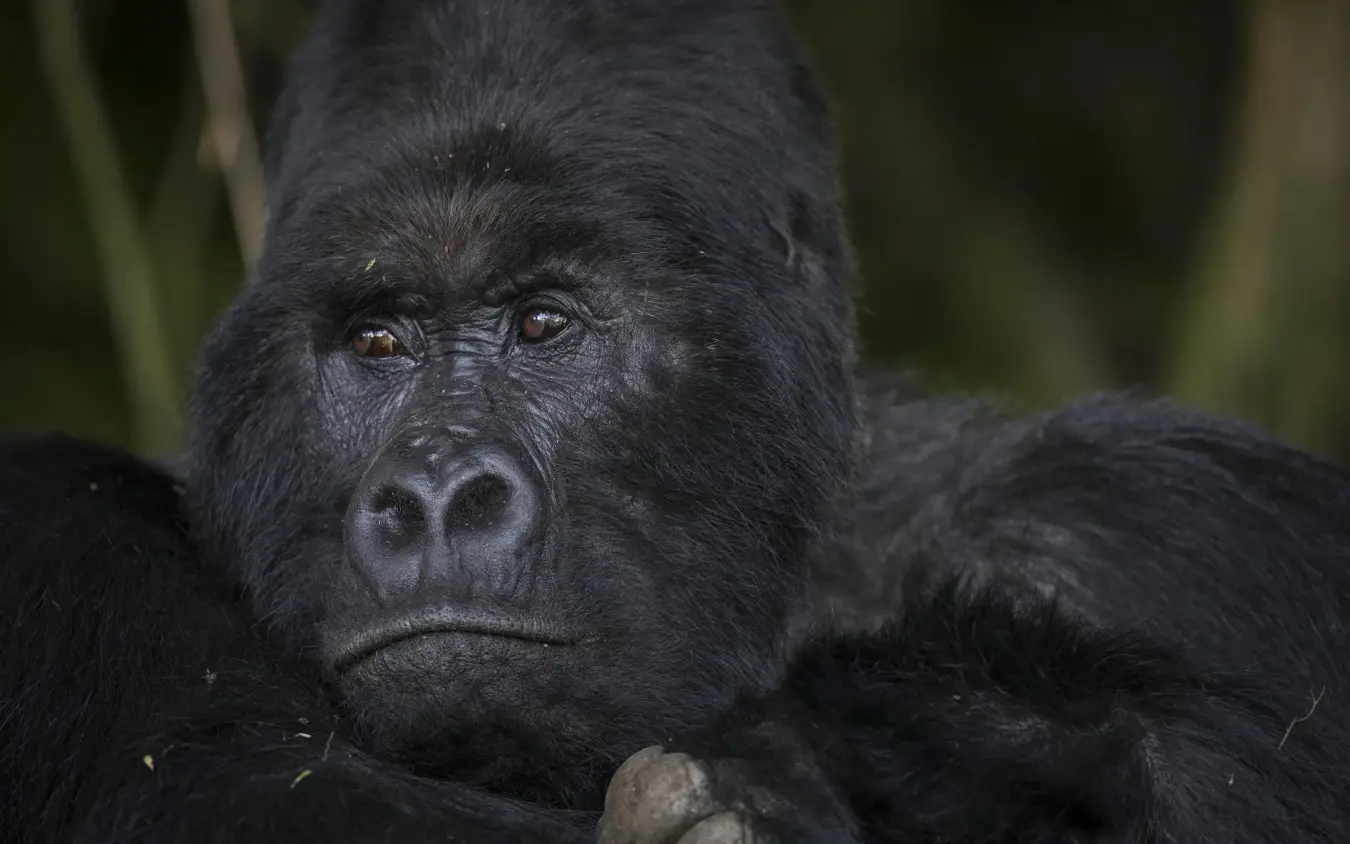
This route links four bases across Rwanda and Uganda over 10 nights, beginning in Kigali, Rwanda’s capital and arrival hub. From there it climbs to Volcanoes National Park, the Rwandan sector of the Virunga Massif, then crosses into Uganda for Mgahinga, the country’s smallest gorilla park, and ends in the Bwindi Impenetrable Forest, which holds close to half the world’s remaining mountain gorillas.
You travel by road, and we confirm any light aircraft legs when we plan your dates, with gorilla trekking governed by permit rules that allow eight visitors and one hour with a habituated family. Days move between forest treks, golden monkeys and time in the lodges. Accommodation runs from a boutique city hotel to three hand-built forest-edge lodges.
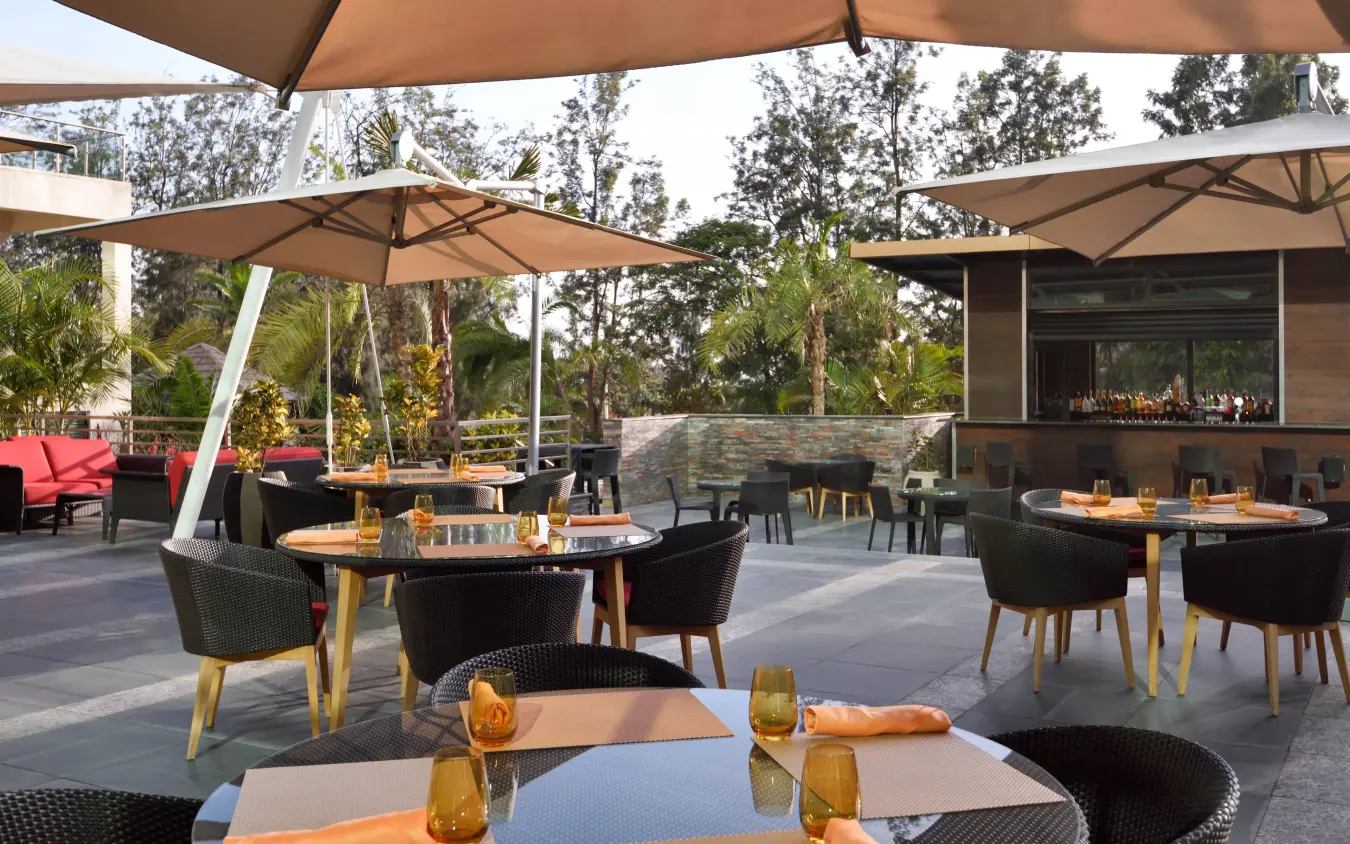
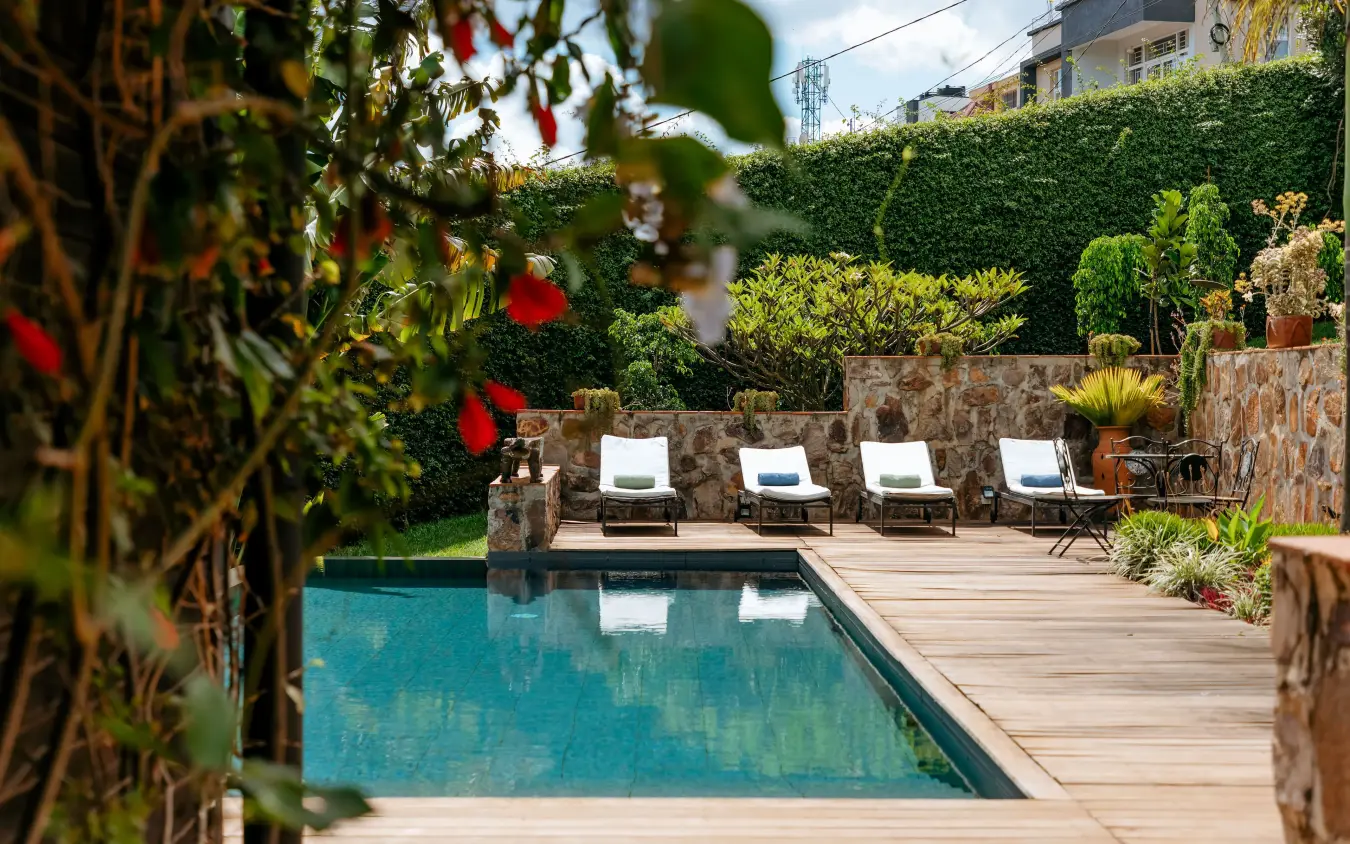
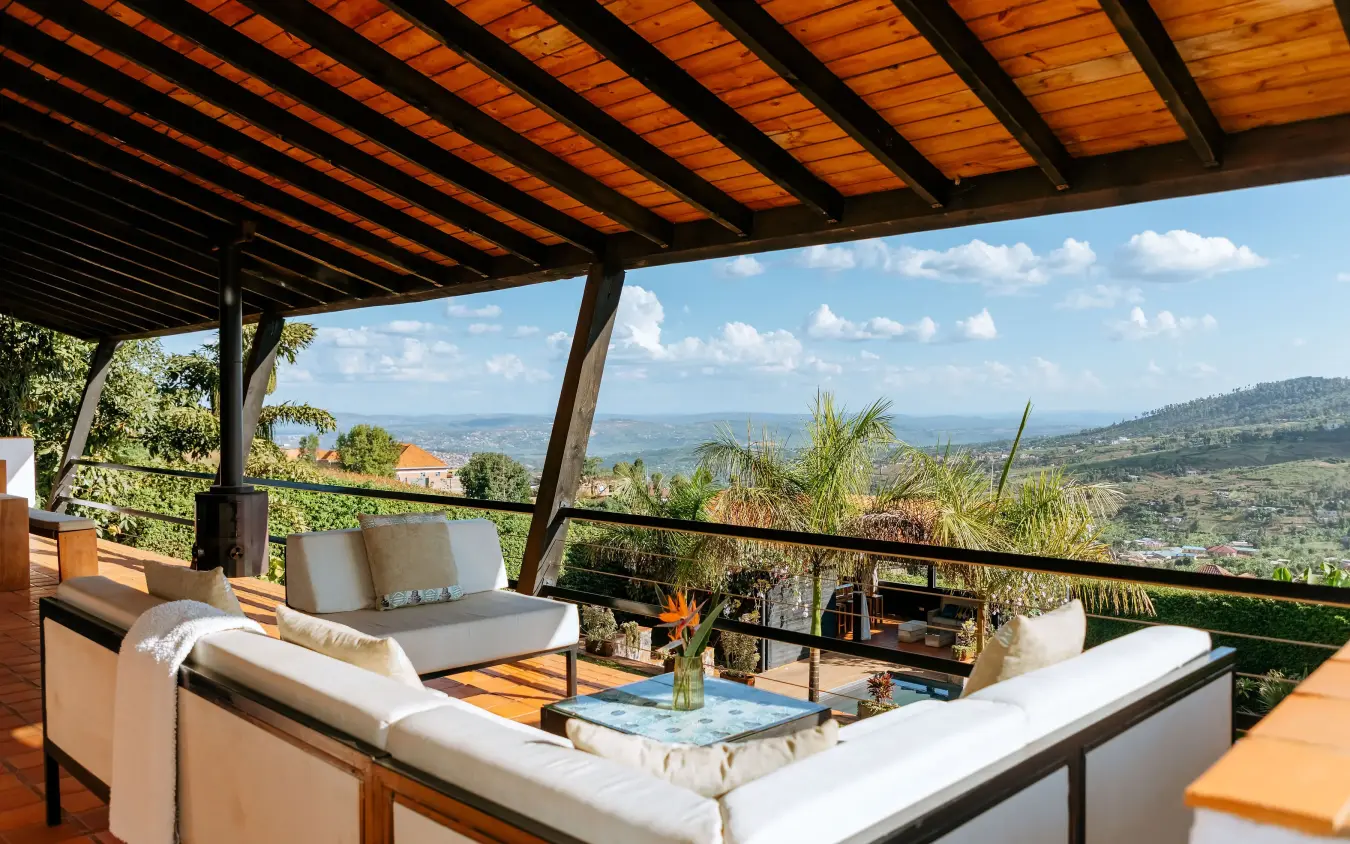
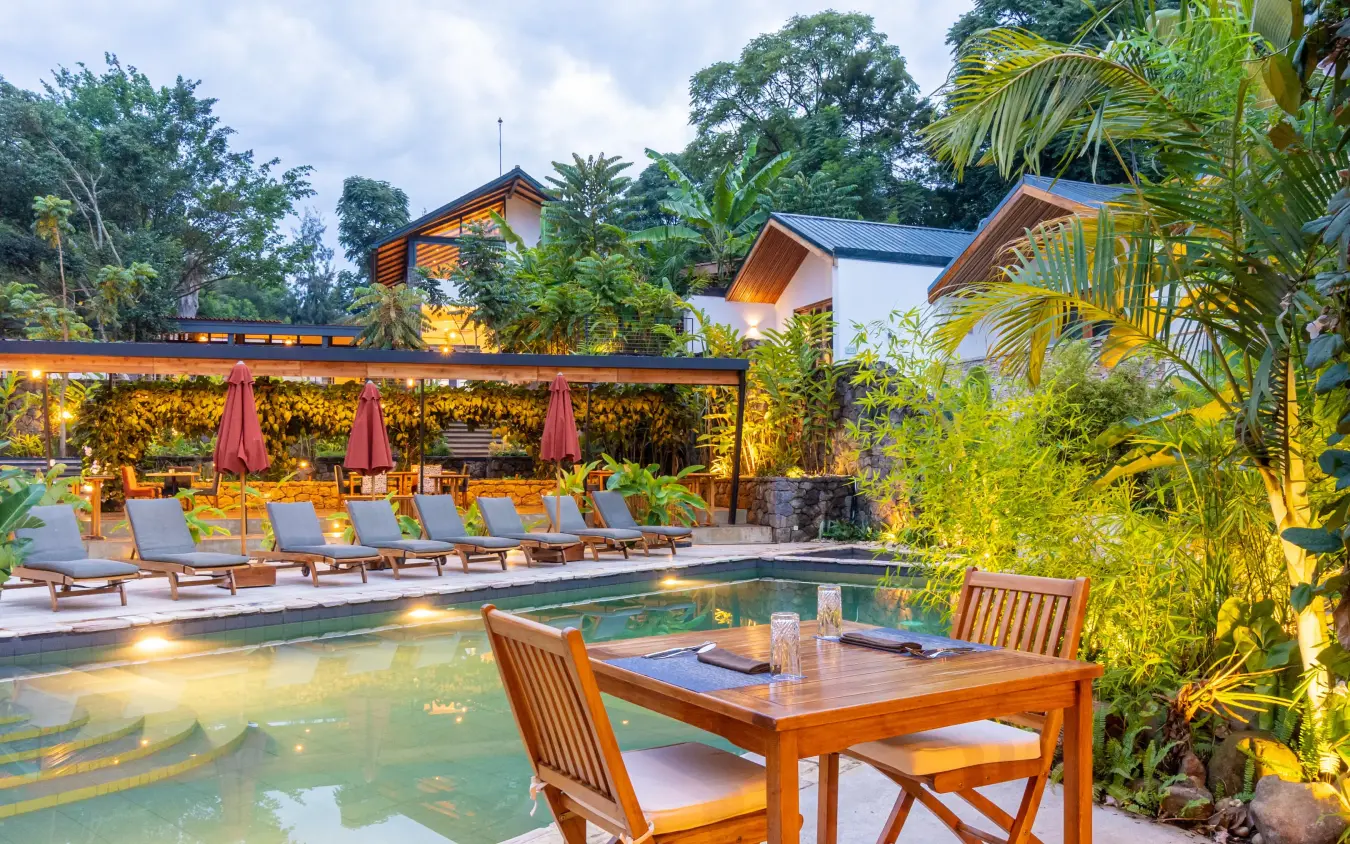
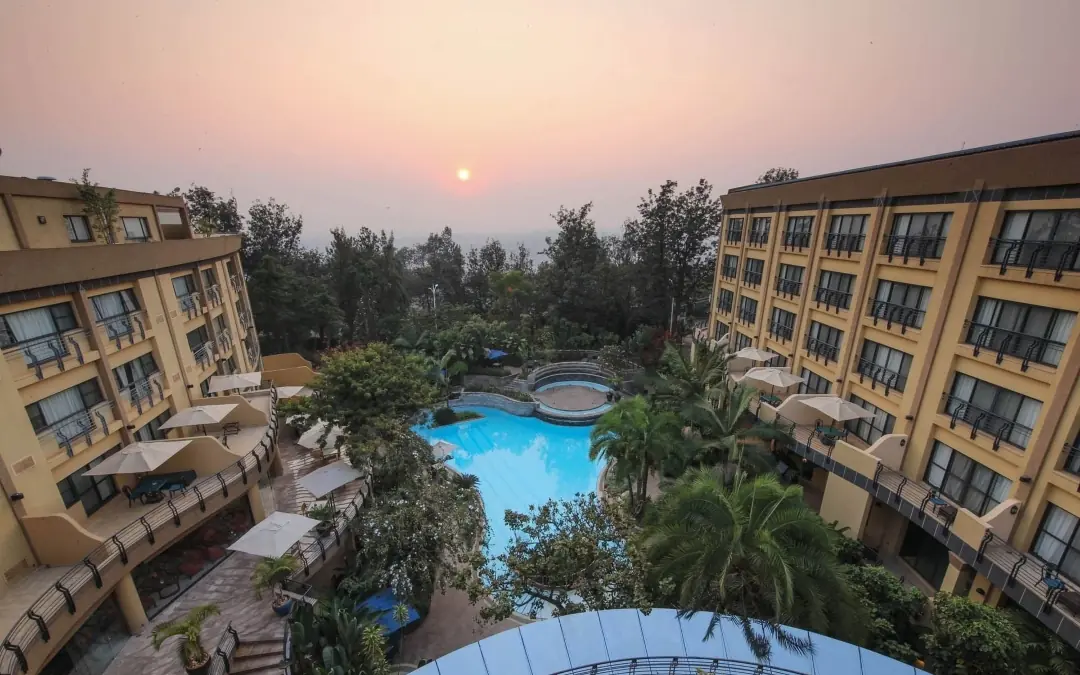
You begin in Kigali, Rwanda's capital, spread across ridges at the centre of the country and widely regarded as the cleanest city in Africa. A single night here eases the arrival, with time for the Kigali Genocide Memorial at Gisozi or the textile stalls of Kimironko Market if the schedule allows. Hemingways Retreat Kigali is a 20-room boutique hotel of stone and teak in the leafy Kiyovu district, a short drive from the airport, with a solar-heated saltwater pool and farm-to-table dining.
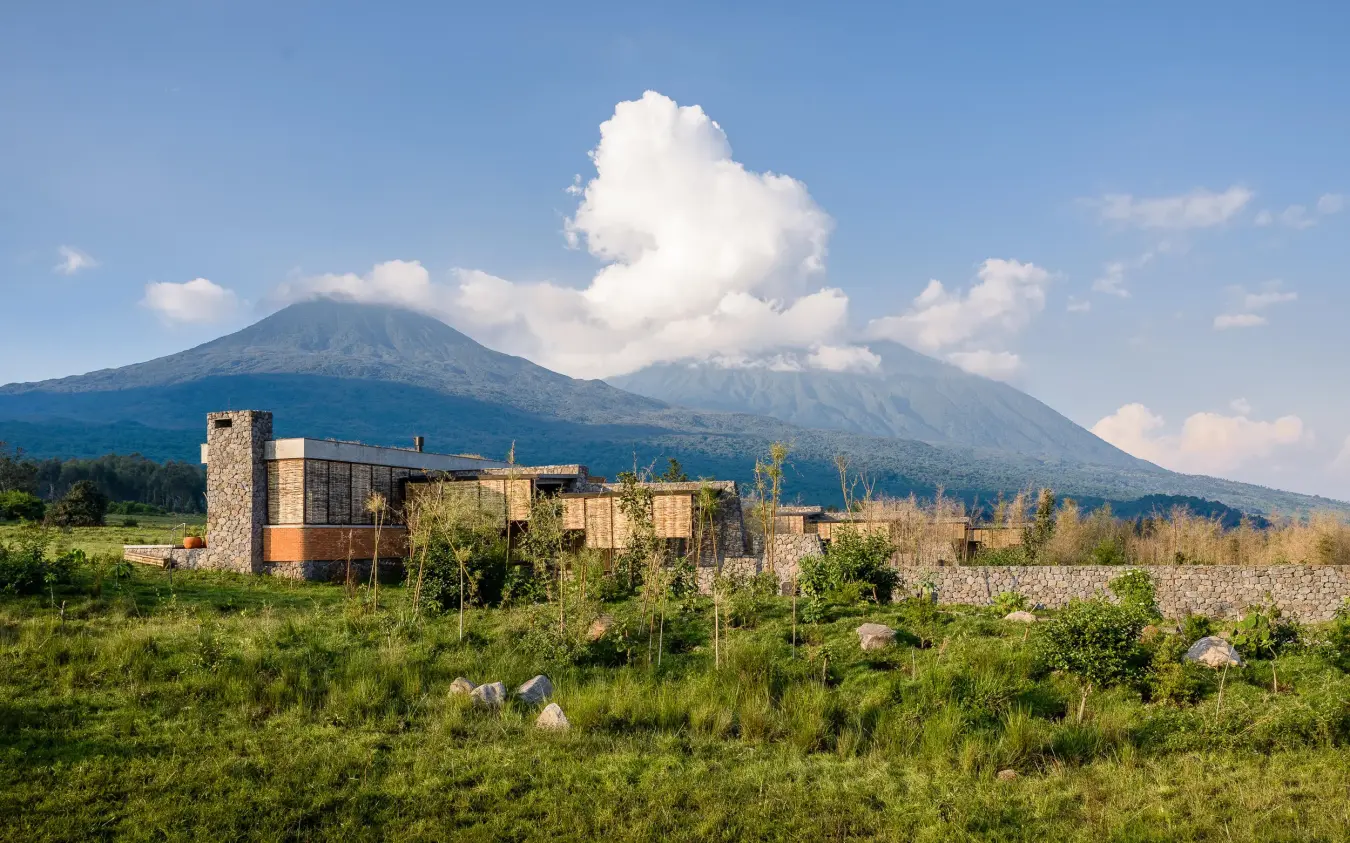
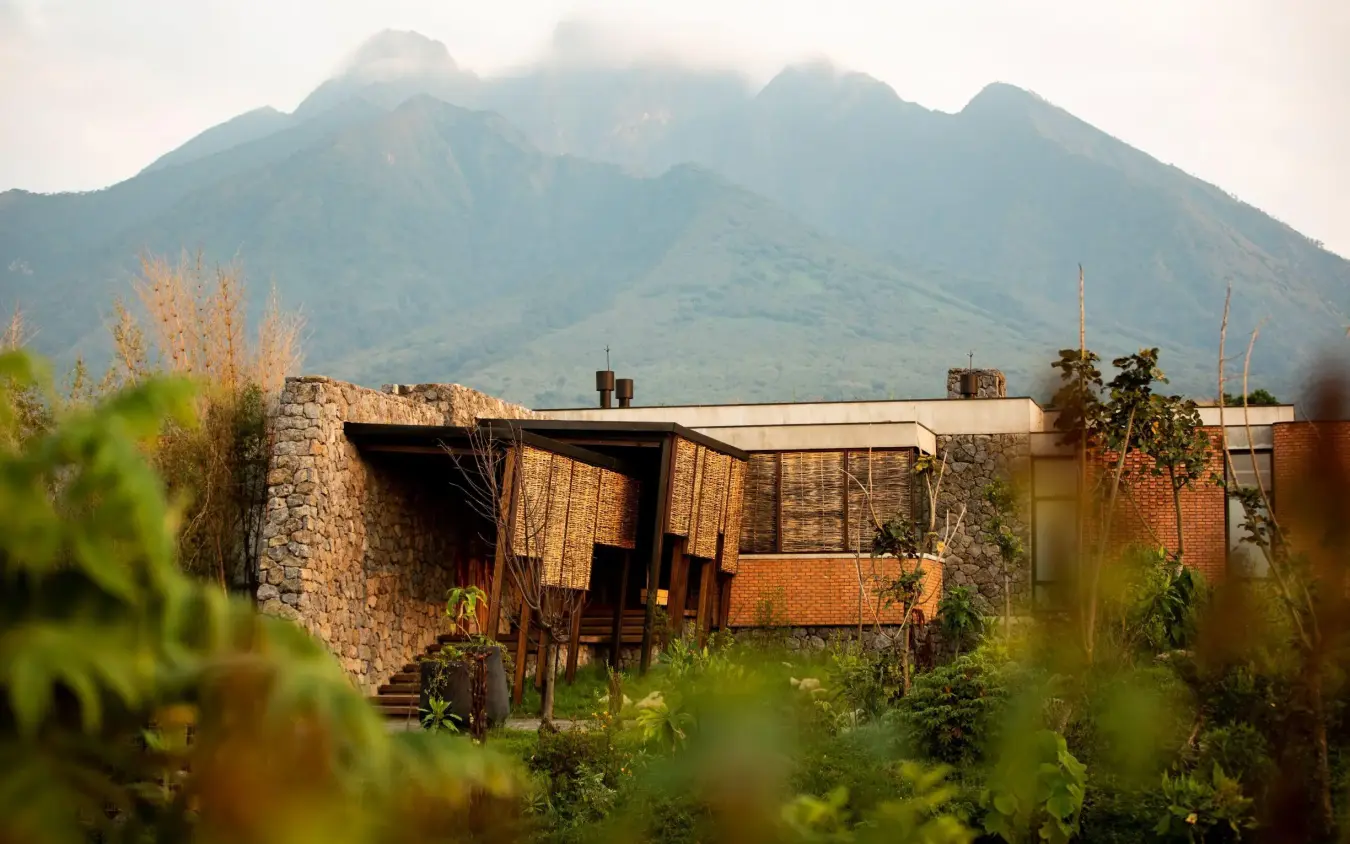
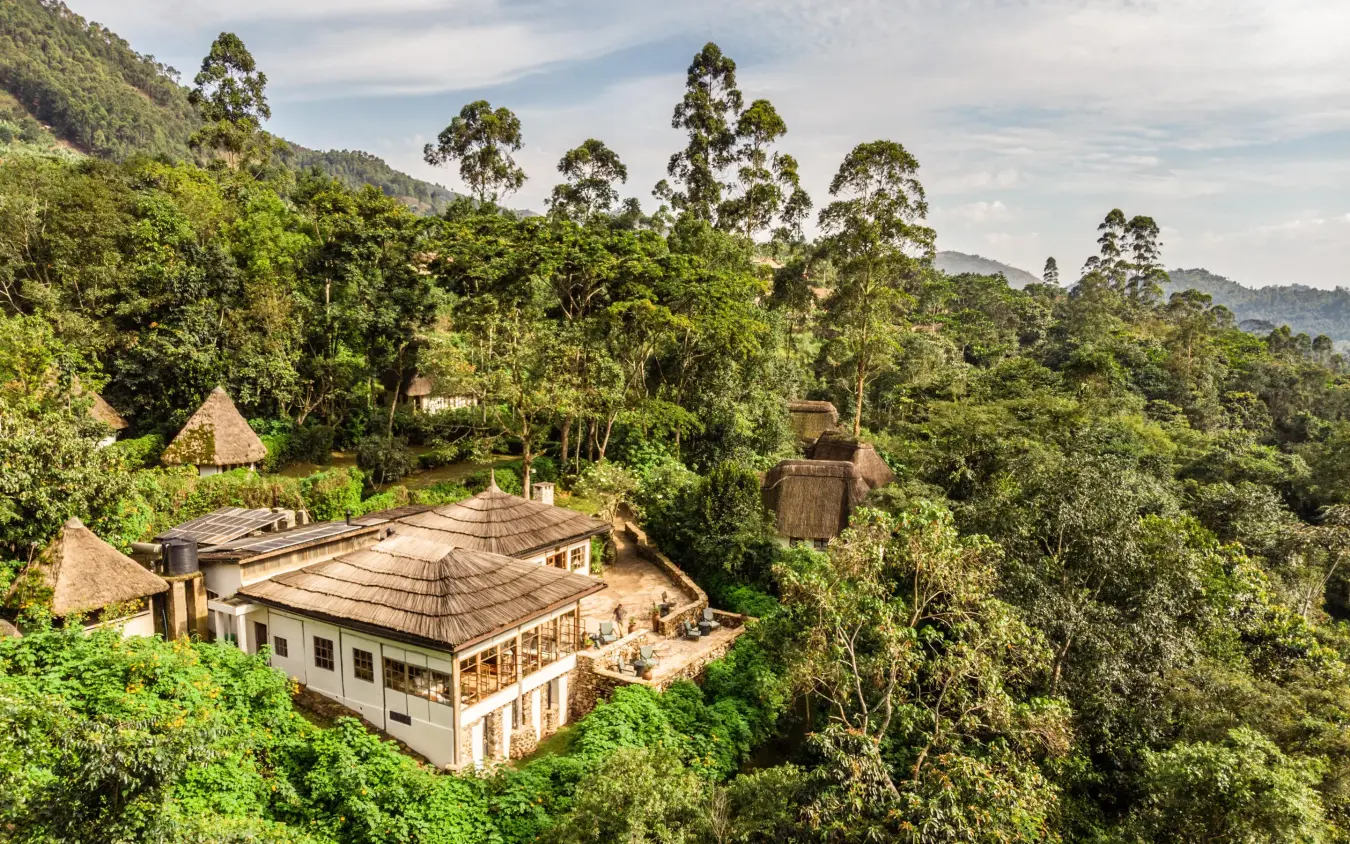
From Kigali you drive north to Volcanoes National Park, the Rwandan sector of the Virunga Massif, covering 160 square kilometres of rainforest. Treks assemble at Kinigi Park Headquarters by 7am and climb through farmed foothills into bamboo and Hagenia woodland, a permit granting one hour with a habituated mountain gorilla family; golden monkeys and around 200 bird species share the forest. Reached by a steep climb of around an hour from the park headquarters, Virunga Lodge stands high on a ridge between Lakes Bulera and Ruhondo, its ten hand-built bandas facing either the volcanoes or the lakes.
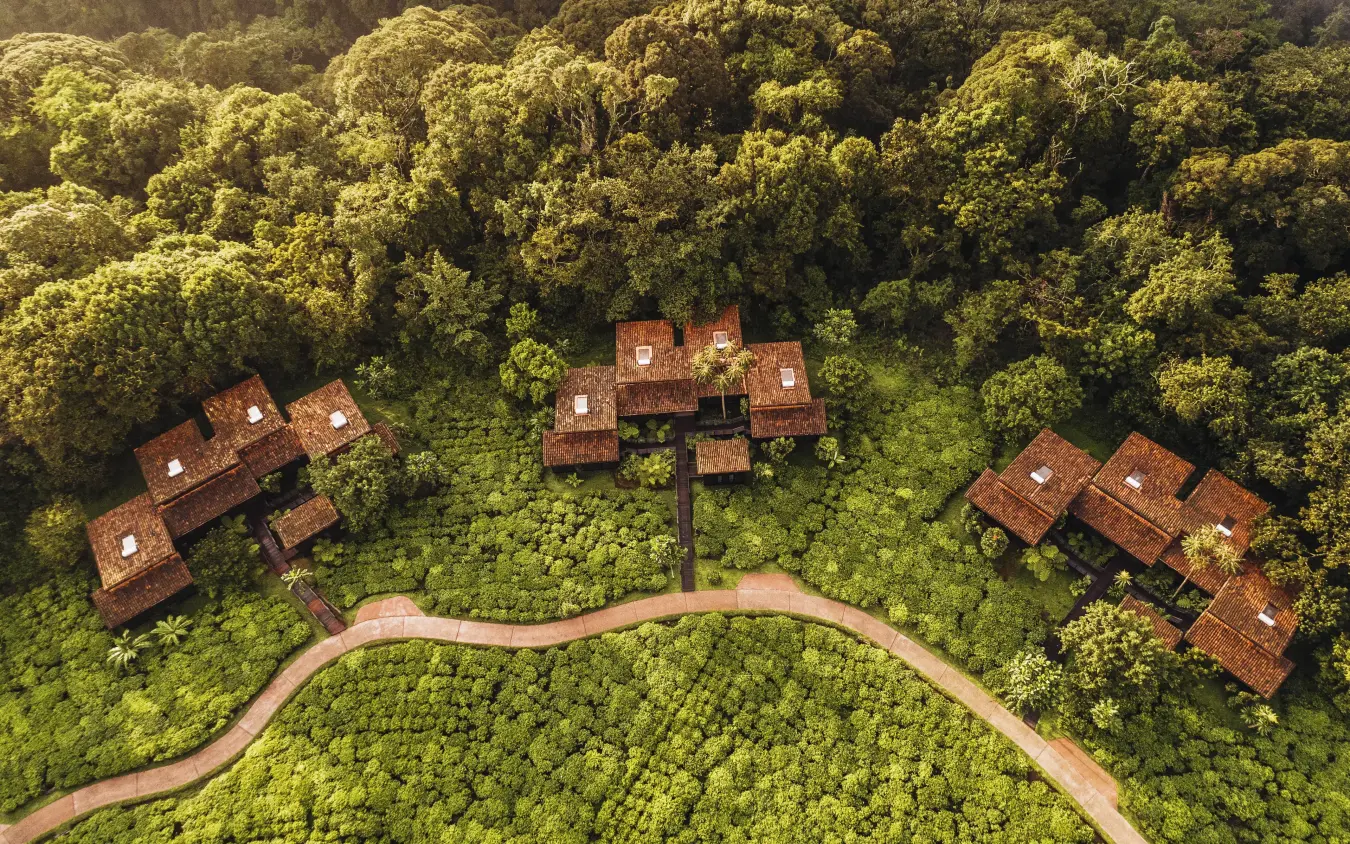
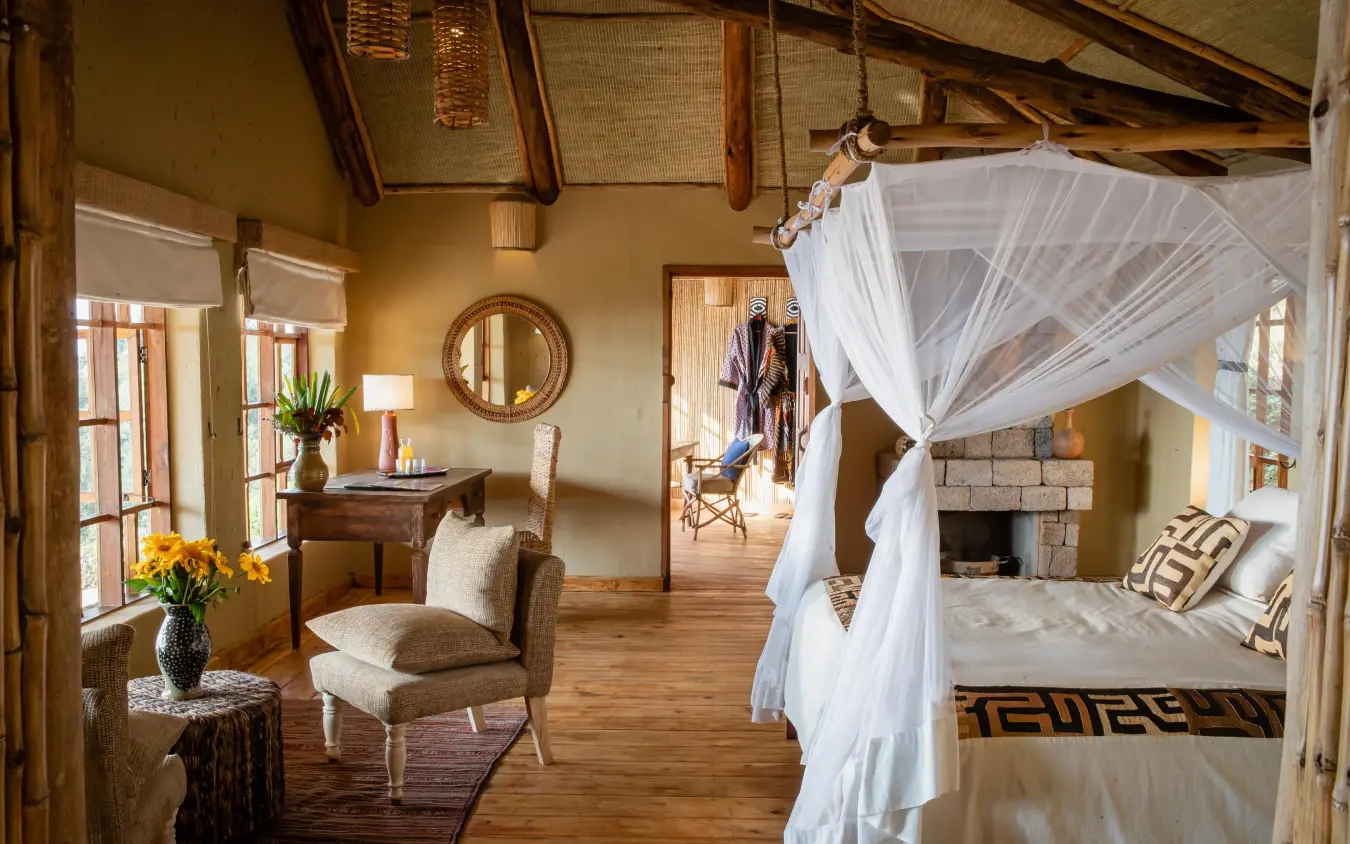
Crossing into Uganda, you reach Mgahinga, the country's smallest gorilla park, set among three dormant Virunga volcanoes. A single habituated family, the Nyakagezi group, lives on bamboo and open volcanic slopes beneath Muhabura, Gahinga and Sabyinyo, which makes for clearer sightlines than the dense forest to the north; golden monkeys are tracked through the bamboo zone. A short walk from the park gate, Mount Gahinga Lodge has eight circular bandas hand-built from local volcanic stone under papyrus thatch, each with a fireplace and a private veranda.
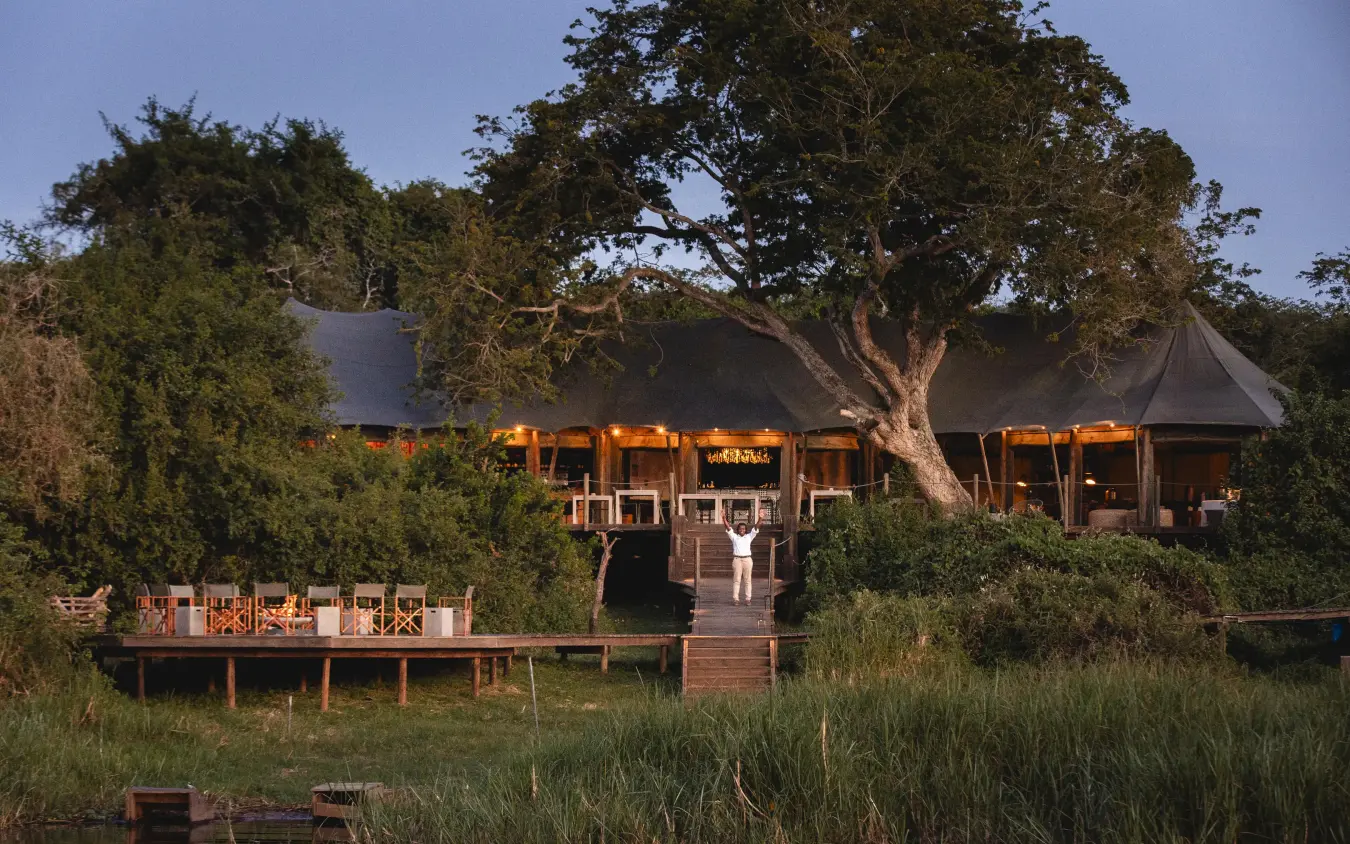
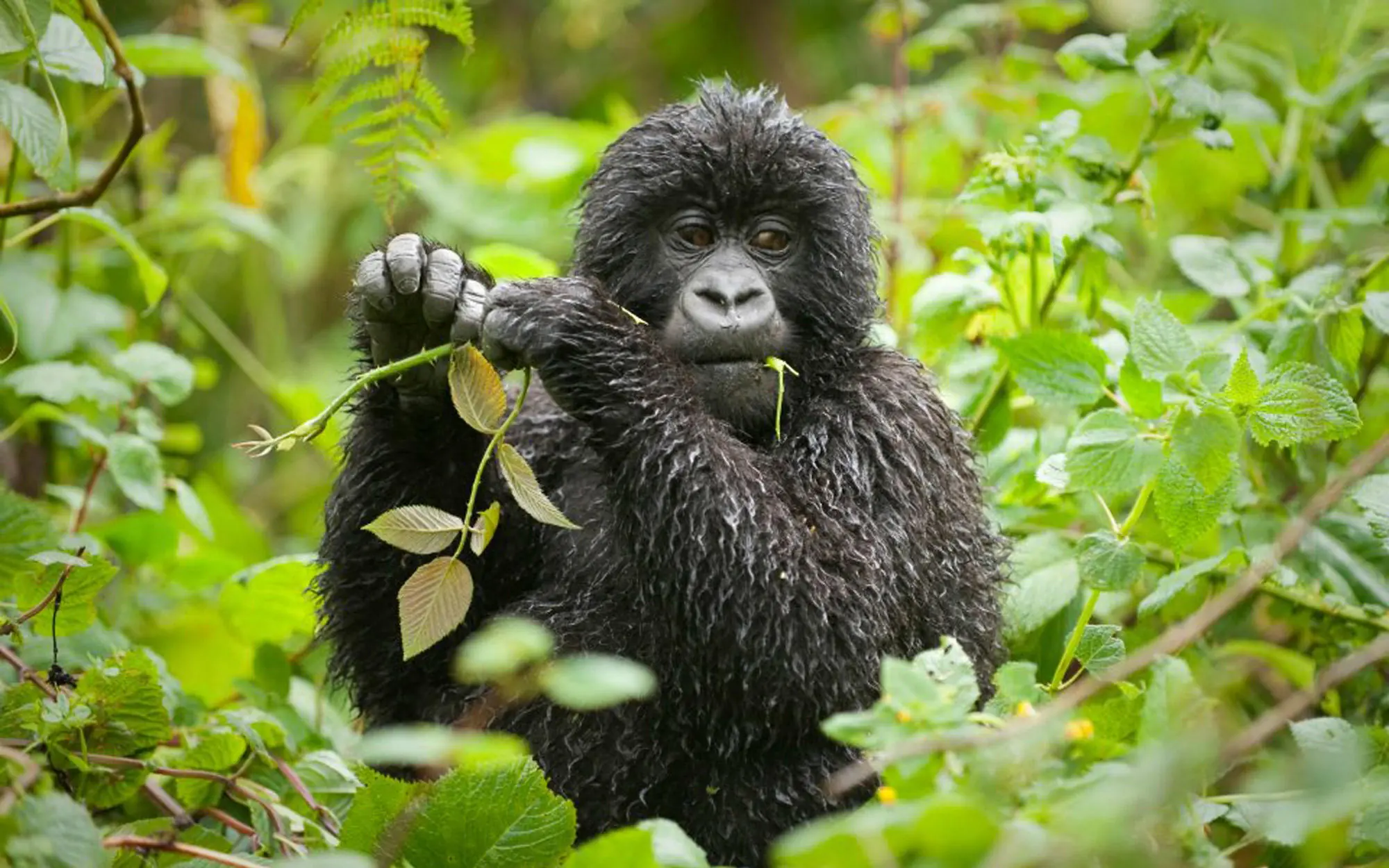
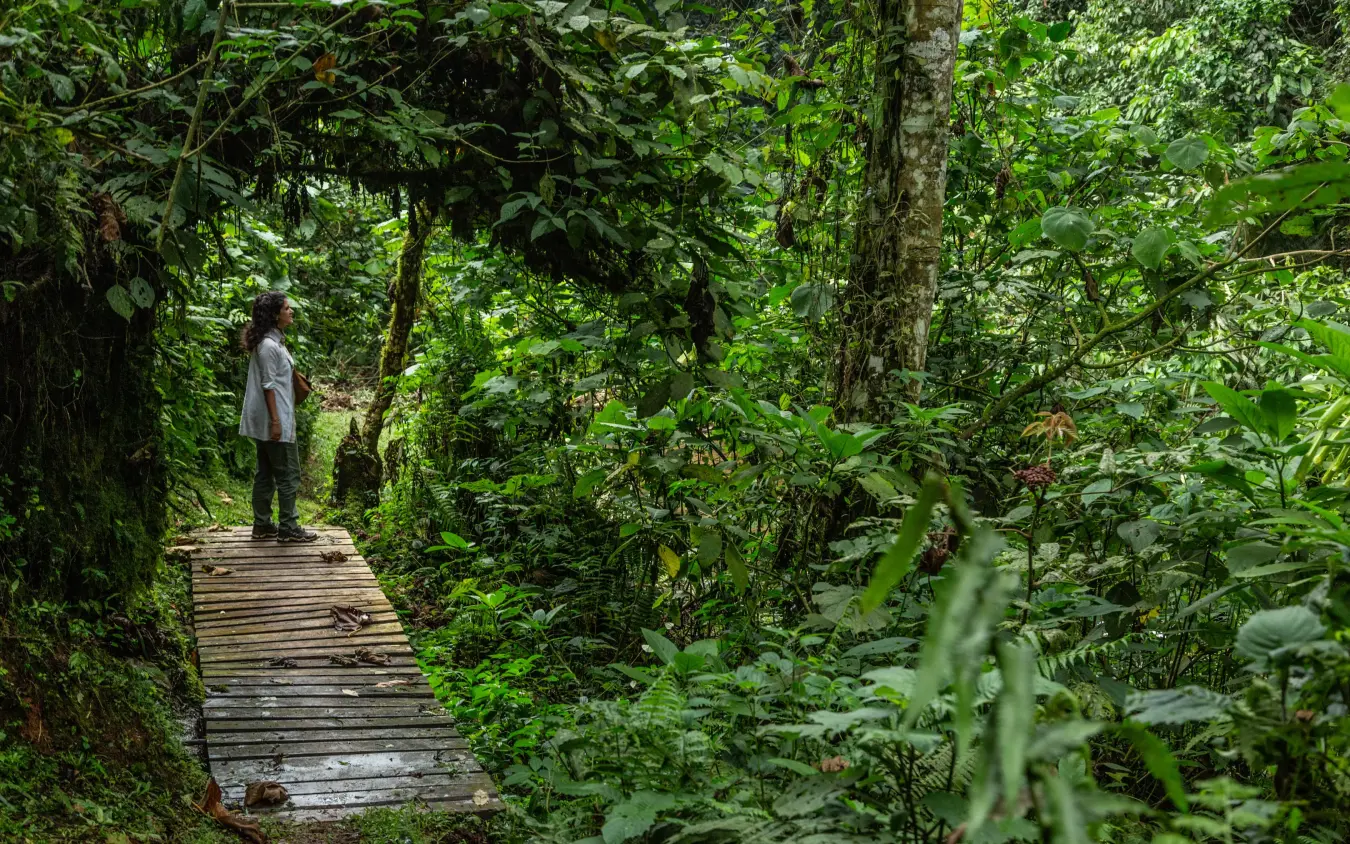
You continue north to the Bwindi Impenetrable Forest, a UNESCO World Heritage Site holding close to half the world's remaining mountain gorillas, with 25 habituated groups, nine of them open to visitors. Treks depart from the Buhoma sector following Uganda Wildlife Authority rangers, eight visitors per group and one hour with the gorillas once found; nature walks lead to waterfalls and the river. On the forest edge at Buhoma, Bwindi Lodge has its own footpath into the forest and balconies looking directly onto the trees, separated only by a stream, and is a favourite haunt of the Rushegura gorilla group.
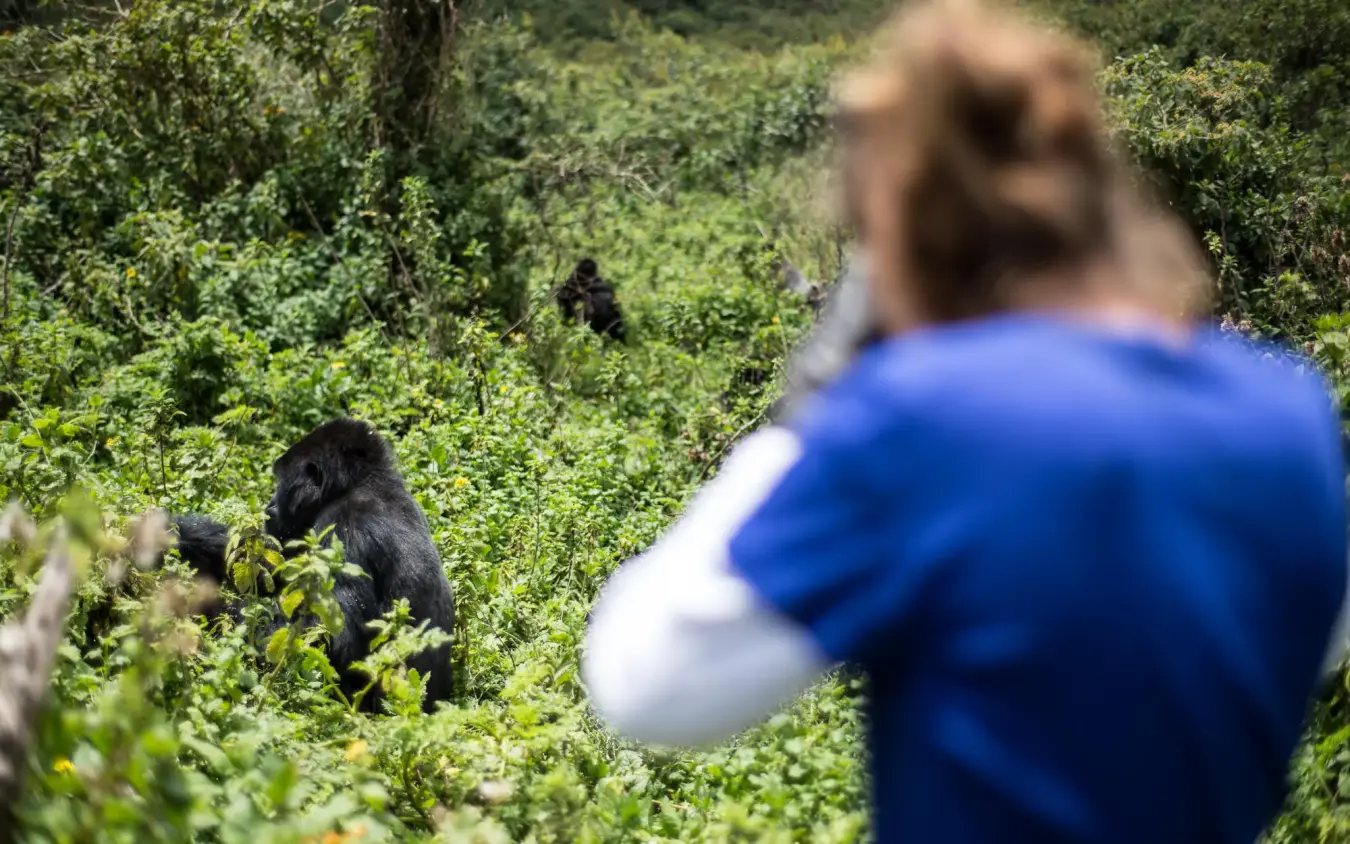
All three give you one hour with a habituated family, in a group capped at eight, and the forests could hardly be less alike.
Volcanoes National Park is high ground, with gorillas found between about 2,500 and 4,000 metres among bamboo and nettles, yet we judge it the easiest place to track them. Its twelve families are allocated by fitness at a 7am briefing.
Mgahinga, in Uganda, is the smallest and quietest: one habituated family, so one party of eight a day, setting out at 8am from Ntebeko on treks that typically last three to five hours across bamboo-covered volcanic slopes.
Bwindi sits lower, from roughly 1,160 to 2,600 metres, but it is steep, tangled rainforest where the walk may be over inside an hour or fill most of the day, and the mud and the gradient are the test there, not the thin air.
Very likely in all three, and no authority promises it.
Neither Rwanda nor Uganda publishes an official figure. We put success at better than 95 per cent on both sides of the border, and for the same reason: trackers go out at first light to the place each family nested, so the rangers set off with a good idea of where to find it.
Mgahinga has a single habituated family, still officially a transboundary group, although it is now resident. In Rwanda, if a visitor family crosses the border, one of the groups normally followed by researchers is offered in its place.
With treks possible in three parks, this route also spreads the risk in a way a single-park trip cannot: a poor hour in one forest, in rain or thick cover, need not be your only hour.
As many as three, one in each park, and the number is yours to choose.
Each trek needs its own dated permit, from the Rwanda Development Board for Volcanoes and from the Uganda Wildlife Authority for Mgahinga and Bwindi, and every family in every park is limited to eight visitors a day.
The tightest is Mgahinga. With one habituated family there are just eight permits a day, and they are usually booked solid, so on this route the Mgahinga date is the one we fix first and the rest follows from it.
Volcanoes has 96 permits a day and Bwindi more, yet both are often booked out well ahead for the dry months. For the dry months of June to September our advice is to begin as soon as you know your dates. In the rainier months permits are less contested.
If three treks feel like too many, golden monkeys make a gentler morning in either country.
Either, and the difference matters. The species' range is centred on the bamboo of these volcanoes, so you are in the right place in both countries.
On the Rwandan side they come easily: the main troop is 80 to 100 strong, thoroughly used to visitors, and often feeds at the forest edge, even in farmers' potato fields, so we rate it the surer and less strenuous of the two.
At Mgahinga, in Uganda, it is a climb of an hour to an hour and a half to reach the troop, rewarded by watching the monkeys feed on fresh bamboo in their natural forest. Mgahinga also offers something you will find nowhere else, a habituation experience in which you spend far longer with the monkeys alongside the researchers who study them.
Golden monkey tracking is less exhausting than gorilla tracking, so either sits well on the day after a trek.
By road, at the Cyanika border post between Musanze and Kisoro. Virunga Lodge to Mount Gahinga Lodge is about two hours' driving, border formalities aside.
One visa can cover both countries: the East Africa Tourist Visa is valid for Rwanda, Uganda and Kenya and allows multiple entries while you stay within the three, but check the official guidance before you apply.
The long day is Mgahinga to Buhoma, five to six hours on winding mountain roads. This route combines road and light aircraft, and exactly which legs are flown is something we confirm with you at the planning stage.
Scheduled light aircraft serve Kihihi airstrip, an hour and a half to two hours by road from Buhoma. The aircraft is typically an 11-seat Cessna Grand Caravan, and the luggage limit is 15 kilograms in soft bags, hand luggage included. By road, Buhoma to Kigali takes about seven hours.
June to September and December to February are the two dry spells, and within them June, July and August stand out as recommended in all three gorilla forests and in both countries.
January and February are recommended in all three as well, and December is a recommended month on the Uganda side, with a few more showers on the Rwandan volcanoes.
Neither country closes its gorilla forests in any month, so what changes is the ground under your boots.
Mgahinga and Bwindi are steep, and after weeks of rain they are slow, slippery work, which is why we rate March, April, May and November as the hardest months there. March, April and November are our lowest-rated months on the Rwandan volcanoes too.
October is the in-between month worth a look: trails are muddier, but permits are easier to secure, the forests are quiet, and flat, overcast light flatters a dark-coated animal.
Ed Charles, BBC Producer
Fitzroy are true specialists in accessing the wilderness. They know where to go and importantly, when to go there. Highly recommended.
rwanda, tanzania & kenya
Rwanda's gorillas, the northern Serengeti and Mara plains, then horseback days below Kilimanjaro in the Chyulu Hills.

rwanda
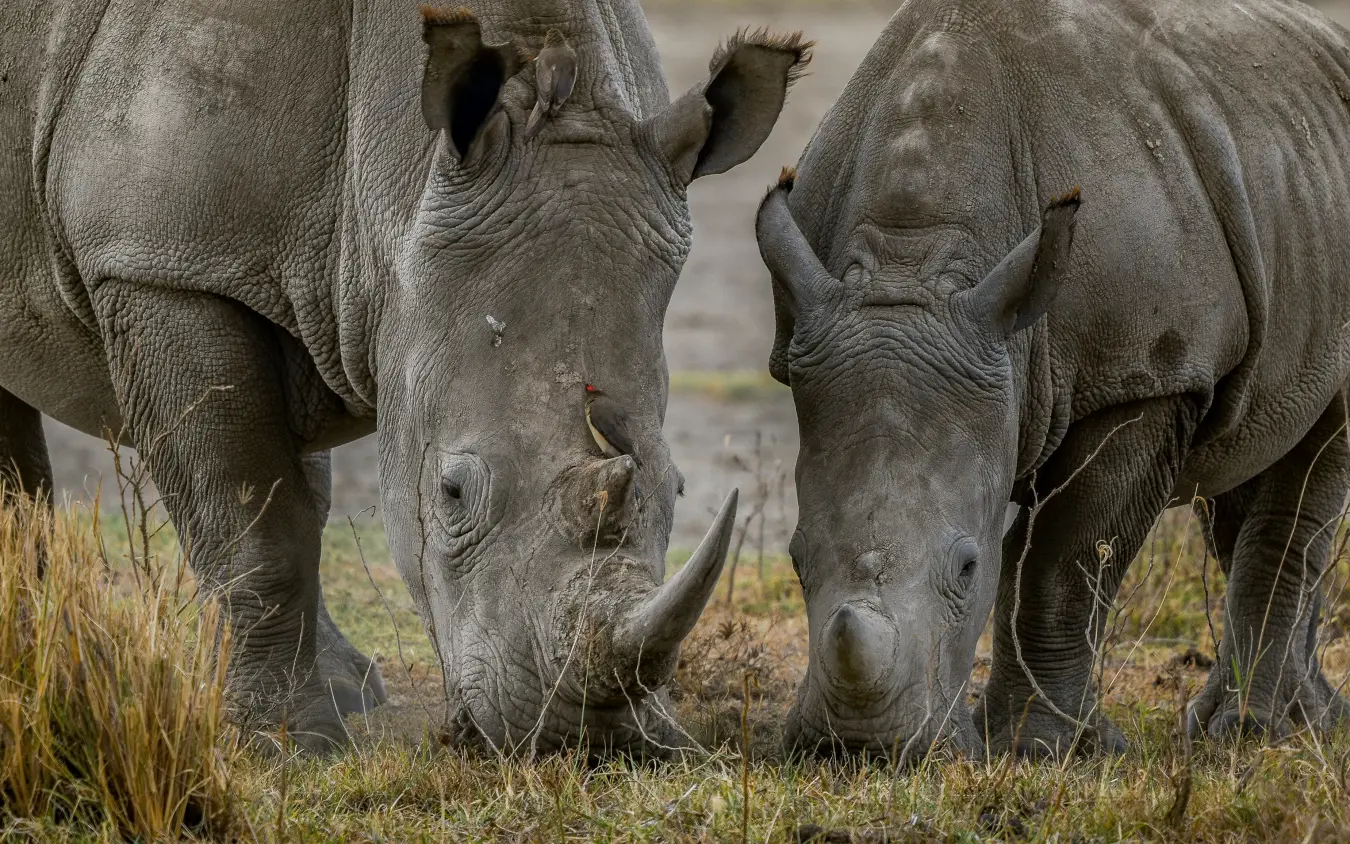
Eleven nights across Rwanda's three parks, from Akagera's savannah to Nyungwe's rainforest and the Virunga gorillas.
rwanda
Ten nights across Rwanda, linking Kigali, the savannah of Akagera, the gorillas of Volcanoes and the rainforest of Nyungwe.
rated five stars by our clients

our approach
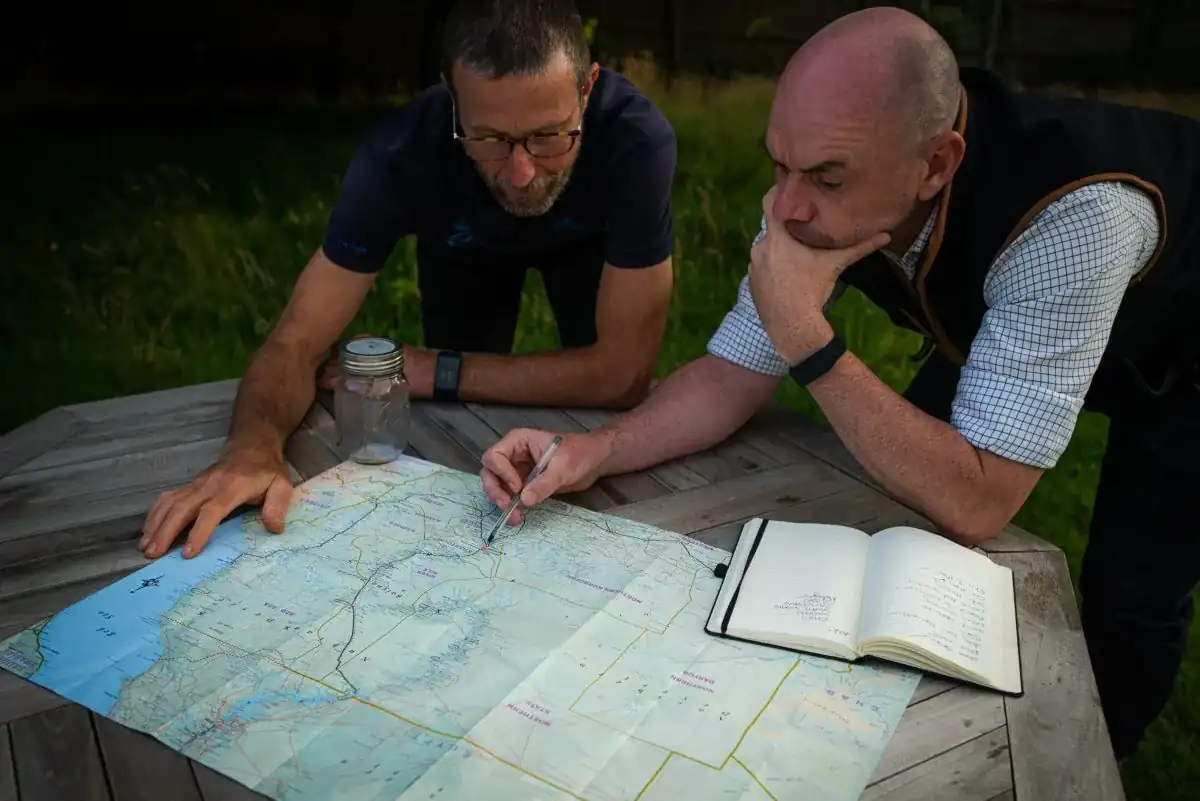
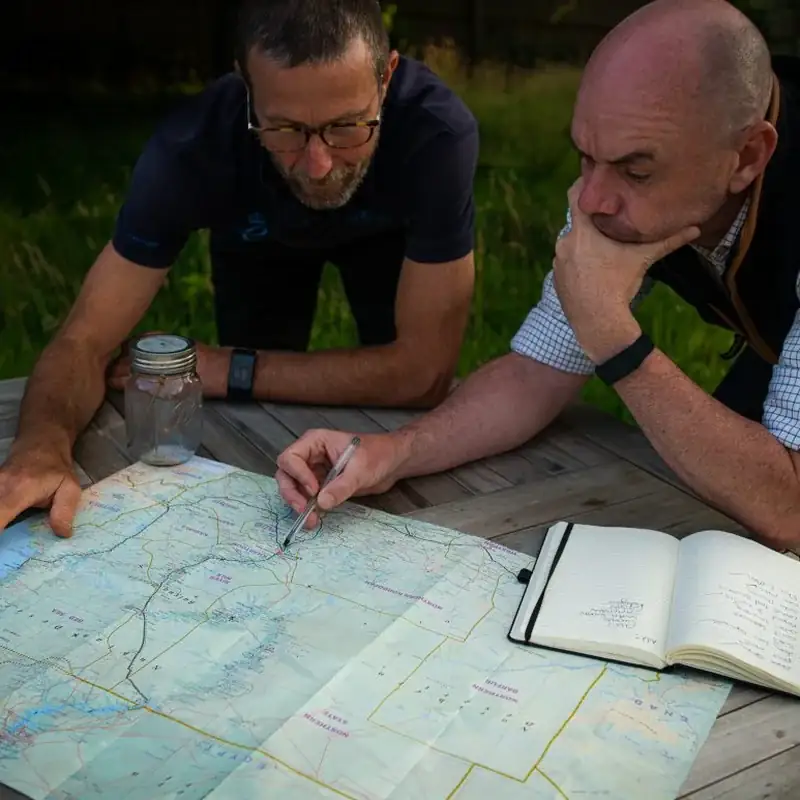
Every journey starts with a conversation. We take the time to understand your vision before we start planning.
Whether by phone or in person, we work with you directly to shape something that is considered, personal, and expertly delivered.
Every journey starts with a conversation. We favour a direct, personal approach: understanding your vision before anything else.
Whether by phone or in person, we work with you directly to shape a journey that is both thoughtfully considered and expertly delivered.
Get in touch to start planning yours.