april 5, 2026
great migration safaris
The Great Migration is a year-round movement of roughly two million wildebeest, several hundred thousand zebra, and significant numbers of gazelle through the Serengeti-Mara ecosystem. It is not a single event with a fixed date. The herds follow the rains, moving from the southern Serengeti plains northward through the western corridor and up toward the Mara River, before turning south again as the short rains begin.
Planning a Great Migration Safari
A migration safari typically runs between 7 and 14 days. Most trips begin with a flight into Arusha or Kilimanjaro, followed by a light aircraft transfer into the park. Which part of the Serengeti you fly into depends entirely on the time of year and where the herds are. The difference between a well-timed migration trip and a poorly timed one is not luck. It is planning.
Fitzroy are true specialists in accessing the wilderness. They know where to go and importantly, when to go there. Highly recommended.
Bafta & Emmy award winning film producer of BBC’s Planet Earth 2 and A Perfect Planet

What the Migration Looks Like
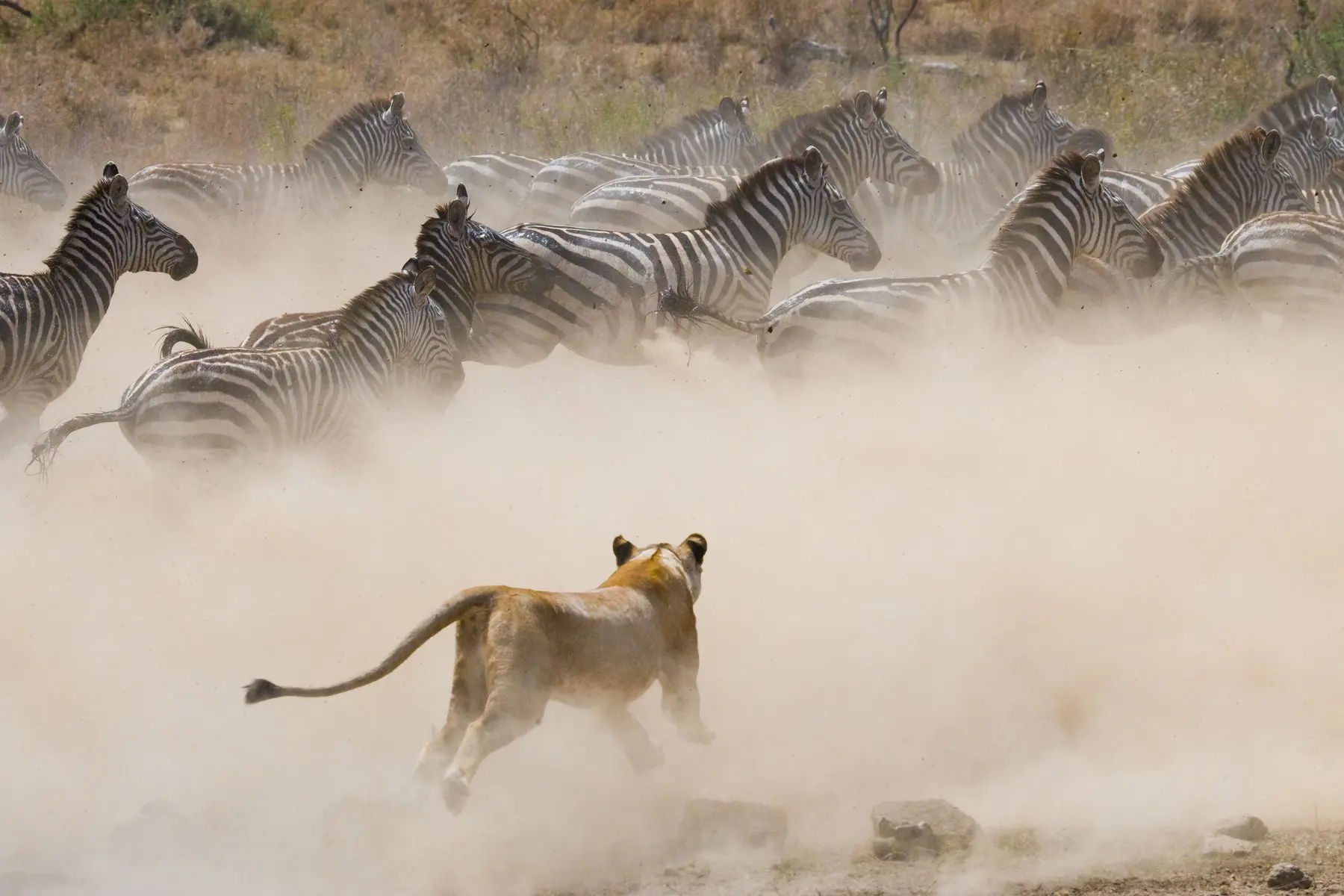
The character of the migration changes completely depending on when you go. Between January and March, the herds concentrate on the southern Serengeti plains around Ndutu, where an estimated 400,000 to 500,000 calves are born within a roughly three-week window. Predator activity is almost constant: lion, cheetah, hyena, and jackal converge from all directions. The open plains offer unobstructed visibility, and the sheer concentration of life is difficult to overstate.
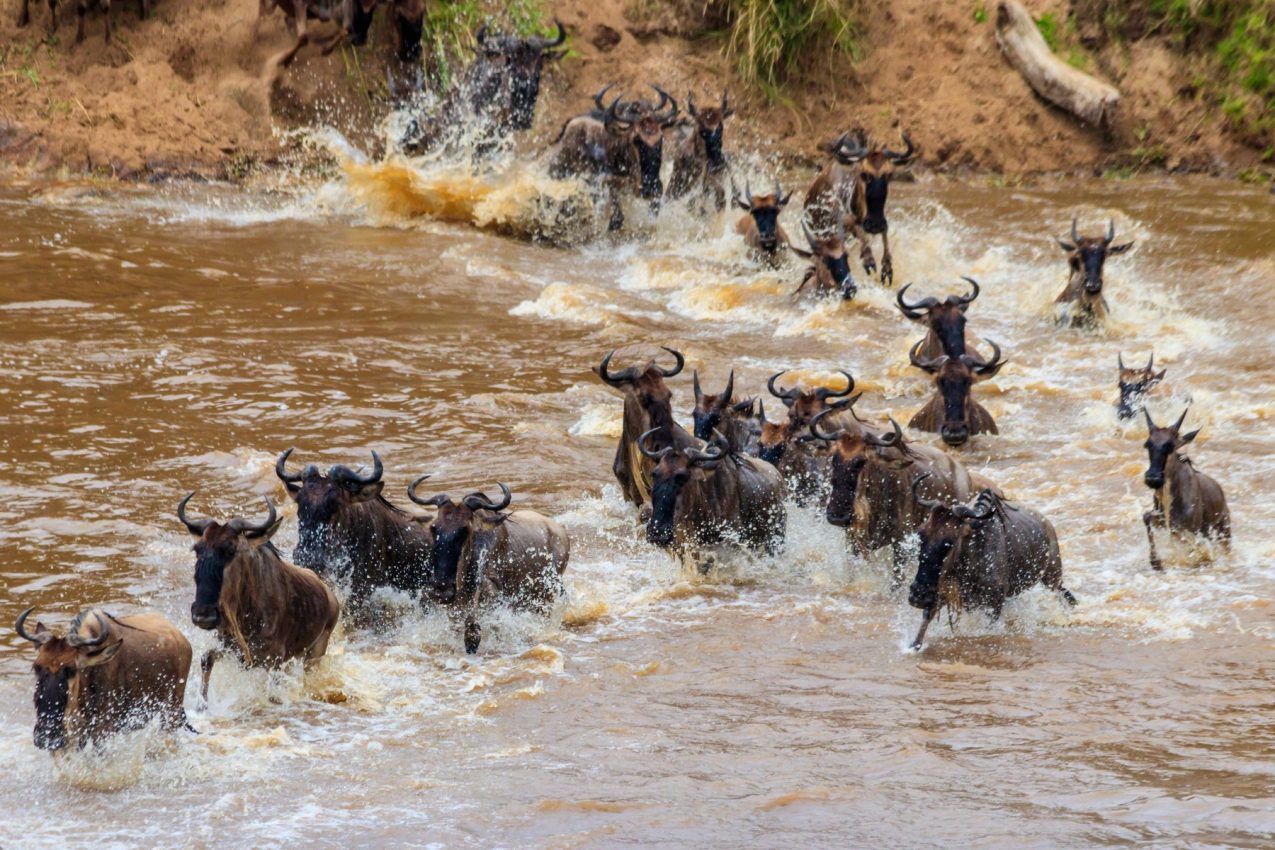
By June, the herds push westward toward the Grumeti River. The first significant river crossings of the cycle occur here, smaller than the headline Mara crossings but no less dramatic. From July through October, the main body reaches the northern Serengeti, and the Mara River crossings begin. Thousands of animals funnelling into narrow stretches of water, crocodiles moving beneath the surface, dust columns rising from the gathering herds on the banks. Between crossings, the northern Serengeti offers consistently strong game viewing, with large lion prides and leopard along the river margins.
From November onward, the short rains trigger a rapid return south. By late December, the herds are back on the southern plains and the cycle resets. Every phase offers a fundamentally different experience.
If I had to identify the most undervalued period in the cycle, it would be January and February without hesitation. I have sat on the Kusini Plains, in total isolation, watching a generation of calves, with hyena and jackal working the edges of the herd and a martial eagle circling overhead, and the sheer concentration of life and death in that landscape is something I have never experienced anywhere else. The southern Serengeti in calving season is one of those rare situations where the less famous option is genuinely the more powerful one.
Managing Director
The table below gives a quick overview of the migration’s annual cycle through Tanzania. Detailed month-by-month notes follow further down.
| Months | Migration phase | Where in Tanzania | What to expect |
|---|---|---|---|
| Jan to Feb | Calving season | Southern Serengeti & Ndutu | Mass calving on the short-grass plains. Peak predator activity. |
| Mar | Early northward movement | Southern to Central Serengeti | Herds drift north in loose columns. Strong birdlife after rains. |
| Apr to May | Long rains | Central Serengeti | Low season. Green landscapes, few visitors, some camps closed. |
| Jun | Western corridor | Grumeti River area | First river crossings of the cycle. Dense columns forming. |
| Jul to Aug | Mara River crossings begin | Northern Serengeti (Kogatende) | First Mara River crossings. Enormous herds gathering on the banks. |
| Sep to Oct | Crossings continue | Northern Serengeti (Kogatende) | Herds cross back and forth. Some splinter groups remain in Kenya’s Maasai Mara. |
| Nov to Dec | Return south | Central to Southern Serengeti | Short rains trigger rapid southward movement. Landscape greens. |
How We Plan Migration Safaris
Most safari companies build migration itineraries around a single formula: fly to the northern Serengeti in August, hope for a river crossing, fly home. It works, but it is also the reason most migration safaris feel interchangeable and the camps are at capacity.
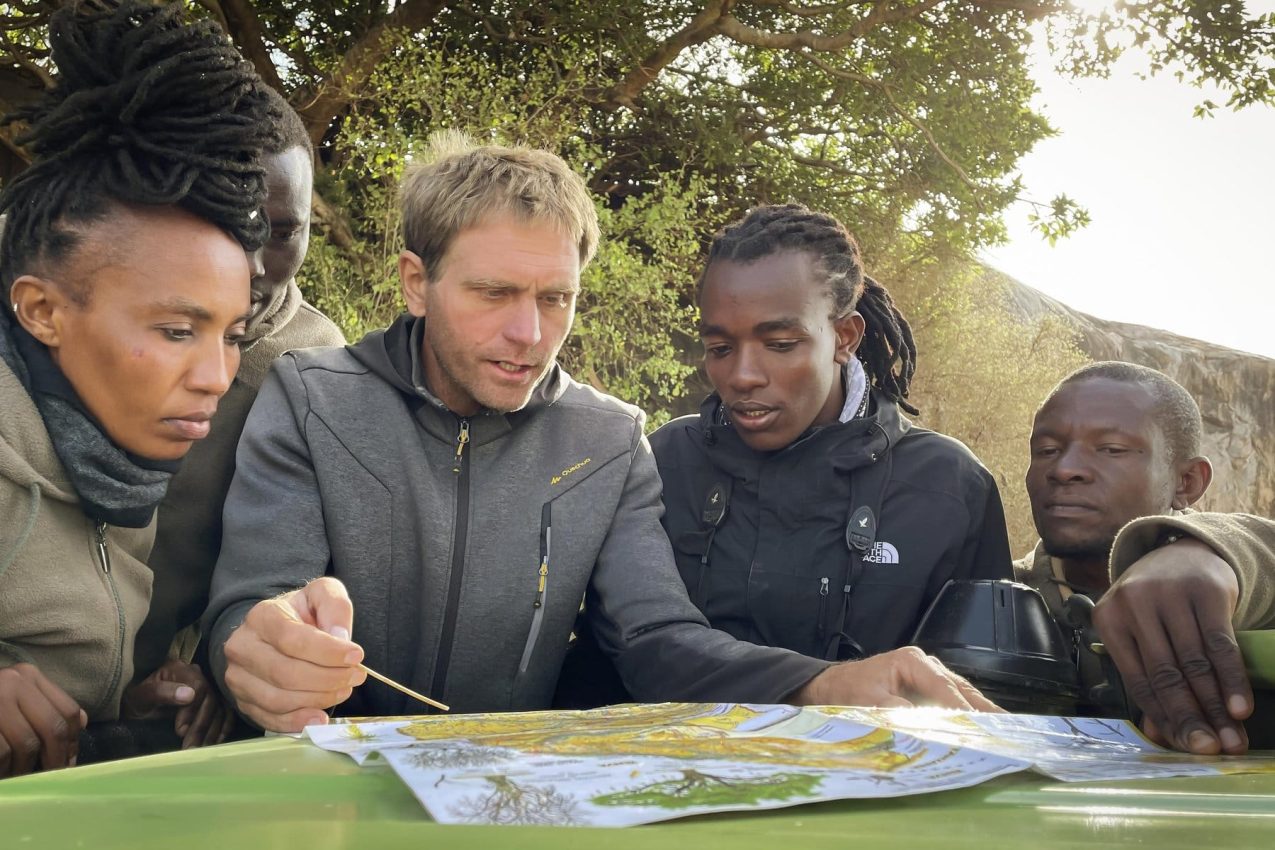
We work differently. We plan migration trips around which phase of the cycle suits you, not around which month the brochures say is best. For clients who want the river crossings, we use the northern Serengeti’s Kogatende and the Lamai Wedge, where vehicle density at crossing points is significantly lower than the equivalent experience in Kenya’s Maasai Mara. For clients open to the calving season, we place them on the southern plains where visitor numbers are a fraction of peak season.
For clients with time and flexibility, we increasingly recommend combining both sides of the border. A short flight and border formalities handled at Migori make it straightforward. Staying on one of Kenya’s private conservancies neighbouring the Maasai Mara adds a dimension that the national parks on either side cannot offer: night drives, walking, and a level of exclusivity that changes the quality of the experience entirely.
Your next adventure starts with a conversation.
When to See the Great Migration
The herds do not move as a single mass along a fixed path. The migration is better understood as a fluid, shifting front of animals responding to localised rainfall and grazing conditions. The more useful question is not which month is best, but which phase of the cycle suits you.
I’ve lost count of the number of times clients have asked me when they should go to see the Great Migration. It’s the right question, but it carries a hidden assumption: that there’s a single best window, a golden week you need to hit. There isn’t. The migration is a continuous, year-round movement. Something is always happening. And as is so often the case with travel, those who resist the obvious, who don’t fixate on the single moment everyone else is chasing, tend to be rewarded most richly.
Managing Director
the great migration
Seasonal route through the Serengeti-Mara ecosystem
FITZROY TRAVEL
What a Migration Safari Costs
Great Migration safaris range in price depending on the camps, the time of year, and whether you have a private guide and vehicle. Our private migration safaris start at approximately $1,000 per person per day. That covers accommodation, all meals, game drives with an experienced guide, internal flights, and park fees.
If the timing or the budget does not fit, we will say so, and suggest an alternative that does.
Crossing season in the northern Serengeti (July to October) commands the highest prices and the longest advance booking windows. January and February on the southern plains are often better value, with shorter lead times and smaller camps.
The Serengeti Without the Crowds
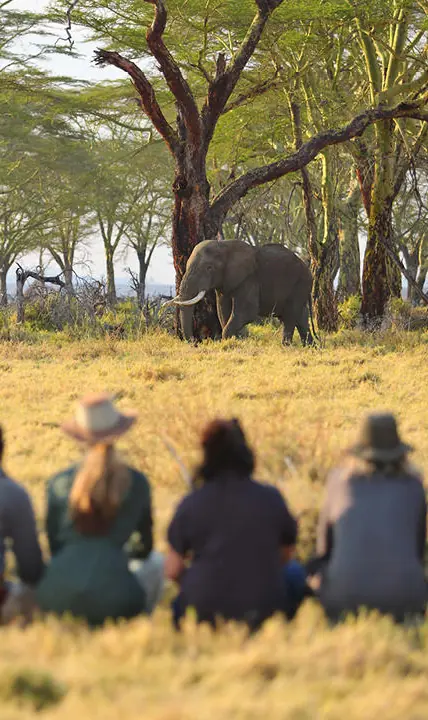
The Serengeti supports large resident populations of lion, leopard, elephant, and buffalo year-round, regardless of where the migration happens to be. When calving season draws visitors to the southern plains between January and March, the northern camps operate at a fraction of their capacity. When crossing season concentrates attention on the Mara River between July and October, the central and southern Serengeti are nearly empty.
The wildlife does not leave when the wildebeest do. What changes is the number of vehicles.
Few operators suggest this approach because it requires placing clients away from the headline event. It means using smaller, year-round camps in areas most itineraries skip entirely.
Being in the northern Serengeti with a private guide in February is like travelling in the Maasai Mara in the 1960s. Resident wildlife everywhere, not another vehicle in sight. This is what we recommend to documentary crews and filmmakers working in the Serengeti: go where nobody else is going. It is the great wildlife opportunity that most people are missing, and it is exactly the kind of trip we build.
Managing Director
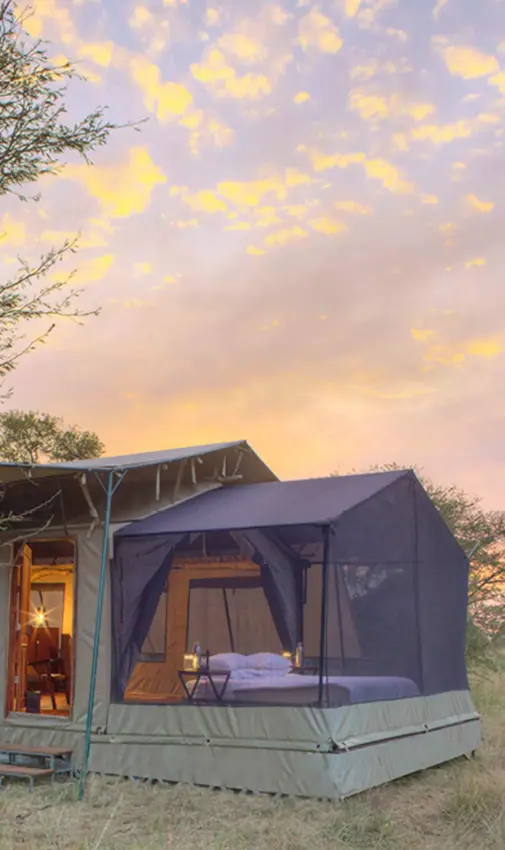
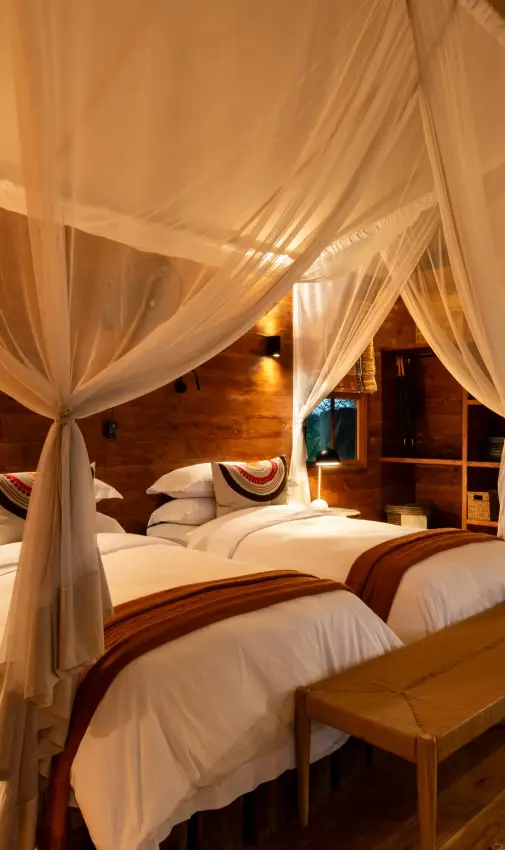
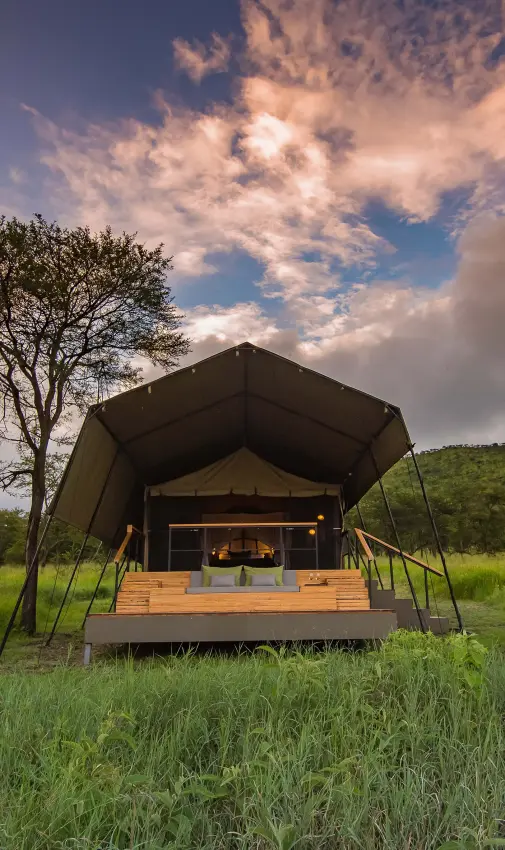
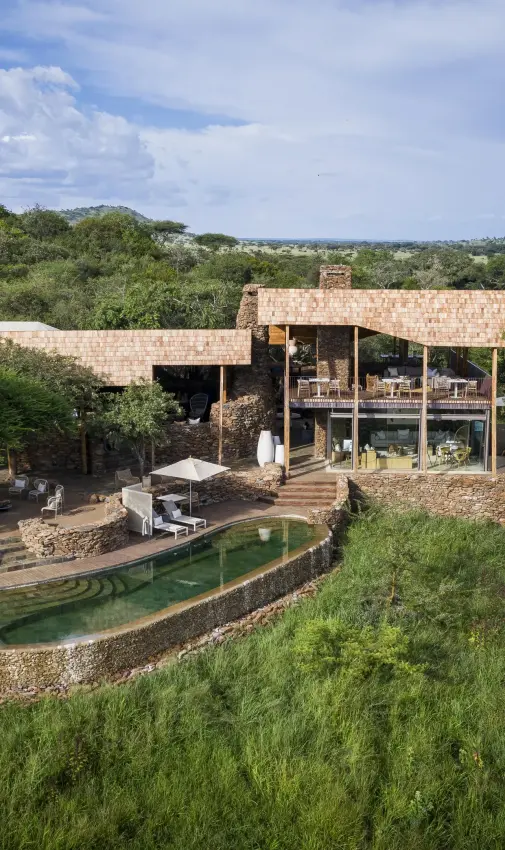
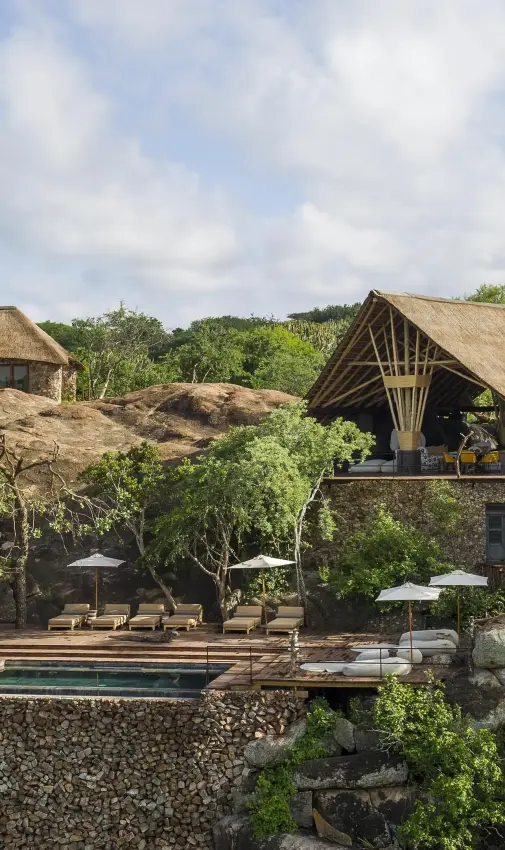
featured accommodation in the serengeti
 01
01

 02
02
 03
03
 04
04
 05
05
 06
06
 07
07
 08
08
 09
09
 10
10
 11
11
 12
12
 13
13
 14
14
How to Get Started
Fill in the enquiry form below. When you might travel, how many of you there are, what matters most. A member of our team will call you, normally within 24 hours, for an informal conversation about what you are looking for and how our safaris work. From there, we put together a detailed proposal tailored to what you have told us.

Not every great trip starts with a search.
Let us send you the ones worth knowing about. Thoughtful, occasional, always worthwhile.
Find out more about Great Migration safaris
Let us know your travel requirements below and one of our specialists will be in touch with you as soon as possible.