





kenya
helicopter safari
Twelve nights across Kenya by helicopter, from the Borana rhino conservancy over the Suguta Valley to Turkana, then Laikipia and the Kilifi coast.
- Private Safari
- From $37,100 pp
- 4 guests
- 12 nights
This route links five parts of Kenya over thirteen nights. It opens in Nairobi, where savannah runs up against the city’s southern edge, then climbs to the Laikipia Highlands and the Borana rhino conservancy. From there it moves into the Mathews Range forest, down to Naboisho Conservancy on the edge of the Maasai Mara, and ends among the Loita Hills.
The pace shifts as you go. Borana is horse riding, walking and rhino tracking on a private conservancy; Kitich does away with the game drive and explores on foot; Naboisho allows off-track driving and night drives that the reserve cannot. The stays are family-run lodges and small camps, closing on a lightweight mobile camp in the Loita Hills, where the walking is led by Maasai guides.
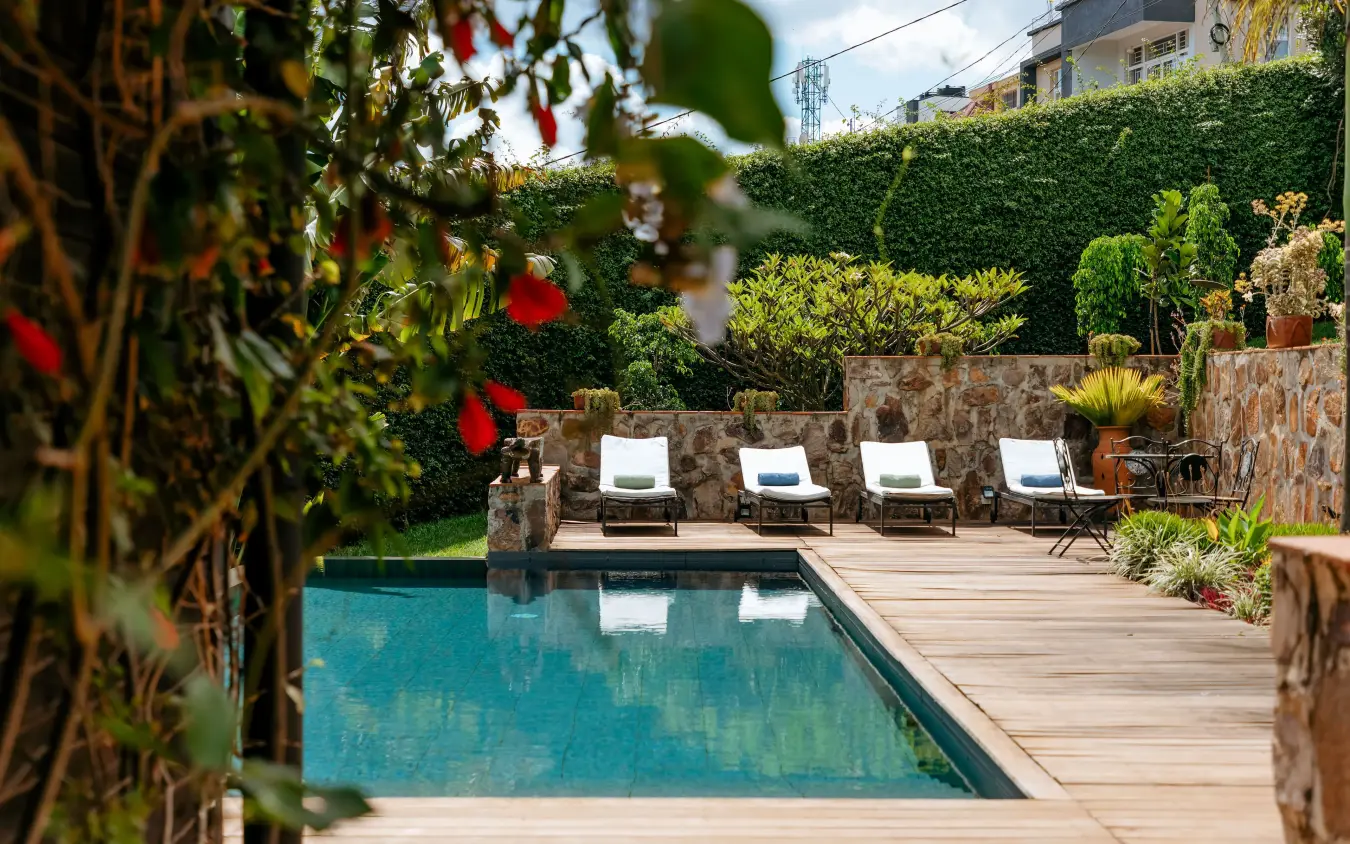
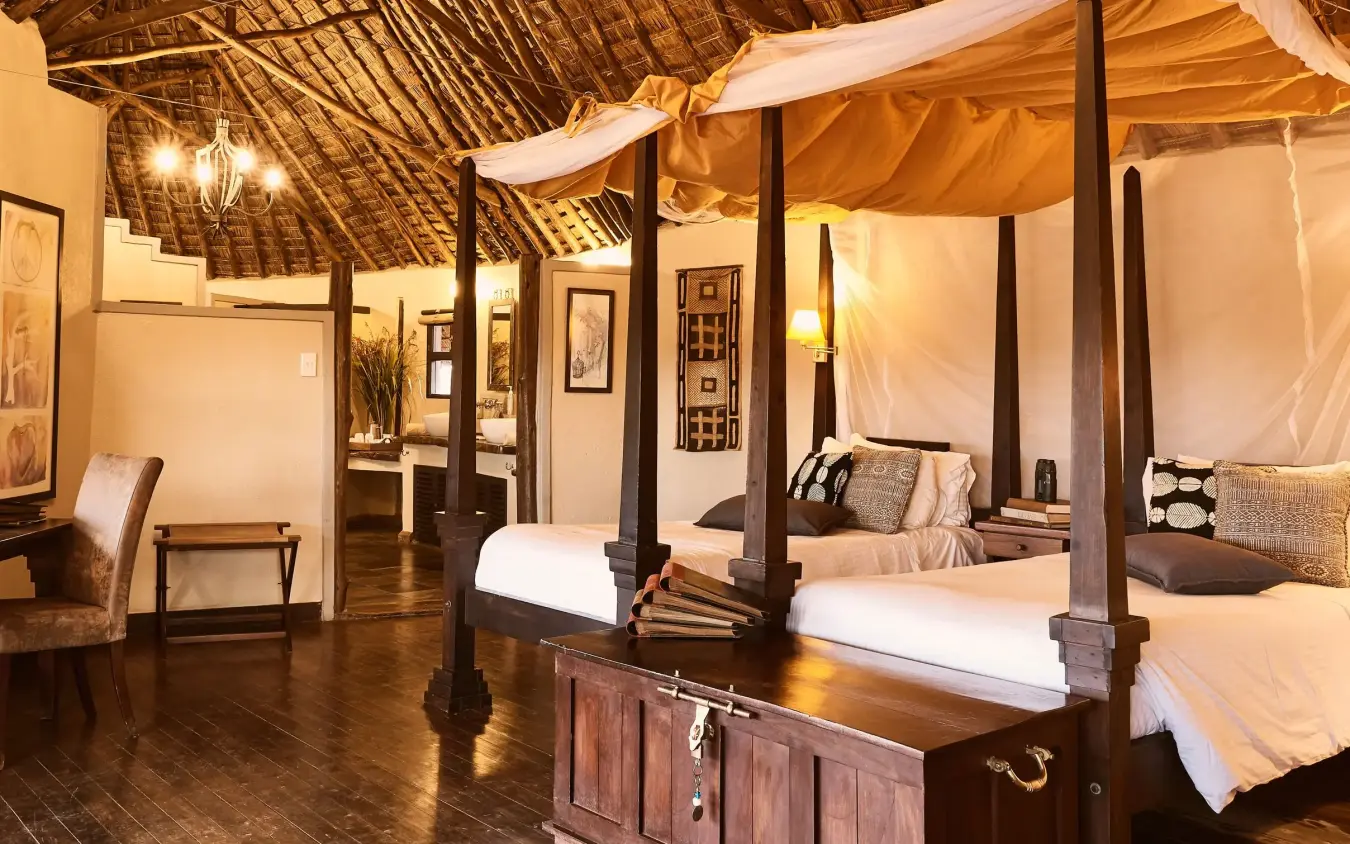
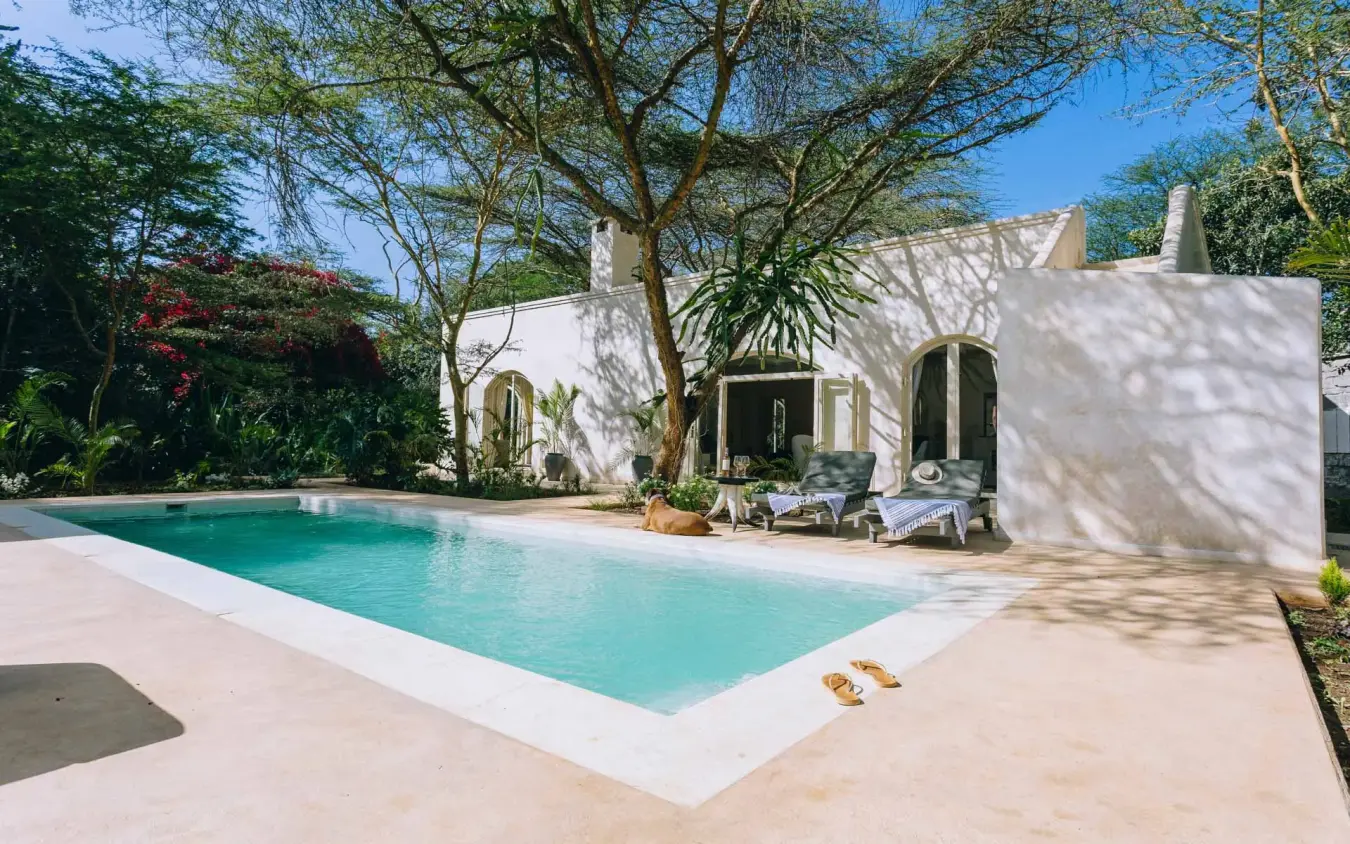
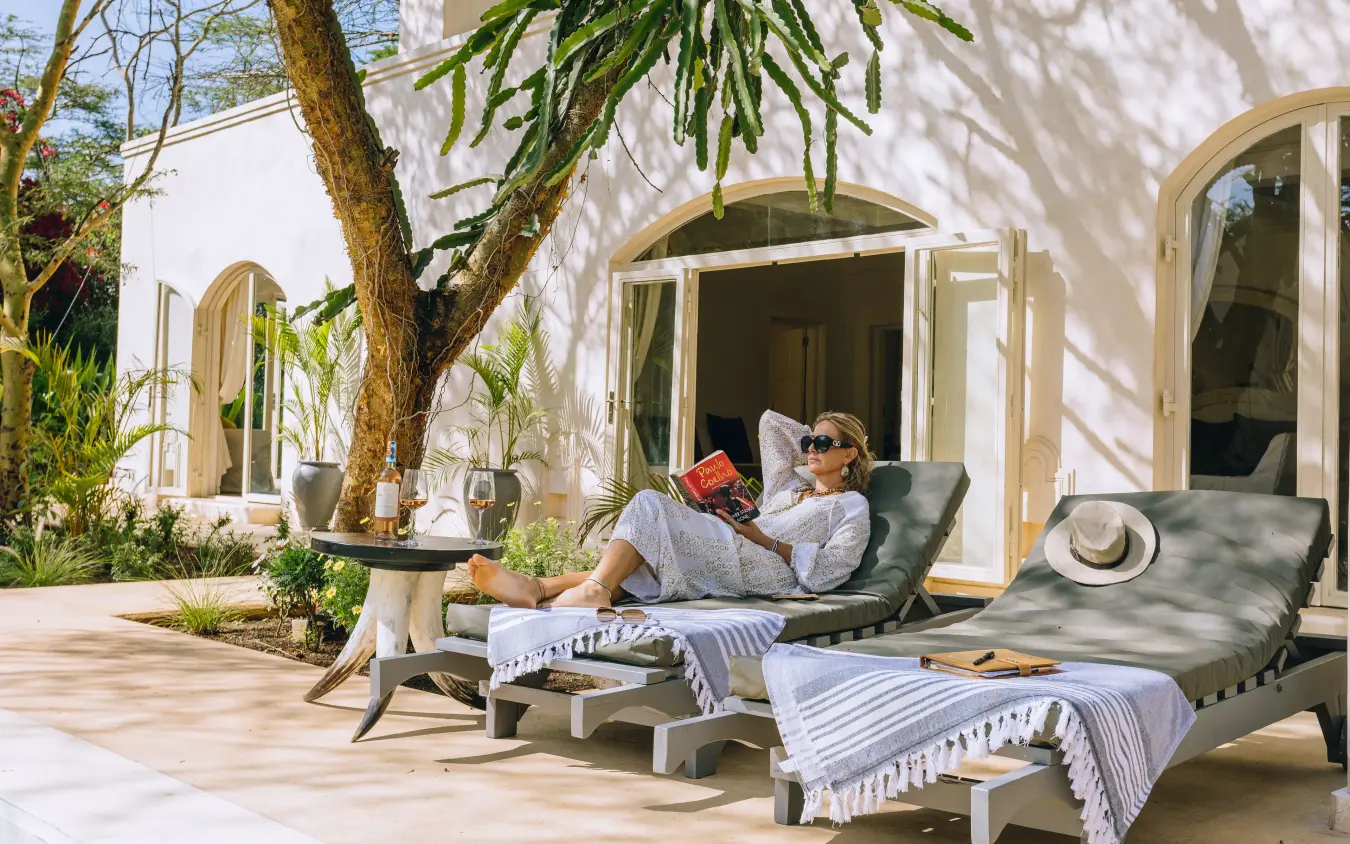
You begin in Nairobi, a highland capital where lion, black rhino and resident herds of zebra and giraffe move across grassland on the city's southern edge. With a day here you can visit the Giraffe Centre, which runs a breeding programme for Rothschild's giraffe, or the Sheldrick Wildlife Trust, which raises orphaned elephant calves at the park's edge. Manzili House is a Lamu-inspired family home in the Karen suburb, below the Ngong Hills, built with artisans brought up from Lamu Island. White living spaces open onto a central courtyard and pool, and the in-house chef cooks to order.
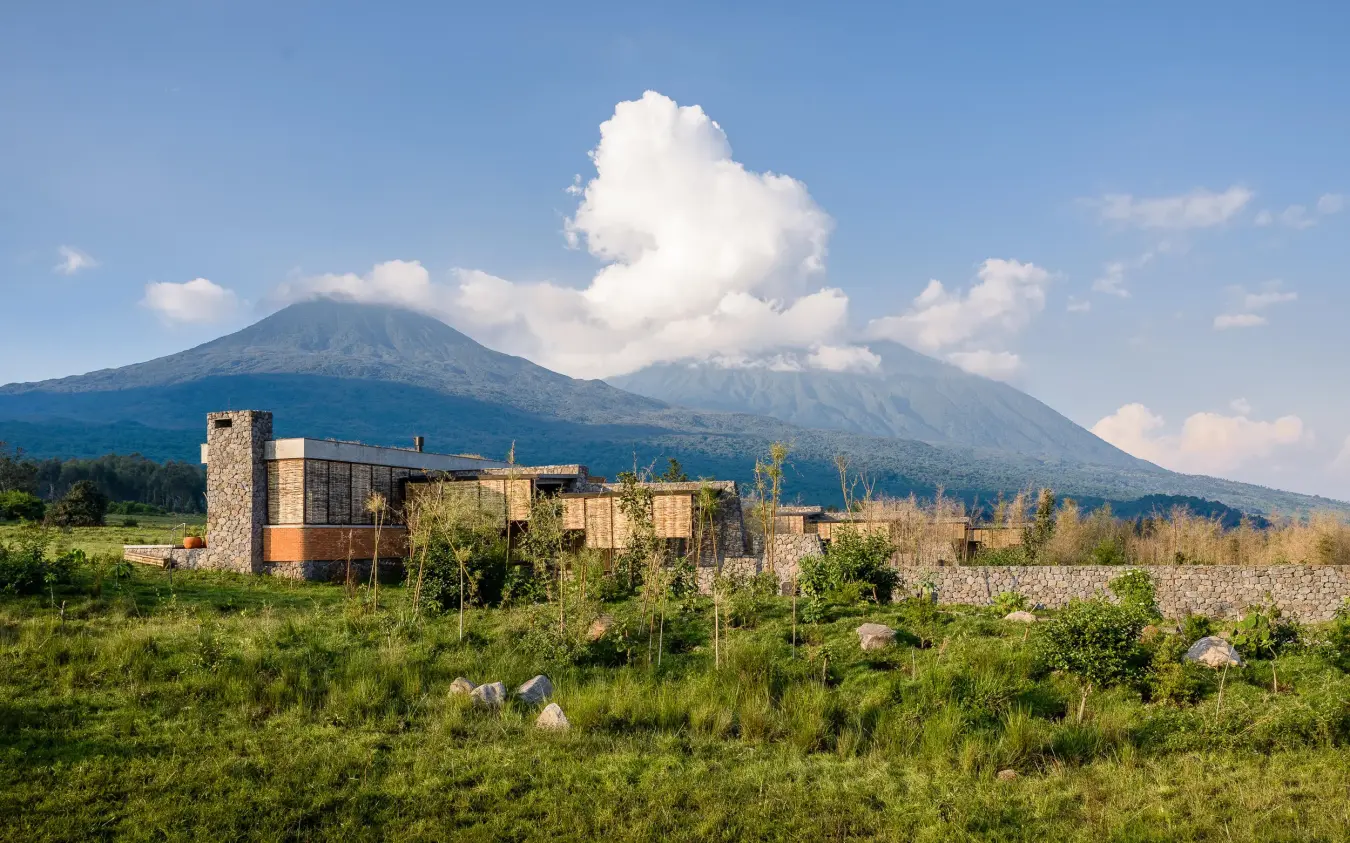
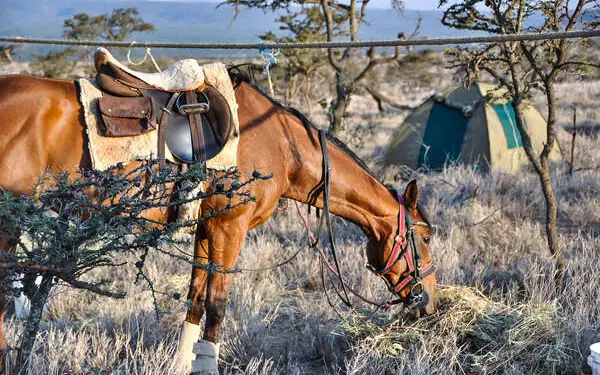
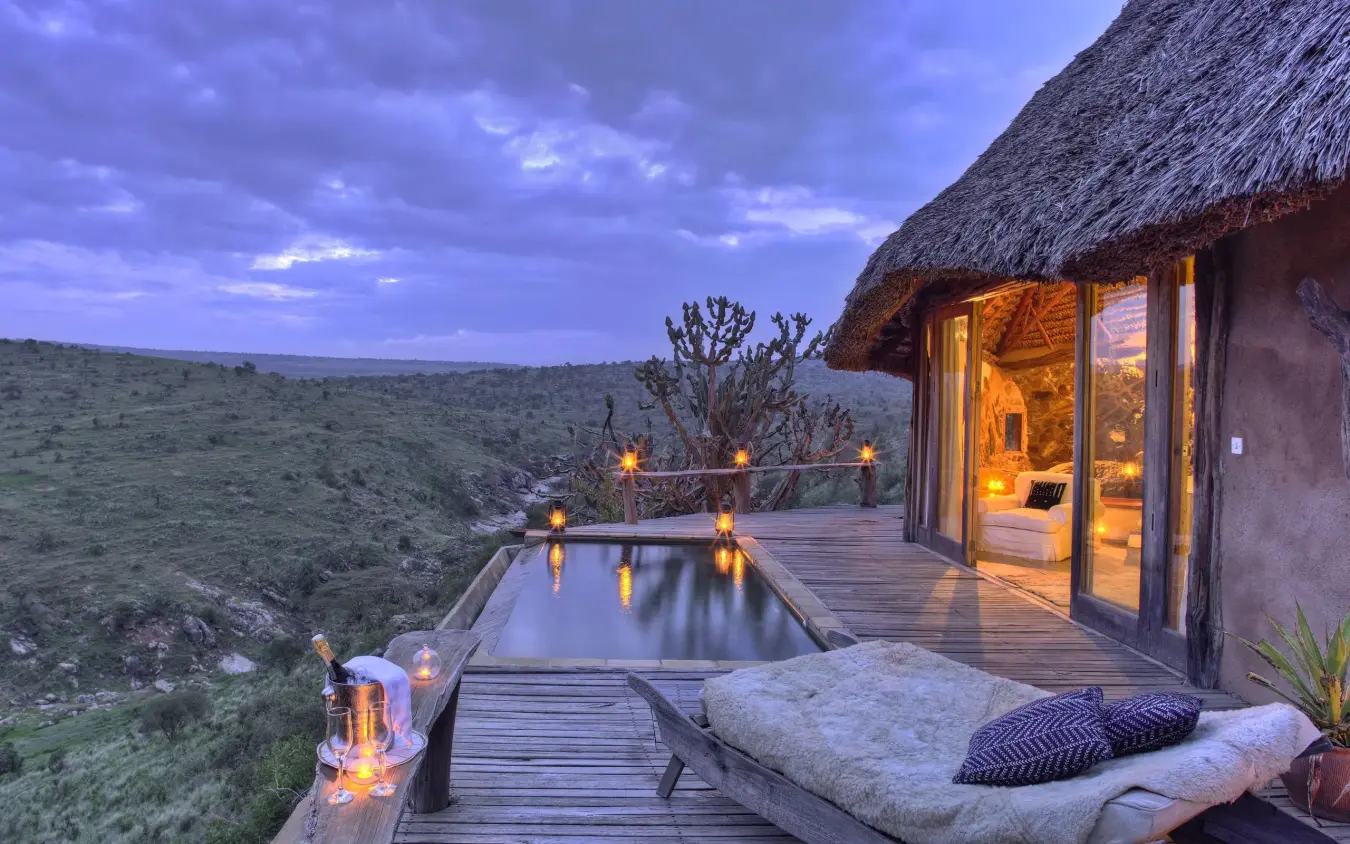
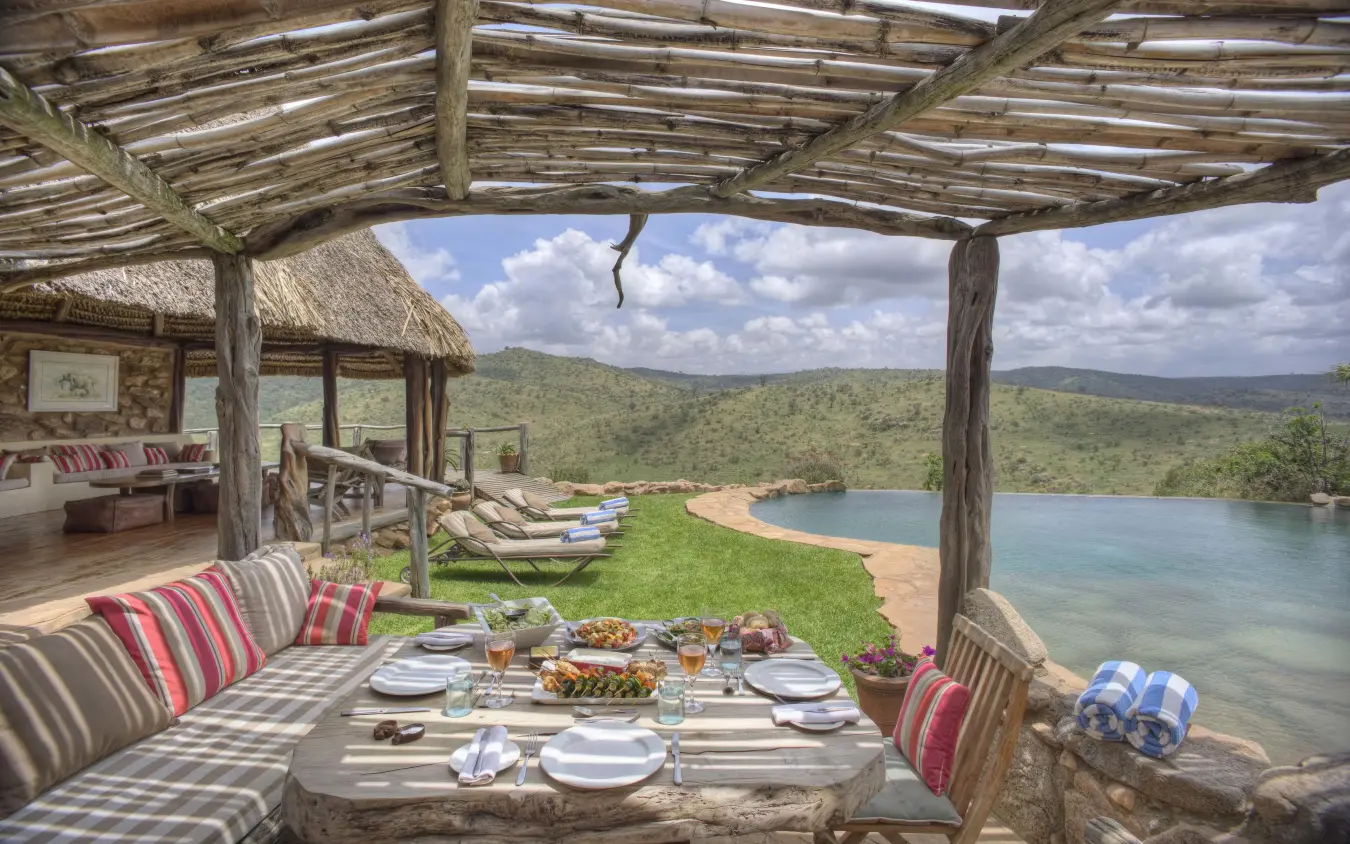
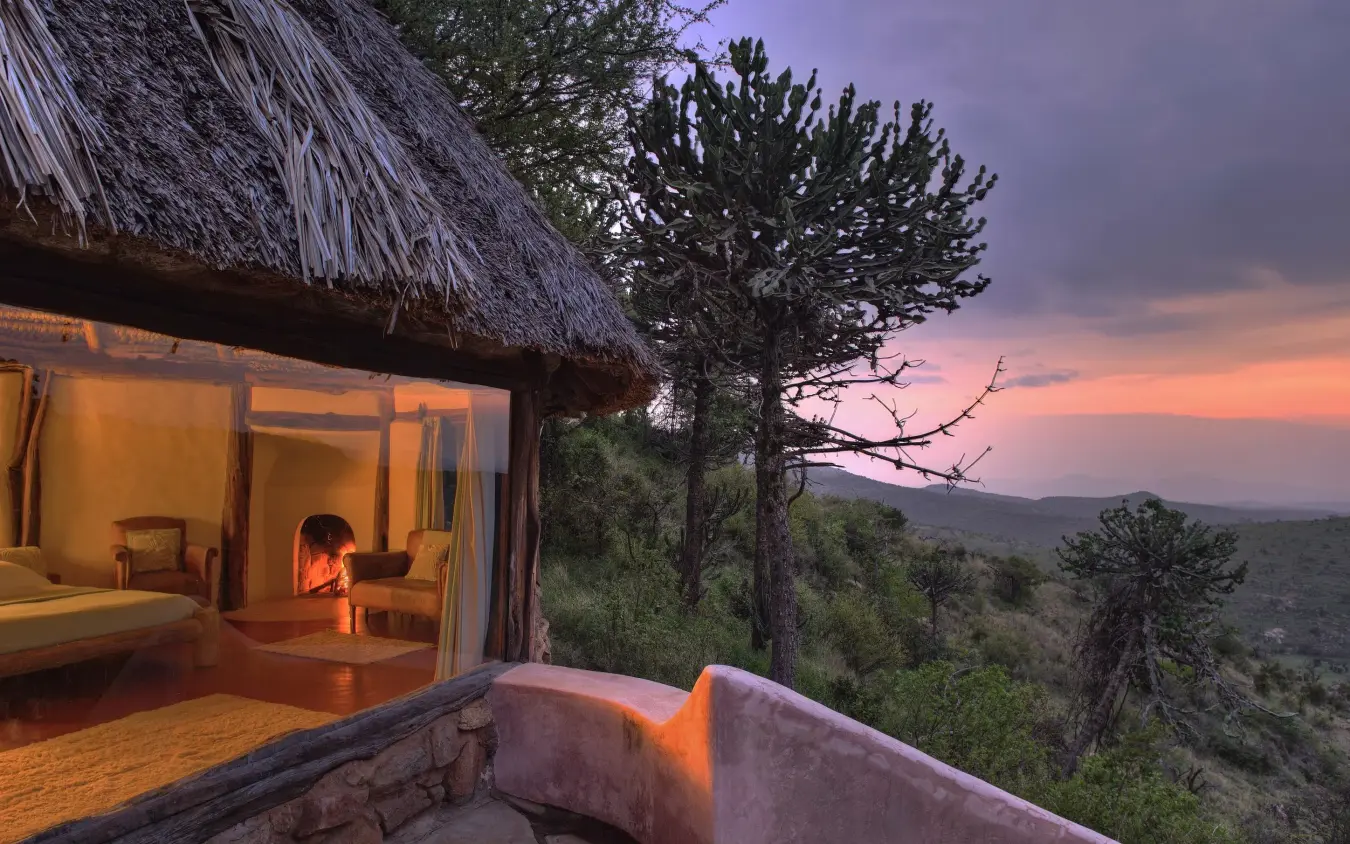
In the Laikipia Highlands you spend three nights on a private rhino conservancy, where the dropped boundary with neighbouring Lewa forms a single landscape of 93,000 acres, home to more than 270 black and white rhino. Rangers monitor the animals daily and you can track individuals on foot. Because Borana is private, days go beyond drives into night drives, off-road approaches and horse riding among zebra and giraffe. Borana Lodge sits terraced above the Samangua Valley in eight cottages of local stone and cedar, with a dam below drawing elephant, giraffe and baboon through the day.
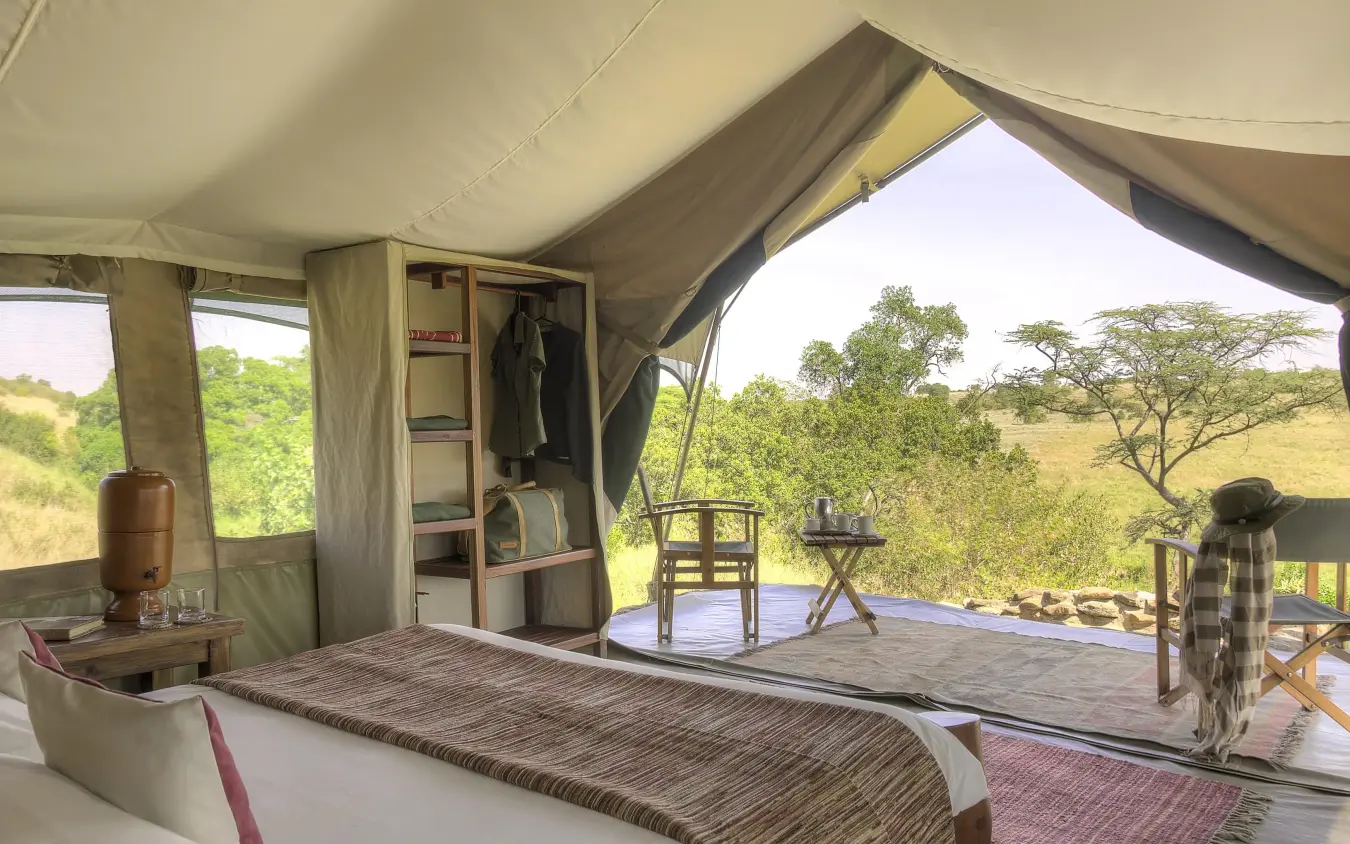
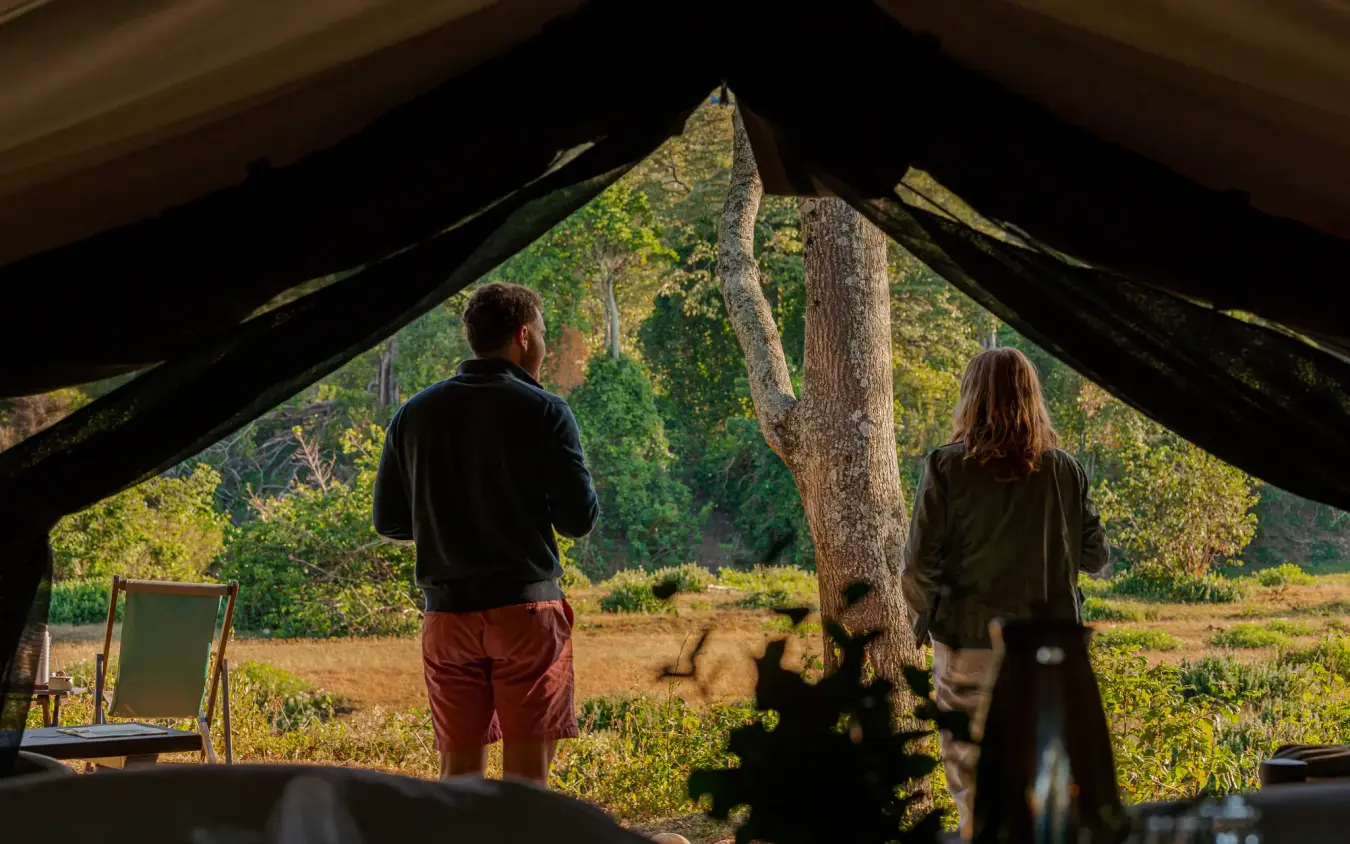
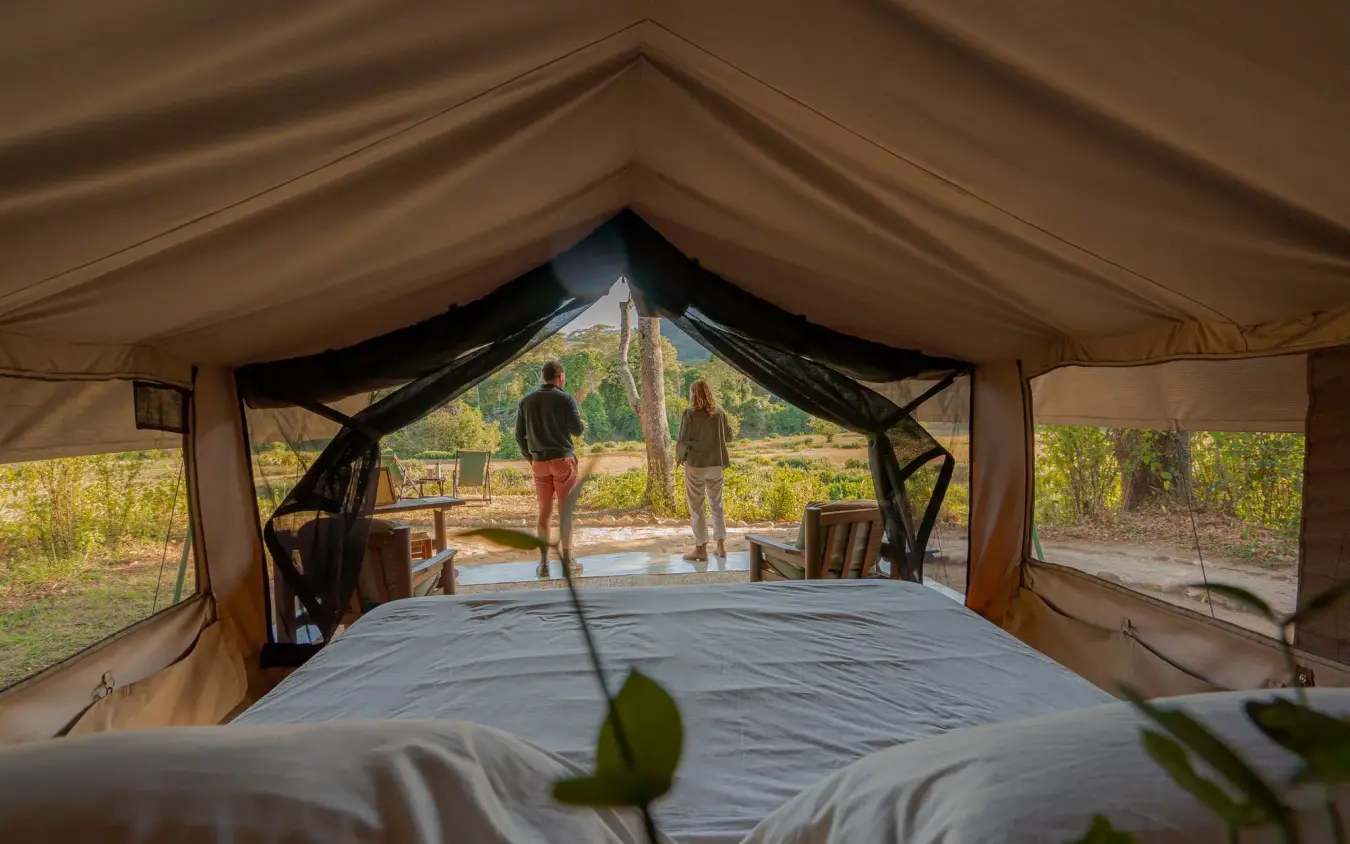
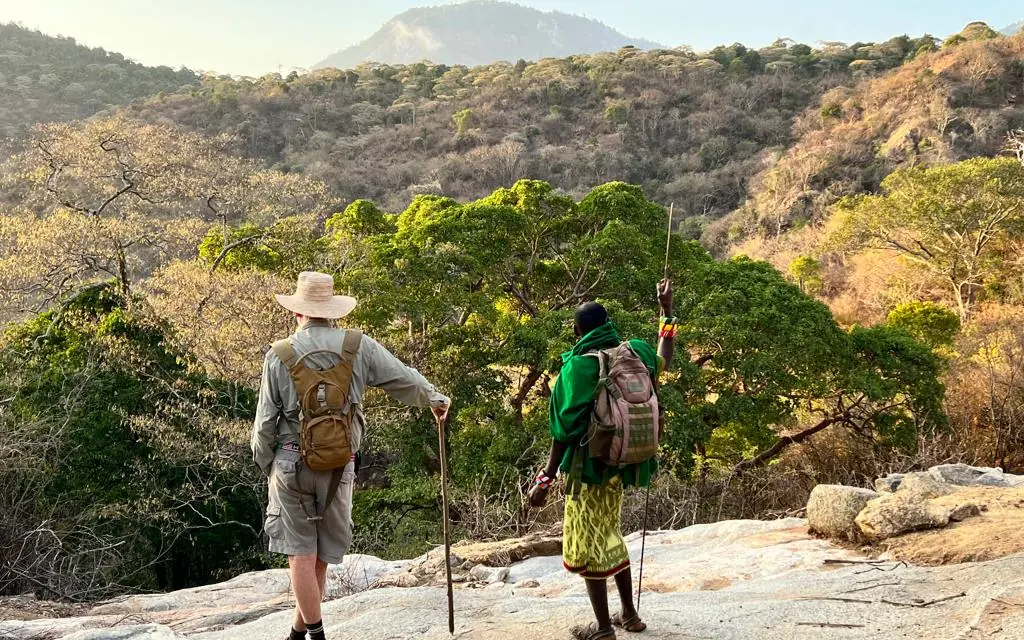
Four nights in the Mathews Range are spent on foot, moving through indigenous montane forest and along the seasonal Ngeng River, tracking elephant sign and following birdsong rather than a road. The forest holds more than 350 recorded bird species and over 150 kinds of butterfly, with elephant, buffalo and bushbuck in the glade below. Between walks you swim in natural rock pools and can fly-fish the streams. Kitich Camp does away with the game drive entirely; its canvas tents string along the river glade beneath the canopy, each with a veranda facing the valley.
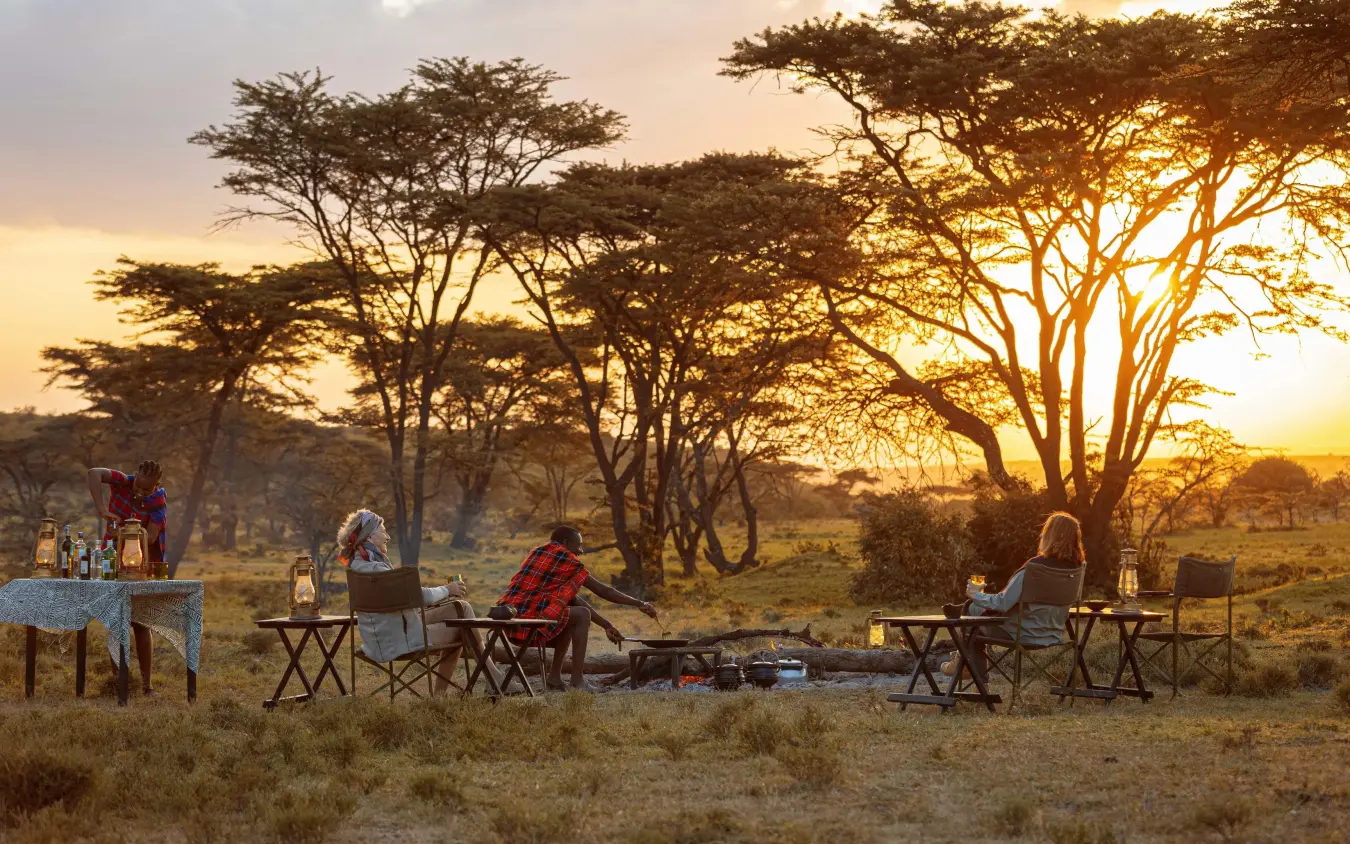
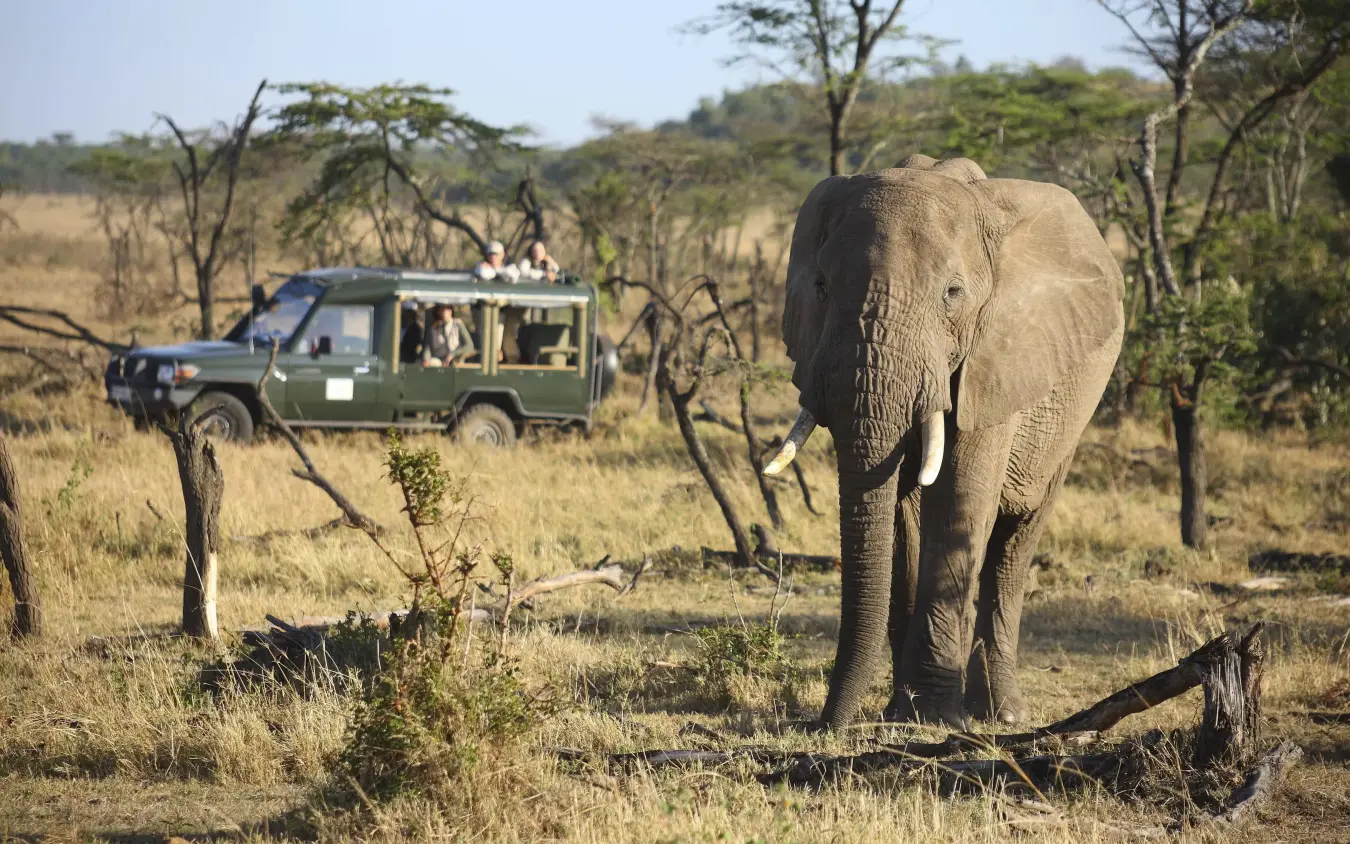
On the edge of the Maasai Mara you spend three nights in Naboisho, co-owned by more than 500 Maasai landowners, where visitor numbers and vehicle density are capped. Lion, cheetah, leopard and elephant move through the country, and guides can leave the track to follow a cheetah, something forbidden in the national reserve, with drives running on after dark and walking safaris on foot with an armed guide. Kicheche Valley Naboisho is an owner-run camp of six octagonal tents on a wooded hillside, each raised on its own platform and turned east across the valley.
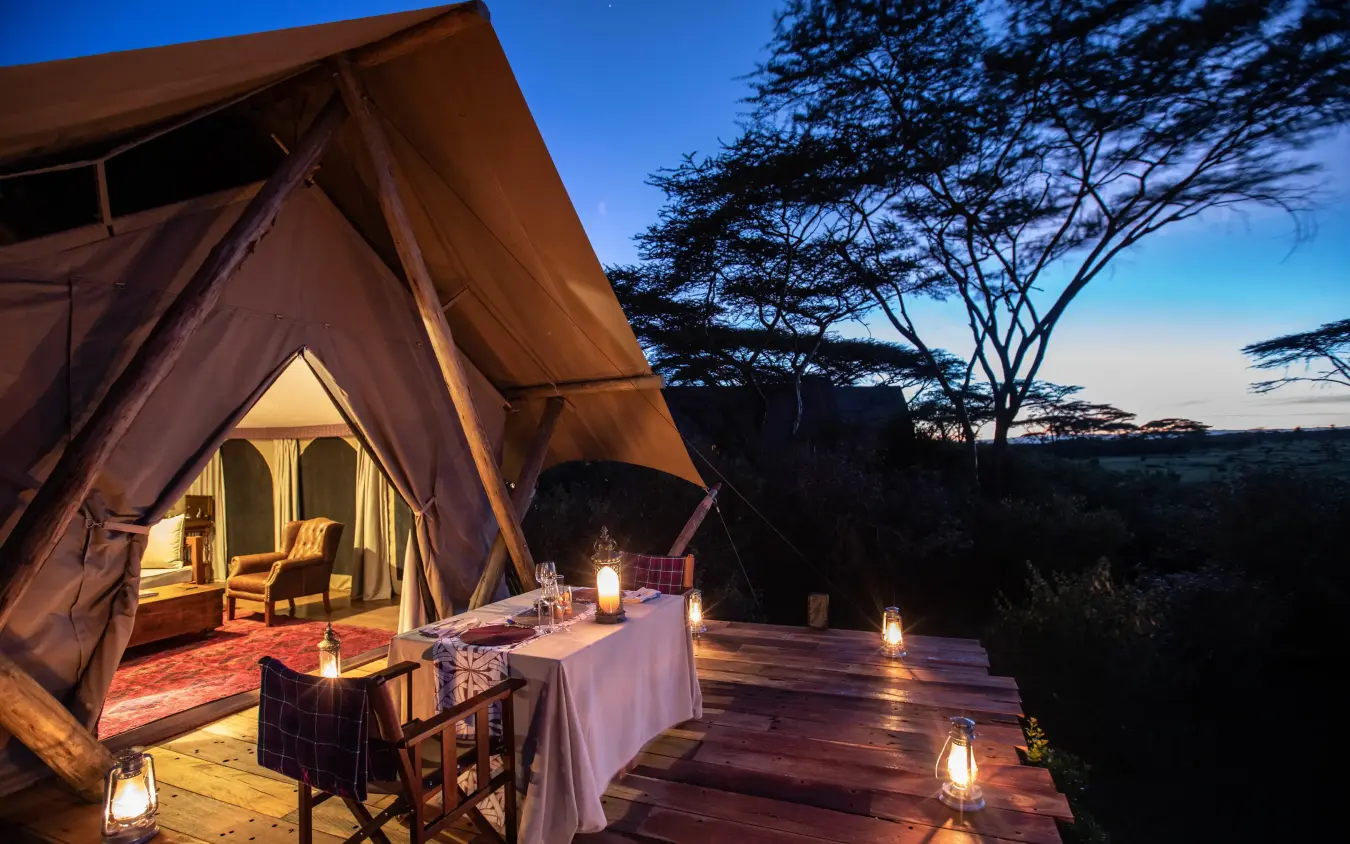
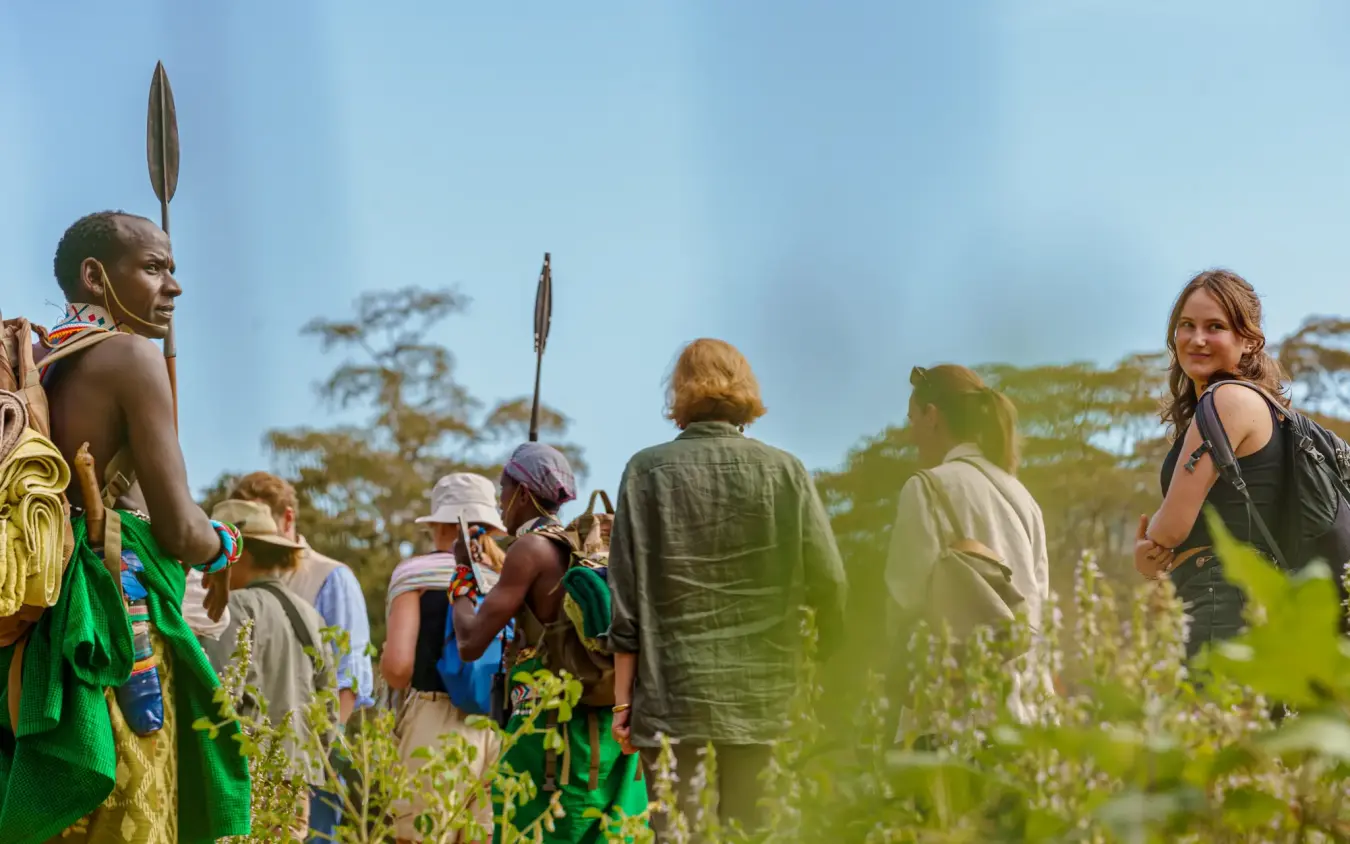
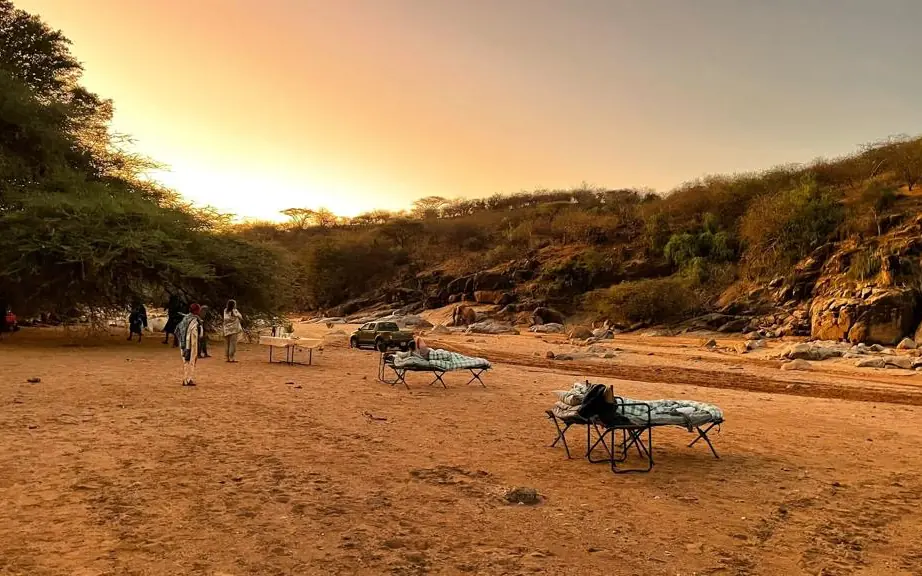
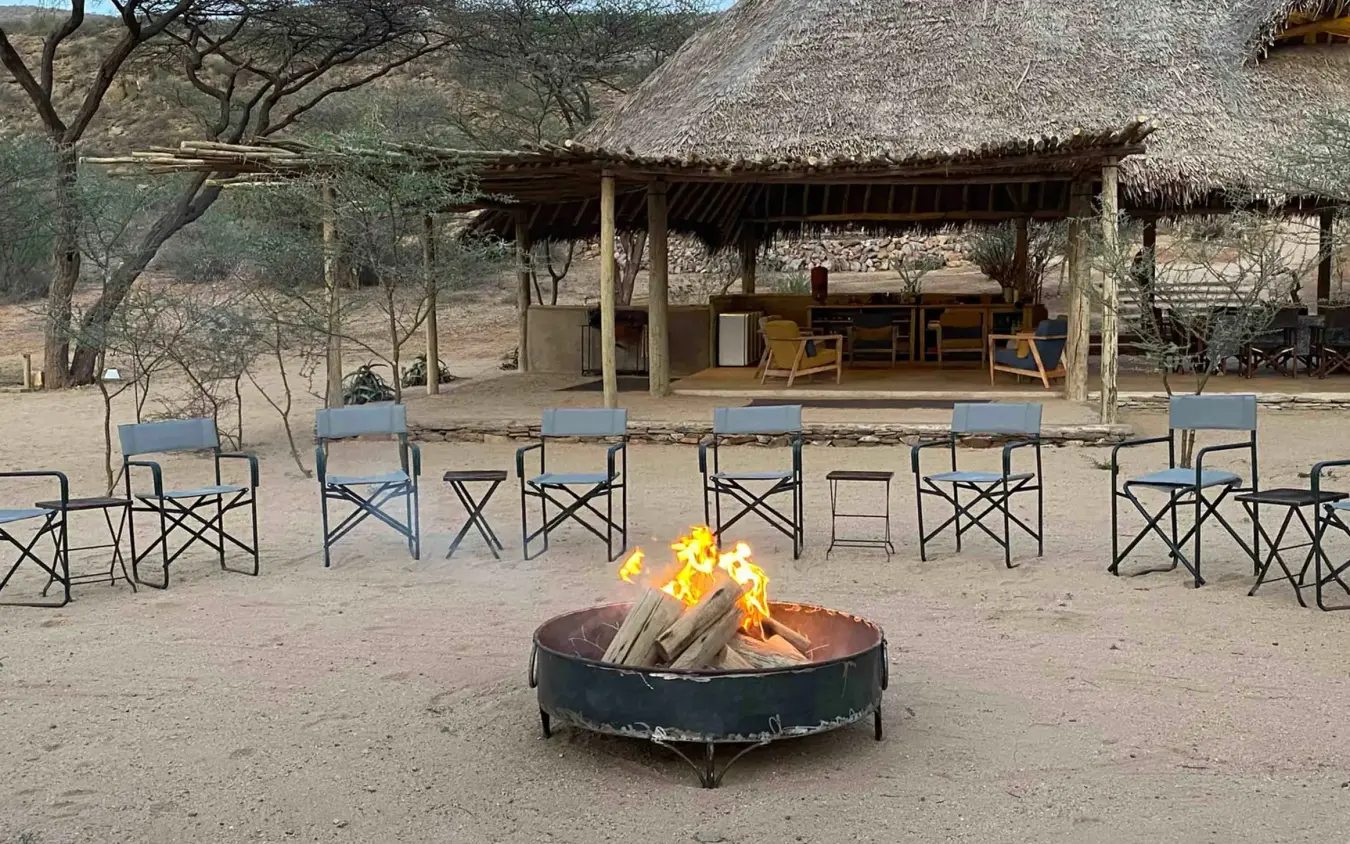
The trip closes with two nights in the Loita Hills, staying under canvas after the drive down from Naboisho. This is a lightweight mobile camp rather than a permanent property, set up for the stay and kept simple, so the country around it stays the focus. Days here are spent on foot, led by Maasai guides who live in these hills and read the forest, the water and the grazing as working knowledge rather than commentary. You walk out from camp through cedar forest and along open ridges, and the route follows what the guides want to show you that day. It brings the trip to a quiet end in a different part of Kenya, away from the conservancies that came before.
Happy to walk for several hours a day on rough ground, but you do not need to be an athlete, and almost everything can be shortened.
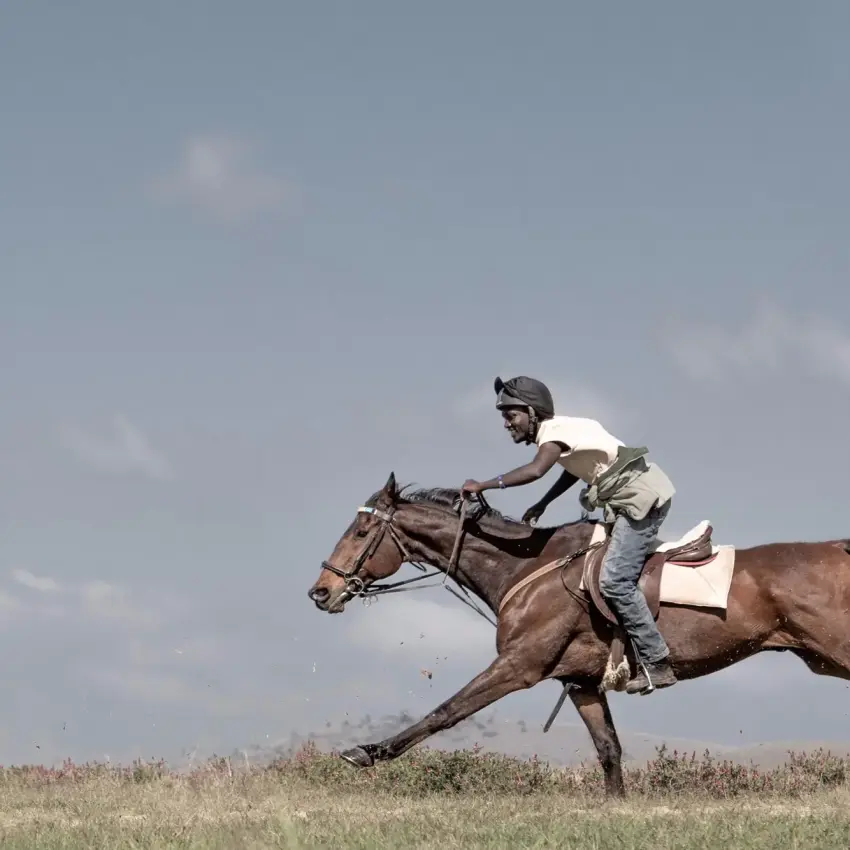
Borana is the gentle start: the lodge's bush walks go out with a guide and a ranger, beginners are welcome on the horses up to a weight limit of 95 kilograms, and rhino tracking sets out on foot at first light.
Kitich asks the most of you. Nothing beyond the camp can be reached by vehicle, and its trails run from circuits of 10 to 13 kilometres, each with about 500 metres of ascent, to a longest route of some 18 kilometres.
In Naboisho the walks are typically four to five hours at a flexible pace, with game drives whenever you want a rest. The Loita Hills are high country, their forest lying at around 2,300 metres, so expect cooler air there.
Tell us how far you like to walk and we will plan each stop to suit.
The odds are good across three nights, but rhino are wild and nobody can promise one.
Borana shares an unfenced boundary with Lewa and the two are counted as one population: 273 rhino in March 2025, of which 130 were black and 143 white.
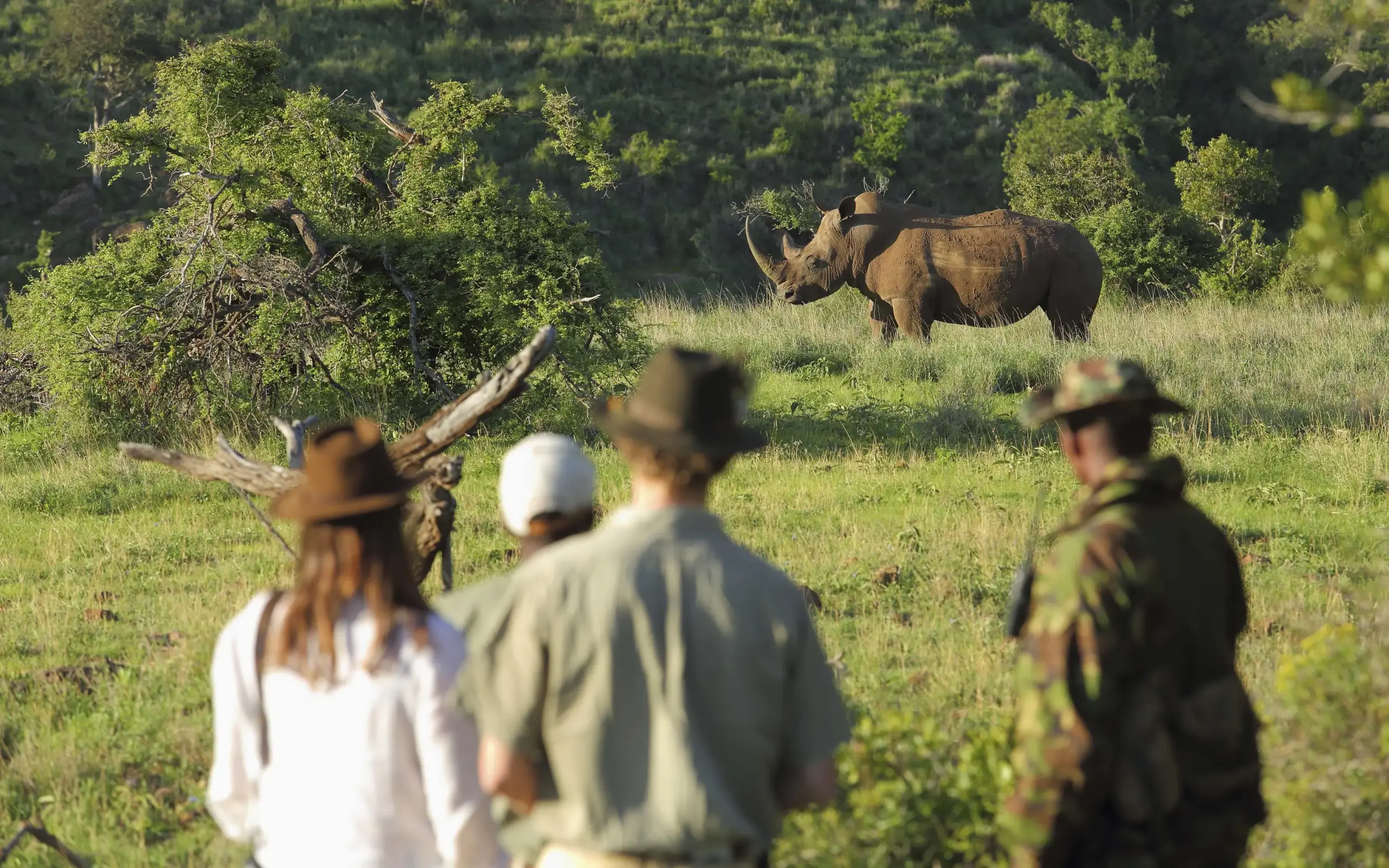
What makes them findable is a daily routine. Every morning Borana's scouts head out on foot until each rhino on the conservancy has been found and recorded, and as a guest you can join them, learning how individual animals are recognised and how the team keeps them safe.
How close you get is the scouts' decision on the day, and their word is final.
White rhino graze in the open and are the more readily seen. Black rhino stay in thicker bush and are harder to get a clear look at, so a good view of one on foot is something to prize. You can look for both from a vehicle as well, by day and after dark.
You never walk alone, and the walking is slow and watchful by design.
At Borana the bush walks are accompanied by your guide and a ranger, and the rhino tracking is done with the conservancy's own scouts. In Naboisho every walk is led by one of the camp's senior guides and accompanied by an armed ranger.
The camp's minimum age is seven, with no separate age for its walks, so tell us about any young travellers. In the Mathews Range forest your guides are Samburu and Ndorobo, experienced walking guides who know these mountains intimately.
A walking safari is not an endurance event: the pace is gentle, with frequent stops to read tracks and look at smaller things, and the guide decides how near to go to any animal.
Nobody can remove all risk from walking in wild country, so listen to the briefing and follow the guide's instructions at once.
Simple, by design, and we will describe it to you in detail before you commit.
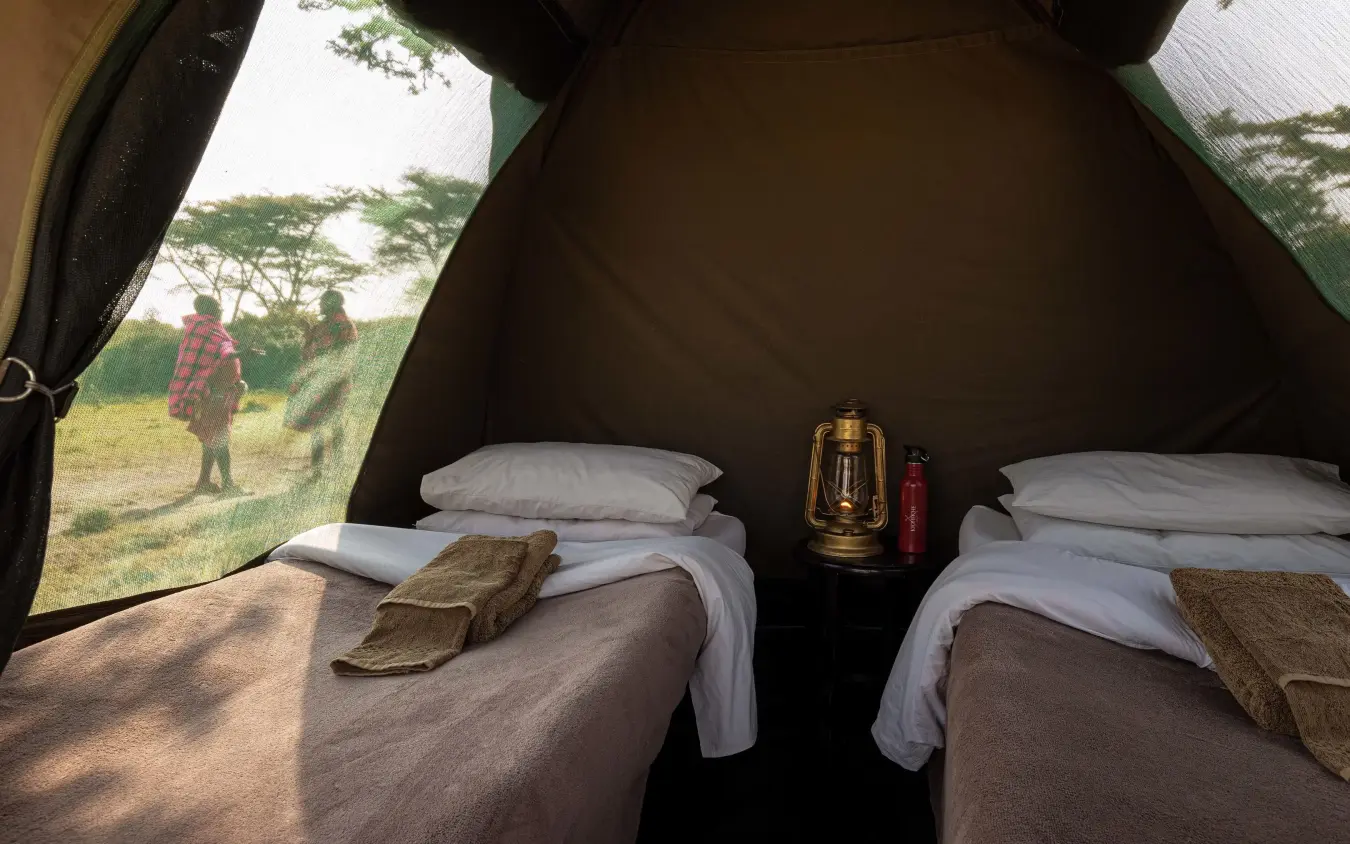
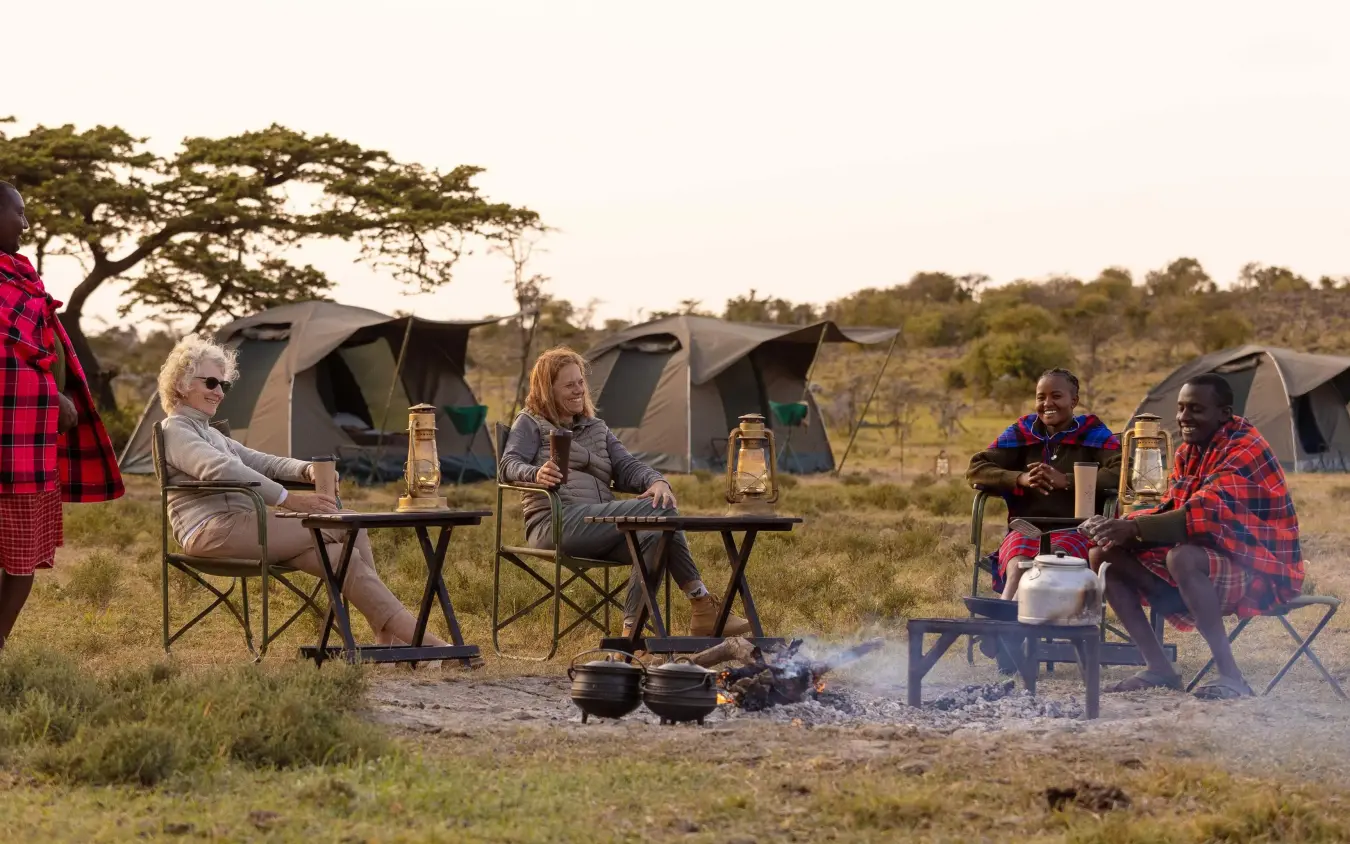
It is a lightweight mobile camp and not a lodge: it exists only for your two nights and leaves no permanent rooms behind.
Camps of this kind are usually built around a long-drop loo freshly dug for the stay, a bucket shower, and a small walk-in tent with a solid bed and a comfortable mattress, and we will send you the exact set-up for your dates.
The setting is the point. The Loita Hills rise east of the Mara on Maasai community land, and their forest, which the Maasai call Naimina Enkiyio, the Forest of the Lost Child, covers about 330 square kilometres at around 2,300 metres and shelters elephant and buffalo.
Most of it lies above 2,100 metres, with cool weather all year, so pack a warm layer and a waterproof. You arrive by road from Naboisho.
For a route walked as much as this one, pick dry ground: January, February and July to September carry our top rating in every region it crosses, with firm paths in the Mathews Range forest and short grass for walking in Naboisho.
June and October are in-between months, rated highly in the north and in one other region each, though the Laikipia highlands can catch a shower. Keep clear of April and May, when the long rains fall.
Two other months need care: we rate March as challenging in the Mara and November as challenging in Laikipia, and we caution that the roads to Samburu and the Loita Hills may not be dependable in the wet months. December is an in-between month.
The green weeks do bring fewer visitors, lower prices, newborn animals and migrant birds, but slippery forest paths and a simple canvas camp in cool hills under cloud are a high price for them on a walking trip.
Only if you travel between about July and October, and only in the Naboisho part of it.
Those are the months when the wildebeest from Tanzania are normally in the Mara. Even then, the herds cannot be counted on inside the conservancy, and August and September are the likeliest months.
A river crossing is harder still. The Mara River runs through the national reserve and the Mara Triangle, neither of which is part of Naboisho, so you would trade a day of walking and off-track driving for a day in the reserve, with no certainty that a herd will cross while you wait.
We would not plan this route around the migration. Its strengths do not depend on it: the rhino at Borana, the forest at Kitich, and the lion, cheetah and leopard that move through Naboisho, in country you explore on foot as well as by car, with very few other vehicles about.
Ed Charles, BBC Producer
Fitzroy are true specialists in accessing the wilderness. They know where to go and importantly, when to go there. Highly recommended.
kenya
Twelve nights across Kenya by helicopter, from the Borana rhino conservancy over the Suguta Valley to Turkana, then Laikipia and the Kilifi coast.
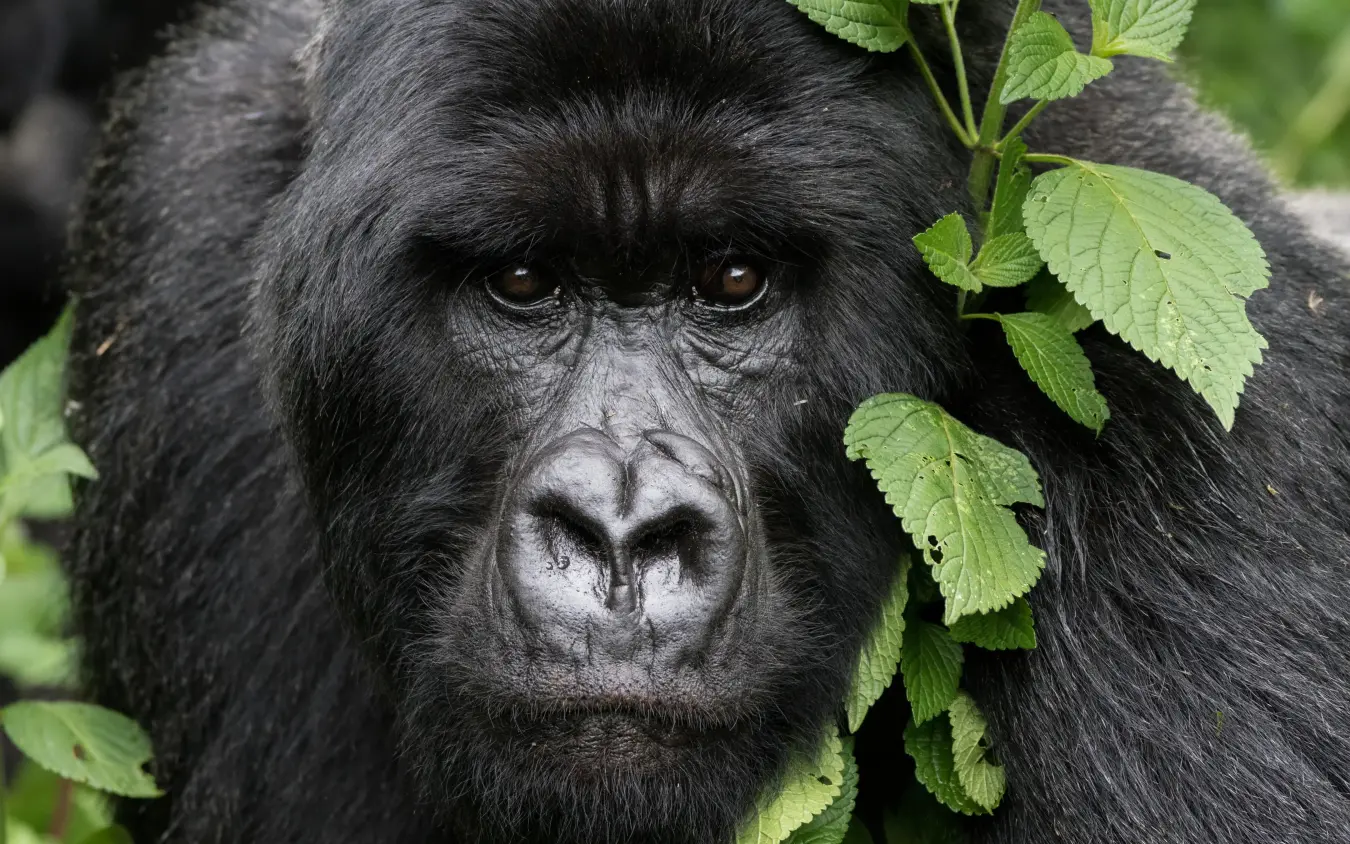
kenya & rwanda
Twenty nights from Nairobi through Kenya's northern conservancies to Rwanda's mountain gorillas.
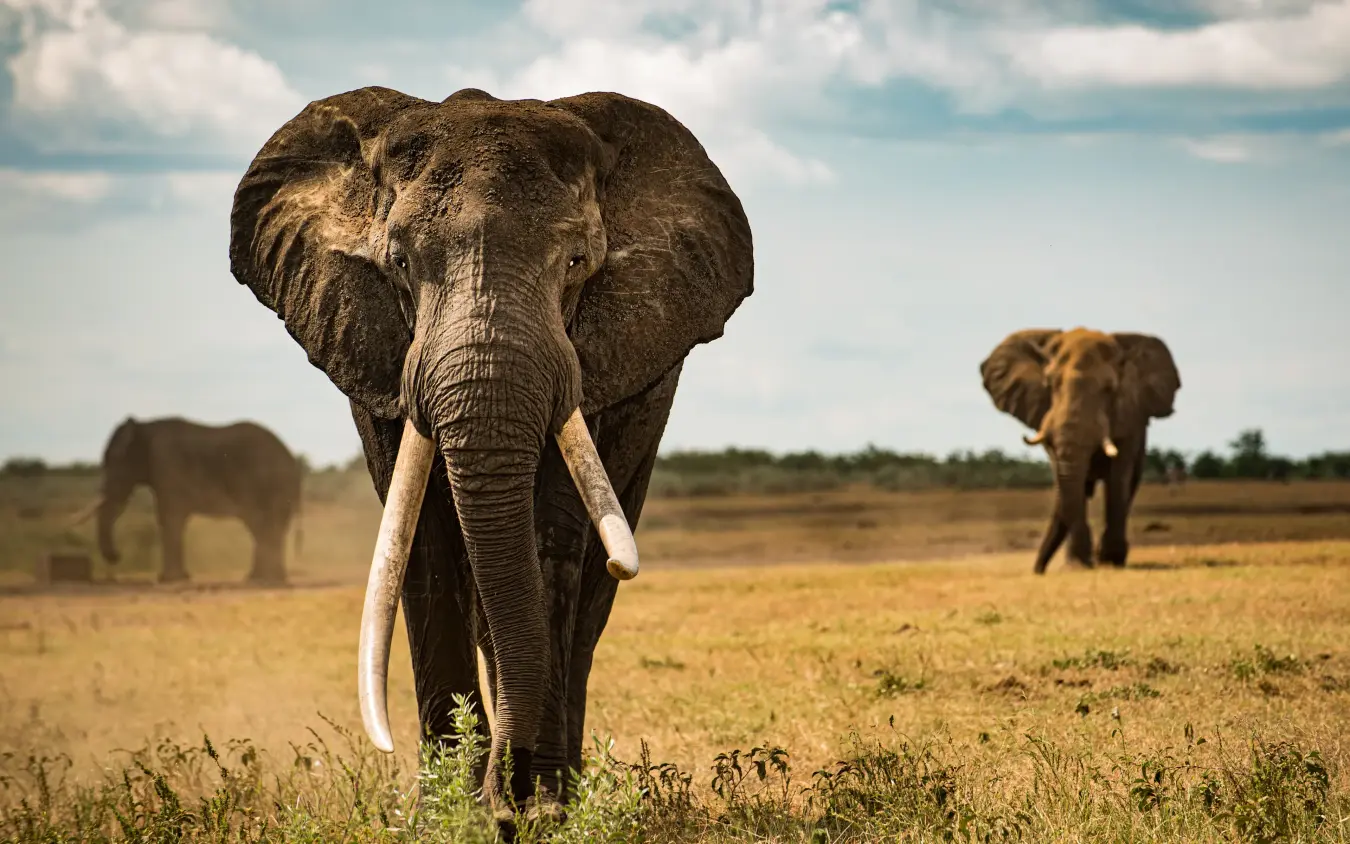
kenya
Thirteen nights across Kenya, linking Amboseli under Kilimanjaro, the Mara North plains and Borana's rhino country.
rated five stars by our clients

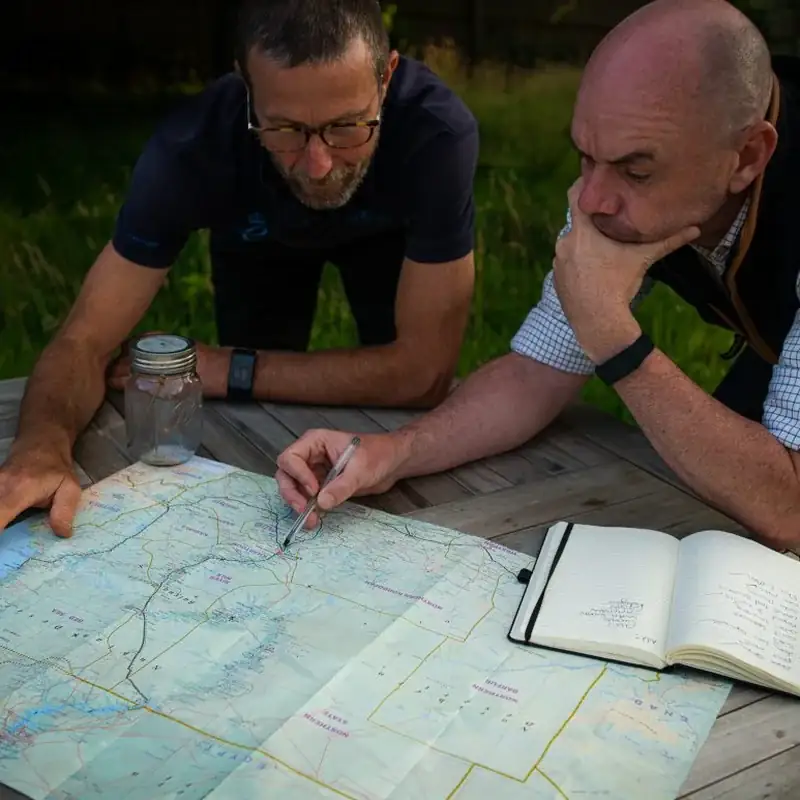
our approach
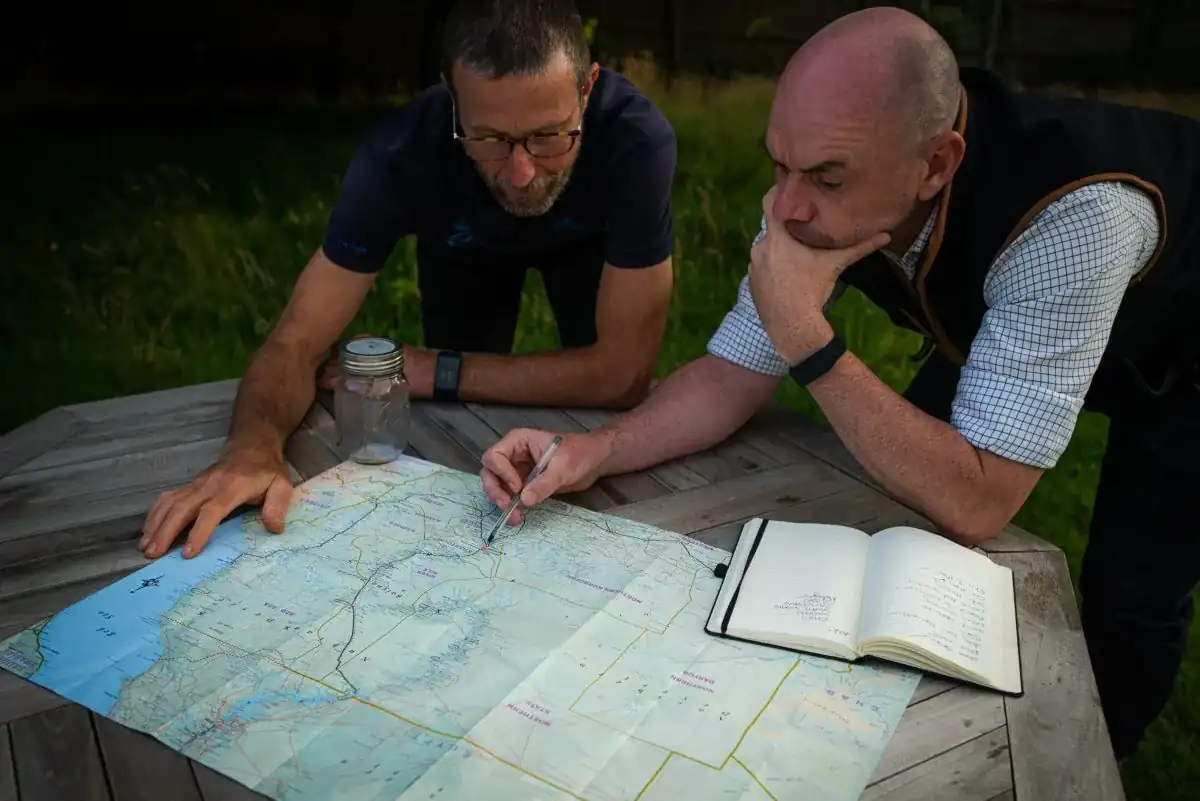
Every journey starts with a conversation. We take the time to understand your vision before we start planning.
Whether by phone or in person, we work with you directly to shape something that is considered, personal, and expertly delivered.
Every journey starts with a conversation. We favour a direct, personal approach: understanding your vision before anything else.
Whether by phone or in person, we work with you directly to shape a journey that is both thoughtfully considered and expertly delivered.
Get in touch to start planning yours.