










rwanda & uganda
both sides of the virungas
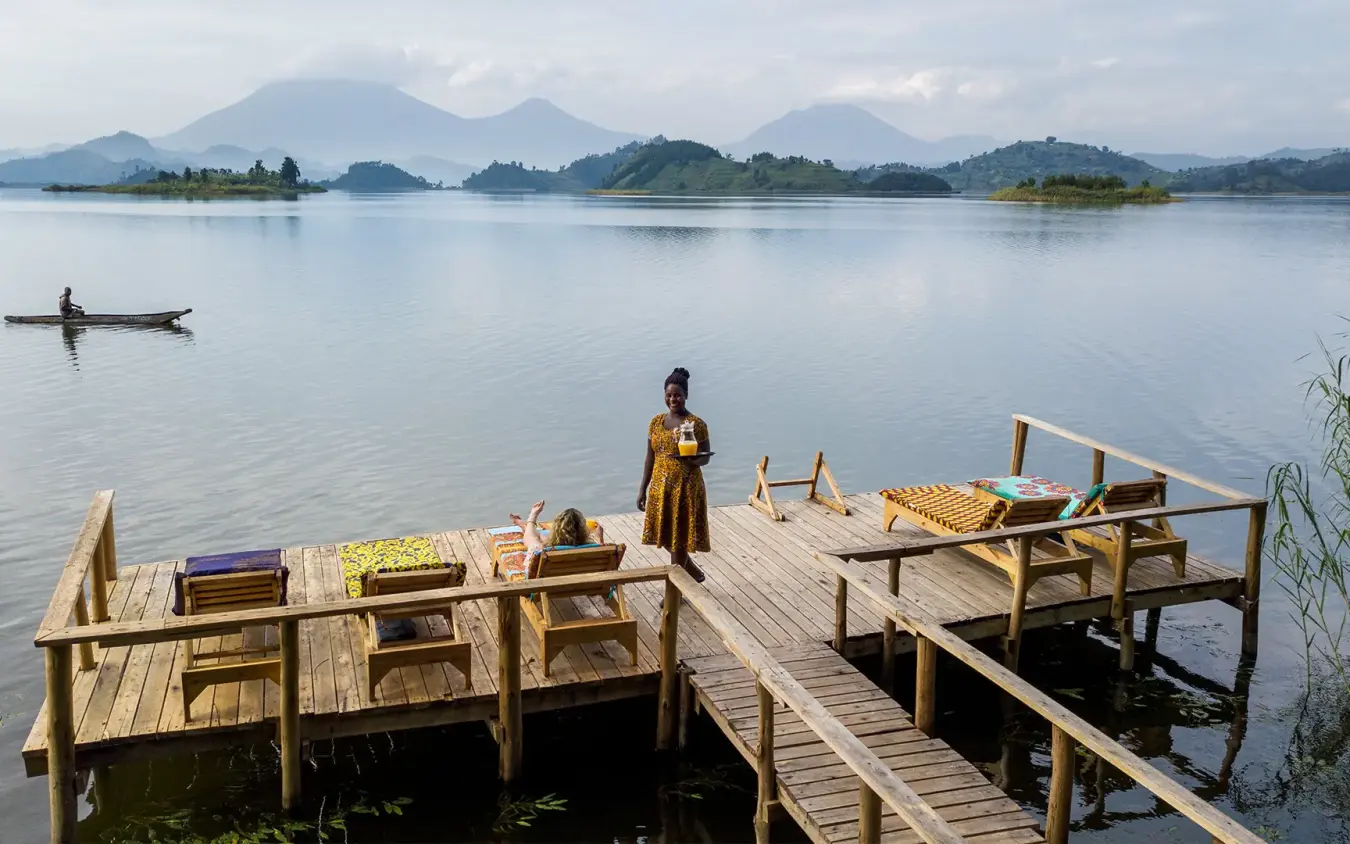
Seven nights from Kigali into Uganda's Mgahinga and back to a Rwandan ridge, tracking gorillas along the Virunga chain.
- Private Safari
- From $11,295 pp
- 2 guests
- 7 nights
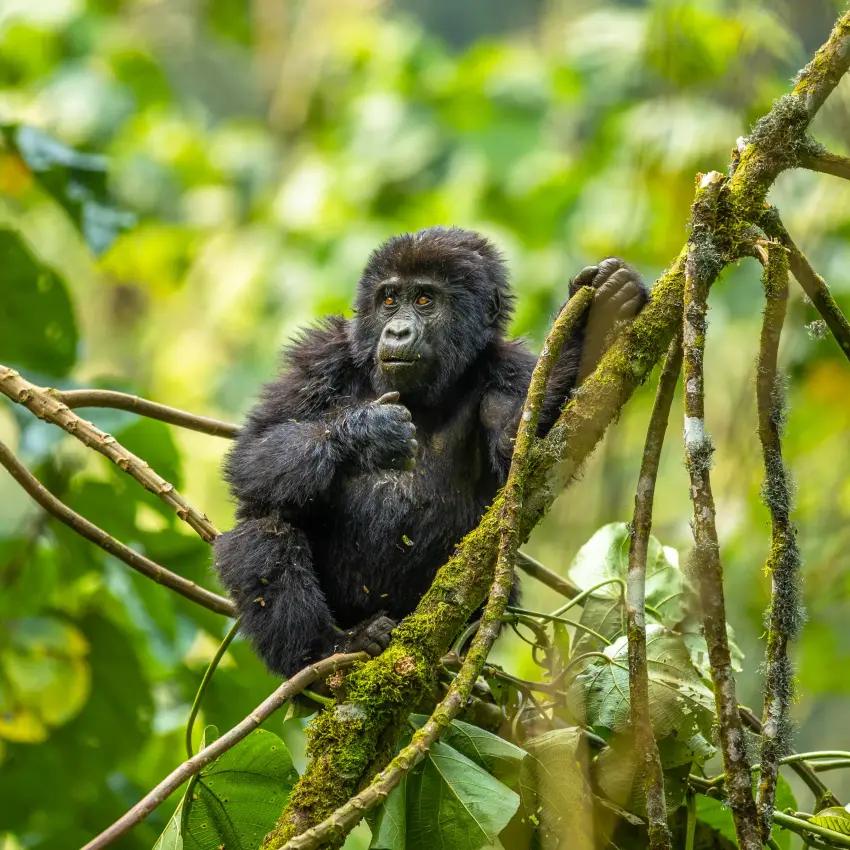
This nine-night route runs west across Uganda’s primate country. It opens in Entebbe, close to Lake Victoria, then climbs to Kibale Forest, a moist evergreen rainforest holding thirteen primate species and more than a thousand chimpanzees. From there it moves south to the Bwindi Impenetrable Forest, home to close to half the world’s mountain gorillas, staying on the quieter Nkuringo side, and ends at Mgahinga, the country’s smallest gorilla park, set among three Virunga volcanoes.
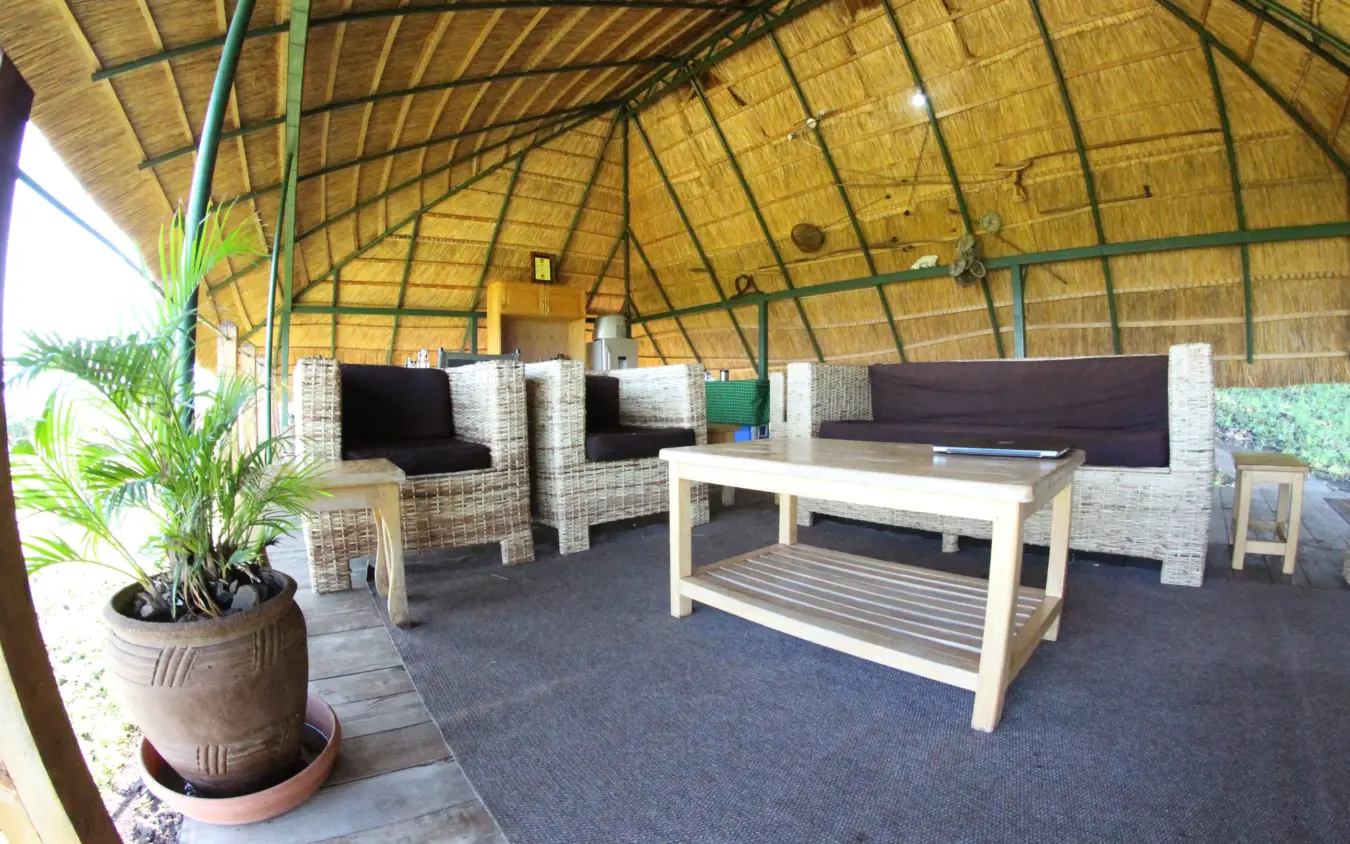
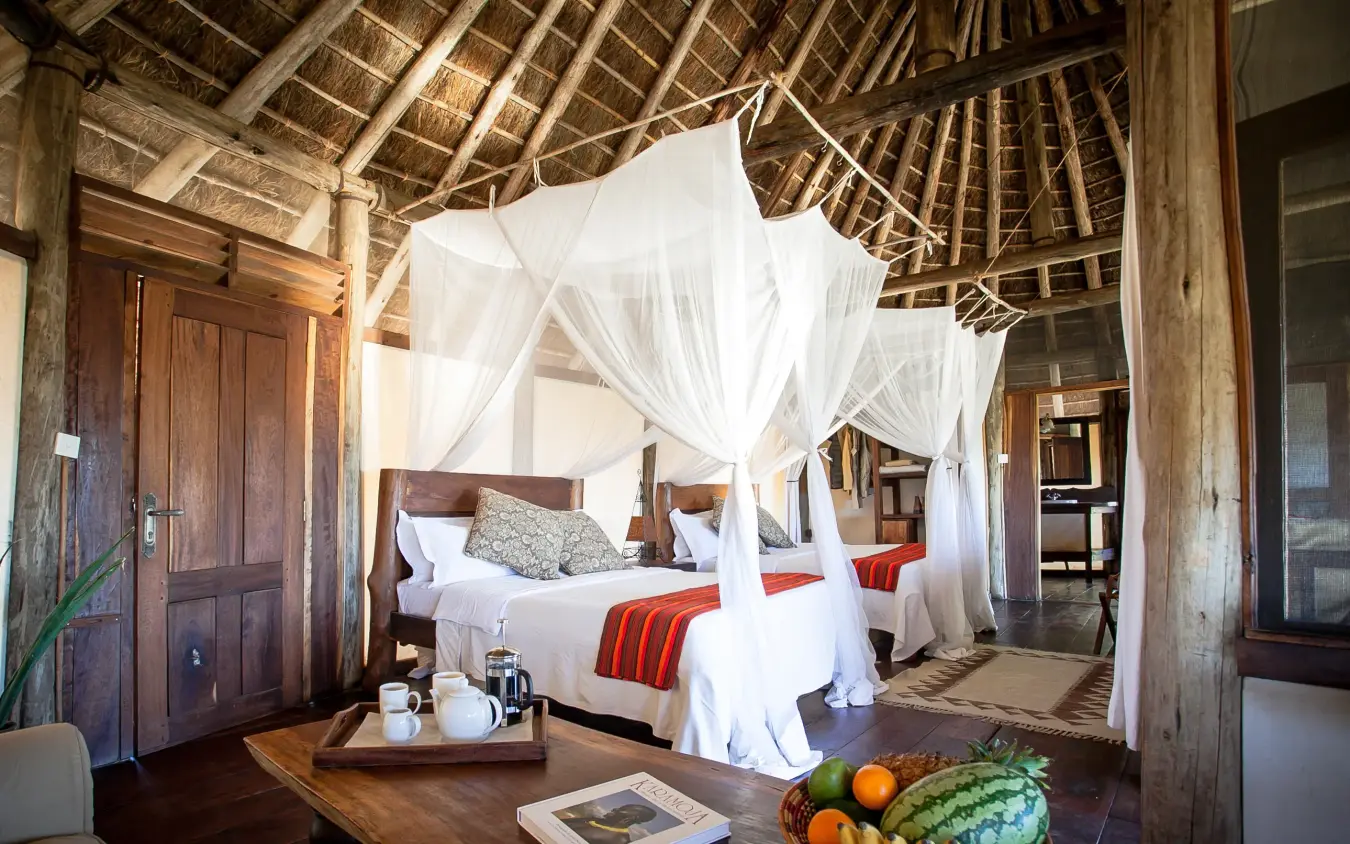
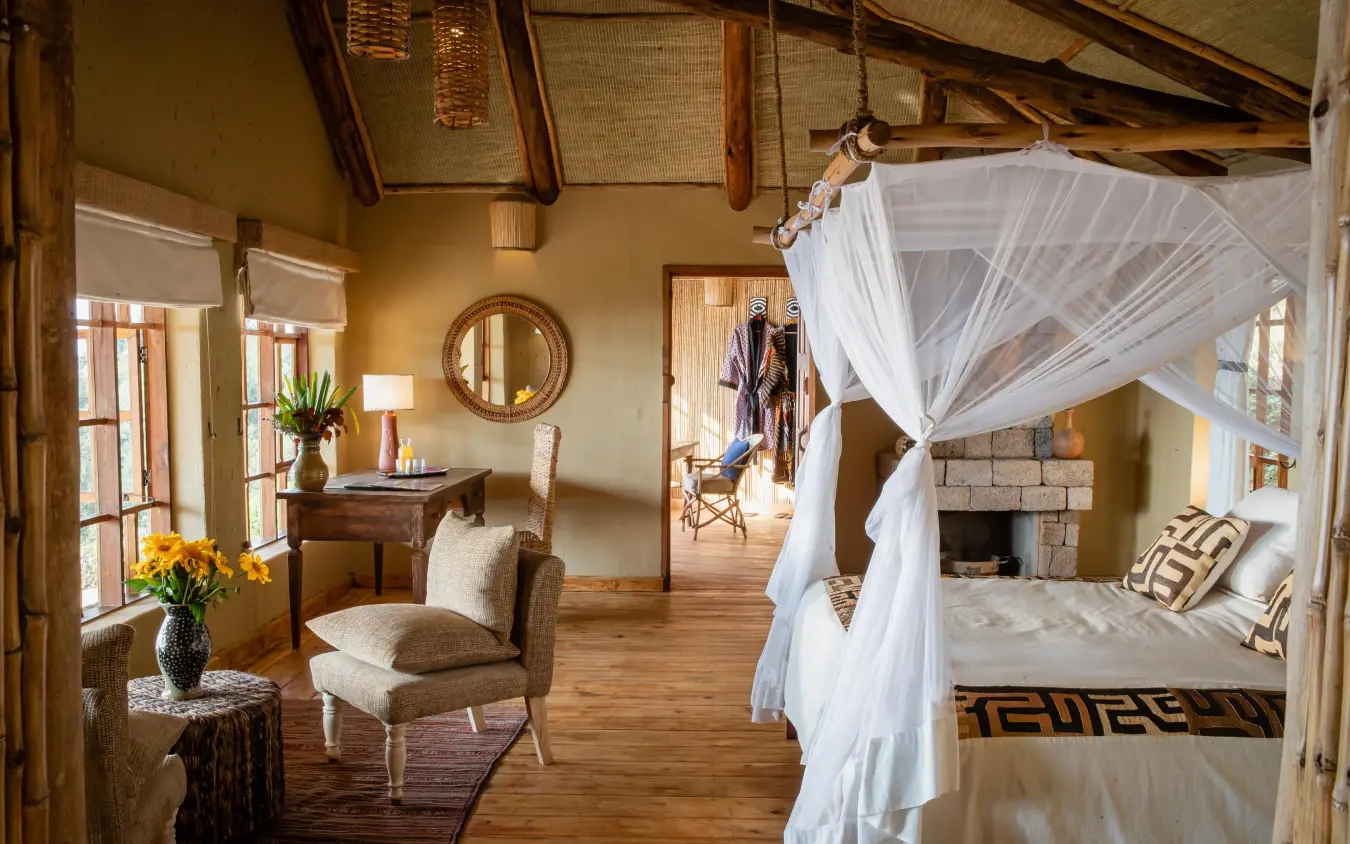
You travel it by road and light transfers, with morning treks the shape of most days. Chimpanzees at Kibale, mountain gorillas at Bwindi and Mgahinga, and golden monkeys in the bamboo. The lodges are the strongest in each area, hand-built in stone and thatch, with fires lit, personal butlers and a level of finish rare this close to the forest.
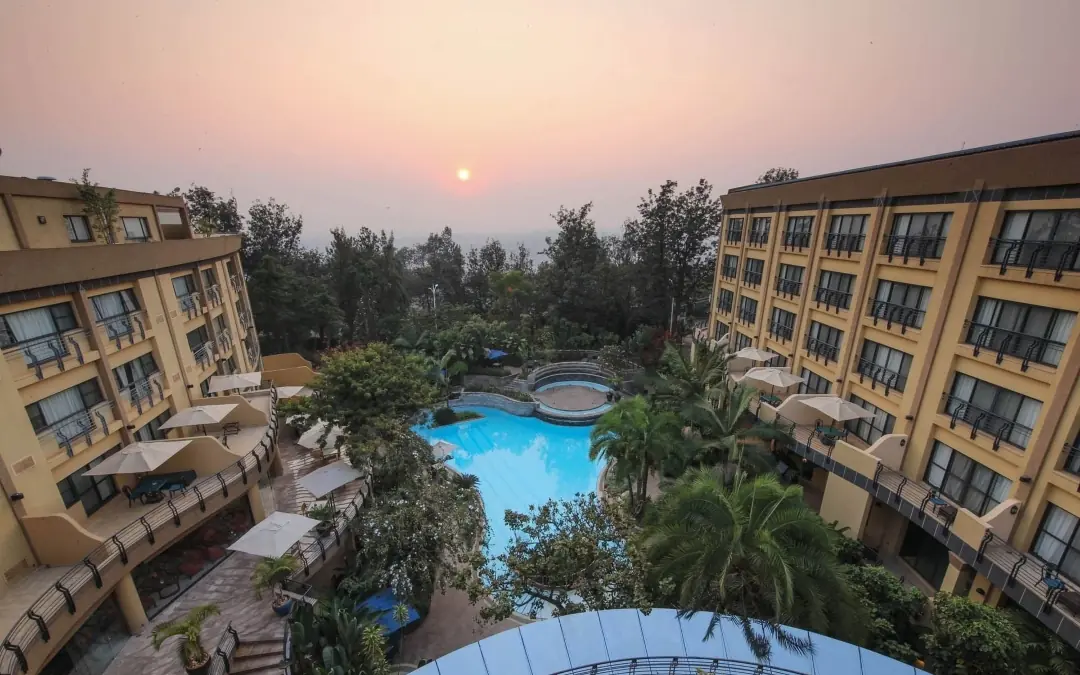
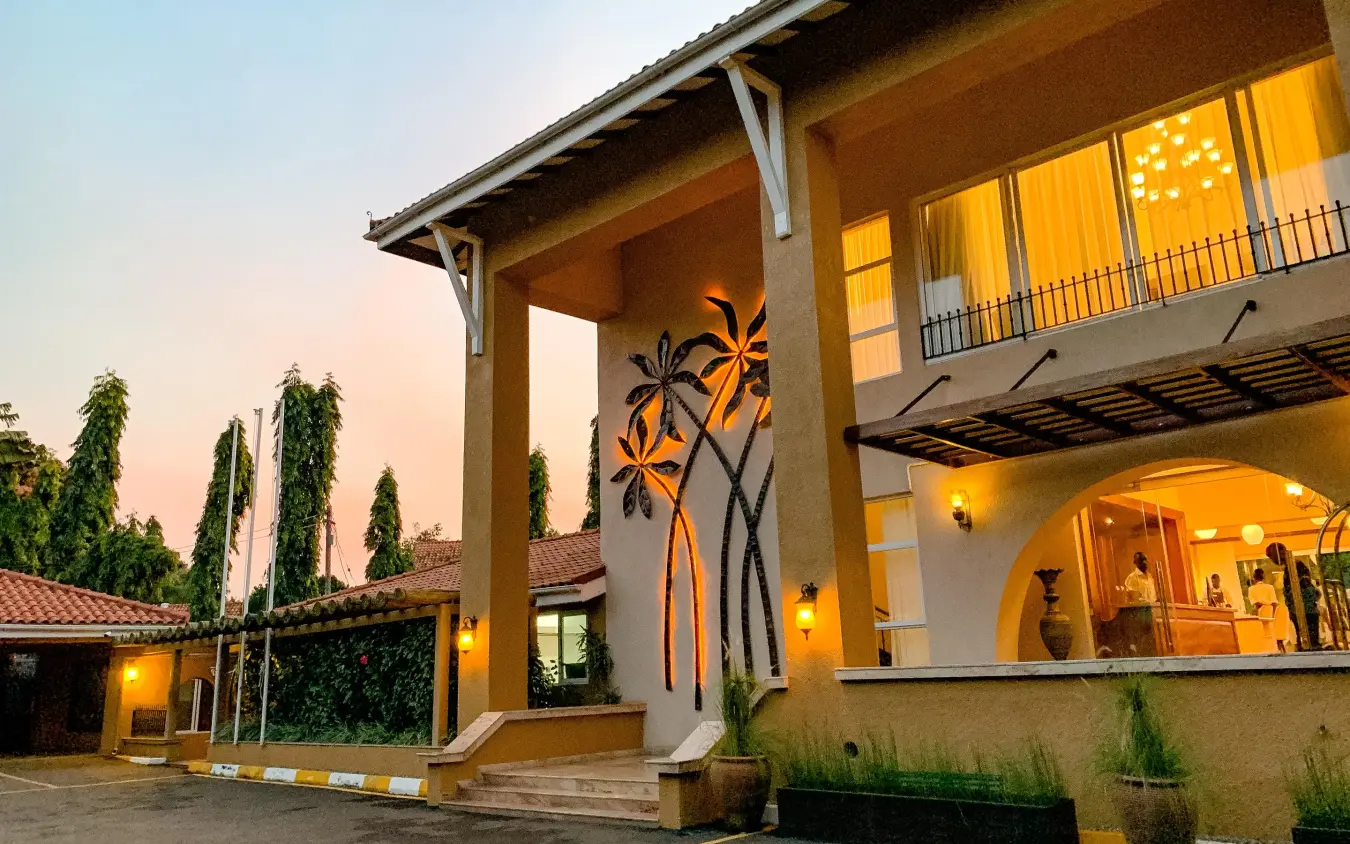
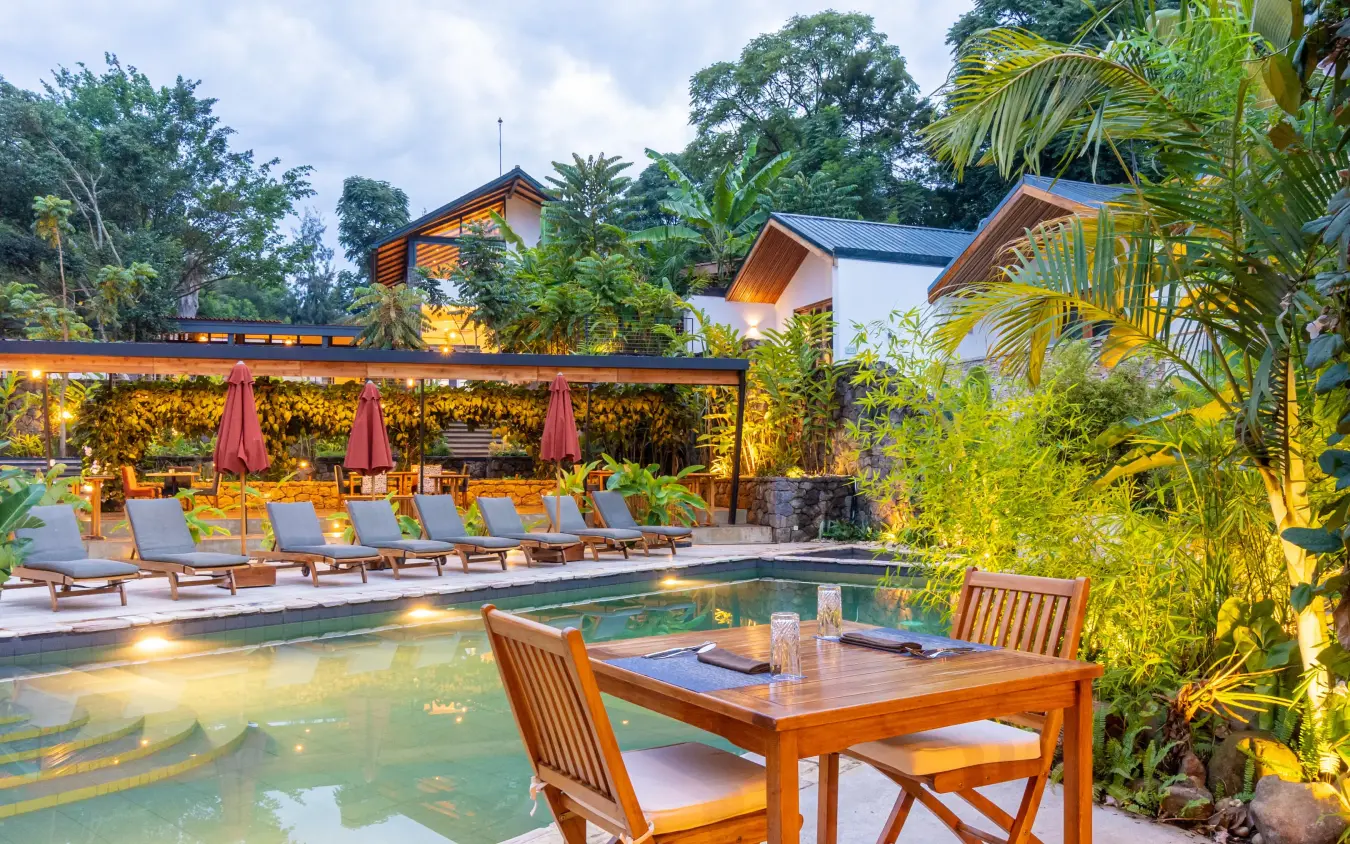
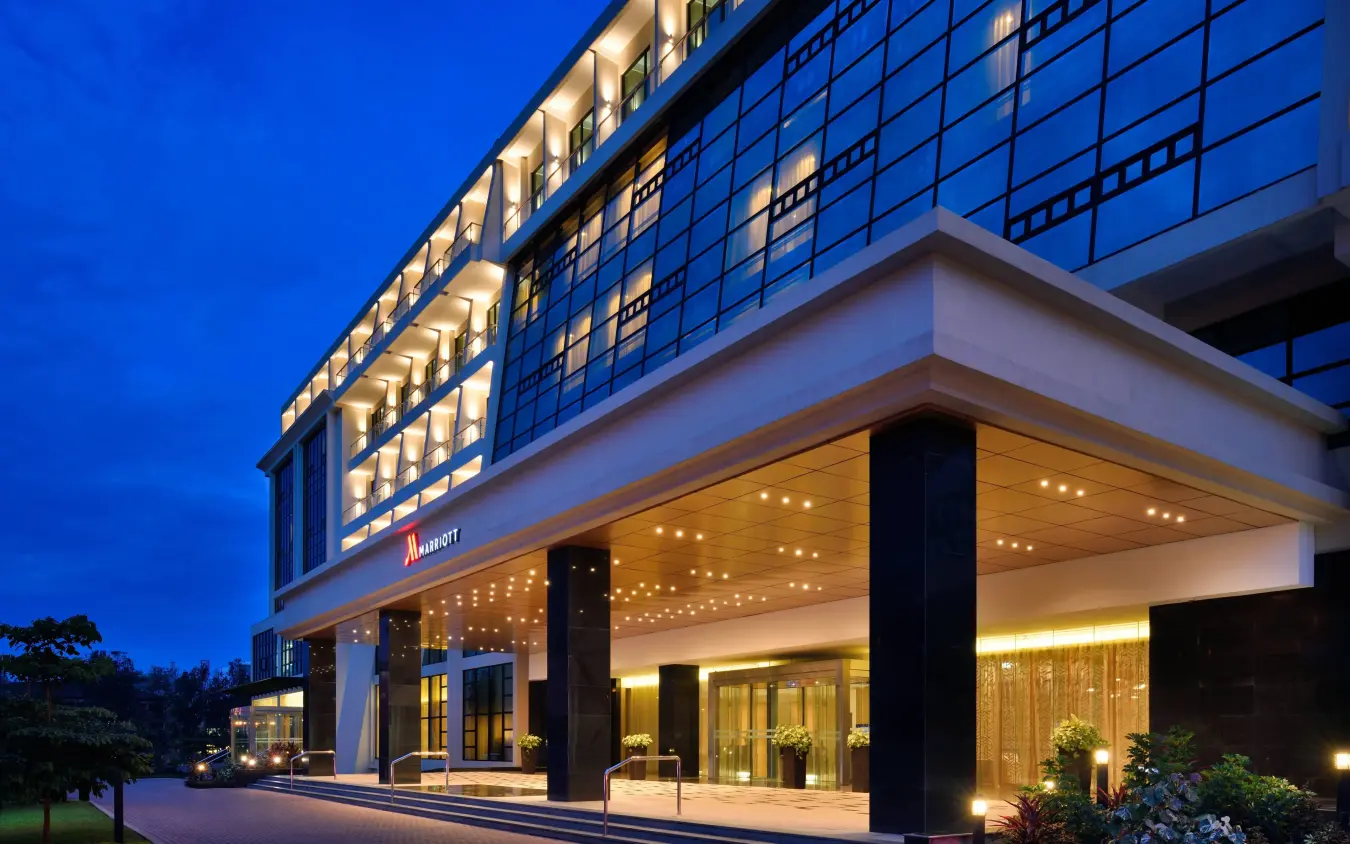
You land at Entebbe International Airport and settle for the night close to the shores of Lake Victoria, a short drive from the terminal. This is a rest stop rather than a game-viewing day, built around the flight schedule before you head west in the morning. No.5 Boutique Hotel is a small garden retreat in a leafy Entebbe suburb, ten minutes by road from the airport. Rooms and communal spaces gather around a courtyard planted with palms, with a pool, a well-stocked bar and dining that runs through the day. Fifteen rooms keep the operation small, and arrivals are met with a cold juice.
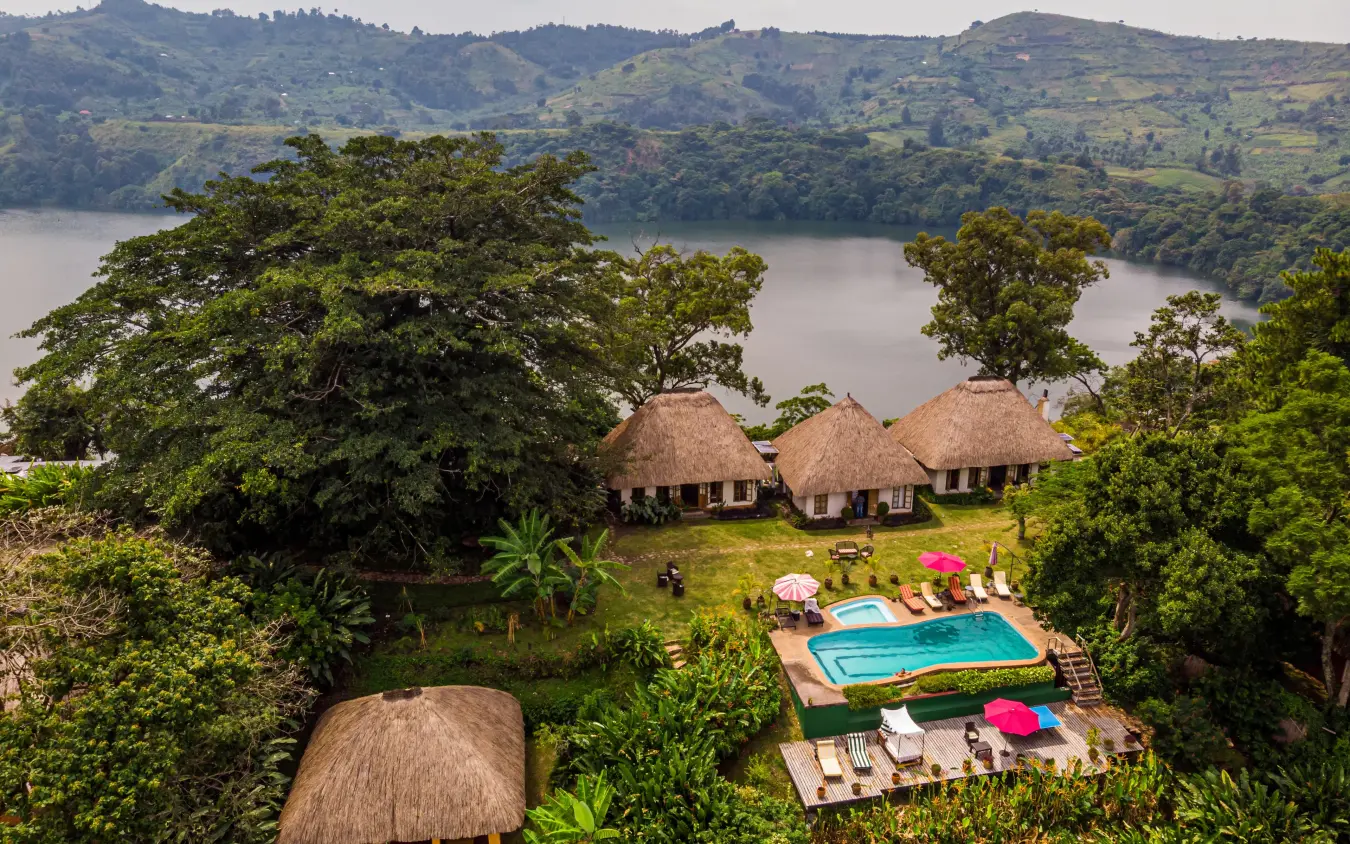
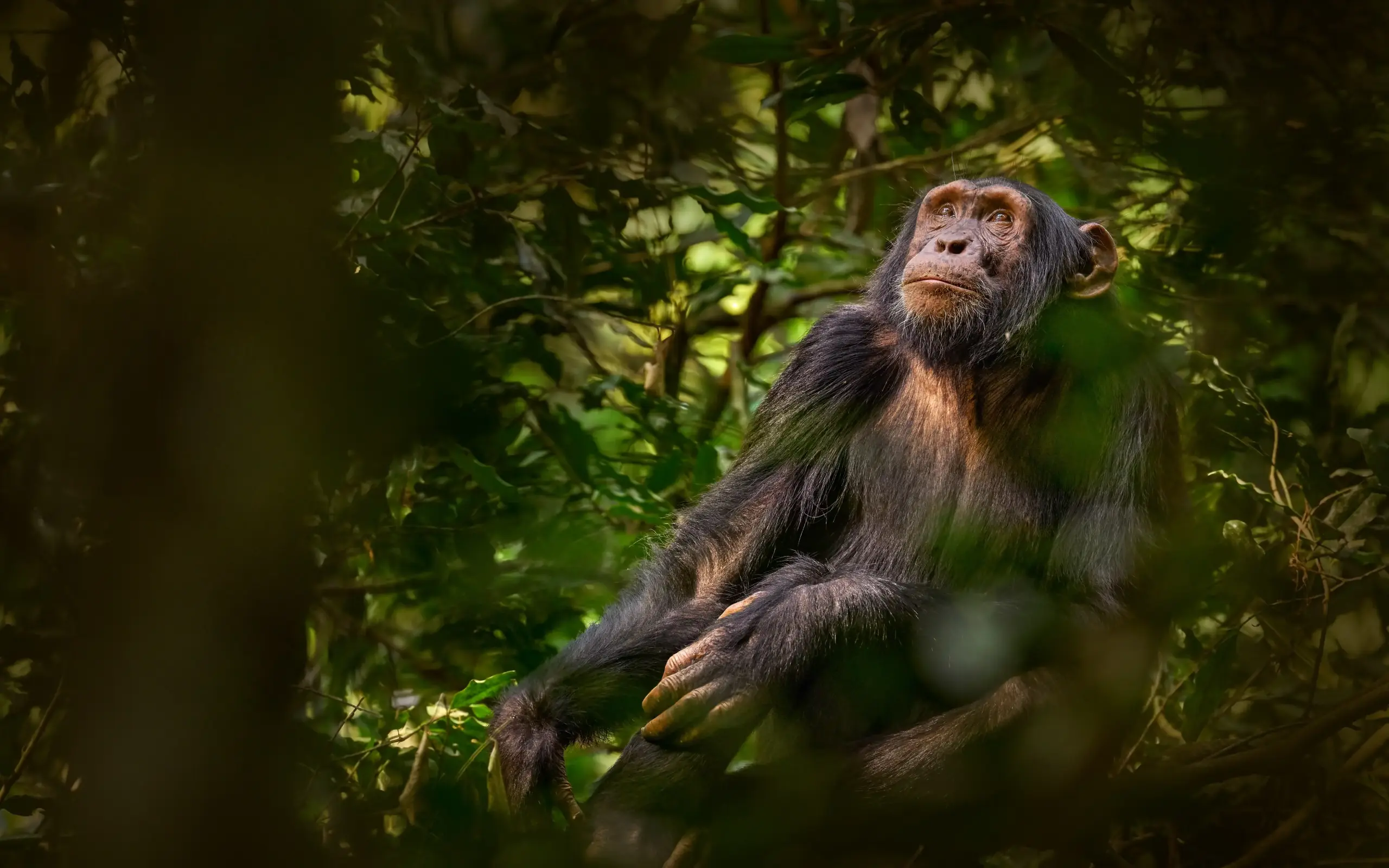
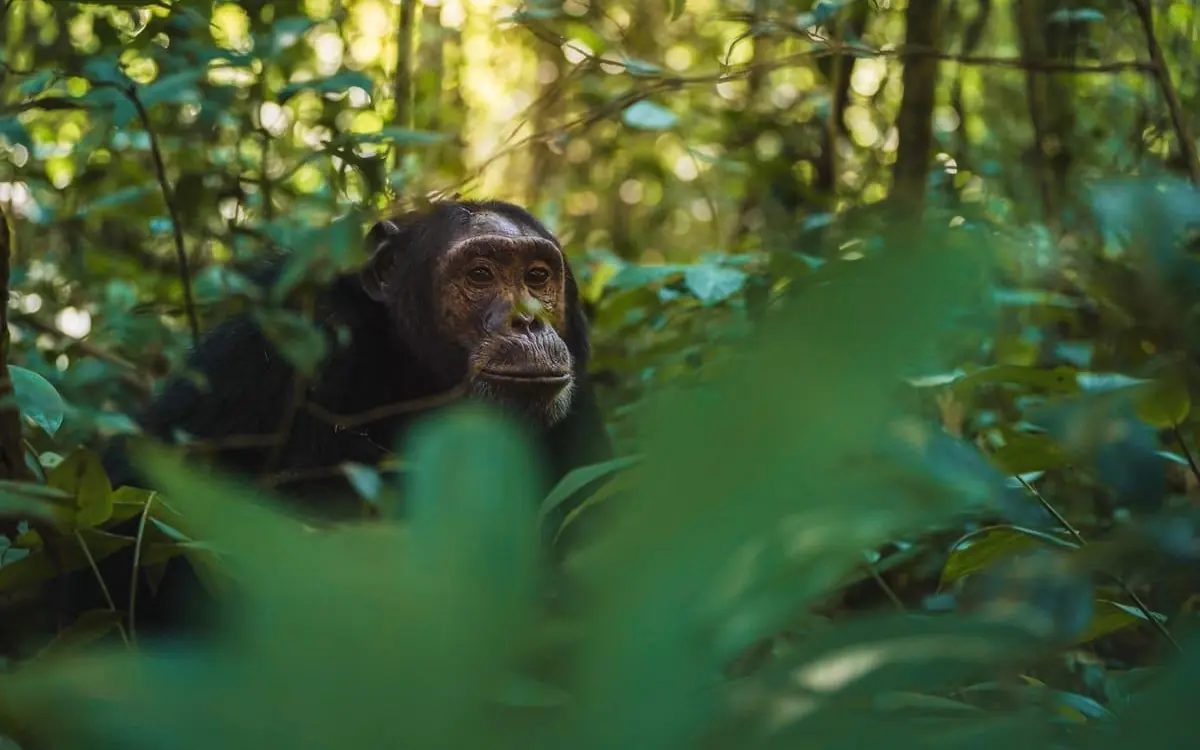
You move west to Kibale Forest, southeast of Fort Portal, where treks set out each morning from the Kanyanchu trailhead to find the habituated chimpanzee families. The forest holds thirteen primate species alongside red and black-and-white colobus, grey-cheeked mangabey and blue monkeys, and sightings come on the great majority of mornings. Afternoons can take in the Ndali-Kasenda crater lakes or the Bigodi wetland for birds. Kibale Lodge stands on a ridge about thirty minutes from the trailhead, its eight hand-built bandas looking towards the Rwenzori Mountains. Papyrus thatch, eucalyptus floors and a personal butler for every guest set the tone.
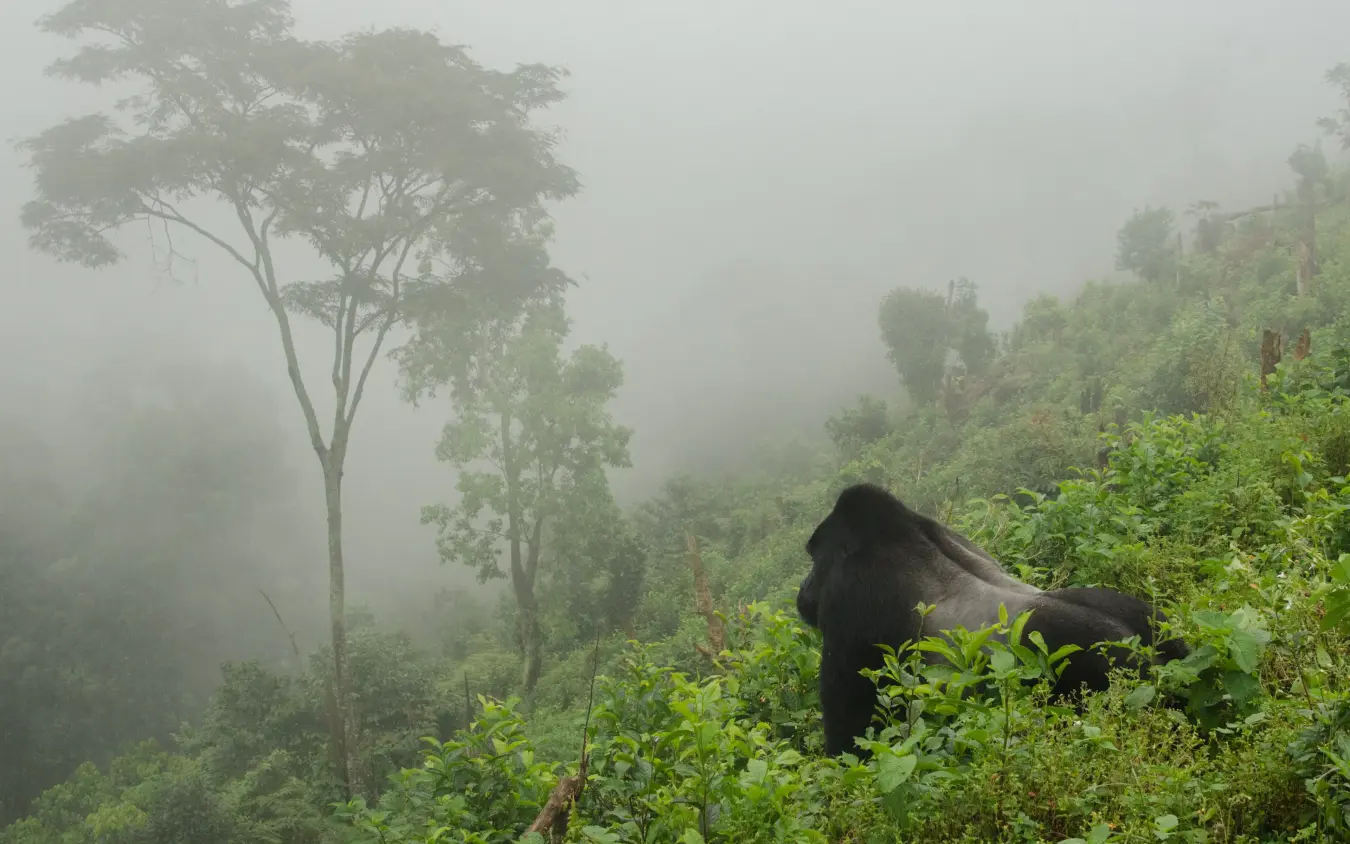
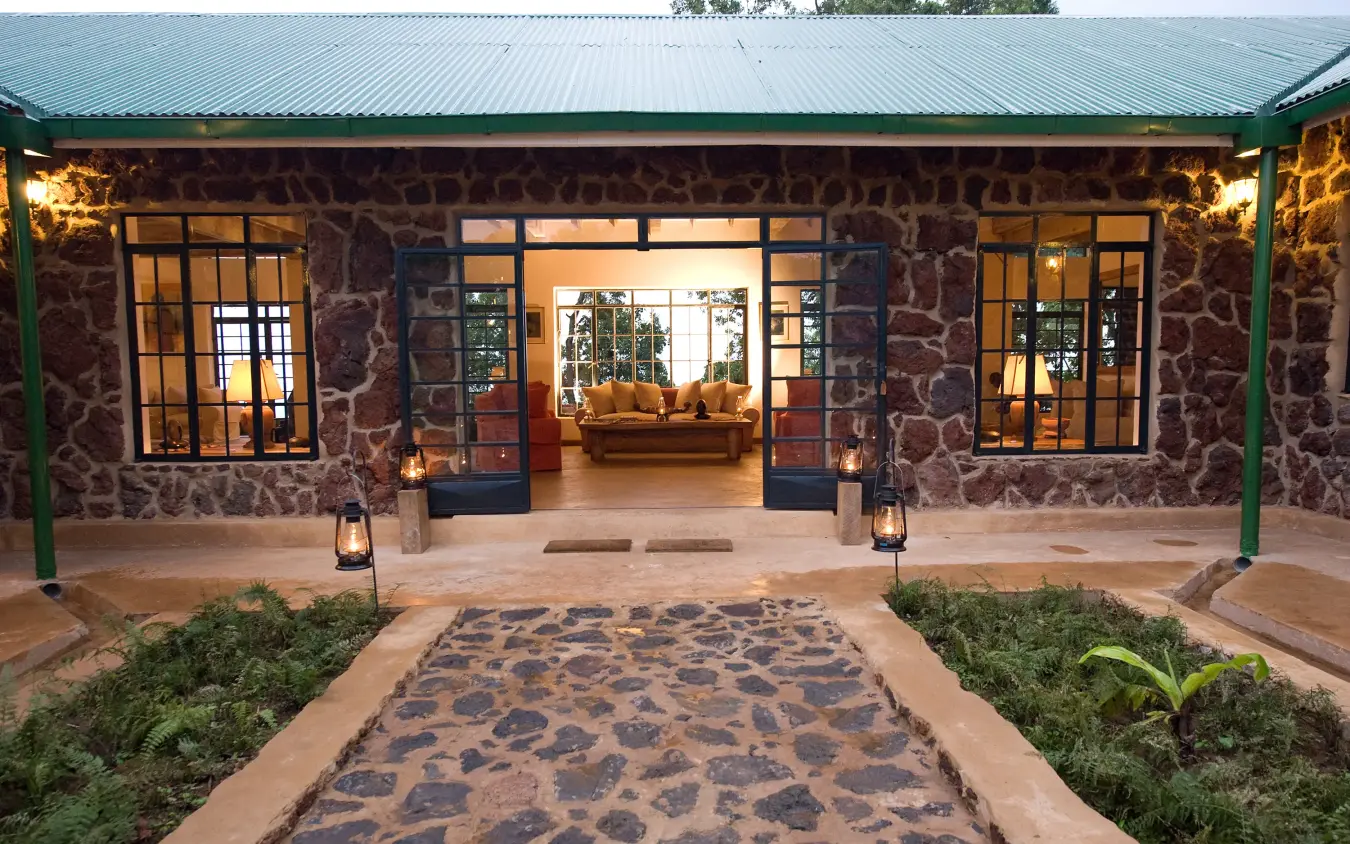
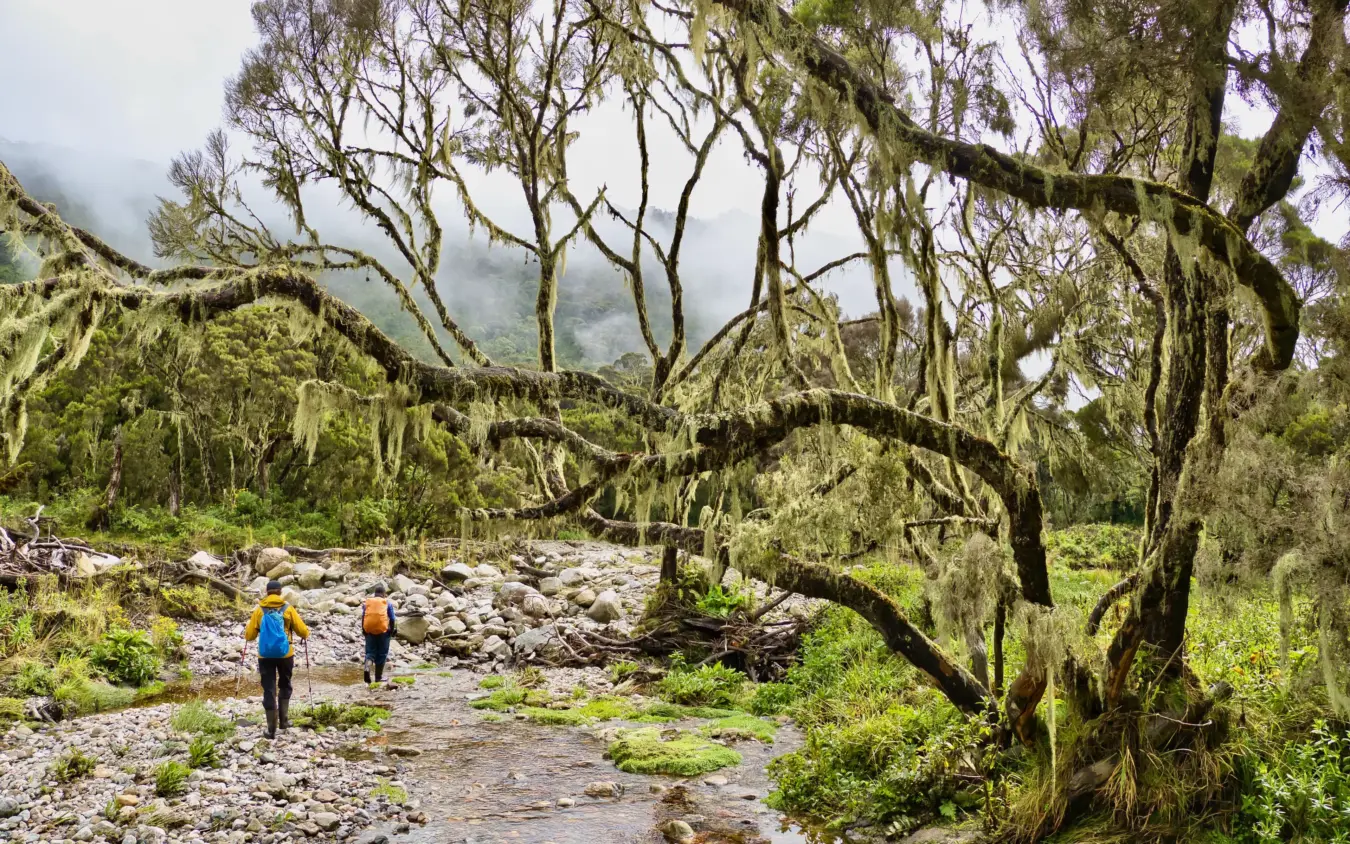
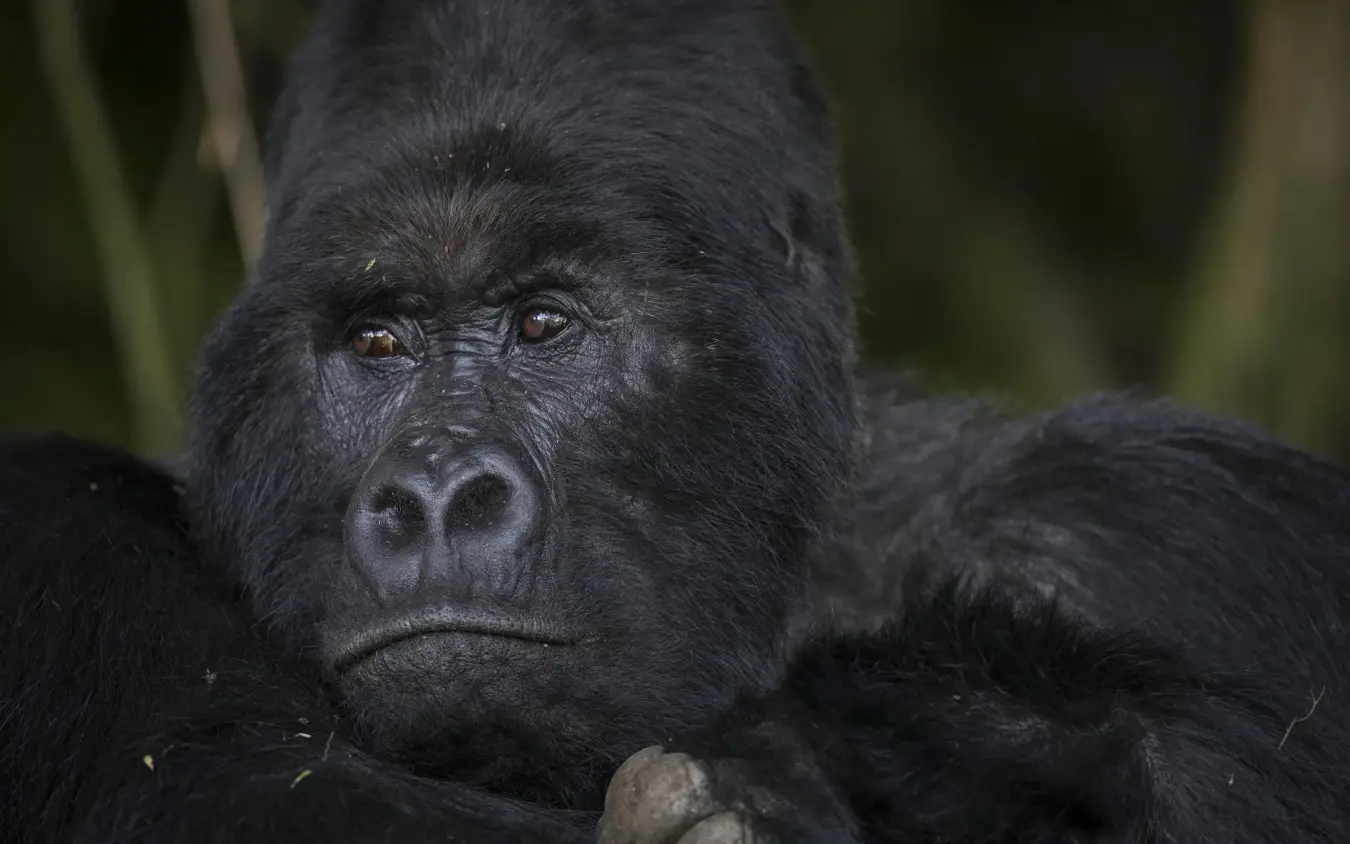
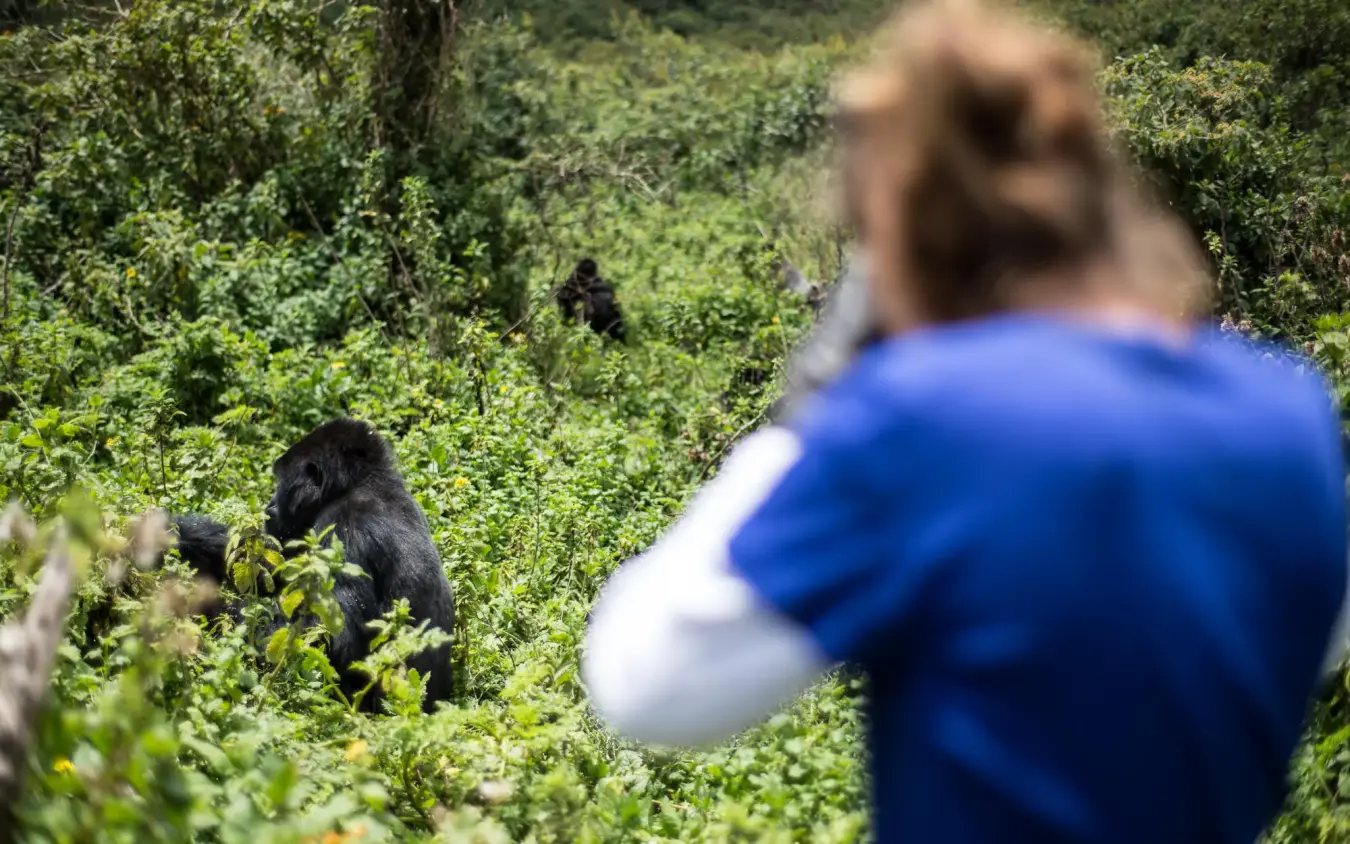
South in the Bwindi Impenetrable Forest, you trek the quieter Nkuringo sector, where fewer lodges and less traffic make for the emptiest trails in the forest. Uganda Wildlife Authority rangers lead you in among a habituated mountain gorilla family, with eight visitors per group and a strict hour once the gorillas are found. The routes here are among the steepest, long ascents and descents through dense forest at altitude. Clouds Mountain Gorilla Lodge sits at roughly 2,000 metres on Nteko Ridge, its volcanic-stone cottages facing the canopy one way and the Virunga volcanoes the other. A fire is kept lit in each cottage, with hot towels and a foot massage waiting off the mountain.
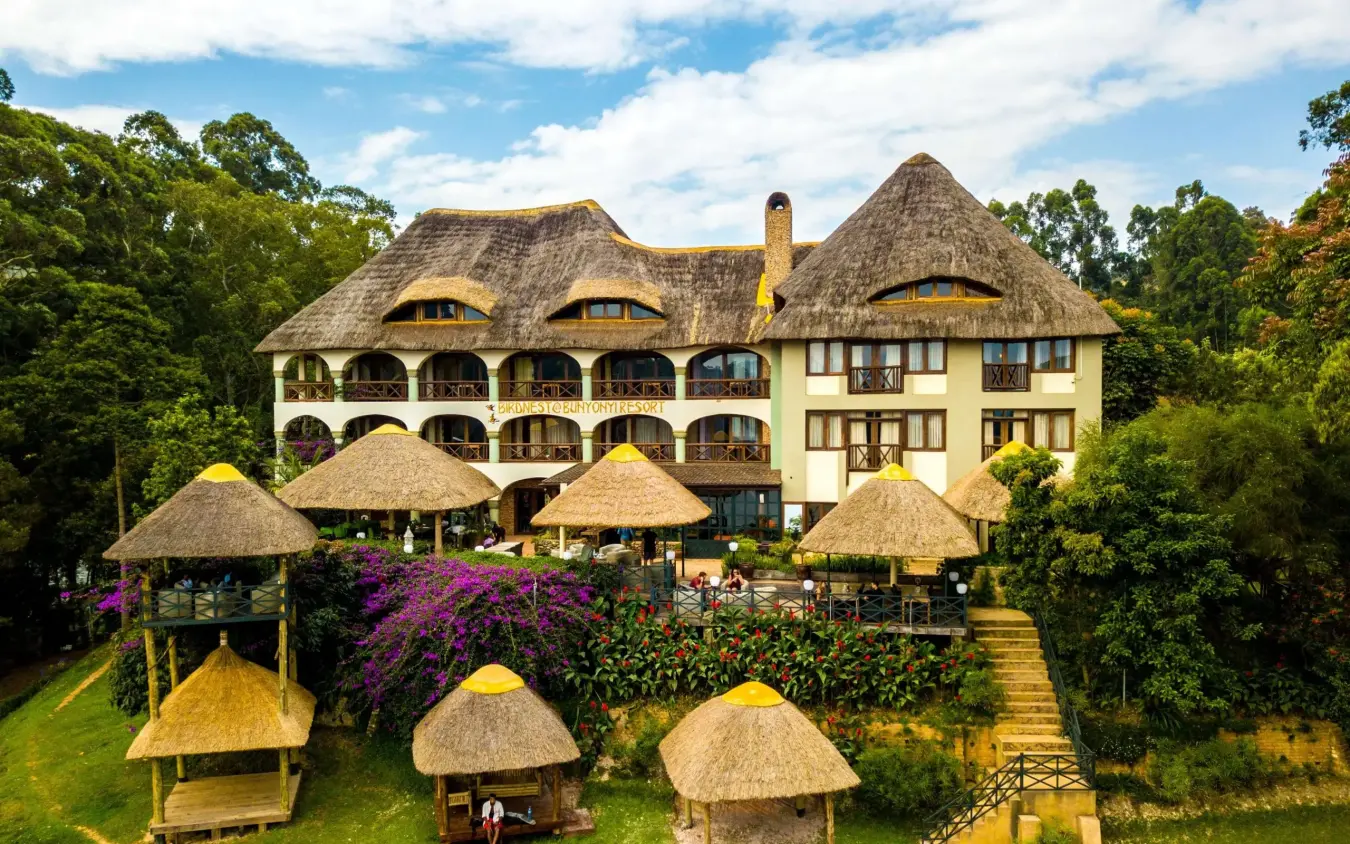
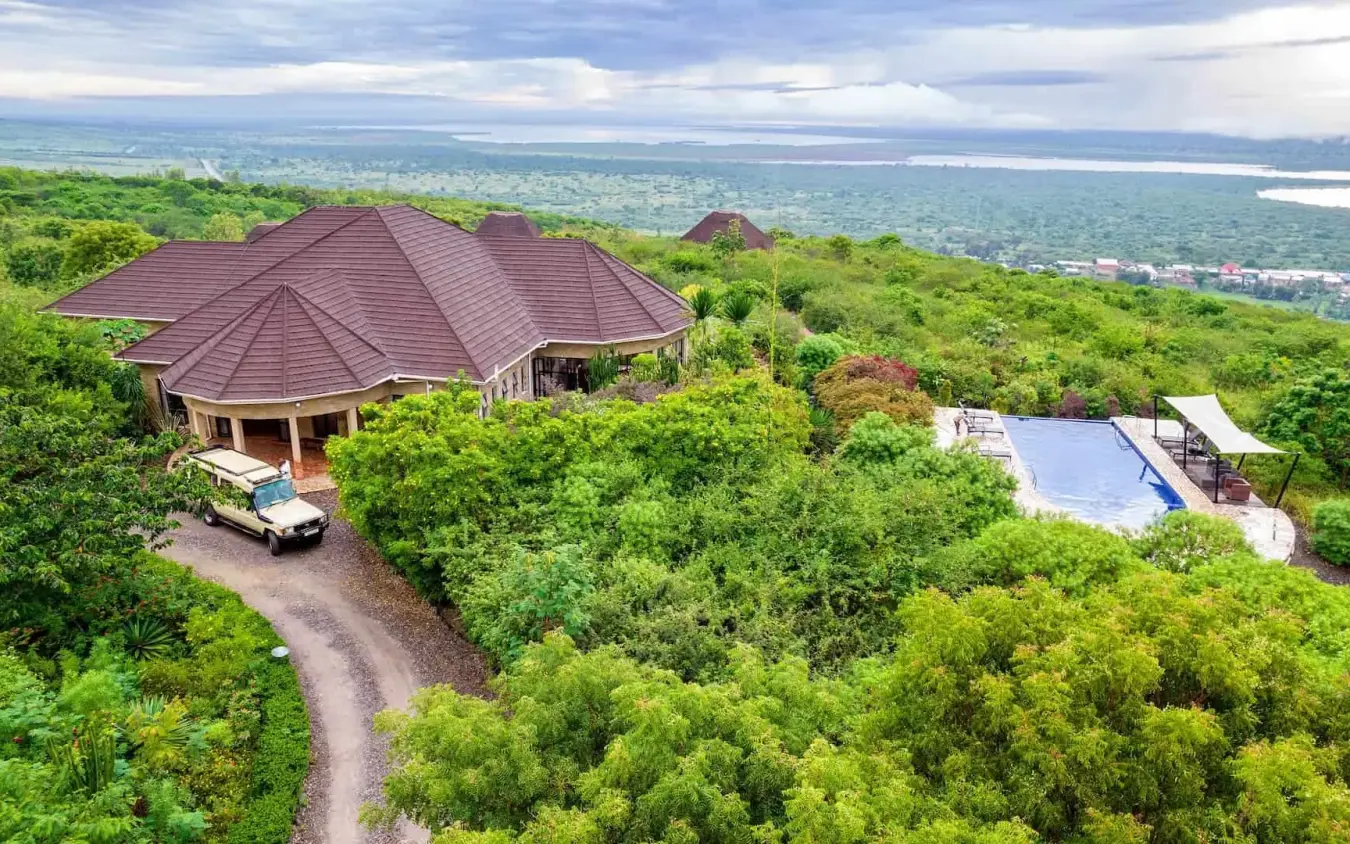
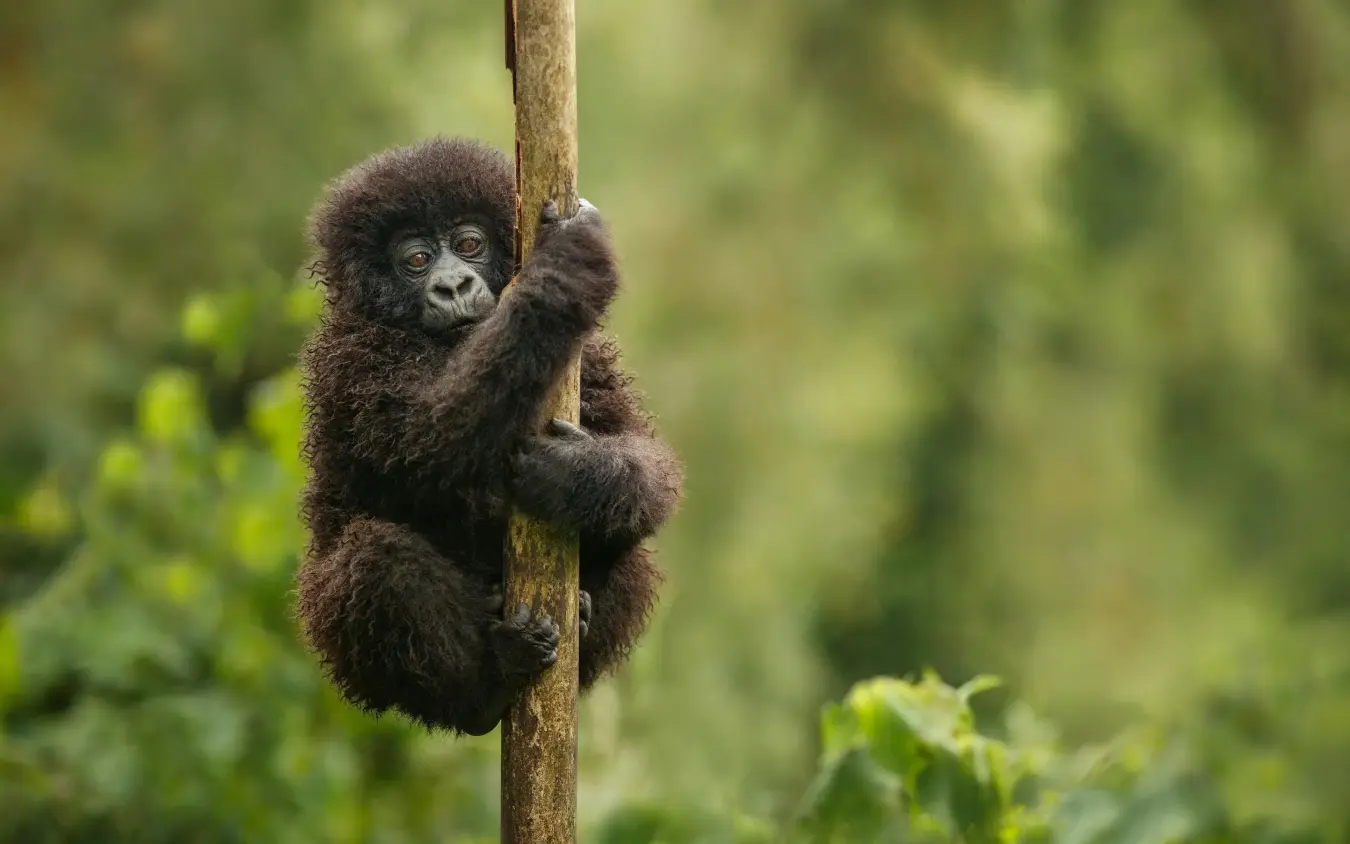
You finish at Mgahinga, Uganda's smallest and quietest gorilla park, where a single habituated family, the Nyakagezi group, lives against the backdrop of Muhabura, Gahinga and Sabyinyo. The gorillas spend much of their time in bamboo and on open volcanic slopes rather than tangled undergrowth, which gives clearer sightlines. Golden monkeys are tracked through the same bamboo zone, and over 180 bird species have been recorded on the slopes. Mount Gahinga Lodge sits a short walk from the park gate, with eight circular bandas of local volcanic stone under conical thatch. Each holds a fireplace and opens onto a private veranda angled toward the volcanoes.
Very likely for all three, although wild animals keep no appointments and Uganda's park authorities make no promises.
Kibale is a dependable chimpanzee forest: we put the chance of locating the habituated community there at over 90 per cent. We put gorilla tracking at better than 95 per cent successful, because trackers are out at dawn picking each family up from its overnight nests, so the rangers know where to aim before you set off.
This route also has a safeguard built in. It tracks gorillas in two separate parks, Bwindi and Mgahinga, so the trip never hangs on one family or one morning.
Golden monkeys are a different case: the troop at Mgahinga is habituated and keeps to the bamboo where it feeds. In each case the visit is capped at an hour from the moment the animals are reached.
Nkuringo is the most demanding of Bwindi's trailheads, and the reason is its shape.
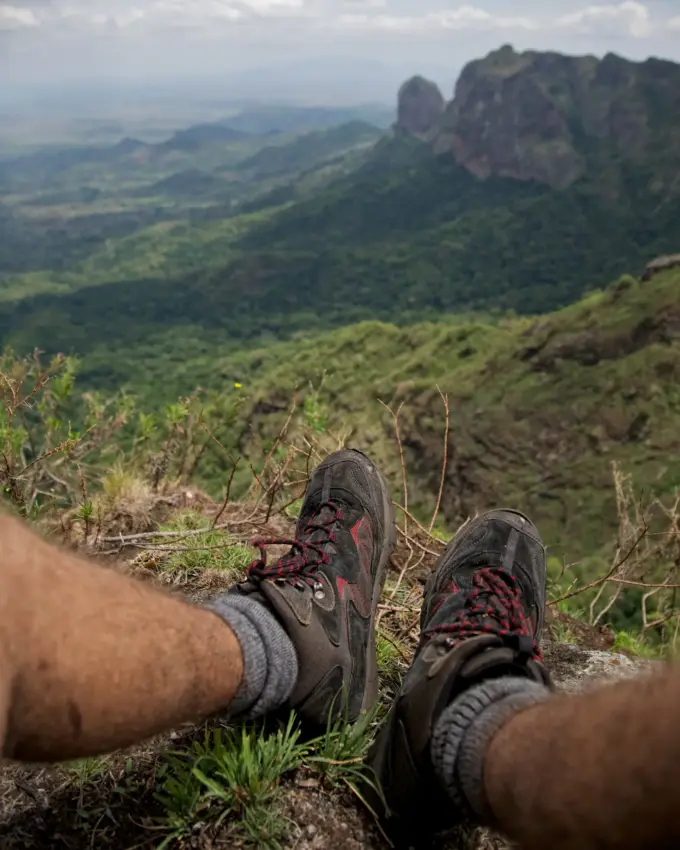
The trailhead stands on top of the Nteko ridge, at about 2,000 metres, and the gorillas live in the forest below, so the day usually starts with a long, steep descent and ends with the climb back out, when you are most tired.
Treks in Bwindi run from a couple of hours to most of a day, and nobody knows which until the morning. Mgahinga starts higher, at 2,227 metres at the Ntebeko gate, but treks there are typically three to five hours, much of it through bamboo and across open volcanic slopes.
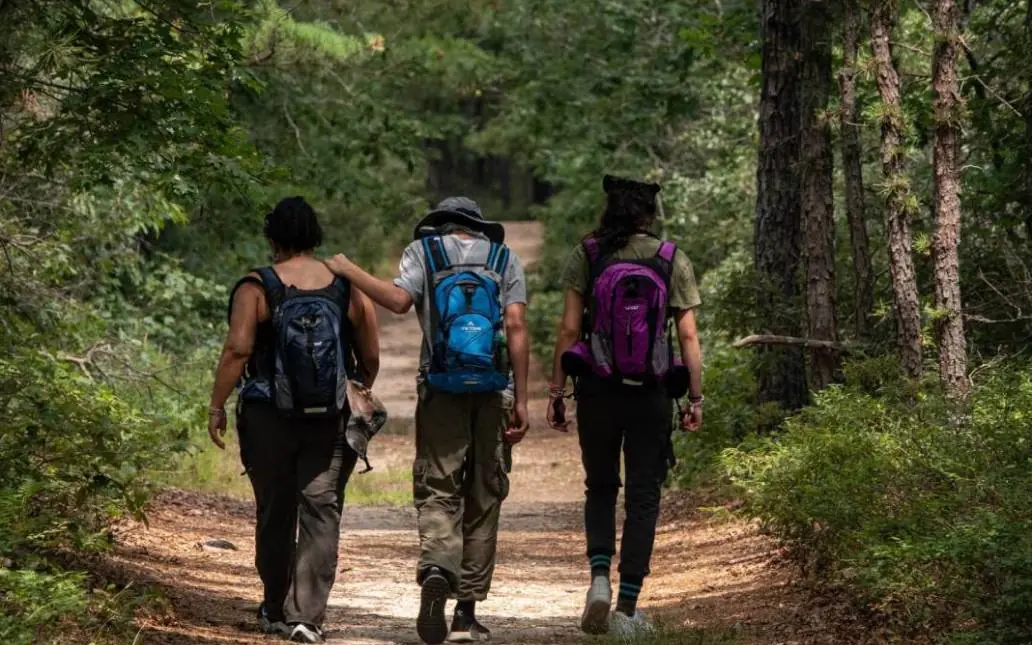
Neither park asks for athletic fitness. Both ask for several hours on your feet on steep, slippery ground.
Walking sticks are handed out, porters from the nearby villages can be hired on the morning to carry a bag and lend a hand, and trekkers must be 15 or over.
It is a reason to book early more than a reason to worry.
Mgahinga has a single habituated family, the Nyakagezi group, and the Wildlife Authority issues about eight permits a day for it, against well over a hundred across Bwindi, so one small party can fill the park.
The family also has a history of wandering. It crossed into Rwanda in June 2006 and did not return until July 2007, and its movements were erratic. It has kept to the Ugandan slopes for more than a decade since, but that history is one more argument for a route that treks in Bwindi too.
What Mgahinga adds is a different setting: bamboo and open ground below three Virunga volcanoes in place of dense rainforest, far fewer people, and golden monkeys in the same park.
Permits are issued for a named park on a named day, so we book them first and build the trip around those dates.
Shorter and lighter than a gorilla trek, and a good contrast to one.
Golden monkeys live almost nowhere outside the bamboo forests of the Virunga volcanoes. At Mgahinga a habituated troop is tracked on the slopes of Mount Gahinga, setting out from the same Ntebeko gate as the gorilla trek, a short walk from the lodge.
Expect a steady uphill walk of an hour to an hour and a half through regenerating forest to reach their territory, then one hour with them, the same limit as for gorillas. They are small, quick and sociable, and you watch them play, squabble and strip fresh bamboo shoots.
If an hour sounds short, ask us about adding the habituation experience, which is particular to Mgahinga and lets you spend several hours with the troop alongside the researchers who study it. With three nights at the park there is room for the gorillas and the monkeys on separate mornings.
None of the three primates goes anywhere with the weather, so timing this route is about how firm the ground is, not whether the animals are there.
June, July, August, December, January and February are our recommended months at all three forests, with the firmest trails on the Nkuringo ridge and the clearest views of the Virunga volcanoes from Mgahinga.
September is nearly as settled in the two gorilla parks, though Kibale is turning wetter by then, and October turns the paths muddy.
The rains fall from March to May and again in November, and on gradients like Nkuringo's that means slow, slippery going; we rate April and November as challenging at every stop on this route.
The rains have real compensations all the same. Permits are easier to find at short notice, lodge rates come down, the forest is lush and the birding good, and cloud cover gives soft, even light on dark fur where hard sun through the canopy does not.
Pack waterproofs and proper boots whatever the month.
You travel by road, and two of the days are long:
From Mgahinga there are two ways home. Kisoro has scheduled morning flights to Entebbe in an 11-seat Cessna Grand Caravan, a little over an hour when direct and up to three when the aircraft calls at other airstrips, with 15 kilograms of luggage allowed in soft bags. Or Kigali is about four hours by road through the Cyanika border post.
If the long middle day does not appeal, we can break it with a night in Queen Elizabeth National Park, or arrange a private charter, typically a Cessna Caravan, from Kasese to Kisoro.
Ed Charles, BBC Producer
Fitzroy are true specialists in accessing the wilderness. They know where to go and importantly, when to go there. Highly recommended.
rwanda & uganda
Seven nights from Kigali into Uganda's Mgahinga and back to a Rwandan ridge, tracking gorillas along the Virunga chain.
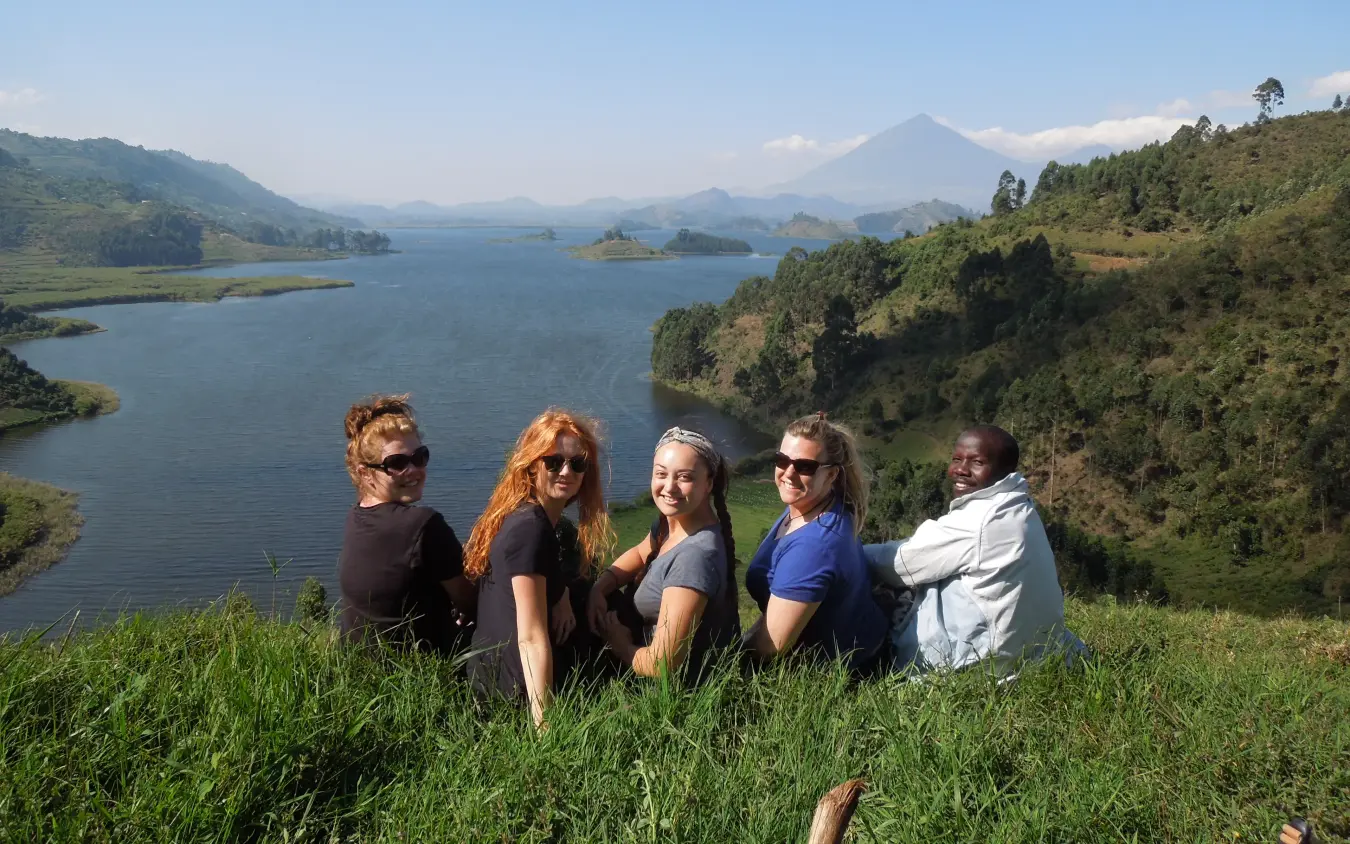
uganda & rwanda
From Kigali across Uganda's highland lakes to gorillas at Mgahinga, savannah game and the chimpanzees of Kibale Forest.

uganda
Nine nights from Lake Victoria through Karamoja to the Kidepo Valley, Uganda's most remote park.
rated five stars by our clients

our approach
Every journey starts with a conversation. We take the time to understand your vision before we start planning.
Whether by phone or in person, we work with you directly to shape something that is considered, personal, and expertly delivered.
Every journey starts with a conversation. We favour a direct, personal approach: understanding your vision before anything else.
Whether by phone or in person, we work with you directly to shape a journey that is both thoughtfully considered and expertly delivered.
Get in touch to start planning yours.