










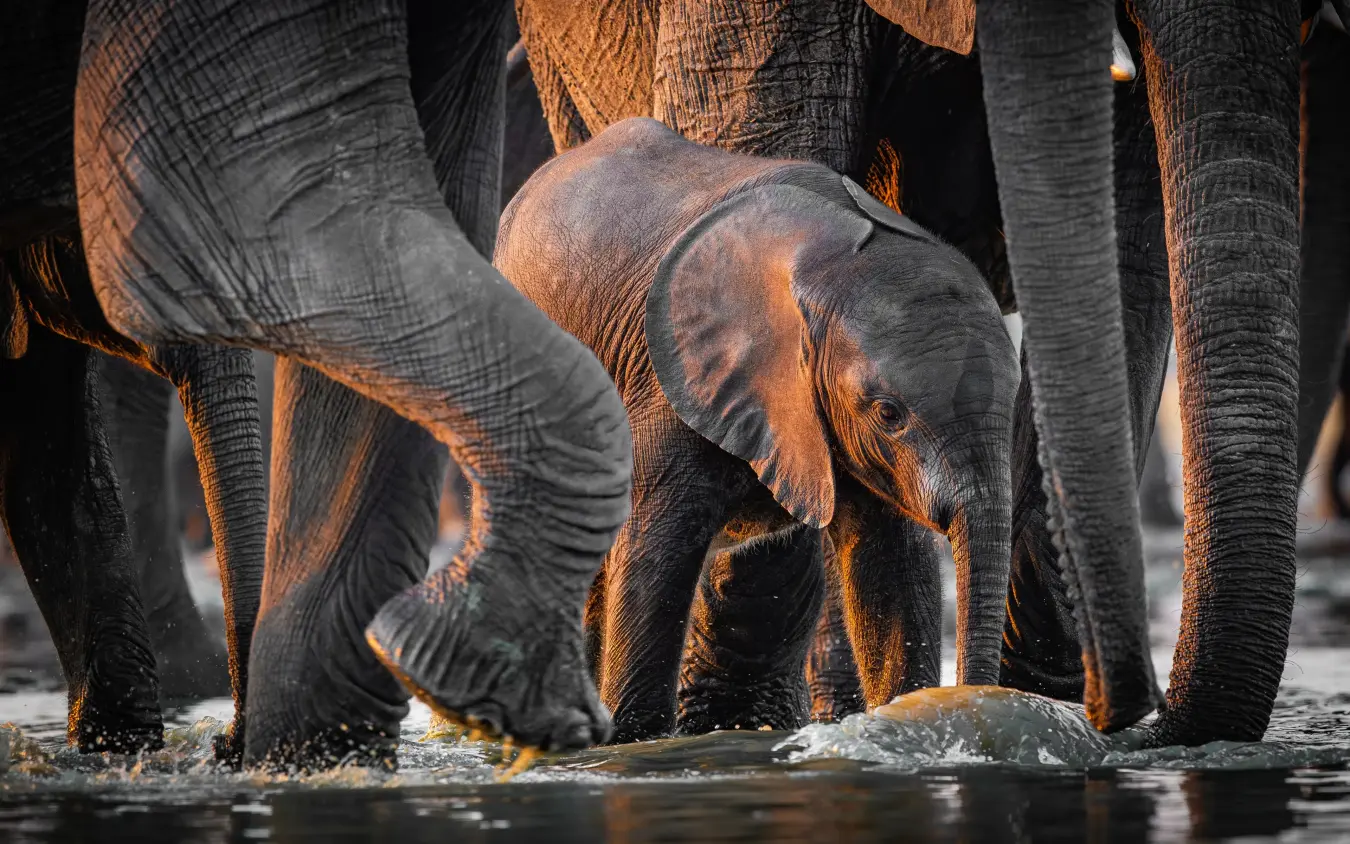
kenya
the elephant corridor to lamu
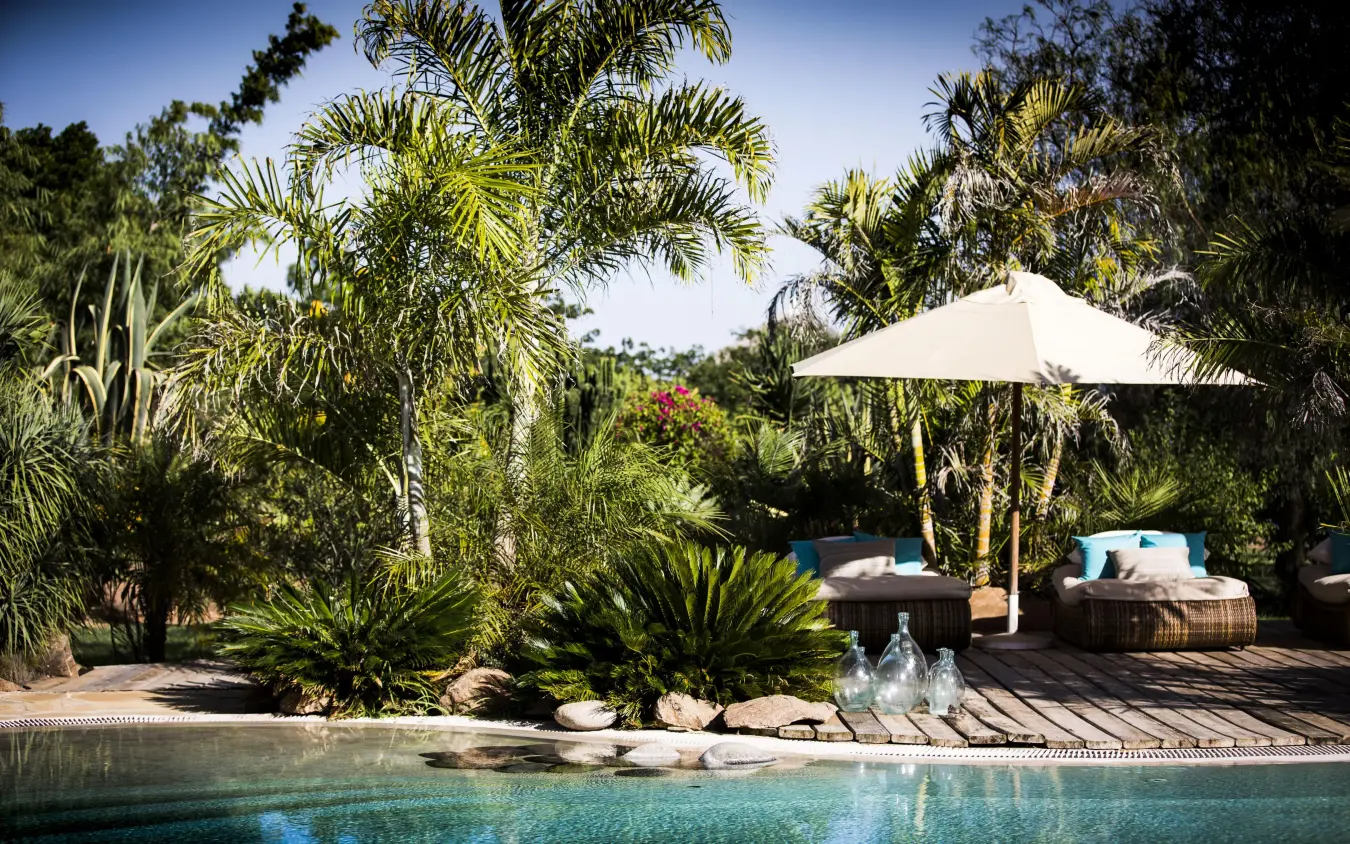
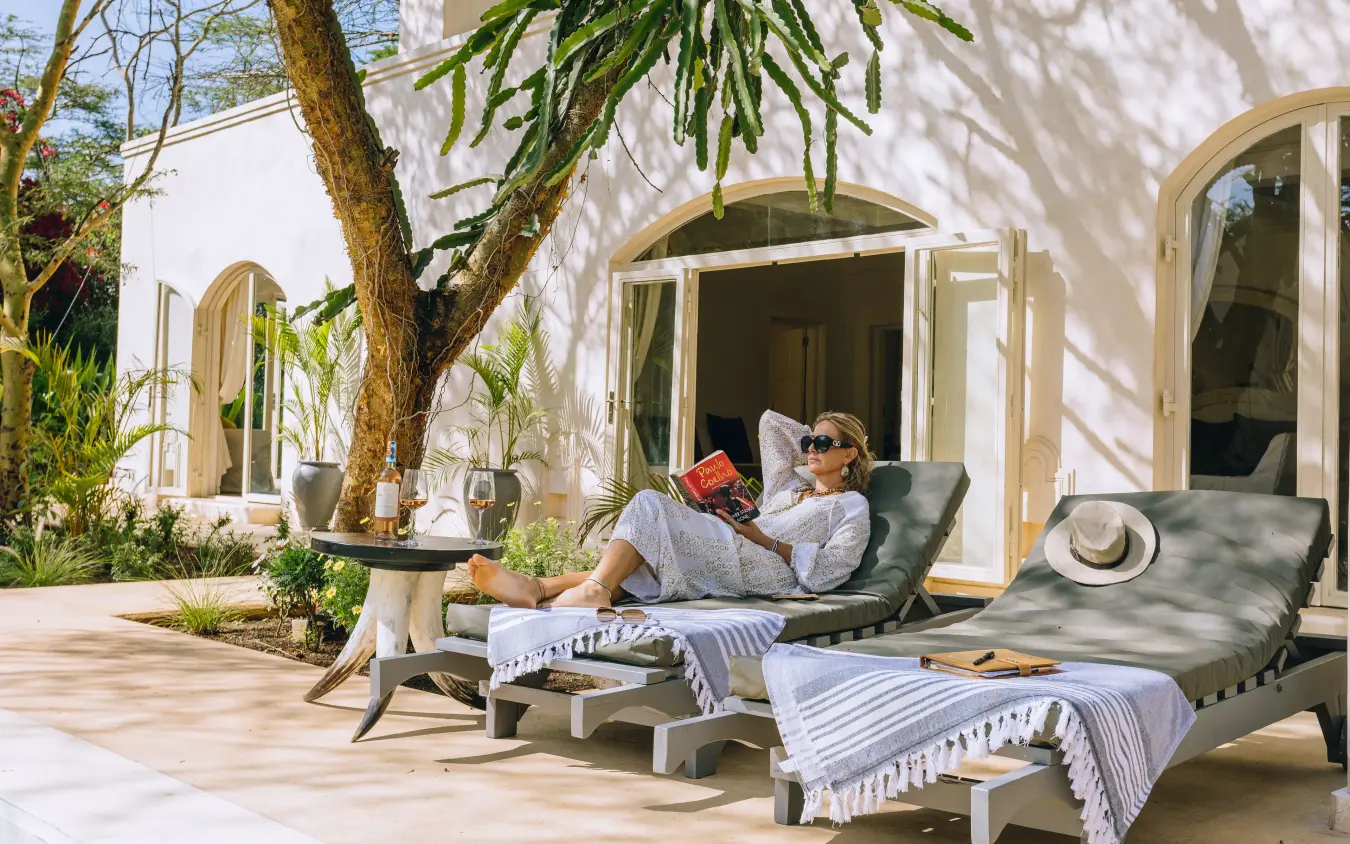
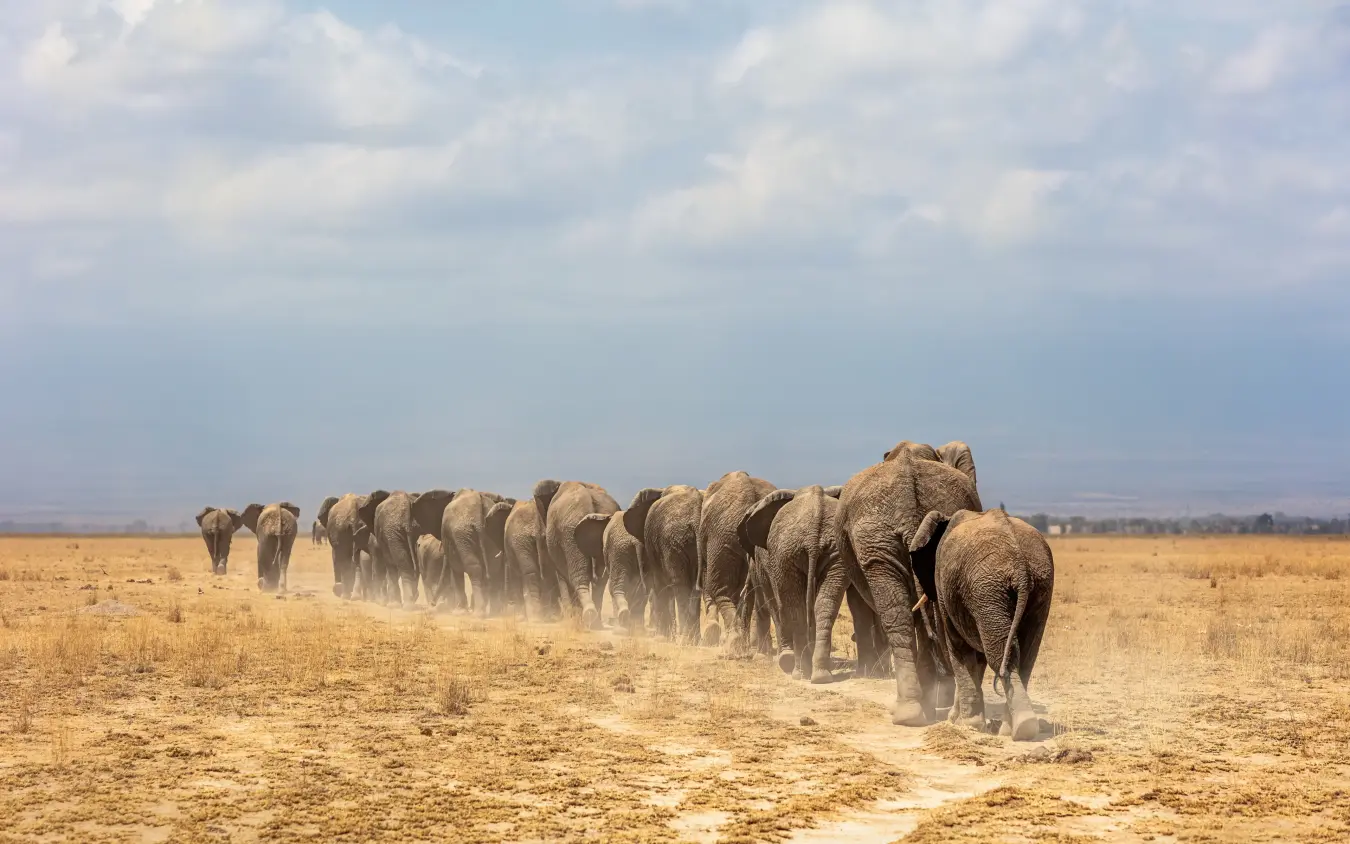
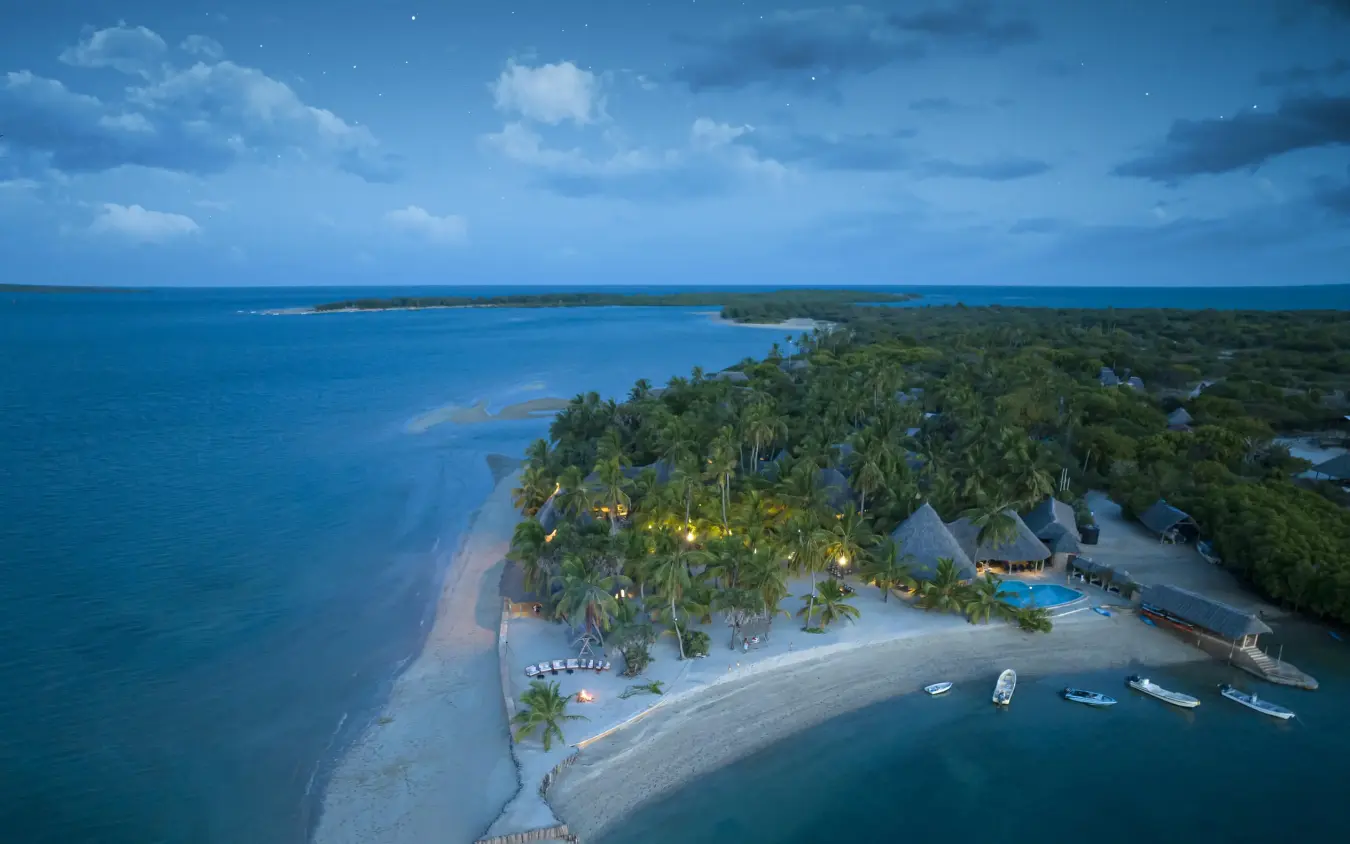
Ten nights from Nairobi through Amboseli's elephant corridor and Tsavo to a remote beach lodge on Manda Island.
- Private Safari
- From $5,485 pp
- 2 guests
- 10 nights
This is an 11-night route that begins in Kenya and crosses into Uganda. It opens in the Lewa Wildlife Conservancy in the northern foothills of Mount Kenya, runs north into the desert country of the South Horr Valley, then crosses to Kidepo Valley in Uganda’s far northeast, on to Murchison Falls on the Victoria Nile, the crater-lake country near Kibale Forest, and finally Mgahinga in the south-west corner.
The aircraft is the trip. A helicopter flies the Kenyan legs, north from Lewa over the Suguta Valley and the Turkana shore into the South Horr Valley, then north-west across the Turkana plains and over the border into Kidepo; light aircraft and vehicles carry the Ugandan stages that follow. The days are built around black rhino and Grevy’s zebra on Lewa, Lake Turkana and cultural visits in the far north, the wildlife of the Narus plains, the falls and the shoebill delta, chimpanzee tracking near Kibale, and gorillas beneath the Virunga volcanoes. The six stays are small lodges and camps chosen for their settings and their standard.
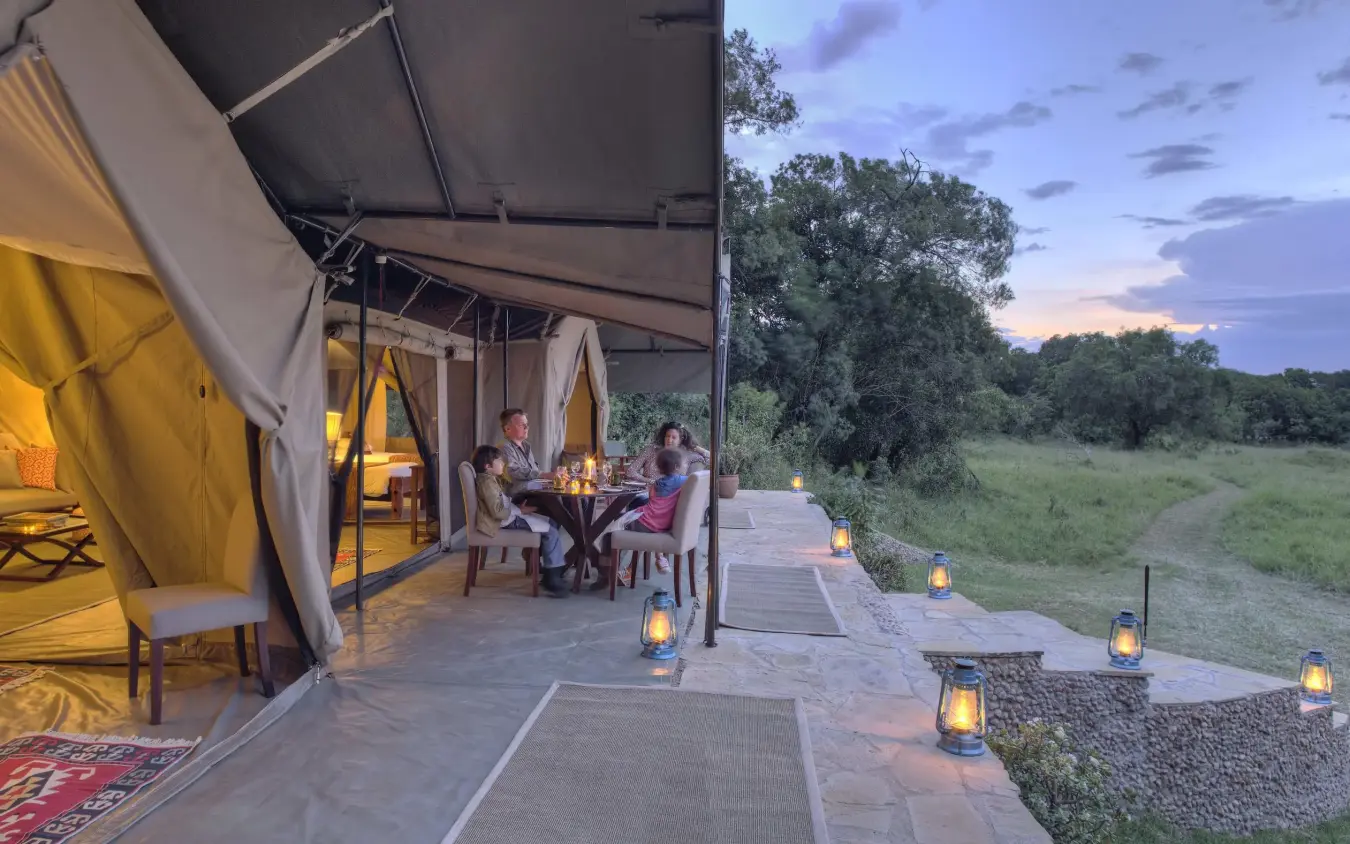
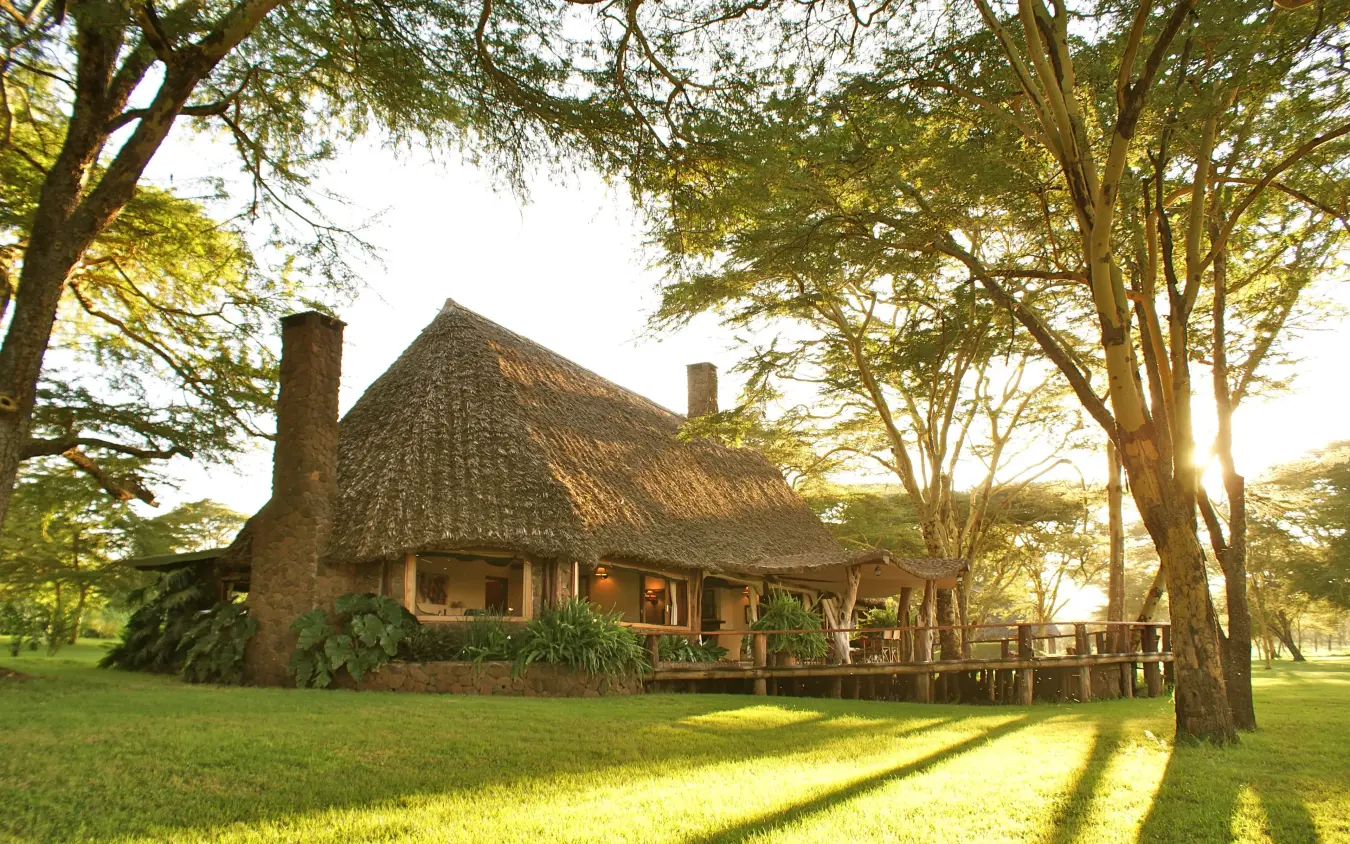
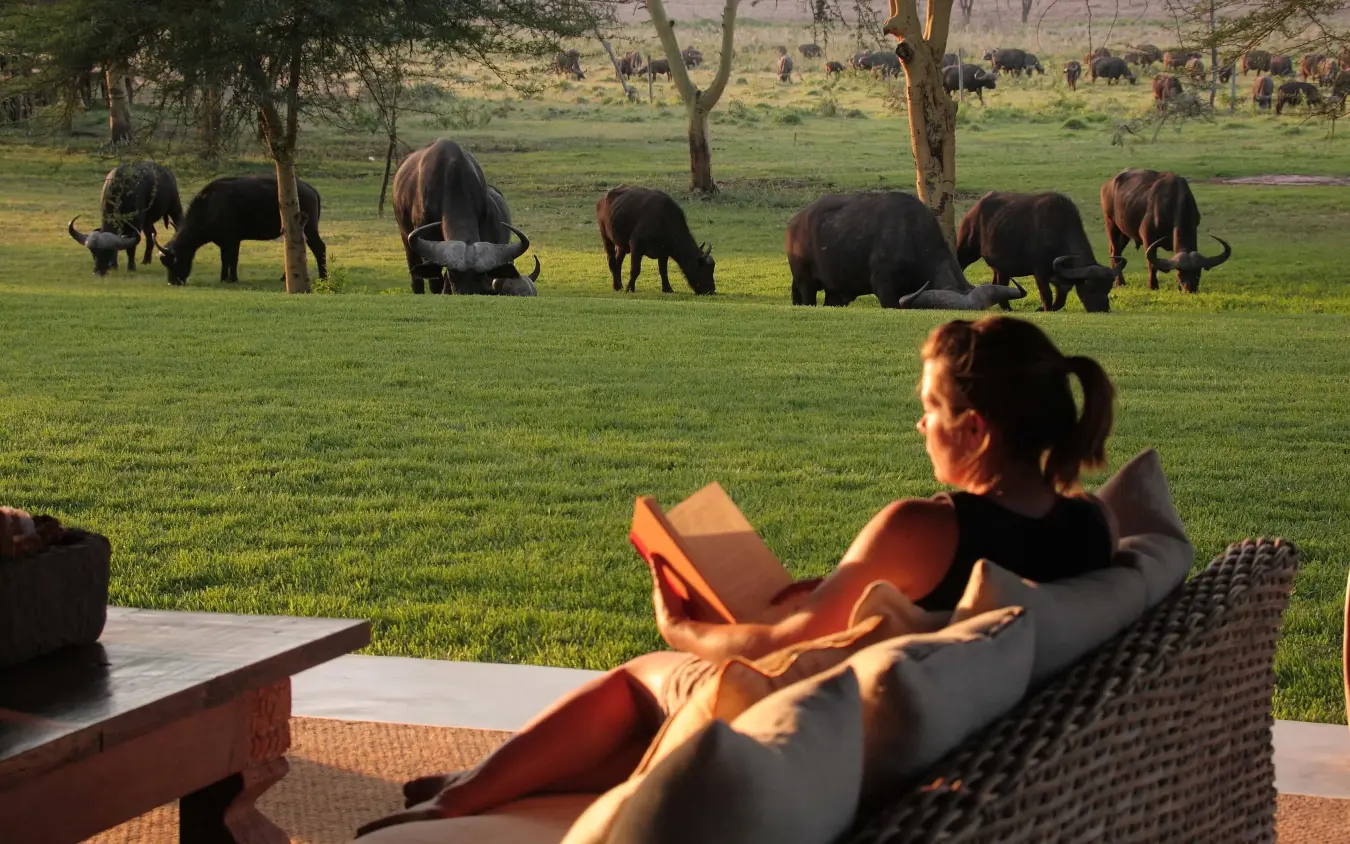
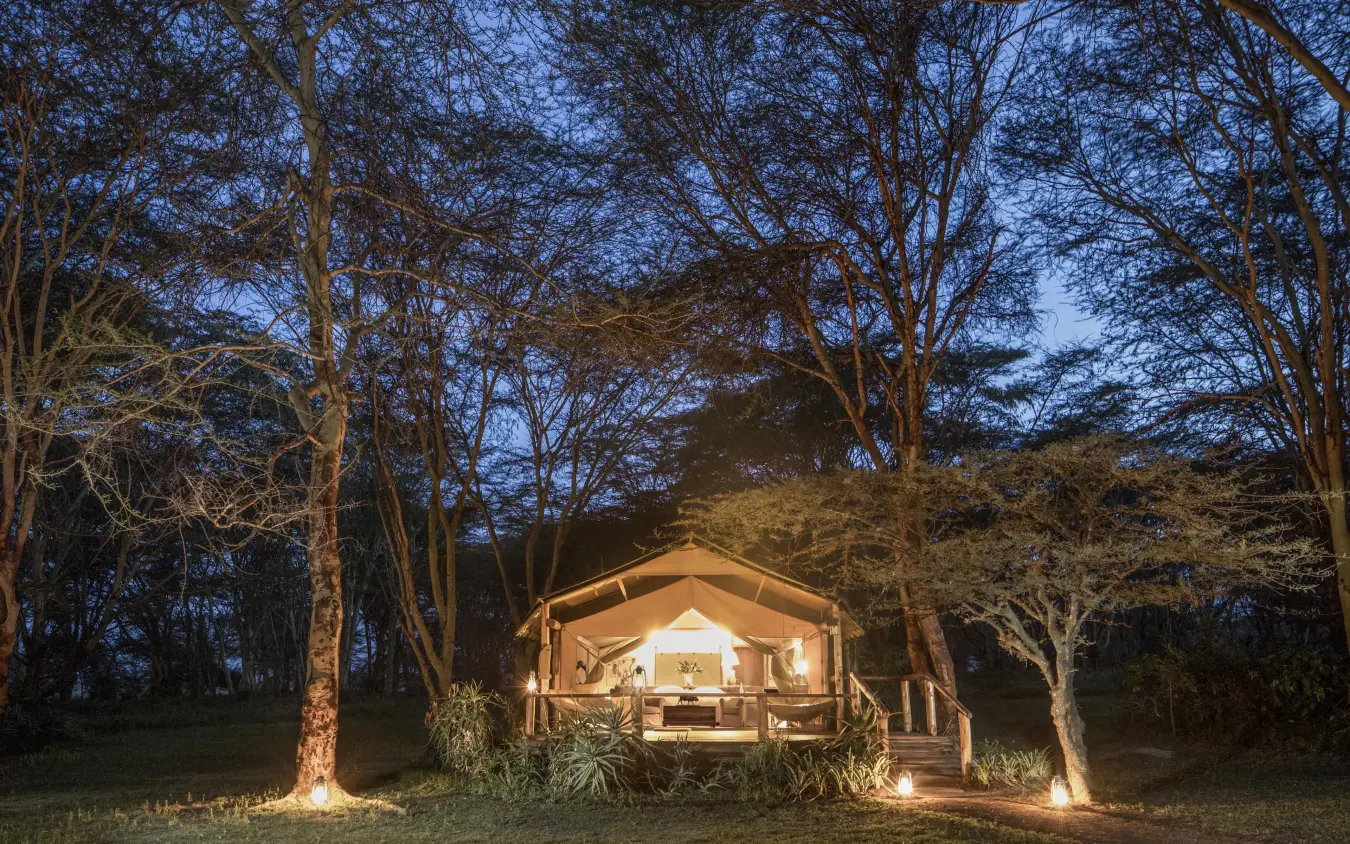
You are in the Lewa Wildlife Conservancy, in the northern foothills of Mount Kenya, where a spring-fed waterhole draws elephant to bathe and wallow within view of the lawns almost daily. Lewa holds a substantial share of Kenya's black rhino and a significant number of endangered Grevy's zebra, and inside a private conservancy your own vehicle and guide make a night drive or a walk with an armed tracker simple to arrange. Sirikoi keeps four luxury tents on raised platforms facing the water, each with a freestanding Victorian bath and an evening fireplace, and is run as a family home rather than a hotel.
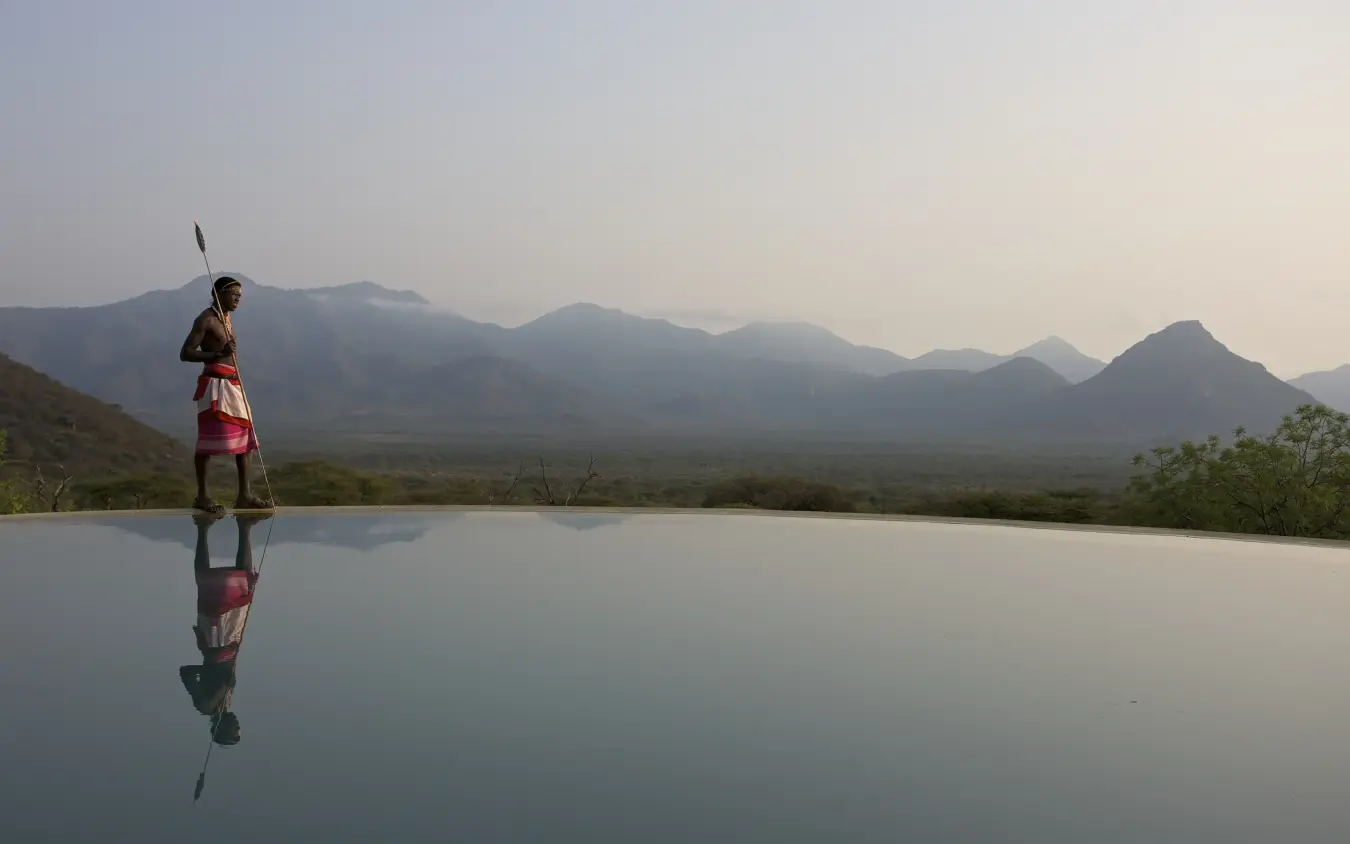
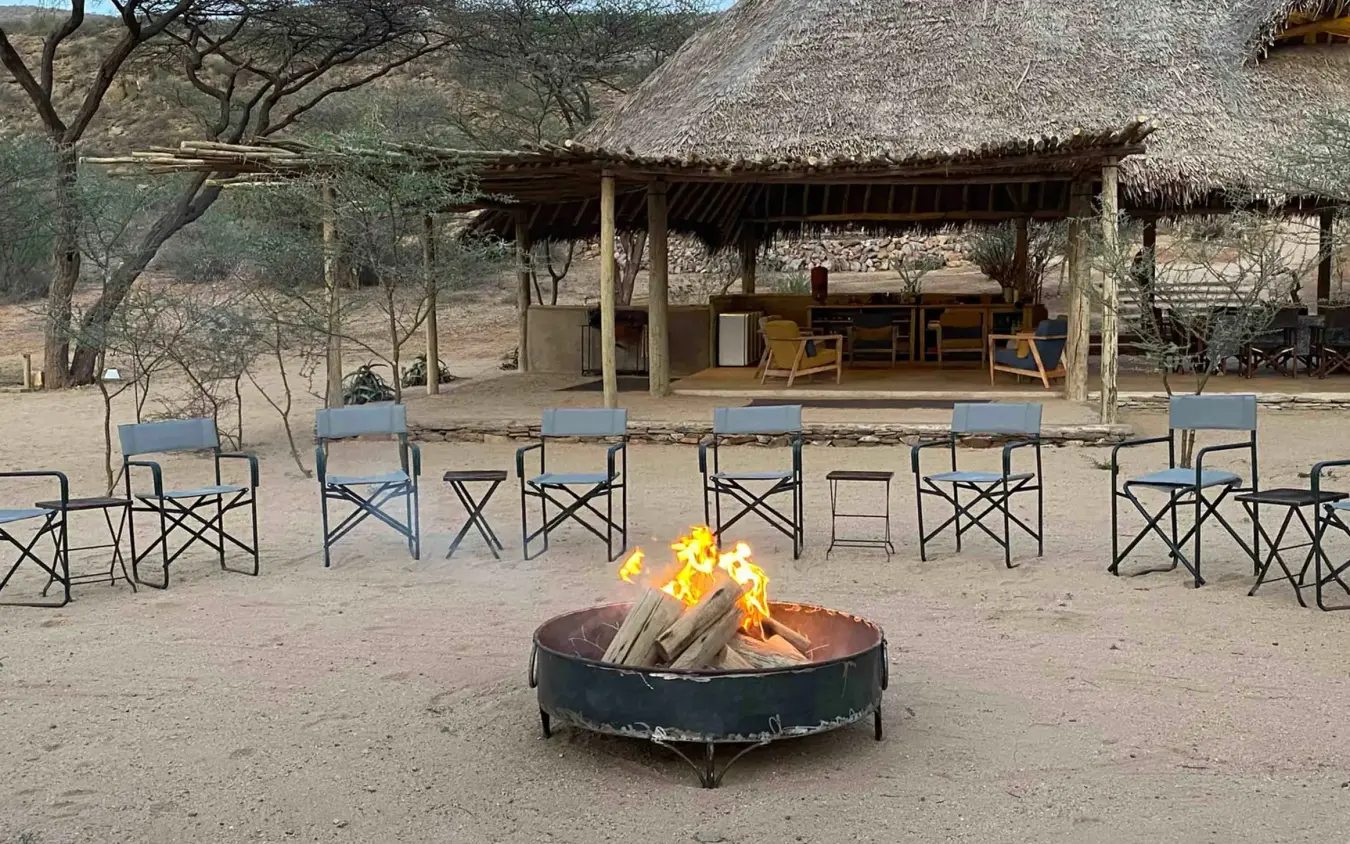
The helicopter lifts off Lewa and runs north, low over the Suguta Valley and the eastern shore of Lake Turkana, into country that opens into extinct volcanoes, sandy riverbeds and desert plains. This is not classic game-drive country; the pull is space and silence, explored on foot along dry riverbeds, by quad bike between communities, and by boat onto Lake Turkana for Nile perch and the crocodiles and birdlife that gather along the shore. Cultural visits reach Samburu and Rendille homesteads at the golden end of the day. Koros Camp is an off-grid base with six thatched rooms, a pool and an open-air mess, and a dense field of stars above the campfire at night.
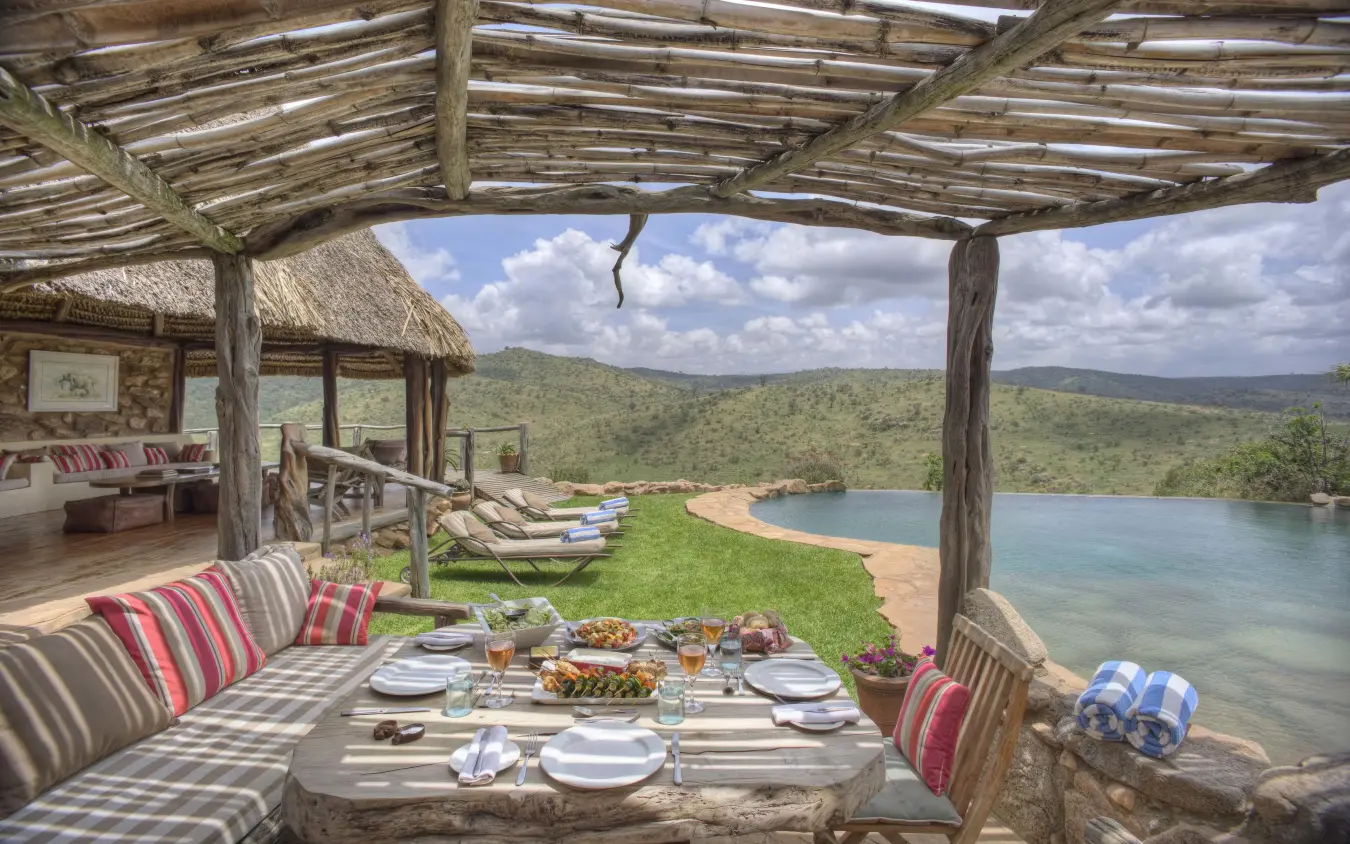
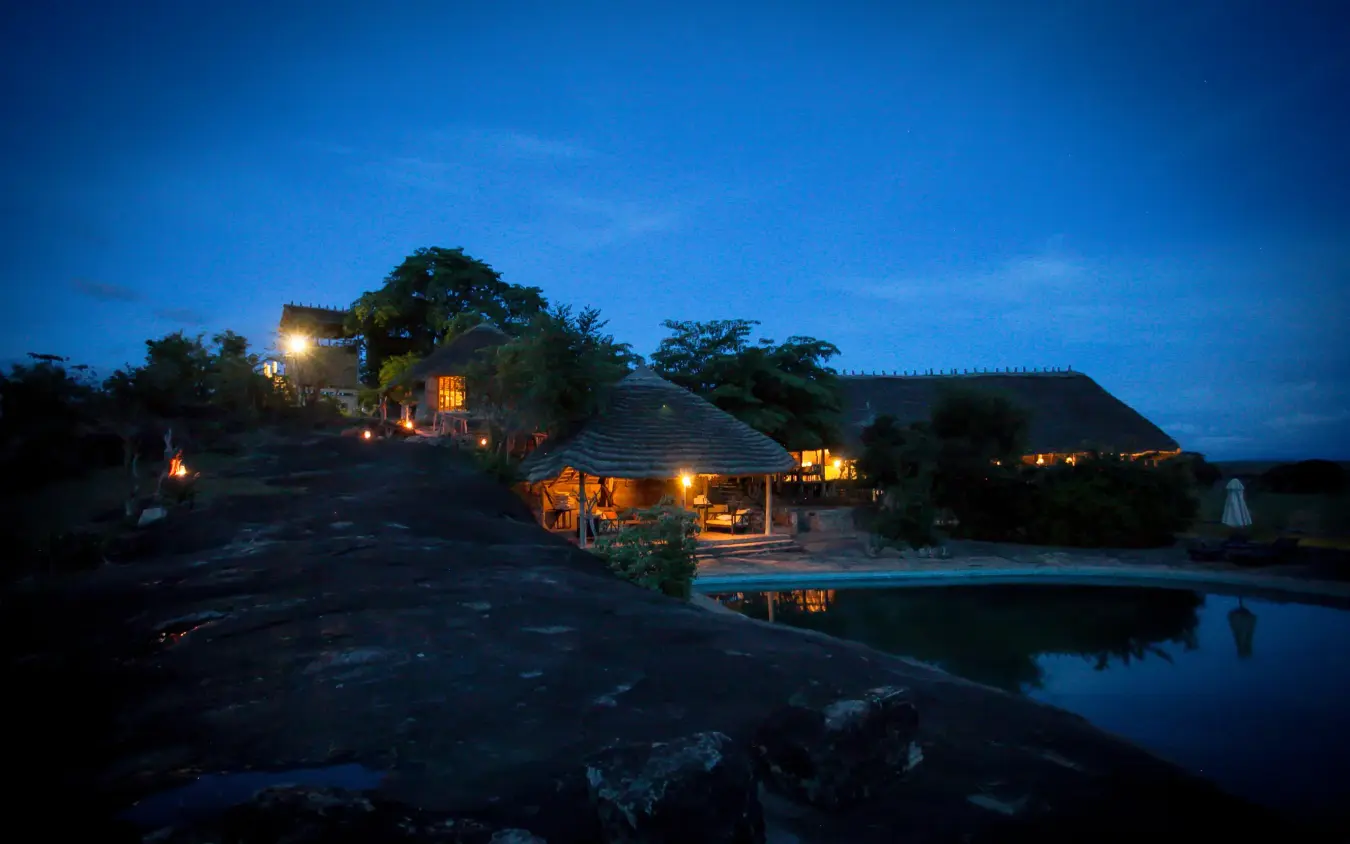
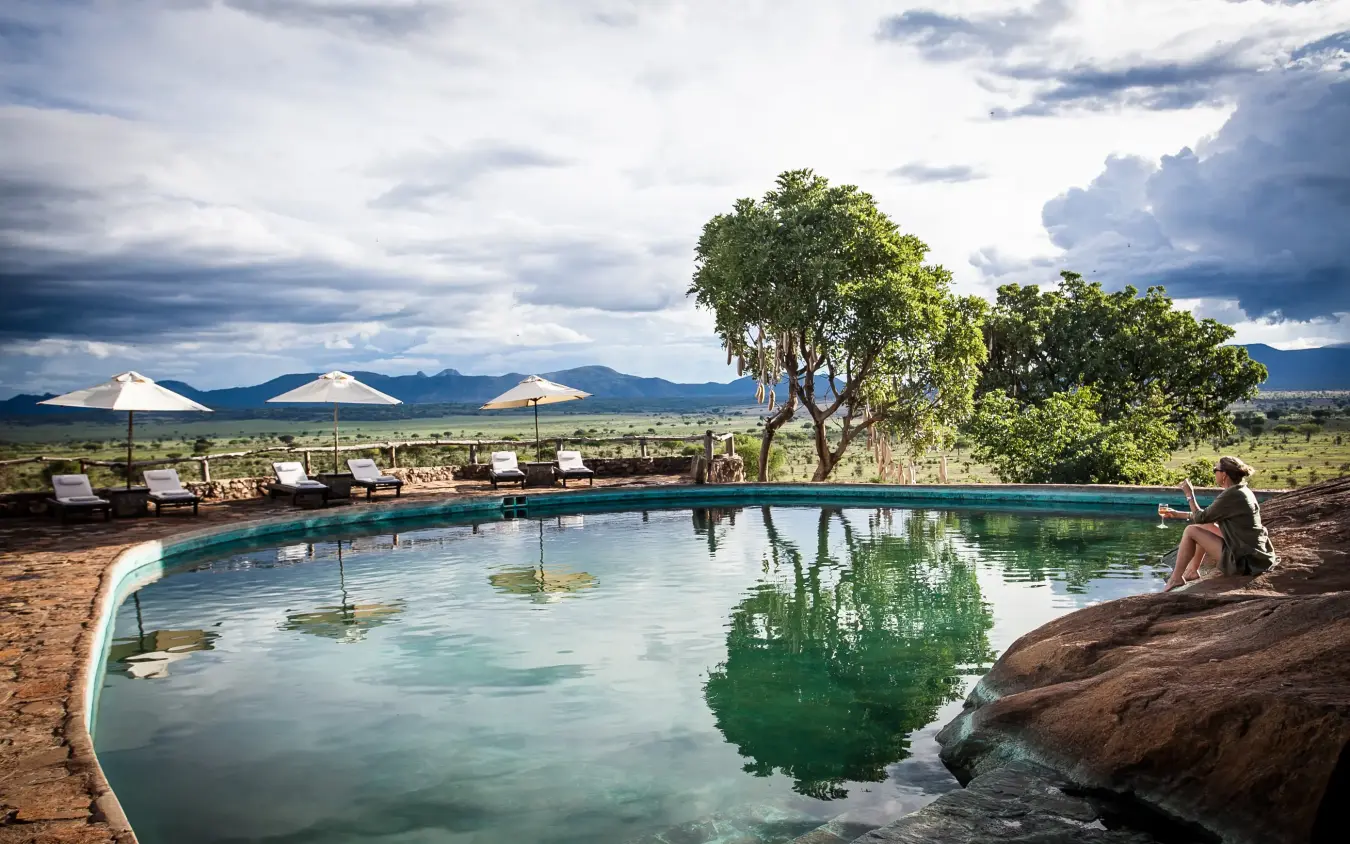
The crossing into Uganda is flown, north-west over the Turkana plains and across the border into Kidepo, the whole leg visible from a few hundred feet. On a rocky kopje above the Narus Valley, the wildlife-rich heart of Kidepo Valley National Park, elephant and zebra move through the unfenced grounds rather than waiting at the end of a transfer. The valley holds permanent water, drawing elephant, buffalo, giraffe and zebra onto the plains below, where lion and leopard work the acacia and cheetah range the open ground. Sightings arrive without the queue of vehicles found on busier parks. Apoka Safari Lodge sets ten canvas-and-thatch cottages around the rock, each with a deep outdoor stone bathtub angled at the plains.
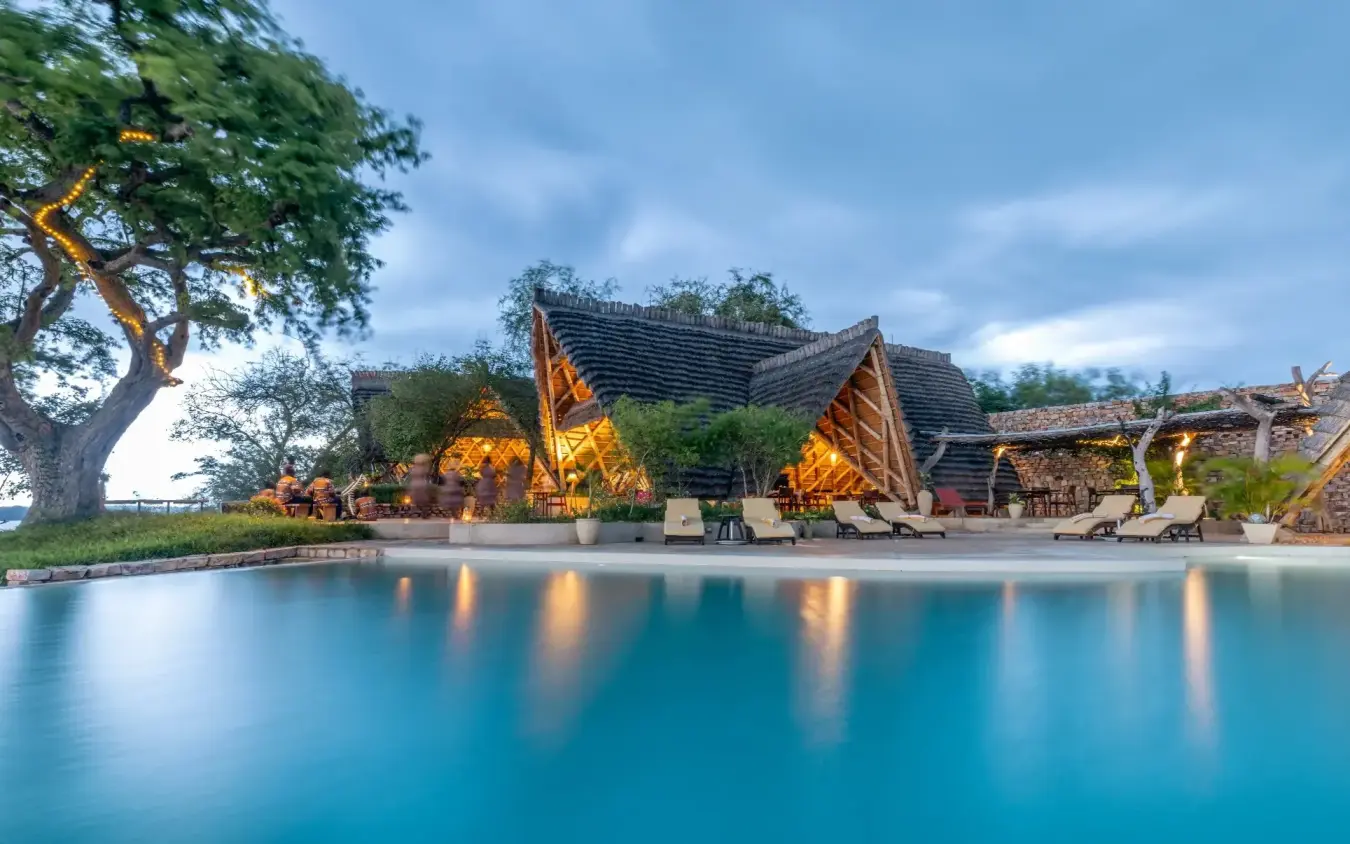
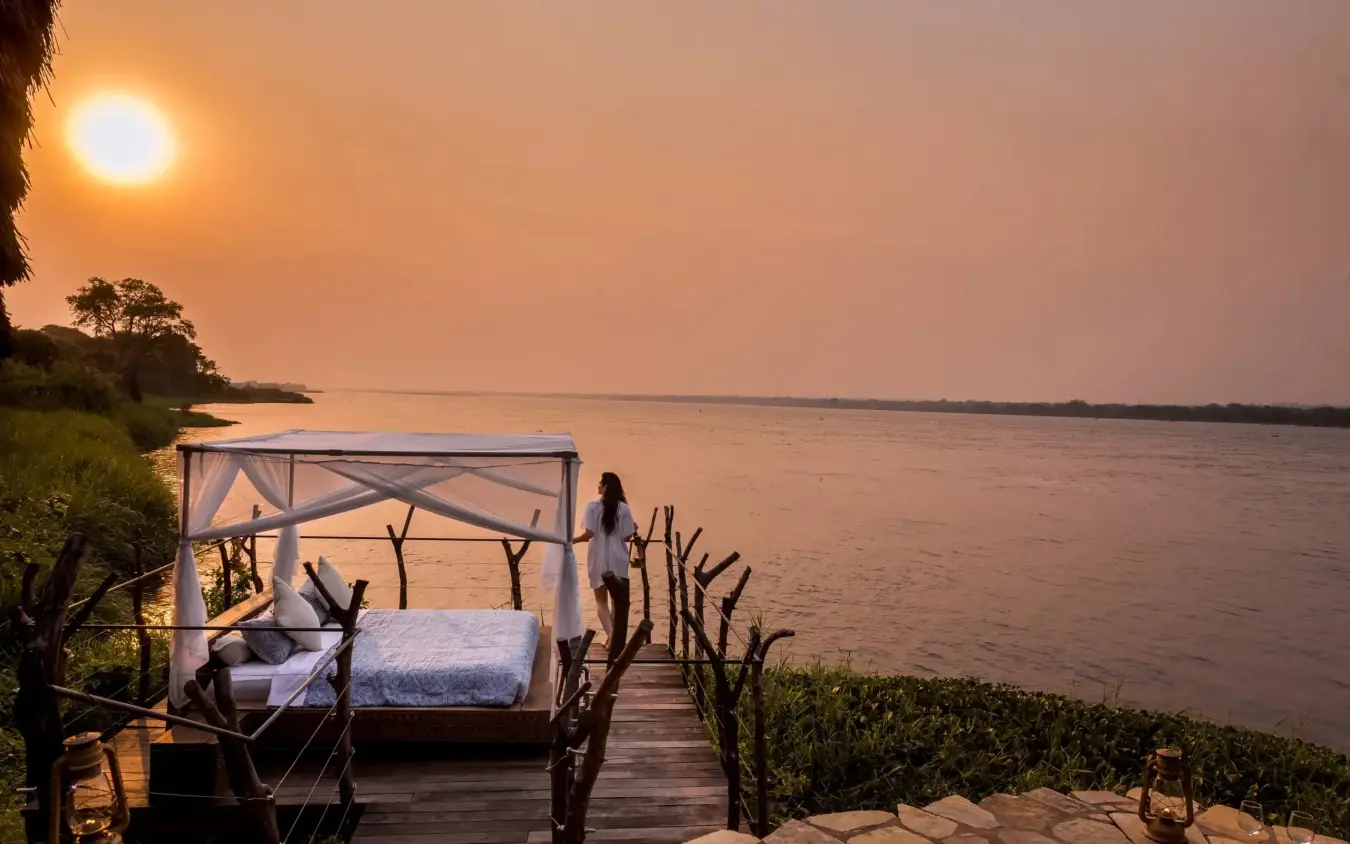
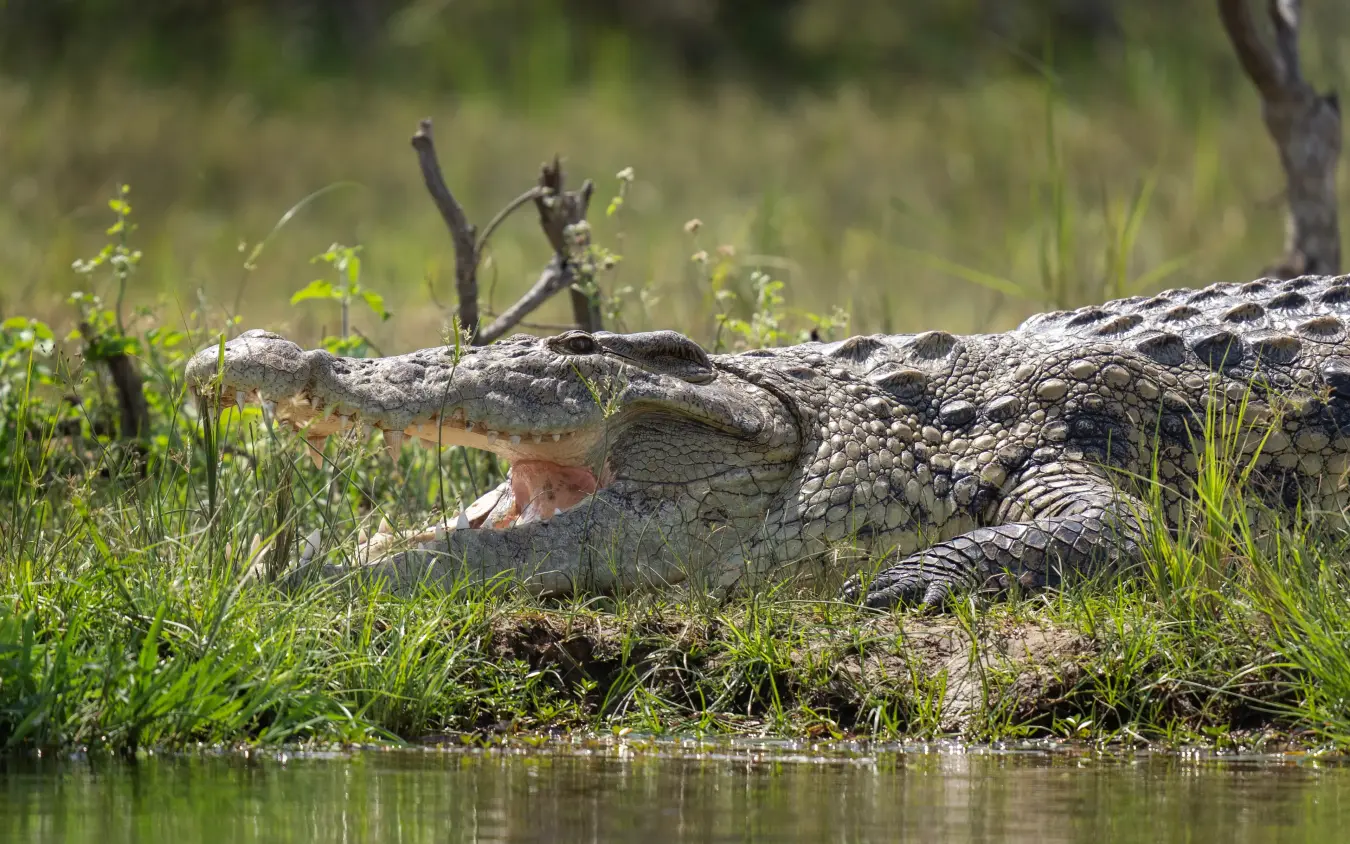
The Victoria Nile defines these days. Boats run upriver to the base of Murchison Falls, where the entire river forces itself through a gap just eight metres wide, past basking crocodiles, buffalo and elephant on the banks; the downstream run reaches the Nile-Albert Delta, the reliable place to look for the shoebill in the papyrus shallows. Game drives cross to the northern savannah of the Buligi area. Nile Safari Lodge raises eight thatched bandas on stilts above the river, runs entirely on solar power, and sets a saltwater infinity pool level with the water. Hippos grunt through the night, close enough to wake guests.
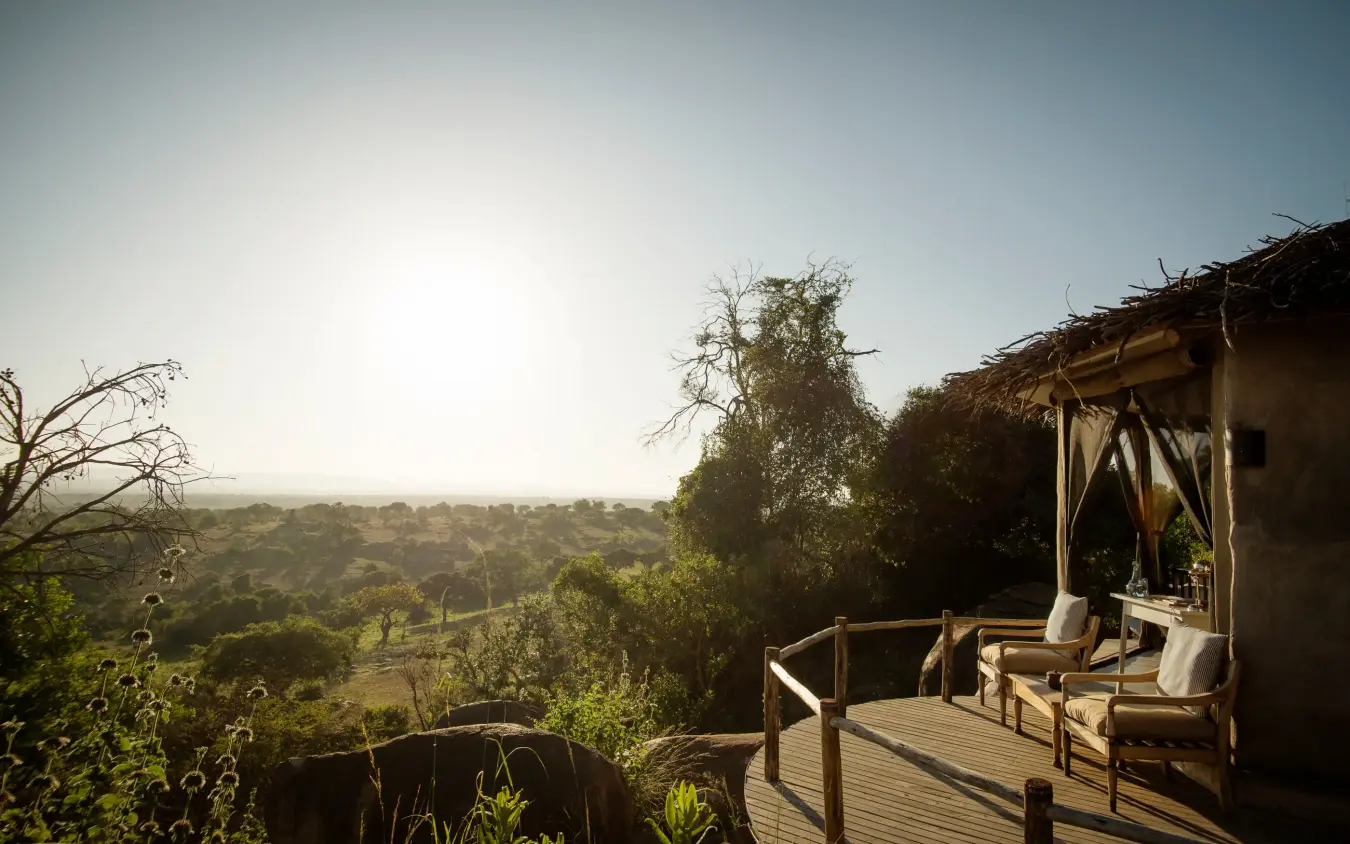
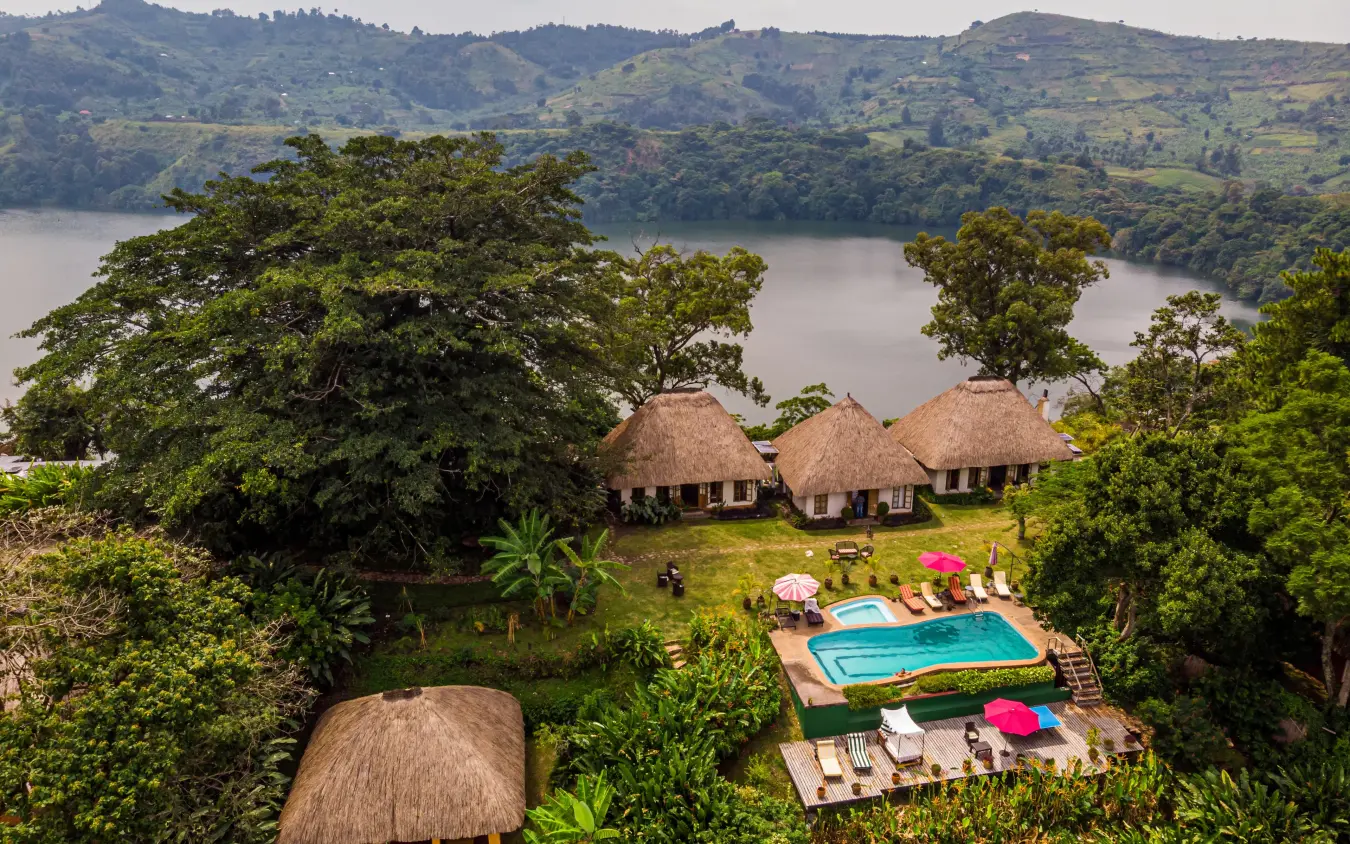
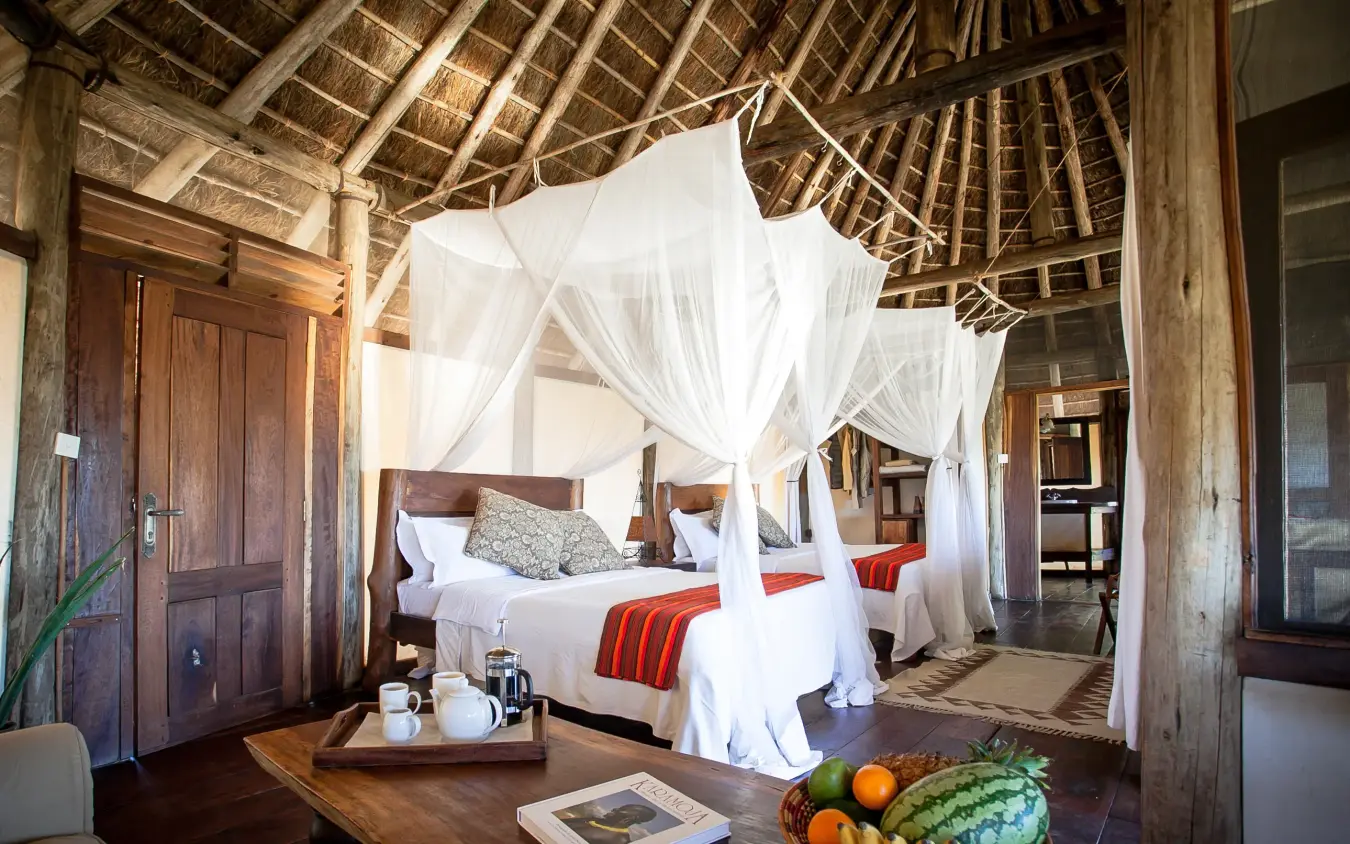
You are an hour from the chimpanzees of Kibale Forest, which holds one of the highest concentrations of chimpanzees in Africa, along with twelve other primate species. Tracking groups are kept small under Uganda Wildlife Authority rules, and the community-run Bigodi Wetland Sanctuary adds swamp walks for colobus and red-tailed monkeys. Ndali Lodge stands on the rim of an extinct volcano above Lake Nyinambuga, its eight stone-and-thatch cottages angled west across the tea estate towards the Rwenzori Mountains, with candlelit dinners drawn from the estate's own fruit and vegetables.
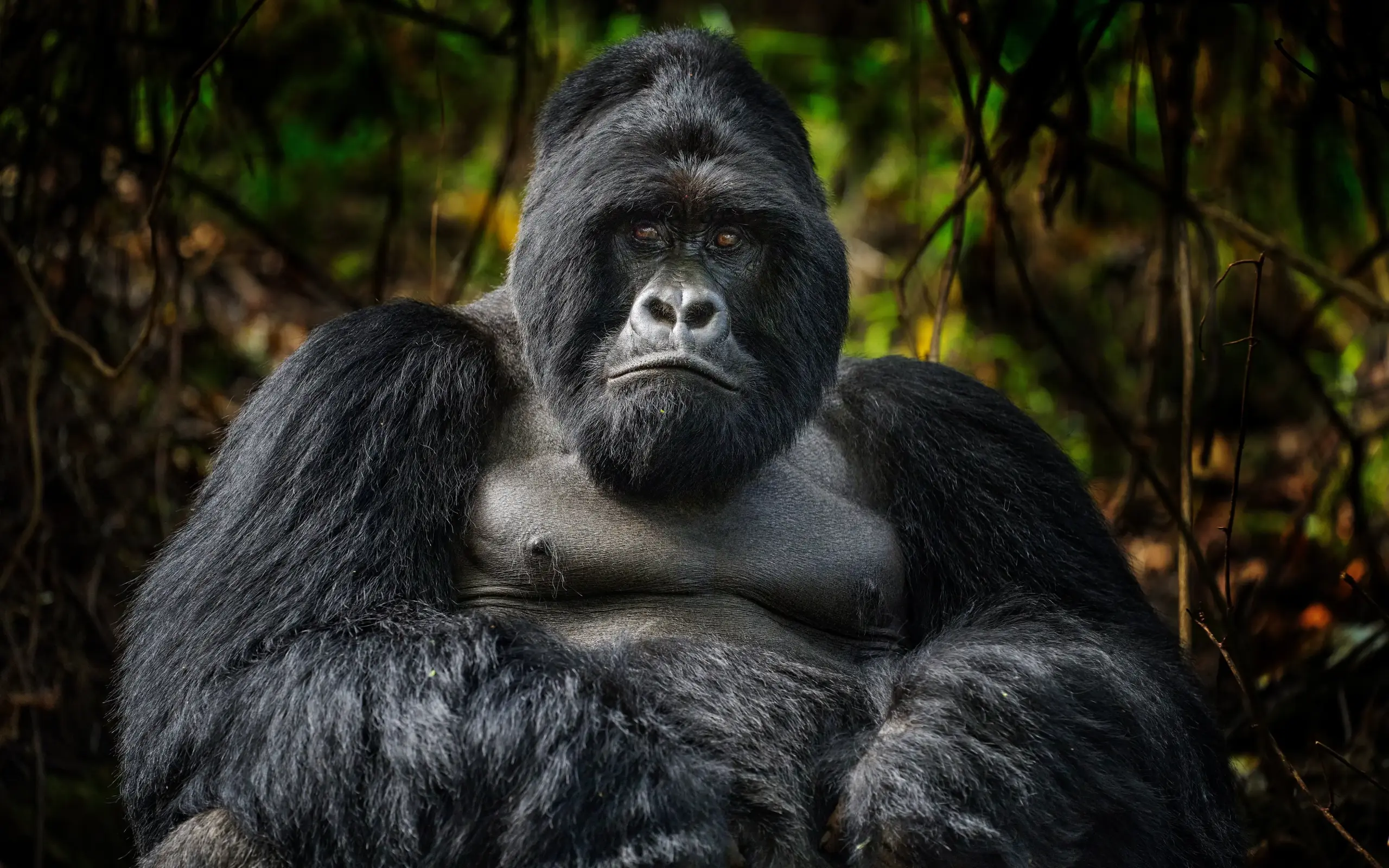
You track the Nyakagezi family, the single habituated gorilla group in Mgahinga Gorilla National Park, the smaller and quieter of Uganda's two gorilla parks. The group spends much of its time in bamboo and on open volcanic slopes rather than tangled undergrowth, which means clearer sightlines with the volcanoes behind the animals, and the treks stay strenuous at altitude. Golden monkeys move through the same bamboo zone. Mount Gahinga Lodge, a short walk from the park gate, sets eight stone-and-thatch bandas facing Sabinyo, Gahinga and Muhavura, each with a fireplace and a private veranda, with a butler and a fire lit before evening.
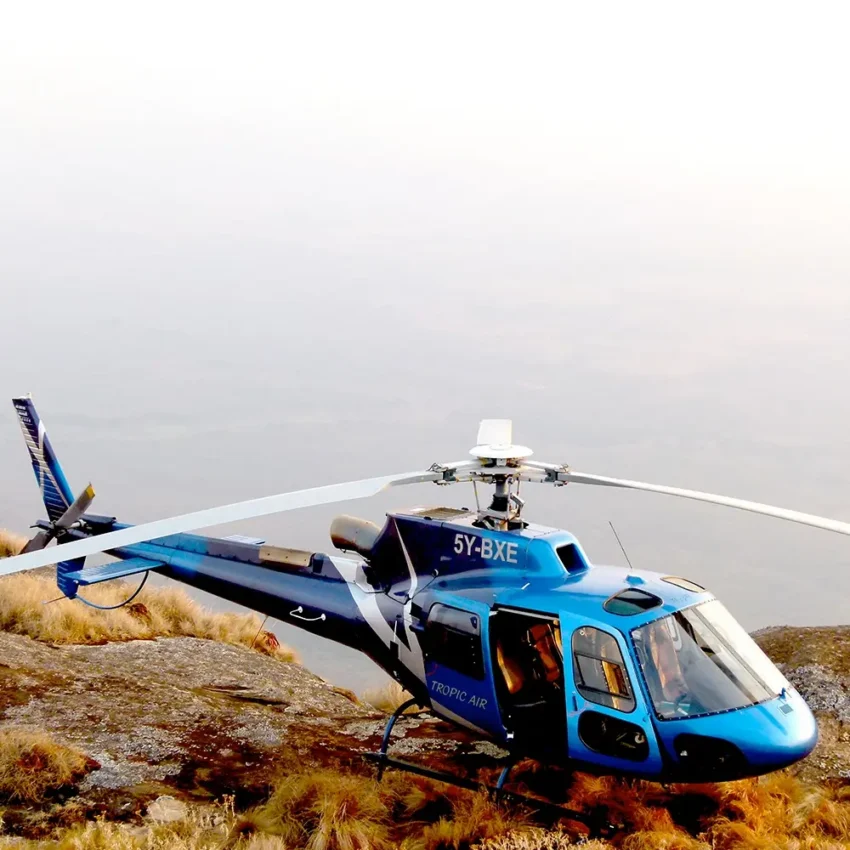
An Airbus H125, typically, flown by Tropic Air out of Nanyuki.
Typically, because no operator commits to one airframe months ahead, and the same fleet holds a larger Airbus H130 that seats six.
The H125 takes five passengers and a pilot, so a party of four fits with room to spare. Everyone faces forward on a headset, and it is flown low with the doors often wide open, so the country is in front of you rather than past a window.
Two things make it the right machine here. It performs in thin, hot air, being the type flown to a landing on the summit of Everest in 2005, and this route leaves the Mount Kenya foothills and finishes the morning in desert heat.
And it needs no airstrip, which is what allows the legs north over the Suguta Valley and the Turkana shore, and then across the border into Kidepo.
No. The helicopter does the Kenyan flying and the border crossing, and that is where it stops.
From the landing in Kidepo the Ugandan stages are covered by light aircraft and vehicles: on to Murchison Falls, then the crater country near Kibale Forest, and finally the south-west for Mgahinga, with game drives and boat trips filling the days between.
Uganda's scheduled service uses 11-seat Cessna Grand Caravans, and the allowance is 15 kilograms a person in soft bags with hand luggage counted, which is the figure to pack to for the helicopter as well.
Scheduled flights into Kidepo are not a fixture, so for a party of four this usually means a private charter, typically a Cessna Caravan or a Pilatus PC-12. We confirm every leg, and the aircraft on it, when we plan your dates.
Both are dependable by the standards of wild primates, and neither is promised.
Kibale is the easier of the two: we put the chance of locating its habituated chimpanzees at over 90 per cent, in flat to gently rolling forest, with tracking groups of six and an hour once the animals are reached. The lodge sits about an hour from the forest, so it is an early start for a single day.
Mgahinga is the tighter one: a single habituated group, the Nyakagezi family, with the Uganda Wildlife Authority putting about eight permits a day into the whole park, which is why that permit is booked first and why this leg sets your dates. We put success there at better than 95 per cent.
The walking is bamboo and open volcanic slope, strenuous at altitude, and trekkers must be 15 or over.
Two quite different outings, and there is room for both in two nights.
The upstream launch runs to the foot of the falls past crocodiles, buffalo and elephant on the banks, and ends where the whole Victoria Nile is squeezed through a gap in the rock. The downstream run is the birding one, out to where the river spreads into papyrus channels before it reaches Lake Albert.
That delta is where the shoebill lives, and the bird is commonly spotted there. No official rate exists in Uganda, so treat published percentages with care.
It is a large, slow, motionless bird standing in tall papyrus, so an early start, a quiet boat and a guide who knows the channels count for more than luck. Nothing wild is ever a certainty.
One can cover both.
The East African Tourist Visa is a joint tourist visa for Kenya, Uganda and Rwanda, good for 90 days and for multiple entries between the three, and the British Foreign Office sets it out in the same way.
The condition to watch is which country issues it, because it has to be the one you enter first, and this route begins in Kenya. It also lapses once you leave those three countries, which does not arise here.
Separately, Kenya now asks most arrivals to hold an electronic travel authorisation obtained before departure, with a fortnight suggested as the least notice to allow, and how the two fit together is not written down by either country. So we read your nationalities against the rules in force and send you what applies to you.
January and February, and it is not a close call.
This route crosses two different rainfall patterns, so the usual advice for Uganda does not hold. Kidepo's dry season runs from September to February, while the gorilla and chimpanzee forests are at their firmest in December, January and February.
That leaves January and February as the only two months we rate highest at every stop from Lewa to Mgahinga, with December next and nothing on the route worse than an in-between rating. August is sound almost everywhere and September strong apart from Murchison and Kibale.
June and July suit the forests but are rated challenging in Kidepo, where the grass grows long and the game scatters, and October is the reverse, good in the north and challenging at Murchison.
April and May are the long rains, while November is challenging in the forests though dry in Kidepo.
Ed Charles, BBC Producer
Fitzroy are true specialists in accessing the wilderness. They know where to go and importantly, when to go there. Highly recommended.
kenya
Ten nights from Nairobi through Amboseli's elephant corridor and Tsavo to a remote beach lodge on Manda Island.
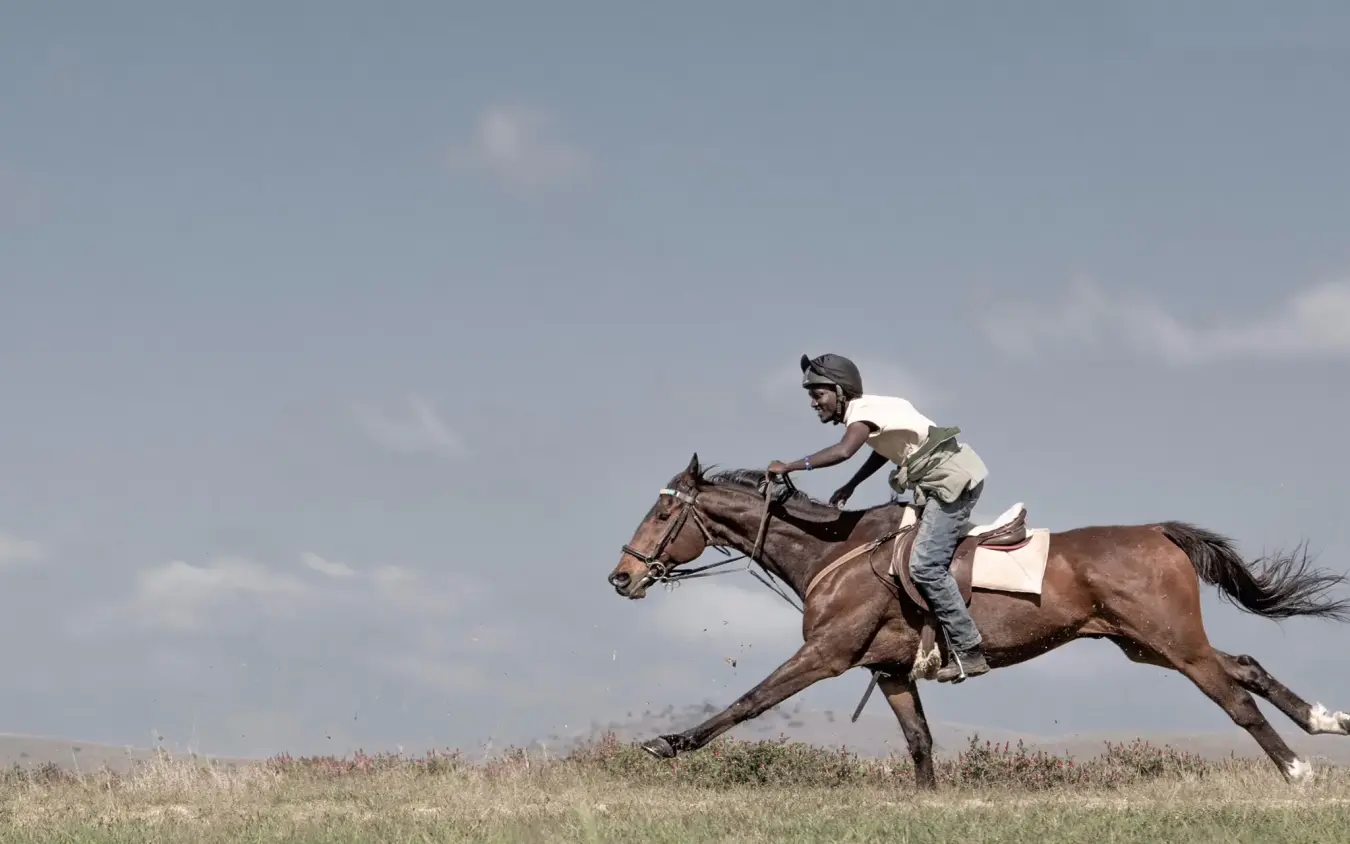
kenya & tanzania
Thirteen nights linking northern Kenya's conservancies to the Maasai Mara and the northern Serengeti's migration country.

kenya
Twelve nights across Kenya by helicopter, from the Borana rhino conservancy over the Suguta Valley to Turkana, then Laikipia and the Kilifi coast.
rated five stars by our clients

our approach
Every journey starts with a conversation. We take the time to understand your vision before we start planning.
Whether by phone or in person, we work with you directly to shape something that is considered, personal, and expertly delivered.
Every journey starts with a conversation. We favour a direct, personal approach: understanding your vision before anything else.
Whether by phone or in person, we work with you directly to shape a journey that is both thoughtfully considered and expertly delivered.
Get in touch to start planning yours.