Timing your trip
best time to visit damaraland
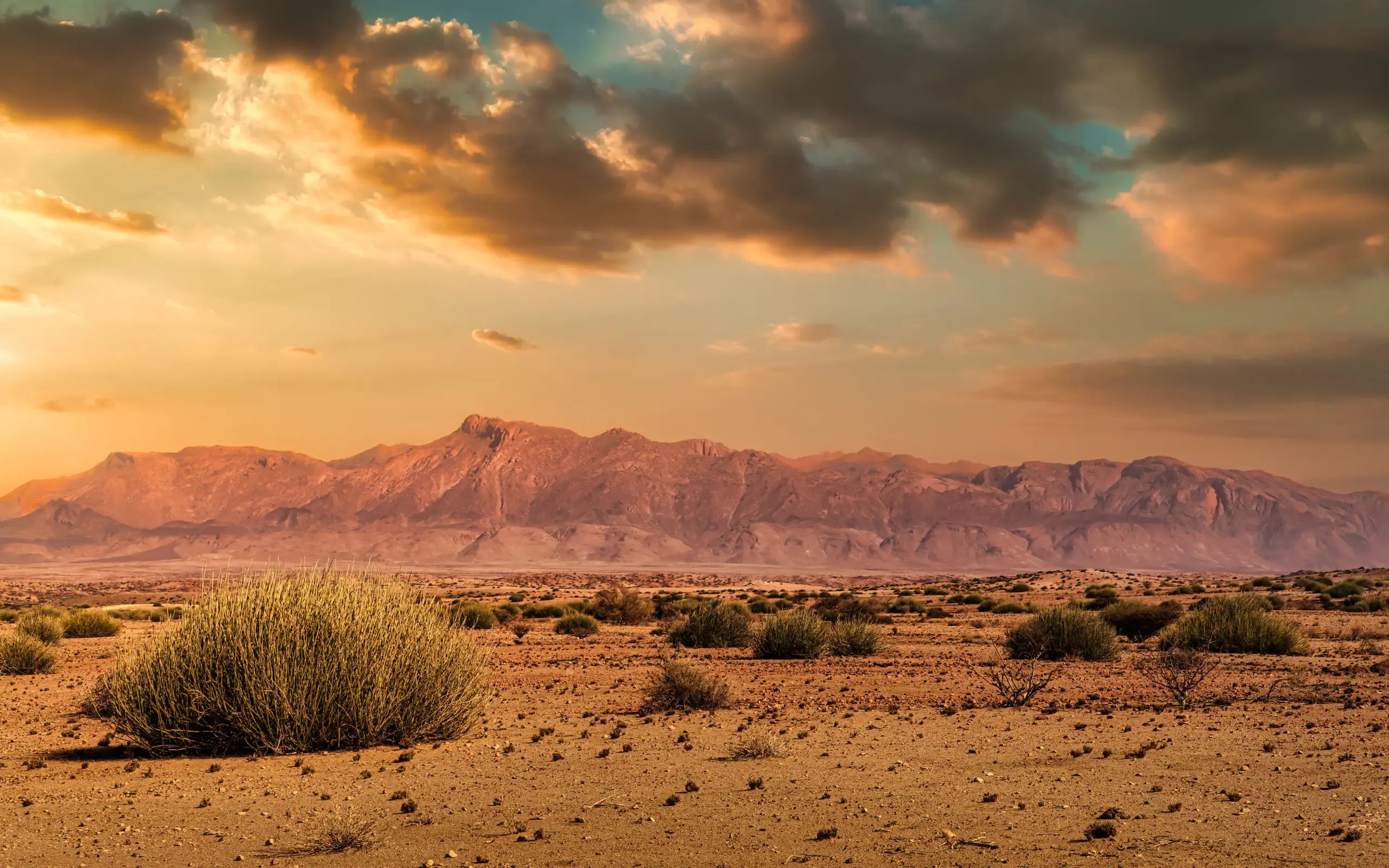
A semi-desert wilderness of dry riverbeds and open plains, where desert-adapted elephant and black rhino are tracked across community conservancies. The dry winter months, June to October, draw that wildlife to scarce water and offer the most reliable viewing.
seasonal guide to damaraland
For desert-adapted elephant and black rhino, come between June and September, when the dry season pulls wildlife to the springs and underground water of the Huab and Aba-Huab riverbeds. July to September is coolest and best for tracking rhino on foot. October is driest but climbs into the mid-thirties. The green season suits birding, though the rains disperse the game.
month by month details
January sits in the middle of the wet summer, when scattered rain lets wildlife disperse far from the few permanent water sources. Afternoon thunderstorms build over the hills, daytime temperatures hold around 29 to 30 degrees Celsius, and tracking desert-adapted elephant and black rhino becomes slow and uncertain as the animals range widely.
The trade-off is a transformed landscape, with fresh grass on the gravel plains, dramatic skies for photography and good birding as summer migrants arrive. For the signature game viewing that brings most travellers to Damaraland, though, this is one of the weakest months.
February is among the wettest months, with frequent afternoon storms and warm, humid days near 29 degrees Celsius. Surface water lies across the region, so elephant and rhino move freely and predictable sightings at riverbeds and springs fall away.
Birding is at its best as the country greens and migrants are present, and the scenery is at its most dramatic. Some tracks soften after heavy rain. This is green-season travel rather than prime game viewing, and worth choosing only if landscape and birds matter more than concentrated wildlife.
March sees the main rains begin to taper, though showers still fall and the country stays green and warm. Water remains widespread, so desert-adapted elephant and black rhino are not yet drawn to the dry riverbeds where they are most reliably tracked.
Conditions for travel improve through the month and the scenery holds its summer colour, with birding still rewarding. For classic game viewing it remains a poor choice, sitting at the tail of the green season before the dry months arrive.
April is a genuine shoulder month, with the rains largely over and the landscape still holding its green. As surface water starts to retreat, wildlife begins to concentrate and sightings of desert-adapted elephant and rhino slowly improve along the Huab and Aba-Huab river systems.
Days are warm and pleasant, nights are mild, and crowds are light. The dry-season concentrations have not yet set in, so game viewing is building rather than prime, but the comfortable weather and quiet camps make it a sound time to travel.
May marks the start of the dry season, with cool mornings, dry ground and the first real concentration of wildlife around shrinking water. Daytime highs sit around 25 to 28 degrees Celsius and nights drop sharply, often to 8 degrees or below.
As seasonal pools dry, desert-adapted elephant and black rhino move toward the permanent springs and underground water in the dry riverbeds, making tracking more productive. It is one of the better-value months, with fewer visitors, though the very best concentrations are still a few weeks ahead.
June opens Damaraland's prime months, as the deepening dry season pulls wildlife toward the few remaining water sources. Days are dry and clear at around 24 to 26 degrees Celsius, while nights and early mornings turn cold, sometimes below freezing, so warm layers matter on game drives.
This is when desert-adapted elephant and black rhino become predictable along the dry riverbeds, and rhino tracking on foot with conservancy guides comes into its own. The bush is thinning, visibility is good and the heat of later months has not arrived.
July is deep dry season and among the best months for game viewing in Damaraland. With water scarce, desert-adapted elephant gather along the Huab and Aba-Huab riverbeds and black rhino are reliably tracked across the conservancies. Skies are clear and visibility through the thinned bush is at its best.
Days are mild and very dry, but nights and dawn drives are genuinely cold, so warm clothing is essential. This is high season, with strong demand on the better camps, so early booking is worthwhile.
August holds prime conditions, with sparse vegetation and concentrated wildlife making it one of the strongest months for desert-adapted elephant. The landscape is arid and open, water is limited to known sources, and tracking elephant and black rhino is at its most productive.
Daytime temperatures are comfortable and dry, while nights stay cold. Demand is at its peak through these winter months. For travellers whose focus is the region's signature desert wildlife, August is hard to better.
September is the last cool month of the dry season and prime game viewing continues as water stays scarce. Wildlife remains concentrated around permanent sources, so desert-adapted elephant and black rhino are seen with consistency, and the open, dry terrain keeps tracking productive.
Temperatures begin to climb toward the end of the month but conditions stay comfortable for most. With the bush at its thinnest and the rains still weeks away, it rounds out the strongest window of the year.
October is the driest month and wildlife is at its most concentrated, though the heat builds notably. Daytime temperatures climb toward the mid-thirties and can exceed 38 degrees Celsius, while desert-adapted elephant and black rhino remain tied to the last permanent water, giving excellent sightings.
Game viewing is exceptional, but the conditions are less comfortable than the winter months, and travellers sensitive to heat are better suited to July through September. For those who accept the warmth, the concentration of wildlife is at its height.
November is a turning point, with the first thunderstorms possible and the heat still high before the rains take hold. Early showers begin to scatter the wildlife, though game can still be good around the remaining water in the first half of the month.
Afternoon temperatures sit around 30 degrees Celsius or higher. As the season tips toward summer, sightings grow less predictable, and birding and dramatic skies start to become the stronger reason to travel.
December moves squarely into the green season, with building rains, humid heat and wildlife spreading out across the freshening landscape. Afternoon storms become frequent and daytime temperatures stay high, so the predictable dry-season concentrations of elephant and rhino fall away.
The compensation is lush scenery, newborn animals and good birding as the country greens. For the desert wildlife tracking that defines a Damaraland trip, however, this is a weak month, better suited to travellers prioritising landscape and photography.
Plan your perfect namibia safari
Tell us a little about what you have in mind and one of our specialists will be in touch.
frequently asked questions
June to September, and it is water that decides it.
These elephant walk the dry riverbeds, the Huab and the Aba-Huab, moving between springs and the water held under the sand. In the dry months those points are few and known, so a guide who reads the tracks can work out where the herd slept and where it is heading.
From December the storms scatter the game across a suddenly green landscape and the same tracking takes far longer.
The herds are wild and free-ranging, so nobody can promise you a sighting on a given morning. What the dry season buys you is the odds.
July to September, because it is cool enough to walk properly.
Tracking is done on foot across open gravel plains with specialist trackers, in several camps alongside the Save the Rhino Trust teams, and it can take hours. In midwinter the mornings are cold and the walking is comfortable. By October the heat is punishing and the same walk is far harder work.
Most camps only offer it on stays of three nights or more, so build the time in rather than hoping to add it on arrival.
If rhino on foot is the reason you are coming, book the dry months and give it three nights.
For photographs and birds, yes. For tracking, no.
From December to April the storms turn the plains green, the light after rain is extraordinary and the rock country looks nothing like the pictures. February brings the strongest birding of the year.
What you lose is the wildlife's predictability. Standing water is everywhere, so elephant and rhino range widely and the trackers work much harder for less.
It is also the season when a river can come down without warning and close a road for a day. For a first visit built around desert elephant, we would send you in winter.
Rarely, briefly, and usually between February and April.
The Huab and the Aba-Huab are dry sand for most of the year. They come down when enough rain falls inland, sometimes as a wall of water in a riverbed that was dust the day before, and they run for days rather than weeks.
It is a remarkable thing to see and it changes the game for a while: the elephant spread out, the vegetation recovers, and the tracking resets.
Nobody can schedule it. If you are travelling in those months we will tell you what the season has done so far rather than promise you a river.
Cold enough to change what you pack.
Days run warm to hot for most of the year, often past thirty degrees, and the rock holds the heat. Then the sun leaves and the temperature drops fast. From June to August a dawn on an open deck, or an early drive towards the coast, can sit close to freezing.
So the packing is two wardrobes: light, breathable clothes and a hat for the day, then a fleece, a windproof jacket and something for your head and hands for the mornings.
Closed shoes for the walking, strong sun cream and a scarf against the dust finish it.
May to September, which is the country's dry season nearly everywhere.
Those months give you firm tracks in Damaraland, the clearest air at Sossusvlei, and the coast at its most workable, so a route joins up without a season fighting you. The same window is the coolest for tracking on foot.
October and November are the hottest and the driest, superb for game at water but hard going in the middle of the day.
Tell us which of the three you care about most, and we will build the route around that one rather than averaging them.
rated five stars by our clients

our approach
remote, exclusive
& personal
Every journey starts with a conversation. We take the time to understand your vision before we start planning.
Whether by phone or in person, we work with you directly to shape something that is considered, personal, and expertly delivered.
Every journey starts with a conversation. We favour a direct, personal approach: understanding your vision before anything else.
Whether by phone or in person, we work with you directly to shape a journey that is both thoughtfully considered and expertly delivered.
Get in touch to start planning yours.