Timing your trip
best time to visit namibrand private reserve
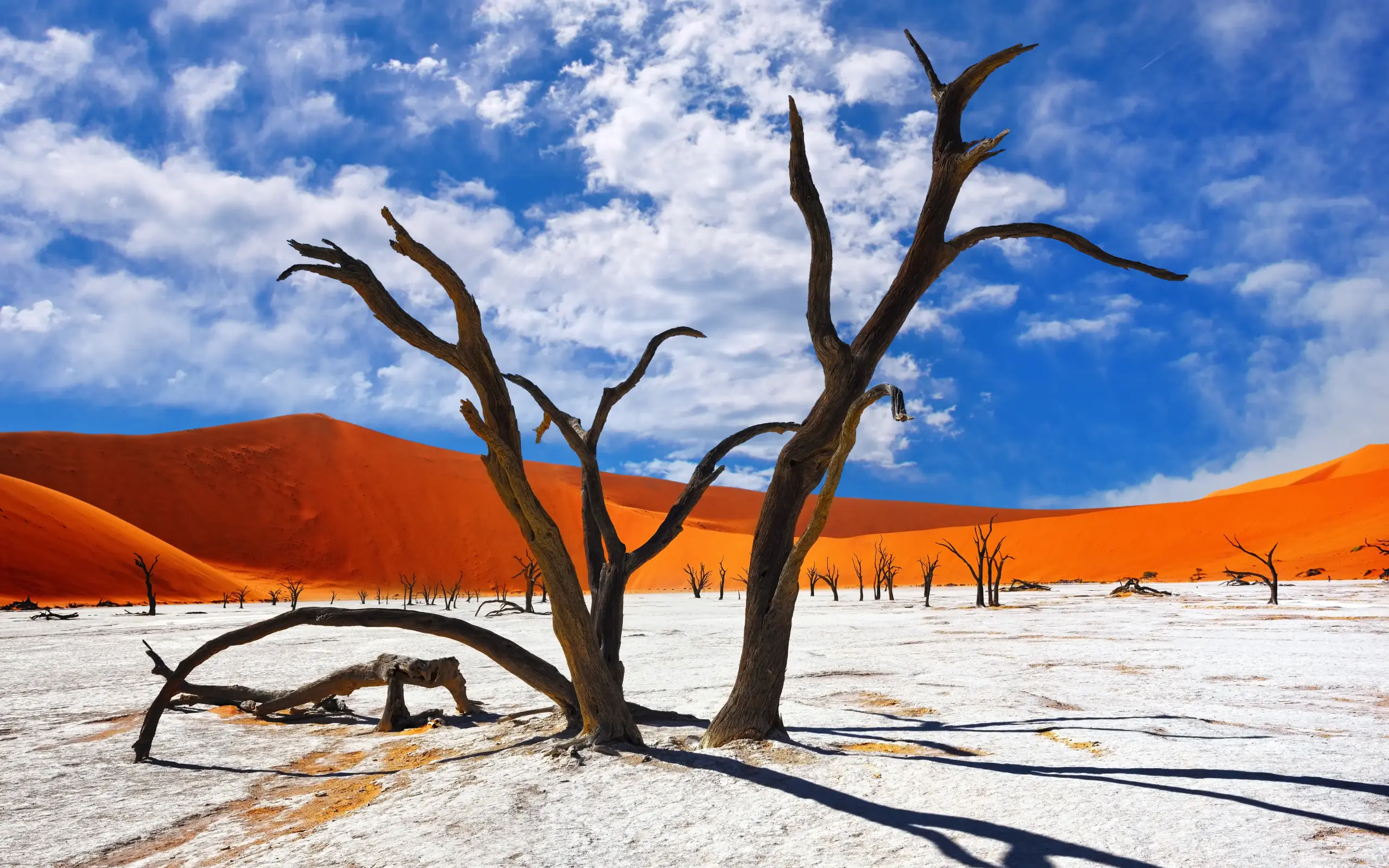
A desert reserve in southwest Namibia where oryx and springbok cross open plains beneath some of the darkest skies in Africa. The dry winter from May to September brings clear days, retreating water and exceptional stargazing.
seasonal guide to namibrand private reserve
For NamibRand, the prime window is May to September, the dry winter of low humidity and clear skies, when retreating water brings oryx, springbok and mountain zebra onto the open plains and the cloudless nights make this Africa's first Dark Sky Reserve superb for stargazing. Nights from June to August often drop below freezing. October turns very hot; the green season brings rain and cloud.
month by month details
January sits in the hottest, wettest part of the year, with daytime temperatures often above 35 degrees Celsius and short, heavy afternoon thunderstorms. The rains are usually brief here in such an arid place, but the heat is sustained and the open plains offer little shade.
The upside is a green flush across the dunes and the start of calving among the springbok, so young plains game appear on fresh grazing. With water and grass widely available, oryx, springbok and zebra spread out rather than concentrating, and frequent cloud cover makes the famously dark skies unreliable for stargazing.
February is the hottest and most humid month, with the main rains still active and the least comfortable daytime conditions of the year. Thunderstorms remain possible and the heat on exposed desert plains is taxing for many visitors.
For anyone who values green landscapes and newborn antelope over comfort, the reward is a desert at its most lush, with red dunes set against fresh grass and dust-free air after storms. Wildlife stays dispersed across the wider grazing, and stargazing is at the mercy of cloud, so this is a month for specific interests rather than a general visit.
March marks the end of the main wet season, with the heat beginning to ease and showers becoming less frequent. In a good rains year the reserve is often at its greenest, with grasses at full height against the dunes.
This is a strong month for young animals, as springbok and other plains game raise the calves born in midsummer. Game is widespread rather than concentrated, and lush vegetation can make spotting harder than in the dry months. Clear nights become more common as the rains retreat, though stargazing is not yet at its winter best.
April is a comfortable shoulder month, with warm days, cooler nights and rain mostly tapering off. The plains hold a mix of green and golden grass as the desert begins to dry, which photographs well.
Game viewing is good, though animals remain spread across the reserve rather than tied to water, so sightings of oryx, springbok and zebra are reliable without being concentrated. Nights are clearing, bringing very good dark-sky conditions, and visitor numbers are lower than the peak winter months that follow.
May opens the dry winter and combines comfortable daytime temperatures with low humidity and clear, stable skies. Grasses begin to thin and cure to gold, and visibility across the plains is excellent.
As surface water retreats, oryx, springbok and mountain zebra become easier to find on the open ground, and sightings grow more reliable through the month. Nights are cool but not yet at their coldest, and the cloudless skies of an International Dark Sky Reserve make this one of the strongest months of the year for stargazing.
June is firmly in the dry season, with cool sunny days, almost no rain and some of the clearest skies of the year. The landscape is parched and golden, and the desert character is at its most defined.
Plains game stand out sharply against bare ground and dunes, and with limited water the oryx, springbok and zebra are very visible. Nights turn cold, often dropping to or below freezing with frost on exposed ground, so warm layers matter for early drives and night-sky viewing. The long, cloudless winter nights make this a prime month for astronomy in the reserve.
July is the heart of the dry winter, with mild days, no meaningful rain and extremely reliable clear weather. The desert is stark and open, red dunes set against pale grass and clean horizons.
Game viewing is at its most dependable, with oryx, springbok and zebra concentrated by the sparse water and easy to pick out on the plains. Nights are very cold and frost is common, which luxury camps offset with heaters and hot water bottles. This is among the best months of the year for stargazing, with long hours of darkness and consistently cloudless skies.
August stays in peak dry season, with comfortable days, crystal-clear air and nights that are cold but a little milder than midwinter. Rain is effectively absent and conditions are very settled.
Wildlife viewing remains excellent, with desert-adapted plains game easily seen on the open plains and around the few remaining water sources. Some dust can build late in the dry months, but clarity is usually high. The long, dark nights continue to deliver exceptional stargazing in Africa's first International Dark Sky Reserve.
September brings cloudless skies and steadily warming temperatures while staying firmly dry, making it one of the most balanced months to visit. Rain is almost unheard of and conditions are dependable for both game and photography.
Animals remain tied to limited water, so sightings of oryx, springbok and zebra are reliable across the plains. Nights are warmer than midwinter, which makes long stargazing sessions more comfortable, and the dark skies remain excellent. Daytime warmth is climbing but has not yet reached the extremes of October.
October is the end of the dry season and usually the hottest, driest stretch before the rains, with daytime highs that can exceed 40 degrees Celsius. Low humidity takes some of the edge off, but the heat is intense on the open plains.
For wildlife this is a strong month, as animals stay concentrated at the last water and grazing and are highly visible. Skies remain mostly clear and stargazing is still good early in the month, with some haze possible later. The trade-off is comfort, so anyone sensitive to heat is better suited to the cooler months from May to September.
November marks the start of the green season, with rising heat, increasing humidity and the first afternoon storms. Early rains can settle the dust and bring very clear views between showers.
This is a transition for wildlife: as water and grazing improve more widely, animals begin to disperse from their dry-season concentrations, so game is less predictable than in winter. Calving peaks are still ahead. Nights are warm, but developing cloud makes stargazing less consistent than the months just past, and visitor numbers are lower.
December is one of the hottest months and the first full month of regular rains, with dramatic afternoon thunderstorms more common. The desert greens quickly in response, with bright grass against the red dunes and dust-free air between storms.
Calving begins for many plains game, so young animals start to appear, though herds are spreading out across fresh grazing rather than gathering at water. The heat is demanding and frequent cloud cover makes the dark skies unreliable, so this month suits visitors drawn to green landscapes and the start of birthing season more than those seeking comfort or stargazing.
Plan your perfect namibia safari
Tell us a little about what you have in mind and one of our specialists will be in touch.
frequently asked questions
May to September, the Namibian winter.
The air is at its clearest, the walking is comfortable and the night skies are at their best, which is a large part of why people come here. Days are warm and the nights are cold.
October and November are clear and building towards real heat.
December to March is the hot season, when the middle of the day belongs to the shade.
The dry winter months, May to September, and around a new moon.
Winter gives the clearest, driest air and the longest nights, and the reserve's dark-sky protection does the rest. The Milky Way through a telescope here is unlike anywhere most people have been.
A full moon washes it out, however clear the sky.
Tell us if the stars matter and we will time the nights around the moon rather than just the month.
Close to freezing from June to August, which catches people out every year.
The desert loses its heat the moment the sun goes, so a sleep-out or a night drive in winter needs a proper jacket, a hat and gloves. The same day will have been warm in shirtsleeves.
Summer nights are mild and much easier for sleeping out.
Pack layers rather than one heavy coat, and expect to use all of them in a single day.
For the price and the emptiness, with a plan for the heat.
December to March brings very hot days, dramatic cloud over the dunes and far fewer visitors. The trick is the schedule: out early, back by ten, out again at five.
It is not the season for long walks.
In a good rain year the plains green up and the game spreads across them, which is a rare sight and worth seeing.
May to September, when the temperature allows a proper morning out.
The guided walks across the grass plains and dunes are the best way to understand the reserve, and they want cool air and firm footing. Winter mornings are ideal.
In summer the walks are short and early or they do not happen.
Tell us if walking is what you want and we will choose the camp that does it properly.
May to September, when both are at their best.
That window gives clear air for the dune climbs at Sossusvlei and comfortable walking and stargazing at NamibRand, and the two are close enough to split a stay between them.
In summer both work with an early start and a plan for the afternoon.
We would put two nights at each rather than four in one, because they are different places despite the short distance.
rated five stars by our clients

our approach
remote, exclusive
& personal
Every journey starts with a conversation. We take the time to understand your vision before we start planning.
Whether by phone or in person, we work with you directly to shape something that is considered, personal, and expertly delivered.
Every journey starts with a conversation. We favour a direct, personal approach: understanding your vision before anything else.
Whether by phone or in person, we work with you directly to shape a journey that is both thoughtfully considered and expertly delivered.
Get in touch to start planning yours.