Timing your trip
best time to visit lake bunyonyi
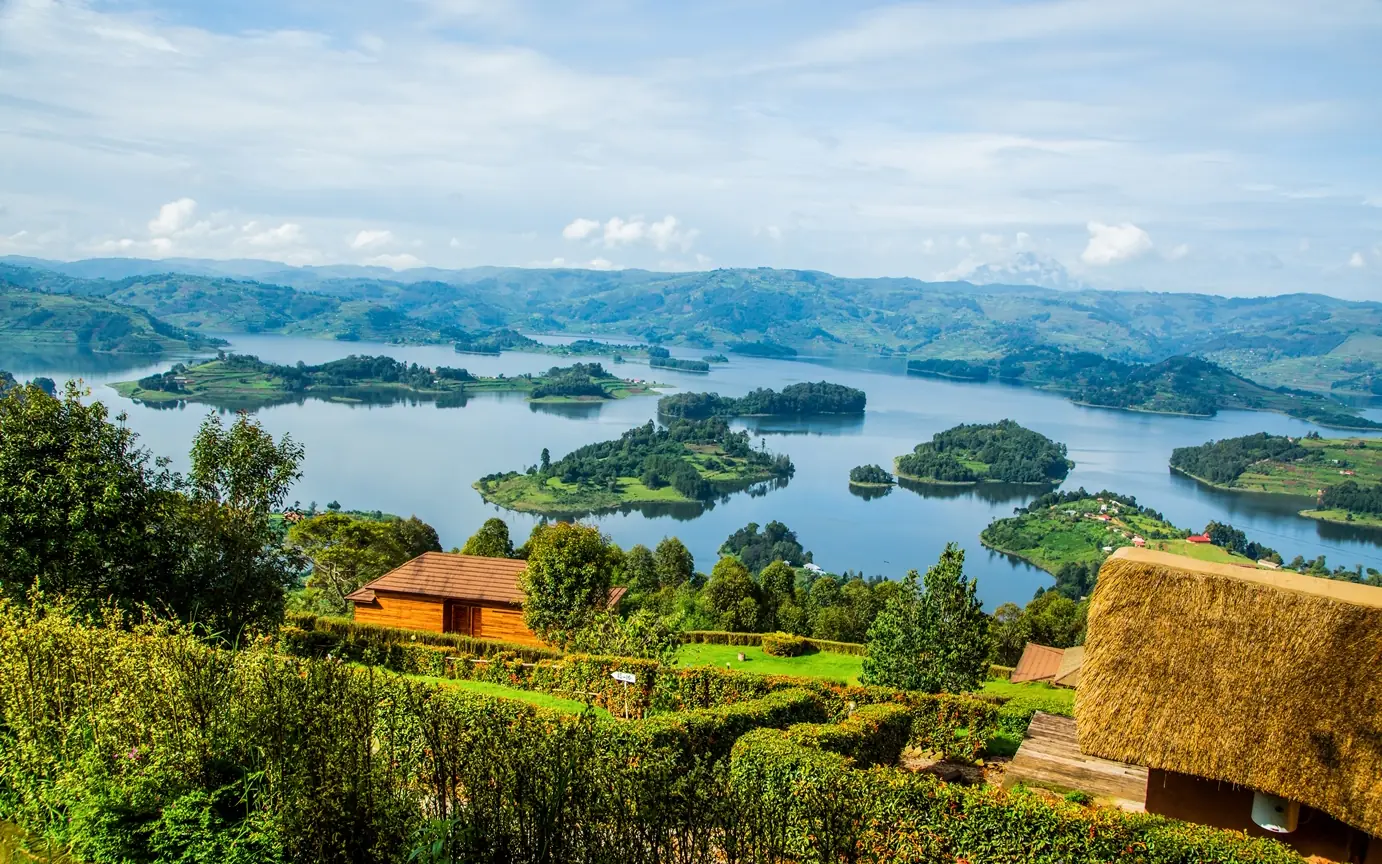
A highland lake at 1,950 metres in Uganda’s far southwest, ringed by terraced hills and reached on the same road as the Bwindi gorillas. Its year splits into two dry seasons and two rainy seasons.
seasonal guide to lake bunyonyi
For calm water and the easiest pairing with Bwindi gorilla trekking, come in the two dry seasons, June to September and December to February, for unhurried dugout-canoe trips and firmer forest trails next door. Birding is strong, with more than 200 species around the lake. The long rains of March to May are the wettest and turn the approach roads to mud. Temperatures stay mild all year.
month by month details
January sits in the shorter dry season, with light rainfall and steady sun over the lake. The water is calm enough for long dugout-canoe trips between the 29 islands, and the terraced hillside paths are dry and firm underfoot.
This is one of the easiest months to pair Bunyonyi with gorilla trekking in Bwindi, an hour or two away, where the dry-season forest trails are more stable and less slippery. Days are mild at around 24 degrees, but the altitude tells at night, when temperatures on the water can fall to about 12 degrees, so warm layers earn their place after dark.
February is the warmest and driest stretch of the early-year dry season. Rainfall stays low, the sky is mostly clear, and the lake holds its calm, with good light for photography across the water and the surrounding hills.
Canoeing, island walks and community visits are all straightforward, and the approach roads from Bwindi are at their most reliable. It is a popular window for combined gorilla trips, so lodges and gorilla permits should be secured well ahead. Nights remain cool by the lake despite the warmer days.
March marks the start of the long rains, and conditions begin to turn. Showers arrive more often, usually as intense afternoon and evening downpours, while mornings can still be clear and calm for early paddling.
The landscape greens quickly and crowds thin, which suits travellers who value mood and quiet over guaranteed sun. The unpaved roads to and from Bwindi grow muddier, and steep village paths get slippery, so footing and travel times both need allowing for. Birdlife stays active in the lusher vegetation.
April is one of the two wettest months, with frequent heavy rain across the region. Downpours come most days, often in the afternoon and overnight, and the unpaved approach roads can turn to deep mud that lengthens transfers and, at times, blocks them.
Canoeing is still possible in calm early mornings, and the misted hills are at their most atmospheric, but storms and slippery paths make longer outings harder. For anyone combining with Bwindi, the forest trails are at their most demanding now. This month suits flexible travellers and keen photographers who accept the rain in exchange for green, near-empty scenery.
May stays firmly in the long rains, with heavy showers and saturated ground. Rainfall remains high, the roads stay soft, and travel between the lake and the gorilla forests can be slow and unpredictable.
The reward is a landscape at its greenest and quietest, with strong bird activity in the dense vegetation and few other visitors. Early mornings often bring the calmest, mistiest water of the day. Anyone on a tight schedule for gorilla permits should weigh the road conditions carefully before committing to this month.
June opens the main dry season and is one of the best months of the year at the lake. Rain eases sharply, sunny and partly cloudy days return, and the water settles into long, calm conditions ideal for canoeing and island-hopping.
This is also a peak birding month, when the lake that takes its name from its many small birds is at its most rewarding, with more than 200 species around the shoreline and reed beds. Bwindi enters its own dry season at the same time, so combined gorilla trips work smoothly, with firmer trails and more predictable access. Nights are cool, falling to around 16 degrees on the water.
July is the driest month of the year and the heart of the prime season. Rainfall is at its lowest, days are reliably sunny, and the lake stays calm for extended dugout-canoe trips and swimming in its cool, clear water.
Birdwatching is strong, the hillside and island paths are dry and easy, and the unpaved roads to Bwindi are at their most dependable. This is the strongest single window for combining the lake with gorilla trekking, which makes it busy; permits and lodges need booking well in advance. Expect warm days near 24 degrees and crisp nights.
August keeps the dry-season conditions, with low rainfall and stable, comfortable weather. The lake remains calm for canoeing and island walks, the surrounding paths are firm, and access roads stay in good shape for transfers to and from the gorilla forests.
It is a dependable month for a combined Bwindi trip and one of the busier ones, so advance arrangements matter. Days are mild and nights cool, with the usual highland drop after sunset. Late August begins to edge toward the second rains, but conditions stay reliably dry for most of the month.
September keeps the still early hours that make Bunyonyi worth the detour, with cloud building later in the day. Mornings are usually calm for a dugout canoe, and the terraced hills are green again after the drier middle of the year.
It pairs well with a Bwindi permit in the same week, because the forest trails next door are still in good order. Bird activity climbs in the freshening vegetation and the lake is quieter than at the mid-year peak. Roads are sound, though they begin to soften late in the month.
October sits in the second rains, with showers becoming more frequent and the ground softening. Rain often arrives daily, usually in the afternoon, leaving calm, mist-wrapped mornings that are good for early canoeing and photography.
The landscape stays lush and the lake quiet, but steep paths get slippery and the unpaved roads to Bwindi grow muddier, so transfers slow down. Birding remains good in the dense vegetation. It is a workable month for flexible travellers, less so for anyone needing dependable road access on a fixed gorilla itinerary.
November is one of the wettest months of the year, with frequent and often heavy rain. Showers can come daily, the roads turn muddy and slippery, and travel between the lake and the gorilla forests becomes harder and slower.
Against that, November sees high bird activity in the warm, wet conditions, and the lake is at its greenest and least crowded. It suits birders and photographers comfortable with wet weather and longer, more demanding treks next door in Bwindi, rather than travellers wanting dependable sun and easy access.
December brings the return of the dry season, with rainfall dropping and clearer skies settling over the lake. The water calms for canoeing and island visits, the hillside paths firm up, and the roads to Bwindi become reliable again.
This is a strong window for a combined gorilla trip, and it coincides with the festive high season, so lodges and permits fill early. Days are mild around 24 degrees, with cool nights by the water typical of the altitude. Conditions hold dry through the month and into the new year.
Plan your perfect uganda safari
Tell us a little about what you have in mind and one of our specialists will be in touch.
frequently asked questions
June to September, and again from December to February.
Those are Uganda's dry seasons, when the lake is calm, the hills are clear and the walking is easy. They are also the best months for the gorilla trekking that brings people here in the first place.
June to September is the longer and more reliable window.
At nearly two thousand metres the lake is mild all year; the rain is what changes rather than the temperature.
Not really, because it comes in heavy bursts and clears.
March to May and November are the wet months, when the hills are green and the afternoons are stormy. What that affects is the canoeing and the walking rather than the stay itself.
The lake looks its best under moving cloud.
We plan the dates around the gorillas and treat the lake nights as the rest they are meant to be.
Cool by day and genuinely cold at night, because of the altitude.
Evenings need a fleece all year and a fire is welcome most nights. Days are mild rather than warm, and the water is cool even in the hot months.
Mist sits on the lake most mornings, which is part of its character.
Pack a warm layer, a waterproof and swimming things, which is an odd combination and the right one.
The wetter months, March to May and around November.
The shoreline and the papyrus hold a long list of species and the wet season brings breeding activity and migrants. Early mornings from a canoe are the most productive way to see them.
The dry months are still good and the walking is easier.
Tell us if birds are the reason for the stop and we will book a guide rather than leave it to the lodge.
The dry seasons, and Ugandan holidays.
June to September and December to February bring the visitors coming off the gorillas, and the lake is also popular with people from Kampala at weekends and holidays.
The better lodges are small, which is the real constraint.
We book these nights when we book the permits rather than assuming a room will be free.
After the gorillas, and before the journey home.
The usual shape runs the forests first, Bwindi or Mgahinga, then a night or two on the lake, then the flight from Kisoro or the long drive back to Entebbe.
In the dry seasons the roads are quick and the lake is at its calmest.
If your trip is short, it is the first thing we would cut, and we will say so rather than pad the itinerary.
rated five stars by our clients

our approach
remote, exclusive
& personal
Every journey starts with a conversation. We take the time to understand your vision before we start planning.
Whether by phone or in person, we work with you directly to shape something that is considered, personal, and expertly delivered.
Every journey starts with a conversation. We favour a direct, personal approach: understanding your vision before anything else.
Whether by phone or in person, we work with you directly to shape a journey that is both thoughtfully considered and expertly delivered.
Get in touch to start planning yours.