













rwanda & tanzania
gorillas and the mara
Ten nights linking Rwanda's Virunga gorillas with the far northern Serengeti and the Mara River, via Kigali.
- Private Safari
- From $13,235 pp
- 2 guests
- 10 nights

This ten-night route runs north then out to sea, linking four contrasting parts of Tanzania. It opens on the North Dolly wildlife estate below Mount Meru near Arusha, moves to the Burunge corridor between Tarangire and Lake Manyara, then into the Serengeti to follow the migrating herds, and closes on Mnemba Island off the northeast coast of Zanzibar.
You travel by road and light aircraft, walking and riding where there are no predators, driving and tracking where there are, then trading the plains for reef and tide. Accommodation ranges from a nine-room estate lodge to a four-tent private camp, a mobile tented camp that moves with the herds and a twelve-banda island retreat.
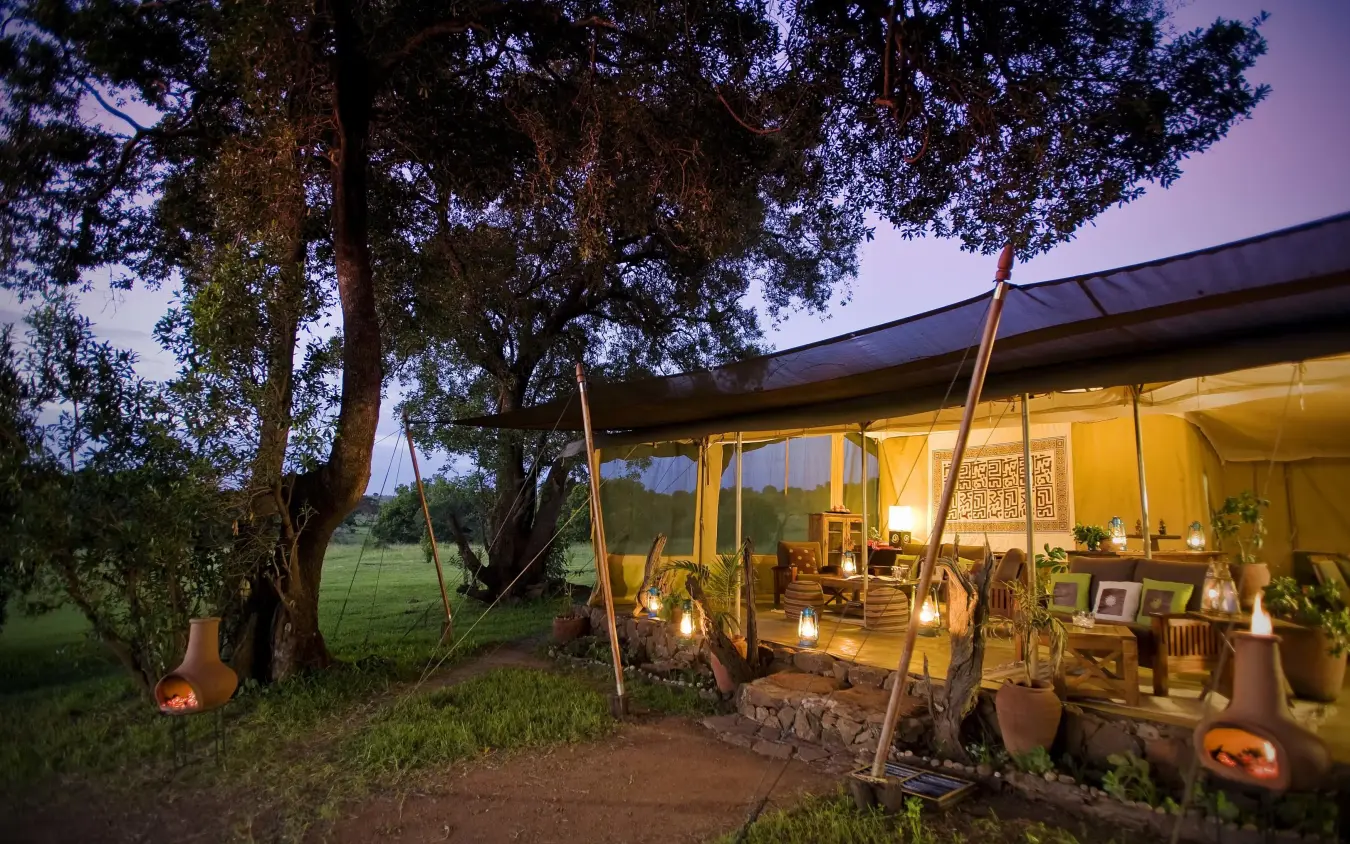
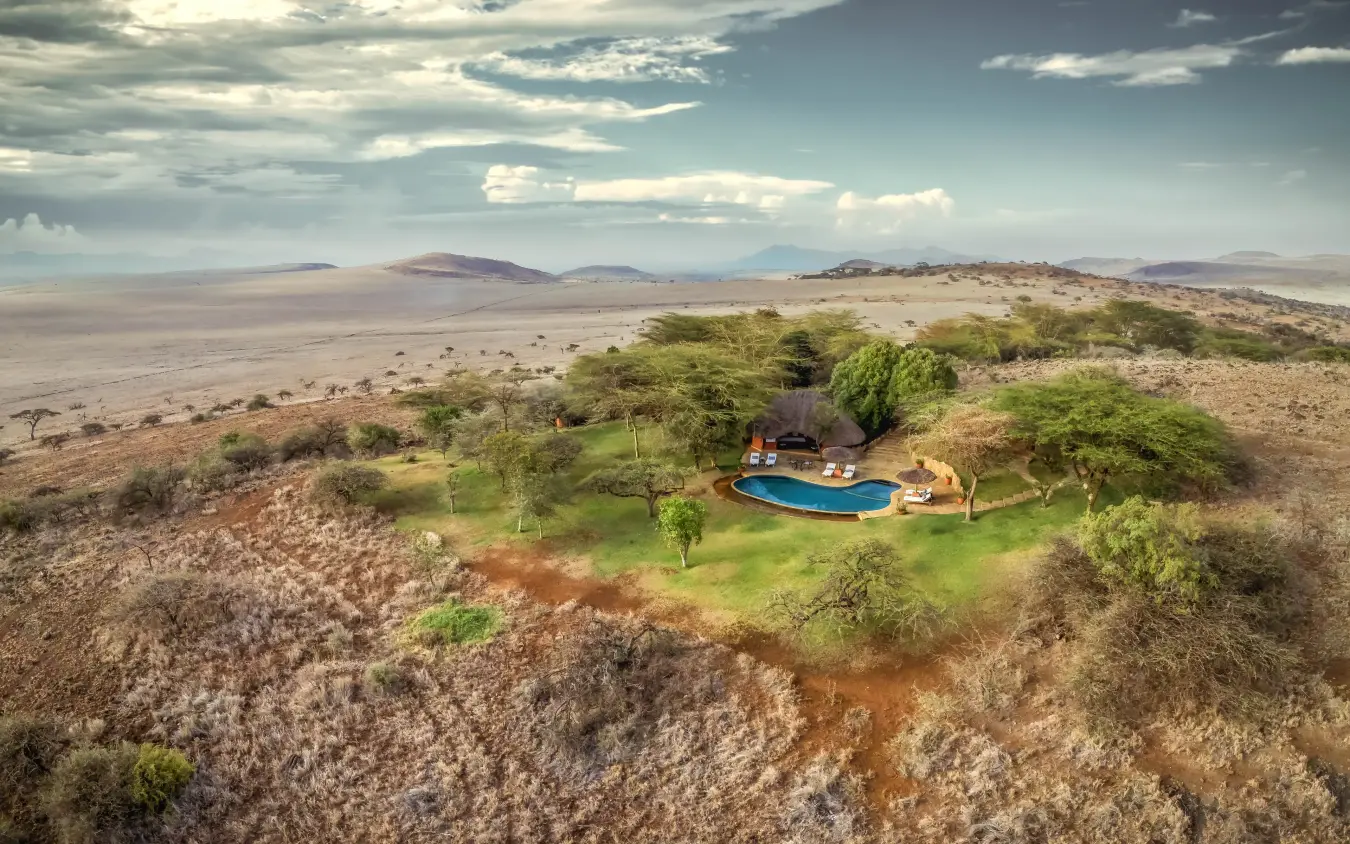
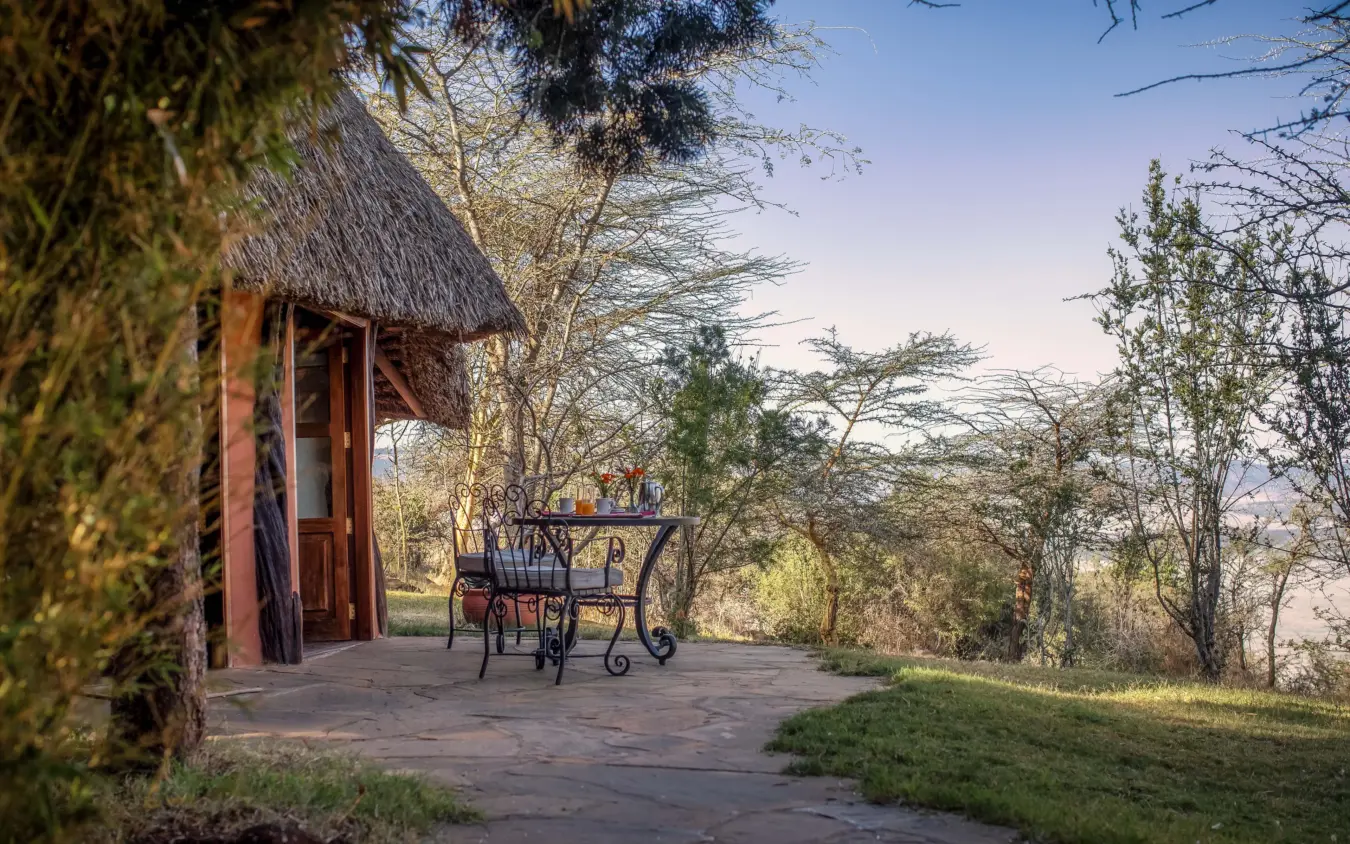
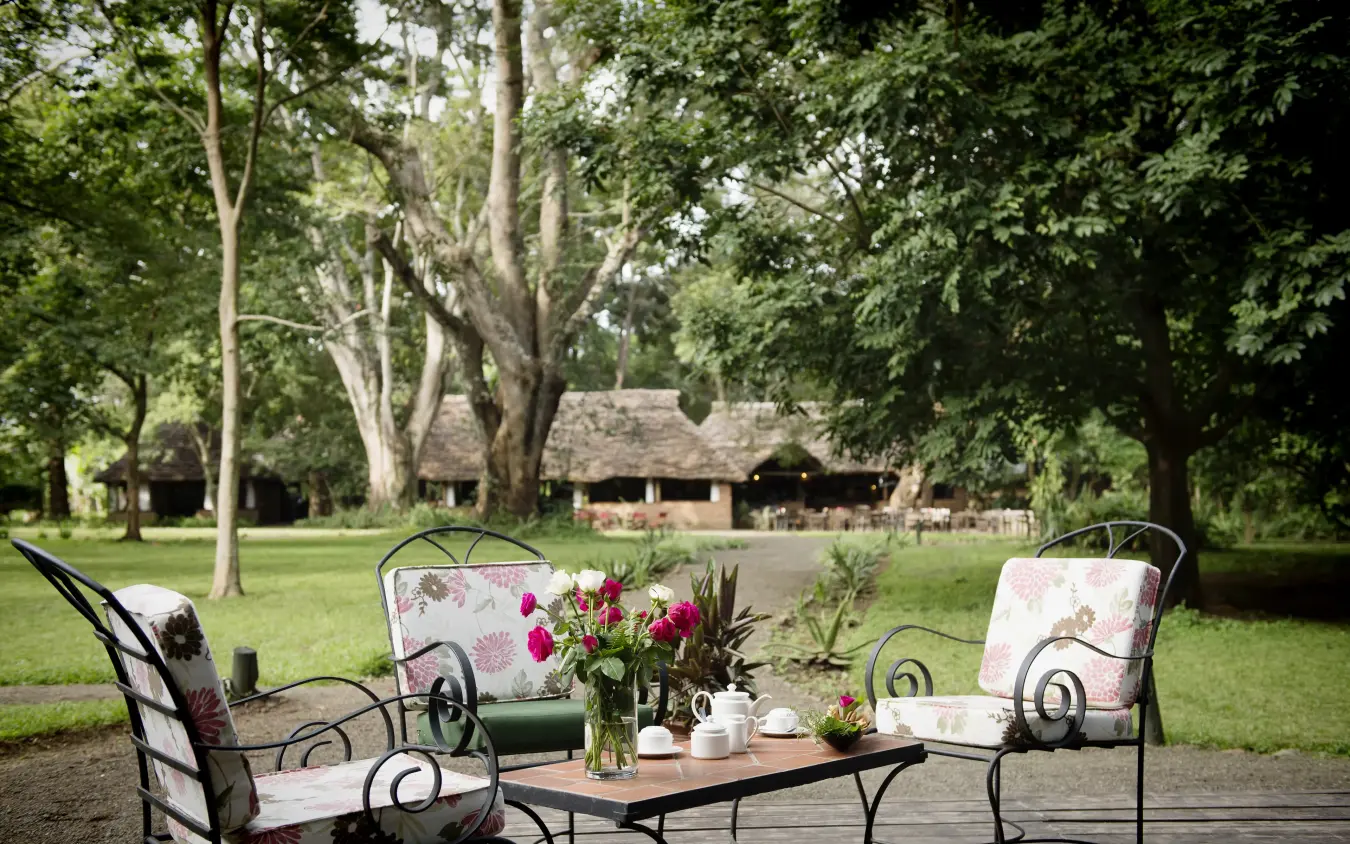
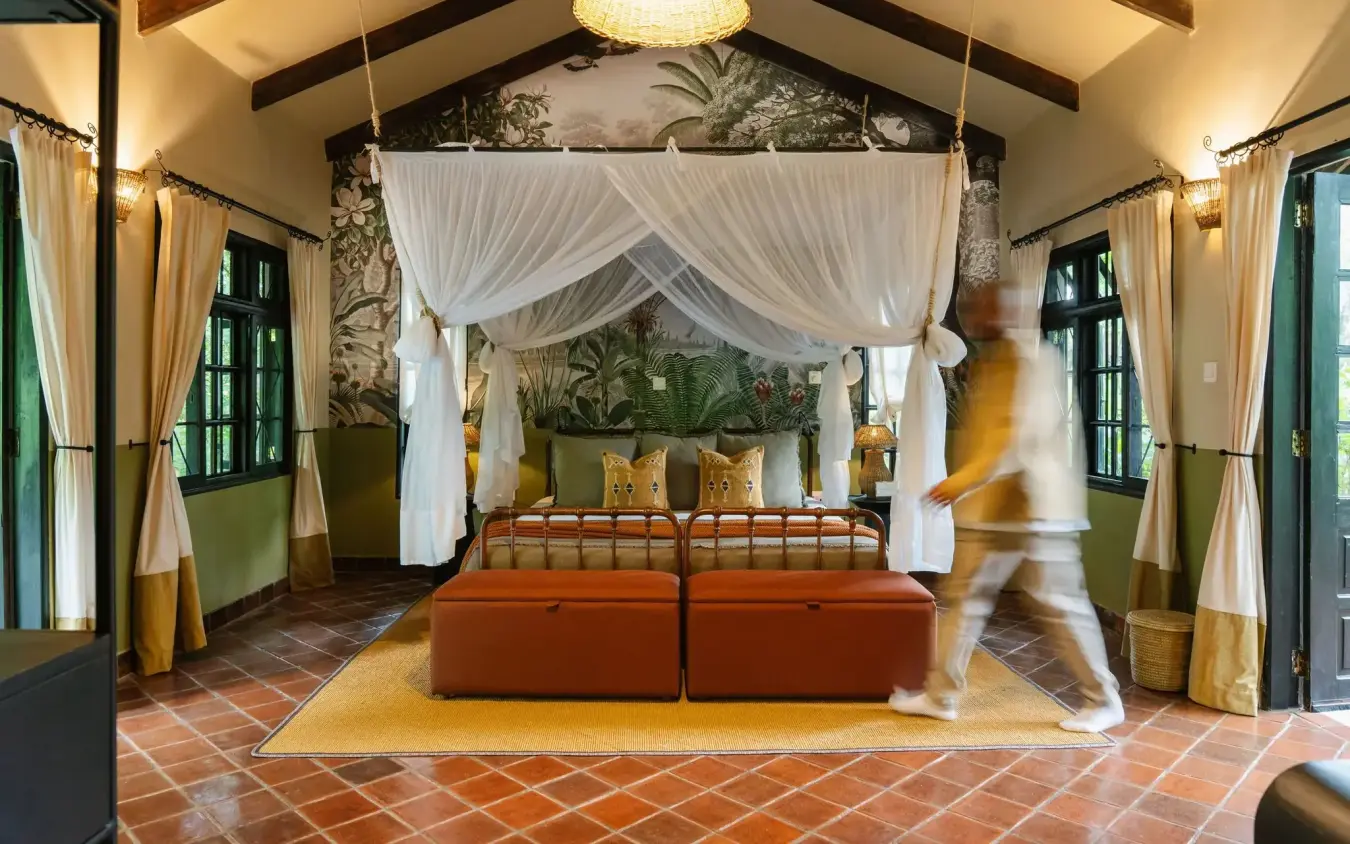
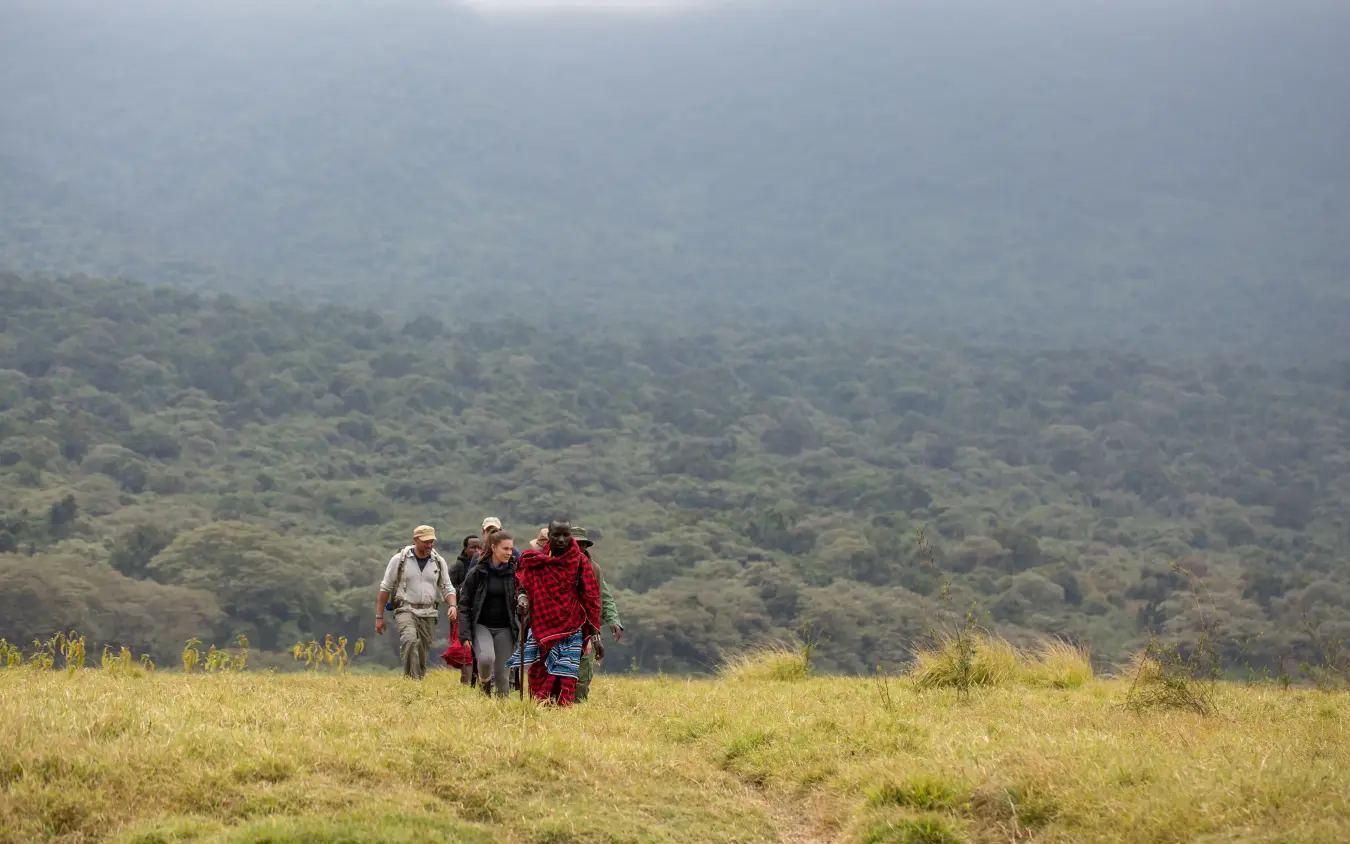
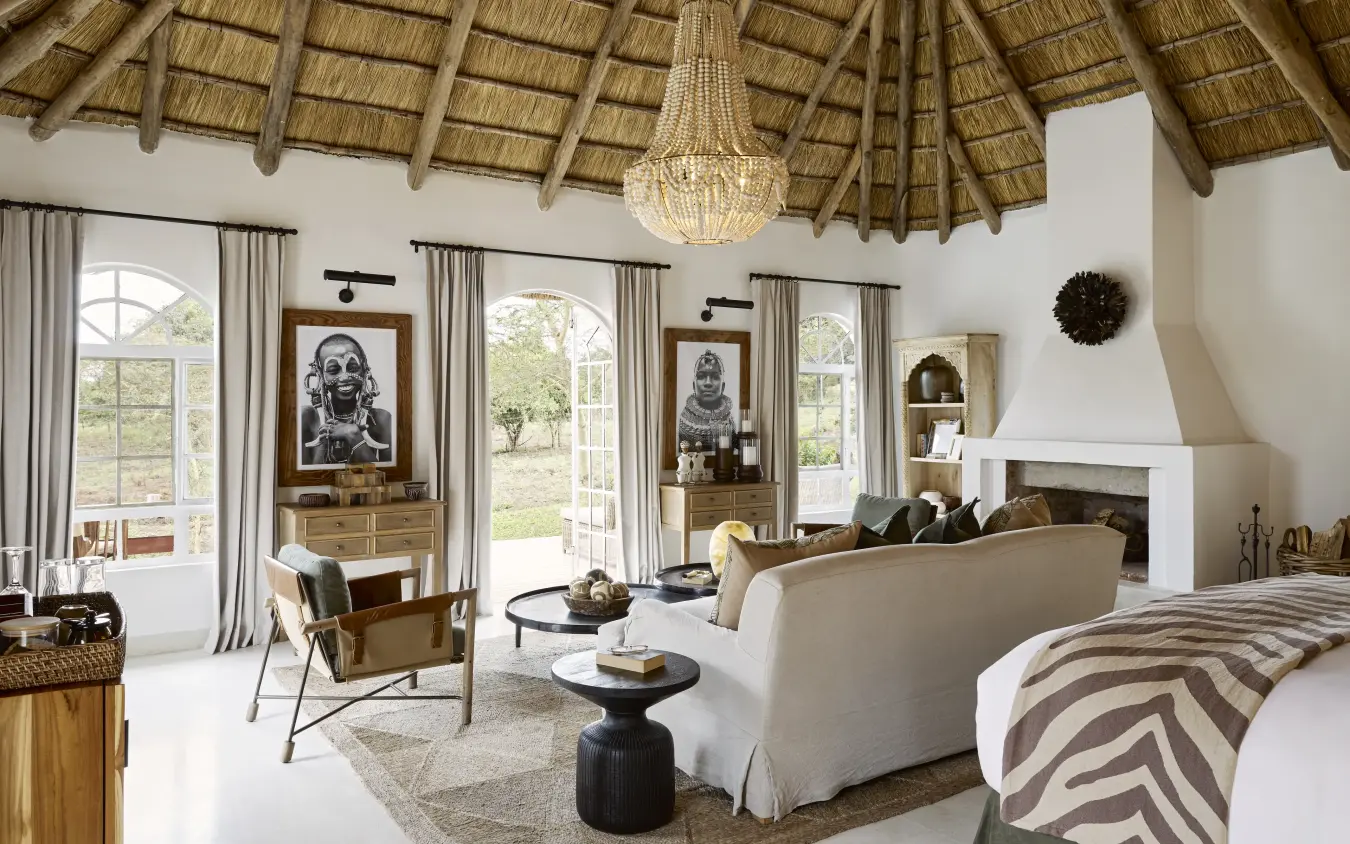
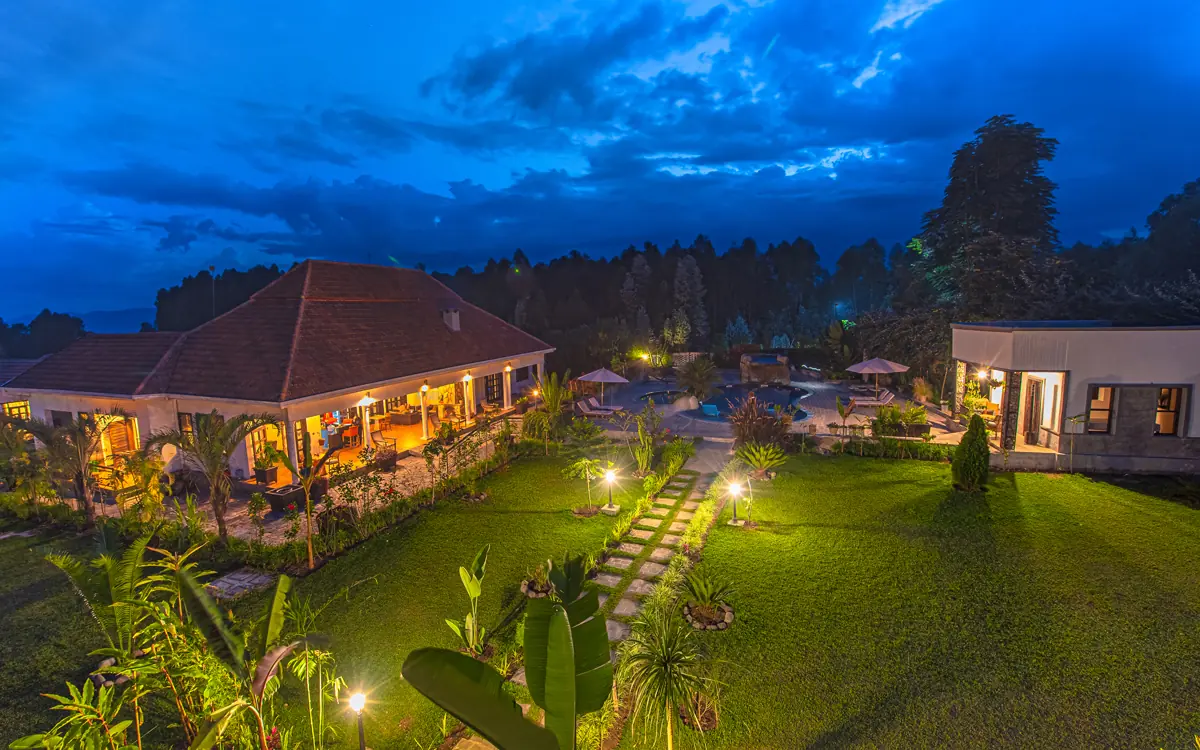
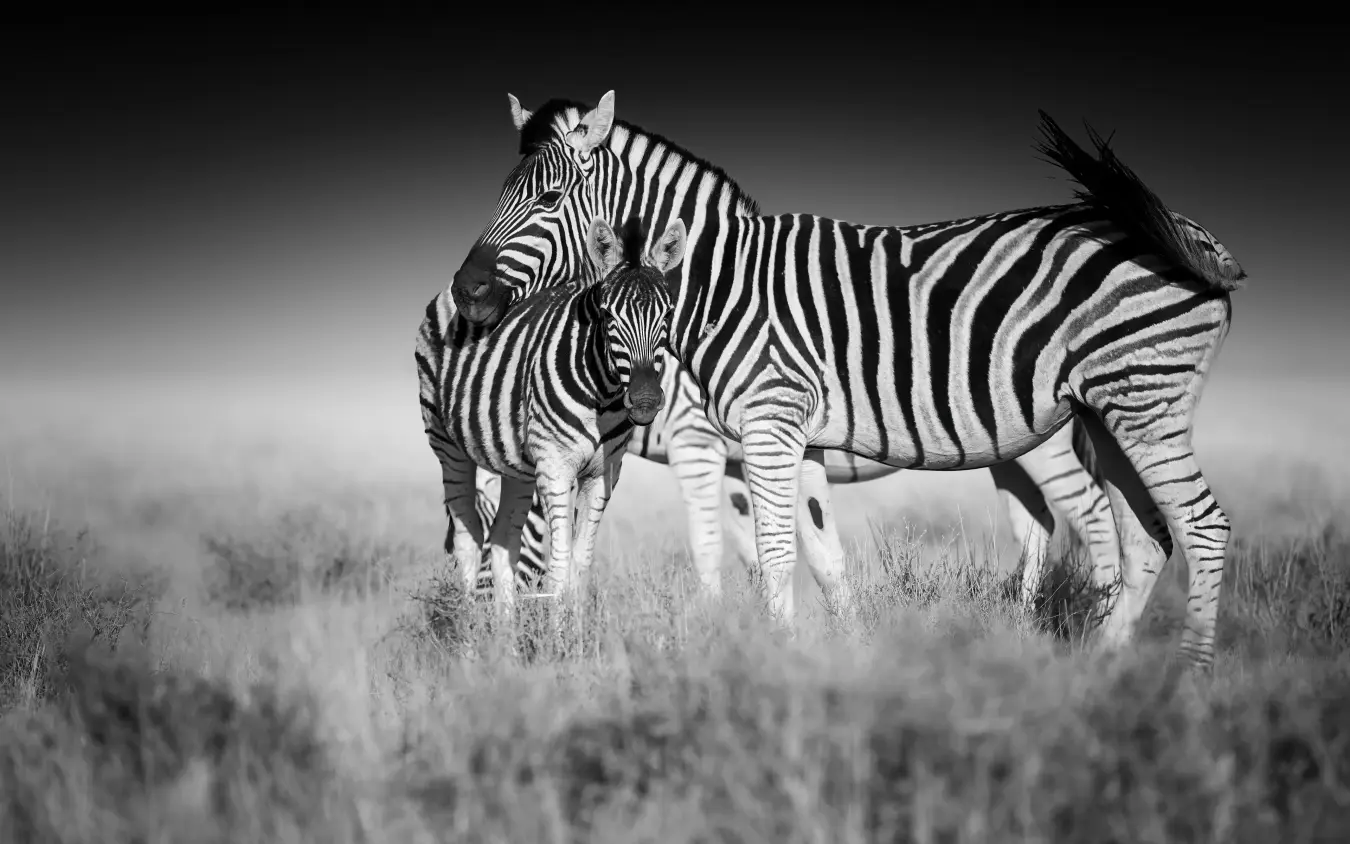
Your first morning is spent on the North Dolly wildlife estate, watching zebra and antelope drift across the grass below Mount Meru, thirty-five minutes from Kilimanjaro International Airport. There are no large predators here, so you explore on foot with Maasai trackers and on horseback, drawing close to grazing wildebeest, eland, kudu, impala and gerenuk. Mama Simba is a nine-room lodge; six garden cottages stand alone across the estate, each with a wood-burning fireplace, a freestanding copper bathtub and a private terrace turned towards Meru.
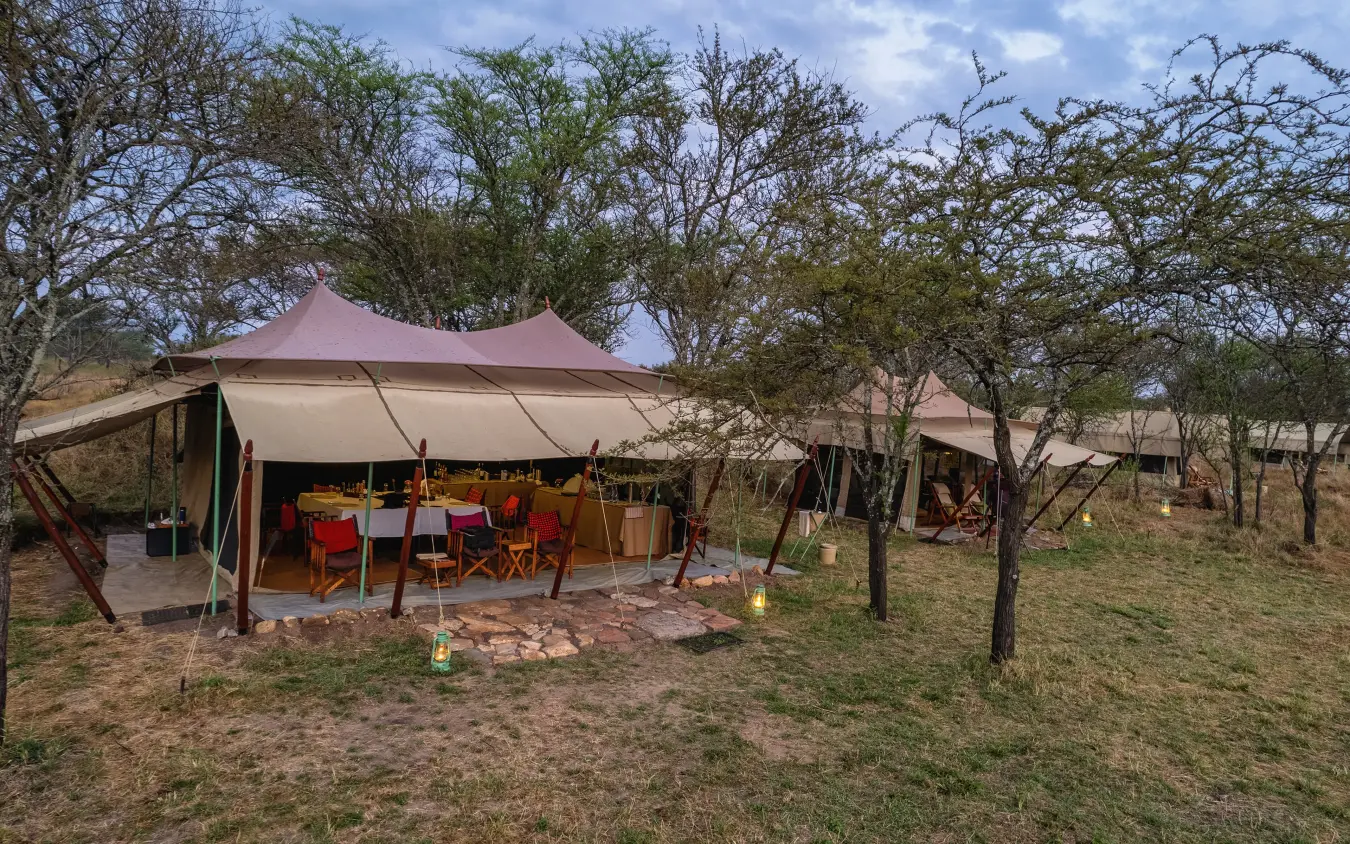
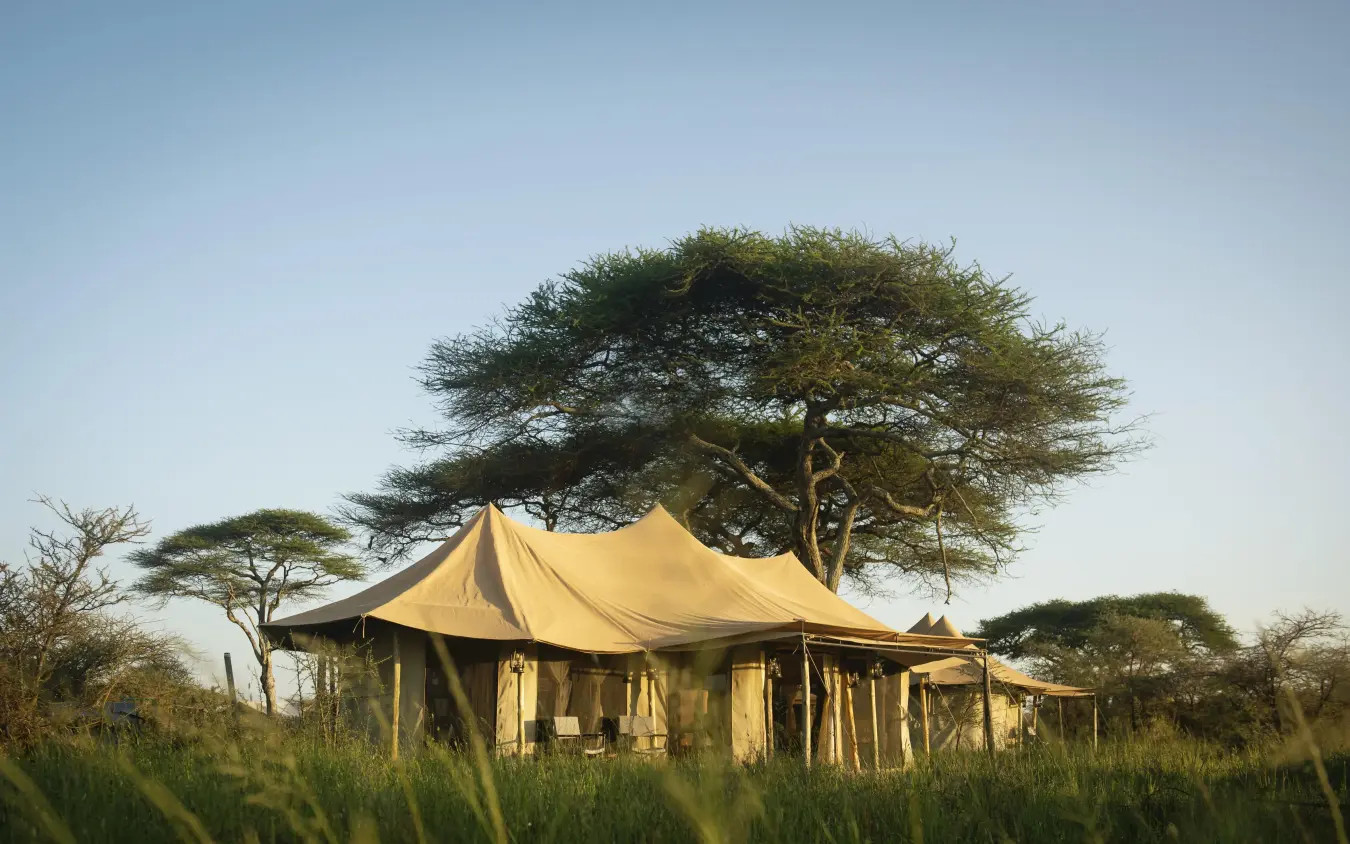
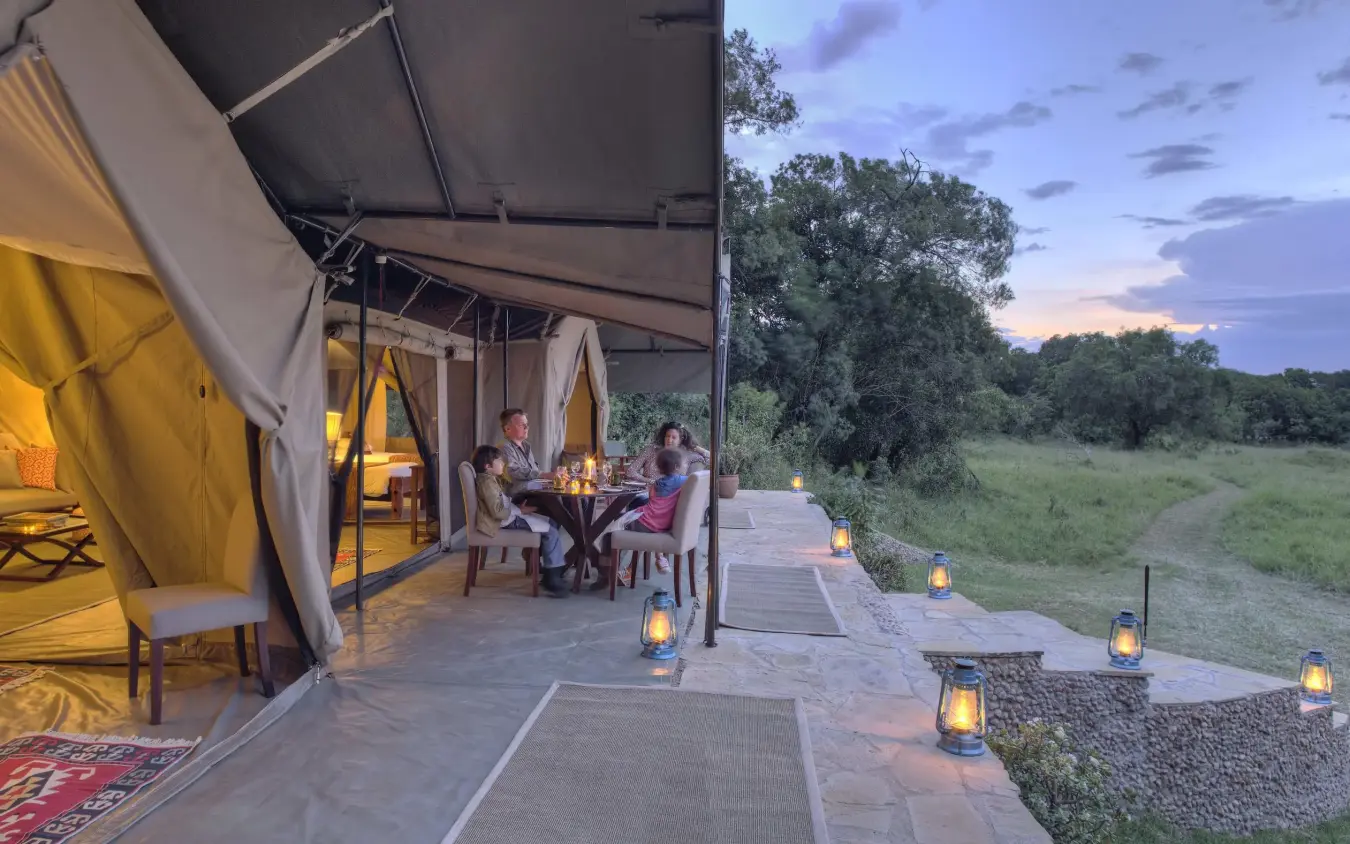
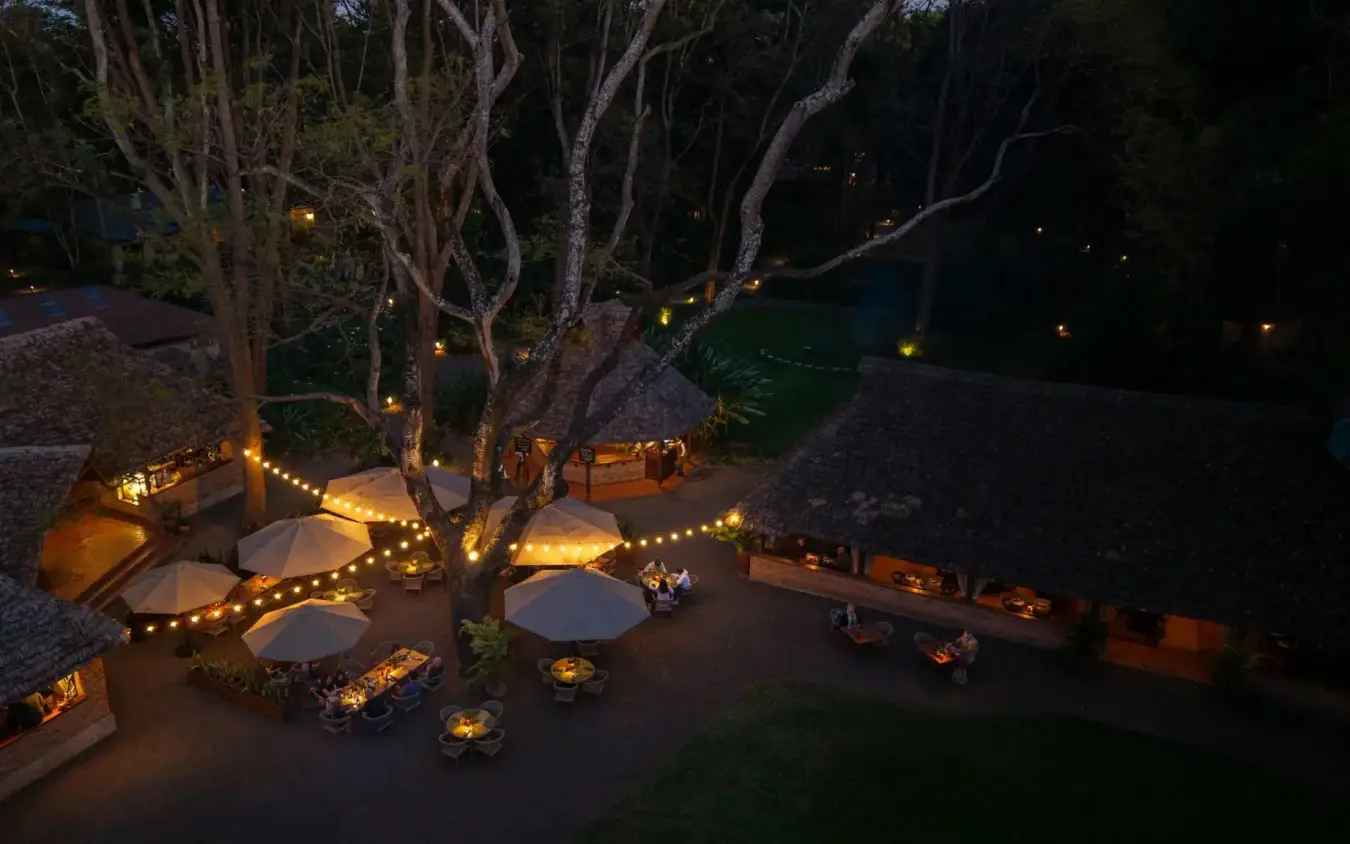
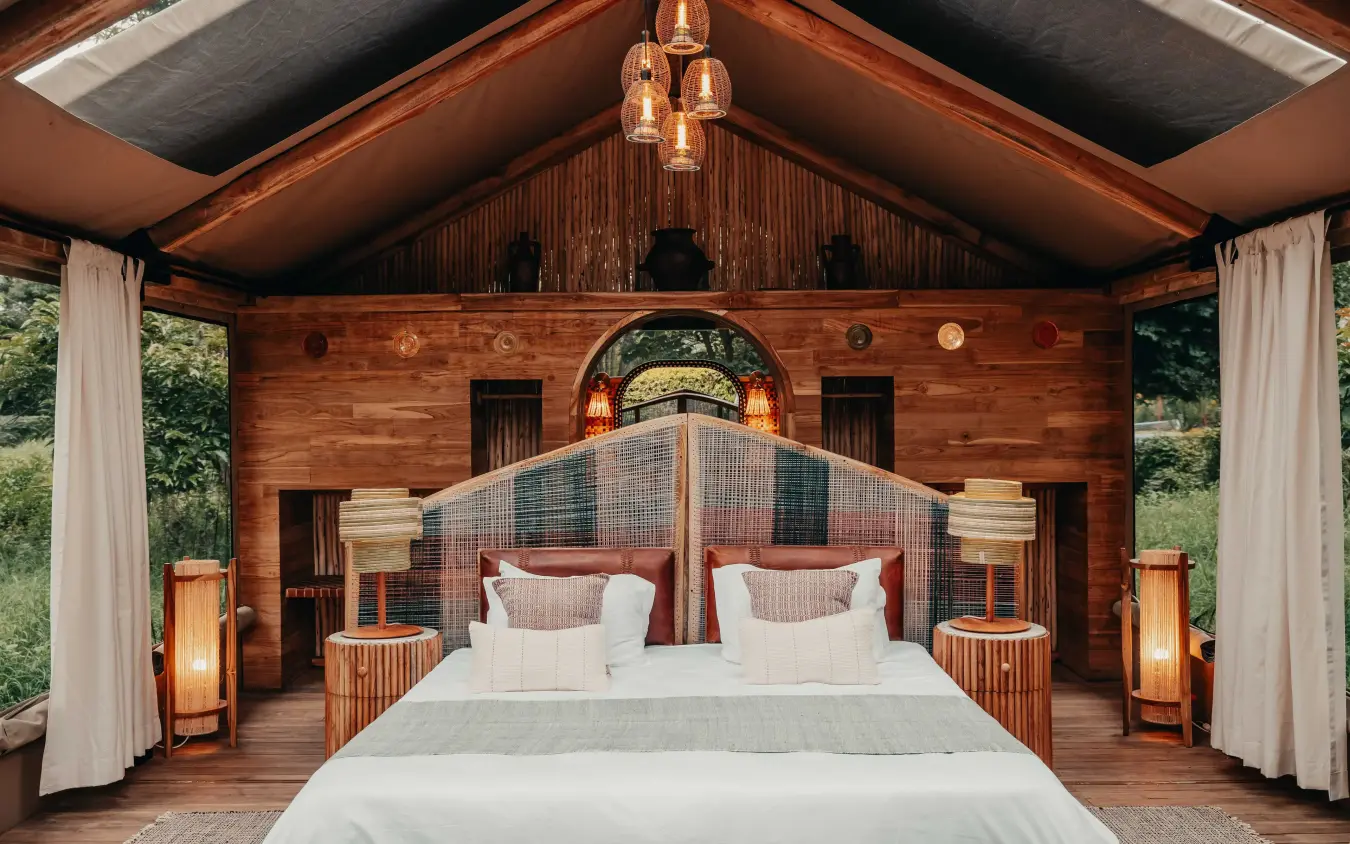
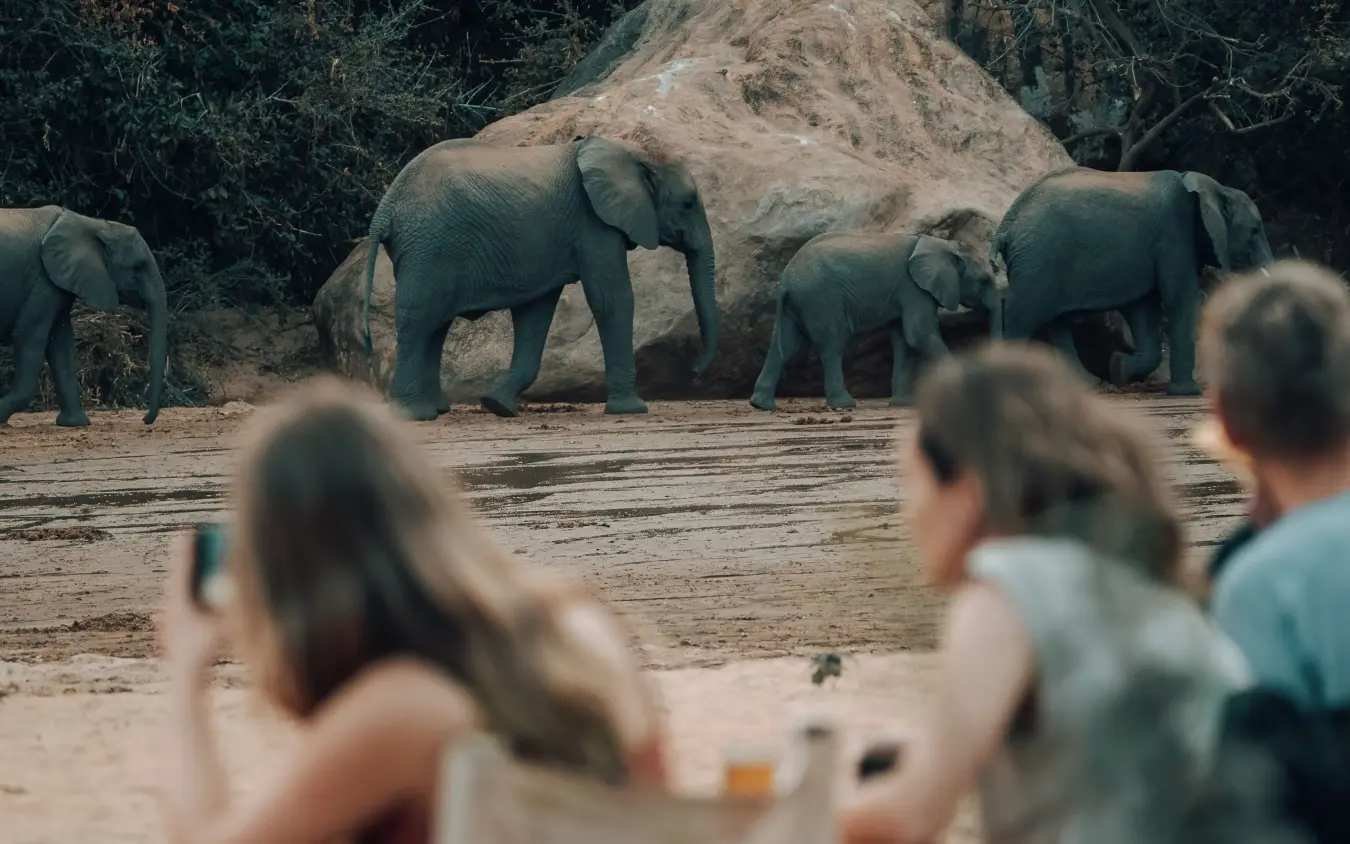
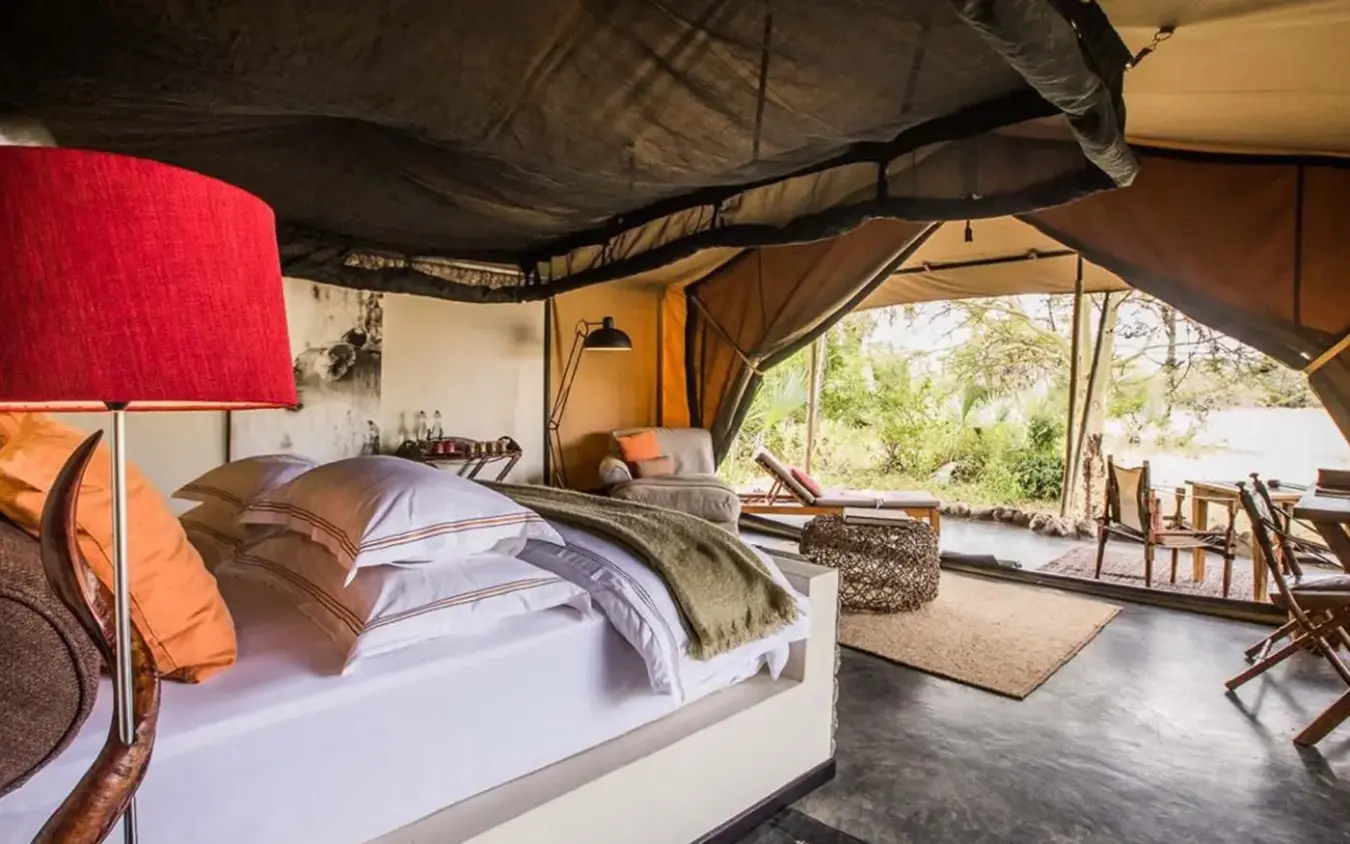
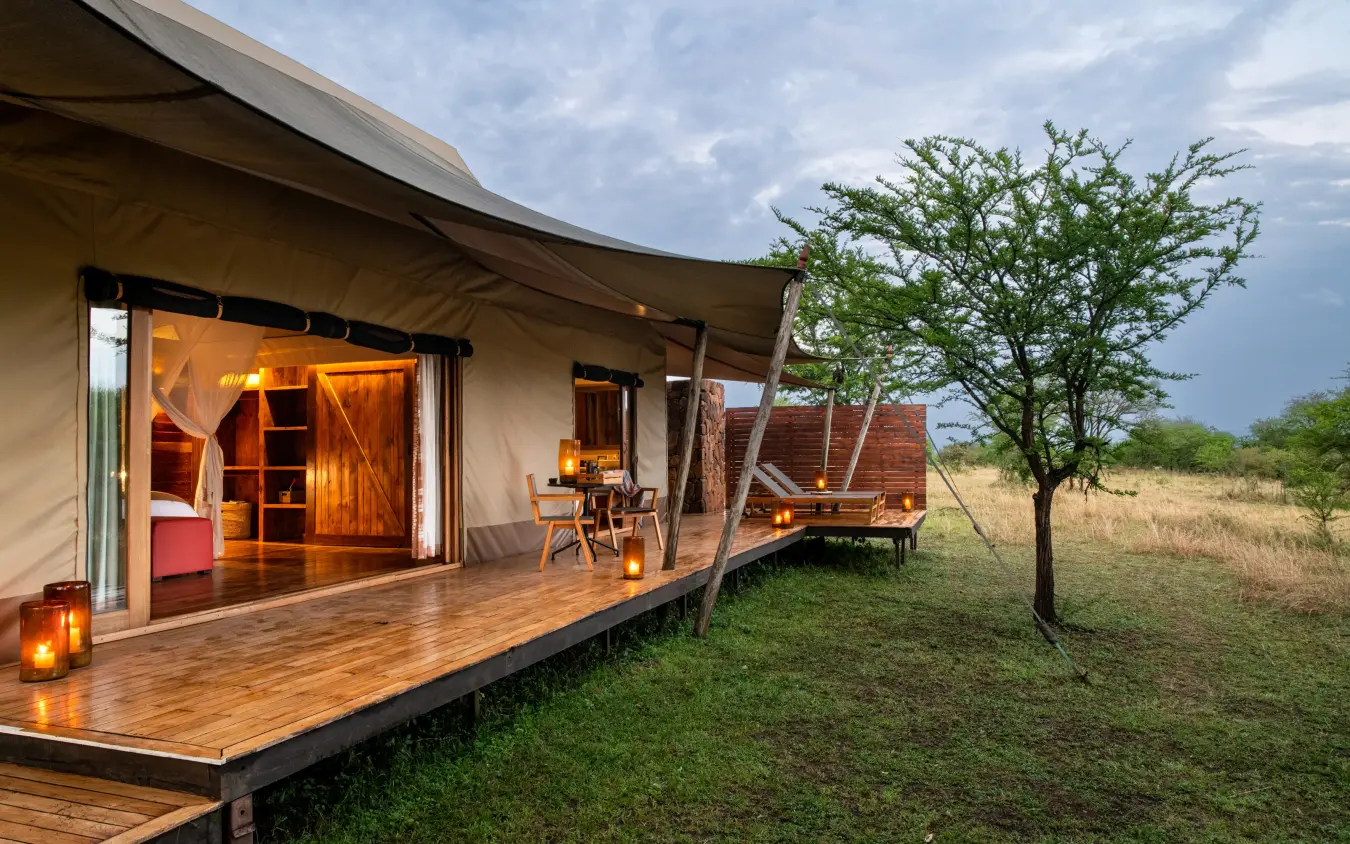
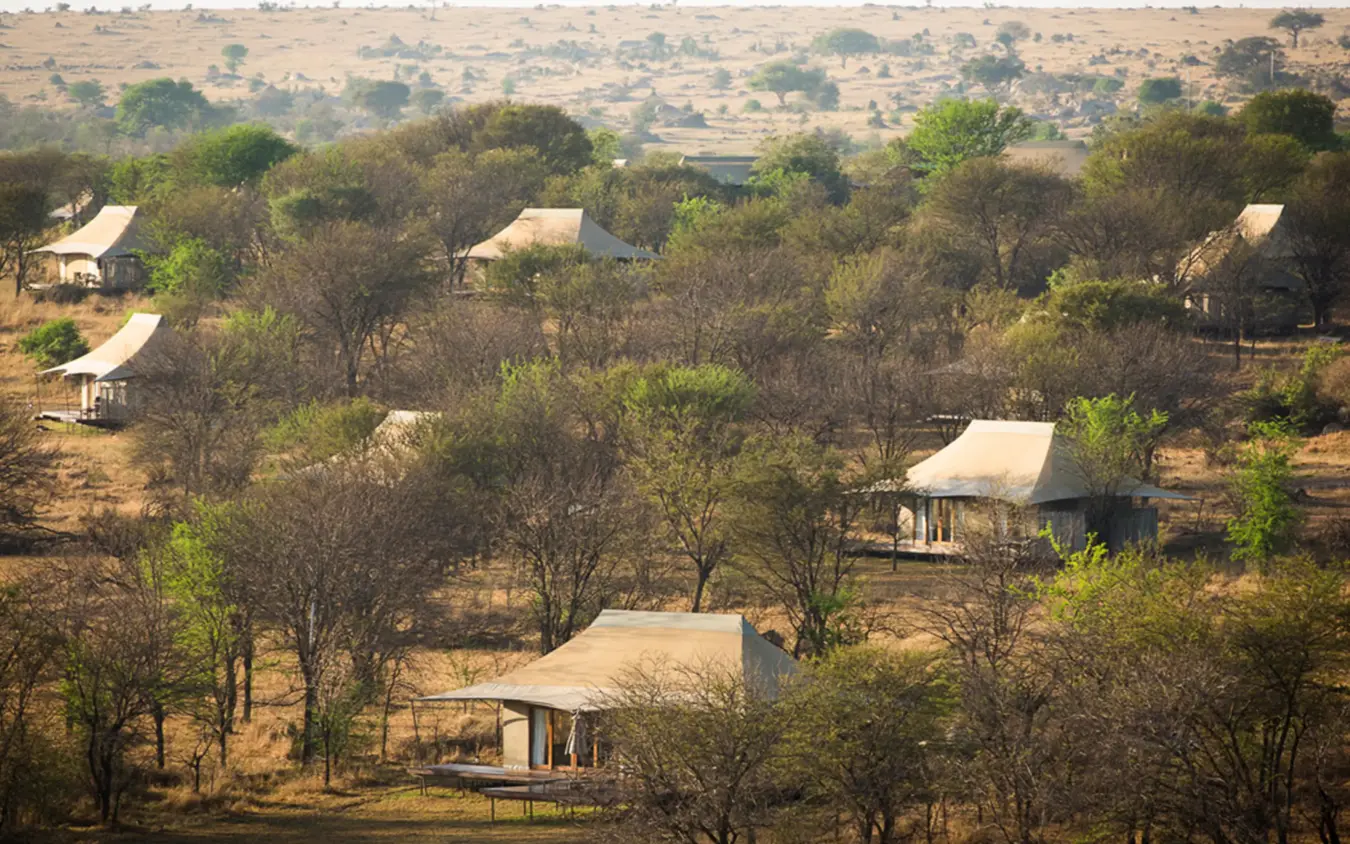
A private drive brings you to the Burunge Wildlife Management Area, the community-run corridor that links Tarangire and Lake Manyara. Your group takes the whole camp, so the days follow no fixed schedule: you walk with Maasai guides who read the tracks and point out medicinal plants, and after dark the spotlights pick up genets, owls and smaller carnivores the parks reveal less readily. Tarangire's elephant herds and baobabs are a drive away, and Lake Manyara adds tree-climbing lions and flamingos. Forest Chem Chem has just four canvas tents raised on platforms beneath fever trees and mature baobabs, understated and light on the ground.
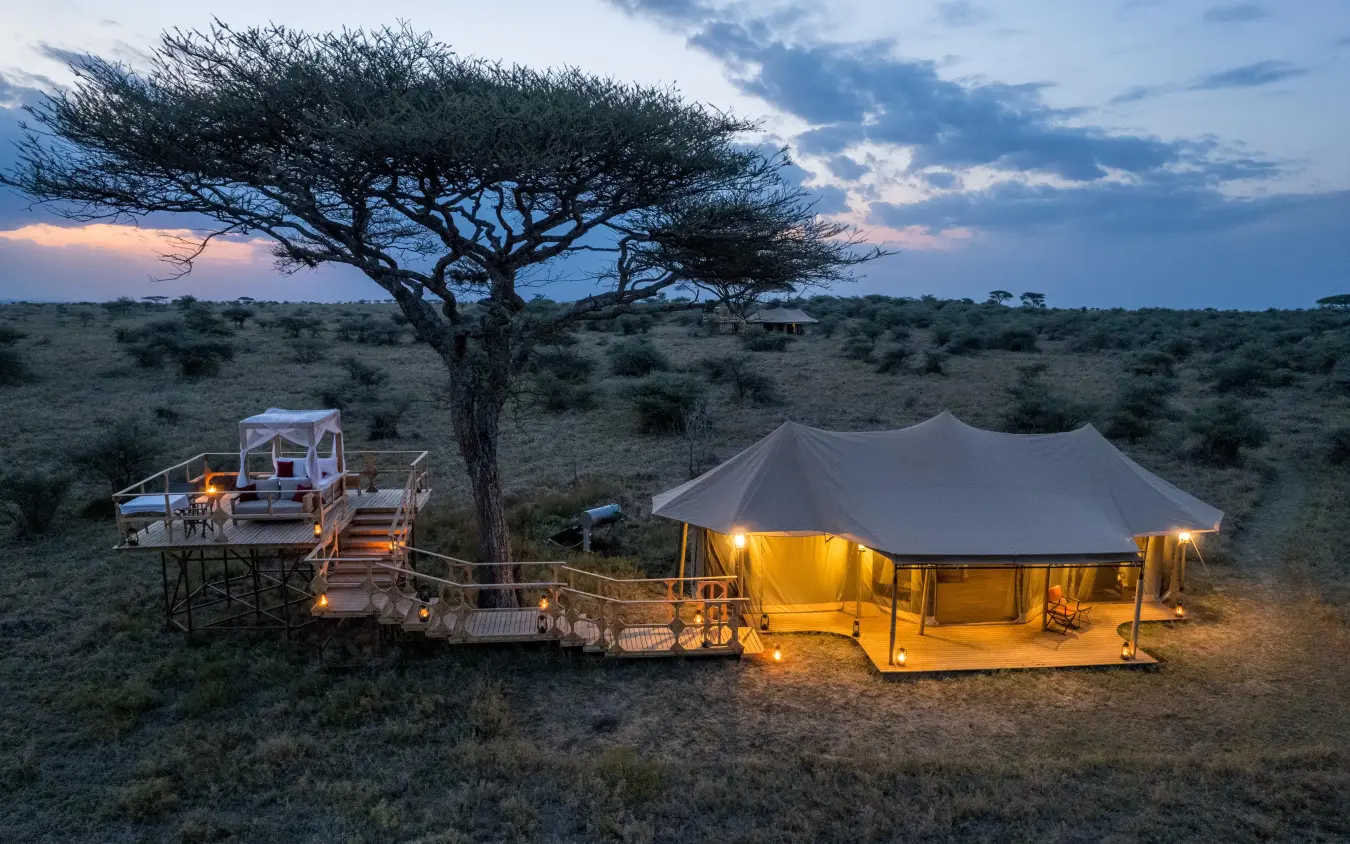
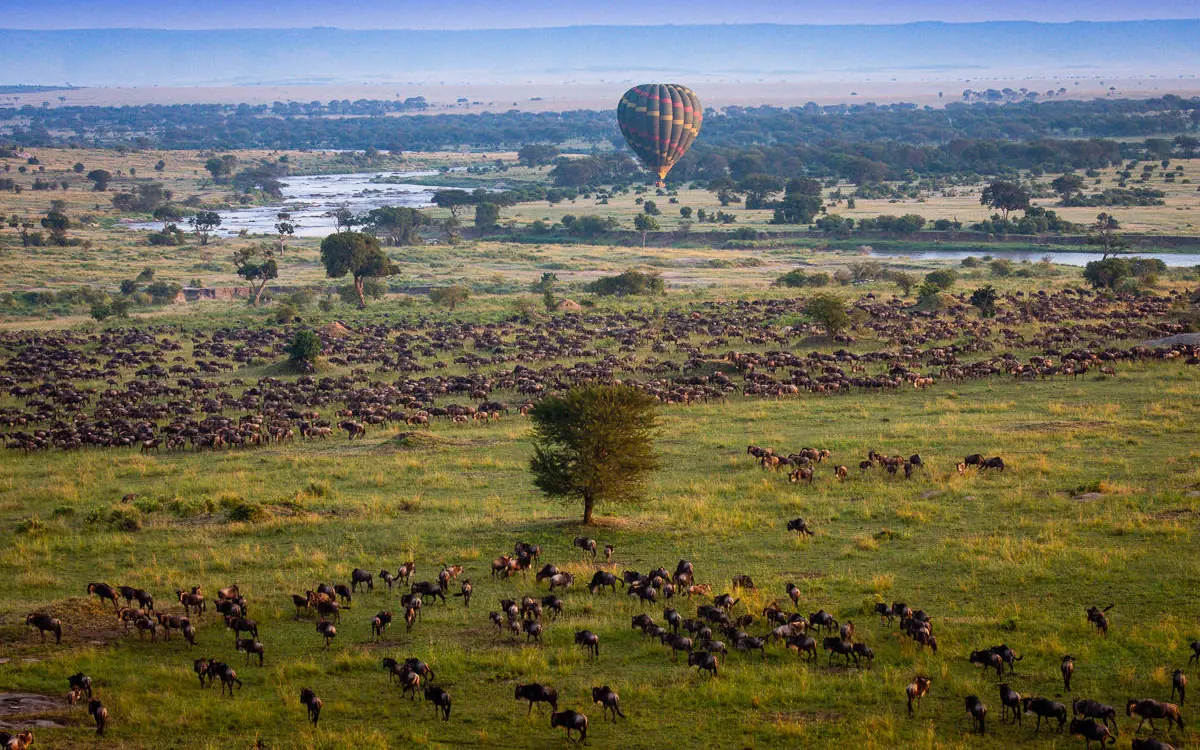
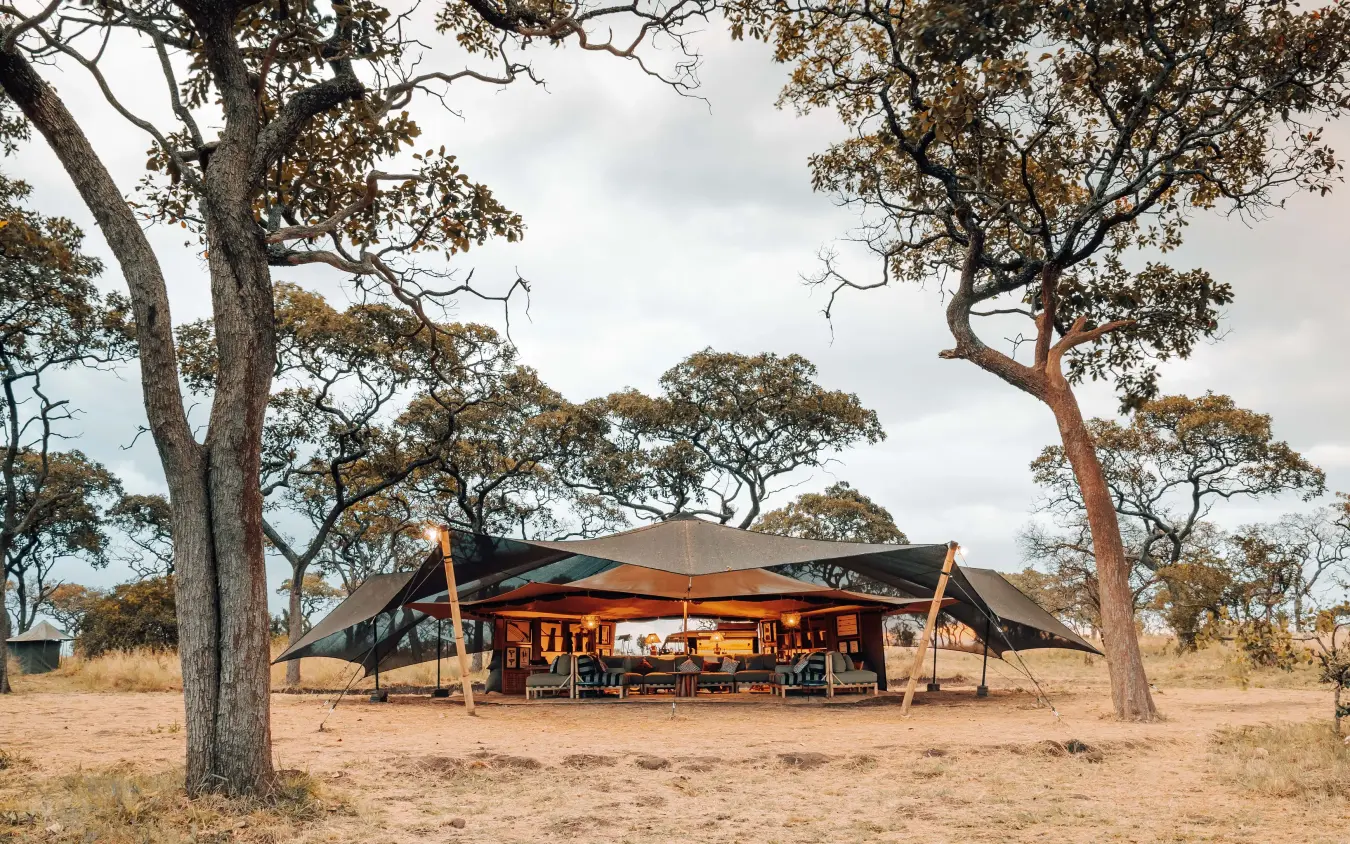
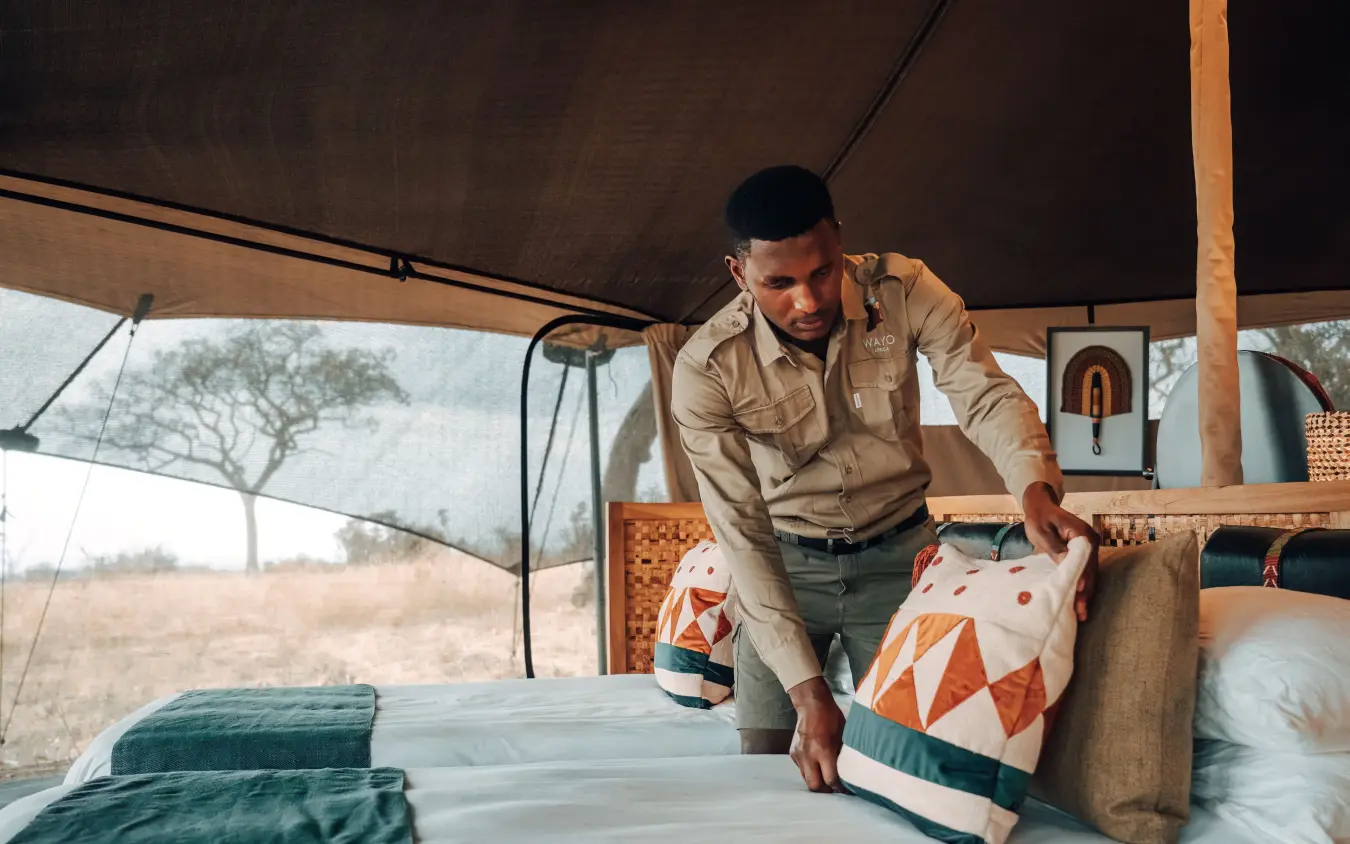
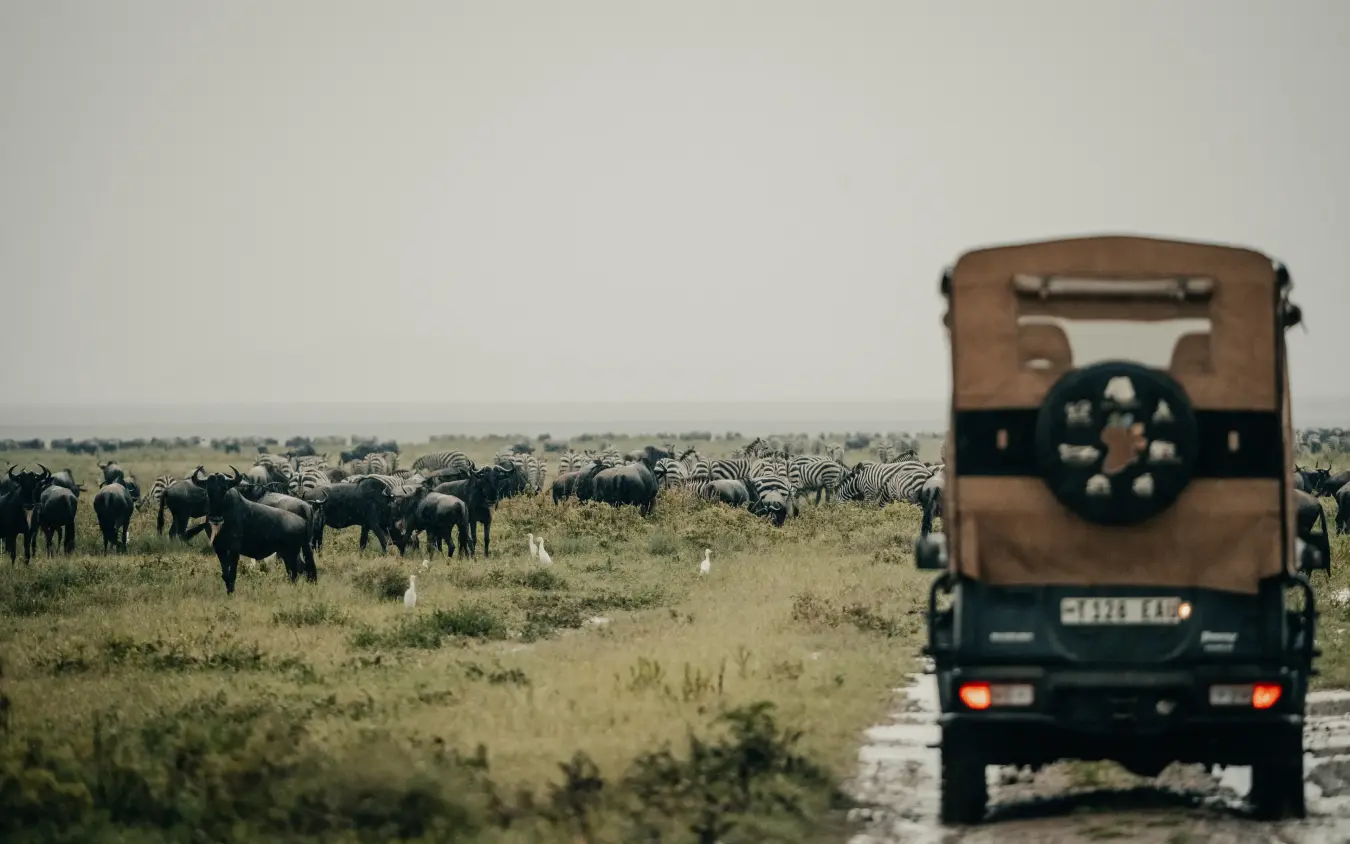
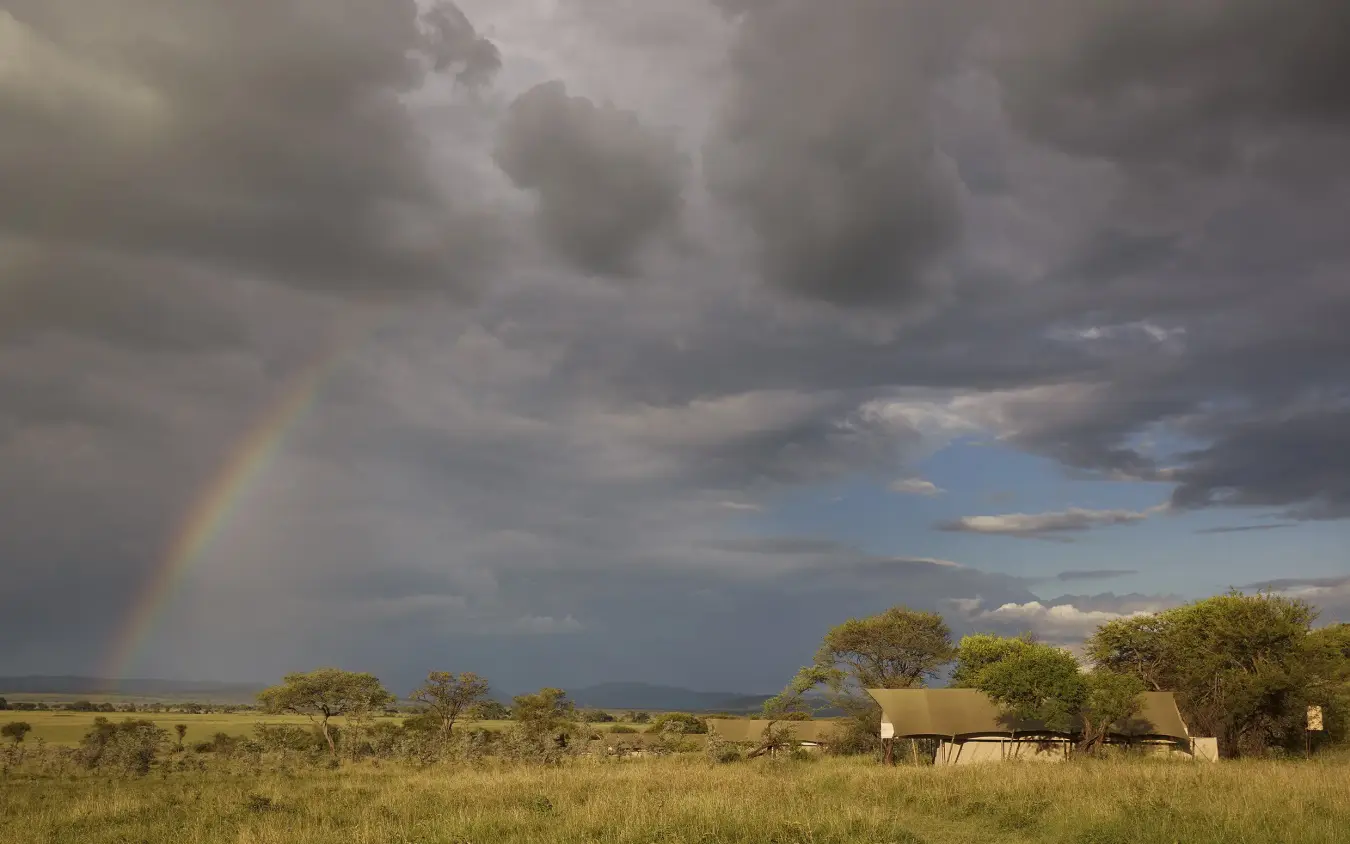
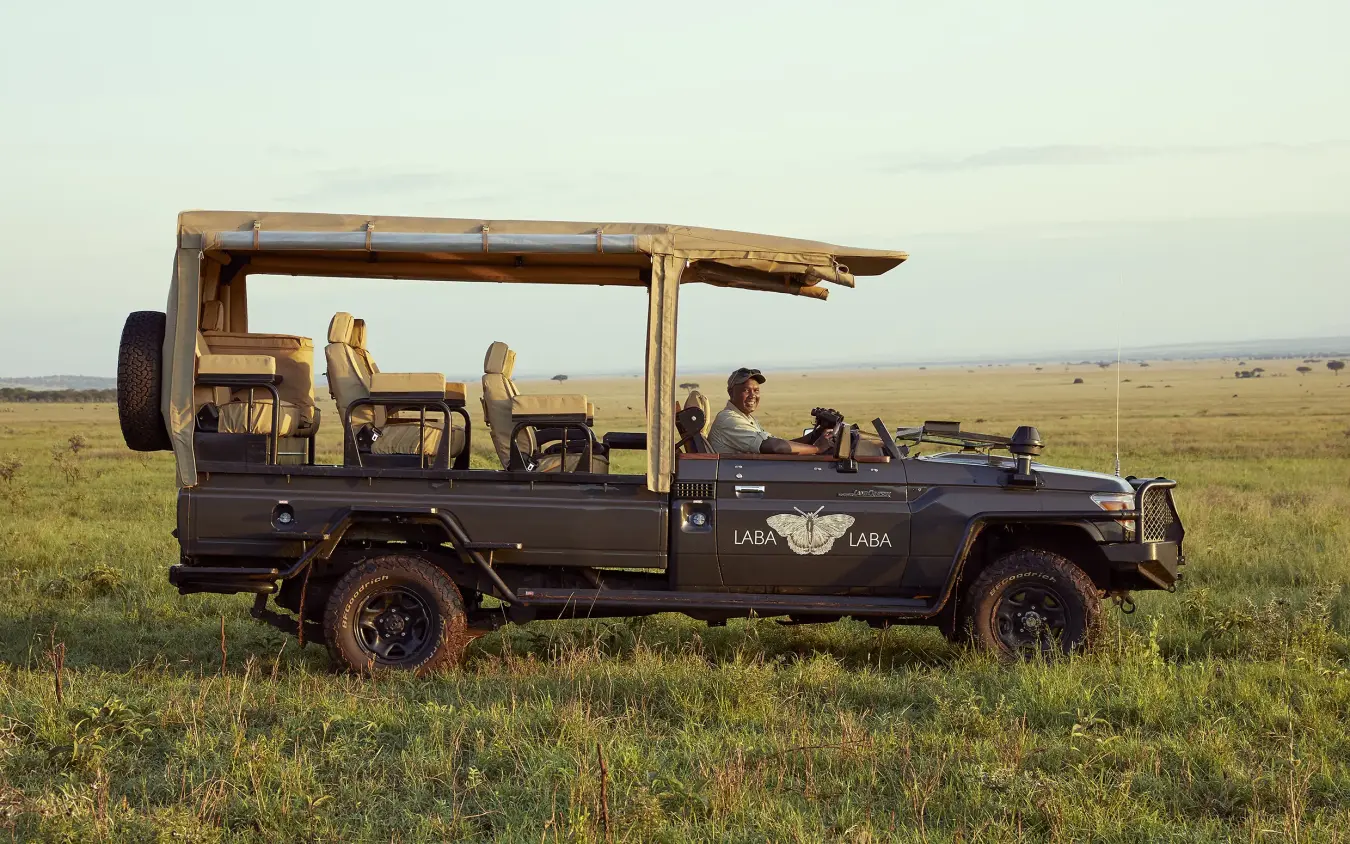
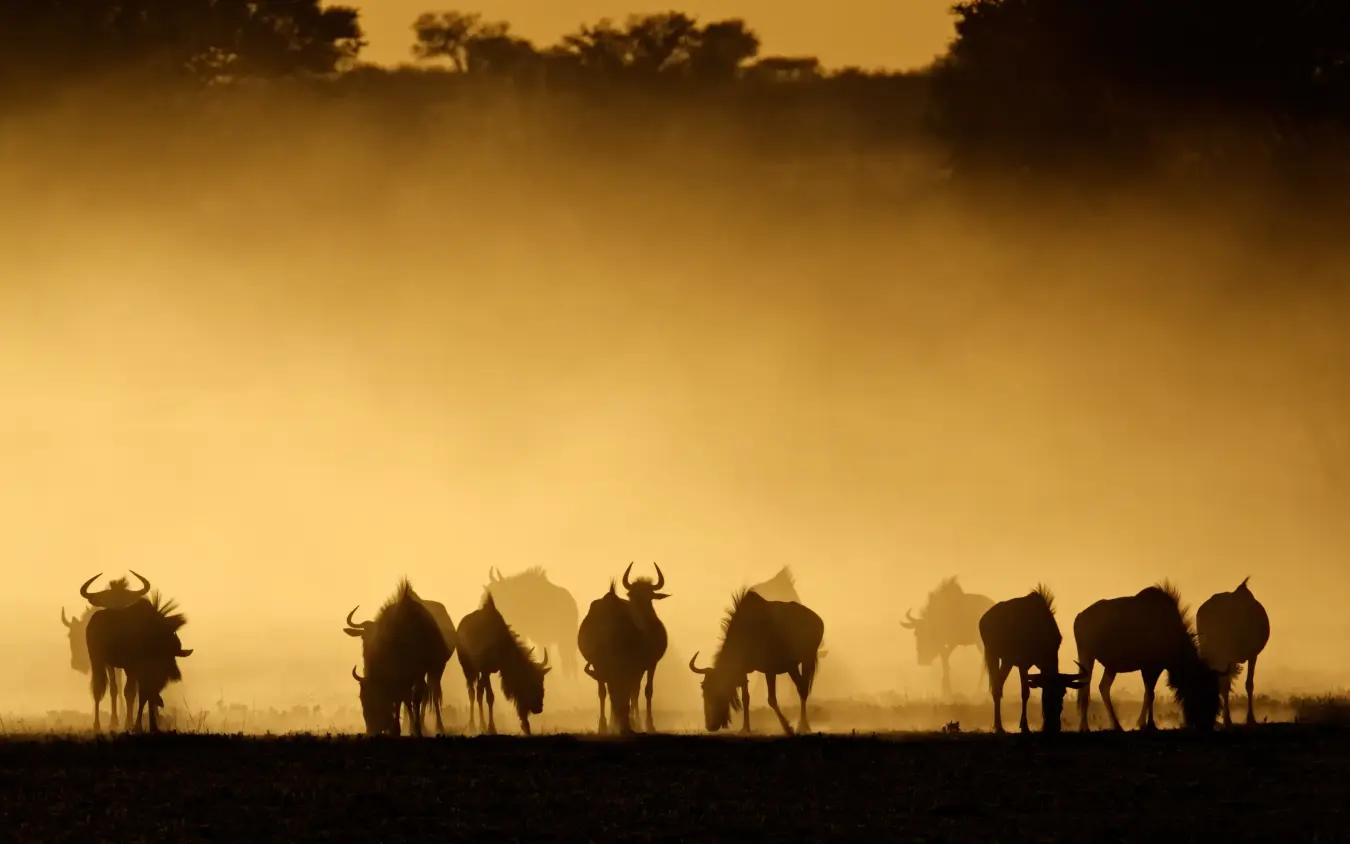
These days are spent in a mobile camp that relocates three times a year to follow the wildebeest and zebra across the Serengeti. From December to March it sits on the Ndutu plains for the calving; by mid-year it shifts west toward the Grumeti, then north to the Mara River. Where you stay depends on the season, and the herds are often close enough to graze between the tents and call through the night. Laba Migration Camp opened in 2024 and holds up to 22 guests; its mess tent reads like a natural-history study, filled with rare books, fossils and meteorites, and there is a tented gym with Technogym machines.
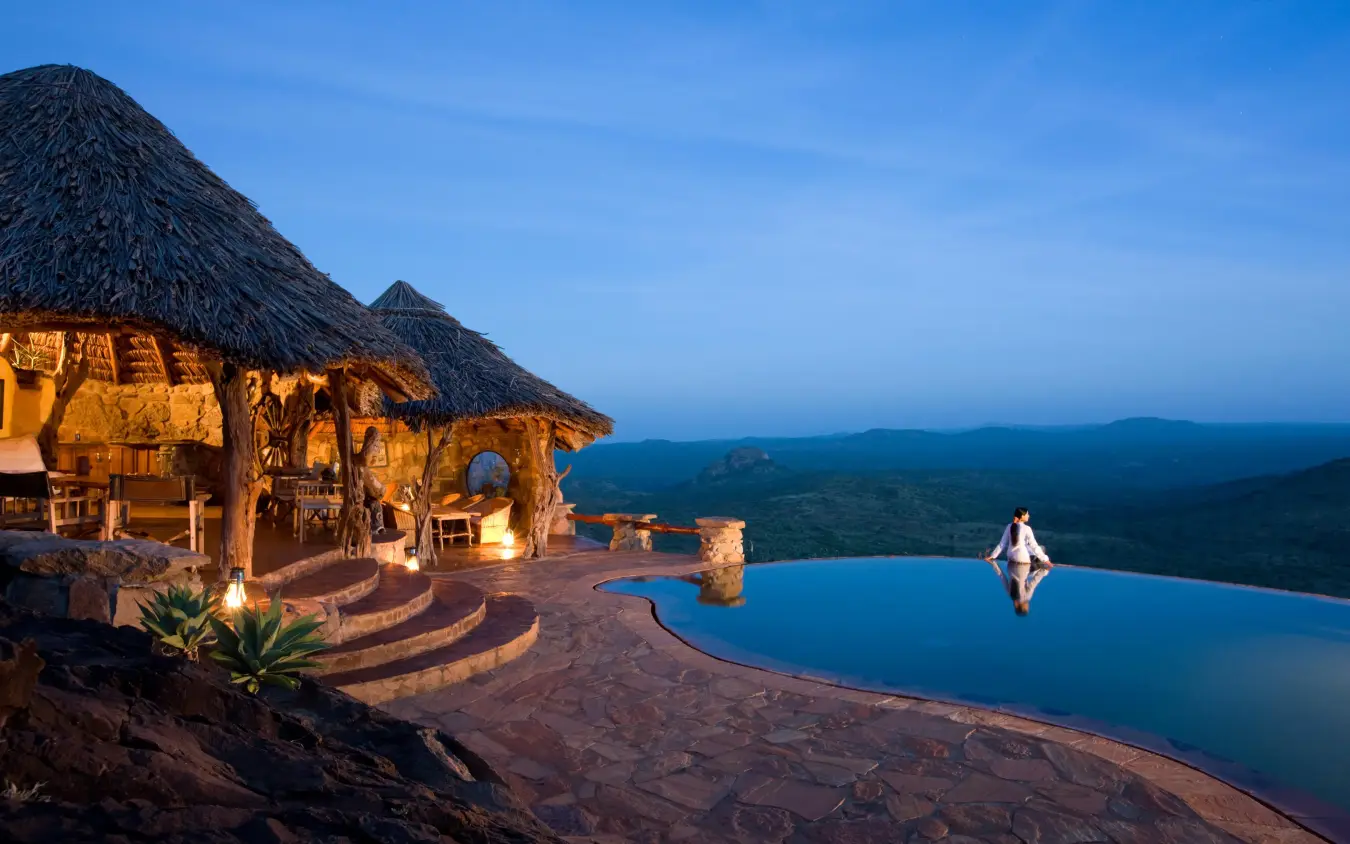
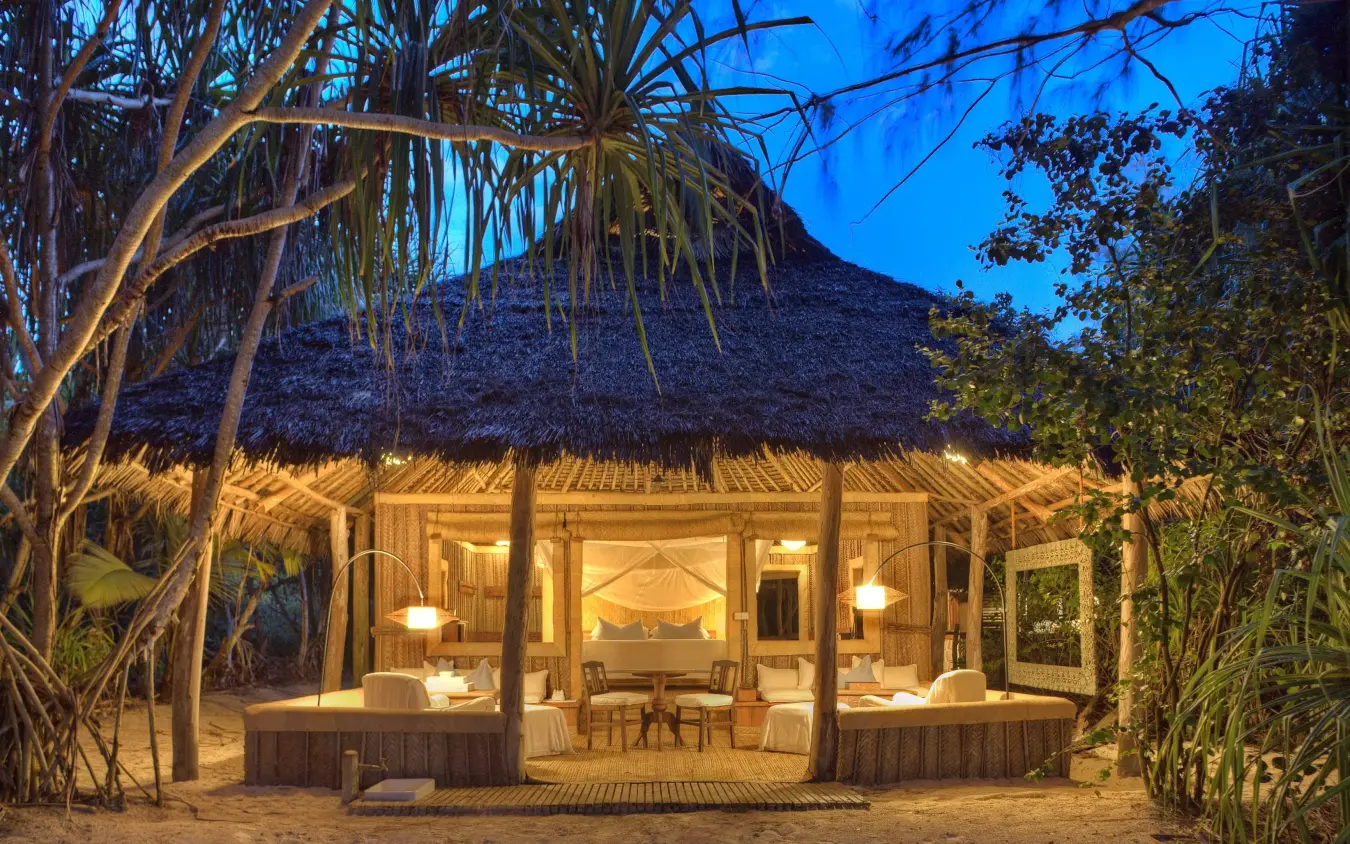
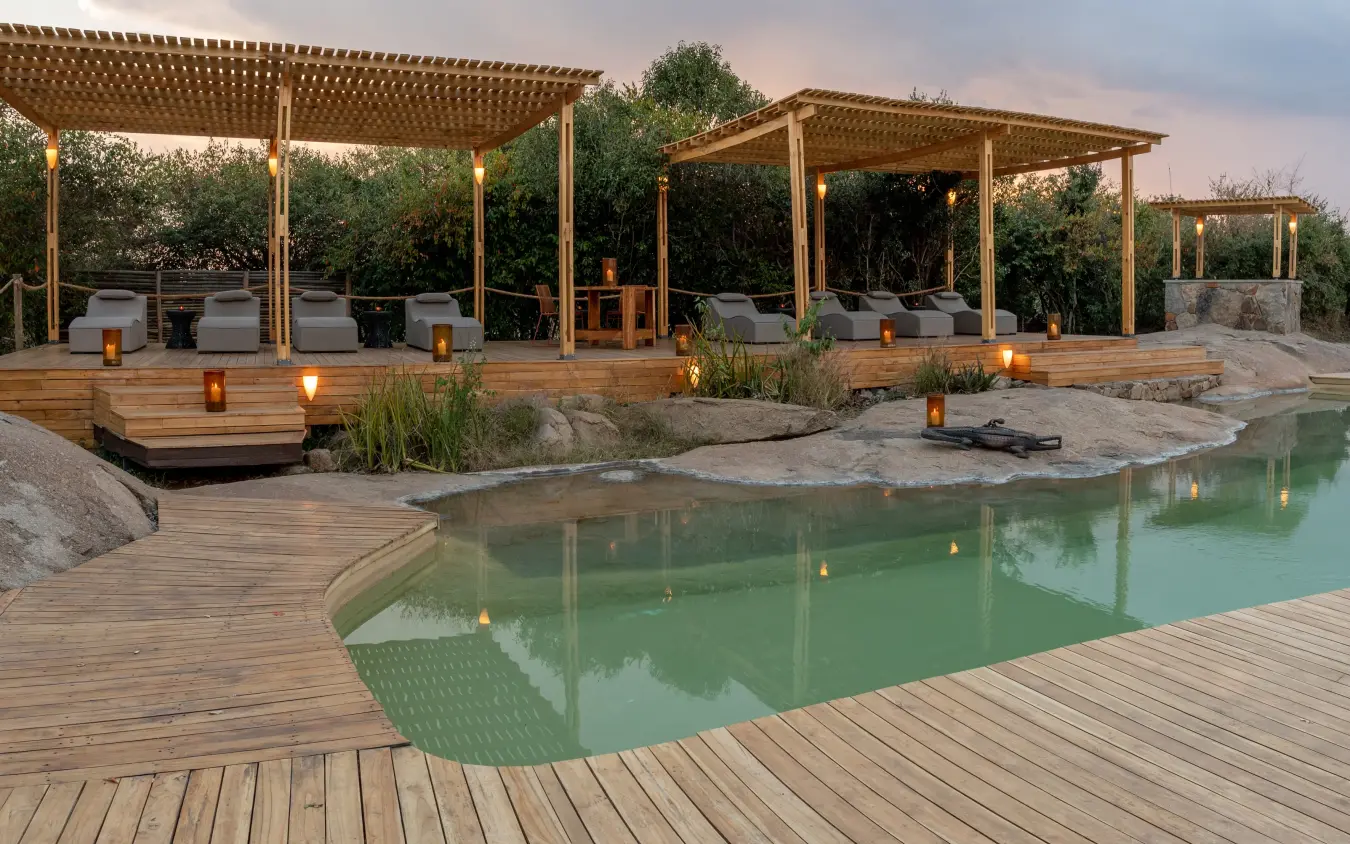
After the plains you reach the coast, crossing to a private island about 3 km off the northeast of Unguja. There are no jetties, so you wade ashore, leave your shoes at the door and let the tide set the day. The reef within the surrounding marine conservation area supports around 600 species of fish, with green turtles, three species of dolphin and, between July and September, seasonal humpback whales passing through the deeper water. Mnemba holds just 12 open-air bandas and a maximum of 24 guests, each built without doors or windows beneath casuarina trees, with a private beach lounge and a personal sala.
Comfortable camping rather than canvas pretending to be a lodge, and its address changes with the herds.
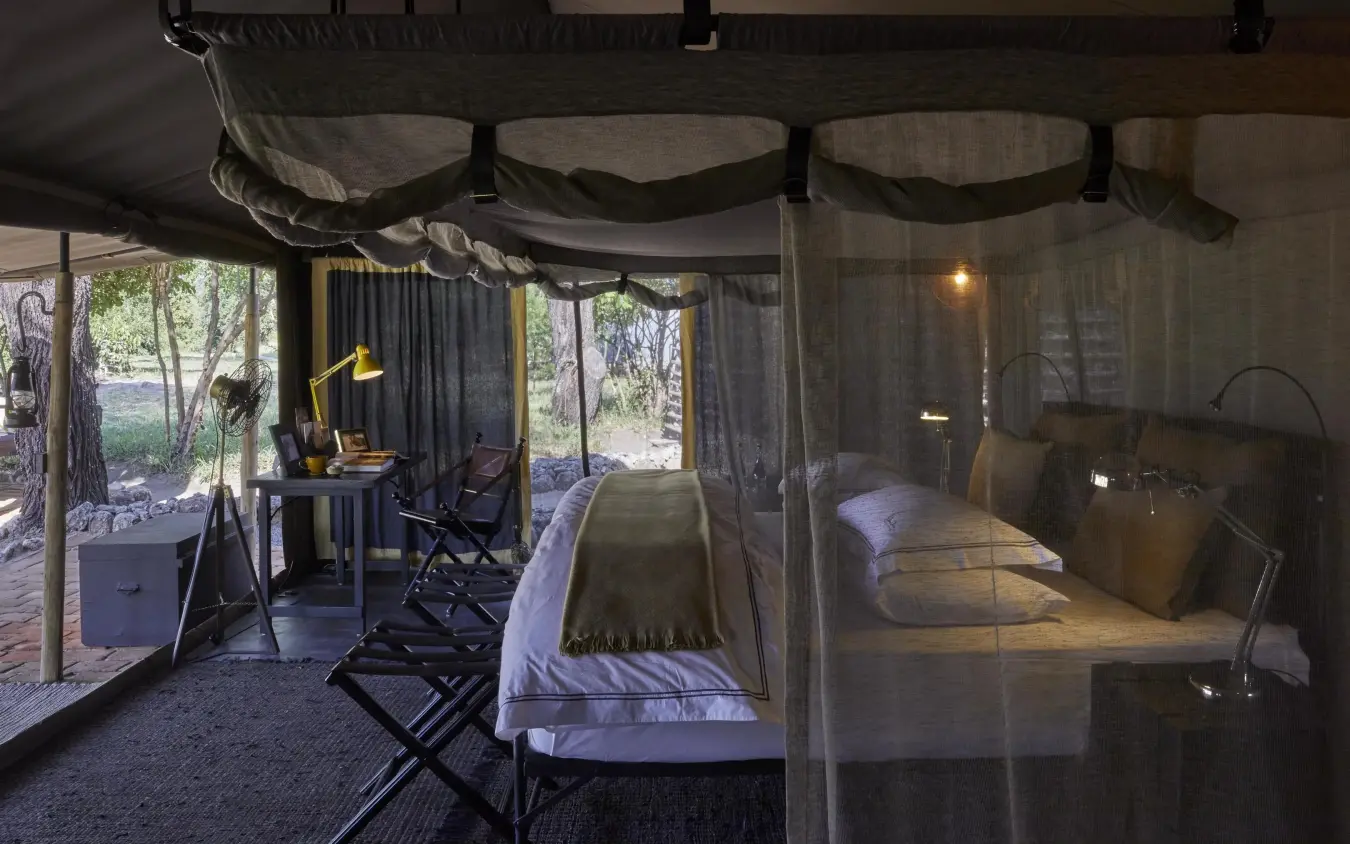
Laba Migration Camp has twelve tents, ten doubles and two family tents whose two rooms connect along a corridor, and it takes up to twenty two guests, with organic linen throughout. The mess reads like a natural history study, full of rare books, fossils and meteorites, and there is a tented gym.
The activities run to private game drives, morning, afternoon or full day, with bush breakfasts and sundowners, walking in season, and Olduvai Gorge while it stands in the south.
Where it stands depends on your dates:
Between those three stints it is packed away.
At the first two stops, and that is less common than it sounds in northern Tanzania.
The North Dolly estate below Mount Meru is an unfenced conservancy of about 1,700 acres with no large predators, so eland, zebra, wildebeest, kudu and gerenuk can be approached on foot with Maasai trackers, and rides go out for around two hours. It is a gentle opening rather than big game on foot.
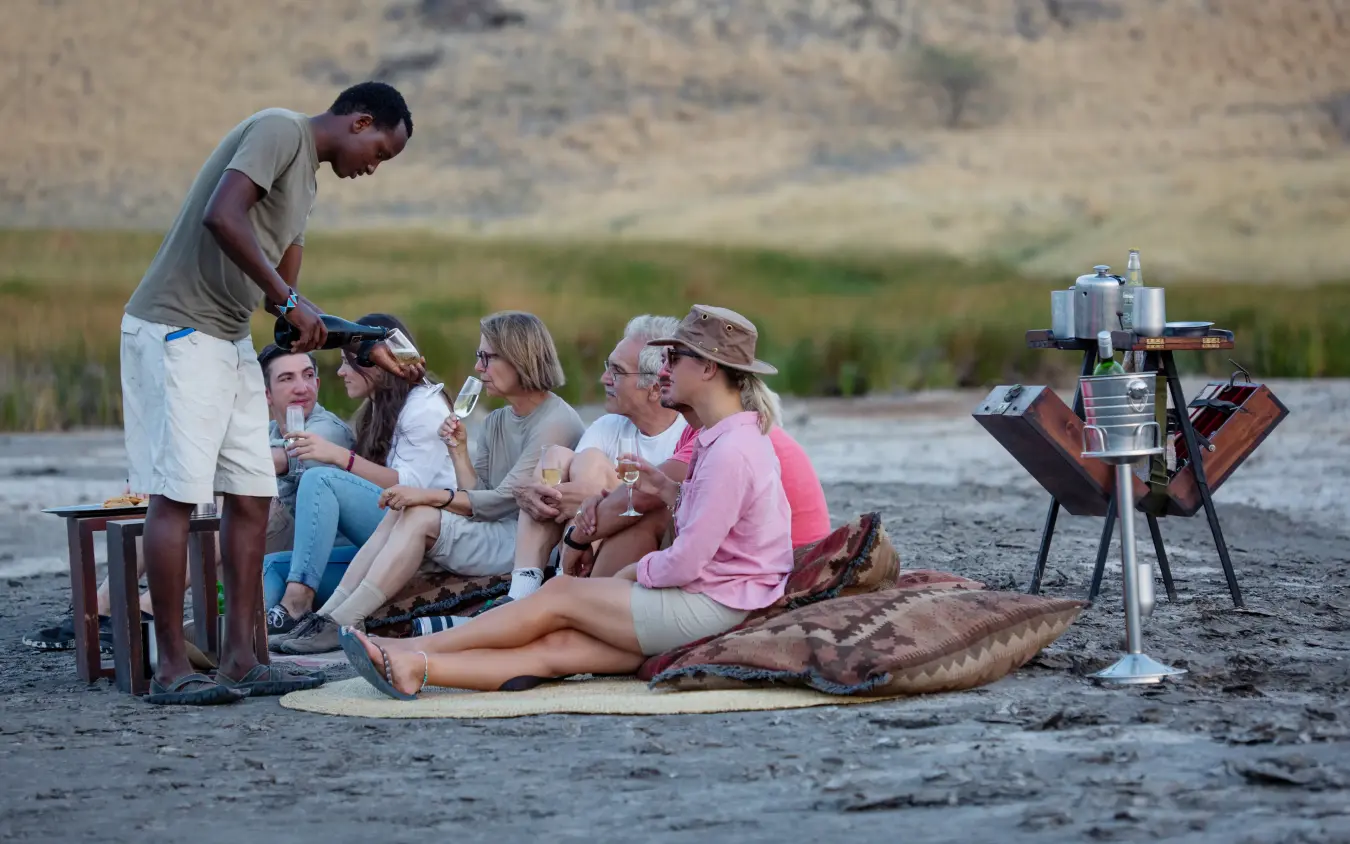
Forest Chem Chem then sits inside the Burunge Wildlife Management Area, the community run corridor between Lake Manyara and Tarangire, where the camp arranges its own walking with Maasai guides and its own drives after dark rather than working to a park timetable. Your group takes that four tent camp whole, so those days keep no schedule at all.
In the Serengeti the game viewing is from the vehicle, with short guided walks near camp where the season allows.
Close in the right months, though no wild animal can be promised.
The camp is moved to sit among the wildebeest and zebra rather than drive out to them, so in the calving months at Ndutu the herds can graze within sight of the tents and call through the night.
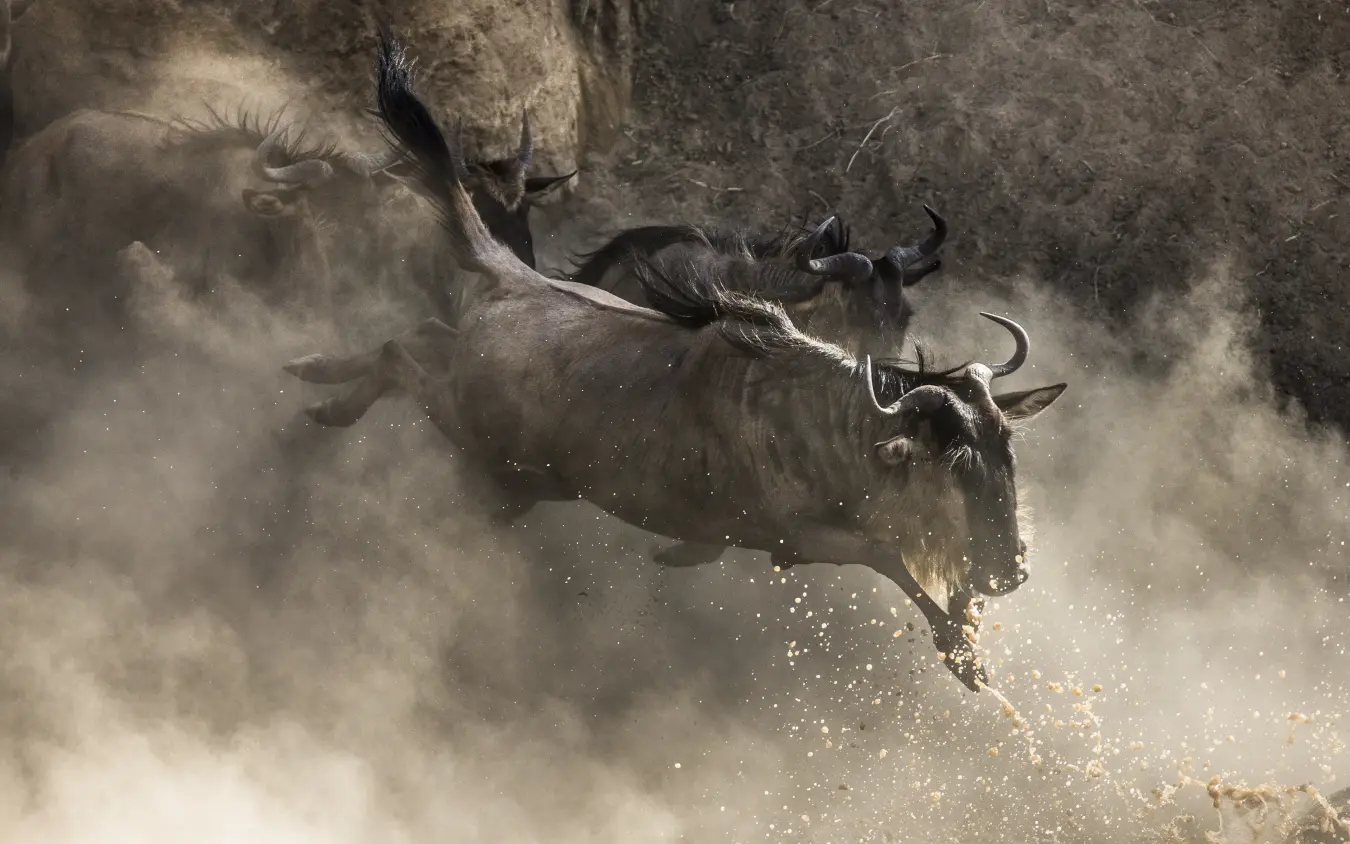
A Mara River crossing is a different proposition. The herds reach the far north around July and start going in during the last days of that month, carrying on into October, at their most frequent through August and September.
Even then a herd can sit on the bank for days, think better of it, or enter the water at a point nobody is watching, and no published success rate exists. Three nights in the north is a fair chance rather than a strong one, and we advise three or four for anyone travelling for the crossings alone.
It is a small private island with one camp on it, twelve open sided bandas taking no more than twenty four guests, about three kilometres off the northeast corner of Unguja.
Reaching it means a drive up the island and then a short boat crossing, and because there are no jetties you step off into shallow water and wade the last few metres, so keep something sensible on your feet in your day bag.
The water around it is the Mnemba Island Marine Conservation Area, protected by the Zanzibar government since 2002, and the reef inside the atoll holds around 600 species of fish.
Green turtles nest on the beach through the year, and the lodge's conservation arm has monitored nests there for more than twenty years, though which months are busiest is uncertain.
Four places, one answer: the dry middle of the year carries all of them.
We rate July through October top on every part of this route, with the mobile camp pitched at Kogatende in the north, Tarangire's elephant herds drawn in to the river, and the calmest, clearest water of the year off Zanzibar. Those weeks are the busiest and the dearest as well.
Our second pick is February, when the Ndutu plains are calving and the coast is bright, although Tarangire and Lake Manyara are thinner going by then.
November to January sit in between: green country, lighter traffic, arriving migrant birds and young animals, set against game that has spread out and storms most afternoons.
March opens the long rains, so Forest Chem Chem shuts from April to the end of May and the mobile camp stands nowhere in April or the first half of May.
Road at the start, light aircraft for the long legs, a boat at the end.
Kilimanjaro International is about thirty five minutes from the North Dolly estate, which also has an airstrip ten minutes away if you would rather fly in privately. A private drive takes you south to the Burunge area, and the Serengeti is reached by air, landing at Ndutu, Kirawira or Kogatende depending on where the camp is standing that month.
The Zanzibar flight takes about two hours from the Serengeti and the aircraft almost always sets down somewhere first, and Mnemba is then a drive up the island and a short crossing by boat.
The aircraft cap you at 15 kilograms in total, cabin bag included, carried in a soft holdall. We can charter any leg privately, normally in a Pilatus PC-12.
Ed Charles, BBC Producer
Fitzroy are true specialists in accessing the wilderness. They know where to go and importantly, when to go there. Highly recommended.
rwanda & tanzania
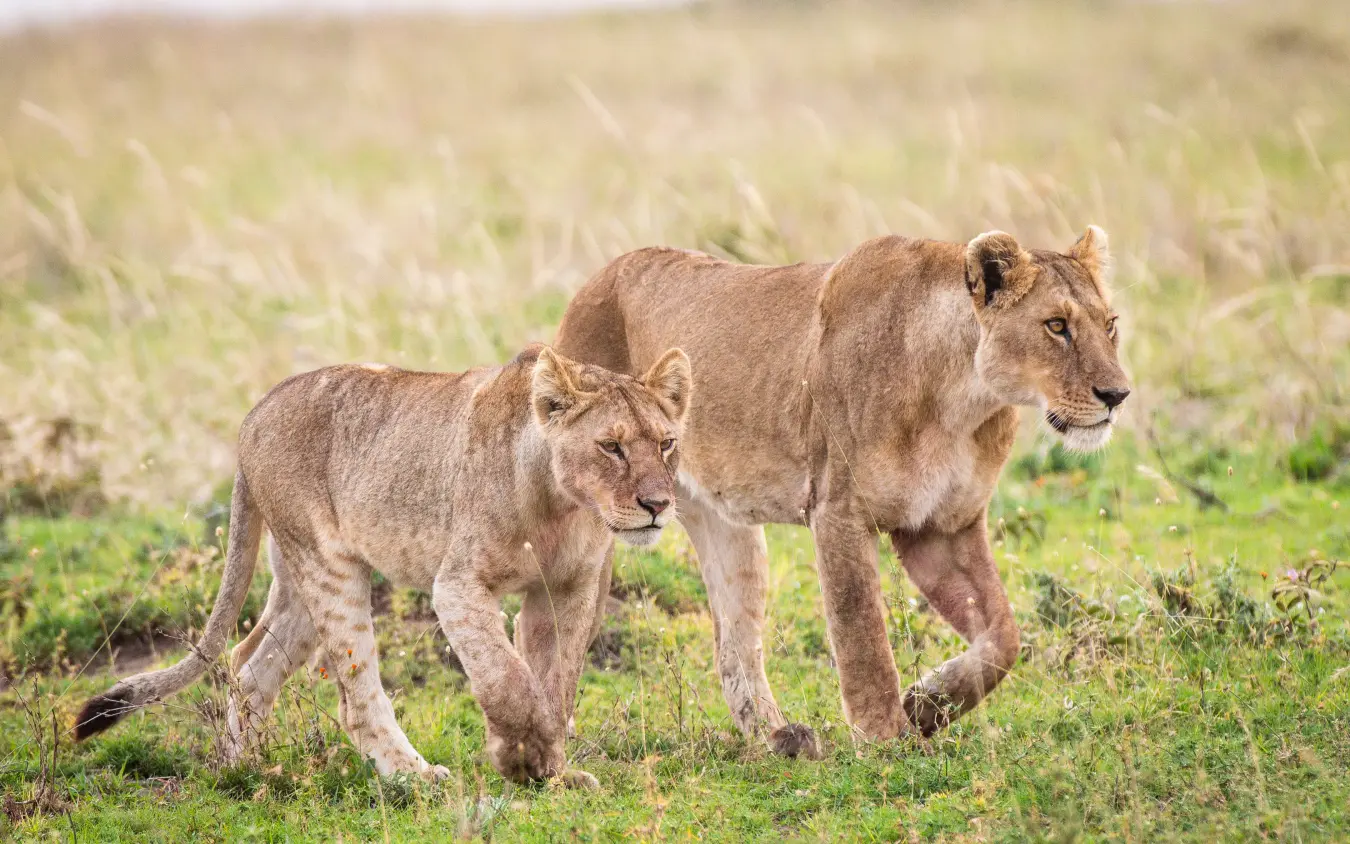
Ten nights linking Rwanda's Virunga gorillas with the far northern Serengeti and the Mara River, via Kigali.
tanzania & kenya
Twenty-one nights from Mount Meru's forest across the Serengeti and Mara to the Laikipia Highlands of northern Kenya.
tanzania
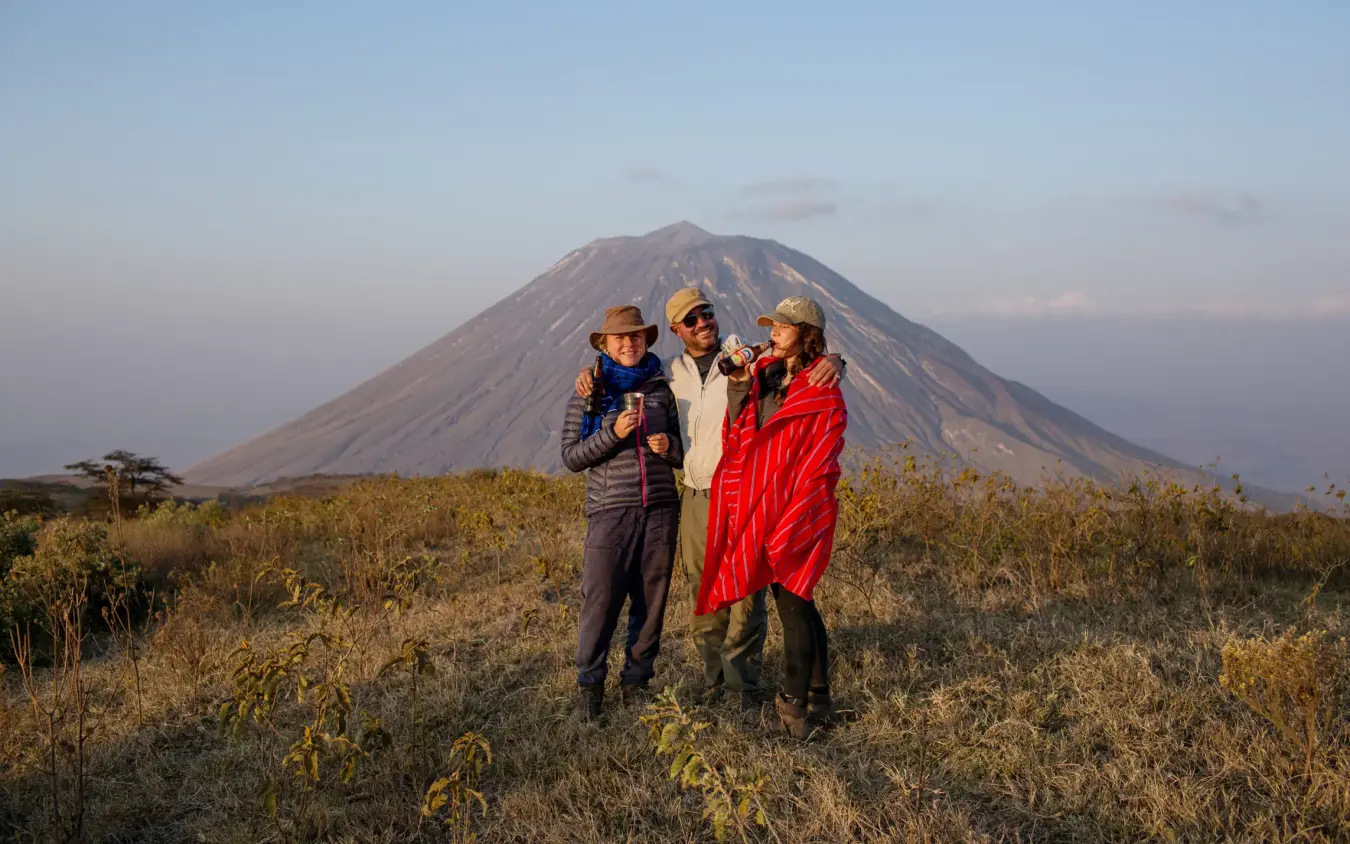
Eleven nights across northern Tanzania, from Lake Manyara to Lake Natron on foot and on to the Serengeti plains.
rated five stars by our clients

our approach
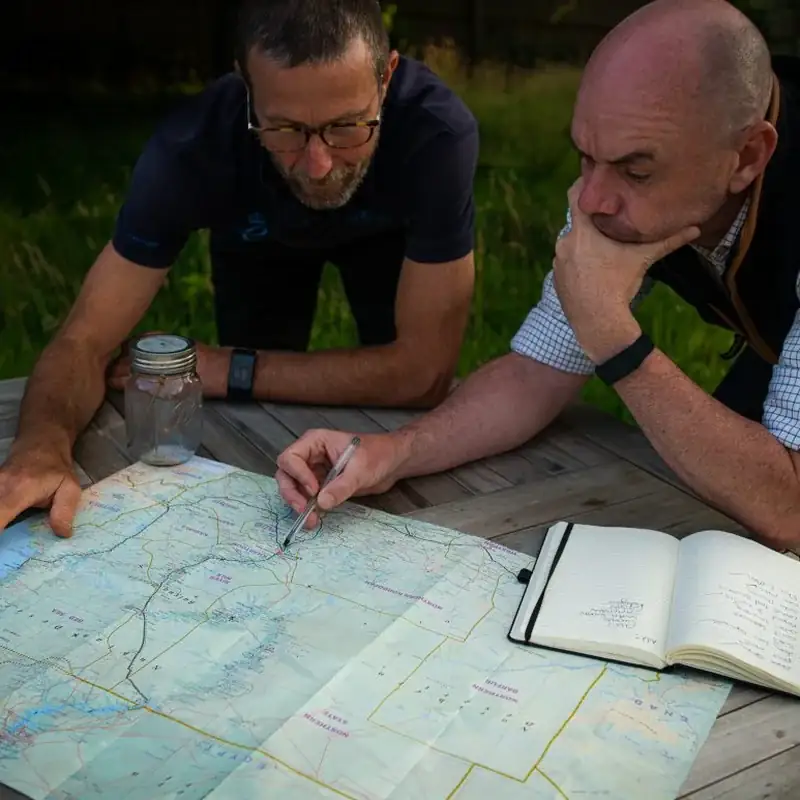
Every journey starts with a conversation. We take the time to understand your vision before we start planning.
Whether by phone or in person, we work with you directly to shape something that is considered, personal, and expertly delivered.
Every journey starts with a conversation. We favour a direct, personal approach: understanding your vision before anything else.
Whether by phone or in person, we work with you directly to shape a journey that is both thoughtfully considered and expertly delivered.
Get in touch to start planning yours.